
Review · ARUBA
Aruba Downtown Historic and Cultural Walking Tour
Oranjestad rewards a closer look. This 2.5-hour walking tour connects Fort Zoutman, the National Archaeological Museum, local food stops, government buildings, churches, shops, and residential streets. I like the mix of Aruba’s past and present, and I like that two local tastings are included rather than leaving the food side to chance.
The main drawback is the pace. You may visit around 30 stops, but several receive only a few minutes, and the heat can make the morning feel longer. The tour is best for someone who wants a broad introduction to Oranjestad, not a slow museum visit or a long walk through distant parts of the island.
Key points before you book
- About 30 downtown stops: You cover forts, museums, churches, government buildings, shops, streets, and local homes in one morning.
- Two food tastings included: Expect a local snack such as pan bati, with pastechi also mentioned by tour participants.
- Fort Zoutman and the Archaeological Museum: Entry is included when both sites are open, though visits can be brief.
- A strong guide can make this tour: Guides such as Wendell, Evy, Marisa, Milton, Hazel, and Yvonne have been praised for stories, humor, and personal insight.
- Start at 9:00 am: The early start helps you avoid the worst heat, though bring water and wear proper walking shoes.
- Good value for first-time visitors: At $45 per person, the tour gives you history, orientation, food samples, and practical advice for the rest of your stay.
What the Oranjestad walk is really like

This is a compact city tour, not an island-wide excursion. You stay mainly in central Oranjestad, covering only a few blocks in some sections. That can feel limited if you expect a large portion of Aruba, but it also means you can get to know the capital without spending the day in a vehicle.
The tour begins at Cosecha Aruban Craft Design & Heritage on Zoutmanstraat at 9:00 am. Selected accommodations may offer pickup, and the activity ends back at the meeting point. The meeting place is generally easy to reach, though one participant found it hard to locate, so allow extra time and keep the address handy.
The group can include up to 20 people. That is small enough for questions, though the experience depends heavily on the guide’s pace and style. The best guides turn ordinary streets into story material. Wendell has been praised for his energy and personal stories, while Evy and Marisa have been described as warm, funny, and deeply familiar with Aruba’s past. Hazel Milton has also brought family stories and a thoughtful view of Aruba’s relationship with the Netherlands.
That personal touch is one of the tour’s main strengths. You are not simply looking at old buildings. You are hearing how the island’s people, religions, government, and food traditions fit together.
More Local Culture and Traditions Tours in the world:
- Amsterdam Food and Cultural Tour with Tastings
★ 5.0 · 4,315 reviews - Sevilla Food Tour: Tapas, Wine, History & Traditions
★ 5.0 · 3,468 reviews - Tromsø: Reindeer Camp and Sami Cultural Tour with Lunch
★ 4.7 · 3,326 reviews
Fort Zoutman and the view from the old tower
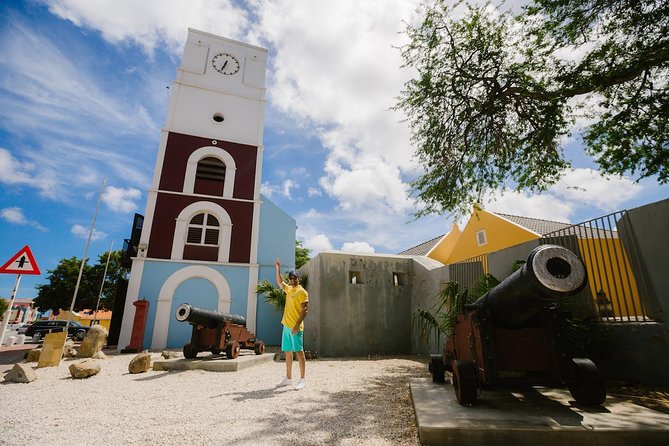
Fort Zoutman is the natural place to begin Aruba’s story. The fort dates to the 1700s, giving you a physical link to the island’s early colonial period. When the Historical Museum is open, you enter to see exhibits about Aruba’s past.
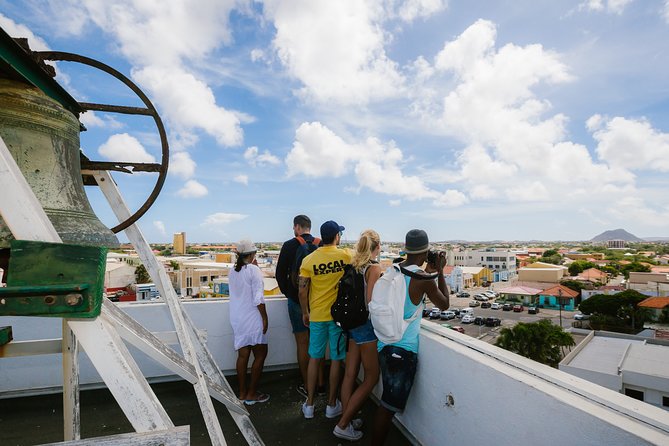
The old clock tower, built in the 1800s, is another highlight. You may climb it for a view over downtown. The tower adds a little effort, but it also gives the opening section of the tour a clear sense of place. You can see how closely the central streets, public buildings, shops, and waterfront areas are connected.
The scheduled stop is only about 10 minutes. That is enough for a quick explanation and a look around, but not enough for careful reading of every display. If museum panels matter to you, plan to return independently later.
Entry is included when the site is open. The phrase when open matters here because the indoor portion is not guaranteed at every departure. You still receive the exterior history even if the museum or tower cannot be entered.
Wilhelmina Park and Aruba’s iguanas
A short walk brings you to Wilhelmina Park, where the guide explains two notable statues. This is also a chance to see the park’s large iguana population.
The park stop is brief, around 10 minutes, so expect interpretation rather than a long rest. The statues give the guide a way to discuss Aruba’s public memory, while the iguanas add a lighter, more amusing break from dates and politics.
This is one reason comfortable clothing matters. You will be outside for most of the tour, often in full sun. Even people who describe the walk as gentle still point out that the heat is the biggest challenge. A hat, water, sunscreen, and sturdy walking shoes will make the morning much easier.
Aruba’s first inhabitants at the Archaeological Museum
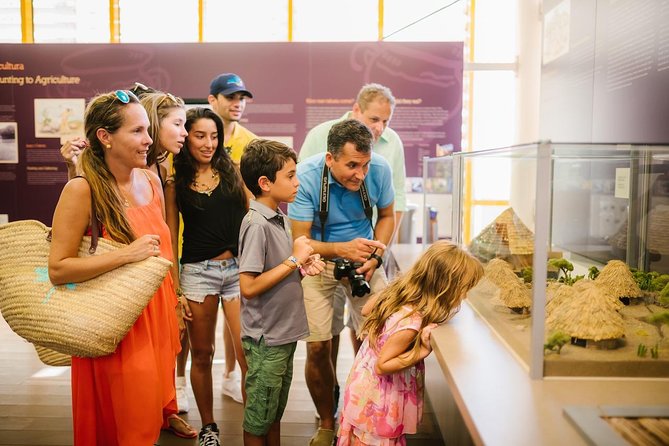
The National Archaeological Museum Aruba covers the island’s earliest inhabitants. When open, you can see pottery, skulls, and tools used by Indigenous people in the early days of Aruba.
The museum’s exterior also provides a good background for photographs. The inside visit, however, may feel rushed because the planned stop is about 10 minutes. I would treat this as an introduction rather than a full museum visit.
That distinction is important. The tour gives you the basic story and points out objects you might otherwise miss. If you enjoy archaeology, you will probably want extra time here. The walk helps you decide which places deserve a return visit, but it cannot give every museum enough time for close study.
More History Walking Tours in the world:
- History and Hauntings of Salem Guided Walking Tour
★ 5.0 · 14,564 reviews - Lisbon: History, Stories and Lifestyle Walking Tour
★ 4.8 · 10,902 reviews - Boston: Freedom Trail History Small Group Walking Tour
★ 5.0 · 6,450 reviews - Historic Charleston Guided Sightseeing Walking Tour
★ 5.0 · 6,216 reviews
A taste of Aruba at Coco Plum

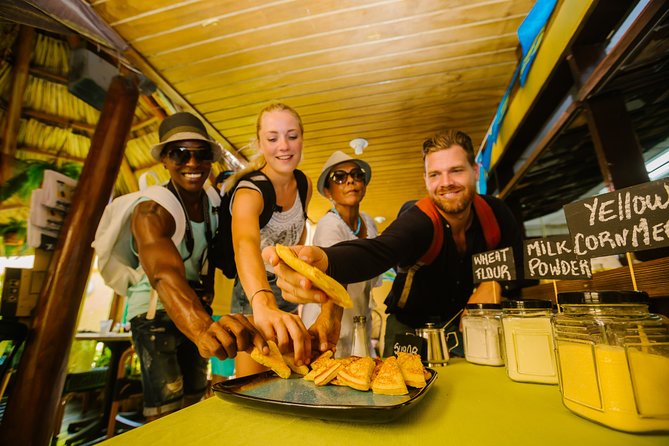
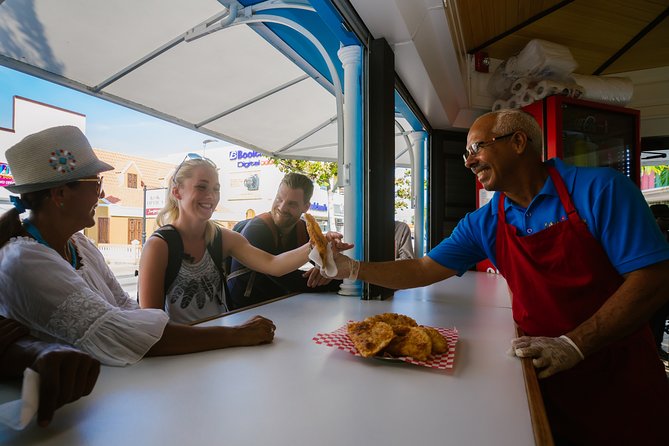
At Coco Plum Restaurant, the tour turns from buildings to food. You learn about pan bati, a local snack that remains common in Aruba, and receive a tasting.
Pan bati is made from a batter and is often described as a local pancake or flatbread. The point here is less about a full meal and more about understanding what Arubans eat. Food gives the history a practical connection. Instead of only hearing about local culture, you get a small taste of it.
A second tasting takes place later on Havenstraat. Food mentioned in connection with this stop includes pastechi, a popular filled pastry. The portions are tastings, not breakfast, so eating something before the tour is sensible. The operator specifically advises having breakfast first, especially because of the heat and the possibility of feeling unwell.
The two samples add real value to the $45 price, particularly if you enjoy local food but do not know which items to order on your own. Just confirm with your guide that both tastings are included on your departure. One participant reported receiving only one snack, so it is reasonable to ask early and politely if you are unsure.
Oranjestad’s mansions, shops, and Main Street
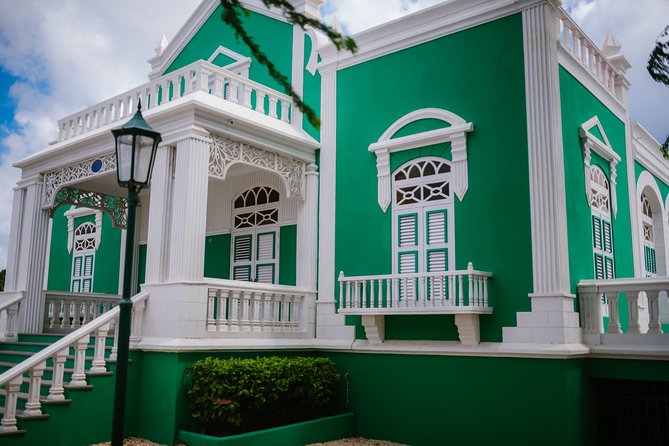
The walking route continues through central Oranjestad, including a stop connected with one of the city’s family mansions from the early 1900s. The guide explains the romantic story behind its construction.
These personal stories are useful because they make the architecture easier to remember. A painted facade or grand doorway becomes connected to a family tale rather than remaining just another photo stop.
You also walk along Aruba’s Main Street, where some shops have operated since 1928. The street includes the route used by the tram, and the guide explains how that system fits into the city’s daily life.
The Main Street section can be a point of disagreement. Some people appreciate the shops and want time to browse. Others come mainly for history and would rather spend more time inside the museums or church. You should see the shopping area as part of the city orientation, not as a dedicated shopping trip.
The tour also begins in front of one of Aruba’s first government buildings, a structure that served several purposes over time. It now houses local arts and crafts made by accredited Aruban artists. This is a useful stop if you want to buy something tied to the island’s creative community rather than a generic souvenir.
Aruba’s government at Parliament
The Aruba Parliament stop takes about five minutes. You hear how the island’s political system works and see where local politicians debate laws and current issues.
That may sound dry, but it is one of the more useful stops for understanding modern Aruba. Many visitors learn the island through beaches and hotels. A brief explanation of government shows you how Aruba operates as part of the Kingdom of the Netherlands and how local decisions are made.
The quality of this section depends on the guide. Some guides explain politics clearly and invite questions. One participant felt the guide became too political at times. If the conversation turns into personal opinion, you can bring it back to the structure of Aruba’s government and the facts you came to learn.
The Protestant Church and Aruba’s religious mix
The Protestant Church is one of Aruba’s oldest churches, built in the 1800s. The guide explains how Protestantism arrived on the island and points out that Protestants are not Aruba’s largest religious group.
The stop is listed at only about two minutes, so you should not expect a full interior tour or time to study every detail. Still, it offers a useful reminder that Aruba’s culture includes several religious traditions and historical influences.
This is another place where the guide matters more than the clock. A clear explanation can make a very short stop worthwhile. If you want to enter the church or study its details, ask if there is a good time to return.
Local homes along Wilhelminastraat
The route leaves the main commercial streets for Wilhelminastraat, a residential street where you see how local families live. The guide points out several notable homes.
This part gives the tour a change of rhythm. Instead of moving only between official landmarks, you see ordinary streets and houses that help explain Oranjestad’s character. The stop lasts about five minutes, but it can be one of the more revealing parts of the morning.
You are not visiting private homes, so the value comes from looking at the streetscape and listening to the guide’s explanations. Keep your voice low and be respectful in this residential area.
Why guide quality matters so much
The tour has a clear route, but the human side changes from one departure to another. Names praised in the supplied information include Wendell, Evy, Marisa, Milton, Hazel Milton, and Yvonne. Their strengths are similar: local pride, humor, personal stories, and a strong grasp of Aruba’s past and present.
The best guides connect buildings to people. They explain not only when a structure was built, but why it mattered. They also make room for questions and adjust the pace when the group needs water or a short pause.
There are some less positive possibilities to keep in mind. One departure began 15 to 20 minutes late, and one guide was described as distracted by the heat. Another participant felt the walk stayed within too small an area and did not offer enough to justify the price. These reports do not define every departure, but they show why expectations matter.
You are paying for interpretation, food samples, museum entry when open, and local orientation. You are not paying for a long-distance walk or a full-day sightseeing program.
Is $45 a fair price?
At $45 per person, the value is strongest if you are new to Aruba and plan to spend time in Oranjestad. You receive roughly two and a half hours with a guide, two local tastings, and entrance fees at Fort Zoutman and the Archaeological Museum when those sites are open.
You also get practical advice about where to eat, drink, shop, and return later. That advice can save time during the rest of your stay. A short city tour early in a trip often helps you decide which places deserve a second visit.
The value is weaker if you dislike group walking tours, prefer long museum visits, or have already explored central Oranjestad. The route stays in the downtown area, and several stops are quick. You may feel the tour covers too much too lightly.
A 96 percent recommendation rate and a 4.8 rating from 623 ratings indicate broad satisfaction, but you should still read the product honestly: the experience is only as good as the guide, the weather, and whether the museums are open.
Heat, timing, and practical preparation
The 9:00 am start is a good choice. Aruba’s sun can be intense, and several participants specifically advise doing the walk early. The operator says the tour runs in all weather conditions, so dress for heat and possible changes in the weather.
Wear walking shoes, bring water, and eat breakfast first. The walk is described as gentle rather than strenuous, and most people can take part, but the heat is a real factor. If you have difficulty walking or standing for extended periods, ask about the pace when booking.
The tour uses a mobile ticket. Service animals are allowed, and the tour is operated by a multilingual guide. Public transportation is nearby. Free cancellation is available if you cancel at least 24 hours before the start time. Changes or cancellations inside that window are not accepted for a refund.
Cruise ship passengers should pay close attention to booking rules. Passengers on Carnival, Holland America, Princess, and P&O cruises must book through the ship’s website or onboard. Other cruise passengers need to provide the ship name, docking time, disembarkation time, and re-boarding time.
Who should book this Oranjestad tour?
I would choose this tour for a first morning in Aruba, especially if you want context before exploring on your own. It suits people who enjoy stories, local food, architecture, public history, and a guide who can answer questions.
It also works well for cruise passengers with enough time after disembarkation, provided the ship’s booking rules are followed. Families and mixed-age groups may appreciate the short stops, food samples, tram discussion, and iguanas.
I would skip it if you want a quiet museum morning, a major island sightseeing tour, or a serious shopping trip. You should also think twice if walking in the heat is uncomfortable. A late start, a slow pace, or a guide who talks at length can push the tour beyond the expected two and a half hours.
Should you book the Aruba Downtown Historic and Cultural Walking Tour?
Book it if you want a friendly introduction to Oranjestad with local stories, two food tastings, and useful orientation. The strongest guides make the capital feel personal, explaining family homes, government, religion, food, and archaeology in one connected morning.
Go with realistic expectations. You will see many places quickly, and the museums may be closed or too rushed for detailed study. At $45, I consider it good value for first-time visitors who want a guided start, but less appealing for repeat visitors or anyone looking for a bigger sightseeing adventure.
FAQ
How long is the Aruba Downtown Historic and Cultural Walking Tour?
The tour lasts approximately 2 hours and 30 minutes, although one participant reported that a departure ran about an hour longer.
What time does the tour begin?
The scheduled start time is 9:00 am.
Where does the tour meet?
The meeting point is Cosecha Aruban Craft Design & Heritage at Zoutmanstraat 1 in Oranjestad, Aruba.
Where does the tour end?
The activity ends back at the meeting point.
How many stops are included?
The tour includes approximately 30 stops around central Oranjestad, including museums, monuments, shops, churches, government buildings, food stops, and residential streets.
Are museum entrance fees included?
Entrance fees at Fort Zoutman and the National Archaeological Museum are included when those sites are open.
Are food tastings included?
Yes. The tour includes two local tastings. Stops include pan bati at Coco Plum Restaurant and a local food tasting on Havenstraat.
Is the tour suitable for cruise ship passengers?
Yes, but booking rules differ by cruise line. Carnival, Holland America, Princess, and P&O passengers must book through the ship’s website or onboard. Other cruise passengers must provide ship and timing details when booking.
Can I cancel for a full refund?
Yes. You can cancel at least 24 hours before the experience starts for a full refund. Cancellations or changes made less than 24 hours before the start time are not accepted for a refund.
Just added around the world
- The Queenstown Story @ Cobh Heritage Centre , Great Stories of Emigration.★ 4.5 · 181 reviews
- Visit 16 Sites Key Historical Sites And Experience Cobh Rebel Tours★ 5.0 · 167 reviews
- Historical Bicycle Tour of Dunedin★ 5.0 · 44 reviews
- Cincy Brunch History and Streetcar Tour with Riverside Food Tours★ 5.0 · 108 reviews
- 2.5 Hour Kayaking with Manatee and History Tour in Tarpon Springs★ 5.0 · 24 reviews
- Private Tour in Chichen Itza Official History Guide★ 5.0 · 36 reviews
- Dazu Ancient Rock Carvings Private Tour Extension★ 5.0 · 24 reviews
- Chicago River Architecture Tour Aboard a Historic Yacht★ 5.0 · 45 reviews
Local Culture & Traditions Tours, compared.

Amsterdam Food and Cultural Tour with Tastings
Read our review →
Sevilla Food Tour: Tapas, Wine, History & Traditions
Read our review →
Tromsø: Reindeer Camp and Sami Cultural Tour with Lunch
Read our review →
Half Day Dominican Republic Cultural Tour : Small Group
Read our review →
Ultimate Melbourne Walking Tour: History, Laneways & Culture
Read our review →
Tromsø: Sámi Reindeer Sledding and Sami Cultural Tour
Read our review →
Kyoto Gion: 2-Hour Geisha Culture & History Walking Tour
Read our review →
Marrakech Historical and Cultural Tour – Half Day City Tour
Read our review →Browse the lists this tour appears in