

Review · GEORGIA
Tbilisi: Guided Walking Tour of Historic City
Tbilisi rewards curious walkers. This three-hour route links old churches, sulfur baths, Silk Road-era streets, and modern landmarks while showing how several faiths and cultures share one compact city. I especially like the small group of up to 10 people and the way the tour mixes major sights with local stories, food advice, and practical tips. The main consideration is the walking itself: stairs, uneven ground, and stops on sloping streets may be tiring for anyone with limited mobility.
I also like that guides such as Sally and Nick have made the tour personal rather than purely academic. Sally is praised for her warmth, humor, honest restaurant suggestions, and willingness to answer questions, while Nick is noted for clear explanations and strong knowledge of the city. At $14 per person, the tour offers good value, though some visitors may find the amount of history packed into three hours a little hard to absorb.
Five things that make this Tbilisi walk worth considering
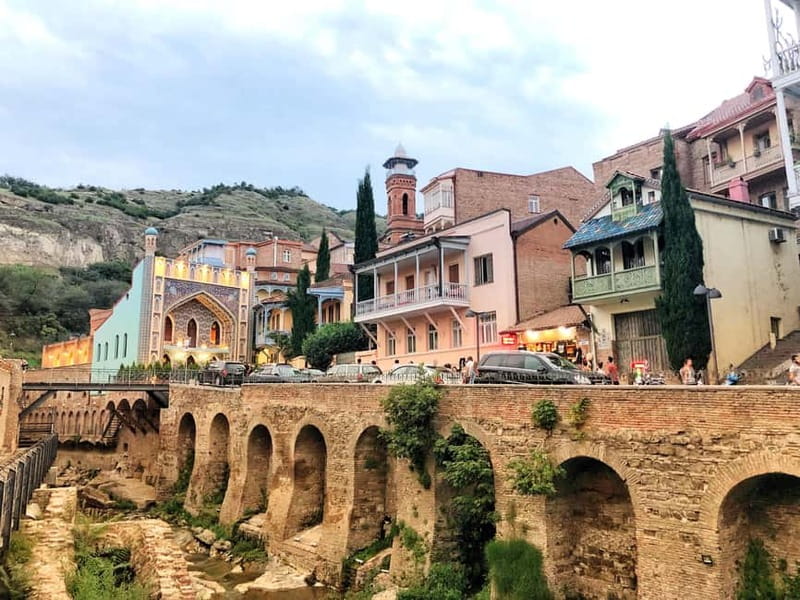
- Five Religions Connecting Square: See a rare cluster of religious buildings that introduces Tbilisi’s long tradition of cultural coexistence.
- Old Tbilisi in one walk: Cover Meidan Bazar, Jan Shardeni Street, Abanotubani, Metekhi Church, Rike Park, and more without arranging transport.
- Stories beyond the postcard stops: Hear local legends connected to Devil Street, the Tamada sculpture, and the city’s founder.
- A useful first-day orientation: Get recommendations for Georgian food, wine, shopping, other activities, and common tourist pitfalls.
- A compact, affordable group: Three hours and a maximum of 10 people make this easy to fit into a first day in the capital.
- A route with contrasts: Pair old brick bathhouses and churches with the Bridge of Peace, Europe Square, and the Berlin Wall Stone.
Starting near Rustaveli Avenue and entering Old Tbilisi
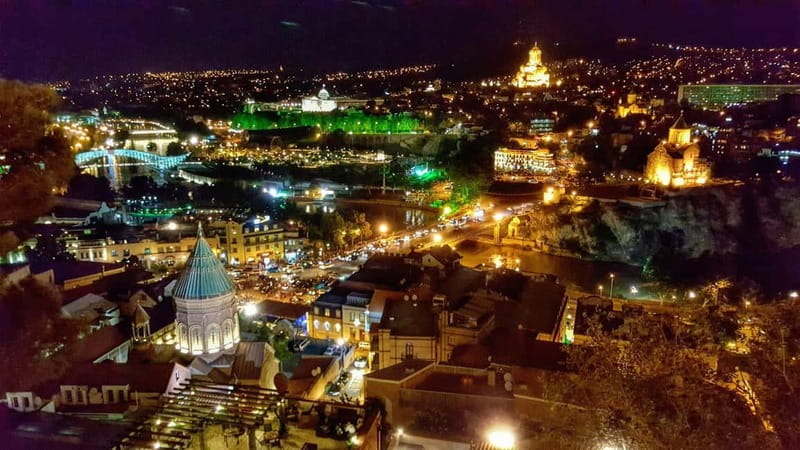
The meeting point is in front of the Magti Office at 20 Shota Rustaveli Avenue. Arrive about 10 minutes early. That small bit of planning matters because the group minimum is two people, and the guide aims to begin promptly.
The walk then moves toward the old city and its central sights. Since this is a walking tour rather than a ride between landmarks, you get a better sense of how Tbilisi fits together. You are not simply dropped at one monument after another. Streets, river views, courtyards, bridges, and religious buildings form one connected story.
The advertised route finishes at 1 Samghebro Street. The exact order of minor stops can vary, but the main route includes Meidan Bazar, Jan Shardeni Street, the Bridge of Peace, Rike Park, Europe Square, Metekhi Church, Abanotubani, Leghvtakhevi Waterfall, the Bridge of Love, and an Armenian church.
More History Walking Tours in the world:
- History and Hauntings of Salem Guided Walking Tour
★ 5.0 · 14,564 reviews - Lisbon: History, Stories and Lifestyle Walking Tour
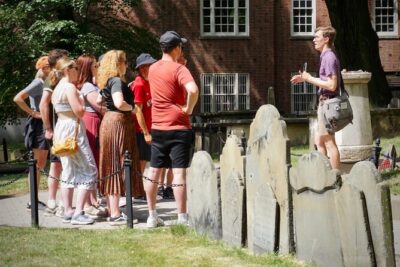
★ 4.8 · 10,902 reviews - Boston: Freedom Trail History Small Group Walking Tour
★ 5.0 · 6,450 reviews
Meidan Bazar and the old trading quarter
Meidan Bazar gives you an early look at Tbilisi as a trading city. The area recalls the days when merchants and goods moved through the wider Silk Road world, and it remains one of the most atmospheric parts of Old Tbilisi.
This is a good place for the guide to explain how trade, travel, and different communities shaped the city. You can expect a photo stop and a guided explanation rather than a long indoor museum visit. If you want to browse or buy something, save that for after the tour so you do not hold up the group.
Jan Shardeni Street adds a more polished, café-lined side of the old town. It is a popular walking street, so it can feel busier than the quieter lanes. Its value is less about one single monument and more about seeing how old buildings now serve restaurants, wine bars, and shops.
The contrast is useful. Tbilisi is not a preserved stage set. It is an old neighborhood still used for daily life, dining, and nightlife.
Five faiths, Devil Street, and the language of hospitality

One of the most meaningful parts of the route is the Five Religions Connecting Square. The idea is simple but powerful: churches, a mosque, and a synagogue are located close together, reflecting the mix of communities that has long shaped Tbilisi.
Your guide can give this setting human scale. Instead of treating religion as a list of buildings, the stop helps you understand why Tbilisi feels different from a city with one dominant architectural or cultural identity. Dress respectfully if you enter a religious building, and remember that some churches may be active places of worship rather than sightseeing venues.
The route also includes the mysterious Devil Street, where local legends add a darker note to the tour. This is the kind of stop that works best when you enjoy stories and atmosphere as much as dates and names. Do not expect a major monument here. The appeal is the tale attached to the street and the way a guide connects it to local imagination.
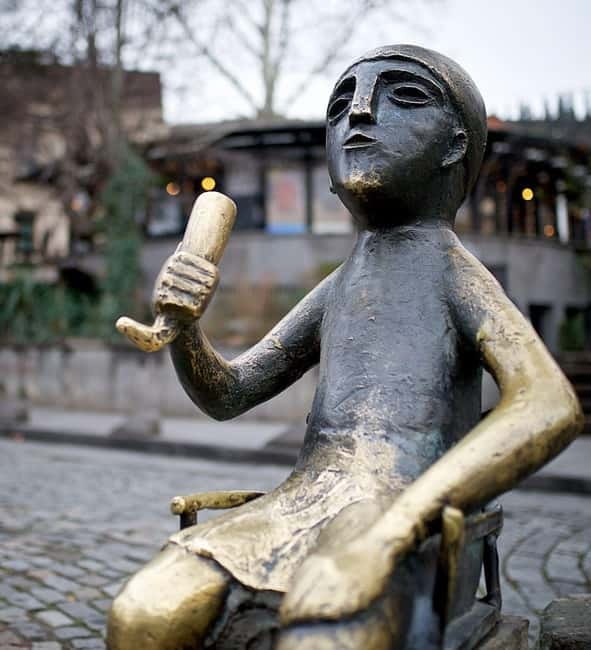
Then comes the Tamada sculpture, also called the Statue of the Toastmaster. It celebrates Georgia’s famous tradition of hospitality and the formal role of the toastmaster at a supra, or Georgian feast. You may hear about toasting customs, food, wine, and the social importance of speaking well around the table.
This is one of the route’s most useful cultural stops because it gives context to the food and wine advice you may receive later. Georgia is not just a place to order dishes and take photographs. Meals and toasts carry meaning, and the guide helps explain that without turning lunch into a lecture.
Bridge of Peace, Rike Park, and Europe Square
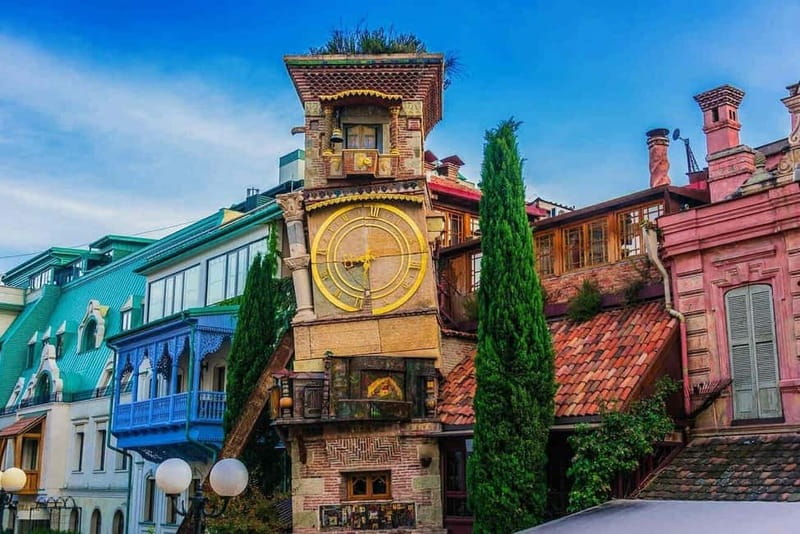
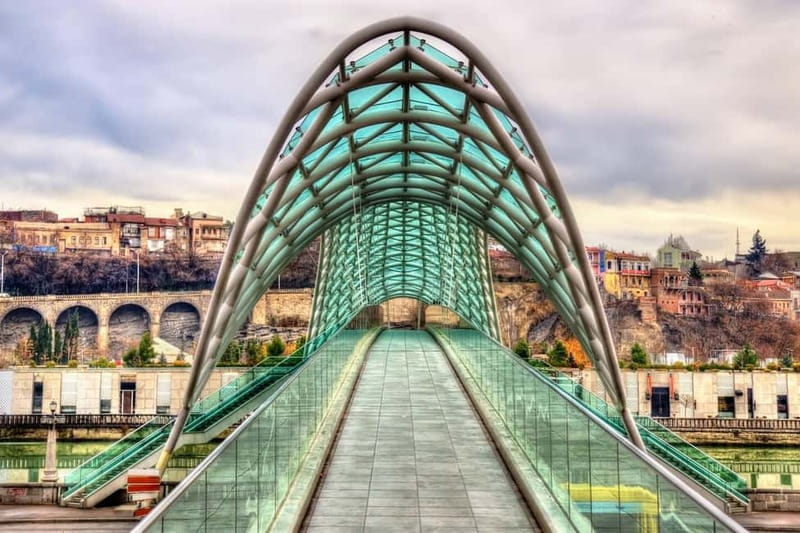
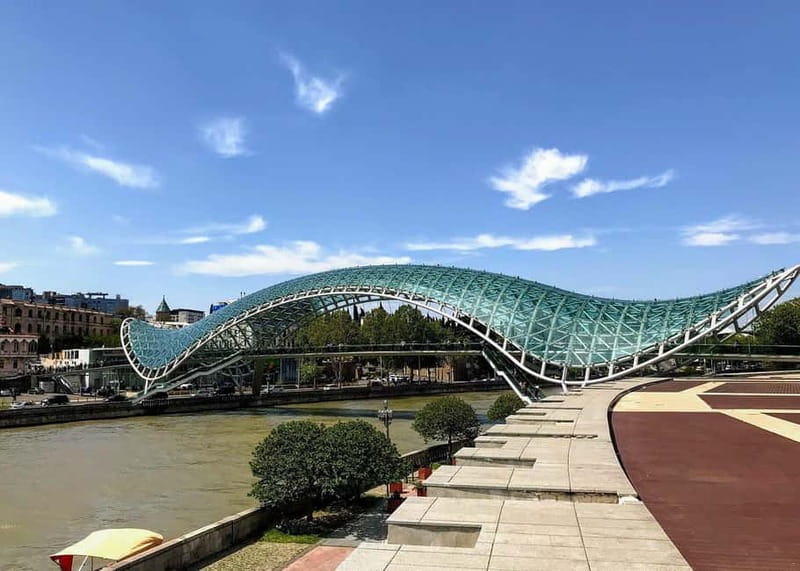
The Bridge of Peace is the route’s clearest piece of modern design. Its curved glass-and-steel form crosses the Mtkvari River and creates a sharp contrast with the older streets nearby.
You get a photo stop and a chance to consider the city’s newer face. Some people love the contrast; others may find the bridge less in tune with the old town. Either way, it helps you see that Tbilisi is still changing rather than simply preserving its past.
Rike Park offers a more open stretch beside the river. After narrow lanes and older buildings, the space gives the group room to pause. Europe Square continues the connection between the river, public spaces, and the historic center.
This section is also helpful for orientation. Tbilisi can feel confusing at first, especially when the river, hills, bridges, and old lanes meet at different angles. A guide who points out where you are and how the areas connect can save you time later.
The Berlin Wall Stone is a small but pointed stop along the way. It is associated with freedom and political memory, and it adds a twentieth-century note to a tour otherwise focused on older Georgian history. Do not expect a large memorial complex. Its importance comes from the idea it represents and the conversation it opens.
More Guided Tours in the world:
- Edinburgh: Edinburgh Castle Guided History Tour with Tickets
★ 4.8 · 9,933 reviews - Historic Charleston Guided Sightseeing Walking Tour
★ 5.0 · 6,216 reviews - Rome: Colosseum with Arena, Roman Forum and Palatine Guided Tour
★ 4.0 · 5,598 reviews - Venice: St. Mark’s Basilica Guided Tour & VR History Intro
★ 3.9 · 4,880 reviews
Metekhi Church and King Vakhtang Gorgasali
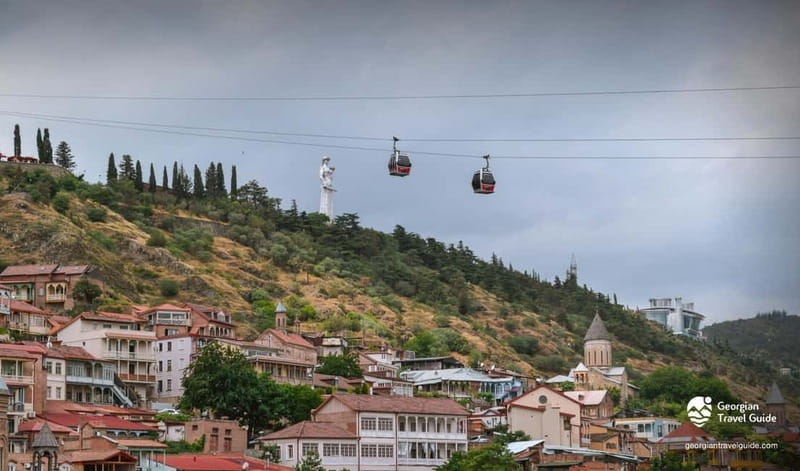
Metekhi Church is one of the route’s key historic landmarks. Perched above the Mtkvari River, it offers both a religious site and a strong viewpoint over the city.
The church is associated with King Vakhtang Gorgasali, the legendary founder of Tbilisi. His statue nearby gives the guide a natural opening to discuss the city’s origins and the stories tied to its name and location.
This is a stop where you should allow time for photographs, questions, and a look across the river. The setting does much of the work, but a good explanation makes it more than a scenic pause. The guide can connect the church, the king, the river, and the growth of Tbilisi into one narrative.
As with the other religious sites, entry details can depend on conditions at the time. The tour includes guided visits to the listed landmarks, but you should follow local instructions about clothing, quiet, and photography.
Abanotubani and the sulfur-bath district
Abanotubani is perhaps the most recognizable part of Old Tbilisi. Its domed brick roofs mark the city’s ancient sulfur-bath district, where naturally heated waters have long been part of local life.
You will learn why the baths matter to Tbilisi’s identity and likely hear about their healing reputation. Even if you do not plan to take a bath, the district deserves a close look. The low domes, brickwork, and tightly packed streets create a setting unlike the grand squares of many European capitals.
The tour does not appear to include a bath session. It is a guided visit and explanation, so plan a separate booking if you want to use the baths.
Nearby, Leghvtakhevi Waterfall gives the route a welcome change of scene. Water runs through a narrow urban gorge, making the stop feel unexpectedly natural inside the old city. The path can include uneven surfaces, so wear shoes with a firm grip.
The Bridge of Love is another short photo stop in this area. It is not the main reason to book the tour, but it adds variety and gives you another way to see the ravine and surrounding streets.
Samghebro Street and Tbilisi’s Armenian heritage
The walk continues along Samghebro Street, described as a quieter route with stories in its walls. This is where the tour can feel less like a checklist of famous sights and more like a guided neighborhood walk.
You may notice architectural details you would otherwise pass without a second look. The benefit of having a local guide here is not speed. It is attention. You can ask why a street matters, who used it, and how the old quarter has changed.
The final historic stop is an Armenian church. It offers another clear reminder that Tbilisi has been shaped by more than one ethnic or religious community. The church is presented as a quiet part of the city’s multicultural past, rather than as a grand finale with a large museum collection.
The route finishes at 1 Samghebro Street, putting you back in the old city with useful ideas for what to eat, where to go next, and which areas deserve more time.
What the guide adds to the experience
The guide is the main reason this tour seems to work well for a first visit. Sally receives especially strong praise for her energy, warmth, humor, and practical advice. She has helped visitors choose food, wine, shopping areas, and further activities, and she has adjusted the walk to suit interests when possible.
Nick is also praised for explaining each place clearly and answering questions. The guide may vary, so you should not assume Sally or Nick will lead every departure. Still, the supplied guide information is clear: tours are offered in English and Russian, with other language requests possible in advance.
The strongest feature is the conversational approach. You can ask about Georgian culture, current life, food, history, or common tourist scams. Several people found the guides welcoming and patient, and one family appreciated that the walk kept two teenagers engaged.
There is one fair warning. The tour can contain a lot of information in three hours. If you prefer a slow, highly visual tour with maps, old photographs, or long quiet pauses, this may feel dense. One useful suggestion from the feedback is to bring or request visual material if historical explanations are difficult to picture.
Price, pace, and practical comfort
At $14 per person, this is strong value if you want an introduction to Tbilisi. You get three hours with a local guide, a small group, landmark explanations, cultural context, and recommendations you can use for the rest of your stay.
The value is greatest on your first day. A walking tour can show you where the old town sits in relation to the river, bridges, parks, bath district, and restaurant streets. You may then spend your remaining time returning to the places that interested you most.
Bring water and wear comfortable shoes. The route runs in rain or shine, so check the weather before leaving and dress accordingly. Stairs and uneven paths are part of the experience, even though the activity is listed as wheelchair accessible. If you have limited mobility, ask the provider about the current route before booking.
Optional wine tasting or lunch can be arranged in advance. These are add-ons, not part of the stated $14 price, so ask about the cost and timing before confirming.
You can cancel up to 24 hours ahead for a full refund, and the reserve-now, pay-later option helps if your plans are still changing. Those policies are useful, but the real practical point is to choose a start time that leaves you enough energy for the hills and old-town walking.
Who should book this Old Tbilisi walk?
I would choose this tour if you want a broad first look at Tbilisi rather than one specialist subject. It suits solo visitors, couples, families, and anyone who wants a local introduction before exploring alone.
It is especially useful if you have only one day in the city. You will see the key areas, learn the basic story of Tbilisi, and leave with food and sightseeing suggestions.
History lovers should enjoy the mix of kings, trade, religious communities, political memory, and local legend. Food and wine enthusiasts will also benefit from the cultural explanation around the Tamada sculpture and the guide’s recommendations.
I would think twice if you dislike group walking, need long museum visits, or find uneven streets difficult. The maximum group is only 10, which keeps it personal, but it is still a group activity with a fixed route and shared pace.
Should you book it?
Book this tour if you want an affordable, friendly orientation to Old Tbilisi with plenty of stories and practical help. The strongest reasons are the compact route, the small group, and guides such as Sally and Nick, who bring warmth and useful local advice to the landmarks.
Skip it if you already know the old city well or want a specialist tour focused only on architecture, food, or the sulfur baths. For most first-time visitors, though, three hours and $14 is an easy way to get your bearings, understand the city’s mix of cultures, and decide what deserves a closer look.
FAQ
Where does the tour start?
The meeting point is in front of the Magti Office at 20 Shota Rustaveli Avenue.
Where does the tour finish?
The tour finishes at 1 Samghebro Street.
How long does the walking tour last?
The tour lasts three hours.
How much does the tour cost?
The listed price is $14 per person.
Which languages are available?
The tour is conducted in English and Russian. Other languages may be available by request with advance notice.
What landmarks are included?
The route includes Five Religions Connecting Square, Meidan Bazar, Jan Shardeni Street, the Tamada sculpture, the Bridge of Peace, Rike Park, Europe Square, Metekhi Church, Abanotubani, the Bridge of Love, Leghvtakhevi Waterfall, and an Armenian church.
Is the tour suitable for wheelchair users?
The activity is listed as wheelchair accessible, but some paths include stairs and uneven surfaces and are not recommended for people with limited mobility. Ask the provider about the current route before booking.
What should you bring?
Bring water and wear comfortable shoes. The tour operates rain or shine, so dress for the weather.
Just added around the world
- The Queenstown Story @ Cobh Heritage Centre , Great Stories of Emigration.★ 4.5 · 181 reviews
- Visit 16 Sites Key Historical Sites And Experience Cobh Rebel Tours★ 5.0 · 167 reviews
- Historical Bicycle Tour of Dunedin★ 5.0 · 44 reviews
- Cincy Brunch History and Streetcar Tour with Riverside Food Tours★ 5.0 · 108 reviews
- 2.5 Hour Kayaking with Manatee and History Tour in Tarpon Springs★ 5.0 · 24 reviews
- Private Tour in Chichen Itza Official History Guide★ 5.0 · 36 reviews
- Dazu Ancient Rock Carvings Private Tour Extension★ 5.0 · 24 reviews
- Chicago River Architecture Tour Aboard a Historic Yacht★ 5.0 · 45 reviews
History Walking Tours, compared.

History and Hauntings of Salem Guided Walking Tour
Read our review →
Freedom Trail History Small Group Walking Tour
Read our review →
Historic Charleston Guided Sightseeing Walking Tour
Read our review →
Tapas Walking Tour with Food, Wine, and History
Read our review →
Savannah History and Haunts Candlelit Ghost Walking Tour
Read our review →
A History of Terror – Belfast City Centre Walking Tour
Read our review →Browse the lists this tour appears in