
Review · VIENNA (STATE)
Vienna: Time Travel and Magic Vienna History Tour
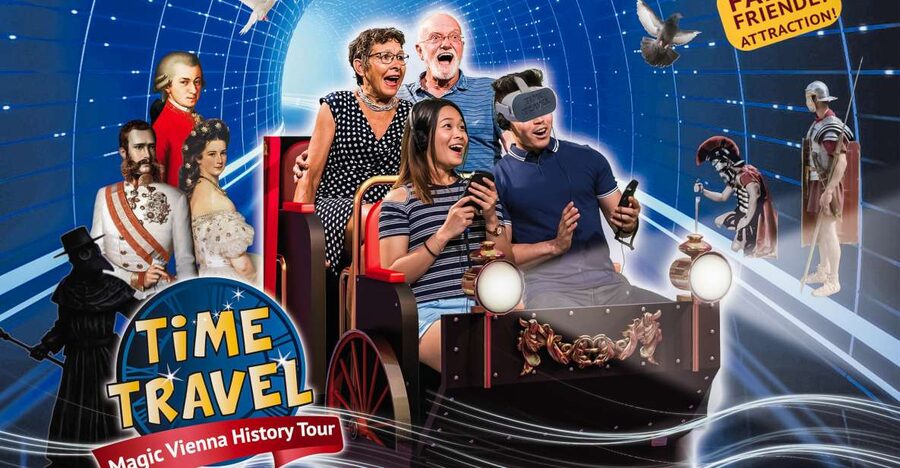
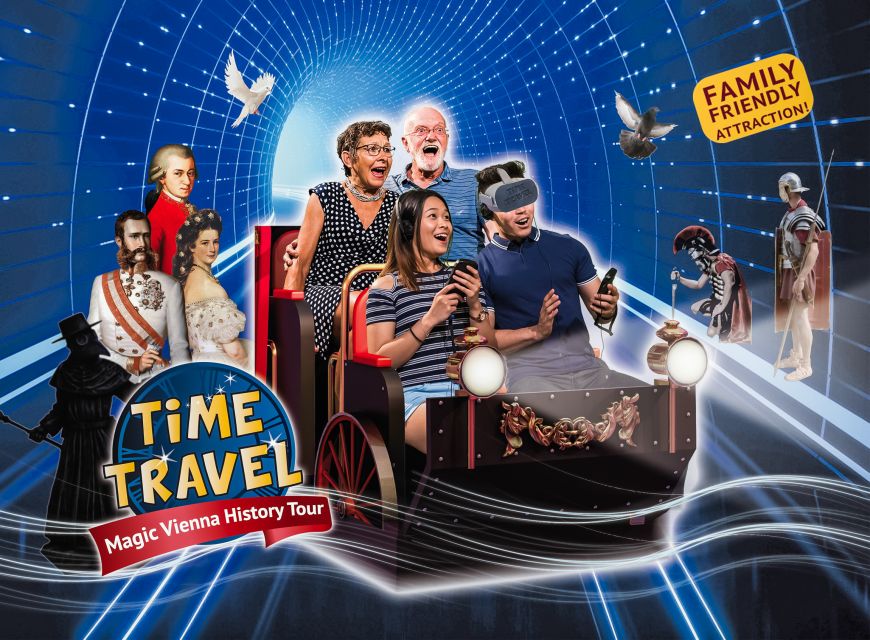
History gets a fun makeover here. Vienna Time Travel packs 2,000 years of the city into one brisk hour, using multimedia rooms, animated figures, a 5D cinema, virtual reality, and a mock air raid shelter. I especially like the strong variety of scenes and the way the experience makes Vienna’s past easy for children to follow. The central location is another plus, just steps from the Hofburg, Graben, Kohlmarkt, and Stephansplatz.
The main drawback is simple: this is a staged entertainment attraction, not a traditional walking tour led by a historian. If you prefer a live guide or original objects, the heavy use of screens, projections, sound, and special effects may feel too polished. The attraction also has about 50 stairs over two levels, with no elevator, so it is not suitable for wheelchair users or people with mobility impairments.
Key points to know before you go
- A fast trip through 2,000 years: The story runs from the Roman camp of Vindobona to modern Vienna in about one hour.
- Several kinds of special effects: Expect a portrait gallery, 5D cinema, virtual reality, a bomb shelter scene, and a simulated flight over the city.
- Excellent first-day activity: The broad overview helps you recognize Vienna’s rulers, music, wars, and famous buildings during the rest of your stay.
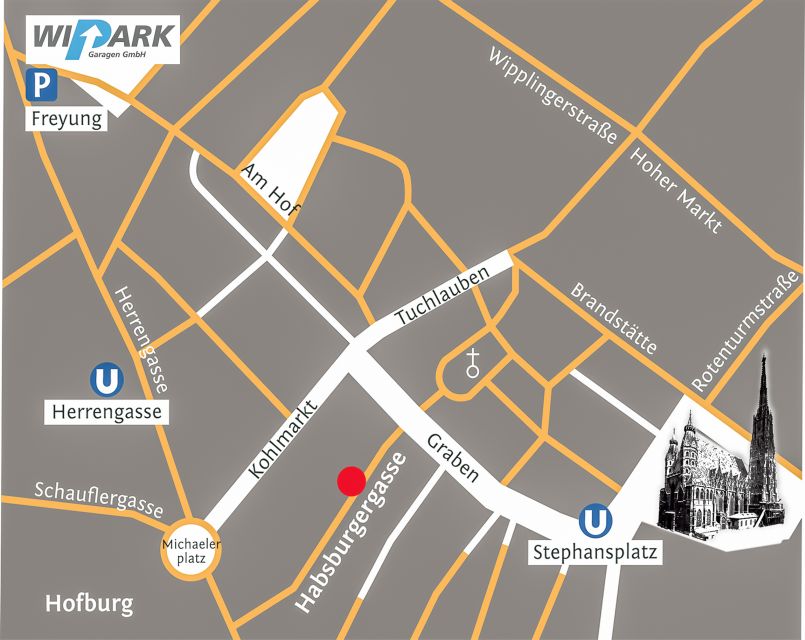
- Right in the historic center: The entrance at Habsburgergasse 10A is about 200 meters from the Hofburg and 100 meters from Graben, Kohlmarkt, and Stephansplatz.
- Best for families and mixed-age groups: Children get action and visual effects, while adults get a quick introduction to the city’s story.
- Plan for stairs: There is no elevator, and around 50 steps must be managed across the attraction.
Why this one-hour history show works
Vienna can be a tough city to understand on a short visit. The palaces, churches, composers, emperors, wars, and grand avenues all compete for attention. Time Travel Vienna gives you a quick framework before you start exploring the city on foot.
I like the decision to tell the story in separate rooms rather than through one long film. You move from one setting to another, and each room covers a different period or idea. That change of pace keeps the hour moving. It also helps younger visitors, who may not want to sit still through a conventional historical presentation.
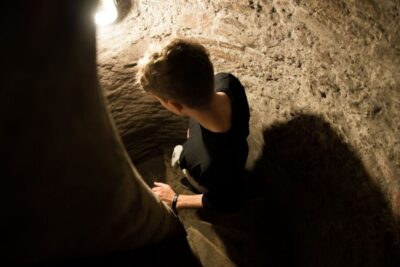
The attraction is located in the old cellars of St. Michael’s monastery. That setting adds a bit of atmosphere before the technology even begins. The route moves through the historic center below street level, then uses modern entertainment equipment to recreate scenes from Vienna’s past.
This is not designed to answer every question about Austrian history. Instead, it gives you the broad strokes: Roman beginnings, imperial power, Viennese music, the Second World War, the end of the war, and modern Vienna. I see it as a city orientation activity, not a substitute for the Hofburg museums or a full history book.
A few more history tours around the world worth a look
- History and Hauntings of Salem Guided Walking Tour
★ 5.0 · 14,564 reviews - Colosseum: Underground and Ancient Rome Tour
★ 4.7 · 12,691 reviews - Lisbon: History, Stories and Lifestyle Walking Tour
★ 4.8 · 10,902 reviews
Starting with Vindobona and the old city
The journey begins with Vienna’s ancient past and the Roman camp of Vindobona. This is a useful starting point because it reminds you that Vienna was not created only by the Habsburgs. The city’s position on the Danube helped make it important long before the imperial palaces appeared.
You move through scenes that show how Vienna changed over time. The exact level of detail is kept light, but the format makes the sequence easy to follow. Instead of studying a wall of dates, you see the city’s story broken into short, memorable episodes.
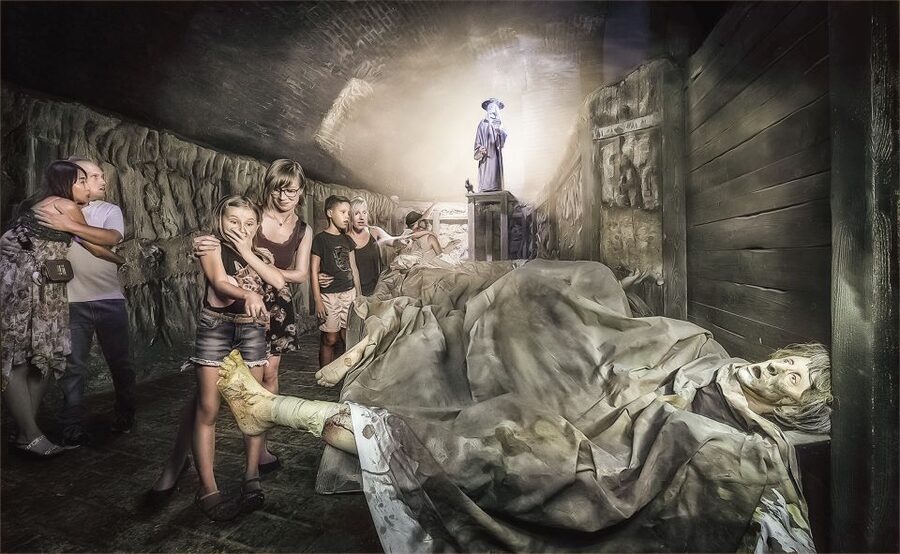
One especially effective moment recreates the Black Plague in Vienna. It is not a quiet museum display. The sound, setting, and visual presentation are meant to give you a sense of fear and uncertainty. For children, this can make the past feel real. For some adults, it may be more dramatic than expected, so keep that in mind if anyone in your group dislikes dark historical scenes.
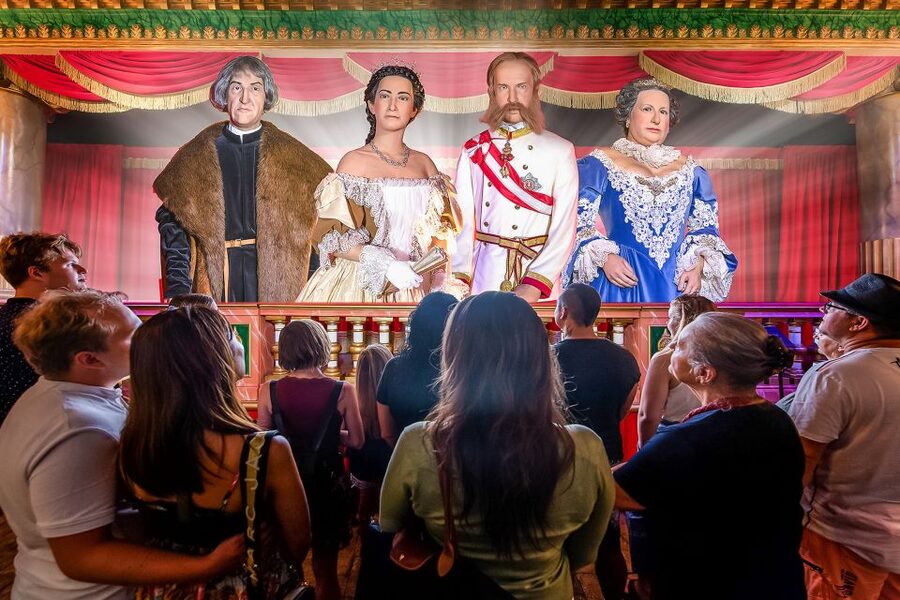
The attraction also uses animated figures to explain why the Habsburgs mattered to Vienna and the wider region. This is a helpful shortcut. You will not leave with a full family tree, but you should better understand why so many of Vienna’s grand buildings, court traditions, and public spaces are tied to imperial rule.
Meeting famous faces in the portrait gallery
The portrait gallery brings important people from Viennese history into the presentation. Instead of simply reading names on plaques, you hear figures speak and get a sense of their place in the city’s story.
This section is particularly useful if you arrive in Vienna without much background. Names connected with the court, music, politics, and public life can blur together during a busy trip. The portrait format gives each figure a short introduction and helps you connect people with the events around them.
The presentation is designed for speed. You will not stop for a long discussion at each portrait, and that is part of the bargain. Time Travel Vienna covers a huge span in only an hour. I found the brief scenes more useful as signposts than as complete biographies.
The attraction also introduces the imperial family directly. You get a playful look at the royal household and the nobility of the Viennese court. This works well before visiting the Hofburg because you will have a basic sense of the personalities and power structure that shaped the palace.
The 5D cinema and imperial Vienna
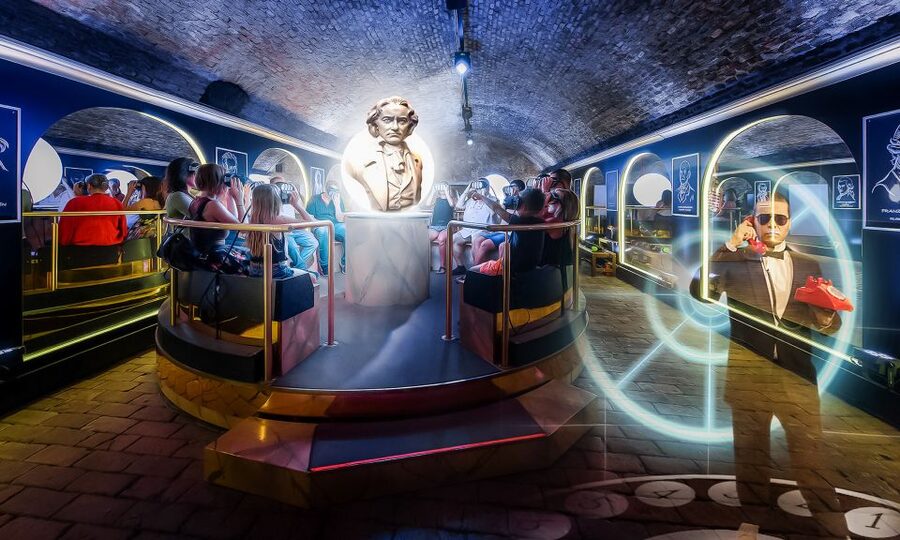
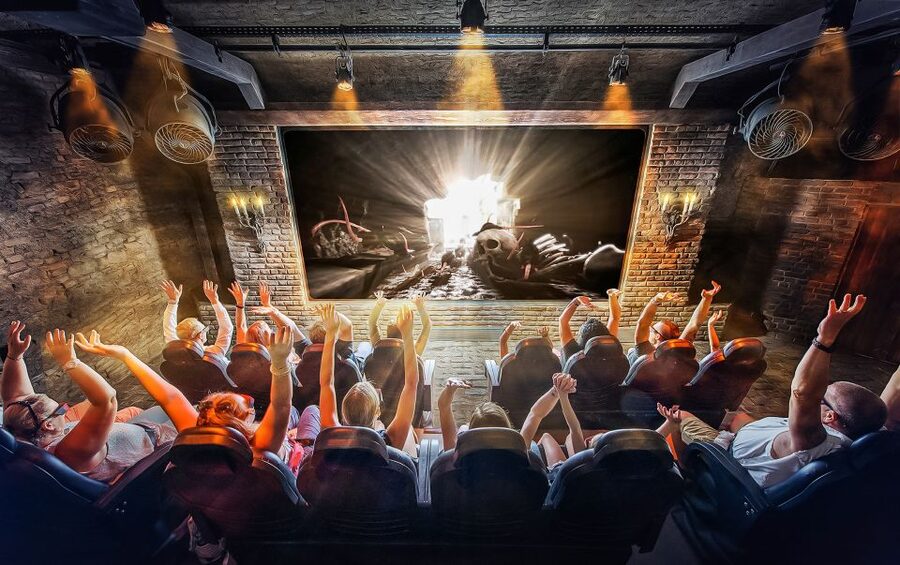
The 5D cinema is one of the most popular parts of the experience. It uses moving effects and other physical sensations to make you feel as if you are passing through scenes from old Vienna.
The film is short, which some people may find disappointing. I would have enjoyed a little more time in this section, since the effects are one of the attraction’s strongest features. Still, the brief length helps the overall hour stay lively. You are not stuck in one theater for half the tour.
The production gives you a sense of ancient and imperial Vienna through sets, sound, movement, and visual effects. Think of it as historical storytelling with a theme-park touch. You are encouraged to react and feel, not simply absorb facts.
This part suits families especially well. Children who might ignore a traditional display usually understand the basic idea of a city changing under Roman, royal, and modern influence when they can see and feel the story unfolding around them.
Same place, a different slice of the past:
- London Small Group Tour of Historical Pubs
★ 5.0 · 10,422 reviews - Prague: Oldtown, Medieval Underground & Dungeon History Tour
★ 4.3 · 10,277 reviews - Charleston’s Old South Carriage Historic Horse & Carriage Tour
★ 5.0 · 10,023 reviews - Edinburgh: Edinburgh Castle Guided History Tour with Tickets
★ 4.8 · 9,933 reviews
Vienna’s music story through virtual reality
Vienna’s music history gets its own virtual reality section. With VR glasses, you enter a simulated world that traces the city’s musical development.
This is a smart choice for Vienna. Music is not a side note here. It is one of the main reasons people come to the city, and a short visual experience helps explain why composers and performance became so closely tied to Vienna’s identity.
The VR segment is more sensory than academic. You should not expect a detailed musicology lesson or an extended concert. Instead, it gives you a playful impression of the city’s musical life and adds another type of technology to the route.
A small practical point: the attraction moves groups from room to room, so you will not spend the whole visit wearing the headset. That variety is welcome. One minute you are looking at figures from the past, and the next you are seeing Vienna through a virtual world.
War, the air raid shelter, and the return to peace
The tone changes sharply with the Enemy Aircraft scene. You enter a setting designed to feel like a bomb shelter while the Second World War seems to unfold around you.
This is among the more memorable sections because it drops you out of palace life and into the fear experienced by ordinary people. Vienna’s wartime story can be difficult to cover in a short attraction, but the shelter scene gives the period a physical setting rather than treating it as a list of dates.
The effects can feel intense, especially for younger children. Parents should use their judgment. The experience is educational, but it is still entertainment built around sound and simulated danger.
The next section turns toward the end of the war and Austria’s return to peace. You hear Chancellor Figl’s moving speech amid the battered remnants of Vienna. This scene provides an emotional pause after the air raid shelter and helps mark the city’s relief after years of destruction.
I appreciate that the story does not stop at imperial Vienna. The modern city makes more sense when you also see the damage caused by war and the difficult path toward rebuilding. The attraction gives that transition only a short treatment, but the contrast is powerful.
Flying over present-day Vienna
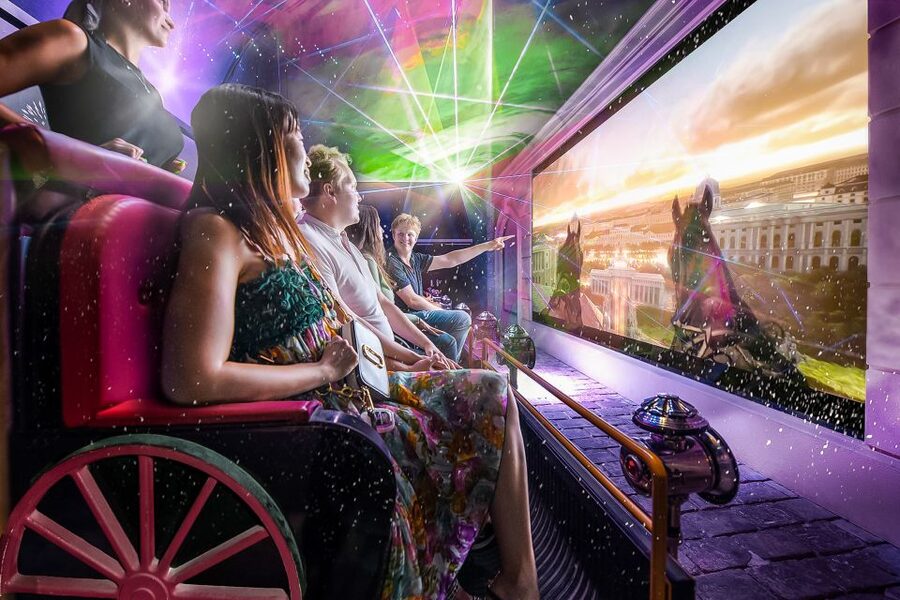
The final scene offers a simulated flight above the roofs of Vienna in a virtual horse-drawn carriage. It is a light, cheerful finish after the darker wartime rooms.
This closing sequence gives you a wide view of the city rather than another close-up historical episode. You get a playful reminder of Vienna’s rooftops, streets, and grand urban character. It also sends you back into the center with the city fresh in your mind.
Do not expect a real sightseeing flight or a substitute for seeing Vienna from a tower. The value is theatrical. It acts as a finale that gathers the past and present into one image.
Is $27 good value for one hour?
At $27 per person, this is not the cheapest way to spend an hour in Vienna. You can walk around the historic center for free, and several major churches and public spaces cost little or nothing to see from outside.
The value here comes from the number of formats packed into a short visit. You receive admission, a multilingual audio guide, moving effects, VR, theatrical rooms, and a guided route through the attraction. If you enjoy interactive entertainment, the price is reasonable for a central Vienna activity that works in any weather.
I would not choose it as the only historical experience on a long Vienna visit. The Hofburg, museums, churches, and streets provide more original architecture and objects. But the attraction gives you a useful overview without demanding half a day, and that makes the cost easier to justify.
It is particularly good value for a family group that wants one activity all ages can share. Adults get context, children get action, and nobody has to commit to a three-hour lecture.
Who should book, and who should skip it?
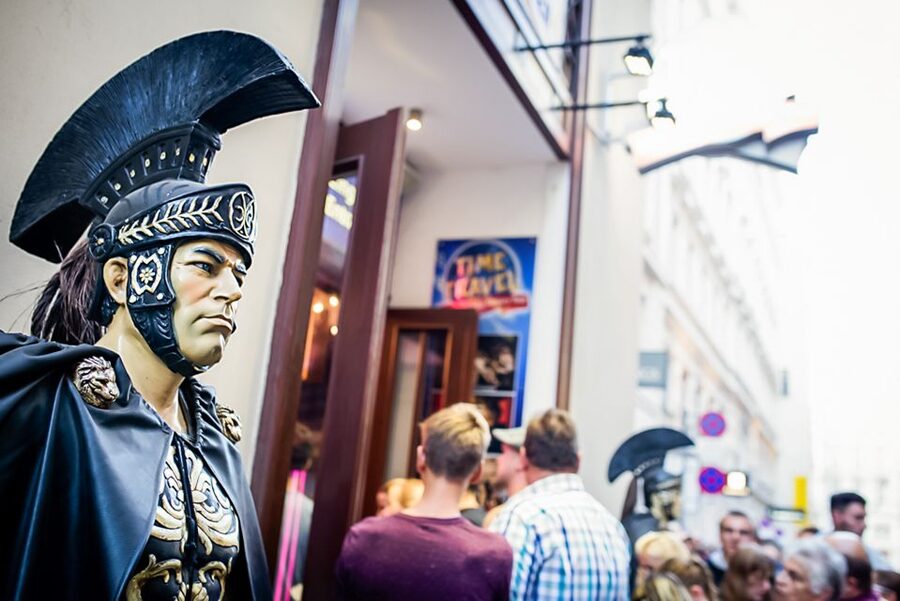
I would recommend Time Travel Vienna for families, first-time visitors, and anyone who wants a quick introduction before exploring the city. It also works well as a rainy-day stop or a short break between nearby sights.
You are likely to enjoy it if you like:
- Short, carefully timed attractions
- Visual storytelling and special effects
- Family activities with educational content
- A broad introduction to Vienna
- VR and interactive entertainment
- Central locations that fit easily into a sightseeing day
You may want to skip it if you prefer quiet museums, original artifacts, or detailed historical interpretation. The attraction tells a simplified story, and its technology sometimes takes center stage.
The route is also unsuitable for wheelchair users and people with mobility limitations. There is no elevator, and you must manage approximately 50 steps across two levels. Sturdy shoes are sensible, but the key issue is the stairs rather than walking distance.
Location, timing, and useful planning tips
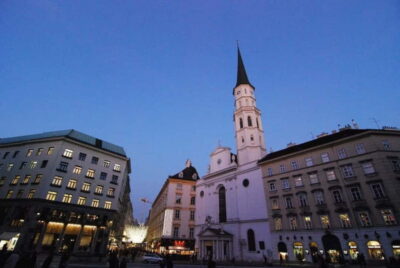
Time Travel Vienna is at Habsburgergasse 10A in Vienna’s first district. From the entrance, it is about 200 meters to the Hofburg and roughly 100 meters to Graben, Kohlmarkt, and Stephansplatz.
The easiest public transport options are the U1 to Stephansplatz or the U3 to Stephansplatz or Herrengasse. If you drive, reduced-price parking is available at the Freyung garage. I would still favor public transport because the attraction sits in the historic center.
The full experience lasts about one hour. Reservations are strongly recommended, and the last admission is at 19:00. Arrive in good time rather than treating this like a sight you can casually enter at any moment.
For the best use of your day, I would pair it with nearby sights. Start here, then walk to the Hofburg, Stephansplatz, or the surrounding shopping streets. Another attraction, Sisi’s Amazing Journey, is directly across from Time Travel Vienna, so combining the two can make a convenient imperial-themed visit.
The audio guide is multilingual, but you should check the available language options when booking. Discounts require suitable identification. Pets are not allowed, and video recording is prohibited.
Should you book Vienna Time Travel?
Book it if you want a lively one-hour introduction to Vienna, especially with children or a mixed-age group. The strongest reasons are the changing rooms, the 5D cinema, the VR music sequence, and the clear movement from Roman Vienna through imperial rule, war, peace, and the present day.
I would schedule it near the beginning of your stay. The experience will not replace time in Vienna’s palaces and museums, but it can help those later visits make more sense. If you expect a serious museum with original objects and long explanations, choose something else. If you want history presented with motion, sound, and a little theatrical fun, $27 is a fair price for a well-organized hour in the center.
FAQ
How long does Vienna Time Travel last?
The experience lasts about one hour.
Where is Time Travel Vienna located?
It is at Habsburgergasse 10A in Vienna’s historic center, about 200 meters from the Hofburg and 100 meters from Graben, Kohlmarkt, and Stephansplatz.
How can I reach the attraction by public transport?
You can use Vienna’s U1 line to Stephansplatz or the U3 line to Stephansplatz or Herrengasse.
Does the experience include an audio guide?
Yes. Admission includes a multilingual audio guide.
Is the attraction wheelchair accessible?
No. The route covers two levels with about 50 steps, and there is no elevator. It is not suitable for wheelchair users or people with mobility impairments.
Can I cancel my reservation?
Yes. You can cancel up to 24 hours in advance for a full refund. A reserve-now, pay-later option is also available.
Just added around the world
- Visit 16 Sites Key Historical Sites And Experience Cobh Rebel Tours★ 5.0 · 167 reviews
- The Queenstown Story @ Cobh Heritage Centre , Great Stories of Emigration.★ 4.5 · 181 reviews
- Historical Bicycle Tour of Dunedin★ 5.0 · 44 reviews
- Cincy Brunch History and Streetcar Tour with Riverside Food Tours★ 5.0 · 108 reviews
- 2.5 Hour Kayaking with Manatee and History Tour in Tarpon Springs★ 5.0 · 24 reviews
- Private Tour in Chichen Itza Official History Guide★ 5.0 · 36 reviews
- Dazu Ancient Rock Carvings Private Tour Extension★ 5.0 · 24 reviews
- Chicago River Architecture Tour Aboard a Historic Yacht★ 5.0 · 45 reviews
Vienna History Tours, compared.

Vienna Historic Center Small Group Walking Tour
Read our review →
Skip-the-Line Schonbrunn Palace Guided Tour and Vienna Historical City Tour
Read our review →
Vienna Mozart Concert in Historical Costumes at the Musikverein
Read our review →
Browse the lists this tour appears in