
Review · ILE-DE-FRANCE
Paris: Le Marais & Montmartre Jewish History Walking Tour
Paris reveals itself slowly here. This 210-minute walk links Jewish landmarks in Le Marais with the artists’ streets of Montmartre, giving you history, memory, food, and grand views in one outing. I like the small groups of up to nine and the way guides such as Benjamin, Benoit, Pierre-Louis, and Achilles bring difficult subjects to life without turning the tour into a lecture. The main drawback is the pace: three and a half hours, hills, rain, cobbles, and a public transport transfer make this a poor fit for anyone with limited mobility.
I also like the tour’s honest range. You see the exterior of Agoudas Hakehilos Synagogue, pause at the Shoah Memorial, follow Jewish life through old streets, then hear about Jewish artists and writers in Montmartre before finishing at Sacré-Cœur’s wide Paris views. Just arrive early. Meeting points can be hard to spot, and one person lost about ten anxious minutes because the guide did not have the expected orange flag.
Key points at a glance
- Two neighborhoods, one connected story: Begin with Jewish Paris in Le Marais, then shift to Jewish artists and writers in Montmartre.
- A small group makes a difference: With no more than nine people, you can ask questions and hear the guide clearly.
- Agoudas Hakehilos is an exterior stop: Hector Guimard’s Art Nouveau synagogue is admired from outside, not visited indoors.
- The Shoah Memorial adds a solemn pause: The memorial’s wall of names and crypt give the tour emotional weight.
- Public transport is part of the plan: Tickets are included for the 30-minute transfer between the two districts.
- You finish above the city: Sacré-Cœur and Square Louise-Michel provide a strong visual ending, with broad views across Paris.
Why this Paris walk is worth your afternoon
At $80 per person, this is not a bargain-priced stroll. It is a guided half-day experience with a small group, an English-speaking local guide, public transport tickets, and a subject that can be hard to understand from plaques and guidebooks alone.
I think the price makes sense if you want context rather than a quick photo stop. The Jewish quarter of Le Marais is not a preserved museum district with every old building intact. Much of the story is about what used to be there, how the community changed, and how memory survives alongside modern shops, cafés, galleries, and restaurants.
The tour also avoids keeping you in one neighborhood for the whole afternoon. Le Marais gives you medieval and modern Jewish Paris. Montmartre shifts the focus toward creative life in the late 19th and early 20th centuries. That change of mood keeps the walk from feeling repetitive.
The rating is strong at 4.8 from 170 reviews, and the praise is remarkably consistent about the guides. Benjamin is repeatedly described as clear, courteous, and well prepared. Benoit is praised for making history relevant and offering useful food advice. Pierre-Louis, Achilles, Pilu, and other guides also receive high marks for warmth, clear English, and thoughtful handling of painful subjects.
More History Walking Tours in France
- Paris: Dark History and Ghostly Guided Walking Tour
★ 4.7 · 1,000 reviews - Paris City of Fashion History Private Guided Walking Tour
★ 5.0 · 221 reviews - Paris City Center w/ Notre Dame interior | Exclusive Walking Tour
★ 5.0 · 190 reviews
Starting in Le Marais near BHV or L’Elephant du Nil
You may begin at BHV Marais or L’Elephant du Nil, depending on the option you book. Check the exact meeting point carefully, since BHV has four entrances and that caused confusion for one participant.
Plan to arrive 15 minutes early. You cannot join after the walk has begun, and locating a guide in central Paris can take longer than expected. Meeting instructions are especially important here because the guide may not carry the marker you expect. One participant had been told to look for an orange flag, but the guide did not have one.
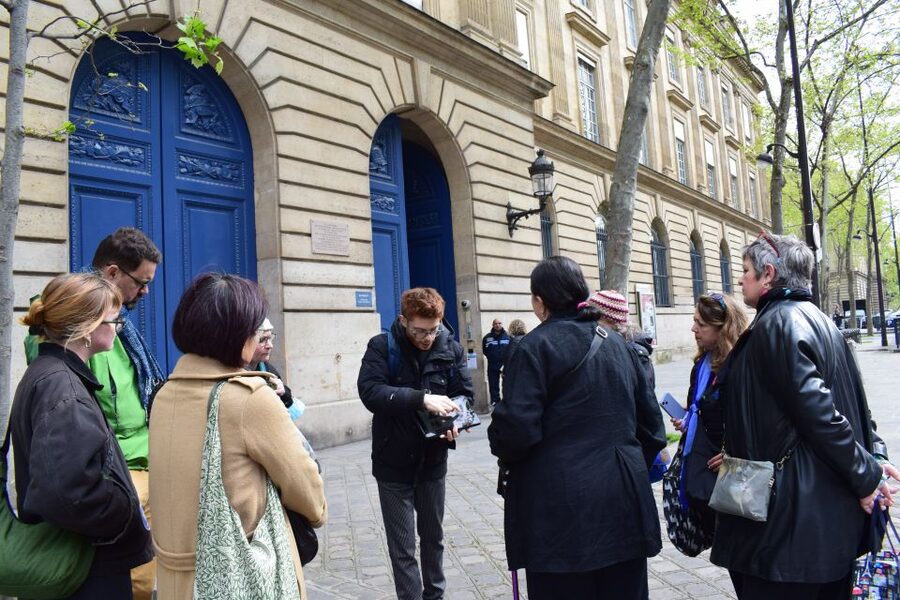
Once the group is together, the guide sets the tone. This is a serious subject, but the strongest guides balance facts with stories and room for questions. Several people praised guides who handled antisemitism, wartime persecution, and current sensitivities with care rather than sensationalism.
Le Marais: from old Jewish streets to modern Paris
The first 90 minutes focus on Le Marais, Paris’s best-known Jewish district. Your guide connects the neighborhood to Jewish life across many centuries, from the Middle Ages to the present.
The important thing here is to look beyond a single building. Jewish Paris was shaped by daily life: trade, family, worship, food, movement, and community. The walk helps you see how those parts fit into the wider story of Paris.
You pass through streets associated with the old Jewish quarter and see places where Jewish-owned businesses and community life continue. The area has changed. It is now also known for independent fashion, galleries, cafés, food shops, and a large LGBTQ community. That mix is part of the appeal, but it means you should not expect a fully preserved historic quarter.
One participant found the district too gentrified and homogenized for the tour they had imagined. That is a fair warning. The value lies less in seeing an untouched Jewish neighborhood and more in understanding how a community has adapted, been displaced, returned, and continued.
Le Village Saint-Paul
Le Village Saint-Paul is included as a guided stop in the Marais portion. The guide uses the streets and buildings around you to explain the district’s changing character and place Jewish life within the wider development of the neighborhood.
Do not expect a long indoor visit here. This is a walking stop, so comfortable shoes matter. The tour works best if you listen closely while also noticing the details around you: street layouts, older façades, businesses, and the contrast between historic memory and present-day Paris.
More History Walking Tours in Paris
- Historic Paris Walking Tour in English
★ 4.9 · 78 reviews - Paris: French Fashion History Walking Tour
★ 4.9 · 37 reviews - Paris Jewish History 2-Hour Private Guided Walking Tour
★ 4.6 · 32 reviews - Paris: Fashion History Walking Tour in the Heart of Paris
★ 4.9 · 22 reviews
Agoudas Hakehilos Synagogue
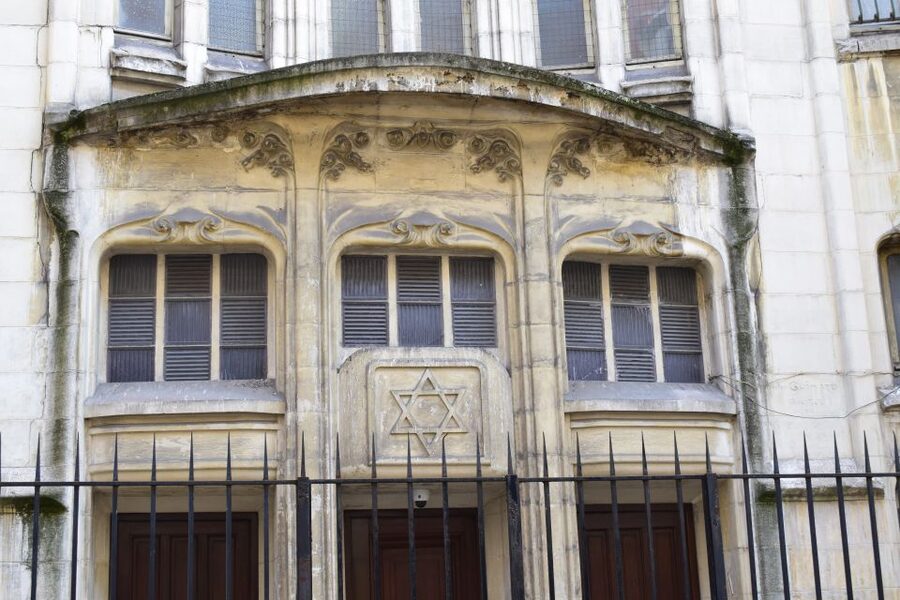
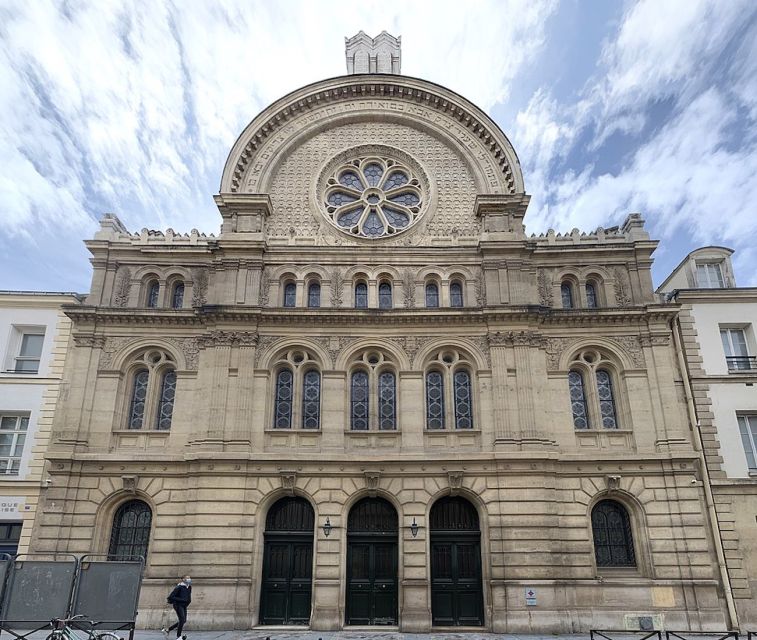
The exterior of Agoudas Hakehilos Synagogue is one of the clearest architectural highlights. Designed by Hector Guimard, better known for his Art Nouveau Metro entrances, the synagogue has a distinctive style that makes it easy to miss if you rush past.
Your guide explains its connection to Jewish life in the Marais and points out the building’s design. This is an exterior visit only, so set your expectations correctly. You will not enter the synagogue, and entrance to monuments and historic sites is not included.
Still, this is a worthwhile pause because architecture gives the history a physical anchor. After hearing about community life, migration, and changing fortunes, you can connect those ideas to a real building on a real street.
The Shoah Memorial
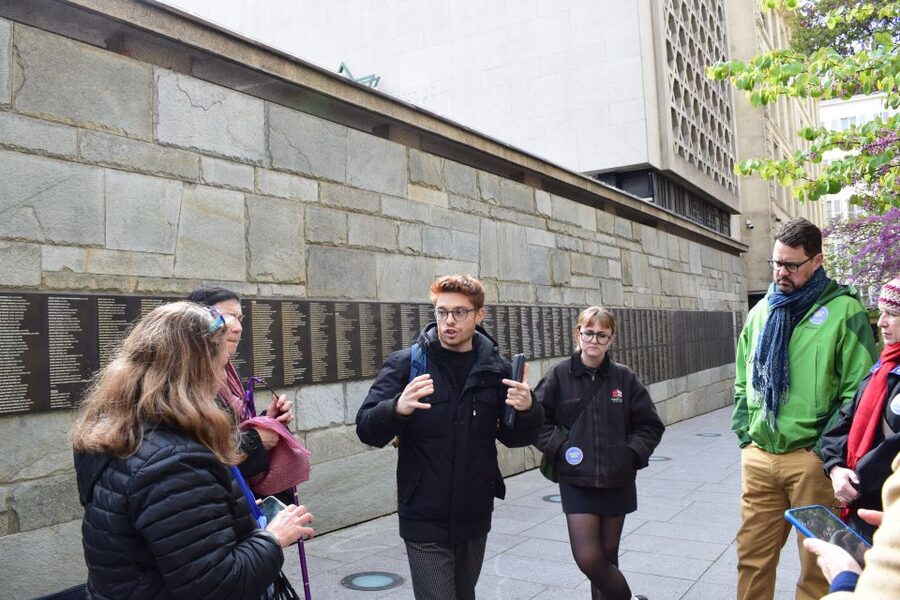
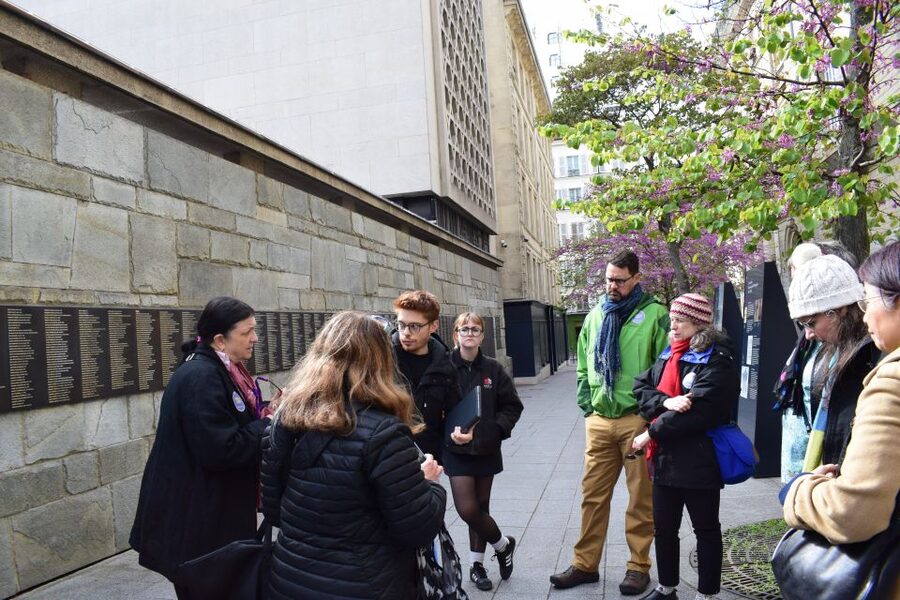
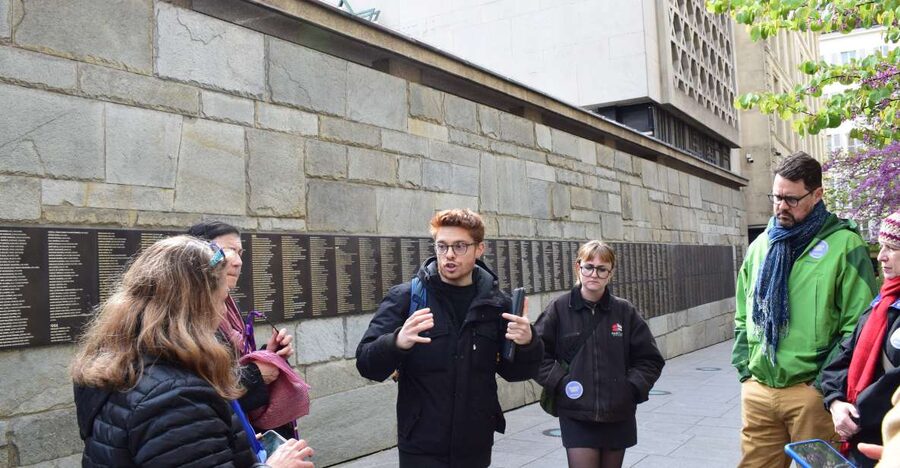
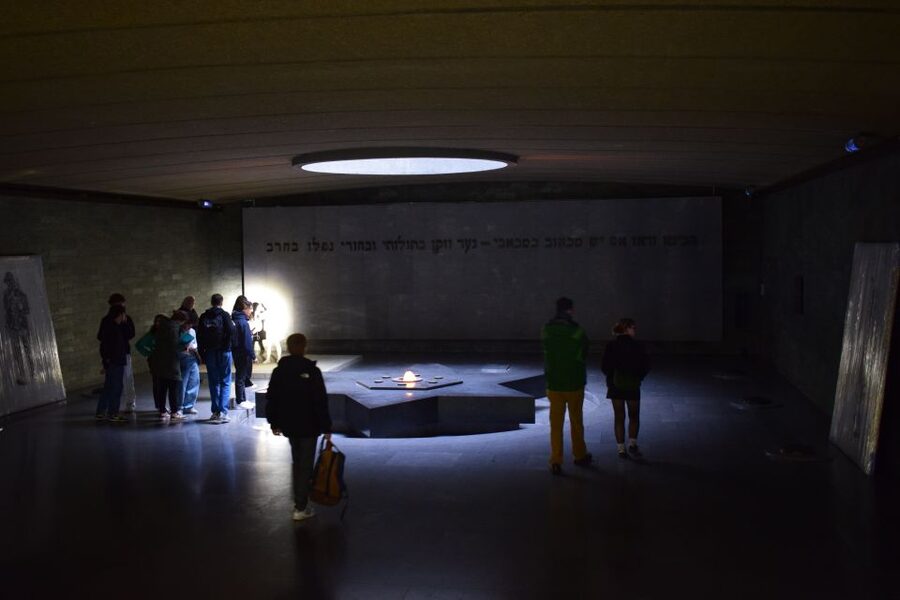
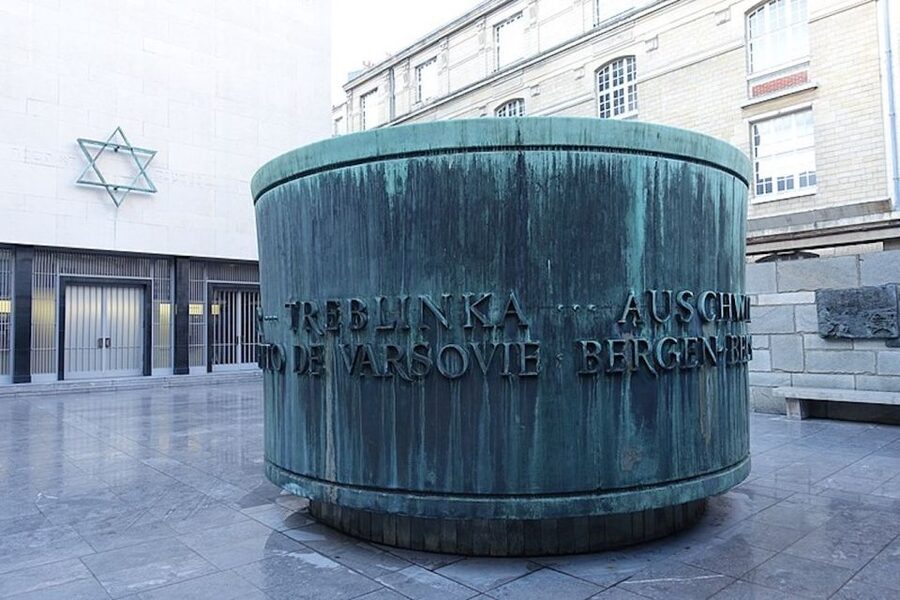
The Shoah Memorial is the most solemn part of the Marais walk. The tour visits it from the exterior, including the memorial wall of names and the crypt area described by several participants.
This stop brings the history of the Holocaust into direct view. The guide also explains the significance of French citizens who helped Jewish people escape during the Second World War. The subject is painful, and the tour does not try to soften it with easy answers.
I would give this section your full attention. It is not a quick photo stop. Several guides were praised for treating the material with sensitivity, especially when discussing persecution, collaboration, resistance, and the continuing importance of memory.
The memorial can also change your view of the streets you have just walked. Le Marais is not only a pleasant district for falafel and shopping. It is a place where ordinary streets carry layers of loss, survival, and renewal.
The 30-minute transfer to Montmartre
After Le Marais, the group travels by public transport toward Montmartre. Your tickets are included, and the transfer takes about 30 minutes.
This break is useful. It gives you a chance to rest your feet and reset before the second half. It also makes the tour feel like two connected walks rather than one long march through similar streets.
The practical issue is that you need to stay with the group and keep an eye on the time. Paris public transport can be busy, and the tour is not suited to anyone who finds transfers or quick street crossings difficult. One person also advised guides to watch the pace around bikes and traffic, a sensible point in a city where cycle lanes and moving vehicles can appear suddenly.
Montmartre at 7 Rue Ravignan and the Bateau-Lavoir
Montmartre changes the subject from Jewish neighborhood life to Jewish artists, writers, and thinkers who helped shape Paris’s creative world in the late 19th and early 20th centuries.
The walk includes 7 Rue Ravignan and the Bateau-Lavoir. These stops connect the group to studios, cafés, writers, and artistic circles that made Montmartre a magnet for new ideas. The guide explains how Jewish voices formed part of that cultural life rather than treating Jewish history as something separate from the wider story of Paris.
The Bateau-Lavoir is especially useful as a reminder that Montmartre’s artistic identity grew from people working close together, exchanging ideas, and trying new forms. You will hear about the people and creative circles linked to the area, but this tour does not include museum admission or an indoor studio visit.
That distinction matters. Montmartre has plenty of museums and interiors you could visit separately, but this walk is about streets, locations, and interpretation. You are learning why the places mattered, not spending time inside each one.
Passing the Musée de Montmartre and 16 Rue du Mont-Cenis
The route passes the Musée de Montmartre and continues to 16 Rue du Mont-Cenis. These stops deepen the picture of Montmartre as a place where artists and writers worked, met, and built reputations.
The guide’s storytelling is central here. Without explanation, many of these addresses can look like ordinary Paris streets. With context, you begin to see how cafés, studios, and social circles helped produce the neighborhood’s artistic identity.
This section is less emotionally heavy than the Shoah Memorial, but it still carries an important theme: creativity and resilience. The tour shows how Jewish identity and artistic expression were part of modern Paris, not a footnote to it.
Expect hills and a fair amount of walking. Montmartre is not flat, and the final ascent toward Sacré-Cœur can be tiring after the Marais and the transfer. You will want shoes with solid support, and wet weather can make the streets harder to manage.
Sacré-Cœur and Square Louise-Michel
The tour ends at Sacré-Cœur Basilica and Square Louise-Michel. The basilica is a sightseeing stop rather than an included indoor visit, so you should not expect admission or a guided interior tour.
The reward is the view. From the hill, Paris opens out below you, giving the afternoon a broad, memorable finish. After hours of close streets, memorials, addresses, and stories, the panorama provides room to think about the city as a whole.
The final reflection links Jewish identity and artistic expression to Montmartre’s place in Paris. It is a thoughtful way to end, though it is not the best point if you need to return quickly to another appointment. You finish at Square Louise-Michel, not back at the original Marais meeting point.
What the guides do best
The strongest part of this tour is the human explanation. The subject covers more than a thousand years, and a guide has to connect medieval Jewish life, modern community life, Nazi occupation, memory, migration, and art without losing the group.
Benjamin received repeated praise for his clear delivery and careful treatment of difficult issues. Benoit was appreciated for combining history with practical Paris advice, including food recommendations. Pierre-Louis was praised for his English, communication skills, and ability to make the past relevant.
Achilles also made a strong impression by keeping a group engaged during very hot weather. Pilu, Pierre, Lucien, Elliot, Matthieu, and others were described as warm, prepared, and easy to question.
That range of guide names means your exact experience depends partly on who leads the walk. The common thread is a guide who can answer questions and adjust the explanation to the group. One participant appreciated a guide who changed the pace, allowed time to replace camera batteries, and responded to personal interests.
A small group helps. With up to nine people, you can hear the guide, ask follow-up questions, and avoid the impersonal feel of a large group. Private options are also available if you want more control over the pace and emphasis.
Food, weather, and walking advice
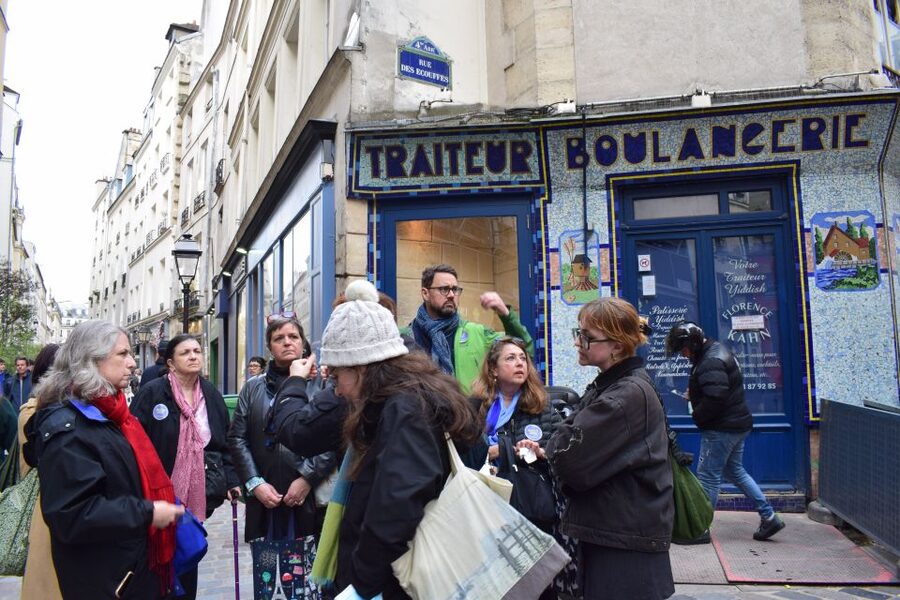
The tour does not include food, but the route finishes near Jewish-owned restaurants and food shops. Falafel came up more than once as a good post-tour choice, and Benoit was praised for offering food advice.
Bring water and dress for the forecast. The walk continues in rain, and one participant enjoyed it despite a downpour. Another group managed extreme heat, but the combination of sun, hills, and three and a half hours on foot can still wear you down.
This is not suitable for wheelchair users or people with mobility impairments. The walk includes uneven city streets, hills in Montmartre, public transport, and a final ascent. Even if you normally walk well, consider how you feel after a full day of sightseeing.
Who should book this walk?
You should book it if you want Jewish history tied to actual streets, buildings, memorials, and cultural settings. It suits first-time visitors who want more than postcard Paris, as well as returning visitors who have already seen the major monuments.
It is especially useful for people interested in French Jewish history, the Holocaust and its memory, Jewish food and community life, or the connection between identity and art. The small group also works well if you like asking questions.
I would skip it if you want extensive indoor access to synagogues and museums. I would also avoid booking it late in an exhausting sightseeing day. The walk is long, the subject demands attention, and Montmartre adds real hills.
Should you book the Jewish Paris walking tour?
For most visitors interested in Jewish Paris, I think this is a worthwhile use of $80. The value comes from the guide, the small group, the thoughtful connection between Le Marais and Montmartre, and the way the Shoah Memorial and Sacré-Cœur give the route both gravity and scale.
Book it for an early or flexible afternoon, arrive 15 minutes ahead, confirm the exact meeting entrance, and wear good shoes. If you want a serious, human explanation of Jewish life in Paris, with art, memory, architecture, and city views along the way, this tour earns its place on your schedule.
FAQ
How long does the Jewish history walking tour last?
The tour lasts 210 minutes, or three and a half hours.
What neighborhoods does the tour visit?
It visits Le Marais and Montmartre.
Is the tour offered in English?
Yes. The live tour guide language is English.
How large is the group?
The tour is designed for groups of up to nine people. Private and small-group options are available.
Does the tour enter the synagogues?
No. Indoor visits to the synagogues are not included. Agoudas Hakehilos Synagogue is viewed from the exterior.
Is admission to monuments included?
No. Entry to monuments and historic sites is not included.
Is public transport included?
Yes. Public transport tickets are included for the transfer between Le Marais and Montmartre.
Where does the tour meet?
The starting point may be BHV Marais or L’Elephant du Nil, depending on the option booked. Check the exact meeting point before departure.
Is the tour suitable for wheelchair users?
No. The tour is not suitable for wheelchair users or people with mobility impairments.
More Jewish Heritage Tours in Paris
- Budapest Jewish Heritage Memorial Walking Tour & Synagogue Entry
★ 5.0 · 568 reviews - Budapest: Jewish Heritage Guided Tour with Synagogue Ticket
★ 4.8 · 533 reviews - 3-Hour Porto Jewish Heritage Walking Tour with Local Guide
★ 4.5 · 396 reviews - Private Jewish Heritage Journey by Barcelona Dreaming
★ 4.8 · 383 reviews
Just added around Paris
- The historic district of Montmartre★ 4.9 · 66 reviews
- Paris: Fashion History Walking Tour in the Heart of Paris★ 4.9 · 22 reviews
- Paris: Khéops VR Experience – Explore Ancient Egypt★ 4.9 · 39 reviews
- Paris: French Fashion History Walking Tour★ 4.9 · 37 reviews
- Paris Jewish History 2-Hour Private Guided Walking Tour★ 4.6 · 32 reviews
- Montmartre Walking Tour: A Journey Through Art and History★ 5.0 · 21 reviews
- Historic Paris Walking Tour in English★ 4.9 · 78 reviews
- Explore the Marais: History, Art & Local Culture★ 4.6 · 105 reviews
Jewish Heritage Tours, compared.

Budapest Jewish Heritage Memorial Walking Tour & Synagogue Entry
Read our review →
Jewish Heritage Guided Tour with Synagogue Ticket
Read our review →
3-Hour Porto Jewish Heritage Walking Tour with Local Guide
Read our review →
Private Jewish Heritage Journey by Barcelona Dreaming
Read our review →
Anne Frank and the Jewish History of Amsterdam Private Tour
Read our review →
Lisbon Jewish Heritage and History – Private Tour Van
Read our review →
Browse the lists this tour appears in