
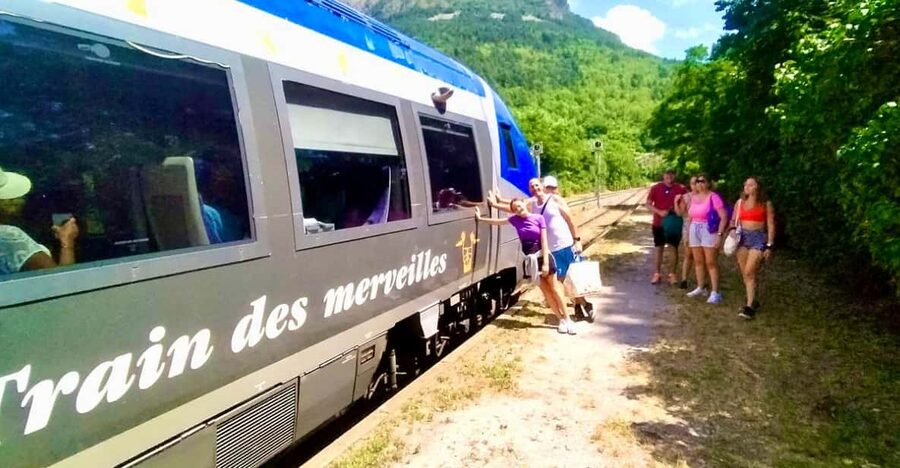
Review · SOUTH OF FRANCE
From Nice: Historic Train Ride & Alps Villages
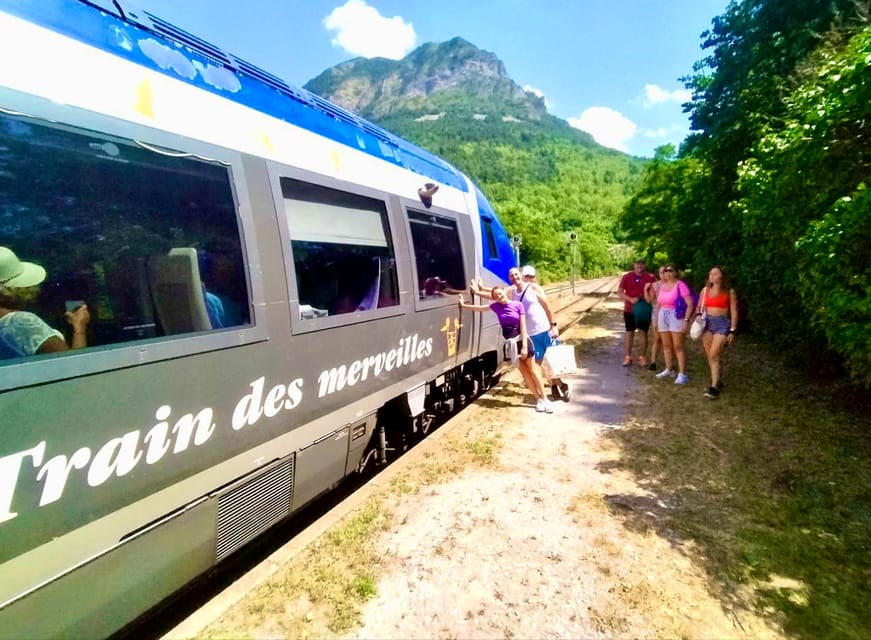
Leave the Riviera behind for a day. This historic mountain train carries you from Nice into a quieter corner of southern France, where medieval villages cling to hillsides, old fortifications tell borderland stories, and the scenery changes from city streets to steep valleys, forests, and Alpine peaks. I especially like the slow train ride and the chance to reach places that are awkward to visit without a car.
The other major strength is the local focus. You eat in a village restaurant or receive a picnic, walk through tiny streets, and hear about Baroque churches, castles, sandstone houses, and village customs from a small-group guide. The drawback is clear: this is a long, active day, with an early start, steep sections, and as much as 4 to 10 kilometers of walking.
The guides receive unusually strong praise, especially Cyril, Carmela, William, and Alex. Their stories, humor, and attention to individual needs can make a big difference. Just do not book this as an easy sightseeing ride. It is better suited to you if you enjoy hills, old stone, fresh air, and a full day with a group of no more than 15 people.
Key points to know before booking
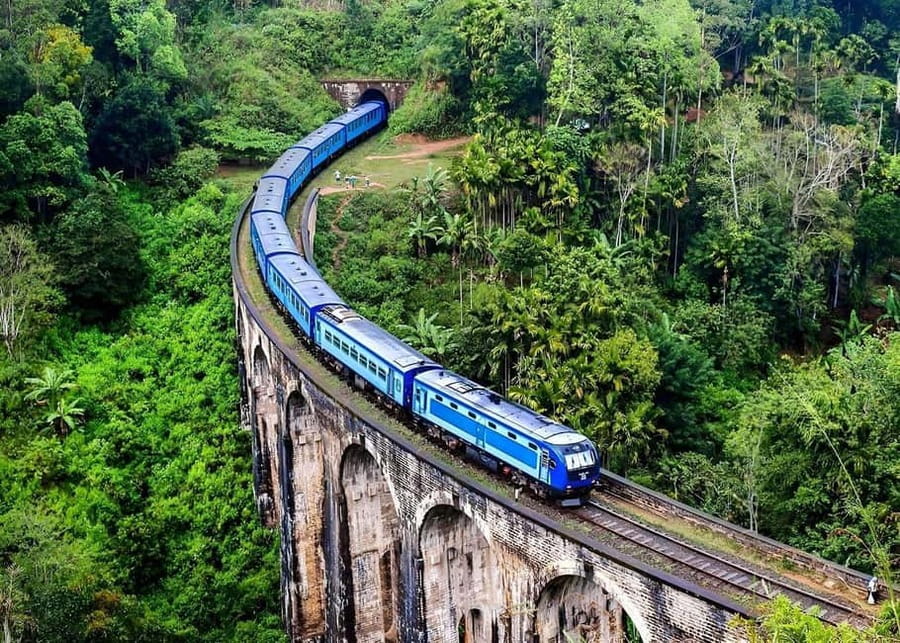
- The train is part of the attraction: The route passes through canyons, tunnels, viaducts, and valleys along one of the region’s major Alpine rivers.
- You visit two very different villages: One focuses on medieval defenses, a cathedral, and a hilltop stronghold. The other has sandstone streets, troglodyte homes, and optional walking routes.
- Lunch is built into the day: Depending on the option selected, you receive a picnic or eat at a traditional local restaurant.
- The walking is real: Reaching the castle can mean a 200-meter climb, and the longer hiking option can reach 12 kilometers.
- The route can vary: Past departures have included places such as La Brigue, Saorge, Tende, and Annot, with seasonal changes to the program.
- The guides are a major part of the value: Commentary is provided on the train, in the villages, and inside monuments, in English, French, Italian, or Spanish.
Why this train trip is different from a Nice day tour
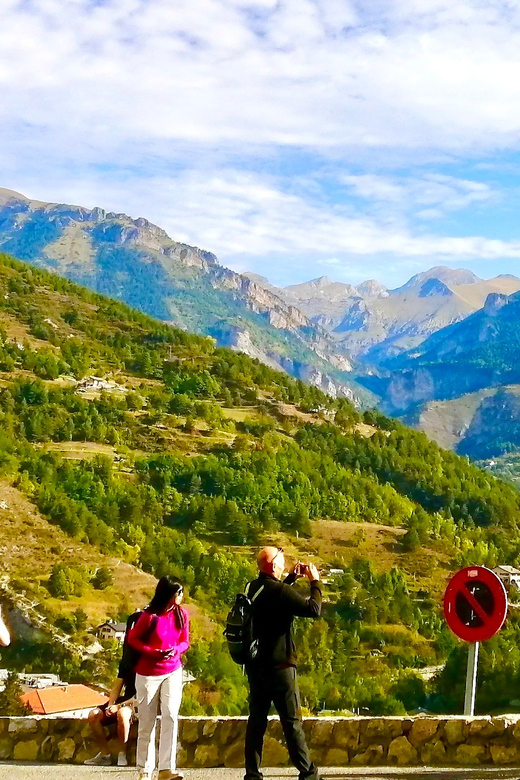
Many day trips from Nice follow the coast or visit the better-known towns of the French Riviera. This one heads inland. The change is striking: apartment blocks and Mediterranean light give way to narrow valleys, wooded slopes, rough rock faces, and high peaks in the distance.
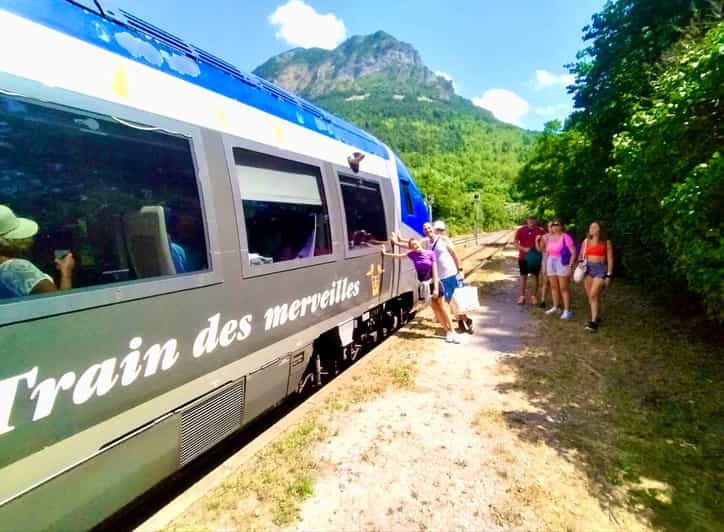
The railway itself gives the day its character. You are not simply being driven from one stop to another. The historic line moves slowly through tunnels and across viaducts, giving you time to watch the valley change outside the window. A guide points out notable places and explains how the railway connects remote communities with Nice.
The train ride takes about an hour and a half at the beginning of the day, followed by another shorter rail journey of roughly 30 minutes between village areas. Exact stops can vary, so you should check the date-specific program when booking. Previous outings have included La Brigue and Saorge, while other departures have featured Tende and Annot.
That variation is worth understanding. You are booking a mountain railway and village experience rather than a fixed city sightseeing route. The reward is a less polished, more local day. The tradeoff is that the exact combination of villages and activities may depend on the season, rail timetable, and chosen option.
More Train Trips in France:
- Puffing Billy Railway: Heritage Steam Train Journey
★ 4.6 · 1,195 reviews - Ancient Ostia Antica Semi-Private Day Trip from Rome by Train with Guide
★ 4.5 · 579 reviews - Dublin to Cork, Blarney Castle & Cóbh Heritage Centre by train
★ 4.5 · 510 reviews
Starting early at the Chemin de Fer de Provence
The meeting point is at the large blue gate of the Gare des Chemins de Fer de Provence. It is about a two-minute walk from the Libération stop on tram line 1, near the Halle de la Gare du Sud on Place Charles de Gaulle.
The guide is scheduled to meet the group at 7:30 in the morning with a blue sign reading Train Experience through the Alps. That early start matters. The standard full-day program returns to Nice at about 8:57 in the evening, so you should plan for a very full 11 hours.
There is no hotel pickup, and breakfast is not included. I would bring something small to eat before meeting the group, along with water, sun protection, and shoes that can handle steep paths and uneven village streets.
The group size is limited to 15. That is a useful middle ground. You get more personal attention than on a large coach tour, but you still have enough people for a social day. Several people who joined alone found the atmosphere welcoming, and the guides worked to include different ages, fitness levels, and interests.
The first train ride through canyons and viaducts
The opening rail journey is not just transport. It is the first major sightseeing section.
As the train moves away from Nice, the route follows valleys and passes through tunnels, over viaducts, and alongside the Alpine river system. The guide provides commentary and points out places to watch from the windows. It is worth paying attention to which side of the train offers the better view at each point.
The scenery is especially rewarding because it changes gradually. You see the built-up Riviera give way to steep slopes, scattered settlements, forest, and exposed rock. The slow pace also makes it easier to take photographs without spending the entire ride staring through a phone screen.
The train is comfortable according to the experience details and past feedback, but the ride can feel long if you expect a fast transfer. I consider that part of the appeal. This is an old-fashioned way to enter the mountains, and the journey helps you understand how isolated these villages once were.
The medieval village, cathedral, and hilltop castle
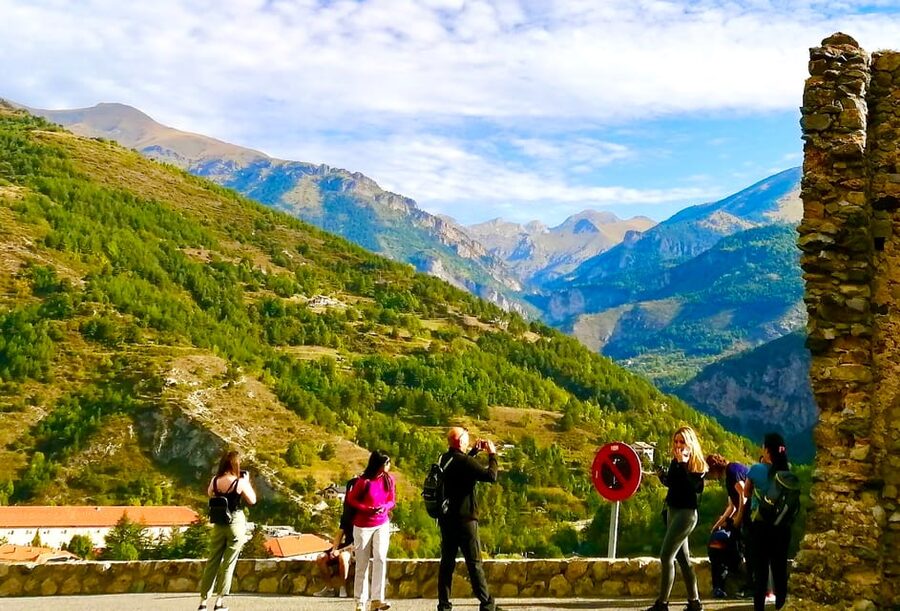
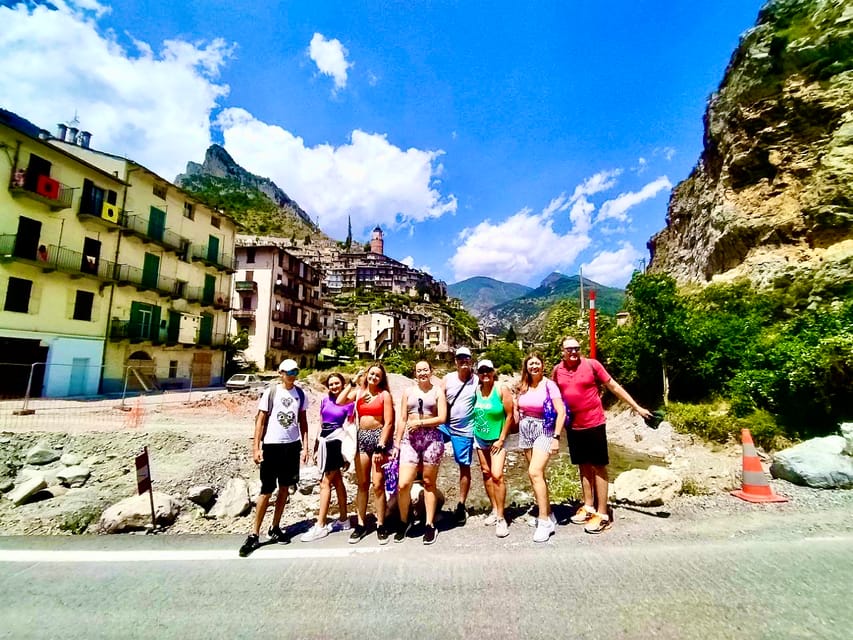
The first village is presented as one of France’s particularly attractive villages and is built around medieval architecture, fortifications, gates, and drawbridges. Depending on the date, the village may be La Brigue, Tende, or another stop on the route.
This part of the day is about more than pretty stone walls. You learn how the villages functioned as defensive settlements and how their position shaped local life. The fortified entrances and heavy walls make sense once you understand that these valleys were important routes through the mountains.
The Baroque church or cathedral is another highlight. The tour commentary covers the art and local religious traditions, helping you notice details you might otherwise pass by. You may also see early 20th-century features mixed into the older buildings, which gives the village a layered feel rather than a perfectly preserved museum quality.
The walk toward the castle is the demanding section. It takes about 30 to 45 minutes through gates and uphill paths, with roughly 200 meters of height difference. At the top, the views from the towers are a reward, but the climb is not minor. You need good physical condition, especially if the weather is warm or the stones are damp.
There are alternatives on some departures. One past group used a shuttle bus to reach the upper church area rather than walking all the way up. The exact availability of an alternative depends on the day, so tell the guide early if steep walking is a concern.
A few more history tours around France worth a look
- Paris: Louvre Museum Entry with History of Mona Lisa
★ 3.9 · 2,823 reviews - Paris: Dark History and Ghostly Guided Walking Tour
★ 4.7 · 1,000 reviews - Vieux Lyon Cultural & Historical Walking Guided Tour (English)
★ 5.0 · 942 reviews - Bordeaux: Historic Center & Chartrons District Bike Tour
★ 4.8 · 709 reviews
Lunch with local food, not a rushed roadside stop
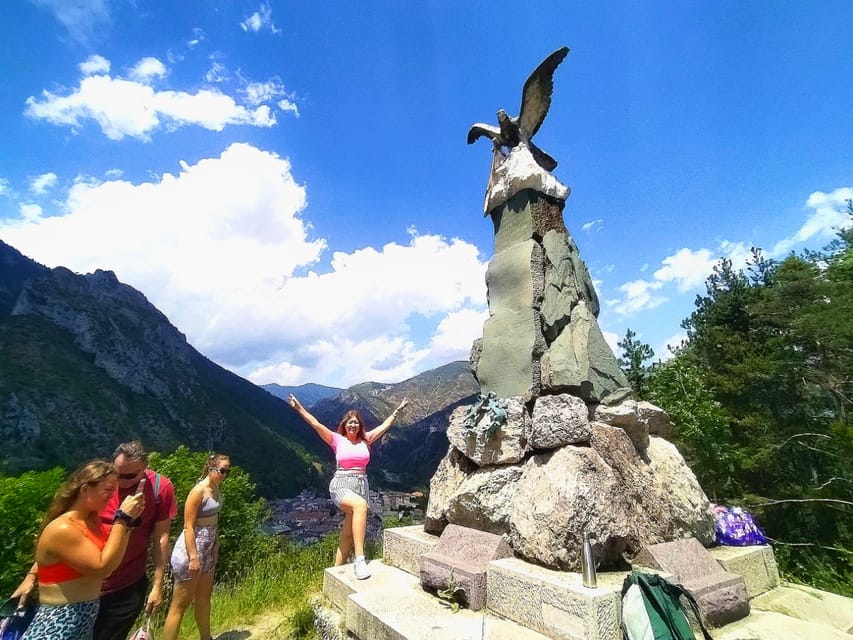
Lunch is one of the stronger parts of the day because it takes place in a village setting rather than at a generic service stop.
The included option may be a picnic or a meal in a local restaurant. The restaurant meal includes regional food or familiar classic dishes, which is helpful if everyone in your group has different tastes. Past menus have included dishes such as pizza and local specialties, and one picnic was described as a large bread roll filled with Niçoise salad.
The picnic option may have fewer choices, particularly for special diets. Vegetarian food was available in one account, but alternatives were not always extensive. If you have dietary restrictions, tell the provider in advance rather than waiting until the restaurant or railway station.
The restaurant option can involve an extra charge depending on the selected package and the day. One past participant paid an additional 15 euros for the restaurant meal. Check exactly what your $200 package includes before you set out.
I like the way lunch supports the village visit. You are not only looking at local life from outside. You have time to sit down, eat, and enjoy the slower rhythm of a small mountain community. The meal also gives your legs a break before the second village.
The second village and its sandstone streets
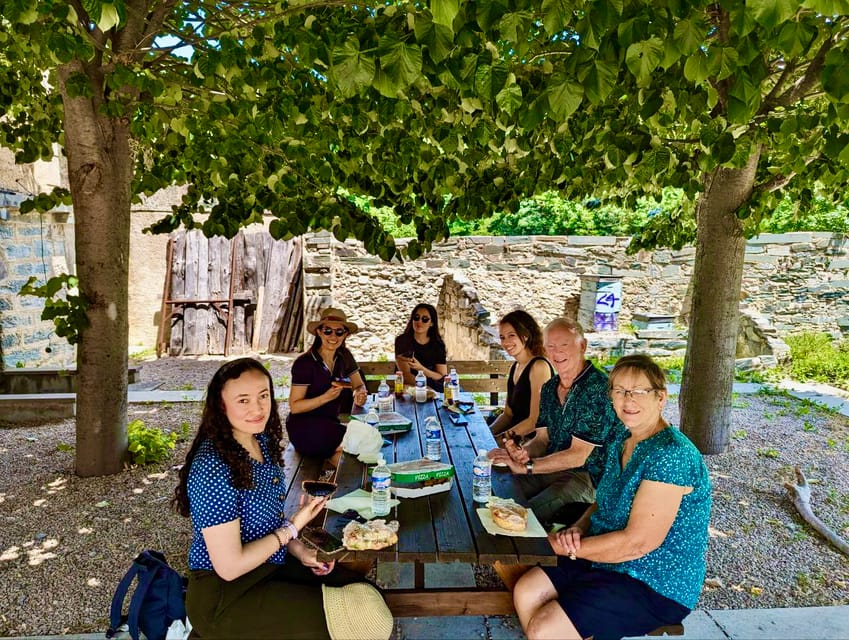
After another short train ride, the day moves to a second village with a very different look. Here, the focus is on narrow lanes, sandstone blocks, and homes partly built into the rock. Troglodyte houses give the village a character that you will not find in the grander fortified towns.
The guide leads you through a maze of small streets and explains how the buildings use the natural rock. This is the sort of place where a local guide earns the fee. Without help, you might admire the stonework but miss the reasons the houses were built that way or how the village adapted to its setting.
Annot has appeared on past routes and is associated with the sandstone formations and wooded walks described for this section. Saorge has also featured on departures and offers steep village lanes, old religious buildings, and broad mountain views. Since the route changes, treat these examples as possible stops rather than a promise for every date.
You get some free time here, which is important. You can take photographs, sample local food, enjoy a pastry or wine, or simply sit down. On some days, the group has even played pétanque with locals or outside a café. That kind of unscripted pause is one of the nicest features of the experience.
Choosing between the short walk and the longer hike
The optional hike is the most active part of the tour. The route can lead through an old chestnut forest, past caves, and among huge sandstone blocks. The description gives a minimum walking day of about 5 kilometers and a longer option of up to 12 kilometers, or 7.5 miles.
This is not a token stroll. You should expect uneven ground, inclines, and enough time on your feet to make comfortable footwear essential. The tour is not suitable for people with mobility impairments, and the full program requires a reasonable level of fitness.
The longer route will appeal to you if you enjoy geology, forests, caves, mushroom hunting, or cliff scenery. It is also the part most likely to become the day’s personal highlight, since it takes you beyond the village streets and into a quieter natural setting.
If you are not sporty, you do not have to take the longest route. Short walks around the village, free time, food tastings, and pétanque are offered as gentler alternatives. Be honest about your pace. A good guide can adjust the day, but the group still needs to follow a schedule to catch the train home.
Bring a swimsuit and towel only if you want to ask about a summer swim in the river. The route may sometimes be adapted for a refreshing dip during hot weather, but you must arrange this in advance, and it is not a standard guarantee.
The guides make the long day work
The most consistent praise goes to the guides. Cyril is often singled out for his history talks, humor, calm handling of changes, and care for individual needs. Carmela receives similar praise for her warmth, organization, and ability to keep a group moving without making the day feel rushed.
William and Alex are also noted for clear explanations and strong local knowledge. Guides have helped with dietary requests, pointed out the best side of the train for views, arranged alternatives for difficult climbs, and kept groups together when rail problems caused delays.
That last point matters. On one departure, a train cancellation led to an unexpected wait and a later return to Nice. The guide arranged a bus connection and kept everyone calm. Rail travel always carries some risk of delay, especially on a mountain line, so leave your evening flexible.
The commentary is available in English, French, Italian, and Spanish. A good guide adds much more than dates and architectural labels. The best moments come when the stories connect a church, fortification, railway, or village custom to the people who lived there.
Is $200 good value for a full day?
At $200 per person, this is not a bargain rail ticket. You are paying for a long guided day, round-trip train tickets, commentary, village visits, and lunch or a picnic, depending on the package.
The value improves if you would otherwise need to arrange several regional trains, local transfers, restaurant reservations, and a route through unfamiliar villages. The railway timetable and mountain geography make independent planning less straightforward than a normal Nice day trip.
You also get access to places that are not part of the usual Riviera circuit. A small group, multilingual guide, and optional hiking add value for people who want context rather than simply a scenic ride.
The price is less attractive if you plan to skip the walking and would be happy with a basic train trip. It is also worth checking whether your selected lunch option includes a restaurant meal or a picnic, since the package can differ.
Free cancellation up to 24 hours before departure and reserve-now-pay-later booking give you some useful flexibility. Still, the most important decision is physical, not financial. If steep paths and a long day sound tiring, choose another activity.
Who should book this experience?
I would recommend it to you if you want to see a less familiar side of southern France, enjoy old villages, and like having a guide explain what you are seeing. Families with active older children, couples, solo visitors, and curious small groups can all fit well, provided everyone is comfortable walking.
It is especially good for people who value local food, regional stories, religious art, village architecture, and scenery from a train window. The guide-led format also helps if you do not speak French or do not want to solve mountain transport connections yourself.
I would not choose it for a relaxed luxury day, a quick photo outing, or anyone who needs step-free access. The early meeting time, 11-hour duration, steep climb, and possible hike demand stamina.
Should you book it?
Book this tour if the idea of a historic train, medieval defenses, Baroque art, local lunch, and a forest hike sounds better than another coastal excursion. The strongest reasons to go are the unusual railway route, the small villages, and guides such as Cyril, Carmela, William, and Alex, who bring structure and humor to a demanding day.
Before paying, confirm which villages you will visit, whether lunch is a picnic or restaurant meal, how much walking is planned, and what time you are expected back in Nice. If you prepare for the hills and accept the long schedule, this is a strong-value way to see the Alps beyond the usual Riviera route.
FAQ
Where does the tour meet in Nice?
The meeting point is at the big blue gate of the Gare des Chemins de Fer de Provence, about two minutes from the Libération tram stop on line 1. The guide carries a blue sign reading Train Experience through the Alps.
What time does the tour start?
The guide meets the group at 7:30 in the morning. The standard full-day program returns to Nice at about 8:57 in the evening.
How long is the experience?
The tour lasts about 11 hours. Some winter departures have shorter programs, with returns to Nice at about 4:00 or 6:15 in the evening depending on the day.
Which villages does the tour visit?
The route visits two villages on the standard full-day program, but the exact stops can vary. Past departures have included La Brigue, Saorge, Tende, and Annot.
Is lunch included?
Yes. The selected option includes either a picnic or lunch at a local restaurant. The exact meal arrangement can vary, and some restaurant options may require an additional payment.
How much walking is involved?
The tour includes approximately 4 to 10 kilometers of walking in the villages and optional hiking areas. The longer hiking choice can reach 12 kilometers, and the walk to the castle involves about 200 meters of height difference.
Is the tour suitable for people with mobility impairments?
No. The experience involves steep paths, village steps, uneven ground, and substantial walking, so it is not suitable for people with mobility impairments.
What languages are available?
The live tour guide service is offered in English, French, Italian, and Spanish.
Can I cancel the booking?
You can cancel up to 24 hours in advance for a full refund. Reserve-now-pay-later booking is also available, subject to the booking conditions.
Just added around France
- Nimes: Private Walking Tour of the Historical Center★ 4.3 · 20 reviews
- Nîmes – Spend a day like an ancient Roman★ 5.0 · 26 reviews
- Nice: Theatrical History Tour – Secrets of the Castle Hill★ 5.0 · 21 reviews
- Nimes: Ancient Roman Arena Ticket & Old Town Audio Tour★ 3.8 · 19 reviews
- Nice: Sunset & Wine Tasting in a historic Land Rover★ 5.0 · 91 reviews
- Nice : Wine Tasting at a Historic Château in a Land Rover !★ 4.9 · 156 reviews
- Montmartre Walking Tour: A Journey Through Art and History★ 5.0 · 21 reviews
- Mont Saint Michel: Village History and Legends Walking Tour★ 4.8 · 96 reviews
Train Experiences, compared.
Puffing Billy Railway: Heritage Steam Train Journey
Read our review →
Ancient Ostia Antica Semi-Private Day Trip from Rome by Train with Guide
Read our review →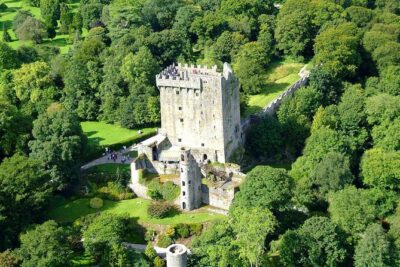
Dublin to Cork, Blarney Castle & Cóbh Heritage Centre by train
Read our review →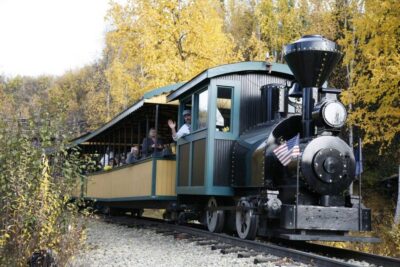
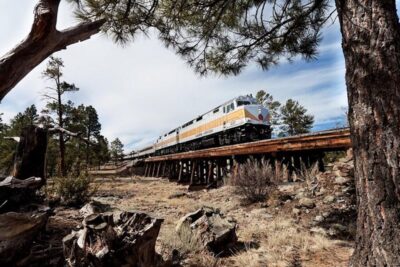
Sedona, AZ: Grand Canyon Guided Tour and Historic Railway
Read our review →
Barbados: St Nicholas Abbey Distillery, CTH Heritage Railway
Read our review →Browse the lists this tour appears in