Review · CENTRAL GREECE
Ancient Athens Segway Tour
Athens rewards a rolling overview. This two-hour Segway tour links the Acropolis, Areopagus, Pnyx, Kerameikos, Ancient Agora, and Monastiraki without asking you to march between every stop. I especially like the Acropolis views along Dionysiou Areopagitou Street and the chance to see Athens’ ancient and modern sides in one outing. The main drawback is simple: you do not enter the archaeological sites, so serious history fans will still need separate admission and time inside them.
The tour begins in Plaka, where you get helmet, instruction, and practice before setting off. That matters because many participants are first-time riders. Guides such as Demie, Dimitry, Dima, Yota, and Alexander have been praised for patient teaching and clear historical explanations. The $81 price is fair if you value orientation, local guiding, and easy movement, but less attractive if you mainly want an inside visit to the ruins.
The route suits a first day in Athens, families with older children, and anyone whose feet are already protesting after a long flight. You will need comfortable shoes, the ability to climb and descend stairs without help, and a willingness to steer through pedestrian areas. Large bags, pregnancy, riders under 45 kilograms or over 113 kilograms, and children under 10 are not a good match.
Key reasons this Athens ride works
- First-time-friendly training: Allow roughly 15 to 20 minutes to practice before the city riding begins.
- Strong Acropolis views: Dionysiou Areopagitou Street gives you a fine outside view of the Acropolis, Museum, and Theater of Dionysus.
- Two important democracy sites: Areopagus and Pnyx connect ancient law, debate, and direct democracy.
- A useful city orientation: Kerameikos, the Ancient Agora, Thiseio, and Monastiraki help you understand how central Athens fits together.
- Patient local guides: Demie, Dimitry, Dima, Yota, Georgia, and Alexander are among the guides praised for calm instruction and helpful recommendations.
- No archaeological admission included: You see the sites from outside or along their edges, then return to Plaka after two hours.
Starting in Plaka with a proper Segway lesson
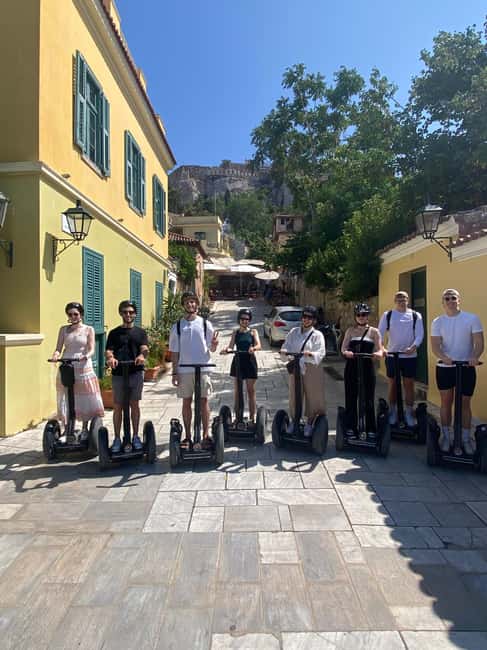
Meet at Eschinou 9 in Plaka, Athens 105 58. This places you in Athens’ oldest and most picturesque district, close to the historic center and the first major sights on the route.
Before you head into town, the guide explains how to mount, steer, stop, and control the Segway. The training is not a token safety speech. First-time riders commonly need a little practice, and the schedule allows time for it. Several participants found the machine easy to handle after only a few minutes, while others appreciated guides who gave them 15 to 20 minutes before setting off.
That patience is one of the tour’s biggest strengths. Alexander helped a 14-year-old rider and a relative learn the controls, while Demie was praised for making beginners feel at ease. You do not need previous Segway experience, but you do need enough balance and confidence to manage the machine in public spaces.
Wear shoes you can comfortably use for two hours. You may step off at several places, and the tour is not suitable for anyone who cannot manage stairs without assistance. Leave large bags at your accommodation. Luggage is not allowed, and a bulky backpack makes a Segway less pleasant to control.
More Ancient History Tours in Athens
- Athens: Ancient Greek Theater Performance
★ 4.7 · 2,481 reviews - Historical Delphi One Day Tour with Arachova Stop & Expert Guide
★ 4.5 · 1,247 reviews - From Athens: Ancient Corinth Day Trip with Canal & VR Guide
★ 4.6 · 1,073 reviews
Dionysiou Areopagitou Street and the Acropolis from below
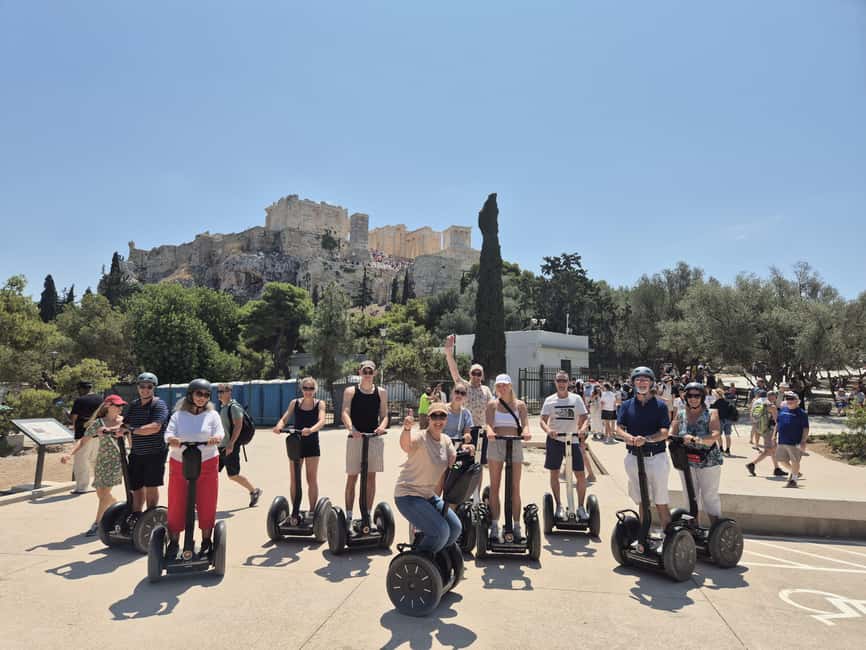
The opening ride follows Dionysiou Areopagitou Street, a pedestrian promenade with some of the best outside views of the Acropolis. You are not climbing the famous hill, and you are not entering the Acropolis complex. Instead, you get a clear look at the monument while gliding through one of Athens’ most scenic central corridors.
This is an excellent way to begin because the setting gives immediate context. You see the Acropolis above you, the modern Acropolis Museum nearby, and the ancient Theater of Dionysus along the southern slope. The theater is linked to the birth of dramatic performance in ancient Greece, so the guide can connect the stone remains to the plays, audiences, and civic life that shaped Athens.
The route is scenic, but it is still a public pedestrian area. You may need to slow down, steer carefully, and listen closely. One useful criticism concerned hearing the guide while moving. If the route is busy, stop when the guide explains a major point rather than trying to catch every word while steering.
Areopagus and Pnyx: where Athens argued and voted
The stop at the Hill of Mars, also called Areopagus, adds a strong viewpoint to the tour. This rocky outcrop looks across central Athens, giving you a broad view that reaches from ancient monuments toward the modern city.
Areopagus also carries political and legal importance. It was associated with judicial and political proceedings in ancient Athens. The combination of stone, height, and city views makes this more than a quick photo stop. It helps you see how Athens was organized around hills, public spaces, and religious centers.
You receive time for photos, a guided explanation, and some free time. Be sensible here. Uneven stone and steps require attention, particularly when you are still getting used to the Segway. The tour requires the ability to climb and descend stairs without assistance, and this stop explains why that rule matters.
Pnyx Hill connects the physical setting of Athens to the idea of democracy. Ancient citizens gathered here for political assemblies, and the site is tied to the early practice of direct democracy. You may not get a long formal visit inside the site, but the guide can explain what happened here and why the slope mattered.
For me, this is one of the most useful parts of the route. Many city tours show monuments. This one also shows where citizens debated and made decisions. It turns an abstract political idea into a place you can stand beside.
Thiseio and the easy rhythm of the ride
Thiseio provides a natural transition between the Acropolis area and the western archaeological quarter. The itinerary allows about 10 minutes for this section, including a photo stop, sightseeing, and riding.
The value here is not one single monument. It is the way the route links major parts of central Athens without long walks between them. You get a sense of distances and street connections that can be hard to grasp when you move only by taxi or metro.
The Segway also changes your pace. You move faster than walking but slowly enough to notice courtyards, ruins, streets, and passing scenes. That makes the ride a good first-day activity. It gives you a mental map for later exploring on foot.
More Ancient History Tours in Greece
- Acropolis, Parthenon & Athens Old City Heritage Walking Tour
★ 4.5 · 876 reviews - Private Biblical Tour Ancient Corinth & Isthmus Canal from Athens
★ 5.0 · 762 reviews - Athens: Ancient Corinth & Nafplio Full Day Trip with Swim
★ 4.8 · 531 reviews - Athens Skip the Line: Open Air Ancient Greek Theatre Performance
★ 4.5 · 520 reviews
Kerameikos, Athens’ old pottery district
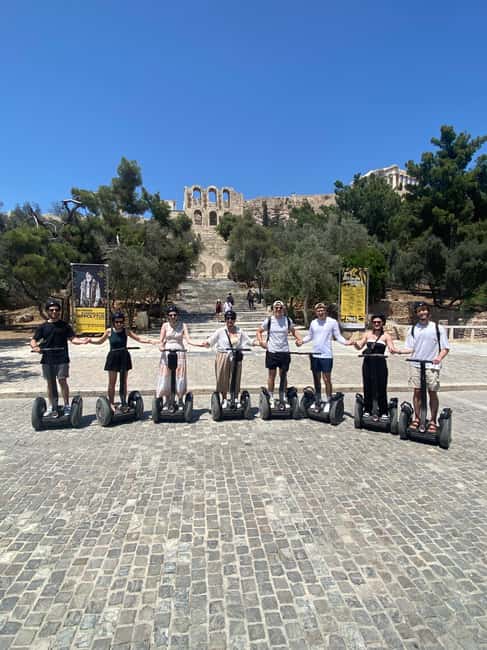
Kerameikos was associated with pottery and craft production, and the archaeological area reveals a working side of ancient Athens. It is less instantly famous than the Acropolis, but that is part of its appeal.
The stop allows about 15 minutes for photos, explanation, and sightseeing. You should understand the limitation: the tour does not provide entry to the archaeological sites. Your guide can point out and explain what you are seeing from the route, but you will need a separate ticket if you want to spend more time inside Kerameikos.
That arrangement works well for an overview. You get the site’s place in the city story without spending the entire two-hour experience inside one ruin field. If Kerameikos is high on your personal list, return later with enough time for a dedicated visit.
Ancient Agora and the daily life of classical Athens
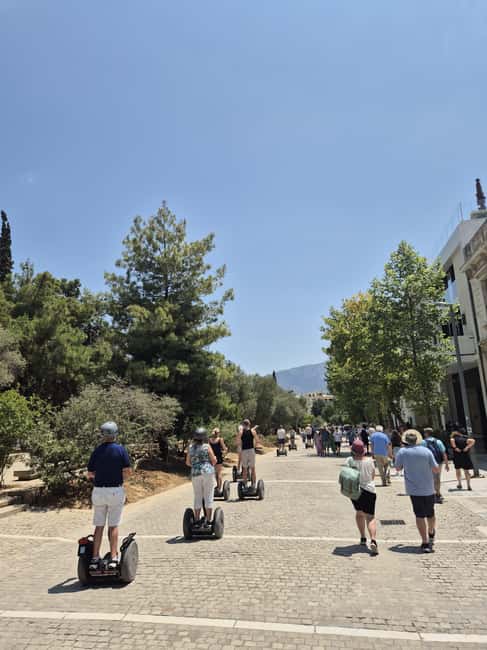
The Ancient Agora is one of the most useful stops for understanding how Athens functioned. This was not just a collection of temples. It was a place connected to government, commerce, public life, and daily routines.
The route gives you roughly 15 minutes here for a photo stop, sightseeing, and a guided explanation. Again, you stay outside the archaeological areas rather than entering them. That means the guide’s storytelling matters a great deal. A strong guide can help you picture the government buildings, temples, and public spaces that once filled the area.
This is also where the Segway saves energy. The central archaeological zone covers a large area, and walking between its nearby points can add up over a day of sightseeing. The machine does not replace a proper visit, but it gives you a useful first look without burning your legs before dinner.
If you have already visited the Acropolis, ask the guide to give extra attention to places you have not seen. One participant who had visited the Acropolis the previous day received a route focused on other parts of Athens. That kind of adjustment can make the tour more useful for repeat visitors.
Monastiraki, Hadrian’s Library, and the Roman Agora
The route then heads into Monastiraki, where ancient stone and present-day commerce share the same streets. You pass the flea market, Monastiraki Square, Hadrian’s Library, and the Roman Agora.
This is the city at its most mixed. Roman, Byzantine, Ottoman, and modern Athens overlap here, with shops and market stalls filling the spaces between major remains. The tour does not treat history as something sealed away from daily life. You see how old walls, busy streets, cafés, and local shopping exist side by side.
The Monastiraki section itself is short, listed at about five minutes, but the wider Athens portion takes up much of the remaining hour. You get a break, photos, guided sightseeing, and time to take in the surroundings.
Expect pedestrians. Riding through crowded streets can be fun, but it demands care and may slow the group. Keep your attention on the guide’s signals and the path ahead. If you want a relaxed market visit, return on foot later. The Segway section is best for orientation and atmosphere, not leisurely browsing every stall.
The final Athens loop and return to Plaka
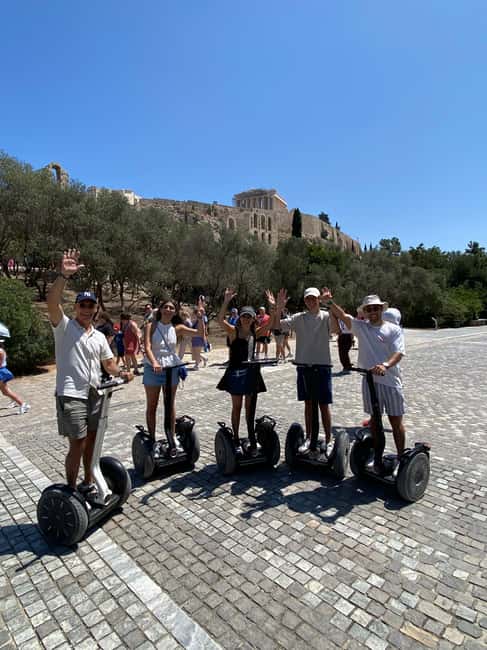
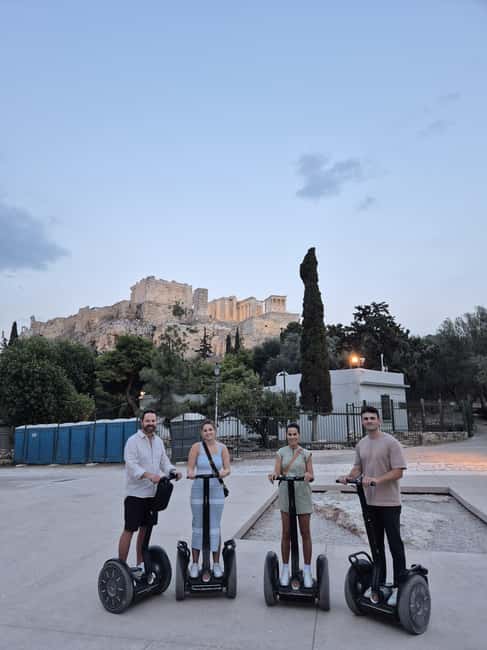
The last part of the tour brings together the earlier sights and returns to Eschinou 9. The total experience lasts two hours, including instruction, riding, stops, photos, and explanations.
That timing is a strength and a limit. Two hours is enough to see a large slice of central Athens and learn how the main districts connect. It is not enough for long visits at every archaeological site. Think of the tour as a moving introduction, not a replacement for a full day of museum and ruin visits.
Guides can also shape the final portion. Yota was praised for answering many questions and helping participants get their bearings, while some guides offered restaurant suggestions and ideas for the rest of an Athens stay. Those recommendations add value because you finish with more than photographs. You have a clearer plan for what to see next.
Is $81 a fair price for two hours?
At $81 per person, this is not the cheapest way to look around Athens. You are paying for the Segway, helmet, training, local guide, route planning, and the ability to cover more ground than you could comfortably walk in the same time.
The price makes the most sense in three situations. First, you are visiting Athens for a short stay and want a quick orientation. Second, you are traveling with teenagers or family members who may enjoy a moving activity more than a standard walking tour. Third, your feet need a break but you still want to see several historic districts.
The value drops if you already know central Athens well, dislike riding in pedestrian areas, or want detailed access to the ruins. Since archaeological entry and inside guiding are not included, budget separately for the Acropolis, Agora, Kerameikos, or other sites you wish to explore properly.
Free cancellation up to 24 hours before the activity and the option to reserve now and pay later make planning less rigid. Starting times vary, so check availability for the date you want.
Who should book this tour?
I would choose this for a first day in Athens, especially after a long journey. It helps you get your bearings quickly, and several people found that it gave them energy rather than taking it away. It also works well for families with children aged 10 and older, provided everyone meets the weight and mobility requirements.
The tour suits curious beginners because the guides put real effort into training. It also suits history fans who want a broad framework before returning to individual sites. An ancient history teacher found enough detail to learn something new, which suggests the commentary can reach beyond the basic postcard facts.
I would hesitate if you are pregnant, under 45 kilograms, over 113 kilograms, carrying luggage, or uncomfortable with balance-based equipment. It is also a poor choice for anyone seeking a quiet, slow archaeological tour with long time inside each monument.
Should you book the Ancient Athens Segway Tour?
Book it if you want a lively two-hour overview with strong Acropolis views, several historic districts, and patient instruction for first-time riders. The best part is the range: Areopagus and Pnyx for politics, Kerameikos for craft and burial traditions, the Agora for public life, and Monastiraki for modern Athens.
Do not book it as your only archaeological experience. You will not enter the sites, and the price is easier to justify when you treat the tour as an orientation and city sampler. For most first-time visitors, that is a useful role. You get the big picture, save your feet, and finish in Plaka with a better idea of where to spend the rest of your stay.
FAQ
Where does the Ancient Athens Segway Tour start?
It starts at Eschinou 9 in Plaka, Athens 105 58, Greece.
How long does the Segway tour last?
The tour lasts two hours, including training, riding, sightseeing stops, photo opportunities, and the return to Plaka.
Does the tour enter the Acropolis or other archaeological sites?
No. The tour does not enter archaeological sites, and admission or guided entry inside those sites is not included.
What languages are available?
Live guides are available in Hebrew, Russian, Ukrainian, Spanish, and English.
What is the minimum age for the Segway?
The minimum age is 10. Anyone under 18 must be accompanied by an adult.
What should I bring or wear?
Wear comfortable shoes and do not bring luggage or large bags. Riders must be able to climb and descend stairs without assistance, and the activity is not suitable for pregnant women or people under 45 kilograms or over 113 kilograms.
More History Bike, Segway and Tuk-Tuk Tours in Greece
- Segway Journey: Athens Tour From The Ancient Past To The Present
★ 5.0 · 62 reviews - Athens: Bike Tour of Athens Historical Centre
★ 5.0 · 61 reviews - Semi-private Historical & Contemporary Segway Tour in Athens
★ 5.0 · 56 reviews - Ancient Athens E-Bike Tour
★ 5.0 · 48 reviews
More History Bike, Segway and Tuk-Tuk Tours in Athens
- Historic Athens: Small Group Electric Bike Tour
★ 4.9 · 966 reviews - Athens: Small Group E-Bike Tour of Historic Highlights
★ 4.9 · 154 reviews - Athens Highlights by E-Bike: Small-Group Historic Tour
★ 5.0 · 131 reviews - Ancient Athens Segway Tour with Agora and Kerameikos
★ 5.0 · 94 reviews
Just added around Athens
- The original Christian tour on Paul’s footsteps in Athens and ancient Corinth★ 4.5 · 25 reviews
- Small-Group Women History in Ancient Greece Walking Tour★ 5.0 · 38 reviews
- Athens: Combo Ticket for Acropolis & 6 ancient sites★ 3.0 · 21 reviews
- Ancient Sparta & Mystras Private Day Tour from Athens★ 5.0 · 52 reviews
- Ancient Olympia & Isthmus Canal Private Tour from Athens★ 5.0 · 20 reviews
- Ancient Agora & Temple of Hephaestus Entrance Ticket★ 3.5 · 22 reviews
- Half Day Historical Athens City Private Taxi Service Tour★ 5.0 · 79 reviews
- Ancient Corinth, Sanctuary of Hera, Blue Lake & Canal from Athens★ 5.0 · 26 reviews
History Bike, Segway & Tuk-Tuk Tours, compared.

Historical Singapore Bike Tour on Full-Sized Bicycles
Read our review →
Charlotte’s Ultimate Southern Charm Historical City Cart Tour
Read our review →

Asheville Historic Downtown Guided Electric Bike Tour with Scenic Views
Read our review →
Private Guided Historic Electric Cart Tour of St. Augustine
Read our review →
60-Minute Guided Segway History Tour of Savannah
Read our review →
Historic Athens: Small Group Electric Bike Tour
Read our review →