
Review · ANDALUSIA
Granada: Royal Chapel and Historical Center Walking Tour
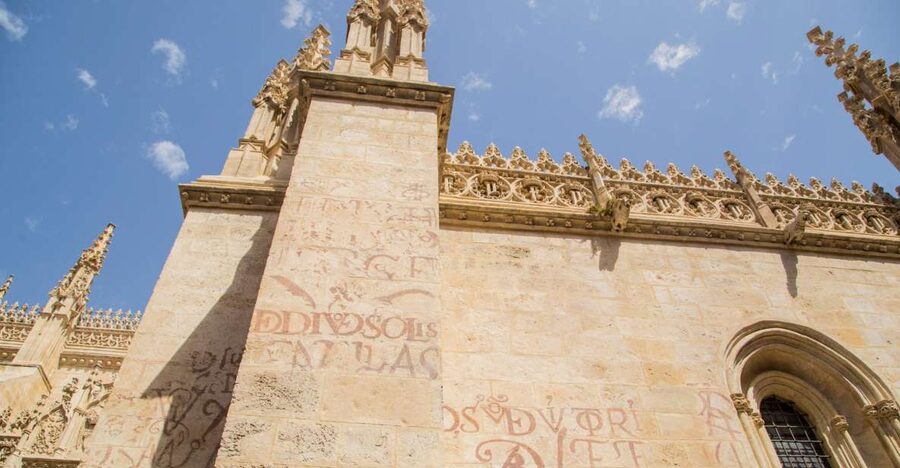
Granada keeps its best stories close together. This 1.5-hour walking tour links the Royal Chapel, the old Arabic marketplace, Plaza Bib-Rambla, and La Madraza in a compact route that gives you useful context without taking up half your day. I especially like the chance to see the marble tombs of Isabella and Ferdinand, and I like that admission to both the Royal Chapel and La Madraza is included.
The main consideration is pace. You cover several historic sites in a short time, and the tour may feel brisk if you want long stretches for quiet viewing. You also need modest clothing for the religious buildings, and the route is not suitable for wheelchair users.
This is a good first look at central Granada, especially if you want a guide to connect the city’s Christian royal past with its Islamic and medieval roots. Guides such as Laura have earned praise for being clear and patient, including speaking slowly for visitors following the tour in Spanish.
Key points at a glance
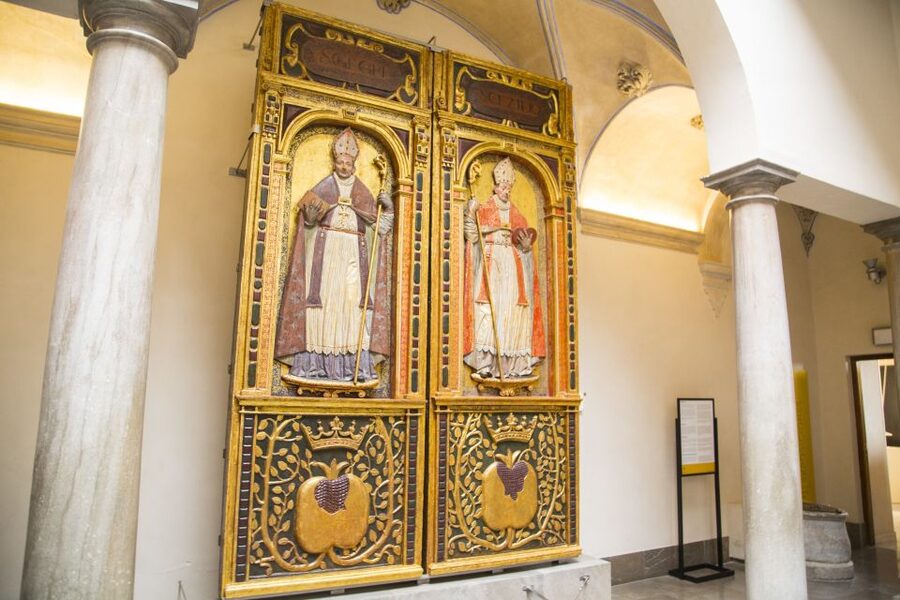
- See four important sights in 90 minutes: The route covers Plaza Bib-Rambla, the Alcaicería, the Royal Chapel, and La Madraza.
- Visit the tombs of famous monarchs: Isabella, Ferdinand, Joanna I, and Phillip the Handsome are buried inside the Royal Chapel.
- Walk through Granada’s former Arabic market: The Alcaicería has narrow, winding lanes lined with silks, spices, and souvenirs.
- Enter two historic buildings: Admission to the Royal Chapel and La Madraza is included.
- Meet under an orange umbrella: Your guide waits in Plaza Bib-Rambla, the starting point for the walk.
- Plan your clothing carefully: Shoulders must be covered, and short skirts are not permitted inside the religious buildings.
Why this short Granada walk works well
Granada can feel confusing at first. Its major sights belong to different chapters of the city’s past, and it is easy to see the buildings without understanding how they fit together. This tour gives you a simple route and a guide who explains the links between them.
At $31 per person, the price is reasonable if you want guided access to the Royal Chapel and La Madraza. The value comes less from the length of the walk and more from the included entries and the local explanation at each stop. A self-guided visit would cost less in time and money, but you would need to arrange the admissions and supply the historical background yourself.
I would think of this as an orientation tour rather than a full-day cultural outing. Ninety minutes gives you a focused introduction to central Granada. It does not give you enough time to linger over every detail, shop at length in the Alcaicería, or explore the Royal Chapel at a slow museum pace.
The tour is offered in English or Spanish. That matters because the quality of a short walk depends heavily on how clearly the guide tells the story. Laura received especially warm praise for her professional manner and for slowing her Spanish so that everyone could follow along. Another guide, Rocia, was praised for being friendly, punctual, and helpful when access to historic places changed unexpectedly.
More History Walking Tours in Spain
- Barcelona: Tapas Walking Tour with Food, Wine, and History
★ 4.8 · 4,261 reviews - Barcelona Tapas Walking Tour: Food, Wine & History
★ 4.5 · 1,928 reviews - Madrid Historical Walking Tour
★ 5.0 · 721 reviews
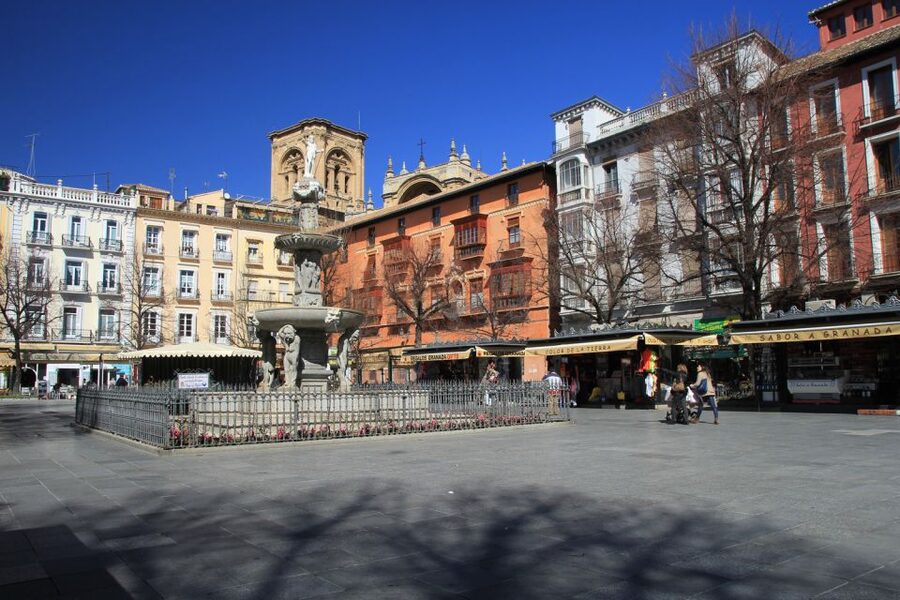
Starting in Plaza Bib-Rambla and the Gate of Ears
The meeting point is Plaza Bib-Rambla, where you look for the guide holding an orange umbrella. This is a practical meeting spot in the center, and it begins the tour with a piece of Granada’s old city layout.
The square once marked an entrance to the city. Here, your guide explains the former Gate of Ears, including the reason behind its unusual name. That small detail is useful because it turns an ordinary city square into a clue about Granada’s medieval past.
I like starting here rather than walking straight into the Royal Chapel. You first get a sense of the city as a place of gates, markets, and public squares. The historical setting comes before the grand monument, so the Royal Chapel feels like part of a larger story rather than an isolated building.
Plaza Bib-Rambla is also a good place to check your shoes and clothing before the walk gets underway. Comfortable footwear is important because the route includes narrow lanes and city streets. Large bags and luggage are not allowed, so this is not a convenient activity to join directly from a long transfer with all your belongings.
The Alcaicería’s narrow market lanes
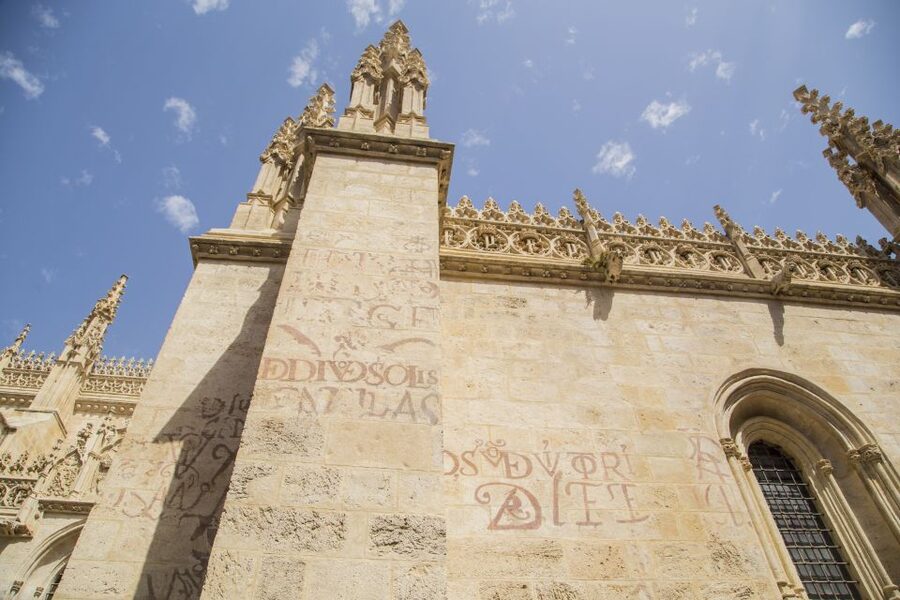
From Plaza Bib-Rambla, the route moves into the Alcaicería, Granada’s old Arabic marketplace. The lanes are narrow and winding, which gives this part of the walk a very different feel from the open square.
You can browse souvenirs here, but the market is not only a shopping stop. The guide helps you picture the area as a place where goods such as silk and spices were sold. The setting makes the commercial side of medieval Granada easier to understand than a simple explanation in a museum would.
The Alcaicería is a short section of the tour, so do not expect a long shopping break. If you see something you want to buy, you may need to decide quickly or return later on your own. I would treat the market as a visual and historical stop first, with shopping as an optional extra.
The winding layout also means you should stay close to the group. It is easy to pause at a shop window and lose sight of the orange umbrella. The compact route is helpful here because you do not need to work out the market’s layout on your own.
Entering the Royal Chapel of Granada
The Royal Chapel is the central reason to book this walk. It is described as Granada’s second most visited site, and its importance is easy to understand once you learn who is buried there.
The marble tombs of Isabella and Ferdinand are inside, along with those of their daughter Joanna I and her husband, Phillip the Handsome. These are not minor royal figures. Their lives connect Granada with the late medieval Spanish monarchy and with the political changes that shaped the city.
The guide’s explanation is particularly useful here. One review praised the detailed account of the royal couple and the chapel itself, while another said the information made the visit far more rewarding. That is exactly where a guided tour earns its fee. The tombs are striking objects, but the names and family connections can blur together without help.
Admission to the Royal Chapel is included, and the tour uses a separate entrance to skip the regular line. This can save useful time, especially on a busy day. It does not mean you have unlimited time inside, however. The group remains on a set schedule, and the chapel is one part of a larger walk.
You should also remember that this is an active religious setting as well as a historic site. Shoulders must be covered, and short skirts are not allowed. Sleeveless shirts are specifically listed as prohibited. I would dress modestly from the start rather than try to adjust your clothing at the meeting point.
More Old Town and Historic Centre Walks in Spain
- Madrid Essential: Historic Center, Plaza Mayor & Royal Palace
★ 5.0 · 6,416 reviews - Valencia Old Town Tour with Wine & Tapas in 11th Century Historic Monument
★ 5.0 · 3,234 reviews - Madrid Historic Centre Food Tour with Authentic Tapas & Wines
★ 5.0 · 814 reviews - Madrid in a Day Tour:Royal Palace, Historic Center & Prado Museum
★ 5.0 · 628 reviews
La Madraza and Granada’s Islamic past
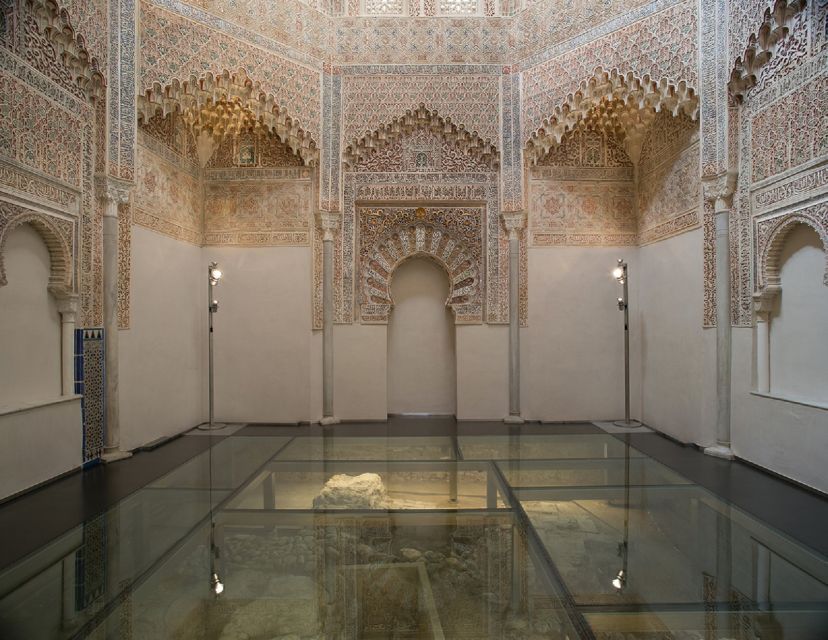
The final major stop is La Madraza, built in the 14th century as Granada’s first Islamic university. The building is still connected with the city’s University, which gives it a living role rather than leaving it as a purely preserved monument.
This stop adds balance to the tour. The Royal Chapel represents Christian royal power, while La Madraza recalls Granada’s Islamic intellectual and architectural traditions. Seeing both in one short walk helps you understand that the city’s identity did not come from one period alone.
Admission to La Madraza is included. The visit is valuable for anyone interested in architecture, education, or the changing cultures of Granada. Your guide can also help you see why this building matters beyond its appearance, though the exact amount of time inside depends on the group’s pace and the day’s access conditions.
Access to historic buildings can sometimes change because of official events or closures. Rocia was praised for handling that kind of difficult situation and helping the group experience as much as possible when places were affected. That is useful reassurance, but you should still keep your schedule a little flexible if this tour is followed by a timed reservation elsewhere.
What the guide adds to the experience
The route itself is easy to follow, but the guide is the main reason to choose this experience over walking through the center alone. You get explanations at the places where the details matter most: the Gate of Ears, the market, the royal burials, and La Madraza.
The feedback points to three qualities worth looking for: clear explanations, a friendly manner, and patience with language differences. Laura was praised for making Spanish understandable by speaking slowly, while several visitors described the tour as informative and well organized.
The tour is available in English and Spanish. If you are joining the Spanish version and are still building confidence, it may help to tell the guide at the beginning. Laura’s example suggests that a patient guide can make the experience work well for mixed language abilities.
One issue to keep in mind is group size. The supplied details do not state a maximum number, so I would not book this expecting a private or small-group tour. If the group is large, listening in the narrow Alcaicería or near the chapel entrance may require you to stay close to the guide.
Timing, cost, and practical value
The tour lasts 1.5 hours and costs $31 per person. That is a fair price for a short guided visit when both the Royal Chapel and La Madraza admissions are included. The separate entrance at the Royal Chapel adds practical value because waiting in line can consume a large part of a 90-minute schedule.
You are paying for a compact route, entry tickets, and live commentary rather than a long walking day. If you already know Granada well, or if you prefer to spend an hour studying one building in detail, this may feel too brief. If you are new to the city, the focused format helps you get your bearings without committing to a much longer activity.
Free cancellation is available up to 24 hours before the tour for a full refund, and you can reserve now and pay later. Those terms are useful if your Granada plans are still shifting. Starting times vary, so check availability before you build the rest of your day around it.
I would avoid scheduling an important appointment immediately after the tour. The stated duration is 90 minutes, but historic sites can take longer to enter or leave when access changes. A little breathing room will keep the walk from turning into a race across the center.
Who should book this Granada walking tour
I would recommend it to first-time visitors who want an introduction to Granada’s central sights, especially those interested in royal history and the meeting of Christian and Islamic traditions. It also suits people who prefer a short guided activity before exploring more independently.
The tour works well for:
- Visitors with limited time in Granada
- People who want the Royal Chapel explained rather than simply entered
- Anyone interested in Isabella and Ferdinand
- Visitors who want both Christian and Islamic landmarks in one route
- English or Spanish speakers who value live interpretation
- Shoppers who would like a quick look at the Alcaicería
I would be more cautious if you need step-free access. The activity is listed as unsuitable for wheelchair users, and the narrow historic streets may make movement difficult. It is also not a good choice if you are carrying luggage or large bags.
Families can enjoy the royal tombs and market lanes, but the tour’s value depends on interest in history. Younger children may find the explanations long, especially because the route has several formal historic stops in a short time.
What to wear and bring
Wear comfortable shoes. The tour is on foot, and the Alcaicería’s narrow lanes are better handled in practical footwear than in dress shoes.
Dress modestly for the Royal Chapel and other religious buildings. Cover your shoulders, avoid sleeveless shirts, and do not wear short skirts. These rules are not minor suggestions: you may not be permitted to enter if your clothing does not meet the requirements.
Do not bring pets, luggage, or large bags. A small everyday bag is the more sensible choice, although the available information only specifically rules out large bags and luggage. Keep your belongings close in the market lanes and around busy entrances.
Should you book it?
Book this tour if you want a short, guided introduction to Granada’s historic center with entry to two important buildings included. The Royal Chapel is the clear highlight, and the Alcaicería and La Madraza give the visit useful range. The strongest praise goes to guides who explain the sites clearly and adjust their pace for the group.
Skip it if you want a slow, private visit or need wheelchair access. You may also prefer to explore independently if you already know the Royal Chapel and La Madraza well.
For most first-time visitors, $31 is a sensible price for the access, route, and historical explanation. Dress correctly, wear good shoes, arrive at Plaza Bib-Rambla looking for the orange umbrella, and leave enough time afterward to return to any market stalls that catch your eye.
FAQ
Where does the Granada walking tour meet?
The meeting point is Plaza Bib-Rambla. Your guide waits there with an orange umbrella.
How long does the tour last?
The tour lasts 1.5 hours.
What buildings are included in the admission?
Admission to the Royal Chapel and La Madraza is included.
Which languages are available?
The live guide is available in English or Spanish.
Can I bring luggage or a large bag?
No. Luggage and large bags are not allowed on the activity.
What clothing is required?
You must dress modestly for the religious buildings. Shoulders must be covered, short skirts are prohibited, and sleeveless shirts are not allowed.
Just added around Spain
- Granada: Historic Center and Lower Albaicin Walking Tour★ 4.7 · 136 reviews
- Granada: Historical City Center Guided Segway Tour★ 5.0 · 57 reviews
- Girona: Jewish Heritage Guided City Tour and Museum Visit★ 4.8 · 124 reviews
- From Santiago: Ribeira Sacra History & Art Trip with Cruise★ 4.3 · 39 reviews
- From Madrid: Ávila and Salamanca, a day among history and walls★ 5.0 · 29 reviews
- Barcelona Historic Guided Tour★ 4.8 · 24 reviews
- Essential Madrid: Walking Tour of the Historic Center★ 4.7 · 58 reviews
- Discover the fascinating Alcazaba: History and unique views★ 4.8 · 30 reviews
Old Town & Historic Centre Walks, compared.
Live Fado Show with Port Wine in Historic Center
Read our review →
Valencia Old Town Tour with Wine & Tapas in 11th Century Historic Monument
Read our review →
Prague Old Town, Medieval Underground and Dungeon Historical Tour
Read our review →
Historic Center and Getsemaní Shared Walking Tour
Read our review →
Old Town Walking Tour History and Tales in Edinburgh
Read our review →
Philadelphia Old City Historic Walking Tour with 10+ Top Sites
Read our review →
Saadian Tombs & Bahia Palace, Medina Guided Tour
Read our review →Browse the lists this tour appears in