
Review · ANDALUSIA
Granada: Historic Center and Lower Albaicin Walking Tour
Granada reveals itself one street at a time. This 2.5-hour walk links the city center with the lower Albaicin, giving you a useful first look at Granada’s Christian, Islamic, and modern sides. I like the way it combines major landmarks with smaller street-level details, and I especially like the Alhambra viewpoint near the end. The price is also hard to beat at $16 per person.
I also like the guides’ strong personal connection to Granada. Pablo, Jaime, Irene, Anna, Rocio, and others have been praised for clear explanations, good local suggestions, and an entertaining style. The main caution is the walk into the Albaicin: narrow streets and uphill sections can be tiring, and this tour is not suitable for people with mobility impairments.
Key Points at a Glance
- A useful first-day orientation: Cover central Granada and the lower Albaicin before exploring on your own.
- Several major sights in one walk: See the Corral del Carbón, Alcaiceria, Madraza, Cathedral, Royal Chancillería, and more.
- A strong Islamic and Christian history lesson: Follow Granada from its Moorish past through the Reconquista of 1492.
- A worthwhile Alhambra view: Finish in the lower Albaicin with a photo-friendly outlook toward Granada’s best-known monument.
- Small-group potential: Some departures have been intimate enough to feel almost private, though group size can vary.
- Good practical value: At $16, you get a live guide, a planned route, and local advice without paying for monument admission.
Why This Walk Works as a Granada Introduction
Granada can feel confusing at first. The Cathedral and main shopping streets sit in the center, while the Albaicin climbs away in a maze of lanes. The Alhambra rises across the valley, often visible from unexpected corners. This tour gives you a map in your head before you tackle the city alone.
You meet in front of the monument to Isabel La Católica and Cristóbal Colón, near the heart of the center. That is a sensible starting point because the route quickly moves into the city’s central squares and historic streets.
I would book this early in your stay. One participant specifically found it useful for getting oriented and seeing a lot in a short space of time. A guide can also point out places worth returning to later, including spots to eat and sights that deserve more time.
The tour lasts about two and a half hours. That is long enough to build a proper story of Granada, but short enough to fit around an Alhambra visit, lunch, or an afternoon of wandering. You should still expect a steady walk rather than a gentle stroll between two nearby monuments.
More History Walking Tours in Spain
- Barcelona: Tapas Walking Tour with Food, Wine, and History
★ 4.8 · 4,261 reviews - Barcelona Tapas Walking Tour: Food, Wine & History
★ 4.5 · 1,928 reviews - Madrid Historical Walking Tour
★ 5.0 · 721 reviews
Starting at the Catholic Monarchs Monument
The meeting point places you beside a monument connected to Ferdinand and Isabella, the Catholic Monarchs. From here, the guide introduces the political story that shaped Granada, especially the Reconquista and its final chapter in 1492.
That date matters everywhere in Granada. It marks the surrender of the Nasrid kingdom and the end of Muslim rule on the Iberian Peninsula. A good guide does not treat this as a simple victory story. The city’s streets, buildings, and customs reflect several centuries of Islamic rule, followed by major Christian changes.
The guides have received particularly strong praise for making this material easy to follow. Jaime has been described as patient and deeply interested in Granada’s past. Irene has been praised for answering questions with enthusiasm. Pablo’s style combines information with humor, which helps when the subject turns political or architectural.
The quality of the experience will depend partly on your guide’s delivery. Two people found the English accent of their guide difficult to understand at times, though both still considered the tour worthwhile. If you miss a point, ask the guide to repeat it. The guides appear accustomed to questions, and several have been praised for making space for them.
Corral del Carbón and Granada’s Commercial Past
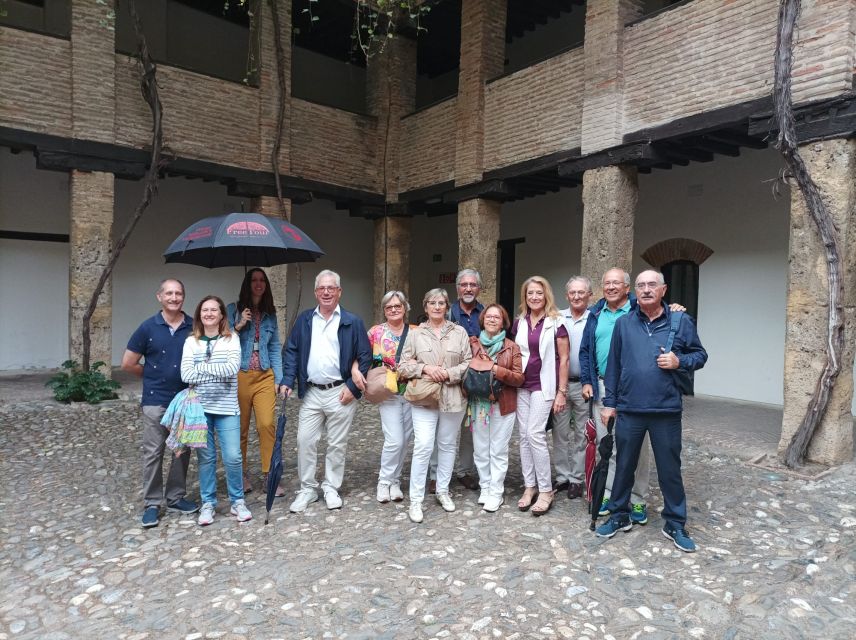
The Corral del Carbón is one of the route’s most revealing stops. Its name refers to an old trading inn and warehouse, a place where merchants and goods passed through Granada. It helps you picture the city as a working commercial center, not just a collection of grand religious buildings.
This is the kind of stop that adds value to a walking tour. You can see a building, read a sign, and move on. A guide gives it a purpose by explaining how people used the space and how it fits into Granada’s wider past.
The stop also introduces a recurring theme: Granada’s Islamic design and urban life did not disappear simply because political control changed. Details in the street plan, building forms, and names continue to point backward.
Expect the guide to pause often for explanations and questions. The exact pace can vary, but the tour is designed around several stops rather than a long speech delivered in one place. That makes the history easier to digest.
Alcaiceria, the Madraza, and the Changing City
The Alcaiceria is one of the best places on the route for understanding Granada’s old commercial center. Today it is associated with small shops and souvenir buying, but the area also recalls the city’s former silk market.
The guide connects this setting to Granada’s Islamic heritage. Look around as you walk. The lanes are narrow, and the layout feels very different from the broad streets near the Cathedral. You get a sense of how the old city worked through compact passages and concentrated trade.
The Madraza adds another layer. It represents Granada’s Islamic intellectual tradition and helps explain that the city was not only a political capital. It was also a place of study, religion, administration, and skilled craft.
Here, I would pay attention to the contrast between what remains and what was altered after 1492. Granada’s story is not preserved in one untouched quarter. It is visible in fragments, reused buildings, changed façades, and streets that still follow older patterns.
You will not be taking a full interior tour of every monument on this walk. The value lies in seeing the exteriors, understanding their role, and learning where to return if a particular building catches your interest.
More Old Town and Historic Centre Walks in Spain
- Madrid Essential: Historic Center, Plaza Mayor & Royal Palace
★ 5.0 · 6,416 reviews - Valencia Old Town Tour with Wine & Tapas in 11th Century Historic Monument
★ 5.0 · 3,234 reviews - Madrid Historic Centre Food Tour with Authentic Tapas & Wines
★ 5.0 · 814 reviews - Madrid in a Day Tour:Royal Palace, Historic Center & Prado Museum
★ 5.0 · 628 reviews
Plaza Bib Rambla and the City’s Public Life
Plaza Bib Rambla gives the walk an open pause after the tighter lanes around the market. The square includes the Giants Fountain, one of the named sights on the route, and provides room to discuss Granada’s public life.
A square like this helps you read the city at a human scale. It is not only a scenic stop. It shows how Granada gathers people around open civic spaces, with the surrounding streets feeding into the plaza.
The guide may also use the square to explain local traditions, architecture, or the way the center developed. Penelope particularly valued a quiet interlude about flamenco during her walk, along with the guide’s advice on what to do next. That sort of aside can be one of the best parts of a walking tour because it links history to living culture.
The square can be busy, especially on a holiday. One guide was praised for choosing sensible stopping points and comfort breaks on a crowded day. That matters more than it sounds. A route can be excellent on paper, but a guide who finds a place where you can hear and catch your breath makes the walk far more enjoyable.
The Cathedral, Royal Chancillería, and Royal Jail
The route then brings you past several of Granada’s major Christian and civic buildings. These include the Cathedral, the Royal High Court, the Royal Chancillería, and the Royal Jail.
The Cathedral represents the scale of Christian power that followed the conquest. Set against the earlier Islamic parts of the city, it makes Granada’s political shift visible in stone. Your guide explains the change instead of presenting each building as an isolated photo stop.
The Royal Chancillería adds a legal and administrative note. It helps you see Granada as a seat of government, not simply a tourist center. The Royal Jail, also included on the route, reinforces that the city’s institutions covered justice and punishment as well as worship and commerce.
This section is strongest if you enjoy connections between buildings. You will hear about how Granada developed, who controlled it, and how architecture expressed authority. If you prefer entering monuments and spending time inside, you may find the outward-looking format limiting. The tour is a city walk with historical interpretation, not a series of extended interior visits.
Into the Lower Albaicin
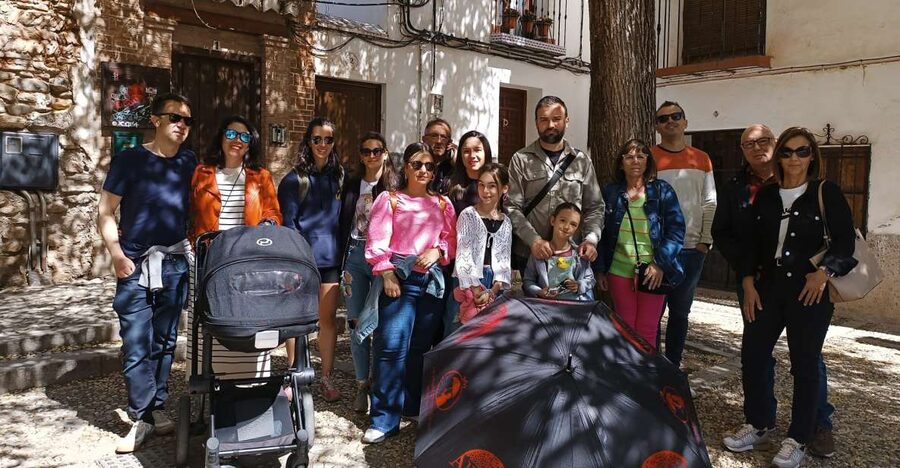
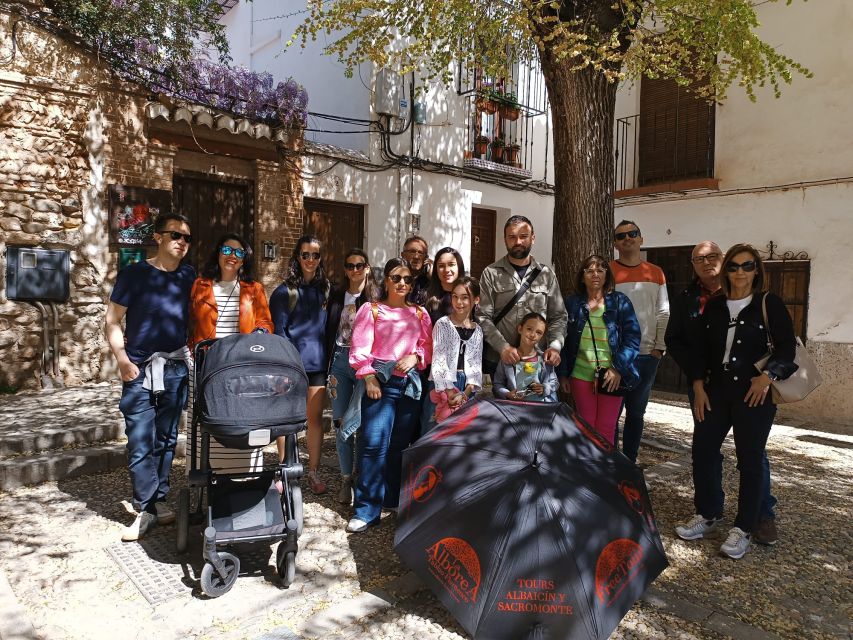
The move into the lower Albaicin changes the mood. The central streets give way to narrow lanes and older-looking buildings, with the route recalling the neighborhood’s Moorish past.
This is also the physically harder part. You may walk uphill, and the surface can be uneven. Comfortable shoes are essential. The activity specifically warns that it is not suitable for people with mobility impairments, so consider your knees, balance, and stamina before booking.
The lower Albaicin is a better fit for you if you enjoy walking without needing every street to be perfectly level. The charm comes from the lanes, bends, and changing views. You are not simply crossing a neighborhood to reach a viewpoint. You are seeing how Granada’s older urban pattern survives in daily life.
One family found that some members struggled with the uphill section because of health and knee problems. Their guide, Jaime, adjusted the pace and allowed breaks because the group was small. That is encouraging, but you should not rely on every departure being equally flexible. A larger group may need to keep moving.
Group size can change the feel of the experience. Some departures have had only a few people, creating an almost private walk. Other sessions may be larger. The guide’s role matters greatly here, especially in narrow streets where it is easy to lose sight of the group.
The Alhambra Viewpoint
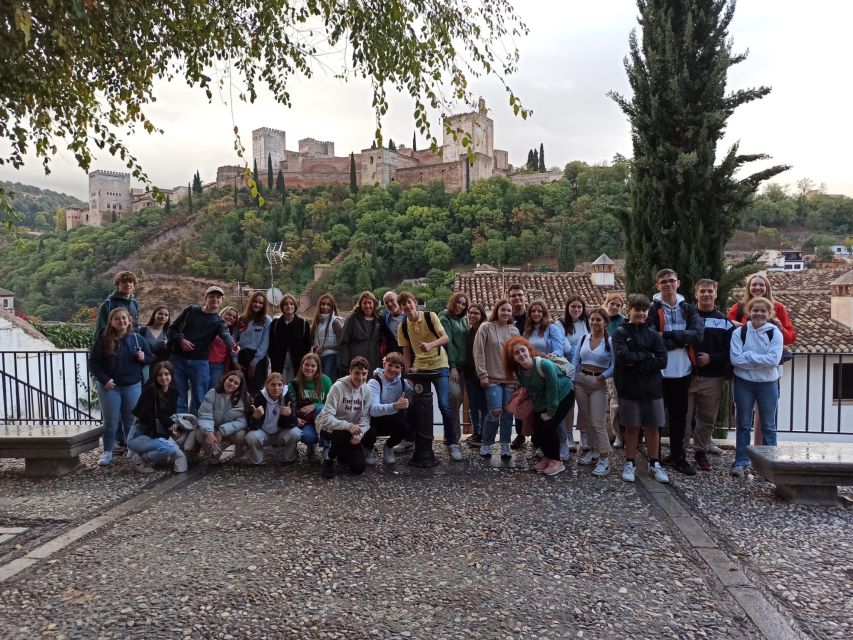
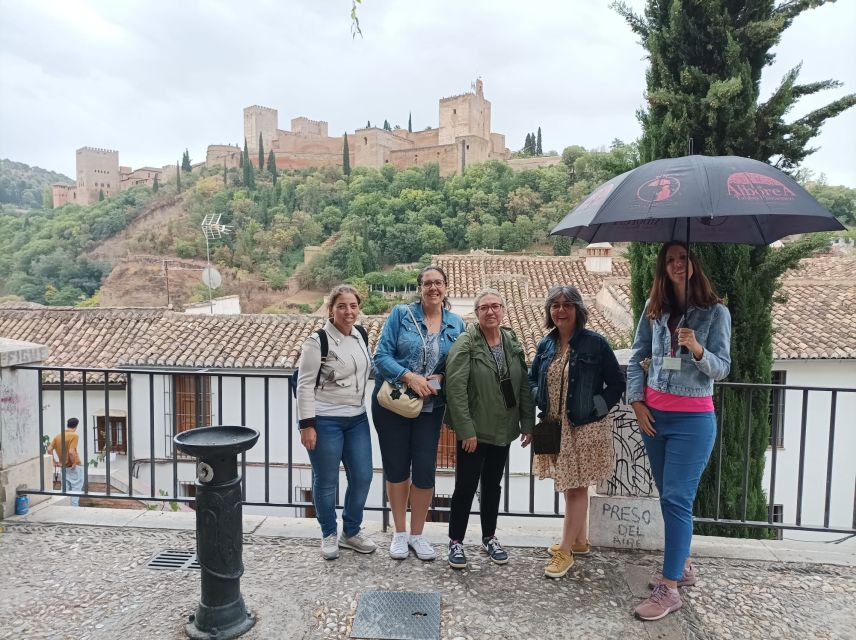
The viewpoint is the visual payoff. From the lower Albaicin, you get a clear angle toward the Alhambra, Granada’s famous hilltop complex.
This is not an Alhambra admission tour, and it does not replace a dedicated visit inside the palace and fortress. Instead, it gives you the essential outside perspective. You see how the Alhambra sits above the city and across from the Albaicin, which makes the geography easier to understand when you visit it later.
Bring your camera, but also listen to the explanation. A good viewpoint is more than a photo opportunity. It shows the relationship between the Nasrid palace complex, the old city, and the Albaicin slopes.
The stop can be especially useful if you have already booked an Alhambra visit. You will recognize the setting from a distance and understand why the Albaicin is such an important part of Granada’s story. If the weather is poor, the view may be less impressive, but the neighborhood walk and historical content still carry the tour.
How Much Value Do You Get for $16?
At $16 per person, this is a low-cost way to add structure to your first hours in Granada. You receive a live guide and a planned two-and-a-half-hour route through several major areas. That is good value if you want context rather than simply a list of buildings.
The price is especially fair because the walk joins two areas that many people explore separately. You see the center, then move toward the Albaicin, while the guide explains how their histories connect.
The tour does not include monument entrance fees, and it should not be judged as a substitute for visiting the Cathedral, the Alhambra, or other interiors at length. You are paying for guiding, route planning, and interpretation.
I also value the practical advice. Several guides have suggested places to eat and other sights to visit. That can save you time later, particularly if Granada is one stop on a busy Andalusian trip.
Free cancellation up to 24 hours before the start and the option to reserve now and pay later make it easier to fit the walk around changing plans. Check the available start times before booking, since the departure schedule can vary.
The Guides Make the Difference
This experience depends heavily on the person leading it. The strongest feedback centers on guides who explain Granada with energy, answer questions, and keep the group involved.
Pablo has been praised for being friendly, entertaining, and full of useful suggestions. Jaime has been described as patient, helpful, and deeply engaged with local history. Irene received repeated praise for her enthusiasm and ability to involve the group. Anna, Emilio, Rocio, and Elene also earned strong marks for clear explanations and a pleasant manner.
Some guides ask questions rather than speaking nonstop. That approach can make the history easier to remember, especially if you like testing your own sense of dates, buildings, and cultural changes.
English and Spanish are offered. The quality of spoken English can vary by guide. Most people found the content accessible, but two noted that a strong accent made parts harder to follow. This is a minor risk, not a reason to dismiss the tour, but it is worth knowing if you rely on every detail.
Who Should Book This Granada Walk?
I would choose this tour if you are visiting Granada for the first time, want a quick sense of the city, and enjoy history explained outdoors. It suits couples, families, and solo visitors who prefer a guided introduction before exploring independently.
It is also a good choice if you want to understand Granada beyond the Alhambra. The walk gives proper attention to the center and the Albaicin, rather than treating the city as a waiting room for the palace visit.
You should think twice if walking uphill is difficult, if you need long indoor stops, or if you want entry into every monument. The route covers many sights, but most are viewed from outside.
Wear supportive shoes, carry water, and leave room in your schedule for pauses. The walk is not long by full-day tour standards, but the Albaicin section makes it more demanding than a flat city-center circuit.
Should You Book It?
Yes, I would book it, especially near the start of a Granada visit. At $16, the route gives you a useful introduction to the historic center, a taste of the lower Albaicin, and a memorable Alhambra view.
Book it if you want local explanation, historical connections, and practical ideas for the rest of your stay. Skip it only if hills are a serious problem or you prefer exploring quietly at your own pace. For most able walkers, this is a sensible, affordable way to get your bearings before Granada’s streets start leading you in every direction.
FAQ
How long does the Granada walking tour last?
The tour lasts 2.5 hours.
How much does the tour cost?
The listed price is $16 per person.
Where does the tour meet?
Meet the guide in front of the monument of Isabel La Católica and Cristóbal Colón.
Which languages are available?
The live tour guide is available in English and Spanish.
Does the tour include an Alhambra ticket?
No. The tour includes a guided walking tour and an Alhambra viewpoint, but no Alhambra admission is listed.
Which sights are included on the route?
The route includes the Corral del Carbón, Alcaiceria, Plaza Bib Rambla, Church of Saint Ana, Royal High Court, Giants Fountain, Madraza, Cathedral, Royal Chancillería, Royal Jail, and the lower Albaicin.
Is the tour suitable for people with mobility impairments?
No. The activity is not suitable for people with mobility impairments, and the lower Albaicin includes uphill walking and narrow streets.
What should I bring?
Bring comfortable shoes for the city walk and the uphill section of the Albaicin.
Just added around Spain
- Granada: Historical City Center Guided Segway Tour★ 5.0 · 57 reviews
- Granada: Royal Chapel and Historical Center Walking Tour★ 4.4 · 21 reviews
- Girona: Jewish Heritage Guided City Tour and Museum Visit★ 4.8 · 124 reviews
- From Santiago: Ribeira Sacra History & Art Trip with Cruise★ 4.3 · 39 reviews
- From Madrid: Ávila and Salamanca, a day among history and walls★ 5.0 · 29 reviews
- Barcelona Historic Guided Tour★ 4.8 · 24 reviews
- Essential Madrid: Walking Tour of the Historic Center★ 4.7 · 58 reviews
- Discover the fascinating Alcazaba: History and unique views★ 4.8 · 30 reviews
Old Town & Historic Centre Walks, compared.

Live Fado Show with Port Wine in Historic Center
Read our review →
Valencia Old Town Tour with Wine & Tapas in 11th Century Historic Monument
Read our review →
Prague Old Town, Medieval Underground and Dungeon Historical Tour
Read our review →
Historic Center and Getsemaní Shared Walking Tour
Read our review →
Old Town Walking Tour History and Tales in Edinburgh
Read our review →
Philadelphia Old City Historic Walking Tour with 10+ Top Sites
Read our review →
Saadian Tombs & Bahia Palace, Medina Guided Tour
Read our review →Browse the lists this tour appears in