Review · BARBADOS
St. Nicholas Abbey Heritage Great House and Rum Distillery Tour
History tastes better with a little rum. St. Nicholas Abbey gives you two things I especially like: a beautifully preserved 1658 Jacobean Great House and a working distillery that connects plantation history with Barbados rum today. The rare old film, gardens, sugar mill, and house collections give the visit more substance than a quick photo stop.
I also like the freedom to set your own pace, especially if you want time for the terrace café, gift shop, or quiet corners of the grounds. Guides such as Simon Warren and Meghan have earned praise for making the house and tasting session lively and clear. The main drawback is value: at $45 per person, the visit may feel costly if you only stay for the house and receive a very small tasting.
Key points to know before you go
- The 1658 Jacobean house is the main attraction: Expect period rooms, historic furnishings, and objects linked to Barbados from Amerindian settlement through colonial times.
- The rum visit is more than a sample: You can see the artisan distillery and learn how rum moves from cane to bottle, followed by a tasting and complimentary drink.
- A rare old film adds real character: The 1930 plantation and Barbados movie offers a glimpse into an earlier age that modern displays cannot easily reproduce.
- The sugar operation connects the past to the present: The syrup factory includes a working steam mill dating from around 1890.
- Allow extra time beyond the stated tour: The main visit takes about 45 minutes to 1 hour 30 minutes, but lunch, coffee, the grounds, and the possible train ride can extend your stay.
- Plan your ride home carefully: If you arrive by taxi, arrange pickup with enough time for the distillery and any train trip you hope to take.
Arriving at St. Nicholas Abbey in Saint Peter
St. Nicholas Abbey sits in Saint Peter, Barbados, and the activity begins and ends at the abbey. You make your own way there, so transport planning matters more than it does on a coach excursion.
If you take a taxi, do not book a tight return pickup. The official visit can be fairly short, but the house, film, sugar mill, rum tasting, café, gardens, and gift shop create several reasons to linger. A return ride timed only for the advertised minimum may leave you hurrying past the parts you came to see.
The group limit is 25 people. That is small enough to keep the house visit manageable, though the feel of the tour will depend on how many people are booked that day. Some guided visits have been especially small, with only six people, which allows plenty of room for questions.
The booking information describes the experience as self-guided, while the detailed visit includes a guided tour of the Great House. In practical terms, expect a structured house visit combined with areas you can explore at your own pace. If the format matters to you, confirm the day’s arrangement when you arrive.
A few more history tours around the world worth a look
- History and Hauntings of Salem Guided Walking Tour
★ 5.0 · 14,564 reviews - Colosseum: Underground and Ancient Rome Tour
★ 4.7 · 12,691 reviews - Lisbon: History, Stories and Lifestyle Walking Tour
★ 4.8 · 10,902 reviews
Walking through the 1658 Jacobean Great House
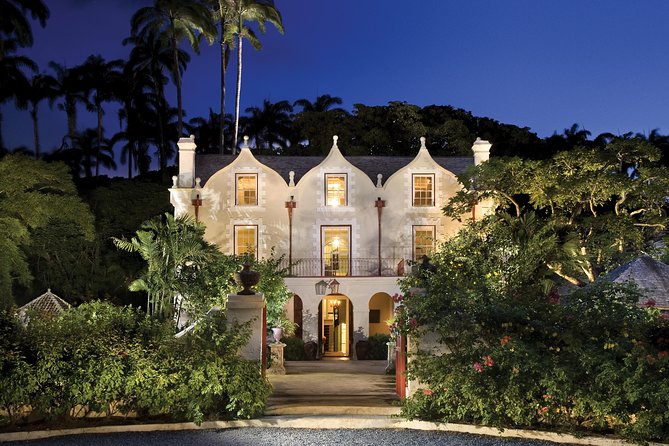
The Great House is the heart of the experience. Built in 1658, it gives you a physical sense of Barbados during the colonial period, rather than presenting the island’s past only through dates and labels.
Inside, you can see artifacts linked to the Amerindian settlement and later colonial life. That range matters. It places the plantation house within a longer story, instead of treating the building as an isolated piece of old architecture.
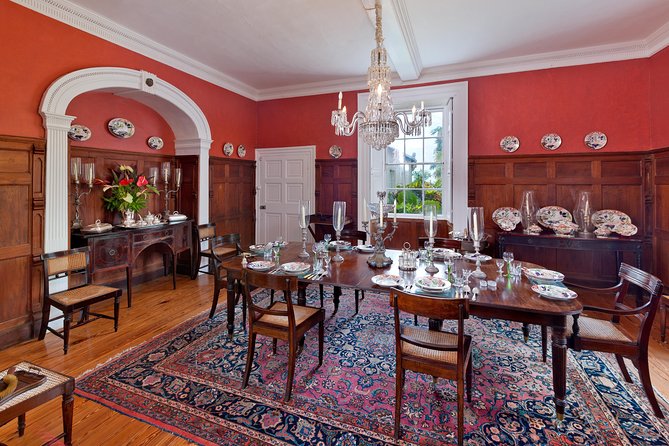
The rooms and household objects reward a slow look. China is singled out as worth seeing, and the house museum adds another layer for anyone interested in the details of domestic life. I would not rush this section. The building itself is attractive, but the objects help you understand how the property was used and how life changed around it.
A guide can make a large difference here. Simon Warren is associated with the rum tasting and has been praised for his humor and clear explanations. Meghan has also received warm praise for giving detailed answers about the house and its past. You may not have either guide on your visit, but the best tours here clearly benefit from a guide who enjoys the subject rather than simply reciting dates.
The setting also encourages a slower pace. After the formal house visit, you can spend time in the gardens or find a quiet place to think about what you have seen. This is useful if you prefer a historic site that leaves room for reflection instead of pushing you from one display to the next.
The old plantation film is a highlight
The visit includes a rare movie about plantation life and Barbados. It is described as a 1930 film, while some descriptions of the screening refer to a 1937 family video, so the exact date may vary by how the material is presented.
Either way, this is not a polished modern attraction film. Its value lies in the age of the footage. You get a visual record of the plantation and the island from an earlier period, with a directness that can be more affecting than a newly produced narration.
I would make time for the screening even if old films are not normally your priority. It gives context to the house, sugar production, and family connection. It also helps turn the visit from a pretty building tour into a look at how the estate functioned over time.
The film may not appeal to everyone. Its age can mean a slower pace and less polished presentation. Still, it is one of the more distinctive parts of the visit, and several visitors have considered it a major highlight.
Seeing cane become syrup at the steam mill
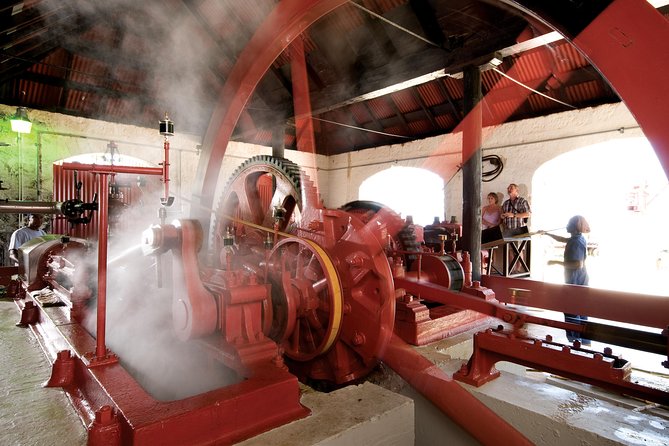
The syrup factory includes a working steam mill dating from around 1890. This is where the visit moves from rooms and artifacts to machinery.
The mill helps explain the practical side of plantation life. Sugar cane was not simply grown and shipped away. It had to be crushed and processed, and the machinery shows the scale and effort involved. Seeing the operation gives the history a physical edge: heat, movement, crushing, and production replace the quiet atmosphere of the house.
This section is especially useful if you want to understand how the estate made money. The Great House shows the social side of plantation ownership. The mill shows the industrial side.
The equipment may be more interesting to some people than others. If you prefer architecture and furniture, you might spend less time here. If you like working machinery, the syrup factory is likely to be one of the strongest parts of the visit.
Same place, a different slice of the past:
- London Small Group Tour of Historical Pubs
★ 5.0 · 10,422 reviews - Prague: Oldtown, Medieval Underground & Dungeon History Tour
★ 4.3 · 10,277 reviews - Charleston’s Old South Carriage Historic Horse & Carriage Tour
★ 5.0 · 10,023 reviews - Edinburgh: Edinburgh Castle Guided History Tour with Tickets
★ 4.8 · 9,933 reviews
From sugar cane to rum at the artisan distillery
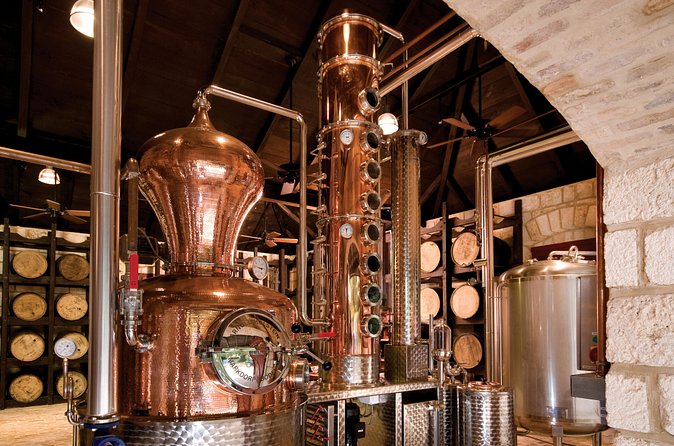
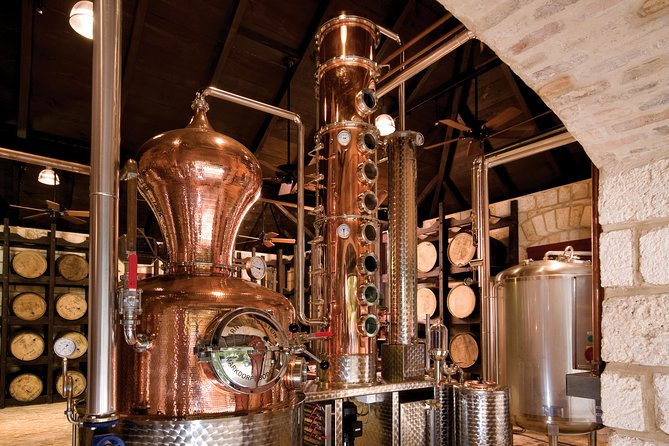
The distillery ties the estate’s past to Barbados’s continuing rum culture. You can see how rum is made from cane to bottle, then take part in a rum tasting.
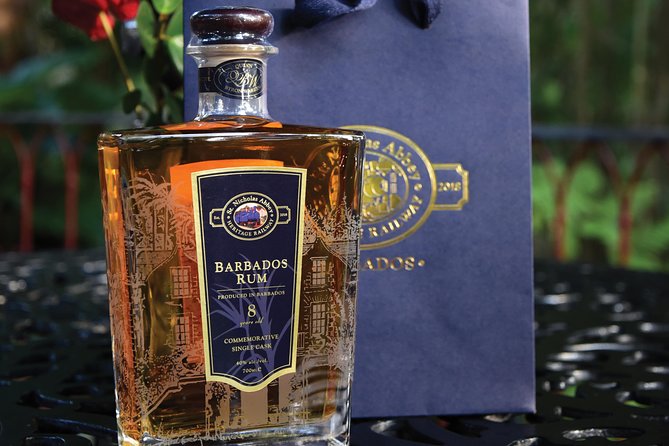
The tasting is included, along with a complimentary drink. The exact pour may be modest. One person found the tasting too small for the price, so you should not book this expecting a long drinking session or a full bar experience.
The value comes from the explanation as much as the quantity. A good guide can show how the production process relates to the sugar mill and explain why aged rum tastes different from a younger spirit. Simon Warren has been singled out for making this section entertaining, especially when discussing aged rum.
The tasting is a better fit for adults interested in spirits, local production, and the history behind a drink. If you do not drink alcohol, the house, film, machinery, and grounds still provide most of the substance, but the price may feel less attractive since the tasting is one of the advertised rewards.
You also receive a complimentary drink. That adds some value, although it should be viewed as a small extra rather than the main reason to visit.
Gardens, café, gift shop, and the possible train ride
The grounds give you a useful break between the indoor sections. You can take in the setting, sit in a quiet area, or simply let the visit unfold without a guide speaking every minute.
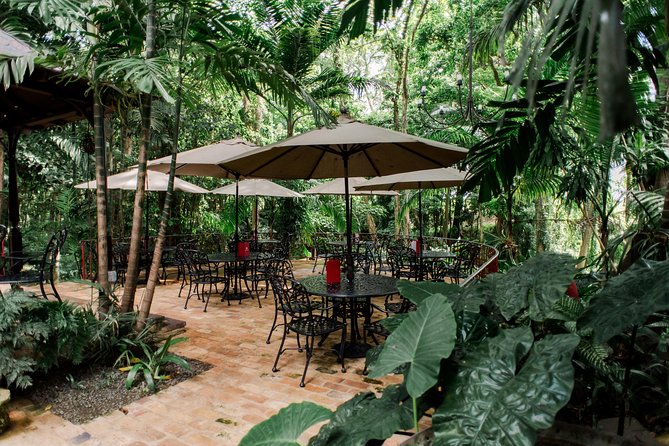
The terrace café is a practical part of the stop. Coffee and lunch are available, and the rum punch has received warm praise. It is a pleasant way to extend your time at the abbey, but service may not always be quick. One person waited about 20 minutes before leaving without ordering, so build in patience if you plan to eat there.
The gift shop gives you a chance to browse after the tour. It can be useful if you want a keepsake tied to the abbey, the house, or Barbados rum, though the available information does not specify the range of products or prices.
A vintage steam railway is also on the property, and some visits include a train trip as an added attraction. The supplied tour details do not clearly state that the train ride is included in the $45 admission, so ask before you count on it. If you want both the distillery visit and the train, allow extra time and arrange your taxi pickup accordingly.
Is the $45 price fair?
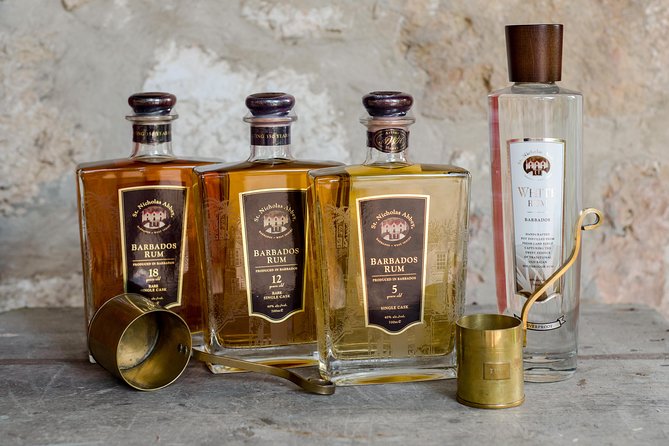
At $45 per person, this is not a bargain admission to a single room or short tasting. It is better judged as a property visit that combines several elements: the Great House, museum displays, old film, syrup factory, steam mill, distillery, rum tasting, and complimentary drink.
I think the price is reasonable for you if you plan to stay long enough to use the full visit. The house and museum give you culture. The mill gives you working history. The distillery gives you a taste of modern rum production. The film adds something unusual, and the grounds and café make the stop feel like a half-day outing rather than a quick ticketed attraction.
The value drops if you arrive late, rush through the house, skip the film and factory, and leave after a tiny tasting. You should also factor in taxi costs, lunch, and any separate charge for the train if applicable.
The overall rating is 4.5 from 257 reviews, with 257 reviews listed for the experience. That suggests strong satisfaction, but the lower value opinion is worth taking seriously. This is a place where your schedule and interests determine the price you feel you paid.
Who will enjoy this visit most?
I would recommend St. Nicholas Abbey to you if you like old houses, working machinery, island history, and rum production in one stop. It is also a good choice if you prefer to move at your own speed instead of joining a tightly timed island loop.
Families with older children may find the machinery and film more engaging than a purely architectural tour. Adults interested in rum will get extra value from the distillery and tasting. History-minded visitors should allow time for the museum objects and the story of the plantation.
You may want to choose another activity if you are looking only for a quick rum sample, a beach outing, or a highly polished modern attraction. The old film can feel slow, café service may be delayed, and the tasting may be smaller than expected.
The house is not presented as a loud or flashy attraction. Its strength is the mix of quiet rooms, old footage, working equipment, and a drink connected to the estate’s past.
Practical timing and cancellation advice
The stated duration ranges from 45 minutes to 1 hour 30 minutes. I would plan on the longer end if you want to see the film, spend time in the grounds, visit the café, or include the distillery at a relaxed pace.
Confirmation is provided at booking. Most people can participate, and service animals are allowed.
You can cancel for a full refund up to 24 hours before the start time. Cancellations or changes made within 24 hours are not refunded or accepted, and the cutoff uses local Barbados time.
Should you book St. Nicholas Abbey?
Book it if you want a thoughtful Barbados outing that combines a 1658 house, plantation artifacts, a rare old film, a working steam mill, and rum production. The strongest experience comes when you give it time, ask questions, and do not treat the $45 ticket as a quick tasting fee.
I would schedule it with enough room for the house, film, distillery, and grounds. Add lunch or coffee only if your day is flexible. If a train ride matters to you, confirm its availability and price before arriving.
For a short, inexpensive rum stop, the value may disappoint. For a full look at one historic Barbados estate, the visit earns its place on your itinerary.
FAQ
Where does the St. Nicholas Abbey tour begin and end?
It begins at Saint Nicholas Abbey in Saint Peter, Barbados, and ends back at the same meeting point.
How long does the experience take?
The stated duration is approximately 45 minutes to 1 hour 30 minutes. Extra time may be useful for the café, gardens, gift shop, film, or train ride.
Is the rum tasting included?
Yes. The visit includes a rum tasting and a complimentary drink.
What can I see at St. Nicholas Abbey?
You can see the 1658 Jacobean Great House, house museum displays, artifacts from Amerindian settlement through colonial times, a rare old film about plantation life and Barbados, a syrup factory, a working steam mill from around 1890, and an artisan rum distillery.
Is the train ride included?
The available tour details do not clearly confirm that the train ride is included. Ask at the abbey if you want to take the train.
How many people can join the activity?
The maximum group size is 25 people.
Can I cancel for a refund?
Yes. You can receive a full refund if you cancel at least 24 hours before the experience starts. Cancellations or changes made less than 24 hours before the start time are not refunded or accepted.
Just added around the world
- Historical Barcelona E-bike Guided Tour★ 4.5 · 106 reviews
- Barcelona: La Boqueria Food, Wine & History Walking Tour★ 5.0 · 126 reviews
- Barcelona in 2 Hours: Guided Walk Through History and Sights★ 5.0 · 203 reviews
- Bike Tour in Barcelona: History, Architecture and Culture★ 3.5 · 29 reviews
- Montjuïc Cemetery Walking Tour – Hidden Art, History & Views★ 5.0 · 62 reviews
- Historical and Modernist Bike Tour Barcelona★ 5.0 · 262 reviews
- Barcelona Historic Walking Tour and Food Experience★ 5.0 · 18 reviews
- Walking Tour of The Historic Garrison and its Museum – A Military Story★ 5.0 · 23 reviews
Tours, compared.
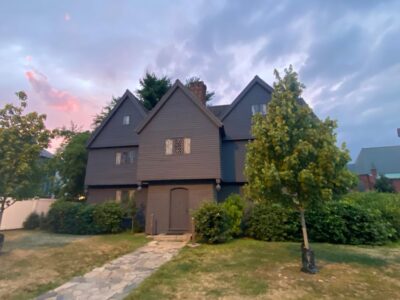
History and Hauntings of Salem Guided Walking Tour
Read our review →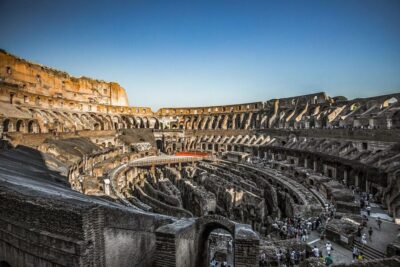
Colosseum: Underground and Ancient Rome Tour
Read our review →
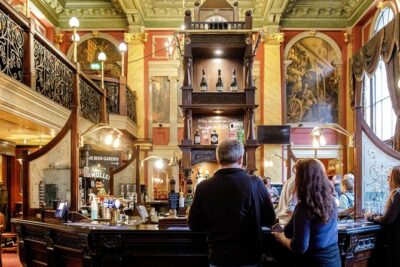
Oldtown, Medieval Underground & Dungeon History Tour
Read our review →
Charleston’s Old South Carriage Historic Horse & Carriage Tour
Read our review →
Edinburgh Castle Guided History Tour with Tickets
Read our review →