
Review · LAZIO
Rome: Colosseum, Circus Maximus, Forum & Ancient Rome Tour
Ancient Rome rewards slow looking. This two-hour walking tour links famous ruins with lesser-seen corners, taking you from the Jewish Ghetto and Tiber Island to the Roman Forum, Circus Maximus, and the outside of the Colosseum. I like the route because it gives you a wider picture of Rome, not just a quick photo stop at the amphitheater. I also like the focus on outdoor monuments, especially the Theatre of Marcellus and Portico of Octavia, places that are easy to miss on your own.
The main drawback is the price: $243.56 per person for two hours is a serious outlay, particularly since entry fees and the Colosseum visit are not included. You are paying for a guided historical walk, not an attraction ticket. The route also includes bridges, streets, and a climb up Capitoline Hill, so it is not suitable for wheelchair users or people with mobility impairments.
Key points before you book
- The Colosseum is viewed from outside only, so this tour does not replace a Colosseum admission ticket.
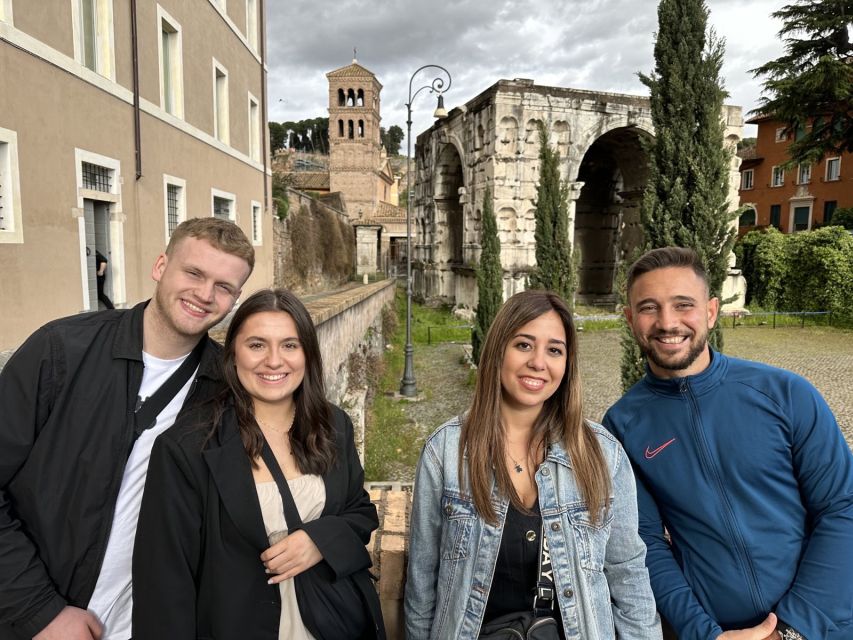
- The route starts in the Jewish Ghetto, then crosses Ponte Fabricius to Tiber Island before reaching ancient theaters and temples.
- Theatre of Marcellus can look like a smaller Colosseum, making it one of the walk’s most useful orientation stops.
- Capitoline Hill adds a climb, followed by Michelangelo’s famous piazza and views toward the imperial forums.
- The guide makes the difference, with Bruno, Gabriel, Francesco, and Sam receiving praise for clear explanations, warmth, humor, and handling questions.
- You need to arrive early, since late arrivals cannot join once the walk begins and the guide waits no more than 10 minutes.
What this two-hour route does well
This is not a standard Colosseum entry tour. It is a guided walk through the city center, designed to connect Rome’s ancient monuments with the streets and neighborhoods around them. You see the city from ground level, moving between ruins rather than spending most of your time inside one major site.
I like that the route begins away from the Colosseum. The Jewish Ghetto, Tiber Island, Theatre of Marcellus, and Portico of Octavia help you understand that ancient Rome was much larger than the familiar arena and forum. By the time you reach the Roman Forum, you have already seen how roads, bridges, temples, theaters, and public spaces fitted together.
The tour also gives you a useful time limit. Two hours is short enough to fit into a busy Rome schedule, but long enough for a guide to explain the main landmarks. You will not examine every ruin in detail, and you should not expect a slow archaeological visit. Think of this as a guided introduction that helps you decide where to return later.
The walk is conducted in English with a live guide. The strongest praise has gone to the guides themselves. Bruno is described as warm, funny, and gifted at making complicated history easy to follow. Gabriel is praised for an informative approach, while Francesco is noted for answering many questions with ease. Sam is described as personable and well informed. Those details matter because this route depends heavily on storytelling rather than entry to buildings.
More Ancient History Tours in Italy
- Colosseum: Underground and Ancient Rome Tour
★ 4.7 · 12,691 reviews - Colosseum & Ancient Rome with Arena Floor Option I Max 6 People
★ 5.0 · 3,306 reviews - Rome: Colosseum, Ancient Rome Tour or AudioGuided Tour
★ 4.4 · 2,879 reviews
Starting at Piazza Cinque Scole and the Jewish Ghetto
The meeting point is in front of the Basilica of Sant’Anastasia al Palatino, and the route includes Piazza Cinque Scole in the Jewish Ghetto. Be ready for a city walk from the first minute. This is not a coach tour with long pauses and transport between sites.
Piazza Cinque Scole gives the walk an urban beginning. Instead of starting at a famous monument crowded with tour groups, you begin in an area where Rome’s ancient, medieval, and modern layers sit close together. Your guide can set up the wider story here: Rome was not just a collection of imperial ruins, but a living city built around them.
This opening also makes the tour feel less predictable. Many short ancient Rome walks rush straight to the Forum. Beginning in the Jewish Ghetto gives you a better sense of Rome as a city of neighborhoods, not just an open-air museum.
You should arrive 15 minutes before the stated start time. The guide will wait no more than 10 minutes after the start, and late arrivals cannot join. That rule is especially important here because a walking group may move on quickly through central streets.
Portico of Octavia, Ponte Fabricius, and Tiber Island
The Portico of Octavia is one of the route’s most interesting early stops. This large ancient structure once marked the entrance to a market. Its surviving remains show how Roman public spaces served practical purposes as well as religious or political ones.
I like this part of the walk because it shifts your attention away from emperors and gladiators. Markets, roads, and public gathering places tell you how ordinary city life worked. The ruins may not have the instant fame of the Colosseum, but they help explain the city’s daily rhythm.
From there, you cross Ponte Fabricius, identified as the oldest bridge in Rome. The bridge connects to Tiber Island, giving you a change of setting and a view of the river corridor. It is a practical reminder that Rome grew around the Tiber and depended on crossings to link its districts.
The route’s outdoor format is useful here. You keep moving through the actual streets instead of seeing each monument as an isolated object behind a gate. The tradeoff is that noise, traffic, weather, and crowds can affect how easily you hear the guide. The tour runs rain or shine, so comfortable shoes and suitable clothing are sensible.
Theatre of Marcellus and the Temple of Apollo
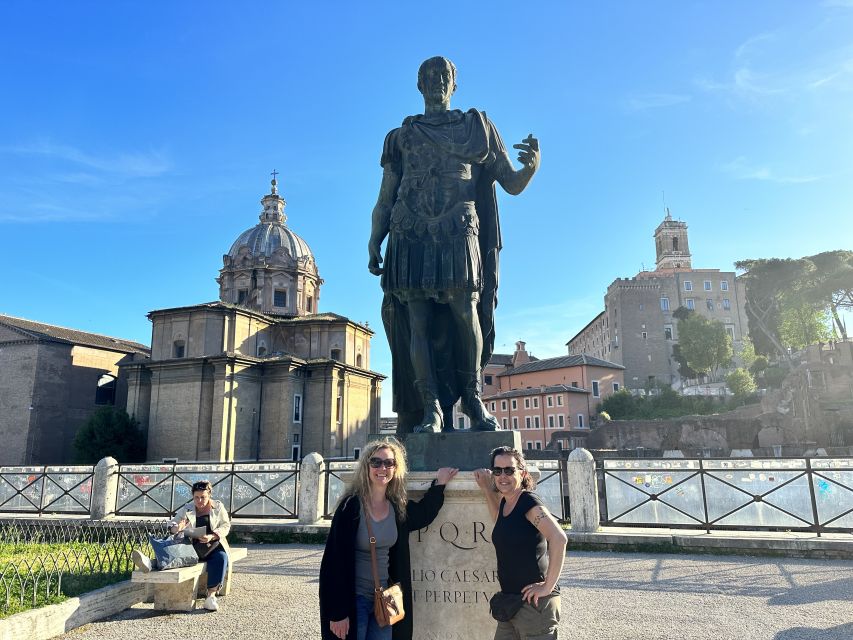
The Theatre of Marcellus is a highlight for anyone who wants more than the standard ancient Rome checklist. Its curved exterior can be mistaken for a smaller Colosseum, and that comparison gives your guide an easy way to explain the different roles of Roman theaters and amphitheaters.
Theater and arena were not interchangeable. A theater hosted performances, while an amphitheater was designed for spectacles such as gladiatorial contests. Seeing the Theatre of Marcellus before the Colosseum helps you recognize the difference in shape and purpose.
Nearby, the Temple of Apollo adds another layer to the route. The ruins are a reminder that religious sites were woven into the city’s public life. You will not enter these monuments as part of this experience, but the guide’s explanation can give the remaining columns and stonework a clearer setting.
This is where the tour’s value depends most on the guide. Without explanation, ancient fragments can blur together. With a good guide, you can start to read the street plan and understand why these buildings were placed where they were.
More Ancient History Tours in Rome
- Colosseum Underground & Ancient Rome Guided Tour
★ 4.5 · 2,590 reviews - Pantheon Elite Guided Tour – Rome’s Iconic Ancient Temple
★ 5.0 · 1,447 reviews - Ancient Rome: Colosseum Underground Group Tour
★ 4.5 · 1,059 reviews - Colosseum Express Guided Tour and Ancient Rome Admission Included
★ 4.0 · 1,008 reviews
Climbing Capitoline Hill and Michelangelo’s piazza
The route then climbs Capitoline Hill. This is a genuine uphill section, not a flat pavement stroll, so take the mobility warning seriously. The tour is not suitable for wheelchair users or people with mobility impairments.
At the top, you see the beautiful square designed by Michelangelo. This stop shows Rome’s habit of building new civic spaces over older layers. The hill links the ancient city to Renaissance Rome, giving the walk a visual change after the low ruins and river crossing.
The climb also provides a useful pause in the story. Your guide can connect the hill’s position with Rome’s political life and explain why this area mattered. From here, the city’s ancient forums can be understood as connected public spaces rather than a jumble of stones.
If you have already spent a morning visiting churches or museums, the hill may feel demanding. Still, it is one of the parts that gives the itinerary shape. You are not simply walking past ruins. You are moving between different levels of Rome, both physically and historically.
Via dei Fori Imperiali and the Roman Forum
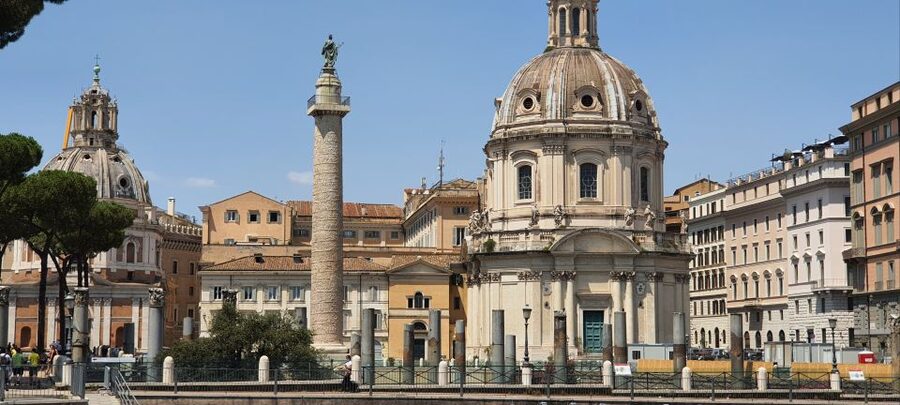
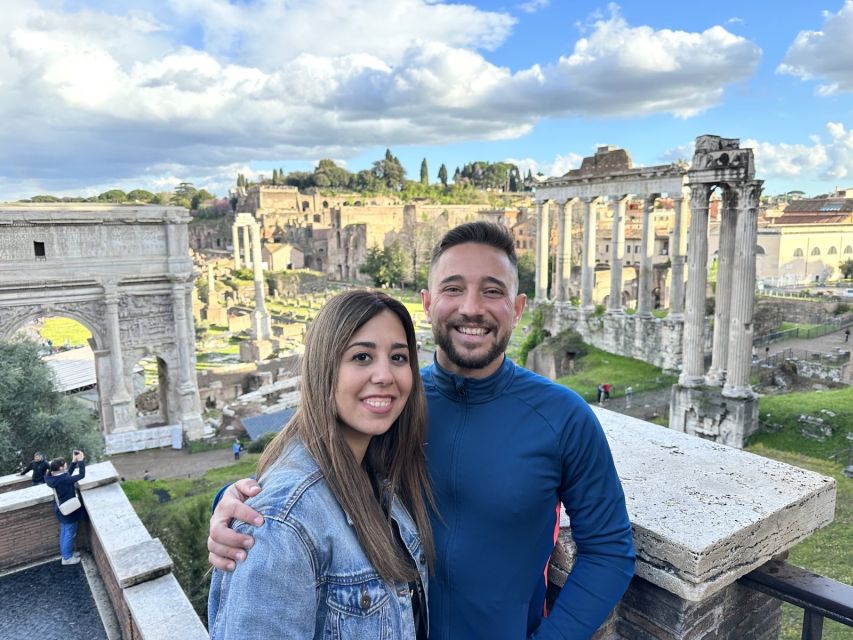
Via dei Fori Imperiali brings the route into the center of ancient political Rome. From here, you look toward the Roman Forum, Forum of Augustus, Forum of Caesar, and Forum of Nerva.
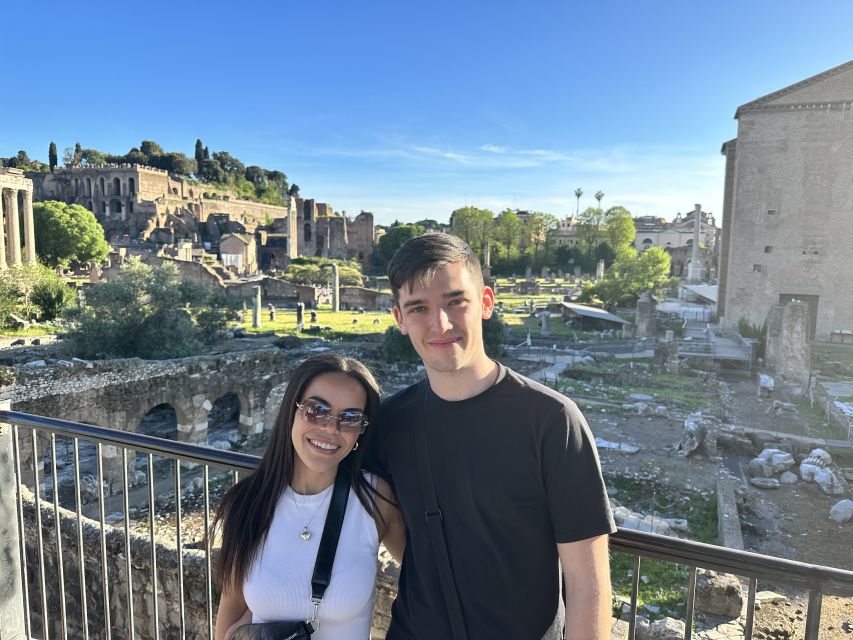
Because the tour remains outside, you will not wander among the Forum ruins. Instead, you view them from the surrounding streets while the guide explains how these spaces served public, political, and social purposes. That approach is useful for first-time visitors who find the Forum difficult to decode without context.
The Roman Forum was not one single monument. It was a changing collection of public buildings and open areas where citizens conducted business, politics, religion, and ceremonies. The imperial forums nearby expanded that civic world as Rome’s rulers added their own public spaces.
I would treat this section as an orientation rather than a full Forum visit. If you want to walk among the ruins, inspect columns closely, or spend hours reading signs, you need a separate admission ticket and more time. The advantage here is that you get a broad view without committing your whole day to one archaeological site.
Circus Maximus and the outside of the Colosseum
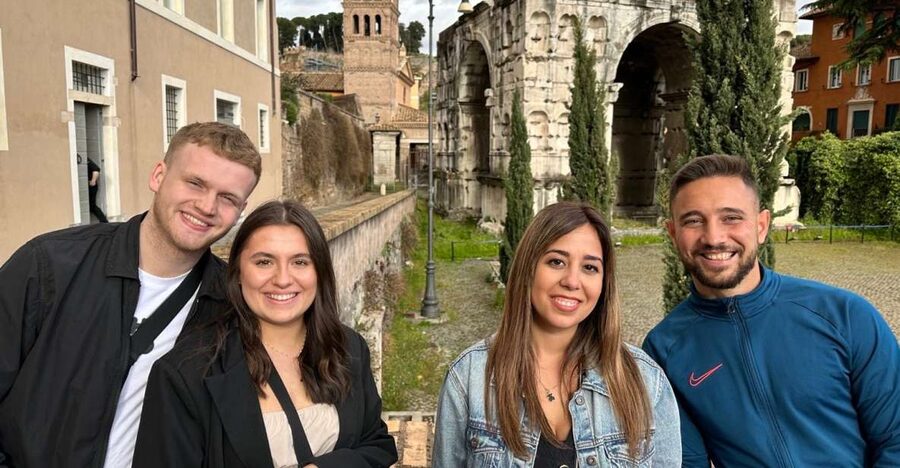
No ancient Rome overview feels complete without Circus Maximus. This enormous chariot-racing stadium gives you a sense of the scale of Roman public entertainment. It also helps place the Colosseum in a larger network of venues rather than treating it as the only arena that mattered.
The final stop is outside the Colosseum, the city’s most famous amphitheater. You can examine its exterior and hear about its role in Roman public life, but you do not enter. Entrance tickets and fees are not included, and the tour does not provide a Colosseum visit.
That distinction should guide your booking decision. If your main goal is to see the interior, underground levels, or arena floor, book a separate Colosseum experience. This walk can still be useful before or after that visit because it gives you context for the surrounding monuments.
The tour ends back at the meeting point. That makes planning easier, since you do not need to arrange a return journey from another part of central Rome.
Guide quality matters more than usual here
The tour’s strongest feature is its human element. You spend two hours looking at outdoor remains, many of which require explanation. A guide who can connect architecture, politics, religion, and daily life will make the walk far more rewarding than a guide who simply names each ruin.
The praise for Bruno is especially specific. His warmth, humor, and ability to explain complex material in an easy way made the tour a highlight for one participant. Gabriel also received praise for being informative, while Francesco was valued for answering numerous questions without difficulty. Sam was described as personable and well informed.
Of course, guide quality can vary from one departure to another. Still, the pattern is encouraging: the experience is built around clear interpretation and personal interaction. If you like asking questions, this is a better fit than a silent audio guide.
The overall score is 4.3 from 32 reviews, which suggests a generally strong experience but not a flawless one. The price and lack of interior access are the main points to weigh carefully.
Is $243.56 good value for two hours?
At $243.56 per person, this is expensive for a two-hour outdoor tour. The walking tour, guide, and historical commentary are included, but entrance tickets and fees are not. You are paying a premium for a guided route and live interpretation rather than for access to a major attraction.
I can see the value if you want a compact introduction to several parts of ancient Rome and prefer a private-feeling, guide-led experience. The route covers more than the usual Colosseum and Forum loop, including the Jewish Ghetto, Ponte Fabricius, Tiber Island, Portico of Octavia, Theatre of Marcellus, and Temple of Apollo.
I would hesitate if you are mainly seeking admission to the Colosseum or Roman Forum. In that case, the price may feel hard to justify because you will still need to arrange and pay for entrance separately.
The free cancellation period of 24 hours gives you some planning flexibility, and you can reserve now and pay later. Those policies help, but they do not change the central value question: is two hours of guided outdoor context worth the cost to you?
Practical advice for the walk
Wear comfortable shoes. The route covers city streets, a bridge, archaeological areas, and a climb up Capitoline Hill. Since the walk takes place outdoors in all weather, check the forecast and dress for sun or rain.
Bring patience for central Rome. You may need to listen near busy streets, and the group must keep to a schedule. Arriving 15 minutes early is not optional in practical terms, since joining after the start is not allowed and there is no refund for a late arrival or for leaving early.
This tour suits you best if:
- You want a short introduction to ancient Rome before choosing longer site visits.
- You enjoy learning through a live English-speaking guide.
- You want to see lesser-known monuments alongside the major ones.
- You can manage walking and the climb to Capitoline Hill.
- You are content to view the Colosseum and Forum from outside.
It suits you less if you need step-free access, want a slow archaeological examination, or expect Colosseum admission to be part of the price.
Should you book this Ancient Rome walk?
Book it if you want a tightly packed introduction to Rome’s ancient center, especially one that goes beyond the usual Colosseum photo stop. I like the route’s variety: Jewish Ghetto streets, an ancient bridge, Tiber Island, the Theatre of Marcellus, Capitoline Hill, the imperial forums, Circus Maximus, and finally the Colosseum exterior.
I would book only after checking the price against your priorities. At $243.56 per person, the tour needs to deliver strong guiding to feel worthwhile. The praise for Bruno, Gabriel, Francesco, and Sam suggests that the guide is the main reason to choose it.
If you want context, questions answered, and a broad look at Ancient Rome in two hours, this is a useful choice. If you want to enter the Colosseum or explore the Forum ruins at length, spend your money on admission and allow more time for a separate visit.
FAQ
How long is the tour?
The walking tour lasts two hours.
Where does the tour start?
You meet the guide in front of the Basilica of Sant’Anastasia al Palatino.
Where does the tour end?
The activity ends back at the meeting point.
Is entry to the Colosseum included?
No. The tour views the Colosseum from outside, and a Colosseum visit is not included.
Are entrance tickets and fees included?
No. Entrance tickets and fees are not included.
What language is the tour conducted in?
The live tour guide speaks English.
Do I need to arrive early?
Yes. You should arrive 15 minutes before the start time. The guide waits no more than 10 minutes after the scheduled start.
Can I join after the tour has started?
No. Late arrivals cannot join once the activity has begun.
Is the tour suitable for wheelchair users?
No. The tour is not suitable for wheelchair users or people with mobility impairments.
What should I bring?
Bring comfortable shoes. The tour is outdoors and takes place rain or shine.
More Ancient Rome and Colosseum Tours in Rome
- Rome: Colosseum with Arena, Roman Forum and Palatine Guided Tour
★ 4.0 · 5,598 reviews - Colosseum with Arena, Roman Forum and Palatine Hill Guided Tour
★ 4.5 · 3,526 reviews - Rome: Colosseum Arena, Roman Forum & Palatine Hill Tour
★ 4.5 · 1,874 reviews - Colosseum, Roman Forum & Palatine Hill Guided Tour
★ 4.5 · 1,568 reviews
Just added around Rome
- Rome: Private Colosseum Experience and Ancient Ruins Tour★ 4.6 · 25 reviews
- Rome Secrets: Dark History & Tasty Bites Tour★ 5.0 · 37 reviews
- Rome: Guided Tour of Colosseum and Ancient Rome★ 4.9 · 74 reviews
- Rome: Rome at Night Evening Historical Walking Tour★ 4.9 · 24 reviews
- Rome: Introduction to the Colosseum and Ancient City Tour★ 4.8 · 75 reviews
- Rome: Colosseum with Access to Arena Floor and Ancient Rome★ 4.2 · 320 reviews
- Rome: Food Tour of the Historic Center with Rooftop Spritz★ 4.7 · 43 reviews
- Rome: Guided Group Colosseum & Ancient City Tour★ 4.8 · 62 reviews
Ancient Rome & Colosseum Tours, compared.
Colosseum: Underground and Ancient Rome Tour
Read our review →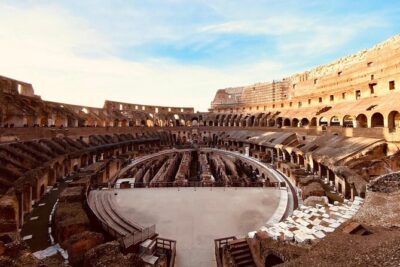
Colosseum with Arena, Roman Forum and Palatine Guided Tour
Read our review →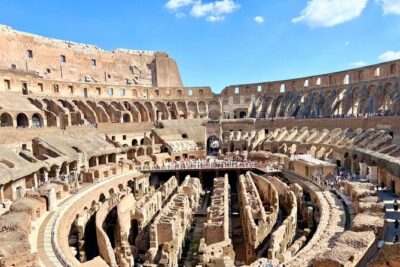
Colosseum with Arena, Roman Forum and Palatine Hill Guided Tour
Read our review →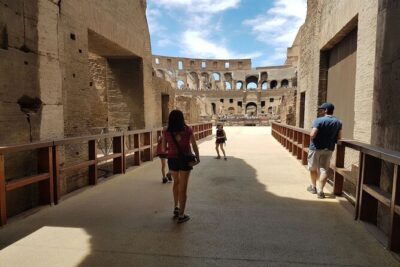
Colosseum & Ancient Rome with Arena Floor Option I Max 6 People
Read our review →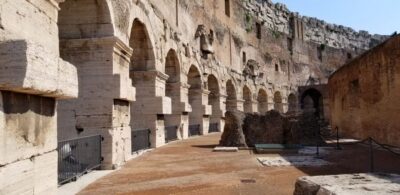
Colosseum, Ancient Rome Tour or AudioGuided Tour
Read our review →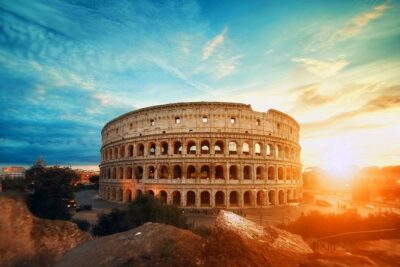
Colosseum Underground & Ancient Rome Guided Tour
Read our review →
Colosseum Arena, Roman Forum & Palatine Hill Tour
Read our review →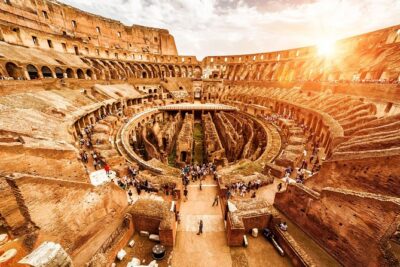
Colosseum, Roman Forum & Palatine Hill Guided Tour
Read our review →Browse the lists this tour appears in