
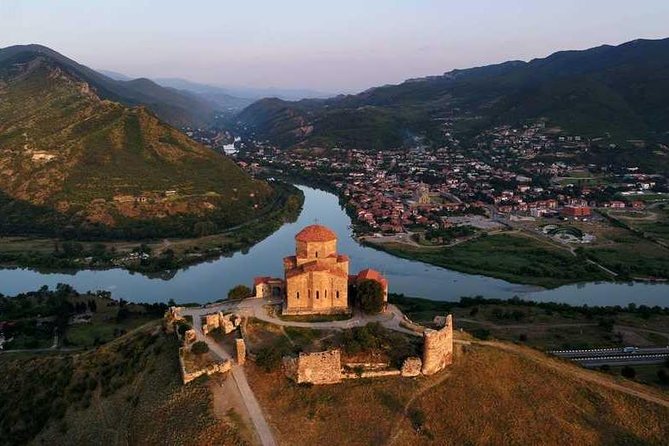
Review · TBILISI
Mtskheta, Jvari, gori, uflistsikhe, history and panorama (group tours)
Georgia’s past fits into one long day. This $19 group trip from Tbilisi links the hilltop Jvari Monastery, Mtskheta’s grand cathedral, the cave city of Uplistsikhe, and Gori, making it a strong introduction to Georgian religion and history. I especially like the wide view from Jvari and the chance to see several major sights without arranging separate transport.
I also like the small-group limit of 15 people and the range of guides who have earned warm praise, including Luka, Paata, George, Tornike, and Emilia. The main concern is guide consistency: some English-speaking customers received short explanations while Russian commentary took much more time, so the quality of your day may depend heavily on who leads it.
Key points to know before booking
- Jvari gives you the day’s best panorama, with Mtskheta below and the Aragvi and Kura rivers meeting in the distance.
- Svetitskhoveli Cathedral is often the emotional high point, especially if Georgian Christianity interests you.
- Uplistsikhe requires walking on uneven stone, with little shelter and an extra entrance fee.
- The Stalin Museum in Gori is optional, and its ticket is not included in the advertised price.
- The English guiding standard can vary, with some accounts describing brief translations beside much fuller Russian explanations.
- The $19 price is excellent for transport and guiding, but lunch, museum tickets, and some entrance charges add to the final cost.
A full day beyond Tbilisi
This is a classic westward outing from Tbilisi. In roughly nine hours, you move from Georgia’s early Christian traditions to its pre-Christian cave settlements and then to the complicated legacy of Joseph Stalin, who was born in Gori.
That range gives the day real substance. You are not simply visiting four attractive stops. You are moving through several layers of Georgian identity: sacred places, ancient trade routes, medieval power, Soviet memory, and the modern country’s effort to explain all of it.
The group meets at 9:00 a.m. at 3 Vakhtang Gorgasali Street in Tbilisi, with the day ending back at the meeting point. Transport and a guide are included, and the group is capped at 15 people. That is small enough to feel manageable, though the vehicle may still feel full when every seat is occupied.
I would reserve the entire day for this outing. The listed stops add up to several hours, and the roads between Tbilisi, Mtskheta, Gori, and Uplistsikhe take time. One provider response describes the tour as lasting four to five hours, but the advertised duration is about nine hours. I would plan around the longer figure and avoid booking an evening commitment.
A few more history tours around the world worth a look
- History and Hauntings of Salem Guided Walking Tour
★ 5.0 · 14,564 reviews - Colosseum: Underground and Ancient Rome Tour
★ 4.7 · 12,691 reviews - Lisbon: History, Stories and Lifestyle Walking Tour
★ 4.8 · 10,902 reviews
Jvari Monastery and the view over two rivers
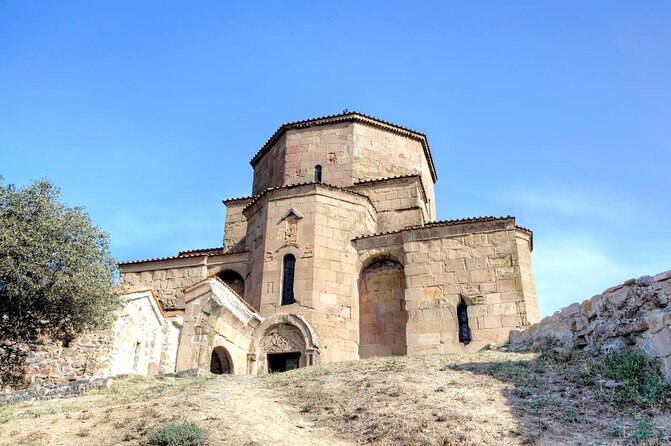
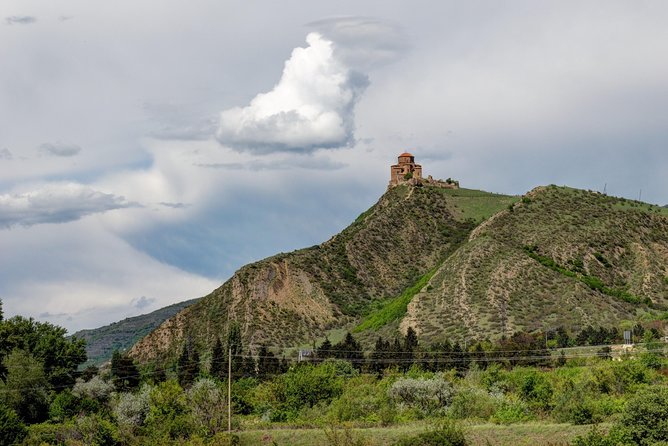
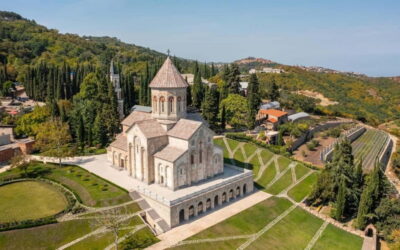
Jvari is usually the first major stop, and it is a smart opening. The sixth-century monastery sits high above Mtskheta, so you get your first sense of the area before walking through the town below.
The view is the star. From the hilltop, the Aragvi and Kura rivers meet near Mtskheta, with the old religious center spread beneath you. The scene has literary associations as well, since the area connects with Mikhail Lermontov’s poem Mtsyri. The tour description also points to the many writers and artists who passed through this part of Georgia.
Inside Jvari, the building itself is more restrained than the view. Its importance comes from its age, religious role, and position in the story of Christianity in Georgia. Your guide should explain how Georgian Christianity developed and why this hill became such an important place of worship.
You will want comfortable shoes and practical clothing here. The visit includes walking, and the hilltop setting can feel exposed in poor weather. The experience depends heavily on clear conditions, since the panorama is one of the main reasons to come.
Allow about an hour. That is enough for the church, the viewpoint, and a guided explanation without turning the stop into a long study visit.
Mtskheta and Svetitskhoveli Cathedral
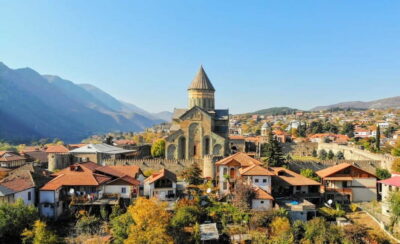
From Jvari, the group continues to Mtskheta, one of the most important religious centers in Georgia. The focus is Svetitskhoveli Cathedral, also called the Cathedral of the Living Pillar.
This is often the strongest stop on the route. The cathedral has a larger sense of occasion than Jvari, with a grander interior and a more direct connection to Georgian Orthodox worship. Even if you are not Christian, the visit helps explain why Mtskheta matters so much to the country.
The cathedral is associated with several important Christian relics, including the tunic of Jesus Christ, the mantle of the Prophet Elijah, and relics connected with Saint Andrew the First-Called. These claims are part of the cathedral’s religious tradition, and your guide can place them in the wider story of Georgian faith.
I would pay close attention to the guide here. A good explanation makes the carvings, relics, and ceremonies much easier to understand. Without context, you may see an impressive old church but miss the reason it has such a strong place in Georgian culture.
The scheduled visit lasts about an hour. Some versions of the day also include time in Mtskheta’s old streets and a wine tasting, though the supplied program does not clearly guarantee either one. Treat those extras as possible additions, not fixed promises.
Uplistsikhe, Georgia’s ancient cave city
Uplistsikhe changes the mood completely. Instead of entering a functioning cathedral, you walk through a stone settlement cut into rock. The site dates from the end of the second millennium BC or the beginning of the first millennium BC, making it far older than the Christian buildings visited earlier.
The name is often translated as Lord’s Fortress. The site once included living spaces, storage rooms, passages, ceremonial areas, and places linked with pagan worship. The route through the complex is a maze of stone corridors and open rock platforms, so your imagination does much of the work.
The guide is particularly useful here. You may hear about Uplistsikhe’s links with ancient states such as Urartu and Media, its role in trade, and its eventual decline. The elevated position also gives you broad views over the Kura Valley.
This is not a polished museum experience. You should expect uneven stone surfaces, steps, and exposed walking areas. Wear shoes with a firm sole, bring water, and be ready for sun or wind. The site can be difficult for anyone who dislikes rough paths or needs fully level access.
The program allows about two hours and 20 minutes for Uplistsikhe and the meal stop. That sounds generous, but the time also covers eating and group movement. One serious complaint about this tour is that the cave city felt rushed, especially for people who wanted to explore more of the side paths and upper sections.
The extra entrance fee is another point to check carefully. The information supplied gives two different amounts, 15 GEL in one place and 17 GEL in another. It is safest to budget roughly 17 GEL per person and confirm the current price before you go.
Same place, a different slice of the past:
- London Small Group Tour of Historical Pubs
★ 5.0 · 10,422 reviews - Prague: Oldtown, Medieval Underground & Dungeon History Tour
★ 4.3 · 10,277 reviews - Charleston’s Old South Carriage Historic Horse & Carriage Tour
★ 5.0 · 10,023 reviews - Edinburgh: Edinburgh Castle Guided History Tour with Tickets
★ 4.8 · 9,933 reviews
Lunch and the limits of a group meal
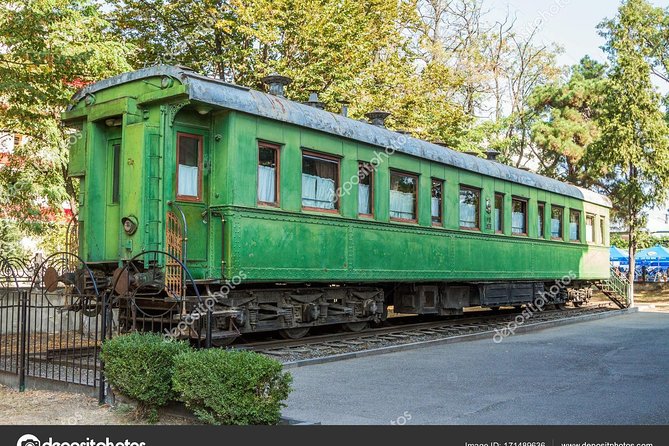
A local restaurant stop is included in the route, but the meal itself is not included in the $19 price. The program says you will taste local products, which gives you a chance to sample Georgian food without searching for a restaurant during a packed day.
The value depends on your expectations. A meal stop saves time and keeps the group together, but it is not a carefully chosen private dining experience. One account praised the restaurant as a welcome part of the trip, while another found the food oily and the service attitude disappointing.
I would treat lunch as practical rather than central to the tour. If you have dietary needs or strong food preferences, ask the provider before departure. The available information does not promise a menu, fixed meal price, or special dietary arrangements.
Gori and the optional Stalin Museum
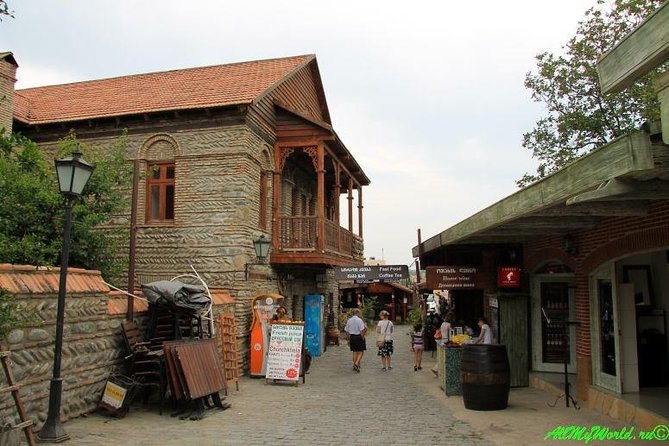
Gori adds a very different kind of history. It is the birthplace of Joseph Stalin, and the optional museum focuses on his life through personal belongings, furniture, sculpture, and displays in a memorial-style setting.
The museum is not an easy stop emotionally or politically. Stalin was responsible for policies and repression that caused immense suffering, yet the museum presents him through the lens of his birthplace and public legacy. Some people find that contrast useful. Others may find the tone too celebratory or simply not want to spend part of a Georgian history day on a Soviet leader.
The museum visit is optional and requires another entrance fee. Again, the supplied details conflict, listing 15 GEL in one place and 17 GEL elsewhere. Bring enough Georgian currency for the higher figure, or confirm the price shortly before departure.
The planned museum visit takes about an hour. The program says it may be visited at the group’s request, so do not assume everyone will enter. If you particularly want the museum, ask at the beginning of the day how the group will decide and how much time will be allowed.
There is also a practical issue about the order of the day. Gori is listed as part of the second half, but one account expected to be dropped there and found that the schedule did not work that way. If you need to finish in Gori rather than return to Tbilisi, this is not the right arrangement unless the provider confirms it clearly in writing.
Guides, language, and group quality
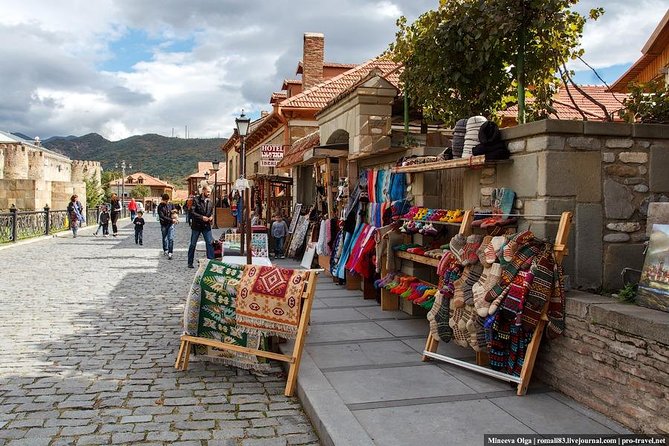
The guide can make or break this excursion. Several guides have received especially warm praise. Luka was singled out for bringing each site to life with clear historical explanations, while Paata was praised for his friendly manner and smooth handling of the day. George and Tornike were also described as helpful and easy to understand, and Emilia received strong personal praise.
That positive range is worth noting, but it is not a guarantee. Other accounts describe very short English explanations, heavy use of Russian, and guides who were difficult or rude. Since English is offered, you should expect the main information to be available in English, but you may want to confirm the language balance before paying.
This matters because the day contains places that benefit from explanation. Uplistsikhe’s rooms can look like bare rock without context, and Svetitskhoveli’s religious importance is easy to miss without a guide who can explain it clearly.
The group limit is 15, which is better than a large coach tour. Still, a small group does not automatically mean personal service. Ask questions early, stay aware of the meeting time, and keep your guide’s phone number. At Uplistsikhe, do not wander onto a different path without knowing where the group will regroup.
What the $19 price really buys
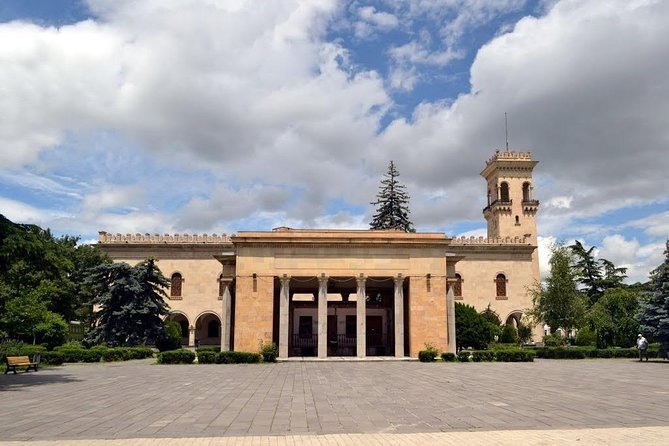
At $19 per person, this is unusually inexpensive for a full-day trip with transport and a guide from Tbilisi. I see the price as a way to buy access and convenience, not a promise of luxury or highly individual attention.
The included value is strong:
- Transport from and back to the Tbilisi meeting point
- Guide service
- A route covering four major places
- A group limited to 15 people
- English availability
You need to add lunch and entrance charges. At minimum, budget for Uplistsikhe and, if you choose it, the Stalin Museum. Because the listed fees conflict, carry a little extra rather than relying on the lower figure.
The low price also helps explain why the itinerary is busy. You cover a lot of ground in one day, but you do not get unlimited time at each site. If you want long independent visits, quiet photography, or detailed archaeological study, a private tour would probably suit you better.
Who should book this day trip?
I would recommend it to someone staying in Tbilisi who wants a broad first look at central Georgian history without planning several separate journeys. It is especially useful for first-time visitors with only a few days in the country.
You will get the most from it if you enjoy variety. In one day, you see an ancient monastery, a major Orthodox cathedral, a pre-Christian rock settlement, and a museum dealing with Soviet memory. That is a lot of Georgia in one route.
I would be more cautious if you need excellent English commentary, dislike rushed schedules, or want complete control over the day. The uneven reports about language, driver safety, and guide behavior are the biggest reasons to confirm the current guide and transport arrangements before departure.
Bring water, sun protection, and sturdy shoes. Keep some GEL for the optional fees and meal. Since the experience requires good weather, poor conditions may lead to a different date or a full refund. Free cancellation is available up to 24 hours before the 9:00 a.m. start.
Should you book it?
Book this tour if you want maximum historical variety for very little money and can accept a group schedule. Jvari’s view, Svetitskhoveli Cathedral, and Uplistsikhe make the route worthwhile even if you decide to skip the Stalin Museum.
Before booking, confirm that English will receive full commentary, ask which guide is assigned, and clarify the current entrance fees. If you receive a guide such as Luka, Paata, George, Tornike, or Emilia, the day may be both efficient and engaging. If you need guaranteed language quality and more time at Uplistsikhe, pay more for a private or smaller custom trip.
FAQ
How long does the tour last?
The advertised duration is approximately nine hours, beginning at 9:00 a.m. and ending back at the meeting point in Tbilisi.
Where does the tour start?
The meeting point is 3 Vakhtang Gorgasali Street, Tbilisi 0105, Georgia.
Which places are included?
The route includes Jvari Monastery, Mtskheta and Svetitskhoveli Cathedral, Uplistsikhe, and Gori. The Stalin Museum in Gori is optional.
Is the tour offered in English?
Yes. English is listed as an available language. Some accounts describe much more Russian commentary than English, so confirm the language arrangement before departure.
Are entrance tickets included?
Guide service and transport are included. Uplistsikhe and the Stalin Museum require additional payment. The supplied information lists the fees as either 15 GEL or 17 GEL, so confirm the current amounts.
Is lunch included?
No. The tour visits a local restaurant, but dinner or the meal cost is not included.
How large is the group?
The maximum group size is 15 people.
Is the Stalin Museum visit required?
No. The program describes it as an optional visit at the group’s request.
Can I cancel for a full refund?
Yes, if you cancel at least 24 hours before the local start time. If poor weather causes the tour to be canceled, you will be offered another date or a full refund.
Just added around the world
- Charlotte Historic : Queen Bee City Tour★ 4.5 · 31 reviews
- Charlotte’s Premier Historical City Bus Tour★ 5.0 · 178 reviews
- Charleston’s Historic Pubs, Taverns, and Taprooms Tour★ 4.5 · 33 reviews
- Charlotte’s Ultimate Southern Charm Historical City Bus Tour★ 5.0 · 61 reviews
- Charleston’s Strong Women of the South History Tour★ 4.5 · 27 reviews
- Small-Group Tour: Charleston Old Walled City Historical Walking Tour★ 4.5 · 283 reviews
- Private Walking Tour of Historic Charleston★ 5.0 · 38 reviews
- Sip History in The Sun Cabana Covered Cocktail Class★ 5.0 · 332 reviews
Tbilisi History Tours, compared.
Mtskheta: Ancient Capital of Georgia Half-Day Tour
Read our review →
Tbilisi old town & soviet heritage – Private driver-guided Tour
Read our review →
Private Wine tasting in Historic Karalashvili Wine Cellar
Read our review →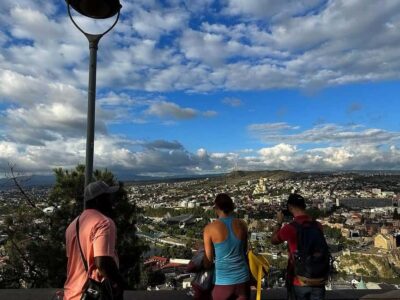
Browse the lists this tour appears in