
Review · TUSCANY
Montepulciano: Historical Cellars Guided Tour & Wine Tasting
A town hides wine below its streets. This 2.5-hour experience pairs a walk through Montepulciano’s historic center with visits to two underground cellars, where huge oak barrels hold the area’s famous wines. I like the clear sense of place, and I like that the guide explains both the town and the winemaking rather than rushing straight to the glasses. The main consideration is that transportation is not included, so you need to reach Montepulciano and Piazza Grande on your own.
The tour costs $77 per person, which is fair if you want context as well as wine. The tasting focuses on Rosso di Montepulciano DOC and Vino Nobile di Montepulciano DOCG, and past guide Valentina has been praised for friendly local advice and detailed explanations. Festival periods can cause a slight delay, so allow a little flexibility at the meeting point.
Key points at a glance
- Two cellars beneath the town: Walk through tunnels and brick-vaulted spaces in central Montepulciano.
- A tasting with local purpose: Sample Rosso di Montepulciano DOC and Vino Nobile di Montepulciano DOCG while learning their basic traits.
- History starts in Piazza Grande: The tour connects Montepulciano’s streets, people, and wine traditions before going underground.
- A small-group feel may be possible: One booking became a private tour, giving the group extra time for questions and local suggestions.
- English and Italian guiding: You can book the experience with a live guide in either language.
- Good timing for a town visit: At 2.5 hours, the tour leaves part of the day for lunch and further exploring.
Meeting in Piazza Grande, Montepulciano
Your starting point is the tourist office in Piazza Grande, the main square at the top of Montepulciano. This is a useful meeting place because you begin in the middle of the town’s historic center rather than at an outlying winery.
The opening walk gives the tour its shape. You are not simply driven to a tasting room, handed a glass, and sent on your way. Instead, the guide introduces Montepulciano and explains how local life and wine production have been linked for centuries.
That setting matters. Vino Nobile is not presented as an isolated product. The streets, buildings, cellars, and wine trade all form part of the story. You get a better sense of why the wine is associated so closely with this hill town.
The historic center also means you should arrive ready to walk. The experience includes moving through town before entering the cellars, and the underground spaces are reached from central Montepulciano. The supplied details do not promise a flat route or step-free access, so anyone with mobility concerns should ask the provider before booking.
More Wine Tours in Italy:
- Abruzzo: Historic Cellar Wine Tour and Tasting
★ 4.8 · 41 reviews - Florence Wine &Food: Taste Tuscan Flavors in Historic Cellar
★ 4.6 · 31 reviews - Douro Valley: Historical Sites, Wine Experience, Lunch & Cruise
★ 5.0 · 5,133 reviews
Walking through Montepulciano’s wine country town
The town portion is more than a short transfer between the square and the first cellar. Your guide explains the history of Montepulciano and the local traditions that shaped Vino Nobile.
This is where a live guide earns the fee. The best part of a town walk is often the chance to ask small questions that do not fit neatly into a printed description. Several people praised the guides for explaining the area clearly, answering questions, and offering suggestions for what to do afterward.
Valentina, one guide named in the feedback, was praised for her friendly manner, local knowledge, and lunch recommendations. That kind of help can be handy because a tour ending in the center gives you an easy chance to continue your day with a meal or more sightseeing.
The walking section also keeps the pace from becoming too wine-heavy. You spend time looking at Montepulciano as a living town, then move into the places where its wine is made and stored. I like that balance. It gives the tasting a setting and a reason.
Inside the first underground cellar
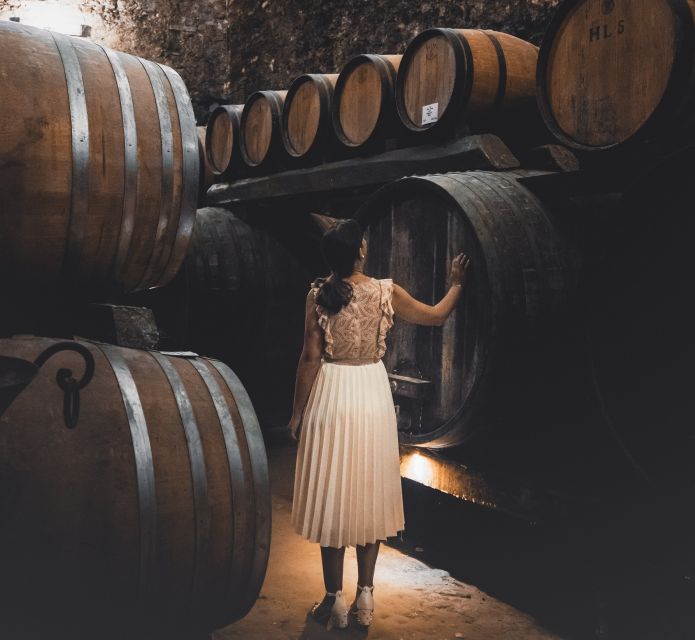
The cellar visits are the heart of the experience. You enter two underground spaces in central Montepulciano, moving through tunnels cut into striking brick vaults.
The design of these cellars is part of the attraction. You are surrounded by old masonry and enclosed passageways rather than the polished, open tasting rooms found at some modern wineries. The atmosphere feels tied to the town itself.
The main visual feature is the collection of enormous oak barrels. Inside them, Vino Nobile di Montepulciano DOCG and Rosso di Montepulciano DOC rest as they mature. Seeing the barrels in their underground setting helps you understand that wine production here takes place beneath the streets you have just walked.
The experience does not promise a technical winemaking course, and that is probably a good fit for most visitors. The guide explains the basic process and the role of the cellars in accessible language. You will learn enough to make the tasting more meaningful without spending the whole afternoon on production details.
At the same time, the cellars may not satisfy someone looking for a large working winery with vineyard views, extensive equipment, or a full meal. The focus is the historic underground setting in town. If that is what interests you, the format works well. If you want a broad agricultural tour, this is a narrower experience.
The second cellar and the value of comparison
Visiting two cellars gives you more than one look at Montepulciano’s underground wine tradition. You can compare the spaces, the barrels, and the way each site presents its wines.
The supplied details do not identify the two cellar names or promise that they are identical in style. That is worth keeping in mind. The strength of the visit is the chance to see two historic cellar environments, not a guaranteed behind-the-scenes tour of every stage of production.
One particularly appealing possibility is meeting a vineyard owner or producer during the visit. One participant described drinking very good wine with the owner of one vineyard, but this should not be treated as a fixed part of every departure. It depends on the day’s arrangement.
The personal nature of the experience comes through in the pacing. A group of eight found the tour comfortable and well organized, while another booking ended up private without expecting it. You should not assume a private tour, but the format can sometimes feel more personal than a large bus excursion.
More Guided Tours in Italy:
- Rome: Colosseum with Arena, Roman Forum and Palatine Guided Tour
★ 4.0 · 5,598 reviews - Venice: St. Mark’s Basilica Guided Tour & VR History Intro
★ 3.9 · 4,880 reviews - Colosseum with Arena, Roman Forum and Palatine Hill Guided Tour
★ 4.5 · 3,526 reviews - Colosseum Underground & Ancient Rome Guided Tour
★ 4.5 · 2,590 reviews
Tasting Rosso and Vino Nobile
The tasting includes Rosso di Montepulciano DOC and Vino Nobile di Montepulciano DOCG. The guide explains the basic characteristics of each wine, so you are not left to guess what belongs in the glass.
Rosso offers a useful introduction to the local wine style. Vino Nobile is the more famous name associated with Montepulciano, and tasting both helps you notice the distinction between the two labels. The point is not to turn you into a sommelier. It is to give you a practical framework for understanding the bottles you may see on menus or in shops across Tuscany.
The tasting is also well timed. After walking through the town and cellars, you have seen the barrels and heard how the wines are connected to Montepulciano. The glasses then serve as the final piece of the visit rather than the only attraction.
Do not expect food pairings based on the information provided. The included elements are the cellar tour, the town walk, and the wine tasting. If you need a meal, plan lunch separately in Montepulciano.
The comments about the wines are consistently warm, with the tasting described as good or excellent. Still, taste is personal. A wine enthusiast may want a more detailed discussion of grape varieties, aging, or production rules than this tour provides. For a visitor who wants an understandable first look at local wine, the level of detail should be suitable.
How much time and money should you allow?
At $77 per person, this is not the cheapest way to taste wine in Tuscany. The price makes more sense when you count the full package: a live guided walk, local history, two underground cellars, and a tasting of two named Montepulciano wines.
I see the value in the setting. You are paying for access and explanation in the center of a famous wine town, not just for a pour at a counter. The cellar architecture and the town walk give you something to look at and learn from between tastings.
The 2.5-hour length is another advantage. It is long enough to feel substantial but short enough to fit around lunch or another Montepulciano activity. One participant called the timing perfect, and that seems right for a visitor who wants a focused introduction rather than a full-day wine program.
The price is less attractive if you mainly want to drink wine and do not care about history. You could spend less at a simple tasting room. This tour earns its cost through the combination of place, guide, and cellar access.
Remember that no transfer is included. You must get to Montepulciano and the tourist office in Piazza Grande yourself. If you are already staying in town or visiting by car, that is simple. If you are basing yourself elsewhere, arrange your transportation before booking.
Language, pace, and practical fit
The tour is offered with a live guide in English or Italian. That makes it suitable for international visitors who want explanations during both the walking portion and the tasting.
The pace is described as personal and casual, which should suit people who prefer time for questions. Guide Valentina was praised for being friendly and well informed about the town and wine area. Another guide was praised for giving detailed answers in both English and Italian.
A festival period caused one guide to arrive late, but the group remained happy with the experience. I would treat that as a useful planning note, not a major warning. Montepulciano can have busy event days, so avoid scheduling another fixed activity immediately after this tour.
The activity is not suitable for pregnant women because wine tasting is included. The supplied information does not give detailed accessibility guidance, so ask about stairs, walking surfaces, and cellar access if those points matter to you.
Free cancellation is available up to 24 hours before the experience for a full refund. You can also reserve and pay later, which helps if your Tuscany plans are still shifting.
Who should book this Montepulciano cellar tour?
I would recommend it to you if you are staying in or visiting Montepulciano and want more than a quick drink. It suits first-time visitors who want the town’s wine story explained in one compact outing.
It is also a good match for couples, small groups, and curious food-and-wine fans who enjoy talking with a guide. The private-feeling pace, when group numbers are low, leaves room for questions and local recommendations.
You may want another kind of experience if you are looking for vineyard walks, a full meal, transport from another Tuscan town, or a long technical tasting. Those features are not included here.
The strongest parts are the underground cellars, the connection between the town and its wine, and the quality of the guiding. The best advice is to book this when you want to understand why Montepulciano matters as a wine town, not simply when you want two glasses of wine.
Should you book it?
Book this tour if the idea of walking through brick-vaulted cellars beneath Montepulciano sounds more appealing than sitting in a standard tasting room. At $77, it offers solid value for a guided town visit, two cellar tours, and tastings of Rosso di Montepulciano DOC and Vino Nobile di Montepulciano DOCG.
Skip it if you need transport, food pairings, vineyard scenery, or a highly technical wine lesson. For most visitors already planning time in Montepulciano, though, this is a well-paced way to connect the town’s streets, cellars, and wines in one afternoon.
FAQ
Where does the Montepulciano cellar tour meet?
Meet at the tourist office in Piazza Grande, in the historic center of Montepulciano.
How long does the experience last?
The tour lasts 2.5 hours.
How much does the tour cost?
The listed price is $77 per person.
Which wines are included in the tasting?
The tasting includes Rosso di Montepulciano DOC and Vino Nobile di Montepulciano DOCG.
How many cellars will I visit?
The tour includes guided visits to two underground cellars in central Montepulciano.
Is transportation included?
No. Transfers are not included, so you must reach the meeting point in Piazza Grande yourself.
Which languages are available?
The live tour guide is available in English and Italian.
Can I cancel for a refund?
Yes. You can cancel up to 24 hours in advance for a full refund.
Is the experience suitable for pregnant women?
No. The activity is not suitable for pregnant women because wine tasting is included.
Just added around Italy
- Alberobello: History Walking Tour★ 4.6 · 223 reviews
- Genoa: Historic Guided Tour of Christopher Columbus’ House★ 4.4 · 186 reviews
- Forte di Bard: history tour★ 4.5 · 31 reviews
- Florence Wine &Food: Taste Tuscan Flavors in Historic Cellar★ 4.6 · 31 reviews
- Florence: Medici Family History Tour★ 4.3 · 93 reviews
- Florence: Fashion History Guided Walking Tour & Museum Visit★ 4.2 · 72 reviews
- Florence Medici Bike Tour – Cycle Through History and Power★ 4.2 · 23 reviews
- Essential Florence Walking Tour to discover its history★ 5.0 · 21 reviews
Wine Tours, compared.

Douro Valley: Historical Sites, Wine Experience, Lunch & Cruise
Read our review →
Tapas Walking Tour with Food, Wine, and History
Read our review →
Live Fado Show with Port Wine in Historic Center
Read our review →
Sevilla Food Tour: Tapas, Wine, History & Traditions
Read our review →
Valencia Old Town Tour with Wine & Tapas in 11th Century Historic Monument
Read our review →
Barcelona Tapas Walking Tour: Food, Wine & History
Read our review →
Ultimate Seville Tapas, Wine & History Small Group Tour
Read our review →
Browse the lists this tour appears in