
Review · APULIA
Lecce: Jewish History Walking Tour
Lecce has a Jewish story beneath its Baroque face. I like the way this one-hour tour combines quiet old-city lanes with the underground Jewish Museum, and I especially value its attention to both medieval Jewish life and the later story of Jewish refugees welcomed in Salento. The $29 price is fair for a guided walk with museum admission, though the short length means you get a clear introduction rather than a long study.
The guide can make or break a history tour, and names such as Diletta, Chiara, Elena, Sarah, and Francesco have been singled out for warm, clear presentations. I would allow extra time afterward if you want to think through the museum’s emotional material, since the walking portion is brisk and the historical evidence is limited in places.
Key details before you go
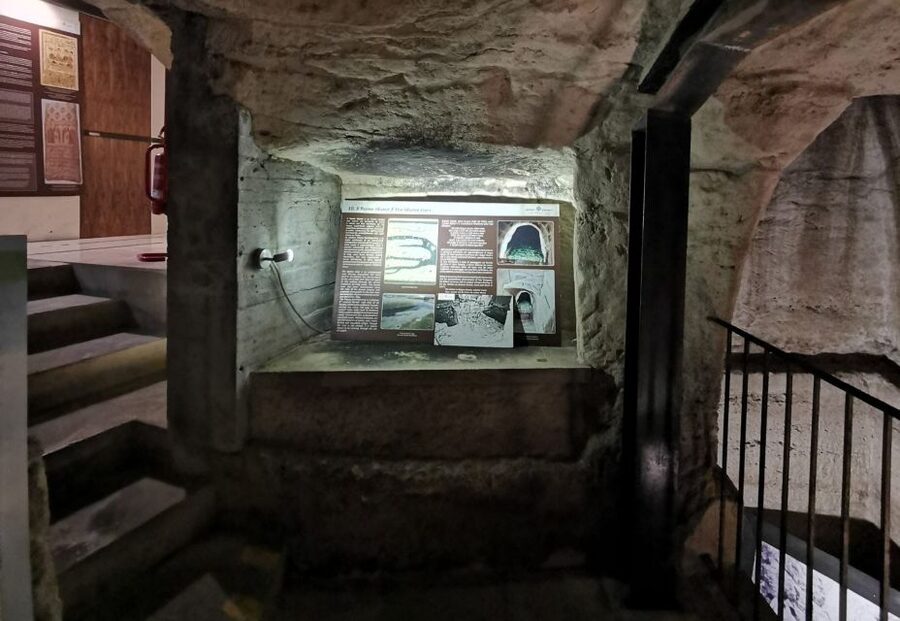
- The museum sits below street level: You visit an underground space built over the remains of Lecce’s former synagogue, with a mikveh and mezuzah.
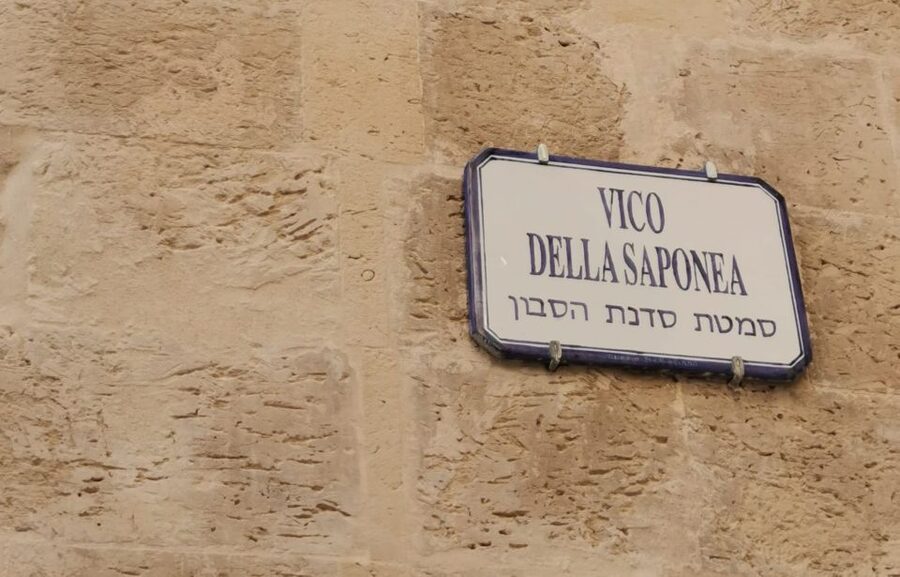
- The route uses real Jewish street names: You walk Via della Sinagoga, Vico della Saponea, and Via Abramo Balmes.
- The story reaches beyond the Middle Ages: The tour also covers Jewish refugees and displaced people welcomed in Salento after World War II.
- The entire experience lasts one hour: About 25 minutes are spent at the Jewish Museum and about 35 minutes walking through the old city.
- The price includes the museum: At $29 per person, you are paying for a local English or Italian-speaking guide, the guided visit, museum entry, and a map of Lecce and Salento.
- It runs in all weather: The tour takes place rain or shine, and it is wheelchair accessible.
Why Jewish Lecce adds another layer to the city
Lecce is famous for its carved Baroque churches and honey-colored stone. That visual identity can easily make the city seem defined by the 17th century, but its story reaches much further back.
The city has been shaped by Messapians, Greeks, Byzantines, Normans, French Angevins, and Spanish Aragonese. The Jewish community forms another important part of that long sequence, even though little of its physical presence remains above ground.
That absence is part of the point. You are not walking through a preserved Jewish quarter with a synagogue still in use. Instead, the guide helps you read the old streets, names, remains, and fragments of evidence. The result is less about grand monuments and more about recovering a chapter that was pushed out of sight.
The tour explains the main phases of Jewish life in Lecce and the wider Salento area. It also addresses why Jews were forced to leave Lecce in the 1500s, a turning point that helps explain why the community is no longer part of the city’s everyday religious life.
I appreciate that the subject is presented as part of Lecce’s general history, not as a niche topic meant only for people of Jewish background. The story concerns religious life, migration, politics, memory, and the way a city chooses what to preserve. You do not need a personal connection to Judaism to find the material meaningful.
More History Walking Tours in Italy
- Venice: City Center Historical Guided Walking Tour
★ 4.2 · 1,873 reviews - Palermo: Street Food and History Walking Tour
★ 4.9 · 1,486 reviews - Verona: History and Hidden Gems Guided Walking Tour
★ 5.0 · 1,379 reviews
Starting inside the Jewish Museum
The meeting point is Infotab, the Lecce Walking Tours office, but pay close attention to the practical detail: the meeting point is actually inside the Jewish Museum. One person specifically wished this had been clearer, so I would not wait outside the building assuming the guide will come looking for you.
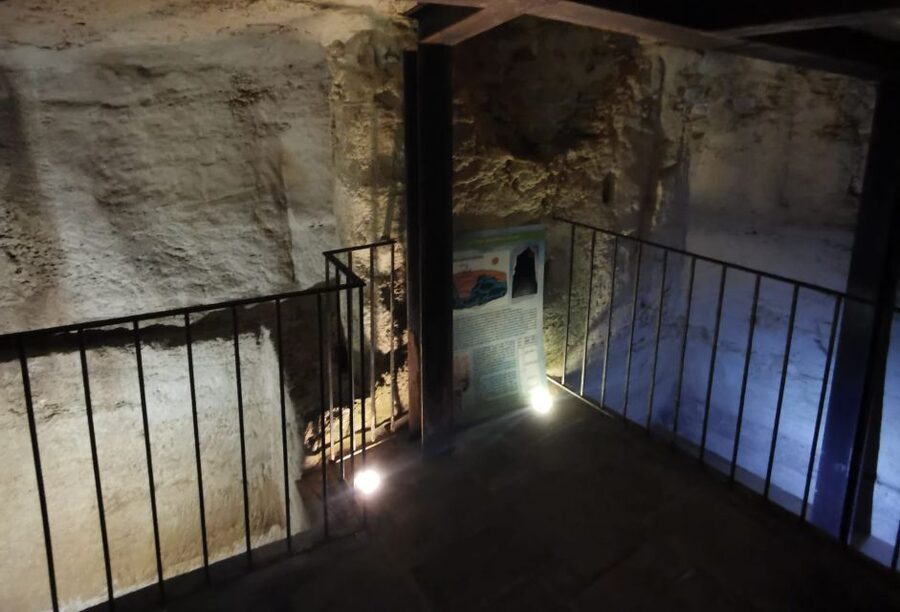
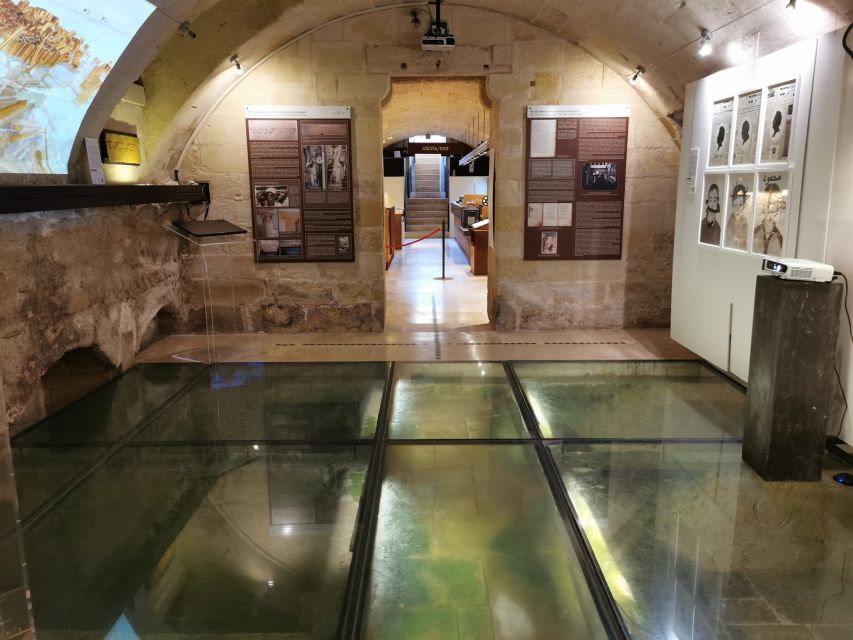
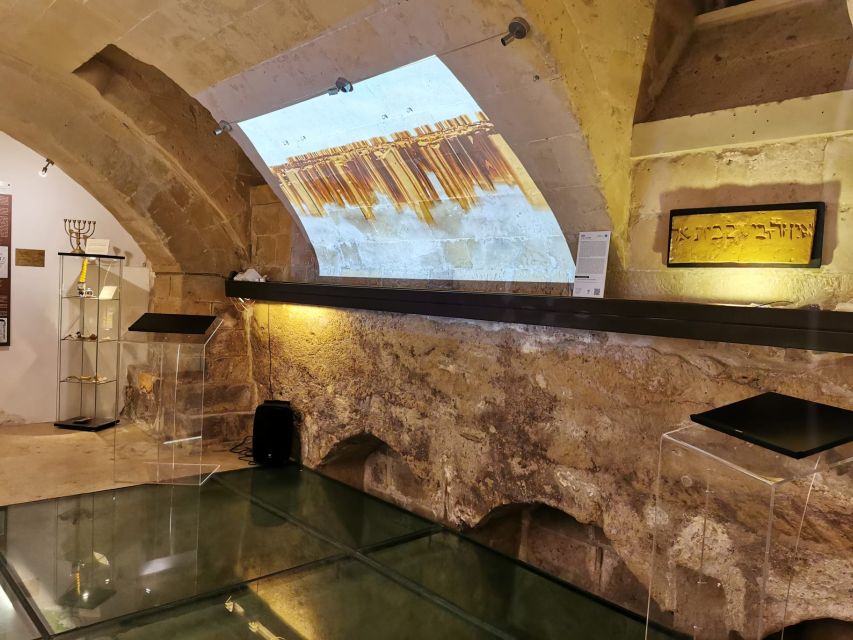
The museum visit takes roughly 25 minutes. It is compact, but the setting gives the first part of the tour real weight. The underground area occupies the remains of the former synagogue, allowing you to see the physical space connected with Lecce’s Jewish community rather than simply reading about it in a modern gallery.
Two details are especially important:
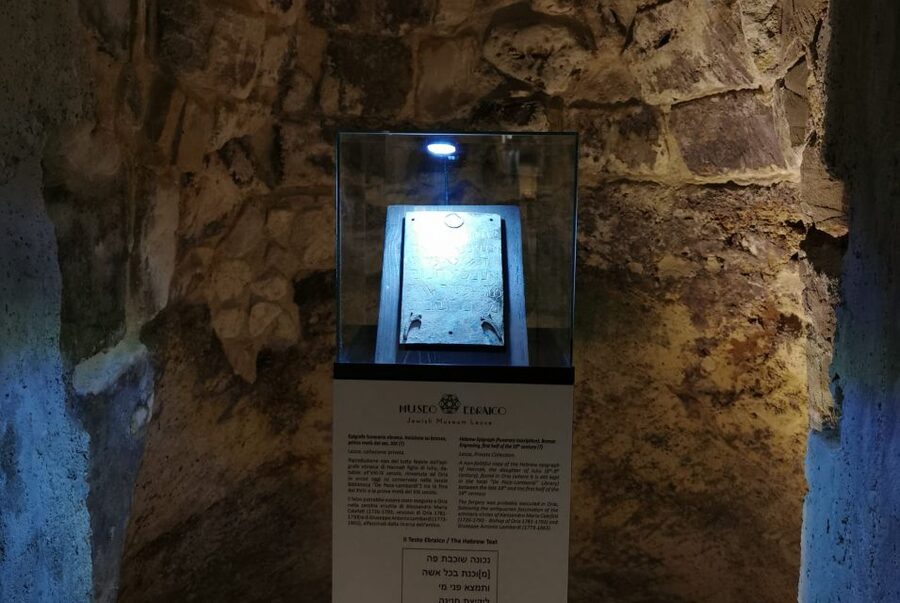
- A mikveh, the ritual bath associated with Jewish religious practice
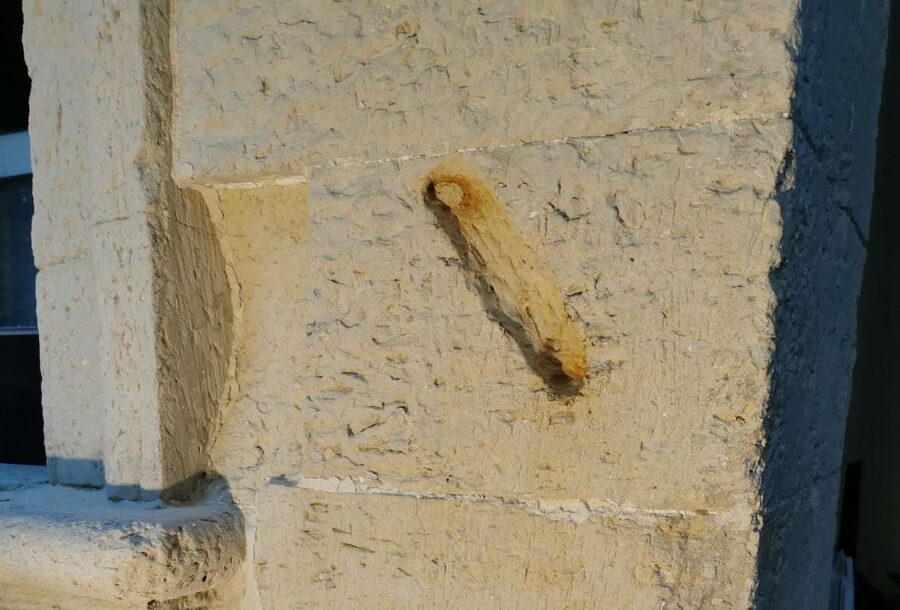
- A mezuzah, connected with Jewish homes and doorways
These objects help turn a broad historical account into something more tangible. You can begin to picture a community with its own customs, worship, and daily routines, even though the synagogue itself no longer functions as it once did.
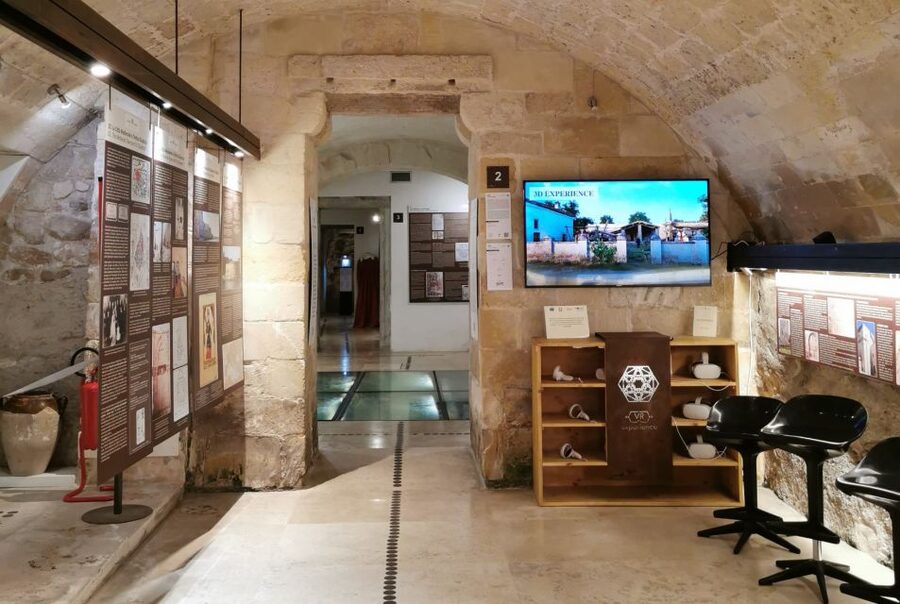
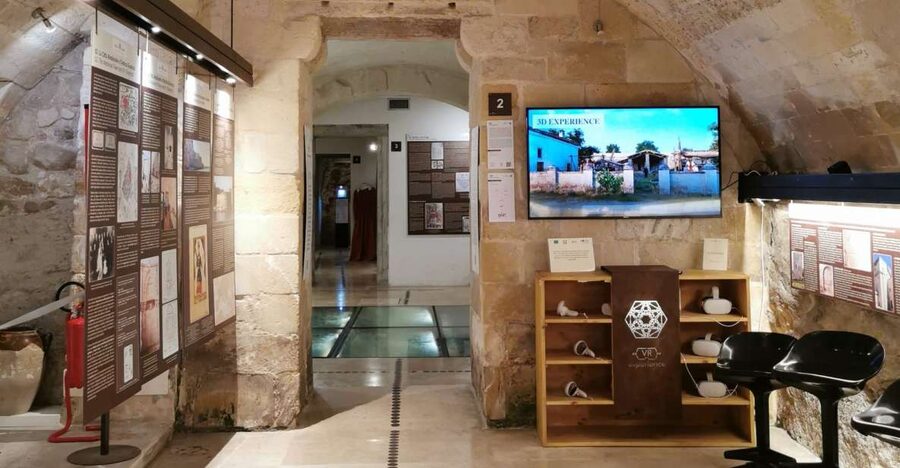
The museum also uses videos and English translations. The presentation has been described as professionally produced, with enough detail to explain the place Jewish people held in Puglian society over the centuries. That matters because the surviving evidence is limited. A good museum must connect small physical traces with a larger explanation, and this one is designed to do exactly that.
The museum is not only about the medieval period. One of its most moving elements concerns Jewish refugees and displaced people in Salento after World War II. A video about three women born in Lecce who later returned from Israel adds a personal dimension to the wider political story.
I would not rush this section. The official tour moves on after about 25 minutes, but the subject includes forced departure, displacement, return, and memory. If you are someone who likes to spend time with exhibits, you may want to revisit the museum independently if that option is available to you.
Walking Via della Sinagoga and the old Jewish quarter
After the museum, the guide takes you through the medieval streets and alleys associated with the Jewish community. This section lasts about 35 minutes and gives you a different view of Lecce from the usual church-and-palace route.
Via della Sinagoga is one of the key stops. The street was the old path leading to one of the most important synagogues in southern Italy. Today, the name functions like a historical signpost. It helps you understand where the synagogue once belonged in the city and how a modern street can preserve a clue to an older urban arrangement.
The walk continues through Vico della Saponea, a narrow alley with a name tied to the old neighborhood. You then reach Via Abramo Balmes, named for one of the most important Jewish figures connected with Lecce.
These are not necessarily spectacular sights in the usual sightseeing sense. You should not expect a fully reconstructed quarter or a row of preserved medieval facades explaining each event. The value comes from learning how to see the city’s streets as evidence. With a guide beside you, an ordinary-looking corner can become part of a former community’s map.
That makes the tour a useful companion to a general Lecce walk. If you have already admired the city’s Baroque churches, this route gives you a counterpoint. It does not replace the major monuments, but it helps correct the idea that Lecce’s past is only Catholic, Baroque, and aristocratic.
The difficult story of departure in the 1500s
A central part of the experience is learning why Jews were forced to leave Lecce in the 1500s. The supplied material places this turning point around 1540, before the city’s famous Baroque appearance had fully taken shape.
The tour treats the departure as a major break in Lecce’s social story. A community that had contributed to medieval life disappeared from the city, leaving behind traces that were later overlooked or erased. That helps explain why the Jewish presence can feel so unfamiliar when you first arrive in Lecce.
I value this part because it gives the street walk a clear purpose. Without it, Via della Sinagoga might be no more than an intriguing name. With the historical background, you understand that the route points to a lost community and to the forces that removed it.
At the same time, you should set your expectations correctly. The guide is working with limited historical evidence. One good account of the tour described it as making the best use of what survives, while another noted that the subject deserves an even longer discussion.
That is a fair criticism, but it is also a limitation of the format. An hour cannot cover every document, date, religious custom, and political cause in detail. The tour gives you the framework. If you want an academic treatment, you will need additional reading or more time at the museum.
More Jewish Heritage Tours in Italy:
- Budapest Jewish Heritage Memorial Walking Tour & Synagogue Entry
★ 5.0 · 568 reviews - Budapest: Jewish Heritage Guided Tour with Synagogue Ticket
★ 4.8 · 533 reviews - 3-Hour Porto Jewish Heritage Walking Tour with Local Guide
★ 4.5 · 396 reviews - Private Jewish Heritage Journey by Barcelona Dreaming
★ 4.8 · 383 reviews
From medieval Lecce to postwar Salento
The later story of Salento’s Jewish communities and Jewish refugees gives the tour an unusual reach. This is not only a medieval-history walk. It also looks at what happened in the region after World War II, when local communities welcomed Jewish refugees and displaced people.
That part of the presentation has made a strong impression because it shows Salento in a different light. Instead of focusing only on exclusion and loss, the museum also presents acts of welcome and the complicated experiences of people rebuilding their lives.
The video about the three women who returned to Lecce from Israel is especially personal. Their connection to the city links the museum’s underground remains with living memory. You are reminded that history is not safely sealed in the past. Families carry it forward, return to places connected with it, and sometimes help recover stories that had been forgotten.
For me, this modern section makes the tour suitable for people who normally avoid purely archaeological walks. It gives you human stories alongside the street names and architectural remains. It also makes the experience relevant to the wider history of migration in Italy.
Guide quality and the value of a short tour
The strongest part of this activity is the guide-led interpretation. Names repeatedly associated with excellent presentations include Diletta, Chiara, Elena, Sarah, and Francesco. Diletta has been praised for presenting the subject with care and clarity, while Sarah has been described as both friendly and well informed. Francesco has also been noted for explaining the material clearly and responding helpfully to questions.
The important point is not that every guide will deliver the exact same experience. It is that the tour depends on a guide who can handle a sensitive subject without turning it into a lecture or a sentimental performance.
The best guides connect the physical route to the larger story. They explain why a street name matters, how the synagogue site fits into the city, and what can reasonably be known from the evidence. They also leave room for questions.
At 60 minutes, this is an efficient activity. You can fit it into a morning or afternoon between Lecce’s churches, cafés, and other historic sights. The trade-off is depth. Several people have wanted a longer discussion, and I agree that the subject could easily fill two hours.
Still, short does not mean slight. The museum visit and street walk cover different kinds of evidence, and the two parts work well together. You see the physical remains underground, then return to the streets above to understand how the neighborhood once functioned.
Is $29 a fair price?
At $29 per person, the cost is reasonable if you want more than a self-guided walk. The fee includes an English or Italian-speaking local guide, entry to the Jewish Museum, the guided route through the Jewish neighborhood, and a map of Lecce and Salento.
Museum admission alone would not provide the same context. You might see the mikveh, mezuzah, videos, and synagogue remains, but the guide explains how those pieces connect with the streets outside. That added interpretation is where the value lies.
The tour does not include hotel pickup or drop-off, so you need to reach the starting point yourself. That is not a major issue in central Lecce, but it is worth knowing when planning your day.
The activity is also wheelchair accessible, and it operates rain or shine. Since much of the experience takes place outdoors, check the forecast and dress sensibly. No special transport is provided, and the advertised format is a walking tour rather than a vehicle-based excursion.
Flexible booking adds some practical value. You can cancel up to 24 hours in advance for a full refund, and you can reserve now and pay later. Those policies are useful if your Lecce plans are still shifting.
Who will get the most from this experience?
I would recommend this tour to you if you:
- Want to see a side of Lecce beyond its famous Baroque churches
- Care about Jewish history, religious heritage, or migration
- Prefer local stories connected to real streets and buildings
- Have only an hour available
- Want a guided introduction before exploring the museum on your own
- Appreciate a serious subject presented in a respectful way
It may be less suitable if you want a long academic seminar or a large number of surviving Jewish monuments. The route is compact, and some of the story depends on interpretation because so much of the original community has disappeared.
Families with older children and adults of any faith can find meaning here. The tour does not require prior knowledge, and the postwar refugee stories give the experience a human focus beyond religious history alone.
Practical tips for making the hour count
Arrive with enough time to locate the museum interior, since the meeting point is inside rather than simply near the building. Wear comfortable shoes for the old streets and alleys, and remember that the tour continues in rain.
Listen for the relationship between names and places. Via della Sinagoga, Vico della Saponea, and Via Abramo Balmes are not filler stops. They are part of the evidence that allows the guide to reconstruct the old neighborhood.
If you are especially interested in the Jewish history of Salento, ask questions during the walk. The hour moves quickly, and a personal question may help you get more from the limited time.
I would also plan a little quiet time afterward. The material about forced departure, postwar displacement, and return can be emotionally heavy. The museum’s videos deserve more attention than a quick glance before rushing to the next attraction.
Should you book the Lecce Jewish History Walking Tour?
Yes, if you want a thoughtful one-hour addition to your Lecce plans. The strongest reasons are the underground synagogue remains, the mikveh and mezuzah, the street-level route through the old Jewish neighborhood, and the postwar stories of refugees welcomed in Salento.
Book it with the right expectation: this is an introduction, not an exhaustive course. You will leave with a better map of Lecce’s forgotten Jewish past, a clearer sense of why the community disappeared, and a new way to read streets that might otherwise seem ordinary.
At $29, museum entry and a local guide make the cost worthwhile. I would choose this tour especially after seeing Lecce’s Baroque center, when you are ready for a quieter and more challenging part of the city’s story.
FAQ
Where does the Jewish History Walking Tour start?
The tour starts at Infotab, Lecce Walking Tours. The meeting point is inside the Jewish Museum of Lecce.
How long does the tour last?
The tour lasts one hour. About 25 minutes are spent at the Jewish Museum, followed by about 35 minutes walking through Lecce.
What language is the tour offered in?
The live guide speaks English or Italian.
Is entrance to the Jewish Museum included?
Yes. Museum admission is included in the tour price.
What will I see at the Jewish Museum?
The underground museum is located on the remains of Lecce’s former synagogue. It includes a mikveh, a mezuzah, videos, and English translations.
Which streets are included in the walking route?
The route includes Via della Sinagoga, Vico della Saponea, and Via Abramo Balmes, along with other streets and alleys connected with medieval Lecce.
Does the tour cover Jewish history after the medieval period?
Yes. The experience includes the forced departure of Jews from Lecce in the 1500s and later stories about Jewish refugees and displaced people welcomed in Salento after World War II.
Is the tour wheelchair accessible and available in bad weather?
The tour is wheelchair accessible and takes place rain or shine.
Just added around Italy
- Lazise: Historical Center Wine Tasting Tour★ 4.9 · 110 reviews
- Pastrengo: Lake Garda Wine & Food Tasting in Historic Fort★ 4.7 · 73 reviews
- Lake Garda: Historic Castle Cruise with Wine Tasting★ 4.5 · 241 reviews
- Cosenza: Audio Guide of the Historic Center★ 4.1 · 19 reviews
- Historical walking tour of Turin (Private tour)★ 5.0 · 18 reviews
- Historical and Spiritual Jorney in Papal Basilicas★ 4.7 · 34 reviews
- Historic Shops in Genoa: Tour Through Tradition and Flavours★ 4.4 · 47 reviews
- Montepulciano: Historical Cellars Guided Tour & Wine Tasting★ 4.4 · 83 reviews
Jewish Heritage Tours, compared.
Budapest Jewish Heritage Memorial Walking Tour & Synagogue Entry
Read our review →
Jewish Heritage Guided Tour with Synagogue Ticket
Read our review →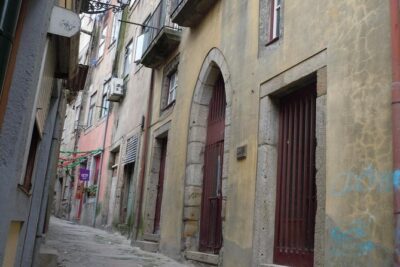
3-Hour Porto Jewish Heritage Walking Tour with Local Guide
Read our review →
Private Jewish Heritage Journey by Barcelona Dreaming
Read our review →
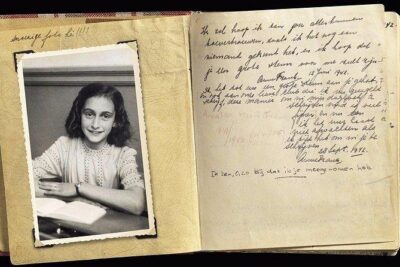
Anne Frank and the Jewish History of Amsterdam Private Tour
Read our review →
Lisbon Jewish Heritage and History – Private Tour Van
Read our review →
Browse the lists this tour appears in