
Review · GHENT
Discover authentic Ghent with historian & taste the best chocolate
Ghent reveals itself one story at a time. This two-hour walking tour links the city’s major sights with clear historical explanations, lively local tales, and a short chocolate stop. I like the way it connects politics, trade, religion, and architecture instead of treating Ghent as a collection of pretty façades. I also like the small group limit of 15 people, which should make it easier to hear the guide and ask questions.
The main thing to keep in mind is the title’s chocolate promise. Chocolate is part of the experience, but this is primarily a city history walk, not a two-hour tasting session. A few people wished they had more time with the chocolatier, so book it for context and storytelling first, with sweets as a pleasant extra.
Key points before you book
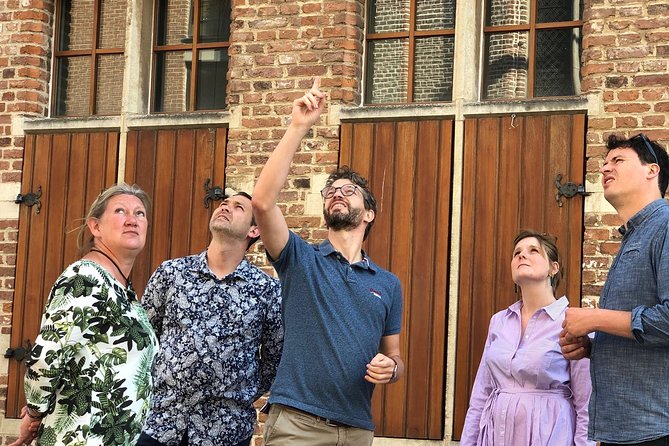
- Wim gives the tour a local, personal voice: He has lived in Ghent for many years and is also described as a historian and teacher.
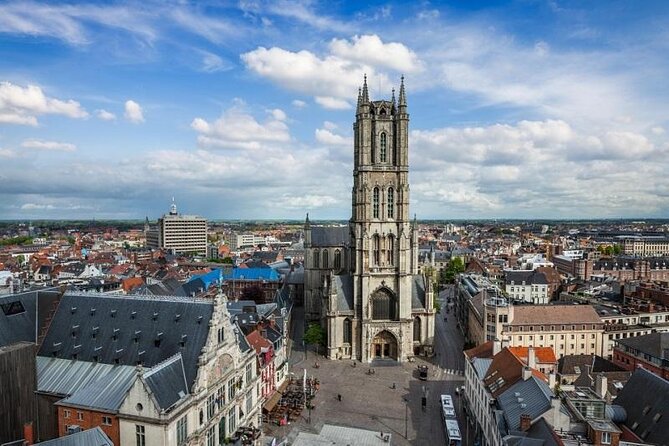
- The route covers central Ghent efficiently: You begin at Sint-Baafsplein and finish at Saint Michael’s Bridge, passing the cathedral, town hall, Gravensteen, and the Graslei.
- History is tied to the buildings around you: You learn how Ghent’s trade, religion, politics, and civic life shaped the streets.
- The chocolate stop is brief: It adds flavor to the walk, but the tour is not designed for extended chocolate sampling.
- The group is capped at 15 people: That is a useful size for a walking talk, especially in busy central streets.
- The price is reasonable for a guided introduction: At $42.05 per person, the value depends on how much you want interpretation rather than independent sightseeing.
Why this Ghent walk works so well
Ghent can feel confusing at first. Its medieval center has canals, churches, guild houses, monuments, and grand public buildings packed into a compact area. You can photograph all of them in an afternoon and still miss the reasons they are there.
This walk gives you a framework. At Sint-Baafsplein, the guide begins with the city’s broad story, then shows how economic, political, cultural, and religious forces meet in one square. That is a smart opening because you learn how to read Ghent before moving through it.
Wim is the guide named in the experience, and his background matters here. He is described as a historian and teacher who has lived in Ghent for years. The strongest praise focuses on his enthusiasm, natural manner, and ability to tell stories clearly. That combination suits a city walk: you want accurate information, but you also want someone who makes you care about a building before you pass the next corner.
The format is brisk. Most stops last five minutes, with longer explanations at Sint-Baafsplein, St. Bavo’s Cathedral, and Ghent Town Hall. You will not spend an hour inside one monument. Instead, you move through the center and build a connected picture of the city.
A few more history tours around Belgium worth a look
- Brussels: Historical Tour with Chocolate & Waffle Tasting
★ 4.8 · 1,206 reviews - Brussels: Historical Walking Tour with Chocolate & Waffle Tasting
★ 5.0 · 1,165 reviews - Best of Bruges: History, Chocolate & Beer Tour
★ 5.0 · 256 reviews
Starting at Sint-Baafsplein
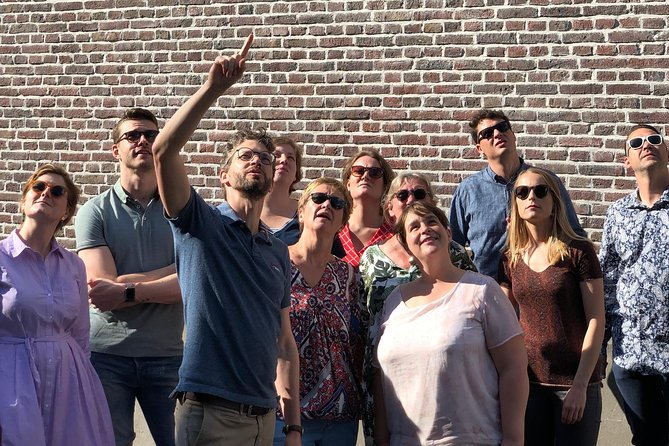
Meet in front of the white statue in the middle of Sint-Baafsplein. The meeting point is specific, but it is still worth arriving early because a central square can be busy and the guide needs to locate a group of people.
The opening section lasts about 20 minutes. You get a general introduction to Ghent, followed by a look at four forces that shaped it: economic power, political authority, cultural life, and religion. This is one of the most valuable parts for a first visit because it gives purpose to the stops that follow.
Sint-Baafsplein also puts you near some of Ghent’s most important landmarks. Rather than rushing straight to a postcard view, the guide begins by explaining how the city developed. I prefer this approach to a simple list of dates and names. Once you know what Ghent was trying to protect, control, or profit from, its grand buildings make more sense.
St. Bavo’s Cathedral and the Van Eyck connection
The walk continues around St. Bavo’s Cathedral for about 10 minutes. The focus is on the building’s development and its major art treasure. You should expect an exterior discussion rather than a full interior visit, since the stop is listed as a walk around the cathedral and admission is not included as a separate ticket.
The cathedral is also connected to the Van Eyck brothers at nearby Maaseikplein. This is a short five-minute stop, centered on an image of the famous brothers and the question of whether it really resembles them. It is a small moment, but it gives the tour a human touch. Medieval and early modern history can feel remote. Looking closely at how important figures were represented makes the past more immediate.
If art is your main reason for visiting St. Bavo’s, you may want additional time on your own. This tour gives context around the cathedral and its art, but it is not presented as a detailed gallery tour.
From the Scheldt to the medieval streets
At Geeraard de Duivelsteen, also called the Castle of Gerald the Devil, the route turns toward the Scheldt and the stories of Vikings and Geeraard De Duivel. The stop lasts about five minutes, so expect a compact tale rather than a long examination of the building.
The name alone makes this one of the more memorable stops. It also shows how Ghent’s history mixes real power struggles with legends and colorful characters. A good guide can make a short stop useful by explaining not only what a building looked like, but why its reputation lasted.
At Hoogpoort, the subject shifts to old buildings from the 13th century. This is another short pause, but the value comes from learning to notice age in the street itself. Ghent’s old center is not just a backdrop. Its buildings show how the city grew, rebuilt, and kept parts of its earlier shape.
Same place, a different slice of the past:
- Historical Walking Tour: Legends of Bruges
★ 5.0 · 2,541 reviews - Historical Walking Tour: Legends of Antwerp
★ 5.0 · 1,837 reviews - Historical Walking Tour: Legends of Gent
★ 5.0 · 1,761 reviews - THE Storytelling Tour of Bruges | First Day Must | History & Tips
★ 5.0 · 925 reviews
Ghent Town Hall and the noose bearers
The Town Hall receives about 10 minutes, enough time to explain why it took centuries to build. The guide connects its complicated construction to Emperor Charles V and the revolt of Ghent’s citizens.
This is where the tour’s political story becomes especially memorable. Ghent rebelled against Charles V, who was born in the city, and the conflict helped give the people of Ghent their nickname, noose bearers. The story is striking because it turns a civic insult or punishment into a lasting piece of local identity.
I like this kind of explanation because it moves beyond dates. You learn how a city remembers resistance and how that memory appears in the way local people describe themselves. The Town Hall is not simply an old façade. It becomes evidence of arguments over authority, money, and independence.
The Stadshal and Korenmarkt
Next comes the Stadshal, a modern and highly disputed building in the historic center. The guide asks if you know its nickname. The stop lasts about five minutes, so you will get the key point without a long architectural lecture.
This contrast is useful. Ghent is not frozen in the Middle Ages. New buildings have been added, debated, and judged beside older ones. The Stadshal lets you consider how a city balances preservation with present-day needs. It also gives the walk a little humor, since a building with a nickname is usually easier to remember than a formal architectural description.
At Korenmarkt, the story reaches back roughly 800 years. You look at the old houses and some mysterious inscriptions. This is a good place to slow your eyes down. The details may be easy to miss if you are walking alone, especially when the square is active and your attention is pulled toward the larger façades.
The tour’s strength is this habit of pointing out small clues. You are not only told to admire the square. You are given something specific to search for.
Meat halls, castles, and civic power
At Het Groot Vleeshuis, the guide explains how medieval butchers protected meat quality before refrigeration. The answer was cooperation: butchers worked together in one building.
That simple fact gives you a practical window into daily life. Large public buildings often had a clear purpose tied to food, trade, taxes, or regulation. The meat hall was not built only for appearance. It helped control commerce and public standards in a time when food storage was a serious problem.
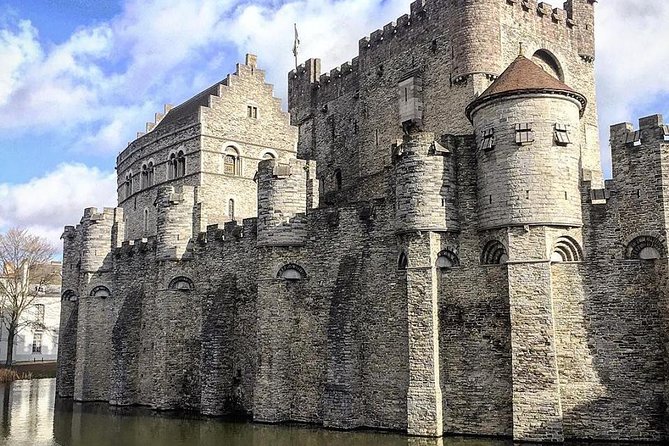
The route then reaches Gravensteen, Ghent’s famous castle. The explanation focuses on the Count of Flanders, who wanted to show strength to the people of Ghent and built a small castle for that purpose. The phrase small castle is amusing when you are looking at such a formidable structure. It also captures the political message: a ruler placing a strong symbol of authority in the middle of a powerful, sometimes difficult city.
You should not expect a full castle visit during this walk. The stop is part of the outside route and lasts about five minutes. If you want to explore the rooms, defenses, and exhibits inside Gravensteen, plan separate time.
St. Veerleplein and the final harbor walk
At St. Veerleplein, you search for Neptune, seahorses, and unusual dolphins. This is another detail-focused stop, the kind that rewards you for looking above eye level and examining sculpture closely.
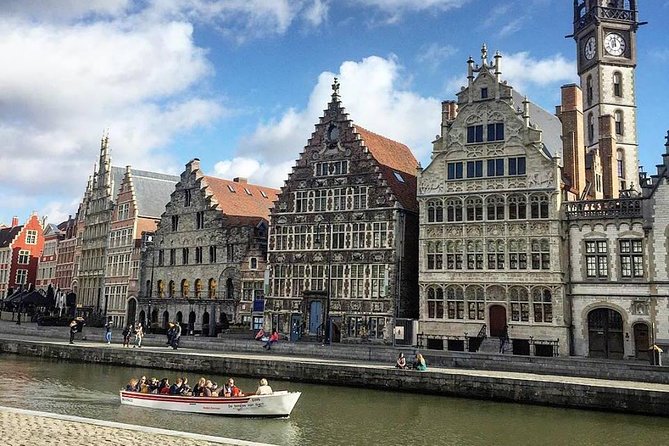
The final major stretch runs along Graslei and Korenlei, ending at Saint Michael’s Bridge. This is the visual high point of the route. The harbor is lined with historic buildings and was once a working place where skippers handled business and looked for entertainment after work.
The five-minute timing listed for Graslei and Korenlei should be read as a guided introduction, not a long pause for photographs. You may want to stay afterward. The route ends at Saint Michael’s Bridge, a useful place to continue exploring on foot or take in the view independently.
The harbor section also explains why Ghent became wealthy and important. Its beauty is real, but the waterfront was first a place of work. That practical background makes the view more interesting than a simple photo stop.
The chocolate break: pleasant, but not the main event
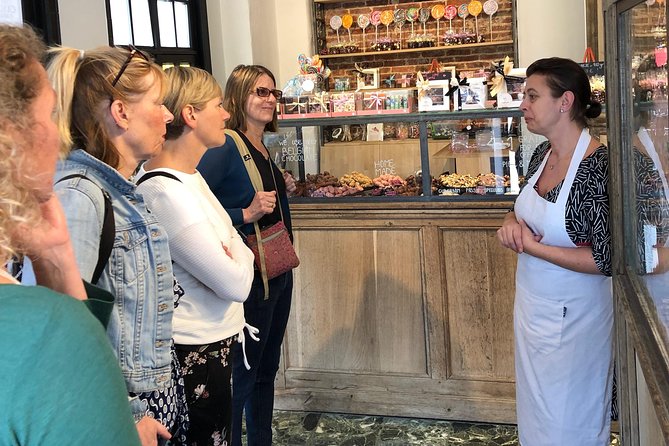
The experience includes chocolate, and the chocolate earns strong praise for its quality. Still, the comments about wanting more time or more chocolate are useful warnings.
I would think of this as a short refresher during a history walk. It breaks up the route and gives you a taste of Belgian chocolate, but it does not replace a dedicated chocolate tour or tasting. If you are choosing this experience mainly for sweets, you may feel shortchanged.
If you want a balanced afternoon, though, the format makes sense. You get a guided look at Ghent, then a small edible reward without losing much walking time. The chocolate also keeps the experience relaxed rather than purely academic.
Price, pace, and group size
The price is $42.05 per person for about two hours. That is fair if you want a guide to explain the city’s main sights and connect them into one story. You are paying for interpretation, not entry to a series of paid attractions.
The listed stops are free admission points, and the route is built around outdoor viewing. That keeps the price focused on the guide’s time. A self-guided walk will cost less, but you will need to research the Van Eycks, Charles V, the noose bearers, the medieval meat hall, and the castle yourself.
The maximum group size is 15 people. That is small enough to feel personal without requiring the price of a private tour. The pace is described as comfortable, with a series of short stops and enough movement to see many central landmarks.
The tour is offered in English and uses a mobile ticket. It begins at Sint-Baafsplein and ends at Saint Michael’s Bridge. The route is near public transportation, and most people can take part. Service animals are allowed.
Who will enjoy this experience most
I would recommend this walk to you if you are visiting Ghent for the first time and want a clear orientation before exploring alone. It is also a good fit if you like architecture but want the politics and daily life behind the façades.
History-minded families may appreciate the short stops and memorable stories about Charles V, the Vikings, the castle, and the noose bearers. The chocolate break adds a little appeal for anyone who wants a lighter touch.
You may want something else if you prefer long museum visits, a slow photography walk, or an extended food tour. The itinerary covers many places in two hours, so the tradeoff is breadth over depth.
Book at least a day ahead if you need flexibility. Free cancellation is available up to 24 hours before the start time, while later cancellations and changes are not refunded or accepted. The experience also requires a minimum number of participants, so a cancellation for that reason comes with an alternative experience or a full refund.
Should you book this Ghent tour?
Book it if you want a smart introduction to Ghent’s story, especially with a local guide who can explain why the buildings matter. Wim’s enthusiasm and teaching background are strong reasons to expect a lively walk rather than a dry lecture.
Do not book it expecting two hours of chocolate. The sweets are a welcome part of the route, but the real value is the historical connection between Sint-Baafsplein, the cathedral, Town Hall, Gravensteen, and the Graslei.
At $42.05, the tour makes the most sense early in your stay. Take it near the beginning, use the route to get your bearings, then return to the places that deserve more time, such as the cathedral, Gravensteen, or the harbor.
FAQ
How long does the Ghent walking tour last?
The tour lasts approximately two hours.
What is the price per person?
The listed price is $42.05 per person.
Where does the tour begin?
The meeting point is Sint-Baafsplein in Ghent. You meet in front of the white statue in the middle of the square.
Where does the tour end?
The walk ends at Saint Michael’s Bridge, on Sint-Michielshelling.
Is the tour offered in English?
Yes. The experience is offered in English.
Is chocolate included?
Yes. The tour includes a chocolate tasting stop, but it is a small part of the two-hour historical walk.
How many people can join the tour?
The group has a maximum of 15 participants.
Is the tour accessible by public transportation?
The experience is near public transportation.
Are service animals allowed?
Yes. Service animals are allowed.
Can I cancel for a full refund?
Yes, if you cancel at least 24 hours before the experience start time. Cancellations made less than 24 hours before the start time are not refunded.
What happens if the experience does not meet its minimum number of participants?
If the experience is canceled because the minimum number is not met, you are offered a different date or experience, or a full refund.
Just added around Belgium
- Small Group Ypres Remembrance Day Filled With War History★ 5.0 · 31 reviews
- Private Historical Tour: The Best of Ghent★ 5.0 · 115 reviews
- Chocolate history workshop Ghent★ 5.0 · 34 reviews
- Bicycle tour in historic Ghent★ 5.0 · 87 reviews
- Historical Walking Tour: The Story of Brussels – by Legends★ 5.0 · 164 reviews
- Bruges Bites & Sights – Belgian Food, Beer & A Little Bit Of History★ 5.0 · 94 reviews
- 2-Hour Historical Walking Tour in Bruges with Praline Included★ 5.0 · 291 reviews
- Historic Battle of the Bulge Sites Tour from Brussels★ 5.0 · 31 reviews
Dessert Tours, compared.
Brussels: Historical Tour with Chocolate & Waffle Tasting
Read our review →
Brussels: Historical Walking Tour with Chocolate & Waffle Tasting
Read our review →

Barcelona & Chocolate Amatller History and Culture + Activity and Tasting
Read our review →
Tapas and history tour ending with churros with chocolate
Read our review →
Lucerne CH Tour: Cheese, Chocolate, Chapel Bridge & Chateau
Read our review →
Bordeaux: Walking Tour of the City’s Best Bakeries
Read our review →
Browse the lists this tour appears in