
Review · UBUD
Crafting Heritage Batik Painting Workshops
Batik turns patience into art. At Five Art Studio outside Ubud, you spend about three hours learning to draw with hot wax, add dye, and create a fabric piece that is yours alone. I like the calm family-compound setting, and I like that the instructors let you choose between working independently and receiving close guidance. The main consideration is that batik is harder than it looks, so neat results require patience.
This is a strong choice if you want a hands-on Balinese activity rather than another sightseeing stop. You get all the materials, coffee or tea, snacks, and mineral water for $29 per person. The finished piece is a far more personal souvenir than something picked up in a shop, though the process can include wax drips, uneven lines, and a few happy accidents.
Key points to know before you book
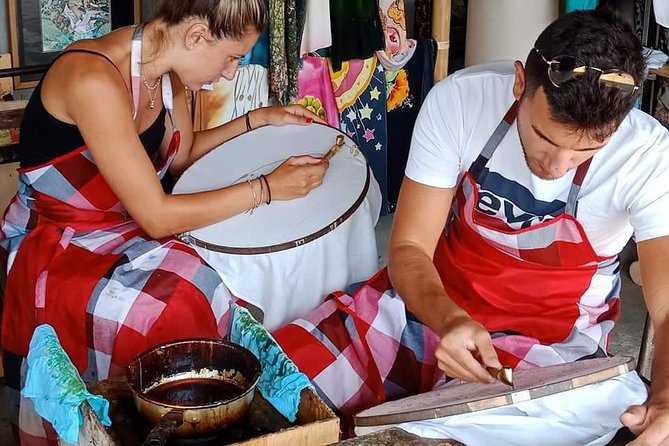
- Hot wax controls the design: You draw with wax first, then apply dye around it so the original fabric color remains along the waxed lines.
- The class takes place in a family compound: You get a look at the working environment of a Balinese artist, not a polished tourist attraction.
- You can work at your own pace: Staff can guide you closely, or give you room to develop your own design.
- Beginners are welcome: The instructors help children and adults through the stages, and you do not need advanced art skills.
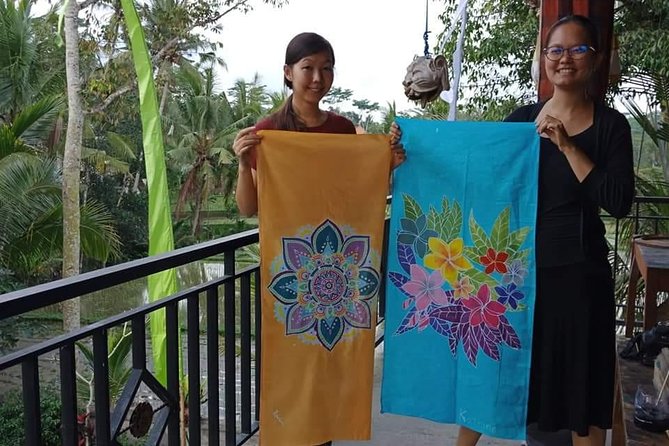
- Your souvenir is handmade: Each finished piece reflects your choices, including its colors, motif, and small imperfections.
- The price includes useful extras: Materials, snacks, coffee or tea, and mineral water are included in the $29 fee.
Why batik makes a better souvenir than another shop purchase
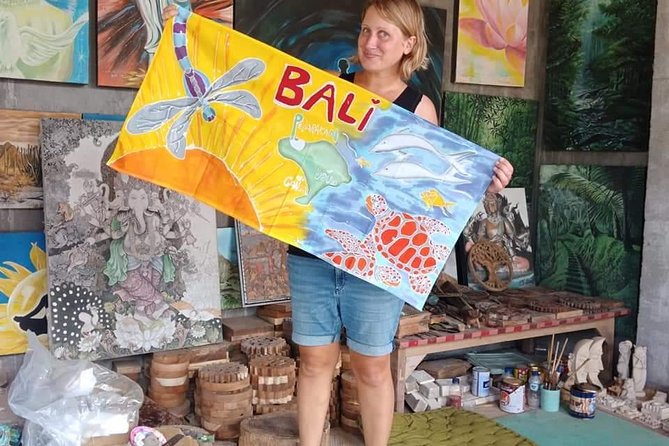
Batik is hand-painted fabric art made with a resist-dyeing method. The wax acts as a barrier, stopping dye from reaching selected lines and sections of the cloth. Once the wax is removed, the original fabric color remains where you worked.
That basic idea sounds simple. The hand control is not. You need to guide hot wax along a design, avoid unwanted drops, and then apply color without losing the pattern. One small mistake can change the finished piece, but that is part of the charm. You are not producing a factory-perfect cloth. You are making a record of an afternoon in Bali.
I like the way this activity gives you a clearer sense of the time behind batik. A finished piece in a shop can look effortless. After working through the wax and dye stages, you understand why careful batik takes patience and why handmade fabric has real value.
You can bring your own motif or choose from designs supplied at the studio. The available patterns range from simple options to more detailed outlines. If you are not confident with drawing, this choice matters. You can focus on learning the process rather than trying to invent a complicated image from scratch.
More Workshops and Classes in the world:
- Dubai Evening Heritage Safari by Vintage G Class Al Marmoom Oasis
★ 5.0 · 1,500 reviews - Undiscovered Charleston: Half Day Food, Wine & History Tour with Cooking Class
★ 5.0 · 948 reviews - Sip History in The Sun Cabana Covered Cocktail Class
★ 5.0 · 332 reviews
Arriving at Five Art Studio near Keliki
The meeting point is Five Art Studio on Jalan Raya Keliki, in Keliki, Tegallalang, Gianyar. The activity begins and ends at this same location, so you need to arrange your own way there and back.
The studio is described as a casual, comfortable workspace within a family home compound. That setting is one of the most appealing parts of the experience. You are not simply seated in a classroom designed for short-term visitors. You see an artist’s working environment and get a sense of how creative work fits into daily family life.
If you arrive early, you may be offered tea while waiting for the class to begin. The atmosphere is relaxed, and the space can include local artists, children, and international participants working alongside one another. That mix gives the afternoon a friendly, informal feel.
The location is outside central Ubud, so check the route before setting off. Public transportation is nearby, but the activity does not list hotel pickup. Give yourself enough time to reach the studio, especially if you are coming from another part of Bali.
The first stage: choosing and sketching your design
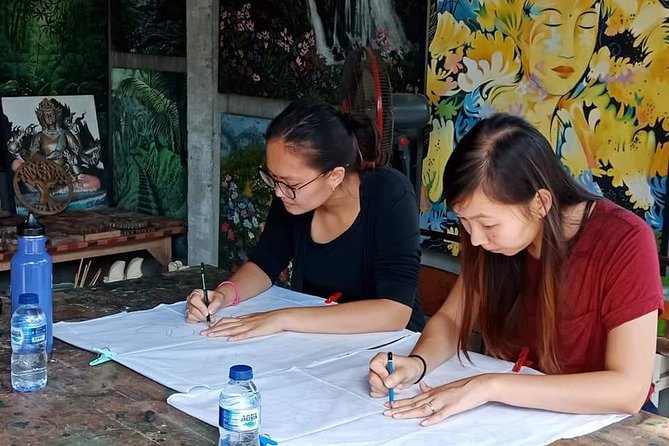
The workshop begins with an introduction to batik and an explanation of the basic process. The instructors also provide a short account of the art form’s place in Indonesian culture, which helps you understand that this is more than a decorative painting exercise.
You then choose an image or create your own design. The studio provides stencils and suggested motifs, including simpler patterns for first-time painters. You can trace the outline onto fabric before moving to the wax stage.
This part is more important than it may seem. Your initial drawing becomes the structure for every later step. A dense design may look impressive, but it will demand more wax work and more careful coloring. If you want an easier first attempt, choose a pattern with clear shapes and open areas.
The instructors can help you decide how much detail is sensible for a three-hour session. You are encouraged to add your own touches, so the finished work does not have to look exactly like the sample design.
Drawing with hot wax requires a steady hand
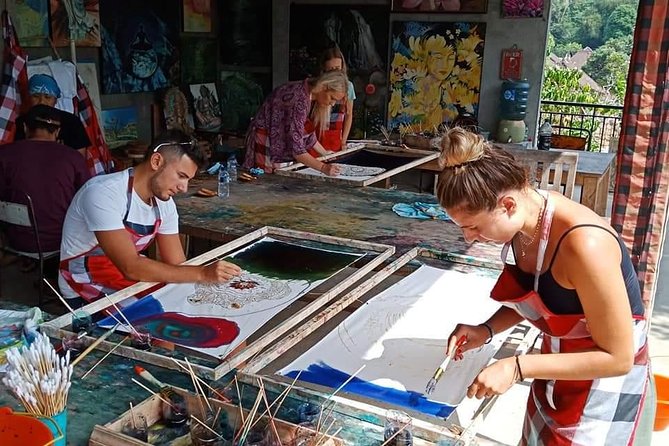
After the design is sketched, you use hot wax to trace selected lines and sections. The wax creates the barrier that keeps dye from spreading into those areas. When it is later removed, the waxed outline remains in the original color.
This is the moment when many people realize that batik is a real skill. Wax can drip where you do not want it. Lines can become thicker than planned. You need enough control to follow the design, but not so much tension that you stop enjoying yourself.
The staff guide you through the technique and help you correct problems where possible. Several instructors are praised for being patient and encouraging, including Dika and Agong. Agong has also helped younger children through the full process, making the class workable for families.
I would not book this expecting a flawless art lesson with perfect results. I would book it expecting to learn a new craft and make something personal. The instructors are good at helping you recover from mistakes, but they cannot remove the need for patience.
A few more history tours around the world worth a look
- History and Hauntings of Salem Guided Walking Tour
★ 5.0 · 14,564 reviews - Colosseum: Underground and Ancient Rome Tour
★ 4.7 · 12,691 reviews - Lisbon: History, Stories and Lifestyle Walking Tour
★ 4.8 · 10,902 reviews - London Small Group Tour of Historical Pubs
★ 5.0 · 10,422 reviews
Adding dye brings the fabric to life

Once the wax outlines are in place, you apply colorful dyes to selected areas. You can use the suggested color combinations or experiment with blends. This is where the work becomes more expressive, because the color choices can change the whole mood of the design.
The studio team lets you make creative decisions while staying nearby to offer help. If you prefer structure, you can follow a sample. If you like working freely, you have room to adjust the colors and add your own ideas.
Dye also rewards restraint. It is easy to keep adding color because the fabric looks unfinished at first. A balanced design may need more waiting and observing than constant painting. The instructors can help you judge when a section is ready for the next step.
The class works well for people who do not consider themselves artistic. You are not expected to arrive with painting experience. The stencil choices, demonstrations, and hands-on help give you a clear starting point. The best attitude is to accept that the final piece may not match the image in your head.
The finished cloth carries the marks of the process
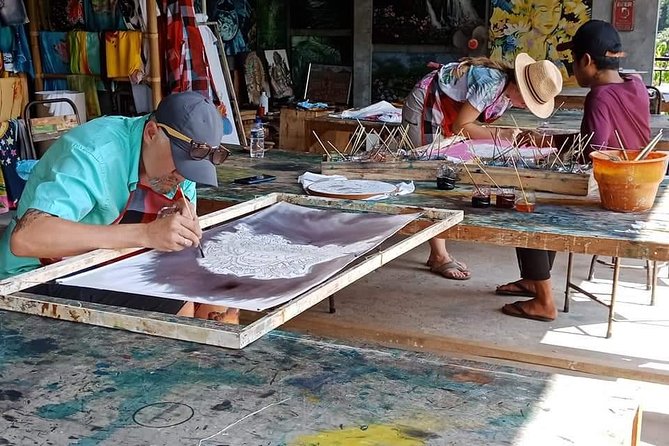
The wax is washed off at the end, leaving the protected lines in their original color. This final stage reveals how the drawing, wax, and dyes worked together. It is also when small errors can become part of the design rather than disasters.
You take your finished batik piece home as a souvenir. That is a major strength of the workshop. A souvenir bought in a market may be attractive, but your own fabric carries the memory of the place, the technique, and the afternoon spent making it.
The result may not be gallery-perfect. Some lines may be uneven, and color may spread in ways you did not plan. That is normal for a first batik project. The class encourages you to accept happy accidents, and that is good advice for this craft.
The finished artwork can also remind you of the people who helped you make it. The instructors are described as friendly, supportive, and willing to give encouragement without taking over your project.
A calm three-hour activity with small comforts
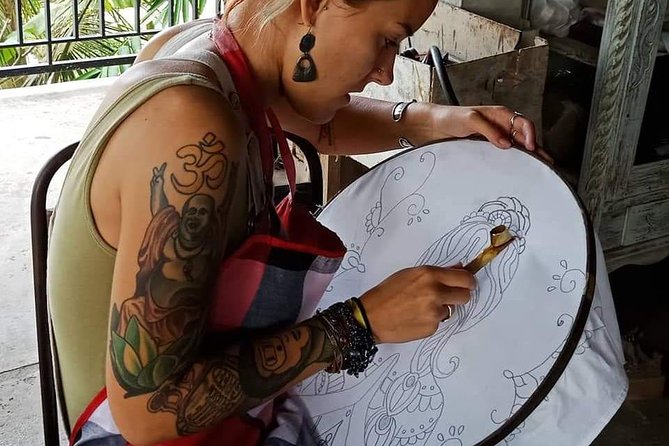
The workshop lasts about three hours, which gives you enough time to work through the stages without turning the activity into an all-day commitment. It is a useful break from Bali’s busy roads, busy markets, and packed sightseeing schedules.
Snacks, coffee or tea, and mineral water are included. Lunch is not included, but local food can be ordered. Alcohol is available to purchase, though it is not part of the class. These details are modest, but they make the session easier, particularly if you are spending the afternoon at the studio.
The group can include up to 30 people. That is a fairly large maximum for an art class, so the amount of individual help may depend on the number of participants on your date. The instructors offer close guidance, but a busy session may feel less personal than a quiet one.
On the other hand, a larger group can add energy, especially for families or friends. You may find the class more social when several people are making different designs at the same time. Solo participants can still receive one-to-one instruction when attendance is low.
Is the $29 price good value?
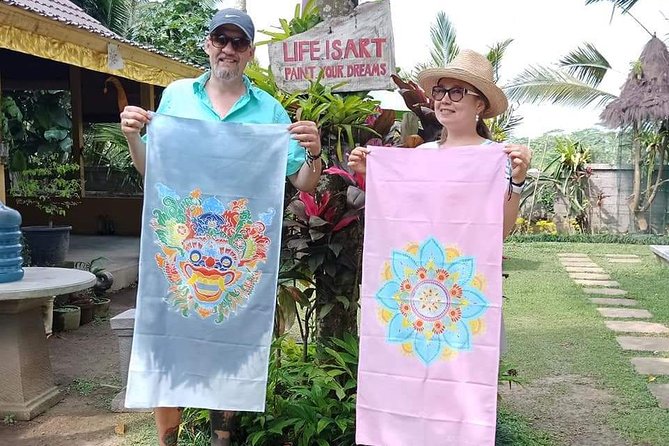
At $29 per person, the price is reasonable for a three-hour activity that includes materials, instruction, refreshments, and a handmade souvenir. You are paying for more than a demonstration. You take part in every stage under guidance from the studio team.
The value is strongest if you want an activity rather than a passive cultural visit. You learn a process, practice it yourself, and leave with a physical result. The class also offers a personal connection to a working Balinese art space, which is difficult to reproduce with a quick shopping stop.
The value is less clear if you are looking for a polished finished product or a short, easy activity. Batik demands concentration, and some people find it more difficult than expected. You should see the price as payment for the experience and the learning, not a guarantee of professional-quality fabric.
For families, the included refreshments and flexible guidance add to the appeal. Children can take part, but hot wax means they need close attention. The studio team has experience helping younger participants, including a six-year-old, but adults should still stay involved.
Who will enjoy this workshop most?
I would recommend the class to you if you like making things, want a meaningful souvenir, or need a quieter activity between Ubud excursions. It suits beginners because the instructors explain the stages and provide design options.
It is also a good fit for families, couples, solo artists, and friends. You can work independently or ask for more help, so different skill levels can share the same class.
You may want to skip it if you dislike slow handwork, become frustrated by small mistakes, or need a tightly scheduled activity with no room for delays. The process rewards calm attention. It is not a quick paint-and-leave attraction.
A strong physical fitness level is listed as a requirement, and service animals are allowed. The activity is near public transportation, but transport to and from the studio is not included in the stated package.
Practical details for a smoother visit
Book with enough time to reach Keliki and bring a design idea if you already have one. You can also use one of the studio’s suggested motifs, so arriving without a plan is fine.
Wear something you do not mind wearing to an art class. The supplied information does not specify a dress code or protective clothing, but wax and dye are central to the activity. You should also avoid packing the rest of your day too tightly. The workshop lasts about three hours, and the creative process is easier when you are not watching the clock.
The booking confirmation is provided at the time of reservation. Free cancellation is available if you cancel at least 24 hours before the start time. Changes or cancellations within 24 hours are not accepted for a refund.
Should you book Five Art Studio?
Yes, if you want a personal, practical introduction to Indonesian batik near Ubud. The strongest reasons are the patient instruction, relaxed family-compound setting, and the chance to take home work you made yourself.
Book it with realistic expectations. Your first batik piece may have uneven lines or unexpected color, and the work is more demanding than it first appears. That is precisely why the class has value. You leave with a new respect for the craft, a memorable afternoon, and a souvenir that could never be identical to anyone else’s.
FAQ
Where is the batik workshop held?
It is held at Five Art Studio, Jalan Raya Keliki, Keliki, Tegallalang, Gianyar, Bali 80561, Indonesia.
How long does the experience last?
The workshop lasts approximately three hours.
What is included in the price?
The fee includes the materials needed to make your batik, snacks, coffee or tea, and mineral water.
Is lunch included?
No. Lunch is not included, but local food is available to order.
Can beginners join the class?
Yes. The workshop is suitable for beginners and provides guidance through each stage of the batik process.
Can children take part?
Yes. The instructors have helped children through the process, including a six-year-old. Hot wax is used, so children need appropriate adult supervision.
Do I need to bring my own design?
No. You can bring your own motif or choose from designs and stencils available at the studio.
Where does the activity finish?
The workshop ends back at Five Art Studio, the same place where it begins.
Can I cancel for a full refund?
Yes, if you cancel at least 24 hours before the experience start time. Cancellations within 24 hours are not refunded.
Just added around the world
- The Queenstown Story @ Cobh Heritage Centre , Great Stories of Emigration.★ 4.5 · 181 reviews
- Visit 16 Sites Key Historical Sites And Experience Cobh Rebel Tours★ 5.0 · 167 reviews
- Historical Bicycle Tour of Dunedin★ 5.0 · 44 reviews
- Cincy Brunch History and Streetcar Tour with Riverside Food Tours★ 5.0 · 108 reviews
- 2.5 Hour Kayaking with Manatee and History Tour in Tarpon Springs★ 5.0 · 24 reviews
- Private Tour in Chichen Itza Official History Guide★ 5.0 · 36 reviews
- Dazu Ancient Rock Carvings Private Tour Extension★ 5.0 · 24 reviews
- Chicago River Architecture Tour Aboard a Historic Yacht★ 5.0 · 45 reviews
Workshops, compared.

Dubai Evening Heritage Safari by Vintage G Class Al Marmoom Oasis
Read our review →
Undiscovered Charleston: Half Day Food, Wine & History Tour with Cooking Class
Read our review →
Sip History in The Sun Cabana Covered Cocktail Class
Read our review →
3-Course Meal in Historic 1st Class Waiting Rooms
Read our review →
2 Hour Historic Market Food Tour and Hands-On Biscuit Class
Read our review →
Milan: Fresh Pasta and Tiramisù Class in A Historical Home
Read our review →
Mojo Workshop Cooking Class in Ancient Canarian Village
Read our review →
Five Shapes of Pasta Cooking Class in Ancient Tavern
Read our review →Browse the lists this tour appears in