
Review · ATHENS
Biblical Tour Letters to The Corinthians – St Paul’s Footsteps
Paul’s Corinth still speaks. This private day trip from Athens follows the apostle from Areopagus Hill to Ancient Corinth, the Corinth Canal, Isthmia, and the port of Kechries. I like the private vehicle and flexible route, especially for a group of up to four. I also like the way the tour links biblical events with temples, ports, games, and Roman politics. The main catch is that your driver is not a licensed guide and will not enter the archaeological sites with you.
You can expect an eight-hour outing, though the pace depends on your group and driver. Several past bookings praised drivers such as Alex, Kostas, Spyros, and Constantine for patience and clear explanations. One important tip: tell the company how slowly you want to tour the sites, since one group felt rushed and returned to Athens after about six hours.
Key things to know before booking
- Paul’s Corinth is the heart of the day: Ancient Corinth, the Bema, the Temple of Apollo, and Kechries give the biblical story a physical setting.
- The tour is private for up to four people: You avoid a large coach and can adjust the route if you have already seen Mars Hill.
- The driver is an informed escort, not a site guide: Drivers can explain the area in English, but they do not accompany you inside the ruins.
- Several stops are free, but Ancient Corinth and the museum cost extra: Allow €15 per person for the Ancient Corinth and Archaeological Museum admissions.
- Isthmia adds useful context: Its sanctuary, stadium, theater, and museum show the pagan world Paul encountered.
- The price works best for a small group: At $386.18 for up to four people, the per-person cost drops sharply when shared.
Why Corinth matters in Paul’s story
This is not simply a drive to see old stones. Corinth was one of the key places in Paul’s ministry, and the connection is unusually direct. According to Acts, Paul spent about 18 months here around AD 51 to 52, preaching and helping establish one of the early Christian communities.
His First and Second Letters to the Corinthians address quarrels, morality, worship, spiritual gifts, resurrection, and the hard work of building a church in a complicated city. Corinth was wealthy, commercial, religiously mixed, and strategically placed on the narrow isthmus joining mainland Greece to the Peloponnese.
That setting helps explain why the tour works best for someone who already knows a little about Paul. You are not just seeing a temple or a theater. You are asking where Paul worked, preached, sailed, and defended his message.
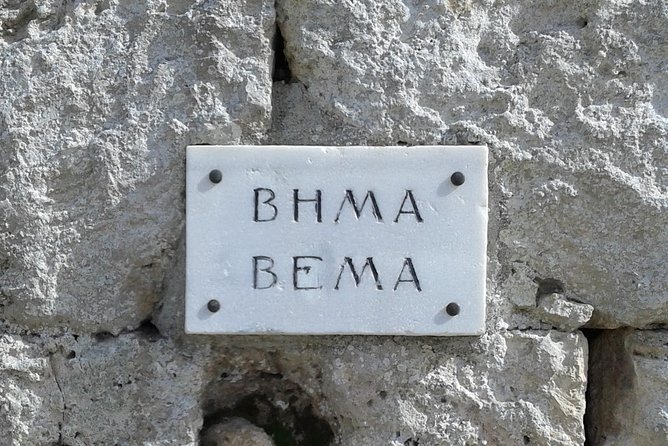
The strongest moments come when the biblical account meets a specific place. The Bema is one example. This stone platform in the Roman Forum is linked with Paul’s appearance before Gallio, the Roman proconsul. Gallio dismissed the case as a religious dispute, allowing Paul to continue his work without Roman interference.
You should keep one distinction in mind. Some parts of the tour description connect Paul with the Isthmian Games and suggest he made tents for athletes and visitors. That is a plausible setting for his trade, but the Bible does not directly say that Paul attended the games or worked specifically for their competitors. The guide should help you separate documented events from reasonable historical interpretation.
Other history tours people book around Athens:
- Athens: Ancient Greek Theater Performance
★ 4.7 · 2,481 reviews - Historical Delphi One Day Tour with Arachova Stop & Expert Guide
★ 4.5 · 1,247 reviews - From Athens: Ancient Corinth Day Trip with Canal & VR Guide
★ 4.6 · 1,073 reviews
From Athens to Areopagus Hill
The day begins with pickup from your accommodation in Athens. Your driver brings you first to Areopagus Hill, also called Mars Hill, beside the Acropolis. Paul’s speech about the Unknown God took place here before the Athenian council, according to Acts.
The stop lasts about 20 minutes and has no admission charge. It is short, so do not expect a full Acropolis visit. You are visiting the hill connected with Paul’s sermon, not touring the Parthenon or the entire Acropolis complex.
If you have already seen Mars Hill, say so before setting out. One group used that time for additional Corinth stops instead, which is exactly the sort of useful flexibility a private trip can offer. The rock can also be uneven and exposed, so sensible shoes are a good idea.
For Christian visitors, this opening stop gives the day a clear beginning. Paul first addressed the intellectual center of Athens, then carried his message onward to Corinth. The route traces that movement without pretending the two cities were interchangeable.
The Corinth Canal and the ancient Diolkos
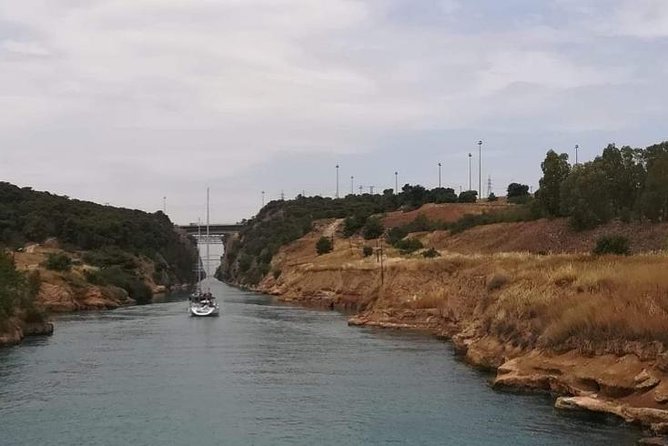
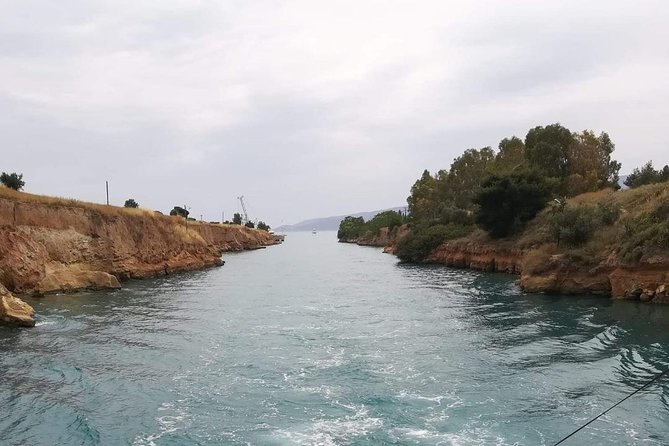
The Corinth Canal is the first major stop on the road west. The modern canal cuts through the isthmus and links the Gulf of Corinth with the Saronic Gulf. It separates mainland Greece from the Peloponnese and saves ships from sailing roughly 185 nautical miles around the peninsula.
You have about 30 minutes here, with no entry fee. The view is the attraction. The canal is narrow, steep-sided, and easy to appreciate from above. It is a quick stop, but it gives you a clear sense of why Corinth mattered long before Paul arrived.
The idea of cutting through the isthmus goes back more than 2,000 years. Periander, ruler of ancient Corinth, reportedly considered such a shortcut. The completed canal is from the 19th century, so it is not a Roman or biblical monument. Still, it explains the geography that brought merchants, sailors, soldiers, and religious ideas through Corinth.
The Diolkos provides the older version of the same story. This ancient road helped move ships across the isthmus between the Aegean and Ionian Seas. The stop lasts around 20 minutes and is free.
Do not expect a large standing monument. Its value is conceptual. You can picture the hard practical work required to move vessels overland before the canal existed. That maritime traffic helps you understand Corinth as a crossroads, not an isolated Greek ruin.
Isthmia, where sport and religion met
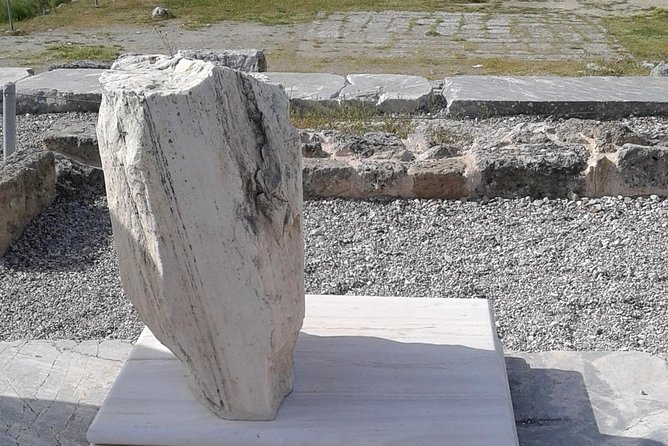
Isthmia is one of the most interesting parts of the route, especially if you want more than the standard Ancient Corinth visit. The sanctuary hosted the Isthmian Games, one of the major athletic festivals of the Greek world after the Olympics. The contests honored Poseidon and drew athletes and spectators from many places.
The setting adds a useful layer to Paul’s letters. Paul often used athletic images when discussing discipline, effort, competition, and endurance. It is easy to see why the games may have provided familiar images for people living in Corinth.
The tour allows about an hour at Isthmia, followed by time at the archaeological museum and site. You may see the Temple of Poseidon, the stadium, the Sanctuary of Palaimon, and the ancient theater used for musical events.
This is also where you should listen carefully to the wording used by your escort. The connection between Paul and the region is strong. The claim that he made tents for athletes and visitors at the games is an interpretation rather than a clearly recorded event. That does not make the setting uninteresting. It simply means you should treat the suggestion as context, not settled fact.
The theater and mosaics show the cultural world Paul faced. Sea creatures and Dionysian scenes reflect the religious and artistic life of the period. The Sanctuary of Palaimon points to beliefs tied to sailors and protection. Paul’s message did not appear in an empty space. It entered a city full of gods, festivals, commerce, and competing ideas.
The site also had political importance. Isthmia was a meeting point for decisions involving Greek leaders and military affairs. That makes Paul’s work feel even more striking. He was preaching in a place where major public matters had long been debated.
Same place, a different slice of the past:
- Historic Athens: Small Group Electric Bike Tour
★ 4.9 · 966 reviews - Acropolis, Parthenon & Athens Old City Heritage Walking Tour
★ 4.5 · 876 reviews - Private Biblical Tour Ancient Corinth & Isthmus Canal from Athens
★ 5.0 · 762 reviews - Athens: Ancient Corinth & Nafplio Full Day Trip with Swim
★ 4.8 · 531 reviews
The Archaeological Museum of Isthmia
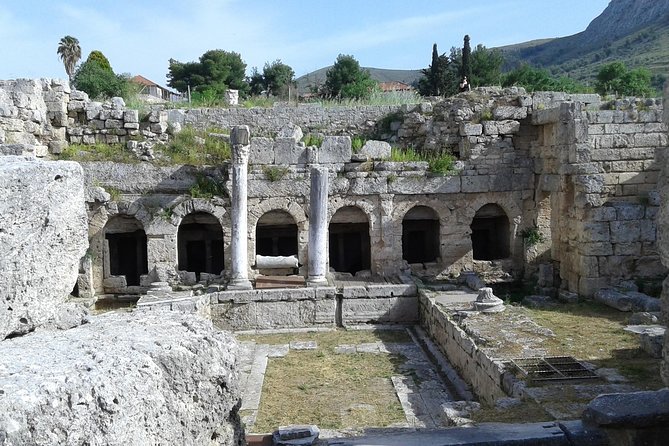
The museum is a smaller stop, with about 30 minutes allowed. Admission is not included, so you should confirm the current fee before entering.
Inside, you can see objects connected with the sanctuary of Poseidon, including statues, offerings, burial finds, and glass panels from Kenchreai. The glass is especially useful because it links Isthmia to Corinth’s eastern port and to the wider movement of goods and people through the area.
This museum visit helps if you want visual evidence of the society Paul encountered. It is less about one famous object and more about the everyday religious and artistic world around the sanctuary.
Thirty minutes is enough for a focused visit, but not for a slow museum study. If you are deeply interested in archaeology, ask your driver or guide in advance if the timing can be adjusted. The private format may allow changes, but the total day still has limits.
Ancient Corinth and the Bema
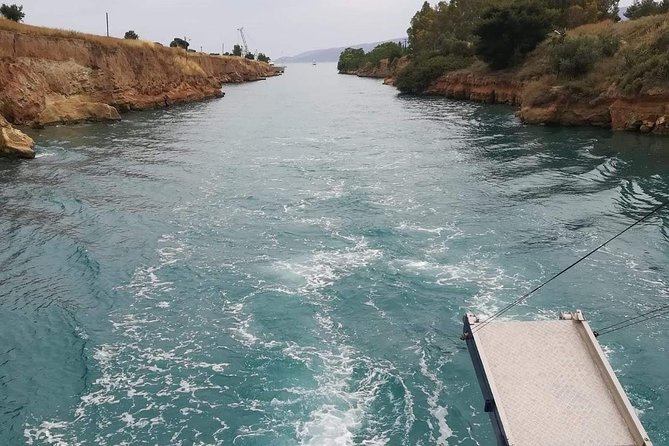
Ancient Corinth is the central stop. Plan on about an hour at the site, with an additional admission charge. The listed cost for Ancient Corinth and the Archaeological Museum of Corinth is €15 per person.
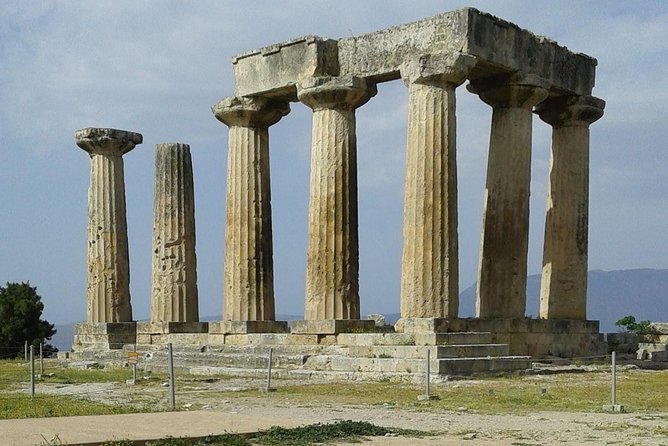
The ruins give you the clearest sense of Paul’s working environment. The city had a Roman forum, temples, public buildings, and a position that made it important to trade across the isthmus. The Temple of Apollo, with its surviving limestone columns, is the most recognizable feature.
The Bema is the emotional focus for many Christian visitors. This raised stone platform is associated with Paul’s hearing before Gallio. Standing near it, you can connect the account in Acts with a real Roman public setting.
The legal episode mattered because Gallio refused to treat Paul’s preaching as a criminal matter. That gave Paul room to continue his work. The Bema later became a Christian worship site in the Byzantine period, adding another layer to its story.
Do not expect the driver to walk through the ruins explaining each feature. The company makes clear that drivers are not official guides and do not enter the sites with you. They can provide background during the drive and answer questions outside, but a licensed guide must be arranged separately if you want detailed commentary among the ruins.
That distinction is important. Many people praised the drivers’ historical explanations, but the experience can feel different from a guided archaeological tour. If this is a once-in-a-lifetime biblical trip and you want close help reading the site, request a licensed guide when booking.
The Temple of Apollo and Apostolou Pavlou
The Temple of Apollo deserves its own attention, even though it sits within Ancient Corinth. Built around 560 BC, it is one of Greece’s early Doric temples. Its remaining monolithic columns are a powerful reminder that Paul preached in a city already shaped by centuries of worship.
The temple helps you picture the contrast between Corinth’s established pagan traditions and the Christian message Paul brought. You are looking at a religious center dedicated to Apollo, while nearby Paul argued for one God and Christ crucified.
A short stop at the Apostolou Pavlou church provides a modern Christian counterpart. The church honors Paul’s 18-month mission in Corinth and offers a quiet place to reflect after the ancient ruins.
The church visit is brief, about 20 minutes. It is not a substitute for the archaeological site, but it connects the ancient story to the continuing Christian identity of Corinth.
Kechries, Phoebe, and Paul’s departure
Kechries, the site of ancient Cenchreae, is the eastern port of Corinth. Paul stopped here before sailing for Syria during his second missionary journey. Acts records that he cut his hair because of a vow, often understood as a Nazirite vow.
The stop lasts about 30 minutes and has no admission fee. Today it is quieter than Ancient Corinth, which suits the story. This is a place of departure, not public spectacle.
Kechries also connects with Phoebe, whom Paul commended in his Letter to the Romans. She was associated with the church at Cenchreae and is described as a servant or minister of that church. Her role gives you a reminder that early Christian communities were not built by Paul alone.
If you are interested in women’s roles in the early Church, ask about Phoebe. She is one of the clearest named links between the New Testament and this port.
Lunch by the sea and the climb to Akrokorinthos
Lunch is not included, but the itinerary allows an hour at a traditional seaside Greek taverna in the Corinth area. This is a useful pause after several archaeological stops. You pay separately, and the exact restaurant can depend on the driver and the day.
The meal also gives you a chance to discuss what you have seen. Past bookings praised the restaurant choice and the drivers’ willingness to help make the day comfortable.
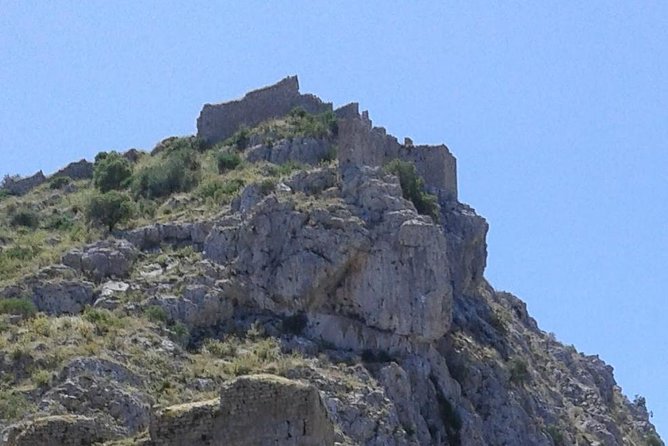
Akrokorinthos finishes the route with a high viewpoint above Ancient Corinth. The fortress occupies a steep hill and offers broad views over the city and surrounding area. The stop is listed at about 40 minutes and has no admission charge.
The climb and footing deserve attention. The information provided does not promise an easy or fully accessible route, so ask the company about current conditions if anyone in your group has mobility concerns. Even if you do not explore every wall, the view helps explain Corinth’s military value and gives the day a strong final image.
What the private format is really worth
The price is $386.18 per group of up to four people. Split four ways, that is about $96.55 per person before lunch, admissions, and any licensed guide. For two people, it is a more serious expense, but you still get private transportation, hotel pickup, bottled water, onboard WiFi, and air conditioning.
You can choose from several vehicle types. Confirm exactly what you are booking, since one unhappy customer expected a larger vehicle but had reserved a private sedan. The company responded that the sedan matched the reservation. In plain terms, read the vehicle description carefully and request a larger car if comfort matters.
The best value comes from flexibility. You can skip Mars Hill if you have already visited, spend more time at Ancient Corinth, or set a gentler pace. One group praised Alex for adjusting the day, while another felt hurried and finished well before the advertised eight hours. Tell the driver at the start that you want the full time available if your group prefers a slower visit.
The cancellation policy is friendly: cancel at least 24 hours before the start time for a full refund. Changes or cancellations inside that window are not accepted.
Who should book this Corinth tour?
I would choose this tour for a small Christian group, a family of four, or anyone who wants Paul’s Corinth without the logistics of renting a car. It also suits people who like to mix biblical sites with archaeology, engineering, ports, and a seaside lunch.
I would be more cautious if you want a formal lecture at every ruin. The driver can be excellent, but the standard service does not include a licensed guide inside the sites. Add one if detailed interpretation matters to you.
Ask for a calm driver who will let you set the pace. Names praised in past bookings include Alex, Kostas, Spyros, Constantine, Pericles, Michael, Pantelis, and Vicky, though you should not assume a particular person will be assigned.
Book it if you value a private day, direct hotel pickup, and a strong connection to Paul’s ministry. Skip it if you prefer a fixed group tour with a guide beside you at every monument. For the right small group, the chance to connect the Bema, Kechries, Isthmia, and the Temple of Apollo in one day makes this a worthwhile and personal route through Corinth.
FAQ
How long does the tour take?
The tour is planned for approximately eight hours. The actual timing can vary with the route, site visits, and the pace set by your group.
How many people can join the private tour?
The price covers one private group of up to four people.
Is hotel pickup included?
Yes. Pickup is offered from your place in Athens or the agreed pickup location.
Is a licensed guide included?
No. The standard service includes professional drivers with historical knowledge, but they are not licensed guides and do not accompany you inside the archaeological sites. A licensed guide may be requested, subject to availability.
What entrance fees must I pay?
Ancient Corinth and the Archaeological Museum of Corinth require an additional fee listed as €15 per person. Lunch is also not included.
Is lunch included?
No. The itinerary allows about one hour for lunch at a traditional seaside Greek taverna, but you pay for the meal separately.
Is the tour offered in English?
Yes. The tour is offered in English, and the drivers can provide commentary in fluent English.
Can I cancel for a full refund?
Yes, if you cancel at least 24 hours before the local start time. Cancellations or changes made less than 24 hours before the tour are not accepted for a refund.
Just added around Athens
- The original Christian tour on Paul’s footsteps in Athens and ancient Corinth★ 4.5 · 25 reviews
- Small-Group Women History in Ancient Greece Walking Tour★ 5.0 · 38 reviews
- Athens: Combo Ticket for Acropolis & 6 ancient sites★ 3.0 · 21 reviews
- Ancient Sparta & Mystras Private Day Tour from Athens★ 5.0 · 52 reviews
- Ancient Olympia & Isthmus Canal Private Tour from Athens★ 5.0 · 20 reviews
- Ancient Agora & Temple of Hephaestus Entrance Ticket★ 3.5 · 22 reviews
- Half Day Historical Athens City Private Taxi Service Tour★ 5.0 · 79 reviews
- Ancient Corinth, Sanctuary of Hera, Blue Lake & Canal from Athens★ 5.0 · 26 reviews
Athens History Tours, compared.
Historical Delphi One Day Tour with Arachova Stop & Expert Guide
Read our review →
Ancient Corinth Day Trip with Canal & VR Guide
Read our review →
Historic Athens: Small Group Electric Bike Tour
Read our review →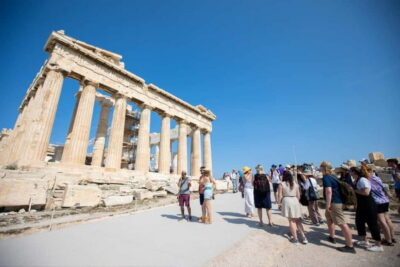
Acropolis, Parthenon & Athens Old City Heritage Walking Tour
Read our review →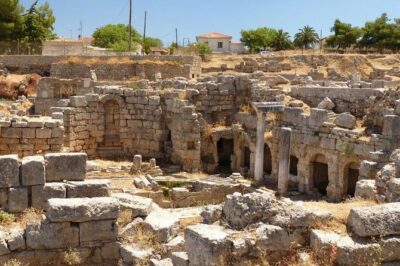
Private Biblical Tour Ancient Corinth & Isthmus Canal from Athens
Read our review →
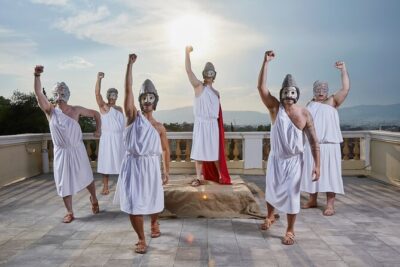
Athens Skip the Line: Open Air Ancient Greek Theatre Performance
Read our review →Browse the lists this tour appears in