
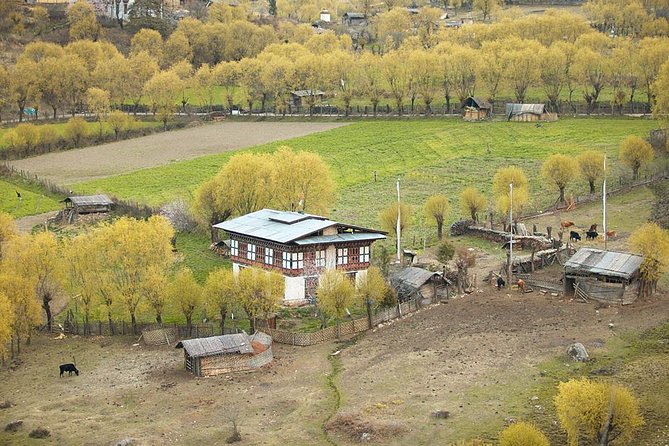
Review · PARO
Bhutan Family Vacation With Cultural Tour
Bhutan rewards curious families. This seven-day private journey combines major cultural sites with easy walks, valley views, and hands-on stops that give children more to do than simply look at temples. I like the included meals, mineral water, transport, and English-speaking guide, since they remove much of the planning work in a country where roads and distances can make independent travel complicated.
I also like the family-friendly variety. You can cross a swinging iron-chain bridge, make a personal postage stamp, watch students learn traditional crafts, walk across Bhutan’s longest suspension bridge, and visit monasteries and fortress-monasteries. The main drawback is the pace: this is a full itinerary with several road journeys, mountain roads, and hikes. The Tiger’s Nest visit alone takes about four hours, so younger children and anyone unused to walking at altitude should prepare carefully.
Key things to know before booking
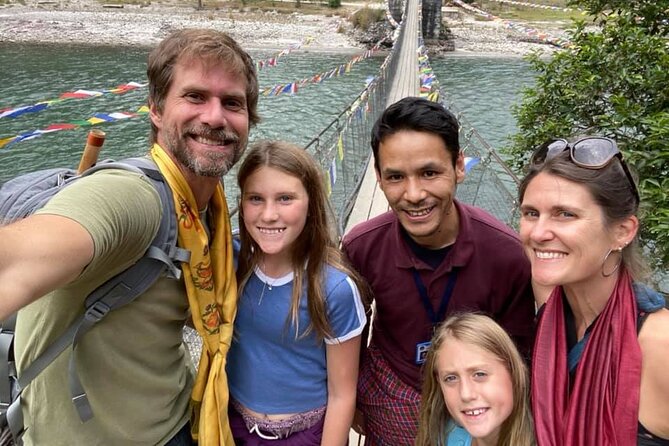
- Bhutan’s major sights in seven days: The route includes Thimphu, Punakha, Phobjikha Valley, Gangtey, and Paro.
- Private family format: Only your group takes part, with an English-speaking guide and included ground transport.
- A strong mix of activities: You will visit dzongs and temples, but also cross bridges, walk forest trails, see craft training, and make a postage stamp.
- The Tiger’s Nest requires time and stamina: Paro Taktsang is scheduled for about four hours, making it the trip’s biggest physical challenge.
- The price includes more than sightseeing: Three-star accommodation, all meals, mineral water, transport, and Bhutan’s $100-per-person-per-night government SDF are included.
- Guide and driver care are a major part of the experience: Names praised in trip accounts include Namgay, Tin, Tandin, Tax, Lhab Tshering, and drivers Jamyang, Jigme, Damchoe, and Kin Zung. Staff assignments can vary.
What $2,156 covers in Bhutan
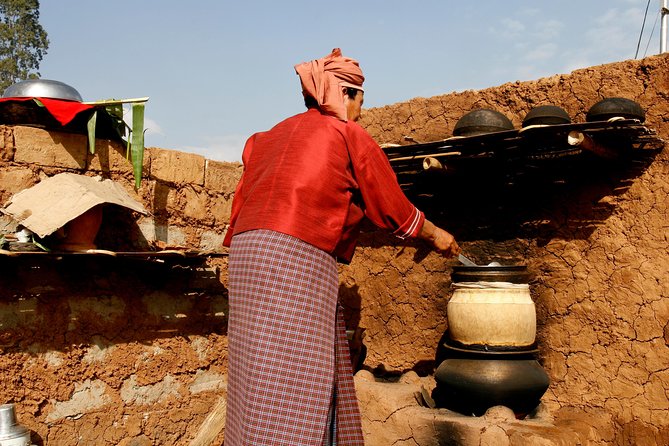
At $2,156 per person, this is not a budget holiday. But the figure includes several costly and important pieces: seven nights of three-star accommodation, all meals, mineral water, private ground transportation, a certified English-speaking guide, and the government Sustainable Development Fee of $100 per person per night.
That SDF alone represents about $600 per person for a seven-night stay, assuming the full seven nights are covered. The remaining amount pays for lodging, meals, transport, guiding, and site visits. International and domestic flights are not included, so you need to price those separately before deciding on the total cost of your holiday.
The three-star lodging should suit families who value convenience over luxury. You can pay extra to upgrade, which may make sense if you want better rooms or a more polished stay after long drives and active days. The tour does not list specific hotel names, so ask for the proposed properties before booking if room size, location, or facilities matter to you.
All meals are included, which is useful in a seven-day itinerary with long driving sections. It also gives you a chance to eat Bhutanese food without repeatedly searching for restaurants. Alcohol costs extra, and travel insurance is not included.
More Local Culture and Traditions Tours in the world:
- Amsterdam Food and Cultural Tour with Tastings
★ 5.0 · 4,315 reviews - Sevilla Food Tour: Tapas, Wine, History & Traditions
★ 5.0 · 3,468 reviews - Tromsø: Reindeer Camp and Sami Cultural Tour with Lunch
★ 4.7 · 3,326 reviews
Tachogang Bridge and Thimphu’s first sights
The first stop is Tachogang Lhakhang Bridge, where you can visit the temple and cross a handmade iron-chain bridge above a roaring river. The crossing takes about 45 minutes and gives children an immediate sense that Bhutan is not just a series of indoor museum visits.
The bridge swings, so anyone uncomfortable with movement or heights may prefer to watch. It is a short stop, but a memorable one.
In Thimphu, the Memorial Chorten offers a gentle introduction to daily Buddhist practice. People come throughout the day to turn the prayer wheels, while the inside contains paintings and statues. Plan on about an hour here. Your guide can help explain what you are seeing, which makes the visit more meaningful than a quick photo stop.
Tashichho Dzong is one of the tour’s major cultural visits. This large fortress complex houses government offices, the secretariat, the King’s throne room, and the summer residence of the Chief Abbot. The scheduled visit lasts about 90 minutes, giving you time to appreciate both the architecture and the continuing role of the building.
The scale of the dzong can be impressive for children, though younger ones may tire during a long explanation. A private guide helps here because your group can usually ask questions and set a comfortable pace within the visit.
Buddha Dordenma and family-friendly Thimphu activities
Buddha Dordenma sits high above Thimphu Valley. The statue is 169 feet tall, and the viewpoint gives you a broad look over the city. The stop lasts about 45 minutes, so it does not require much walking compared with the bigger hikes later in the trip.
Bhutan Post is one of the smartest family stops. At the general post office, you can have a postage stamp made with your own picture, then post it within Bhutan. This creates a useful souvenir rather than another object to carry home, and children can take part in the process.
The National Institute for Zorig Chusum is another strong choice for families. Students train in painting, embroidery, woodcraft, masonry, sculpture, and carpentry. The schedule allows about an hour, and children may be able to take part in an activity if interested. The information provided does not specify which activity will be available on a particular day, so ask your guide when you arrive.
The National Folk Heritage Museum focuses on rural Bhutanese life through exhibits, demonstrations, educational programs, and documentation. It adds context to the monasteries and dzongs by showing how ordinary homes, work, and traditions fit into Bhutanese culture.
Ludrong Memorial Garden provides a slower break. It has ponds and different plant species, with views toward Tashichho Dzong and the Wangchuk River. A 90-minute stop may feel long for children who prefer action, but it gives the family a quiet pause between more structured visits.
Forest walking at Sangaygang and Wangditse
The route includes a gentle forest hike from Sangaygang toward Wangditse Monastery. You will walk through pine and cool broadleaf forest for about 90 minutes. This is a good counterpoint to the formal sites, especially if your family enjoys being outdoors.
The itinerary does not give exact trail conditions or elevation gain, so bring shoes with a firm sole and ask the guide about the day’s ground conditions. The walk is described as gentle, but mountain paths can still feel tiring after a morning of sightseeing.
A few more history tours around the world worth a look
- History and Hauntings of Salem Guided Walking Tour
★ 5.0 · 14,564 reviews - Colosseum: Underground and Ancient Rome Tour
★ 4.7 · 12,691 reviews - Lisbon: History, Stories and Lifestyle Walking Tour
★ 4.8 · 10,902 reviews - London Small Group Tour of Historical Pubs
★ 5.0 · 10,422 reviews
Dochula Pass and the road to Punakha
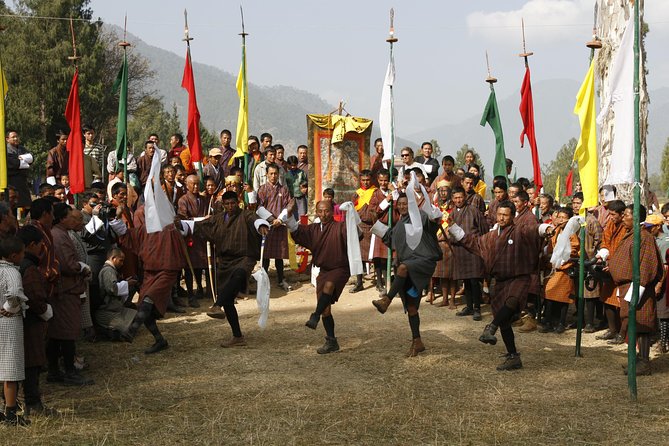
Dochula Pass reaches 3,088 meters, or 10,130 feet. The stop is brief, about 45 minutes, but it offers a chance to see 108 chortens, a mani wall, and prayer flags at one of Bhutan’s best-known road viewpoints. Clear weather matters here, and cloud can limit the view.
The pass also marks a change in the rhythm of the trip. You are not simply moving between attractions. You are crossing mountain roads, so road time may feel substantial. Families should keep water and a light layer handy, even though mineral water is supplied.
Near Punakha, Chimi Lhakhang requires a one-hour walk through rice fields and farmhouses. The temple was built in 1499 after the site was blessed by Drukpa Kunley, known as the Divine Madman. The rural walk is part of the appeal, since the approach gives you a look at farmland and village life rather than dropping you beside the entrance.
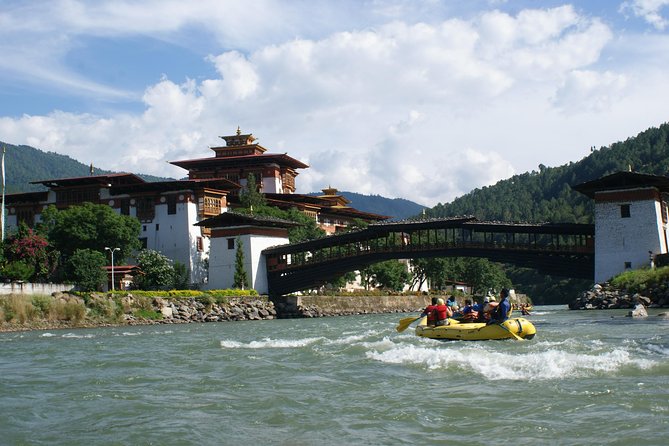
Punakha Dzong is one of the trip’s architectural highlights. It sits at the meeting point of two rivers and served as Bhutan’s capital until 1955. It remains the winter residence of the central monk body. The scheduled visit is about 45 minutes, though you may want to linger if the guide is explaining its religious and national role.
The Punakha Suspension Bridge crosses the Pho Chhu River for 160 meters. It is described as Bhutan’s longest suspension bridge and offers views toward Punakha Dzong and the Pho Chhu Valley. The one-hour stop should be a hit with older children and active families. The bridge can move underfoot, so anyone nervous about heights should take it slowly.
Phobjikha Valley and Gangtey Monastery
Phobjikha Valley brings a quieter outdoor section to the route. The nature trail takes about 90 minutes and begins near the mani, or chorten-like, stone wall north of Gangtey Gonpa before ending in Khewa.
This is one of the shortest nature trails in Bhutan, making it a useful option for a family that wants scenery without committing to a major trek. The itinerary calls it a valley exploration, but it does not specify exact trail difficulty beyond the estimated time. Your guide can help judge whether younger children should walk the full route.
Gangtey Monastery is the main seat of the Pema Lingpa tradition. The visit includes the chance to light a butter lamp, offer incense, raise prayer flags, and interact with young monks. These are personal, simple acts that help children understand that a monastery is a working religious place, not only an old building.
The schedule allows just 30 minutes at Gangtey Monastery before driving back toward Paro. That makes it more of a focused visit than a long stay. The road connection between valleys is an important part of the day, so you should expect travel time around the short monastery visit.
Kyichu Lhakhang and the climb to Tiger’s Nest
Kyichu Lhakhang dates to the seventh century and was built by the Tibetan king Songtsen Gampo. The visit lasts about 30 minutes, making it a compact but significant stop before the main Paro excursion.
Paro Taktsang, better known as the Tiger’s Nest, is the physical centerpiece of the trip. The monastery is one of Bhutan’s holiest sites and is linked to the story of Guru Rimpoche, who is widely revered as the second Buddha. The planned visit takes about four hours.
You should treat this as a serious half-day outing. The information provided does not state the exact trail length, elevation gain, or transport arrangements for the trailhead, so ask those questions before arrival. Wear practical walking shoes, pace yourself, and do not plan another demanding activity immediately afterward.
The Tiger’s Nest can be deeply rewarding, but it may not suit every child. If your family includes very young children, anyone with limited mobility, or anyone who struggles with altitude, discuss the visit with the guide in advance. The private format is helpful because the guide can offer more direct support than a large group tour.
After the hike, the Paro Penlop Heritage Home Museum offers a slower cultural stop. This historic farmhouse shows aspects of traditional Bhutanese social life. The visit lasts about two hours, and it can give you a more grounded sense of how people lived beyond royal buildings and monasteries.
Guides, drivers, and the value of a private tour
The private format is one of the tour’s strongest features. Only your group takes part, so you are not tied to strangers’ walking speeds, meal preferences, or children’s attention spans. All ground transport is included, and a certified English-speaking guide accompanies you.
Several guide and driver pairings have received especially warm praise. Namgay was described as professional and careful with family needs, while Jamyang was praised as an excellent driver. Tin and Jigme were credited with making a family trip feel well cared for, and Tandin and Jigme were noted for kindness and flexibility.
Other praised staff include Tax with driver Damchoe, and Lhab Tshering with Kin Zung. These names suggest a strong service culture, but they do not guarantee a particular guide or driver for your departure. Ask who is assigned to your group and share details about children, older family members, walking limits, and food needs before you arrive.
Who should book this seven-day Bhutan trip?
I would choose this tour if you want Bhutan’s main cultural sights without arranging each hotel, meal, transfer, and guide yourself. It suits families who enjoy variety and can manage several active days.
You are likely to appreciate it most if you want:
- A private vehicle and guide
- Included meals and bottled mineral water
- Cultural sites explained in English
- Short walks mixed with bigger outings
- A clear route through Thimphu, Punakha, Phobjikha, Gangtey, and Paro
- Family activities beyond temple visits
I would think twice if your family wants a slow holiday with few transfers. The schedule covers a lot in seven days, and the Tiger’s Nest, Wangditse walk, Chimi Lhakhang approach, and suspension bridges require energy and confidence.
The tour has a 4.9 rating from 28 reviews, with 100 percent recommending it. That points to consistent satisfaction, especially with guide care, driving, planning, and family flexibility. Still, the rating should not hide the basic tradeoff: you are buying convenience and coverage, not a leisurely resort stay.
Cancellation is free up to 24 hours before the start time. Cancellations within 24 hours are not refunded, and changes within that period are not accepted. Pickup is offered, and the stated starting point is Paro Airport, with operating hours listed as 9:00 a.m. to 5:00 p.m., Monday through Sunday.
Should you book it?
Book this Bhutan family vacation if you want a well-supported first visit with major temples, dzongs, mountain roads, valley walks, and the Tiger’s Nest all brought into one private plan. The included SDF, meals, transport, and guide make the $2,156 price easier to justify than it first appears.
Before paying, confirm the hotels, guide and driver assignment, flight connections, room arrangements, and the exact plan for the Tiger’s Nest hike. If your family can handle a busy seven days, this is a strong way to see Bhutan without carrying the burden of daily logistics yourself. If you want long mornings, slow meals, and very little walking, choose a shorter or more relaxed custom program instead.
FAQ
How long is the Bhutan family tour?
The tour lasts approximately seven days.
Where does the tour start?
The stated starting point is Paro Airport in Paro, Bhutan.
Is airport pickup offered?
Yes, pickup is offered.
Is this a private tour?
Yes. Only your group participates in the activity.
Is an English-speaking guide included?
Yes. A certified English-speaking guide is included.
Are meals included?
Yes. All meals are included in the tour price.
Is mineral water provided?
Yes. Mineral water is included.
Is accommodation included?
Yes. Three-star accommodation is included, with the option to pay an additional fee for an upgrade.
Is Bhutan’s government SDF included?
Yes. The $100 government SDF per person per night is included.
Are flights included?
No. International and domestic flights are not included.
What is the cancellation policy?
You can cancel for a full refund up to 24 hours before the experience starts. Cancellations or changes made within 24 hours are not accepted and are not refunded.
Just added around the world
- Rottnest Island Historical Train and Tunnel Tour from Hillarys Boat Harbour★ 4.0 · 20 reviews
- Spirits of Seville Pensacola’s Haunted History Tour with Meal★ 4.5 · 101 reviews
- Private Half-Day George Town History Tour★ 4.5 · 62 reviews
- Private George Town UNESCO Heritage Walking Tour★ 4.0 · 22 reviews
- Full-Day Wave Rock & Historic York★ 4.0 · 24 reviews
- 3-Hour Heritage on a Plate Dinner Hop in George Town Penang★ 5.0 · 125 reviews
- 3-Hour Heritage on a Plate Lunch Hop in George Town Penang★ 5.0 · 41 reviews
- Penang George Town All-In-One Heritage Tour By Bicycle & Trishaw (Metro Bike)★ 5.0 · 168 reviews
Local Culture & Traditions Tours, compared.

Amsterdam Food and Cultural Tour with Tastings
Read our review →
Sevilla Food Tour: Tapas, Wine, History & Traditions
Read our review →
Tromsø: Reindeer Camp and Sami Cultural Tour with Lunch
Read our review →
Half Day Dominican Republic Cultural Tour : Small Group
Read our review →
Ultimate Melbourne Walking Tour: History, Laneways & Culture
Read our review →
Tromsø: Sámi Reindeer Sledding and Sami Cultural Tour
Read our review →
Kyoto Gion: 2-Hour Geisha Culture & History Walking Tour
Read our review →
Marrakech Historical and Cultural Tour – Half Day City Tour
Read our review →Browse the lists this tour appears in