
Review · PAPHOS
Authentic Paphos: Culture, Flavors and Traditions
Cyprus tastes better beyond the resort. This six-hour outing from Paphos brings you to loukoumi makers, a village home, a hilltop monastery, pottery workshops, and the city’s Old Town. I especially like the warm visit with Sofia and Andreas, where bread, halloumi, olives, and Cypriot coffee turn a standard sightseeing trip into a social occasion. I also like the variety: sacred art, food traditions, rural crafts, and modern street art all appear in one day.
The main caution is that the tour is not always as hands-on as the description suggests. At some stops, you may watch and listen rather than make cheese or pottery yourself. Large groups can also mean queues, slower boarding, and a less personal feel. Still, with a price of $56.72, hotel pickup, a licensed guide, and a late Cypriot breakfast included, the value is strong for anyone wanting more than beaches and ancient mosaics.
Key points to know before you book
- Sofia’s village home is the emotional high point: Expect homemade bread, halloumi, olives, coffee, and generous local hospitality.
- The food focus is practical and tasty: You see loukoumi being made, sample Cypriot produce, and learn how halloumi and bread fit daily life.
- The religious sights are unusual: Agia Paraskevi has five domes, while Agios Neophytos Monastery contains rare Byzantine frescoes in a cave chapel.
- Hands-on activities may be limited: Pottery, cheese making, and bread making can involve demonstrations and tastings more than active participation.
- The day combines city and countryside: You move from Paphos streets to village roads, mountain views, workshops, and a monastery.
- Allow time for a mixed group: The maximum group size is 50, and English guiding may occasionally be paired with Russian commentary.
What this Paphos culture tour is really about
This is not a grand archaeological day trip built around famous ruins. It is a look at the everyday Cyprus that exists between the headline sights: family food production, religious art, local workshops, and old customs that still have a place in modern life.
The schedule lasts about six hours, not counting hotel pickups. It begins in the morning, with pickup generally arranged between 7:30 and 8:30 on Tuesdays. You receive the exact pickup point and time through Viator, so give the operator your hotel name and check your messages. If the details do not arrive, call at least a day before departure.
The vehicle is air-conditioned, and a professional driver handles the roads while a licensed guide explains the places along the way. Sofia and Mary have both led this outing, and Sofia receives especially warm praise for her clear explanations, friendly manner, and care with older people. Fitos is also singled out as a safe and courteous driver.
More Local Culture and Traditions Tours in the world:
- Amsterdam Food and Cultural Tour with Tastings
★ 5.0 · 4,315 reviews - Sevilla Food Tour: Tapas, Wine, History & Traditions
★ 5.0 · 3,468 reviews - Tromsø: Reindeer Camp and Sami Cultural Tour with Lunch
★ 4.7 · 3,326 reviews
Loukoumi, Aphrodite, and a sweet start
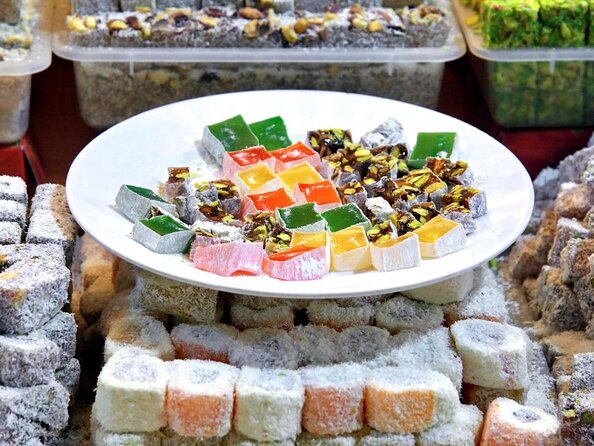
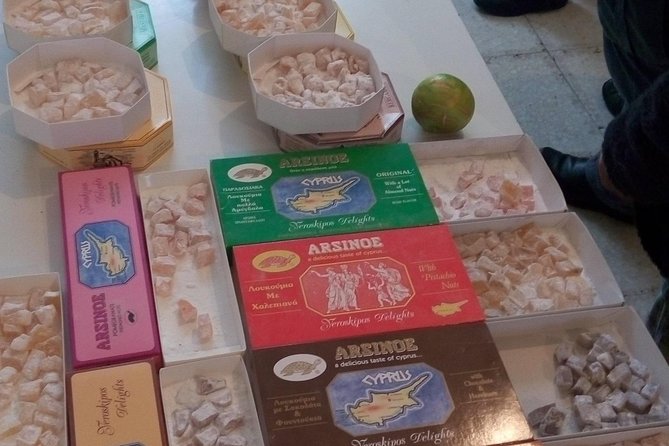
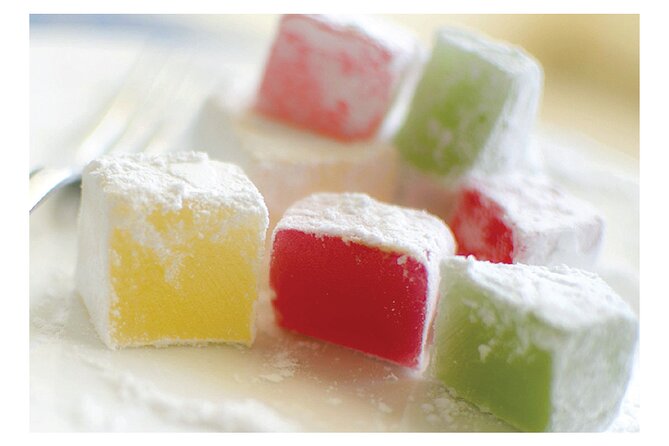
The first food stop is Aphrodite Delights Loukoumi, where you can see how Cyprus delights are made. Loukoumi is the local version of Turkish delight, usually sold in small boxes with several flavors. The stop lasts about 30 minutes, and tasting is part of the appeal.
This visit has a useful connection to the tour’s Aphrodite theme. Cyprus is strongly tied to the goddess, and the day uses that connection as a doorway into local traditions. You are not simply being taken to a souvenir shop. You are seeing a family food craft that has continued through generations, then tasting the result.
The practical point is simple: you may want to buy a box. Prices mentioned for the sweets are around €3 per box, though you should treat that as a guide rather than a guarantee. If you are carrying food home, loukoumi is easier to pack than fragile pastries.
Agia Paraskevi and a five-domed church
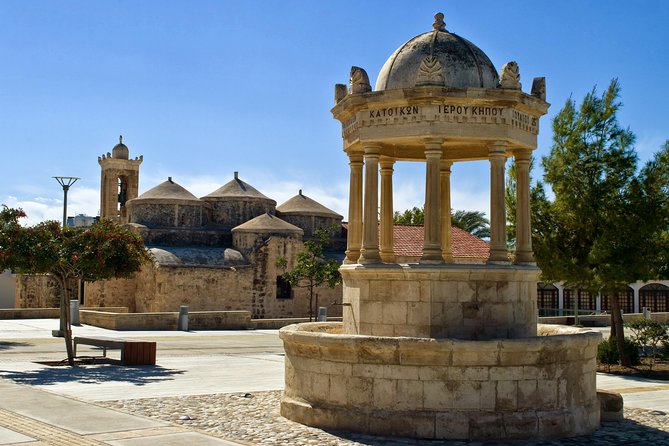
Agia Paraskevi Church is one of the more distinctive religious buildings near Paphos. Its five domes give it an unusual profile, and it was built in the ninth century, reportedly on the site of an earlier temple connected with Aphrodite.
You have about 30 minutes here. That is enough to appreciate the exterior, enter if access is available, and take in the church’s connection to the older religious layers of Cyprus. The stop is brief, so this is not a long church study. It works best as a compact introduction before the longer visit to Agios Neophytos Monastery.
Bring clothing suitable for religious sites. The provided information does not specify a dress code, but respectful dress is a sensible choice at churches and monasteries.
Letymvou: the most personal stop of the day
The visit to Letymvou is where the tour becomes most human. You go to a traditional village home connected with Sofia and Andreas, and the setting gives you a chance to see hospitality as part of Cypriot culture rather than as a staged restaurant performance.
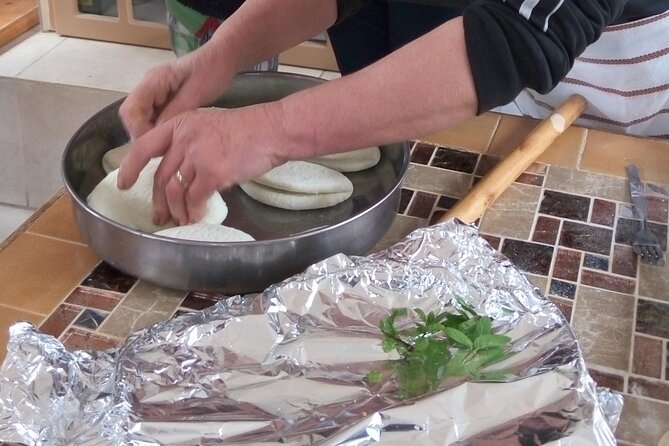
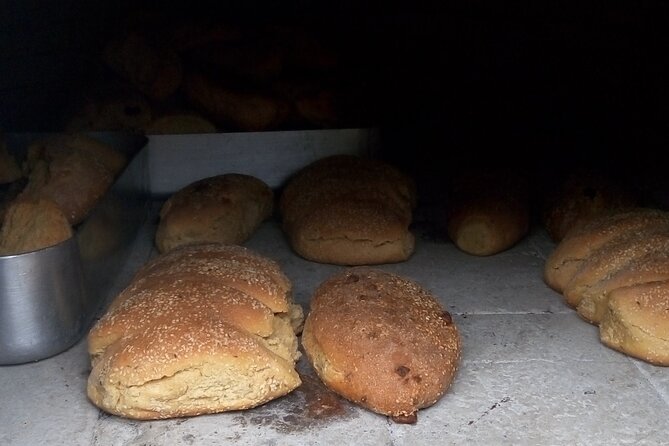
The planned activities include halloumi and bread making. You learn how halloumi is prepared and how village bread is baked in a stone oven. The meal that follows includes homemade bread, halloumi, olives, and traditional Cypriot coffee. Some descriptions also refer to a wider spread of local foods, including sausages, honey, and other village products.
This is described as a late breakfast, but the timing can make it feel more like lunch. It is usually served around late morning. If you eat breakfast at your hotel, you may find yourself having two meals close together. If you skip breakfast, you will appreciate the stop more, but it is wise to confirm exactly what food is included before you go because the general terms also state that food and drinks are not included.
The coffee deserves a note. Cypriot coffee is strong and thick, with grounds left at the bottom of the cup. It is not a large, mild café drink. You may also encounter ouzo during the hospitality stop, as one account describes a small serving for the group. Alcohol is not guaranteed, so do not plan around it.
The biggest expectation to manage concerns the phrase hands-on. Some departures may offer real participation, but the activity can also be mostly demonstration, explanation, and tasting. If making halloumi yourself is the main reason you are booking, confirm the format before paying. The food and welcome remain the strongest part even when the practical work is limited.
Same place, a different slice of the past:
- History and Hauntings of Salem Guided Walking Tour
★ 5.0 · 14,564 reviews - Colosseum: Underground and Ancient Rome Tour
★ 4.7 · 12,691 reviews - Lisbon: History, Stories and Lifestyle Walking Tour
★ 4.8 · 10,902 reviews - London Small Group Tour of Historical Pubs
★ 5.0 · 10,422 reviews
Agios Neophytos Monastery and Byzantine paintings
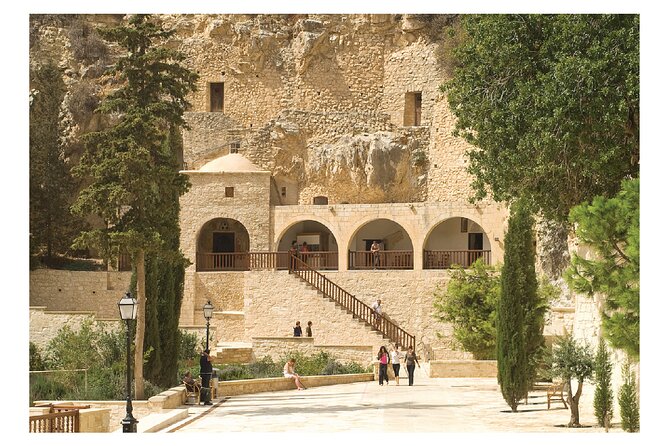
From the village, the tour heads into the hills to Agios Neophytos Monastery. This twelfth-century site is one of the day’s strongest cultural stops, especially if you enjoy religious art and quiet mountain settings.
The key feature is the cave of St. Neophytos, decorated with Byzantine frescoes. The paintings give the monastery a sense of age and place that a modern church building cannot match. Your guide can help explain the story of St. Neophytos and the role of the monastery, which is useful because the cave and paintings are easy to rush through without context.
You have about an hour here. There is an optional riddle game, with clues around the monastery and questions about its past. That can make the visit more engaging for families or anyone who prefers a bit of structure instead of simply following a guide from room to room.
There is also a coffee shop with broad views over the valley. The stop gives you time to sit, drink Cypriot coffee, and recover from the morning’s food sampling. Entrance to the main tour is included, though some accounts indicate that a small extra charge, around €2, may apply for the museum or cave areas. Carry a little cash and ask your guide what is covered that day.
Pottery, weaving, and the changing craft scene
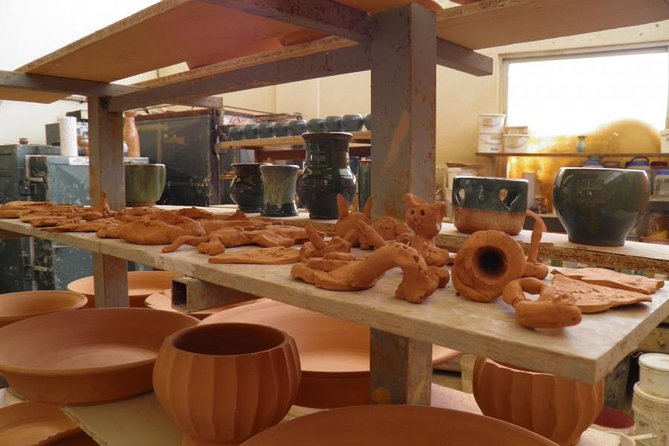
At The Place, you visit a pottery workshop and meet local artisans. The program can include demonstrations of ceramics, weaving, and icon painting, followed by a buffet of local foods such as halloumi, village sausages, olives, carob syrup, and honey.
The pottery stop is attractive because it connects objects with the work behind them. You can see how traditional craft remains part of the local economy, not just a display in a museum. The food table adds another layer, with carob syrup and honey showing how much of Cypriot eating is based on simple, durable ingredients.
Again, you should not assume a full workshop. Some departures provide a demonstration and a chance to look around the shop, while the pottery itself is not always a hands-on activity. If you want to buy ceramics, this is a useful opportunity, but remember that your purchases must fit in the vehicle and survive the trip home.
There is also a practical issue with group size. With as many as 50 people, it can be hard to hear every explanation, especially if several groups are moving through a small workshop. Smaller groups would make the demonstrations easier to follow.
Paphos Old Town, Ottoman baths, and street art
The final planned stop is Paphos Old Town, where the day shifts from rural tradition to present-day city life. You walk through an area where older buildings, local businesses, and creative projects share the same streets.
The Ottoman Baths are a notable stop. This seventeenth-century hammam recalls the period when Ottoman culture shaped parts of Cyprus. It is a compact historical sight, but it helps connect the island’s past with more than ancient Greek and Roman stories.
The Street Art Wall offers a modern counterpoint. Murals refer to Cypriot culture and traditions through a contemporary medium. This is a good place to take photographs and to see how local identity is expressed outside churches, museums, and archaeological sites.
The Old Town portion may feel short to anyone hoping for a long city walk. One hour is allocated, and some people would prefer more time to explore shops and streets independently. If Old Town is your main interest, consider returning on another day. Here, it works as the closing chapter of a wider cultural tour.
About changing stops and the pace of the day
The supplied route includes the loukoumi maker, Agia Paraskevi, Letymvou, Agios Neophytos, The Place, and Old Town. Some descriptions of actual departures refer to a winery instead of, or in addition to, parts of this route. At the winery, you may hear about production and taste several wines, but you should not expect to walk through vineyards or see the full growing and harvesting process.
That variation matters. The tour is clearly built around local food and customs, but the exact order and stops can change. If a winery is important to you, ask the operator what is scheduled for your date. The same applies if your priority is the Old Town, a pottery activity, or the halloumi demonstration.
The day is active without being strenuous. You get on and off the vehicle several times, walk around churches and a monastery, and spend time standing during demonstrations. The pace has been described as comfortable, though larger groups can create waits at entrances and workshops.
Does $56.72 offer good value?
At $56.72 per person, this is a good-value outing if you use the included transport and food elements. Hotel pickup and drop-off from Paphos hotels remove the need to arrange rural transport, while the air-conditioned vehicle matters during warm weather and on winding roads.
The price also covers a driver and licensed guide. You are paying for a full half-day of logistics, not just entry to one attraction. The village meal, tastings, church, monastery, craft stops, and city walk give the cost a broad reach.
The value is weaker if you expect a small, private group or a fully practical workshop. A coach or large minibus can make intimate homes and small craft spaces feel crowded. Some scheduled explanations may also be repeated in Russian when the group includes Russian-speaking participants, which can reduce English listening time.
Food and drinks outside the stated late breakfast or tastings are not included. Bring water and perhaps a small snack, especially because the main food stop comes late in the morning. Also budget for personal purchases such as loukoumi, pottery, wine, or extra monastery admission if applicable.
Who will enjoy this day most?
I would recommend this tour to you if you want to:
- Meet local people in a home setting rather than only visit monuments.
- Taste halloumi, bread, olives, sweets, coffee, and other Cypriot foods.
- See a church and monastery without spending a full day on archaeology.
- Combine countryside views with Paphos city sights.
- Travel independently without renting a car.
- Enjoy a broad introduction to local customs in one organized day.
I would hesitate if you want a private guide, a strict English-only group, or guaranteed participation in every food and craft activity. You may also prefer another tour if your chief goal is Aphrodite’s ancient sanctuary, since this experience follows the theme of Aphrodite but does not focus on a major temple visit.
For older people, the tour can work well because hotel transport and a steady schedule reduce the planning burden. Still, mention any mobility concerns when booking. The program includes several stops, uneven historic settings may occur, and the group may be large.
Booking advice and cancellation terms
This tour runs on Tuesdays, with morning pickups generally scheduled between 7:30 and 8:30. Give the company accurate hotel information. If your accommodation cannot be found, call for a nearby pickup point. Missing the agreed pickup can count as a no-show and lead to a full charge.
Free cancellation is available up to 24 hours before the start time. Changes made within 24 hours are not accepted, and late cancellations are not refunded. Poor weather or an insufficient number of bookings can lead to a new date, an alternative experience, or a full refund.
The tour is usually booked about 24 days ahead, so reserving early is sensible if your stay in Paphos is short. Confirmation is provided at booking, and the maximum group size is 50.
Should you book Authentic Paphos?
Book it if you want a broad, affordable introduction to Cypriot life, with food and personal contact at the center. The visit to Sofia and Andreas, the homemade bread and halloumi, the Byzantine paintings, and the mix of village and city settings give the day more character than a simple sightseeing loop.
Go in with realistic expectations. This is not a private workshop, the group may be large, the precise route can vary, and some activities may be demonstrations rather than practical lessons. For $56.72, though, it is a sensible choice for your first look at Paphos beyond the hotel strip, especially if you value local food, traditional crafts, and a guide who can explain how the pieces fit together.
FAQ
Where does the tour take place?
The tour begins and ends at Paphos hotels, with visits around Paphos, Letymvou, Agia Paraskevi, Agios Neophytos Monastery, craft locations, and Paphos Old Town.
How long does the tour last?
The excursion lasts about six hours, not including hotel pickup and drop-off time.
On which day does the tour operate?
The stated operating hours show the tour running on Tuesdays, with pickup generally arranged between 7:30 and 8:30 in the morning.
Is hotel pickup included?
Yes. Pickup and drop-off are offered from Paphos hotels. You need to provide the hotel name and check the message with your exact pickup point and time.
Is food included?
A late Cypriot breakfast is included, with items such as homemade bread, halloumi, olives, and Cypriot coffee described as part of the village visit. The general terms also state that food and drinks are not included, so confirm precisely what is covered before departure.
Is the pottery workshop hands-on?
The program describes a pottery workshop, but the activity may be a demonstration rather than full participation. The same caution applies to the cheese and bread making.
Is the tour offered in English?
Yes. English is offered, although some departures may include Russian commentary as well when demand does not support separate language groups.
What is the cancellation policy?
You can cancel up to 24 hours before the start time for a full refund. Cancellations or changes made less than 24 hours before departure are not refunded, while weather or minimum-booking cancellations may result in another date or a full refund.
Just added around the world
- 3in1 Notre Dame Tour plus Boat Cruise and Eiffel Tower History★ 4.5 · 19 reviews
- Private walk tour of Paraty’s historical center – BY PARATY TOURS★ 5.0 · 49 reviews
- Your Private boat Captain Guide Explore Historical Paris★ 5.0 · 23 reviews
- Historical Tour with Cachaça Tasting – BY PARATY TOURS★ 5.0 · 40 reviews
- Day Tour to Famagusta, Ghost Town & Ancient Salamis★ 5.0 · 28 reviews
- Beautiful Panama World Heritage City Tour★ 5.0 · 32 reviews
- History, Nature & Art: A Day in Larnaca & Ayia Napa From Paphos★ 4.5 · 19 reviews
- Discover Palermo in 3 hours. Art, history, markets and street food★ 5.0 · 352 reviews
Local Culture & Traditions Tours, compared.

Amsterdam Food and Cultural Tour with Tastings
Read our review →
Sevilla Food Tour: Tapas, Wine, History & Traditions
Read our review →
Tromsø: Reindeer Camp and Sami Cultural Tour with Lunch
Read our review →
Half Day Dominican Republic Cultural Tour : Small Group
Read our review →
Ultimate Melbourne Walking Tour: History, Laneways & Culture
Read our review →
Tromsø: Sámi Reindeer Sledding and Sami Cultural Tour
Read our review →
Kyoto Gion: 2-Hour Geisha Culture & History Walking Tour
Read our review →
Marrakech Historical and Cultural Tour – Half Day City Tour
Read our review →Browse the lists this tour appears in