Review · LAZIO
Ancient Rome: Archeological area Largo Argentina
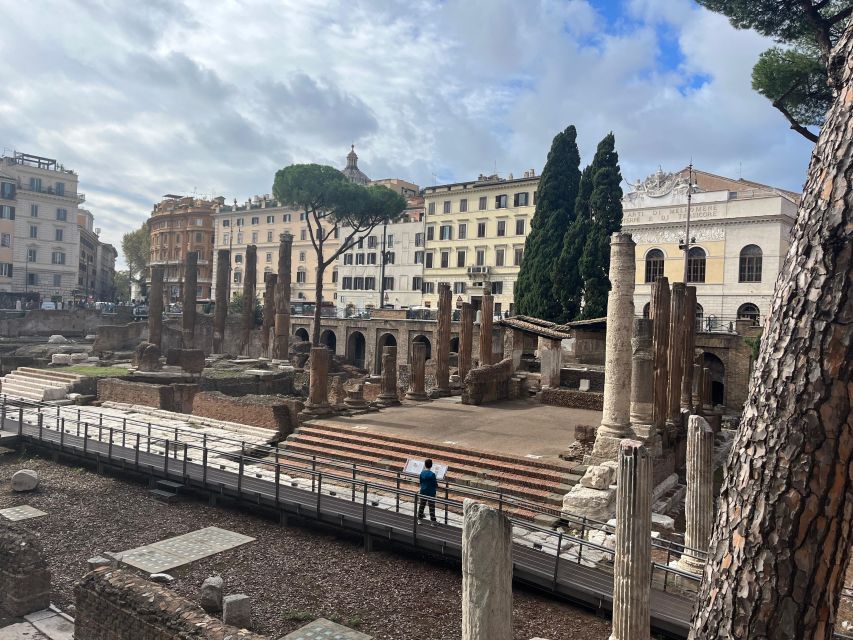
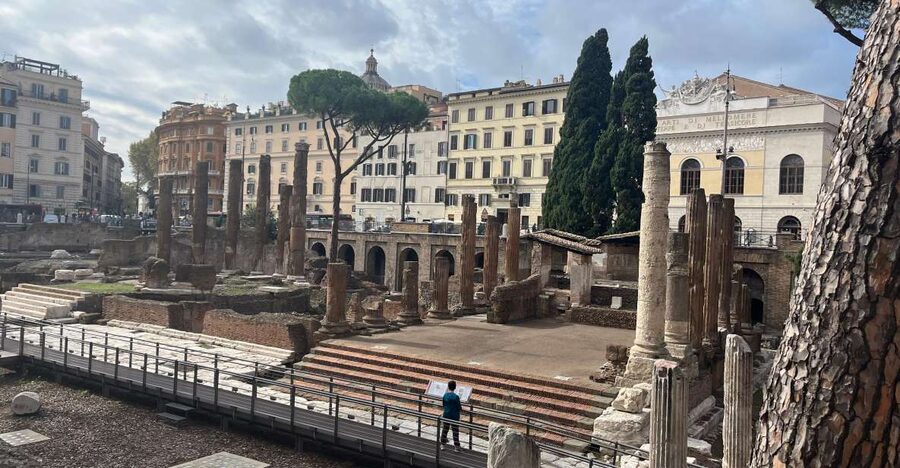
A murder scene sits beneath modern Rome. Largo di Torre Argentina lets you see four ancient temples, the remains of Pompey’s Curia, and the place where Julius Caesar was killed on March 15, 44 BC. I like the site because it puts Rome’s political drama beside tangible ruins, not behind a glass case. I also like the short multimedia presentation, which helps you picture the buildings before they became broken foundations.
The visit lasts about an hour and costs $23 per person. That price is reasonable if you want the video, audio guide, reserved entry, and a quick historical stop. The main drawback is the ticket arrangement: you redeem your voucher at Touristation Aracoeli, about a six-minute walk from the archaeological area, and the skip-the-line benefit may not matter when the entrance is quiet.
Key points to know before you go
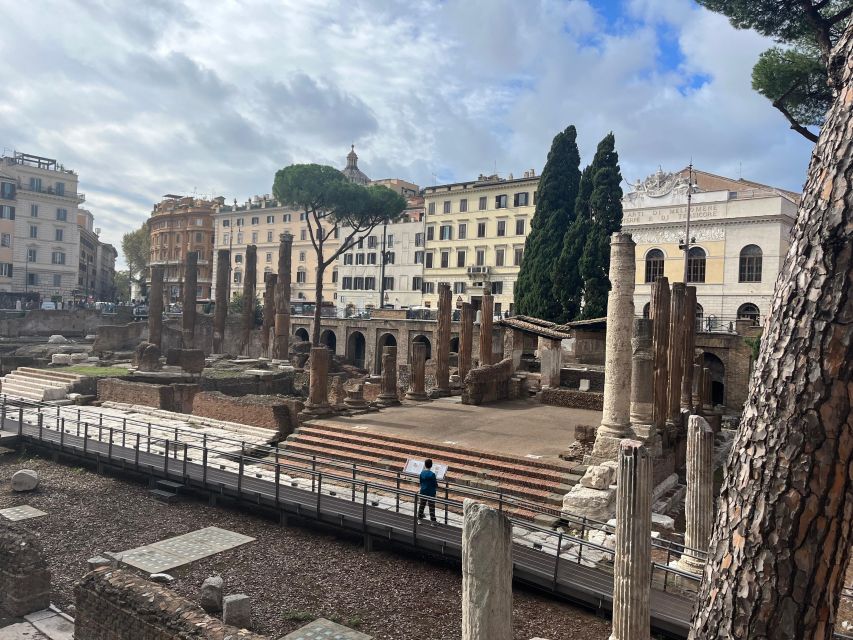
- Caesar’s assassination site: See the remains of Pompey’s Curia, identified in ancient accounts as the place where Julius Caesar was killed.
- Four Republican-era temples: The ruins date from the 4th to the 1st centuries BC, making this one of Rome’s oldest surviving archaeological areas.
- A short multimedia introduction: Plan on roughly 25 to 30 minutes for the presentation at the Touristation office before visiting the ruins.
- An archaeological island in the city: The excavated sacred area sits amid modern Rome, giving you a sharp view of the city’s ancient and present-day layers.
- Self-guided rather than escorted: An English audio guide is included, but there is no live guide leading you through the site.
- A compact stop: The activity lasts about one hour, making it easy to fit between larger Rome sights.
Why Largo Argentina deserves your time
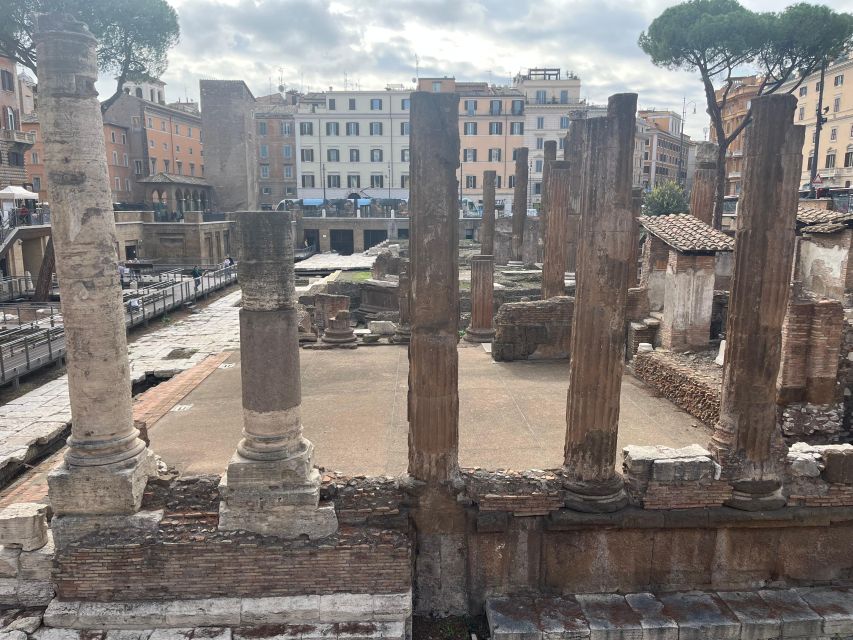
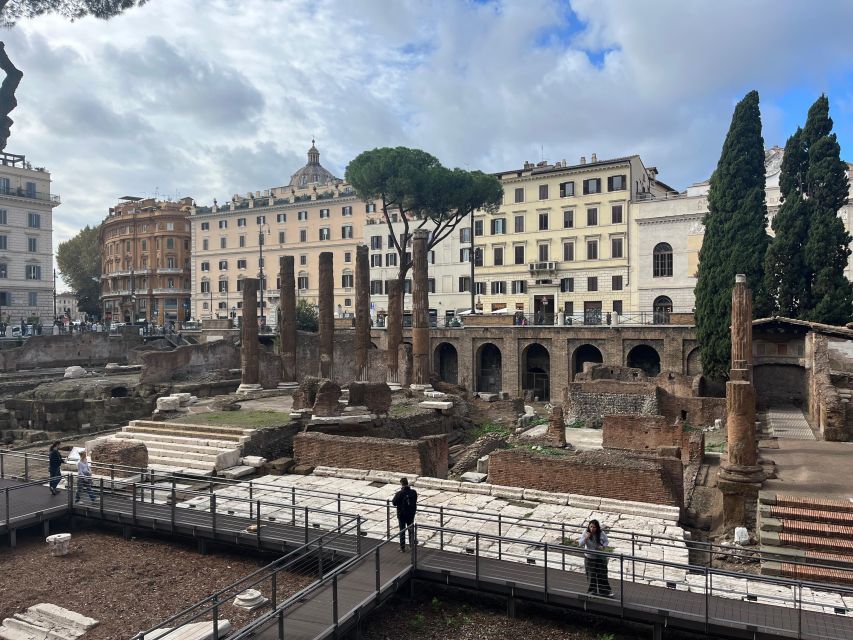
Largo di Torre Argentina is not Rome’s grandest ruin. You will not find towering arches, polished marble halls, or a long procession of monuments. Instead, you look down into a broad archaeological pit where several periods of Roman life sit close together.
That modest scale is part of the appeal. You can take in the four temples from the walkways and then focus on the details: the stone foundations, the different building phases, and the remains connected with Pompey’s Curia. It is an efficient introduction to ancient Rome, especially if you want more than a quick photograph from the street.
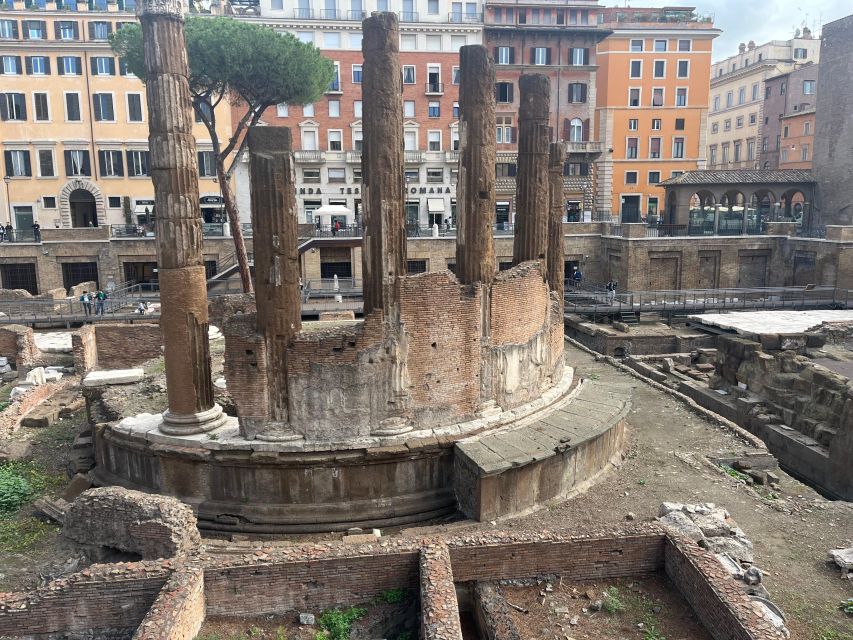
The site also helps explain how Rome was built over itself. The sacred area lived through more than two thousand years of change. The ruins preserve evidence from the Republican period, later imperial alterations, and medieval structures. You are not seeing one frozen moment. You are seeing layers of use and rebuilding.
I find the setting especially striking because the ruins are not isolated in a quiet park. They sit in the middle of modern Rome, surrounded by ordinary city life. The contrast gives the place its character. Ancient temples occupy a sunken space while buses, buildings, and daily traffic continue around them.
More Ancient History Tours in Italy
- Colosseum: Underground and Ancient Rome Tour
★ 4.7 · 12,691 reviews - Colosseum & Ancient Rome with Arena Floor Option I Max 6 People
★ 5.0 · 3,306 reviews - Rome: Colosseum, Ancient Rome Tour or AudioGuided Tour
★ 4.4 · 2,879 reviews
Starting at Touristation Aracoeli
Your booked time applies to the Touristation Aracoeli office at Piazza d’Aracoeli 16, not directly to the archaeological entrance. Look for the fountain and orange flags in front of the office. This is where you redeem your voucher and receive assistance before heading to the site.
The office is roughly a six-minute walk from Largo Argentina. That is not a serious distance, but it matters if you are planning a tightly timed day. Give yourself enough time to find Piazza d’Aracoeli, collect your materials, and walk to the excavations.
The office provides a paper city map and WiFi. Those are small extras, but they can help if you are using the visit as part of a larger walking route. You also receive access to the multimedia video and the Rome audio guide.
One practical point deserves attention: the ticket does not necessarily save much time at the archaeological area. A recent booking experience found that you could also go to the front gate and buy a ticket there. If your priority is simply seeing the ruins, check the entrance when you arrive in Rome before paying extra for reserved entry. If you prefer to have everything organized in advance, the booking still offers a clear meeting point and assistance.
The multimedia video before the ruins
The video is one of the more useful parts of the package. It lasts about 25 to 30 minutes and uses visual overlays to show how the buildings may have looked in earlier periods.
That matters at Largo Argentina because the remains are low and fragmented. Without context, the temples can appear as a group of stone outlines. The video gives you a better sense of the original buildings and helps connect the scattered foundations with Roman religious and civic life.
I would treat the video as an introduction, not the main event. It is indoors at the Touristation office, so it takes time away from the open-air ruins. Still, the visual reconstruction can make the archaeological area easier to read, especially if this is your first ancient Roman site.
The timing also shapes the visit. A one-hour activity includes the office presentation, voucher redemption, walk to the ruins, and time at the excavation. You should not expect an hour of uninterrupted time inside the archaeological area.
Four temples from Rome’s early centuries
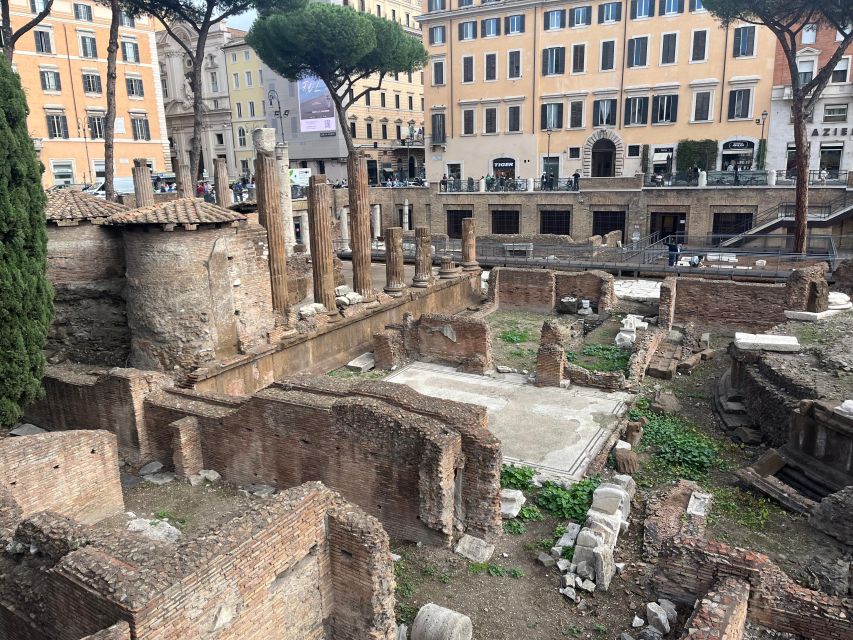
The central attraction is the group of four temples dating from between the 4th and 1st centuries BC. These belong to the older Republican period, before the Roman Empire reached its height.
You will see the remains from viewing areas around the excavation. The experience is about comparison and scale. One temple foundation may look different from another, and the varied stonework helps show that the area changed over time rather than being built in one campaign.
The temples were part of a sacred complex, and later construction altered the site. The archaeological area preserves imperial phases of the temples as well as later medieval structures. This gives you a useful lesson in how archaeologists read ruins. They are not simply looking for one original floor plan. They are tracing repairs, additions, changes in purpose, and the long afterlife of the place.
The ruins are best for visitors who enjoy looking carefully. If you want a dramatic interior or a single famous monument, Largo Argentina may feel spare. If you like seeing the oldest physical layers of Rome and working out how they fit together, the site rewards attention.
More Ancient History Tours in Rome
- Colosseum Underground & Ancient Rome Guided Tour
★ 4.5 · 2,590 reviews - Pantheon Elite Guided Tour – Rome’s Iconic Ancient Temple
★ 5.0 · 1,447 reviews - Ancient Rome: Colosseum Underground Group Tour
★ 4.5 · 1,059 reviews - Colosseum Express Guided Tour and Ancient Rome Admission Included
★ 4.0 · 1,008 reviews
Finding the place where Caesar was killed
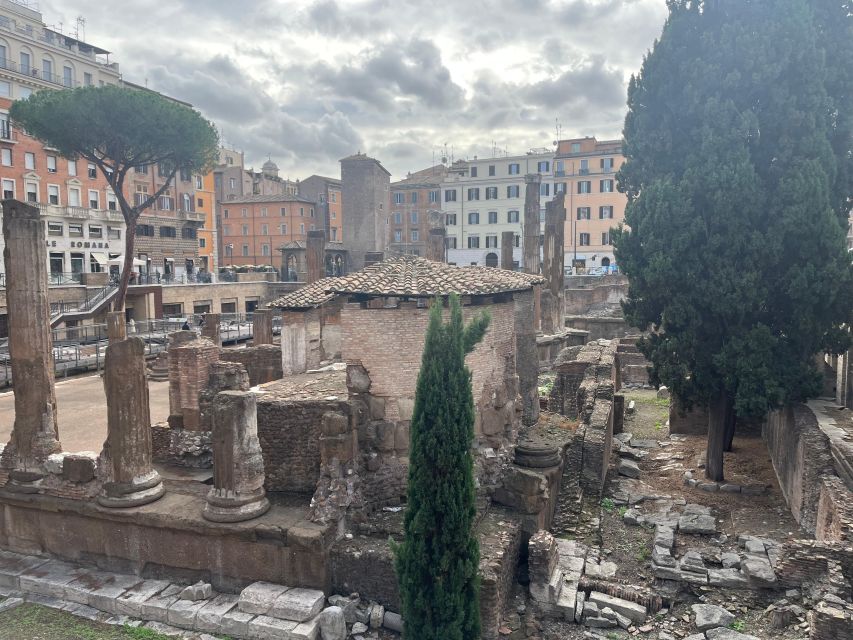
The most powerful part of the visit is the remains associated with Pompey’s Curia. Ancient sources identify this as the place where Julius Caesar was assassinated on the Ides of March in 44 BC.
That story can easily turn the site into a theatrical stop, but the ruins are more interesting when you keep the politics in mind. Caesar was killed in a space connected with Roman power, public life, and the authority of the Senate. The setting makes the event feel less like an isolated act and more like a crisis inside the machinery of the Roman state.
You will not see a preserved assassination chamber waiting exactly as it did that day. What you see are archaeological remains connected with the building and its later history. The value comes from standing before the physical setting while understanding what happened there.
The audio guide can help supply the missing explanation. Since there is no live guide included, listen carefully rather than rushing around the perimeter. The site itself will not narrate the political story for you.
Medieval layers and two thousand years of use
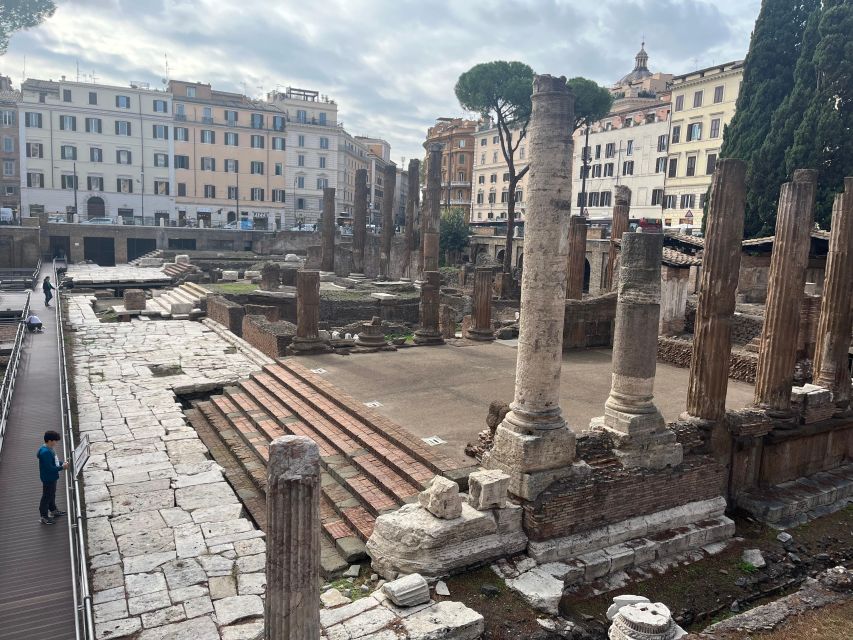
Largo Argentina is not only about the Republic and Caesar. The area also contains evidence of imperial changes and medieval construction.
These later layers are easy to overlook because the Caesar story is so famous. I recommend giving the site a few extra minutes after learning about the temples and Curia. Look for the way later structures sit among or over earlier remains. The point is not to memorize every phase. It is to notice that Rome kept using and reshaping this place.
That long continuity gives the archaeological area its strongest lesson. Ancient Rome did not vanish overnight, and the city was not rebuilt from a clean slate. Temples changed, structures were reused, and medieval life took place among Roman ruins.
The phrase ancient island in modern Rome fits the mood of the place. The excavation feels like a separate pocket of old Rome surrounded by the present city. You can enjoy that contrast without leaving central Rome or committing half a day to a major museum.
What the audio guide adds
The English Rome audio guide gives you a self-guided way to move through the experience. It is useful for visitors who prefer to set their own pace and pause when a particular ruin catches their attention.
It is also important to understand what it does not provide. This is not a guided tour with a historian walking beside you, answering questions, and pointing out details in real time. The package includes assistance at the meeting point, but no live guide.
That distinction affects the value. I would choose this experience if you are comfortable reading a map, listening on your phone, and taking in ruins independently. Families and first-time visitors may prefer the structure of the video and audio guide, while serious archaeology fans may want a longer expert-led visit.
Bring your passport, as it is listed among the required items. Pets, glass objects, luggage, large bags, alcohol, and drugs are not allowed. Keep your belongings light so the short walk from the office remains easy.
Is $23 good value?
At $23, the price is fair if you use the full package. You receive reserved entrance, a 25 to 30 minute multimedia presentation, an English audio guide, office assistance, WiFi, and a paper map.
The value is weaker if you only want to look at the ruins from outside. One booking experience found that much of the archaeological area could be seen from the street and that a ticket might be available directly at the entrance. Since the site is compact, a visitor focused only on a quick glimpse may not need the package.
The video is the main reason to consider paying for this version of the visit. It gives the low foundations a clearer shape and helps explain what you are looking at. Reserved entry is useful when you want a planned visit, but it should not be your main reason for booking without checking the current entrance conditions.
Free cancellation up to 24 hours before the visit adds some flexibility. You can also reserve now and pay later, which helps if your Rome schedule is still changing.
Who will enjoy this one-hour visit?
I would recommend Largo Argentina to you if you enjoy ancient sites but do not want another long, crowded attraction. The hour-long format is manageable, and the subject is memorable: old temples, a Roman political center, and Caesar’s death.
It suits history-minded adults, first-time Rome visitors building a basic timeline, and anyone who likes seeing ruins in an active city setting. The multimedia video is also helpful if you find bare foundations hard to interpret.
You may want to skip it if you have little interest in archaeology or if you are already satisfied seeing the site from outside. The area is compact, there is no live guide, and the ticket office is not at the excavation entrance. Those details reduce the convenience for a casual stop.
I also would not treat it as a replacement for Rome’s larger archaeological sites. Largo Argentina works best as a focused supplement. It gives you one important story and several old structures without taking up a full morning.
Should you book Largo Argentina?
Book it if you want a short, organized introduction to one of Rome’s oldest archaeological areas, especially if the multimedia presentation sounds useful. The connection with Caesar’s assassination gives the visit a clear focus, while the four temples and later medieval remains add depth beyond the famous story.
Skip the package if you mainly want a street-level look or if you prefer buying tickets directly at attractions. In that case, the $23 cost and six-minute ticket detour may not offer enough extra value.
For most visitors, I would make the decision based on the video and audio guide, not the skip-the-line claim. Those are the parts that help you understand what you are seeing. If you use them, Largo Argentina becomes a thoughtful one-hour stop rather than just a view into a hole in the middle of Rome.
FAQ
Where is Largo di Torre Argentina?
The archaeological area is in Lazio, Italy, in central Rome. Voucher redemption takes place at the Touristation Aracoeli office at Piazza d’Aracoeli 16.
Where do I redeem my voucher?
Redeem it at TOURISTATION ARACOELI, Piazza d’Aracoeli 16. A fountain and orange flags are in front of the office entrance.
Does my booked time refer to the archaeological entrance?
No. The selected time refers to your appointment at the Touristation Aracoeli office.
How long does the activity last?
The listed duration is one hour. This includes the meeting point process, multimedia presentation, walk to the site, and archaeological visit.
Is a live guide included?
No. The package does not include a guided tour. It includes an English audio guide and assistance at the meeting point.
What does the package include?
It includes a 30-minute ancient Rome multimedia video, reserved entry to the Largo Argentina excavations, a Rome audio guide app, meeting-point assistance, a paper city map, and WiFi.
Is the multimedia video included?
Yes. The video is included and lasts about 30 minutes, with recent timing information describing it as roughly 25 minutes.
What language is the audio guide?
The audio guide is available in English.
What should I bring, and what is not allowed?
Bring your passport. Pets, glass objects, luggage, large bags, alcohol, and drugs are not allowed.
More Archaeological Site Tours in Rome
- Discover the Ancient Ruins of Pompeii: Day Trip from Rome
★ 3.5 · 2,247 reviews - Ancient Olympia: Archaeological Site and Museum Entry Ticket
★ 4.3 · 555 reviews - Cusco: Historical Guided City Tour with 4 Inca Ruins
★ 4.5 · 99 reviews - Ancient Chacchoben Mayan Ruins & Mayan Experience from Costa Maya
★ 5.0 · 96 reviews
More Ancient Rome and Colosseum Tours in Rome
- Rome: Colosseum with Arena, Roman Forum and Palatine Guided Tour
★ 4.0 · 5,598 reviews - Colosseum with Arena, Roman Forum and Palatine Hill Guided Tour
★ 4.5 · 3,526 reviews - Rome: Colosseum Arena, Roman Forum & Palatine Hill Tour
★ 4.5 · 1,874 reviews - Colosseum, Roman Forum & Palatine Hill Guided Tour
★ 4.5 · 1,568 reviews
Just added around Rome
- Day drinking in Rome – Scandalous Roman History★ 4.8 · 31 reviews
- Rome: Colosseum Arena and Ancient Rome Guided Tour★ 4.8 · 23 reviews
- Rome: Colosseum and Ancient Rome Access with Optional Arena★ 4.5 · 198 reviews
- Ancient Rome Half-Day Segway Tour★ 4.8 · 25 reviews
- VIP Colosseum Underground and Ancient Rome Small Group Tour★ 4.5 · 332 reviews
- Colosseum Forum Ancient Rome Small Group Tour for Kids Families★ 5.0 · 198 reviews
- Colosseum & Ancient Rome Semi-Private Tour★ 5.0 · 208 reviews
- Small-Group Rome to Pompeii & Amalfi: Day of History & Sea★ 5.0 · 239 reviews
Ancient Rome & Colosseum Tours, compared.
Colosseum: Underground and Ancient Rome Tour
Read our review →
Colosseum with Arena, Roman Forum and Palatine Guided Tour
Read our review →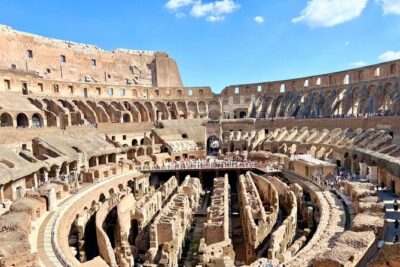
Colosseum with Arena, Roman Forum and Palatine Hill Guided Tour
Read our review →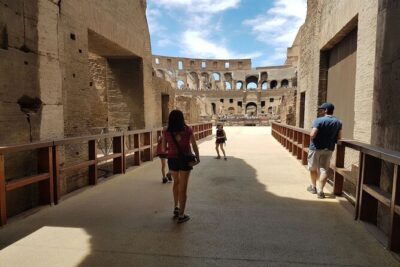
Colosseum & Ancient Rome with Arena Floor Option I Max 6 People
Read our review →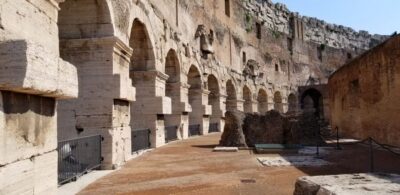
Colosseum, Ancient Rome Tour or AudioGuided Tour
Read our review →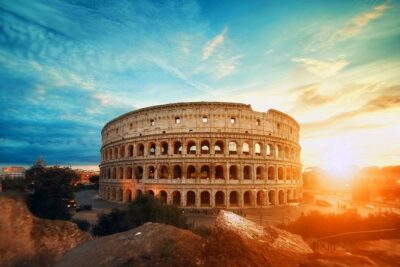
Colosseum Underground & Ancient Rome Guided Tour
Read our review →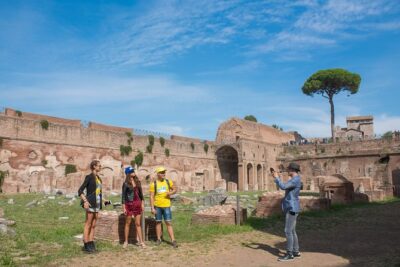
Colosseum Arena, Roman Forum & Palatine Hill Tour
Read our review →