
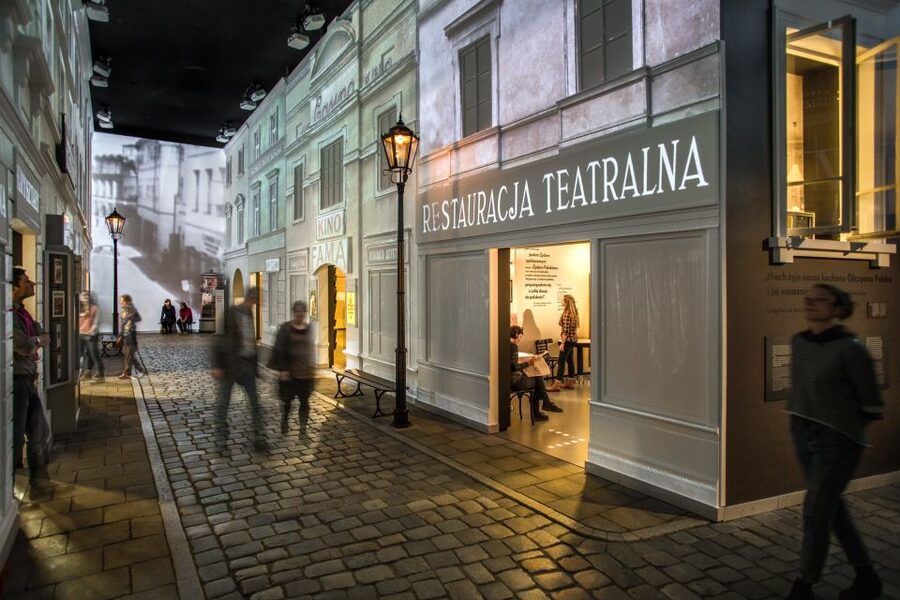
Review · MAZOVIA PROVINCE
Warsaw: POLIN Museum of the History of Polish Jews Ticket
History comes alive here. Warsaw’s POLIN Museum takes you through 1,000 years of Jewish life in Poland, from the first communities to the present day. I especially like its effort to show Jewish life beyond the Holocaust, and I like the mix of artifacts, paintings, sounds, reconstructed spaces, and hands-on displays. The main consideration is time: two hours only gives you a brisk introduction.
At $12 per person, this is one of Warsaw’s strongest museum values. The excellent audio guide helps you follow the galleries at your own speed, though some people may find it hard to listen while reading the many wall panels. The subject is serious and sometimes painful, so plan a pause, not just a quick march through.
Key points before you go
- Eight major galleries cover a full millennium, not only the Second World War.
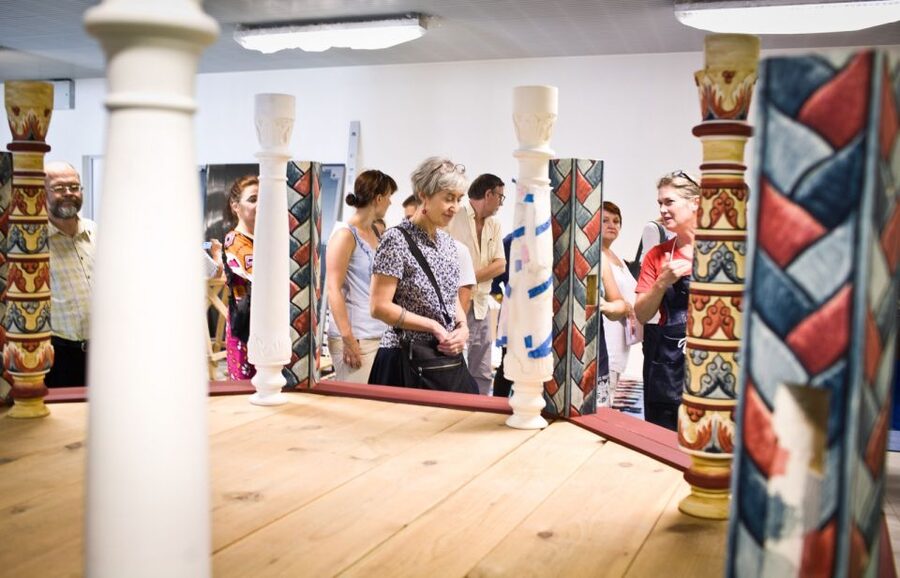
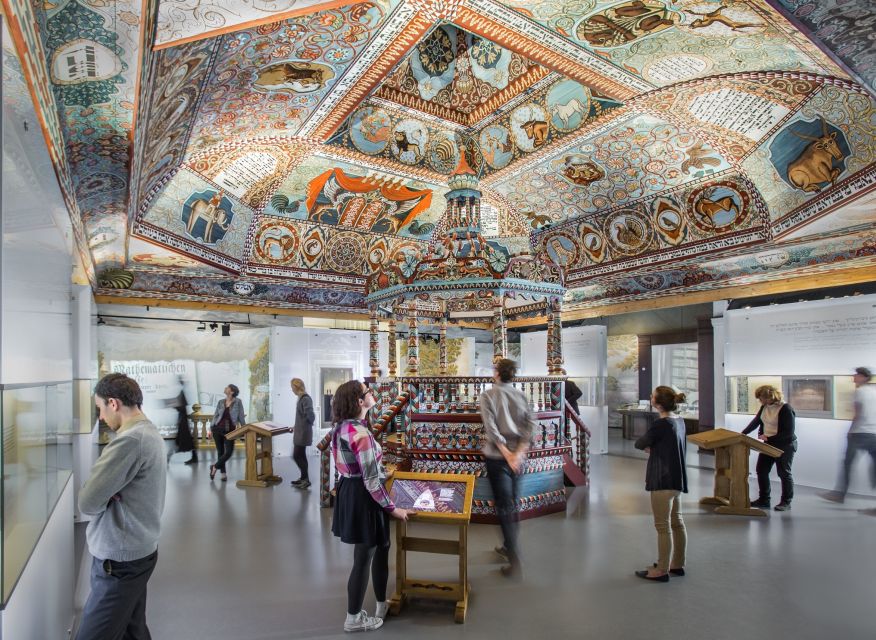
- The reconstructed synagogue ceiling is one of the museum’s most memorable visual features.
- Plan three to four hours if you want to read carefully and use the audio guide fully.
- The audio guide adjusts to your location, giving you the relevant narration as you move through the museum.
- You can leave for lunch and return the same day, which makes a longer visit easier.
- The museum is closed on Tuesdays, and entry to the core exhibition stops two hours before closing.
Why POLIN matters in Warsaw
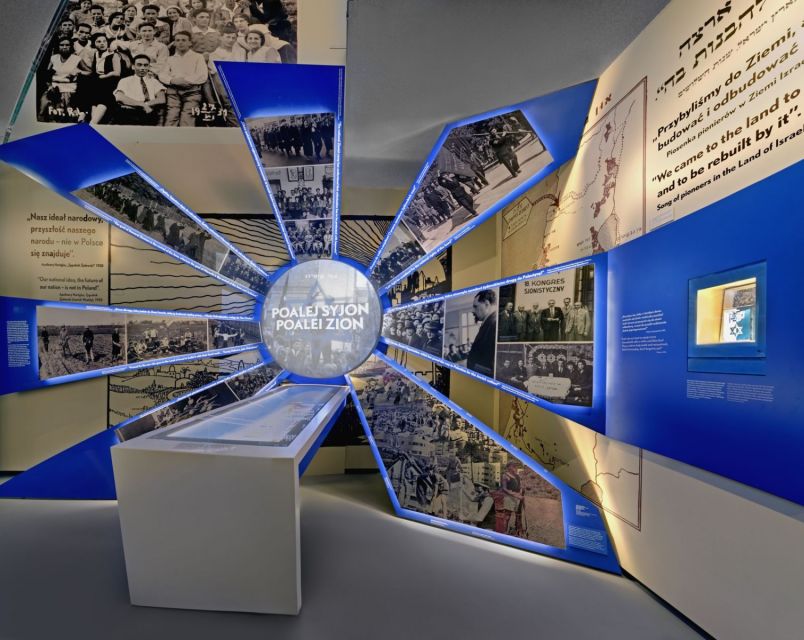
Many people arrive in Warsaw wanting to understand the wartime destruction of the Jewish community. POLIN does address that subject, but it begins much earlier and spends serious time on the centuries when Jewish communities were building homes, businesses, religious institutions, schools, political movements, and cultural traditions in Poland.
That choice matters. If you only visit a Holocaust memorial or former ghetto site, you may leave with a picture of Jewish life defined almost entirely by its destruction. POLIN gives you the before, during, and after. You see Jewish people as neighbors, workers, scholars, merchants, religious leaders, political activists, parents, and citizens.
I find that approach much more useful for understanding Warsaw. The Holocaust becomes part of a long story rather than the whole story.
The museum also helps explain how Jewish life changed as Poland itself changed. The galleries connect Jewish experiences with shifts in government, religious policy, urban growth, industrialization, migration, and war. That wider setting is especially helpful if your background knowledge is limited.
More Museum and Gallery History Tours in Poland:
- Paris: Louvre Museum Entry with History of Mona Lisa
★ 3.9 · 2,823 reviews - Venice’s Best: Basilica, Doge’s Palace, Gondola & History Gallery
★ 4.5 · 2,478 reviews - Guided African American History Tour with Reserved Museum Entry
★ 4.5 · 1,180 reviews
Entering the first galleries: Jewish settlement and community life
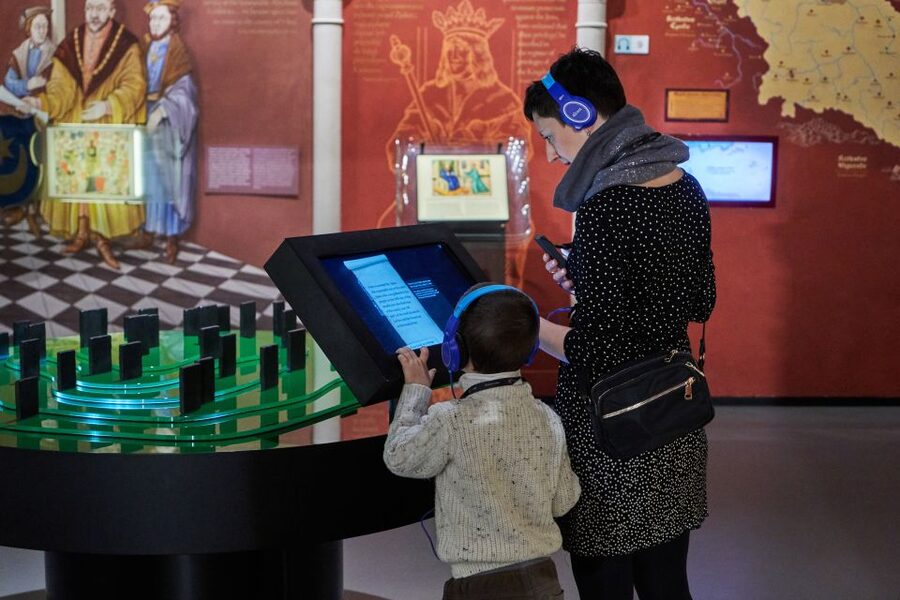
The opening section introduces the arrival of the first Jewish communities in Poland and explains why Jewish people came to settle there. You begin with the foundations of community life, including religious practice, local organization, work, and relations with the surrounding society.
This early material is not a quick preface. It takes up a large part of the visit, and the displays contain plenty to read. You will find artifacts, visual material, and interactive features designed to make distant centuries easier to picture.
I like this opening because it resists the usual shortcut. Instead of treating medieval Jewish history as a few dates before reaching the Holocaust, the museum gives it space. You get a clearer sense of how communities formed and how Jewish people shaped local society over many generations.
The drawback is simple: if you arrive mainly for the 19th and 20th centuries, this section may feel long. One visitor found the early galleries so detailed that the later material received less attention because of tiredness. My advice is to set your pace from the beginning. Read the main panels first, then return to smaller details if you still have energy.
The wooden synagogue and the power of place
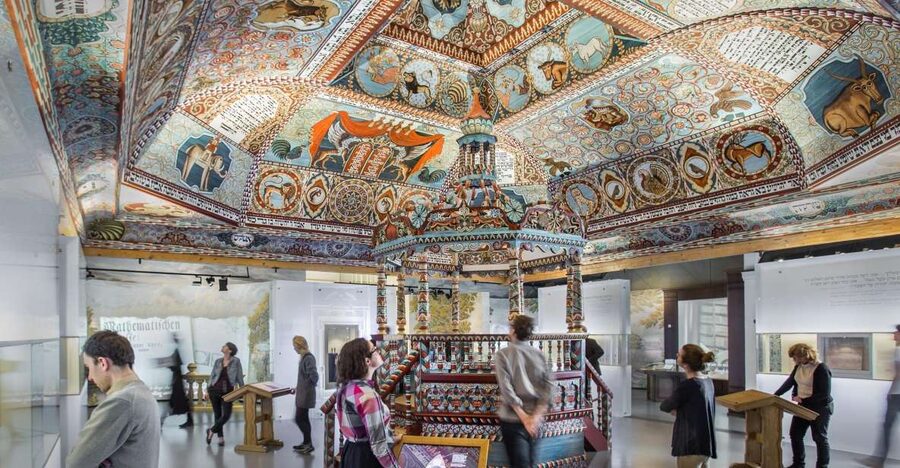
One of POLIN’s most striking displays is the reconstructed wooden synagogue ceiling. It gives the museum a strong sense of place and offers a visual break from the text-heavy sections.
This is not just decoration. A synagogue interior helps you understand how religious life was organized and experienced. The design adds scale and atmosphere to a subject that can otherwise feel abstract when presented only through labels and documents.
You might spend more time here than expected because the setting invites you to look upward and slow down. It is also one of the better places to pause before moving into the galleries about modernization, political change, and the pressures of the modern era.
Jewish life, work, and change in the 18th and 19th centuries
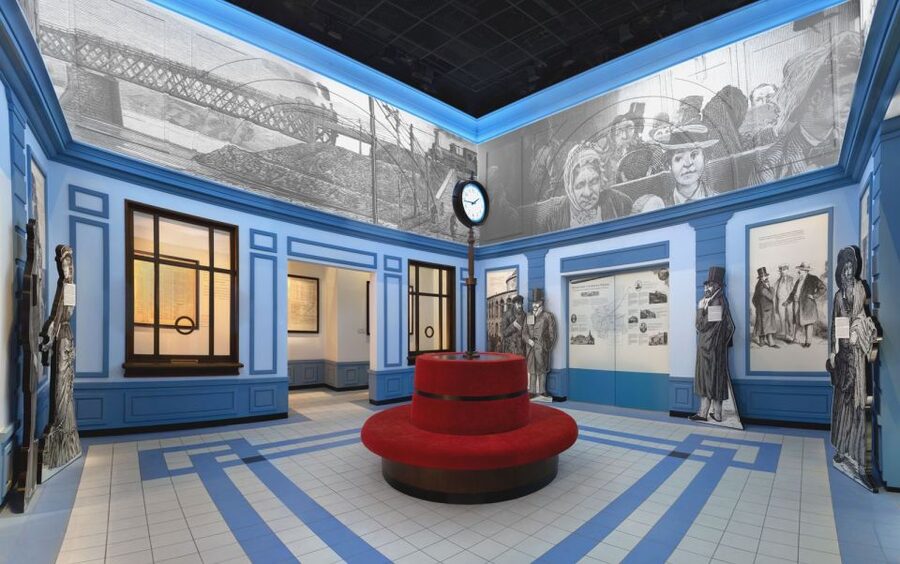
As you move forward, the museum examines the changing role of Jewish people in Polish society. The displays explore individual figures, community institutions, education, work, political ideas, and debates about modernization.
This is where POLIN becomes particularly valuable for first-time visitors. Jewish communities were not frozen in old customs. People argued about how to balance religious identity with new ideas, cities, technology, education, and political movements. The museum shows those disagreements rather than presenting one simple version of Jewish life.
The interactive design helps keep this section moving. Buttons, audio material, images, and objects give you different ways to take in the information. If you are visiting with children or teenagers, these features may hold attention better than a room filled only with text.
Still, the amount of material can be tiring. I would not try to read every word in every gallery on a first visit. Choose the subjects that interest you most, and use the audio guide for the wider story.
More Entry Tickets in Poland:
- Krakow: Kościuszko Mound Ticket – History & Views!
★ 4.4 · 303 reviews - Edinburgh: Edinburgh Castle Guided History Tour with Tickets
★ 4.8 · 9,933 reviews - Taormina: Ancient Theater Skip-the-Line Ticket & Audio Guide
★ 4.5 · 2,412 reviews - Historic Milan Tour with Skip-the-Line Last Supper Ticket
★ 4.5 · 1,976 reviews
The Holocaust galleries: difficult, clear, and necessary
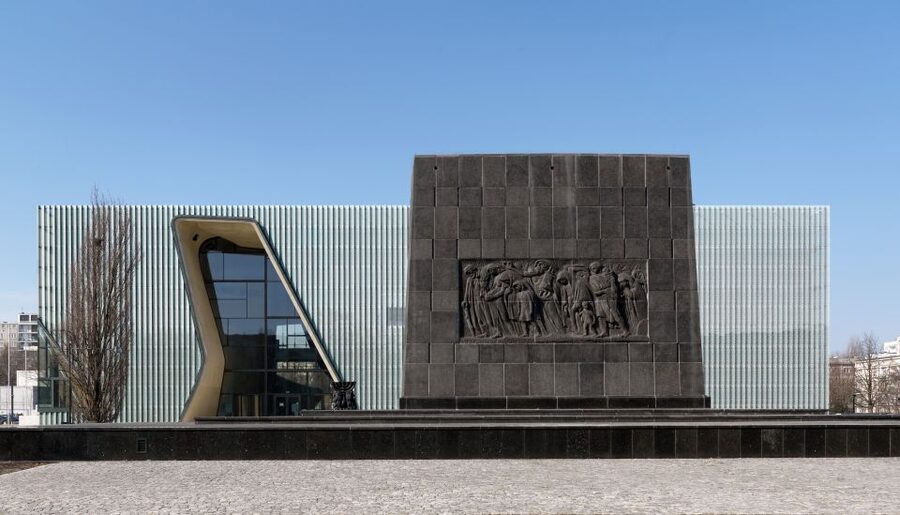
The Holocaust section is emotionally demanding, but the museum’s broader structure gives it added force. You have already seen generations of community life, so the destruction is not presented as an isolated event. You understand what was there before it was attacked.
The displays explain how the Holocaust affected the political, social, and religious diversity of Jews in Poland. Personal stories and historical evidence help connect large events with individual lives. The material is direct and painful, yet the presentation avoids turning suffering into spectacle.
You should give yourself time here. A quick visit can leave the section feeling like another historical stop, while a slower visit allows the scale of the loss to register. Seating throughout the museum is useful, especially in these galleries.
If you have recently visited Auschwitz-Birkenau, POLIN can add important context. Auschwitz shows the machinery and horror of mass murder. POLIN helps explain the society, culture, and communities that existed before the Holocaust and what happened to Jewish life afterward.
The Holocaust material is not the only part of the museum, and that is one of POLIN’s greatest strengths. The museum refuses to let the tragedy erase everything that came before it.
After 1945: survival, memory, and cultural renewal
The later galleries look at Jewish life after the Second World War and at efforts to revive Jewish culture. This section is essential because the story does not end in 1945.
You will see how the destruction affected identity, memory, politics, and community life. The museum also asks what it means to rebuild culture after so much has been lost. That question gives the final part of the visit a different mood from the Holocaust galleries.
The postwar material may be familiar to some people and less familiar to others. Either way, it prevents a misleading impression that Polish Jewish history simply stopped during the war. The museum shows a continuing, if profoundly changed, story.
Using the audio guide without museum fatigue
The audio guide is one of the best reasons to book the museum ticket with audio included. It offers clear narration in Polish or English and is designed to identify your location in the museum, then provide the relevant material.
That feature makes the visit easier because you do not need to keep checking a numbered list. You can look at the display while the explanation begins automatically. The narration provides a helpful outline, especially when a gallery contains more information than you can comfortably read.
There is one practical snag. Listening and reading at the same time can be awkward. Some displays contain long written explanations, and you may find yourself choosing between the audio and the wall text. I suggest using the audio guide for the main structure, then pausing it when a particular object or panel deserves your full attention.
You do not need to listen to every word. A two-hour visit can work if you select the main stops. For a fuller experience, allow three to five hours, depending on your reading speed and interest.
One useful detail: the museum provides places to sit, and you can leave to have lunch and return the same day. That makes a long visit much more manageable.
How long should you allow?
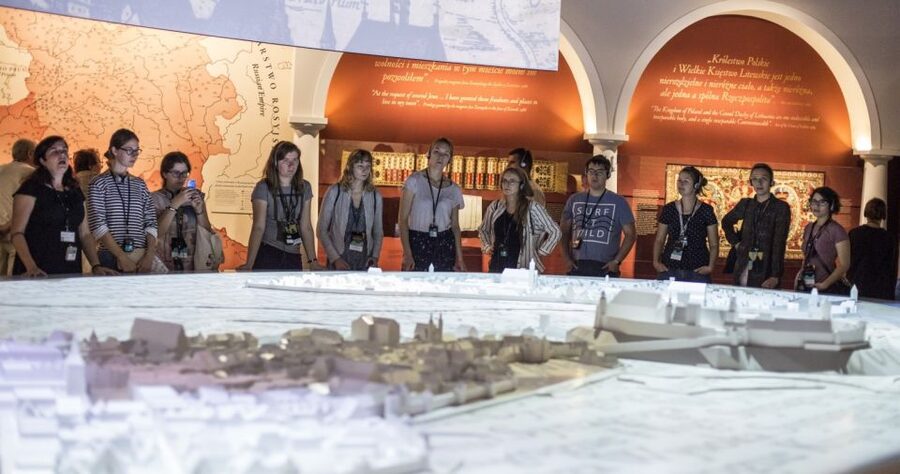
The official estimate for the core exhibition is about two hours. That is realistic for a fast visit focused on the main ideas.
I would allow at least three hours for a more satisfying experience. Four hours is better if you like to read, listen to the audio guide, and stop at interactive displays. Some people spend five or six hours here, especially when temporary exhibitions are open.
Use this simple plan:
- Two hours: Follow the main route and listen selectively.
- Three hours: See the core exhibition at a comfortable pace.
- Four to five hours: Read more panels, use the audio guide fully, and include a temporary exhibition if available.
- Longer visit: Leave for lunch and return on the same day.
Do not arrive near closing time. Admission to the core exhibition ends two hours before the museum closes, so check the day’s hours before setting out.
Price, booking, and practical details
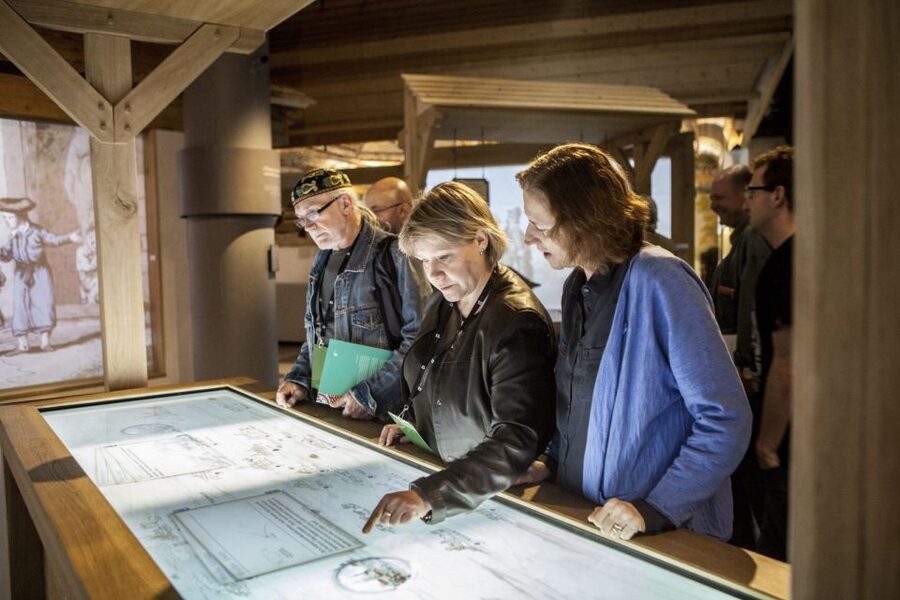
At $12, the ticket offers strong value for a major museum visit. The price includes the permanent exhibition, a temporary exhibition if one is available, and the audio guide. A separate guided tour is not included.
You present your voucher at the museum. Booking ahead can make sense during busy periods, especially if you want to protect a large block of time for the visit. The ticket is valid for one day rather than a fixed short entry slot, so you can arrive at a convenient time during opening hours.
The museum is closed on Tuesdays. It is wheelchair accessible, but oversize luggage is not allowed. Every visitor must pass through electronic security screening before entering the core exhibition.
Children aged seven or younger may enter free. Children aged twelve or younger must remain supervised by an adult.
The museum restaurant is another practical advantage for a long visit. It has informal cafeteria-style service, with generous portions and good-quality food. You do not need to treat POLIN as a rushed morning stop. It can comfortably occupy much of an afternoon.
Who will enjoy POLIN most?
I would recommend this museum to anyone interested in Warsaw, Polish history, Jewish culture, the Holocaust, religion, migration, or modern European history.
It works especially well for:
- First-time visitors who need historical context
- Families with older children who enjoy interactive displays
- Visitors who prefer self-guided museums
- People visiting Auschwitz-Birkenau who want broader background
- Anyone willing to spend several hours with one subject
- Jewish visitors looking for a serious presentation of community life and cultural loss
It may be less suitable if you want a short, light museum stop. Even the quickest reasonable visit requires concentration, and the subject becomes emotionally heavy. The interactive features make the experience approachable, but they do not make the history easy.
Should you book the POLIN Museum?
Yes, if you can spare at least three hours. The museum offers far more than a Holocaust exhibit. Its strongest achievement is showing Jewish life in Poland as a long, complex story filled with faith, work, debate, creativity, conflict, loss, and renewal.
Book it if you value thoughtful presentation and want to understand Warsaw beyond its rebuilt streets and wartime monuments. Use the audio guide, wear comfortable shoes, and resist the temptation to rush through the early galleries.
If your schedule allows only two hours, you can still make the visit worthwhile, but choose carefully and accept that you will not see everything. At $12, the ticket is an easy recommendation for most history-minded visitors, especially because you can leave for lunch and return the same day.
FAQ
Where is the POLIN Museum located?
The museum is in Warsaw, in Poland’s Mazovia Province. You present your voucher at the POLIN Museum of the History of Polish Jews.
What does the ticket include?
The ticket includes access to the permanent exhibition, access to a temporary exhibition if one is available, and an audio guide.
Is a guided tour included?
No. A guided tour is not included. The ticket includes an audio guide for a self-guided visit.
How long does the museum visit take?
The estimated time for the core exhibition is two hours. Allowing three to four hours gives you more time to read and use the audio guide. Some visitors spend five or more hours inside.
Can I leave the museum and return?
Yes. You can leave to have lunch and return, as long as you come back on the same day.
What languages are available?
The listed languages are Polish and English. The audio guide is available in those languages.
Is the museum open every day?
No. The museum is closed on Tuesdays. Admission to the core exhibition also closes two hours before the museum’s closing time.
Is the museum wheelchair accessible?
Yes, the museum is wheelchair accessible. Oversize luggage is not allowed, and all visitors must undergo electronic security screening before entering the core exhibition.
Just added around Poland
- Best of Wroclaw 3-Hour History and Culture Walking Tour★ 4.9 · 49 reviews
- Schindler’s List Movie Tour: Historic Sites & Film Location★ 5.0 · 23 reviews
- Krakow: Vistula River Cruise with Historical Views★ 3.5 · 357 reviews
- Krakow: Kościuszko Mound Ticket – History & Views!★ 4.4 · 303 reviews
- Krakow Old Town Segway Tour — 2H of History, Fun & Discovery★ 4.8 · 91 reviews
- Warsaw: Historic Private Tour in Retro Fiat★ 4.9 · 41 reviews
- Warsaw: Jewish History Guided Walking Tour in English★ 4.7 · 324 reviews
- Small-Group Historical Guided Tour of Warsaw with pick up/drop off. Public Tour.★ 4.5 · 343 reviews
Museum & Gallery History Tours, compared.
Louvre Museum Entry with History of Mona Lisa
Read our review →
Venice’s Best: Basilica, Doge’s Palace, Gondola & History Gallery
Read our review →
Guided African American History Tour with Reserved Museum Entry
Read our review →
Bell Tower & St Mark’s Square History Gallery Ticket
Read our review →
Field Museum of Natural History Ticket or VIP Tour
Read our review →
Madrid in a Day Tour:Royal Palace, Historic Center & Prado Museum
Read our review →
Basilica, Doge’s Palace, History Gallery & Bell Tower Option
Read our review →
Ancient Olympia: Archaeological Site and Museum Entry Ticket
Read our review →Browse the lists this tour appears in