
Review · SEVILLE
Historical Italica: Half-Day Guided Tour from Seville
Roman ruins sit just outside Seville. This four-hour outing takes you to Italica, the ancient settlement often described as the first Roman city founded on the Iberian Peninsula, then adds the striking San Isidoro del Campo monastery. I like the short transfer from Seville and the chance to see enormous mosaics, Roman houses, and one of the empire’s largest amphitheaters without planning transport yourself. I also like that guides such as Jesús, Rebecca, Leon, Miguel, and Alberto have brought strong enthusiasm and storytelling to the site.
The main drawback is organization. Several departures have suffered from late buses, too many pickup points, or a delayed return, which matters if you have a train or another timed booking. The monastery is a welcome bonus for some people, but others find it less interesting than Italica and would prefer more time among the Roman ruins.
Key points before you book
- A short ride from Seville: Italica is roughly 15 to 20 minutes from the city center by bus, so most of this half-day is spent seeing the sites rather than sitting in traffic.
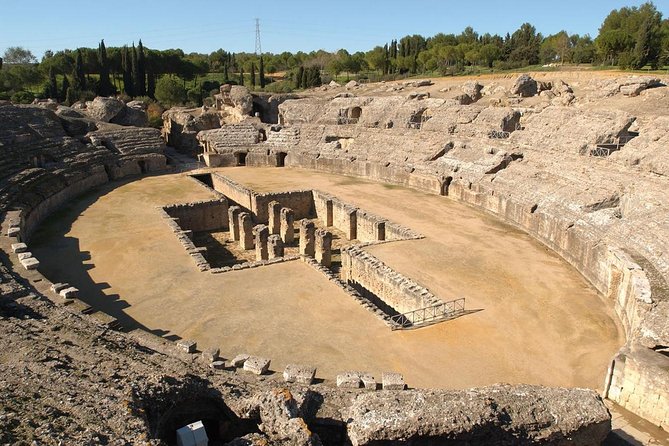
- The amphitheater is the star: The vast arena is described as capable of holding 25,000 spectators, with tunnels and underground areas that help you picture Roman public entertainment.
- Mosaics are the real treasure: The preserved floor designs and upper-class domus houses give you a better sense of daily life than a pile of scattered columns would.
- The monastery adds a second era: San Isidoro del Campo brings medieval religious history and art into the same outing, though its appeal depends on your interests.
- Guide quality shapes the day: Jesús, Rebecca, Leon, Miguel, Juanra, Inez, Catherine, and Alberto have all been praised for clear explanations, energy, and passion, but English delivery can vary.
- Plan for heat and timing: There is little shade at Italica, and late departures have occasionally shortened visits or delayed the return to Seville.
Why Italica makes an easy half-day from Seville
Seville has no shortage of grand palaces, churches, and plazas. It is easy to spend your whole stay inside the city center. Italica gives you a useful change of pace, and the journey is short enough that you do not lose an entire day.
The tour lasts about four hours and includes shared round-trip transport with a professional guide. That arrangement is useful if you do not want to work out the bus connection, find the entrance, or figure out the site on your own. A guide also helps turn the ruins into a city rather than a set of attractive floor patterns.
The group can reach up to 60 people, so this is not a private archaeological walk. In practice, the company may split people into English, Spanish, and French groups. That can make the explanations easier to follow, although one particularly difficult departure had to combine groups after a guide failed to arrive.
The price, about $47.18 per person, is fair if your priority is convenience. You are paying for transport, entry, and interpretation in one package. It is less compelling if you already know Italica well and are happy to take local transport, visit independently, and read up on the ruins yourself.
More Half-Day Tours in Spain:
- Historical Montserrat Half-Day Hiking Tour from Barcelona
★ 5.0 · 26 reviews - Lima’s Vibrant Heritage: Exploring the City’s Landmarks Half-day
★ 4.5 · 581 reviews - From Ho Chi Minh: Cu Chi Tunnels Half-Day History Tour with Guide
★ 5.0 · 480 reviews
Walking through Italica’s Roman streets
The archaeological ensemble is the heart of the experience. Italica was founded as a Roman settlement in what is now Santiponce, just outside Seville. The site helps explain how Roman urban life took root in southern Iberia and how wealthy families lived far from the city of Rome.
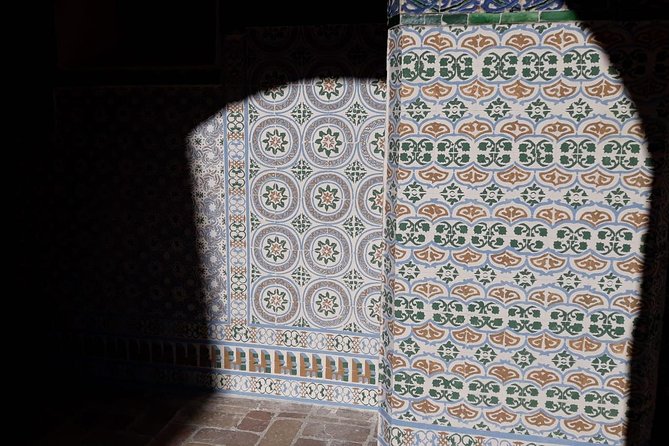
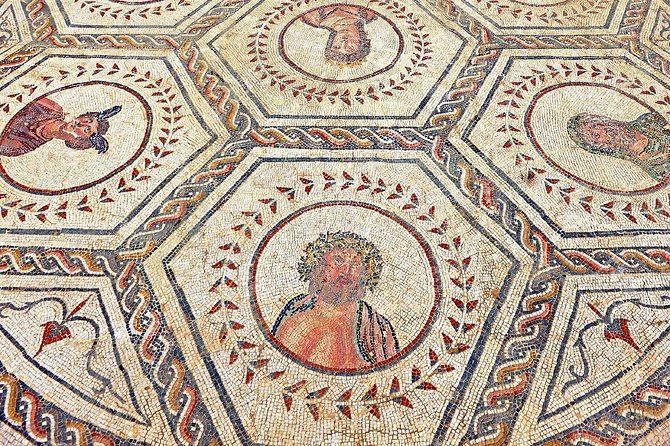
I especially like the residential area because the preserved mosaics give the visit color and scale. You are not only looking at walls. You can see the floor plans of large domus houses and admire intricate designs that once marked private dining rooms and other important spaces.
The mosaics are often the most memorable part of the walk. Their patterns remain surprisingly clear in places, and they show the money and skill invested in elite Roman homes. A guide can point out how the rooms fit together and explain what the decoration says about status, taste, and daily routines.
This is also where a good guide earns the fee. A strong explanation can help you picture streets, courtyards, household work, and public life. Alberto was praised for turning a collection of ruins into a vivid account of the ancient city, while guides including Jesús and Miguel have been singled out for adding detail beyond the basic names and dates.
The quality of historical explanation is not uniform, however. Some guests have found certain accounts too simple, particularly explanations of Rome’s arrival in Iberia and the later Reconquista. If you already have a serious background in Roman and Spanish history, you may want to treat the tour as a site orientation rather than the final word on every historical question.
The amphitheater and its underground passages
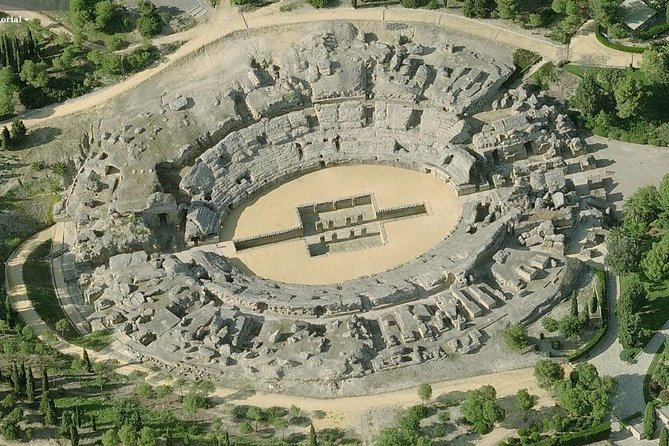
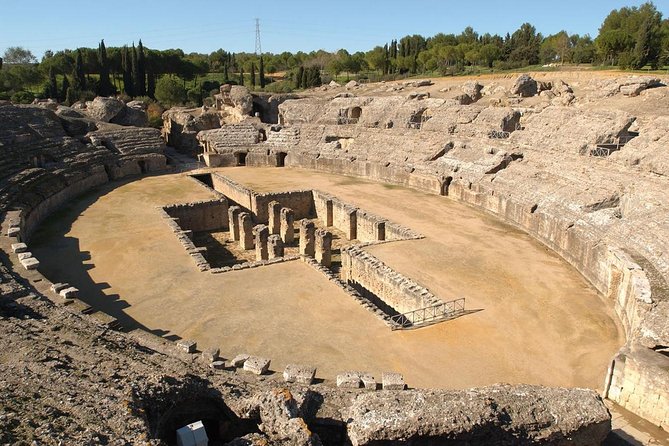
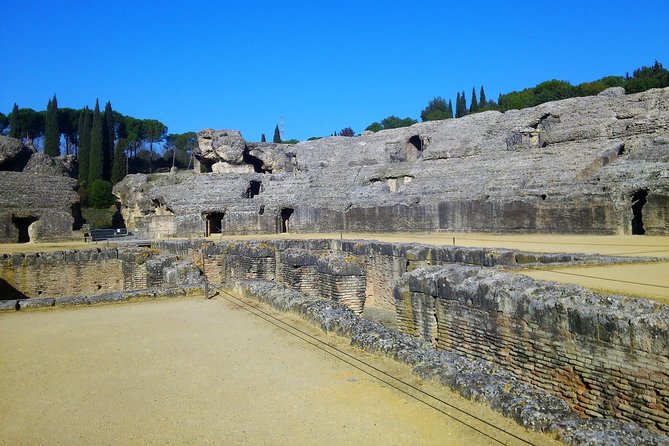
The amphitheater is the clearest reason to visit Italica. It is huge, even in a region filled with Roman remains, and the stated capacity of 25,000 spectators gives you an idea of its importance. The arena was built for public spectacles, and its size makes Roman political and social power feel much less abstract.
You can walk around the structure and see the passages below the arena. One account specifically praised the chance to walk through tunnels beneath the remains, a detail that adds much more than another view from the upper seating area. These corridors help you understand how people, animals, equipment, and performers could be moved out of sight.
The amphitheater is also the part most likely to satisfy a visitor who has seen Roman sites in other countries. It is not the Colosseum, and the excavated areas are not all restored, but its scale is impressive. One guide explained that it was second only to Rome’s Colosseum in size at the time, though you should regard such comparisons as part of the site’s presentation rather than a reason to measure every arena by a strict ranking.
Allow enough attention for the amphitheater even if you are most interested in domestic life. Some departures have had to shorten or alter the visit because of delays, and one unhappy account said the theater and baths were not visited. That does not appear to be the standard plan, but it shows why punctual transport matters on a four-hour schedule.
San Isidoro del Campo, a surprising second stop
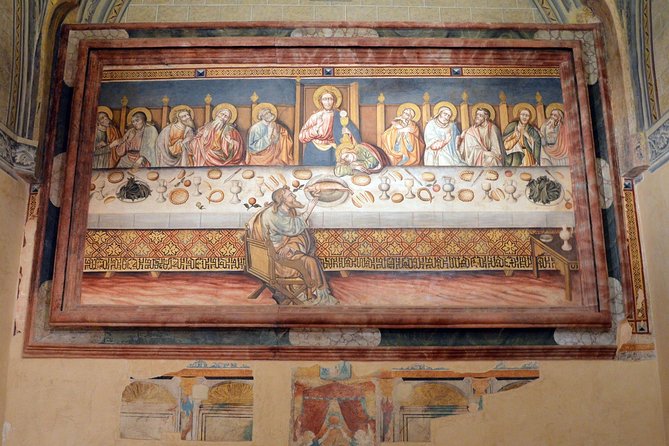
The monastery of San Isidoro del Campo is visited during the same outing, generally on the way to or from Italica. The stop lasts about an hour and admission is included.
This is a former fortress monastery with its own art and religious history. It gives the tour a second layer, moving from Roman civic life to later Christian Spain. Several guides, including Jesús and Rebecca, have been praised for making the monastery more interesting through stories and historical explanation rather than treating it as a quick photo stop.
I can see why the monastery divides opinion. If you enjoy architecture, religious art, and the complicated history of Spain, it is a worthwhile addition. If your main goal is Roman archaeology, the stop may feel like time taken away from Italica. A few people have found it boring or unrelated, while others were delighted because they would not have discovered it independently.
That difference is useful when deciding. Do not book this as a pure Roman ruins tour. Book it as a half-day history outing with two very different sites. The combination is part of the value, but it is also the reason the day may not suit someone who wants every available minute at the ancient city.
More Guided Tours in Spain:
- Guided Tour of Historic and Monumental Trujillo
★ 5.0 · 930 reviews - Madrid Historical Tour with Local Guide in Eco Tuk Tuk Private
★ 5.0 · 876 reviews - Guided Tour of Madrid of the Austrias and the Historic Center
★ 5.0 · 520 reviews - Seville: Tapas, Taverns and History Guided Walking Tour
★ 4.9 · 515 reviews
How the guides shape the experience
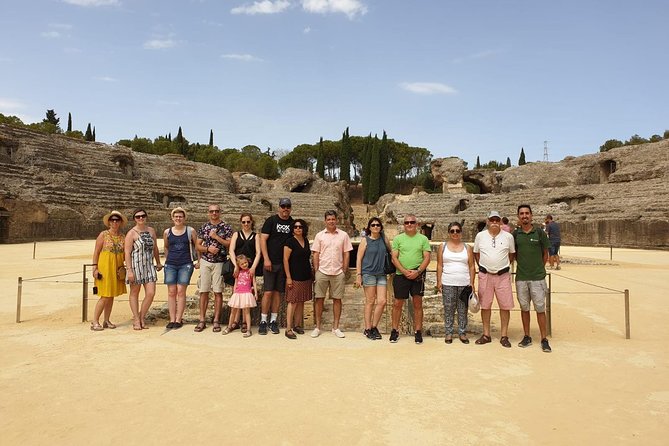
The strongest part of this tour is often the person leading it. Jesús has been praised for explaining both Italica and the monastery with energy and depth. Rebecca has been noted for pointing out details that are easy to miss and for making solo visitors feel included. Leon has received praise for his warmth, passion, and ability to keep a large group involved.
Miguel, Juanra, Inez, Catherine, and Alberto have also been praised for clear explanations and enthusiasm. Alberto in particular was described as a gifted storyteller, while Juanra was appreciated for making the large amphitheater and mosaics easy to understand.
That praise comes with a practical warning: guide assignments vary. One English-language guide was giving a first tour in English and still made a strong impression, but another guide was difficult for some people to follow. The tour is sold in English, yet mixed-language explanations have occurred, especially at the monastery.
I would book the guided option if you want context, not just access. Italica can be enjoyed independently, but the site is spread out and its meaning is not always obvious from the stones. A guide can explain why one house matters, how the amphitheater worked, and what the mosaics reveal about Roman society.
Transport, timing, and the heat factor
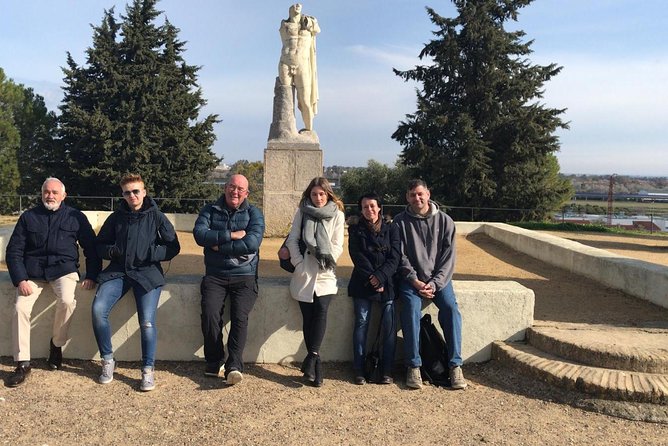
The shared bus is normally clean and comfortable, and the short journey is one of the tour’s advantages. Pickup is from a meeting point in Seville, and the outing usually returns around early to mid-afternoon, depending on the departure and traffic.
The weak point is timekeeping. Some departures have begun about 30 minutes late, with several pickup points adding more delay. That can shorten the archaeological visit and create real stress if you need to catch a train. A late return has also been reported even when the sites themselves were well worth seeing.
I would not schedule a tight connection after this tour. Give yourself a generous buffer, especially if you are leaving Seville the same day. The provider offers free cancellation up to 24 hours before the start time, but changes made inside that period are not accepted. The tour also needs a minimum number of participants, so a cancellation for that reason can lead to another date, another experience, or a full refund.
Heat deserves equal attention. Italica is exposed, and August can be punishing. One visitor described moving from patch of shade to patch of shade by the end of the walk. Bring water, wear a hat, and use sun protection. Food and drinks are not included, so do not assume refreshments will appear on the bus or at the ruins.
You should also carry identification. One person said the instructions did not make this clear and was relieved to have passport images on a phone. The tour information says most people can participate and that public transportation is nearby, but it does not provide detailed accessibility guidance. If mobility is a concern, ask the provider before booking.
Is the $47.18 price good value?
At $47.18, the tour sits in a reasonable middle ground. You receive round-trip shared transport, admission, taxes, and a guide. That removes several small costs and decisions, and it gives you a structured visit to a site that is easy to overlook when planning a Seville stay.
The value is strongest for first-time visitors, people with limited time, and anyone who wants historical interpretation. The value is weaker for experienced Roman-history readers who prefer to move at their own pace. Local transport can cost only a few euros, so independent sightseeing may be cheaper, though it leaves you responsible for entry arrangements and explanations.
The monastery improves the package if you like variety. If you would gladly trade that hour for more Roman remains, the price may feel less attractive. Still, the included second site is not a hidden extra charge, and it gives the half-day a broader view of the area’s past.
Who should book this Italica tour?
I would recommend it to anyone who loves Roman history, ancient architecture, mosaics, or archaeology but does not want to plan a separate trip outside Seville. It is also a good choice for solo visitors who like the ease of joining a group, and for people who want a guide to explain ordinary Roman life rather than only point out famous monuments.
Families and older visitors may appreciate the short transfer, though the walking takes place in hot, exposed conditions. The group size can be large, so this is not the right pick if you want a quiet private visit or flexible pacing.
I would think twice if your schedule includes a train soon after the advertised return, if you dislike mixed-language groups, or if you have no interest in the monastery. I would also consider an independent visit if you have strong Roman-history knowledge and prefer to explore without a fixed route.
Final verdict: book it for the guide and amphitheater
Yes, I would book this tour if you want an easy, informative half-day from Seville. Italica’s mosaics, upper-class houses, and immense amphitheater make the trip worthwhile, and the short bus ride keeps the outing efficient.
Go in with realistic expectations. The guide may be excellent, but English delivery and historical detail can vary. The bus may run late, the monastery may not capture your interest, and the summer sun is serious. With water, sensible timing, and a little flexibility, the $47.18 package offers a strong introduction to one of southern Spain’s most rewarding Roman sites.
FAQ
How long does the Historical Italica tour last?
The experience lasts approximately four hours, including transport and visits to Italica and San Isidoro del Campo.
What is included in the price?
The price includes a professional guide or driver, round-trip shared transfer, admission tickets, and taxes. Food and drinks are not included.
Is the tour offered in English?
Yes. The experience is offered in English, though some departures may also include Spanish or French groups.
How large can the tour group be?
The maximum group size is 60 people.
Is the amphitheater included in the visit?
Yes. The Italica visit includes the archaeological ensemble and its amphitheater, along with mosaics and Roman houses.
Can I cancel for a full refund?
Yes. You can cancel at least 24 hours before the experience starts for a full refund. Cancellations or changes made less than 24 hours before the start time are not accepted for a refund.
Just added around Spain
- Jerez de la Frontera History and Art Walking Tour★ 4.5 · 49 reviews
- 2 Hours Tour around Cádiz: History, anecdotes and curiosities★ 5.0 · 89 reviews
- Bilbao Historical Small Group Tour★ 4.5 · 159 reviews
- Barcelona Jewish & Gothic Tour★ 5.0 · 18 reviews
- Andorra Original History and Sightseeing Tour (Private, Pickup)★ 5.0 · 350 reviews
- History Museum of Catalonia & Rooftop Access Ticket★ 4.5 · 43 reviews
- Sip, Sites & Bites Barcelona Food, Drinks & History Tour★ 4.5 · 95 reviews
- Barcelona Tapas Food Tour, Taverns, History & Local Culture★ 5.0 · 42 reviews
Seville History Tours, compared.
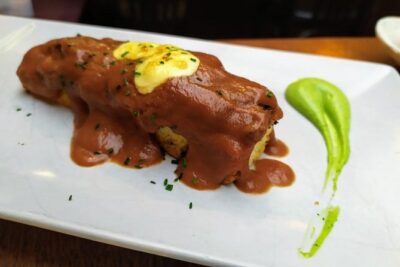
Sevilla Food Tour: Tapas, Wine, History & Traditions
Read our review →
Ultimate Seville Tapas, Wine & History Small Group Tour
Read our review →

Seville Evening Historical Tour with Haunted History
Read our review →
Historic Gibraltar Rock and St Michael’s Cave Tour from Seville
Read our review →

Seville City Tour: 3-Hour Historical Segway Adventure
Read our review →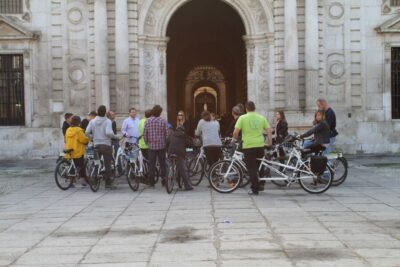
Browse the lists this tour appears in