
Review · ROME
Ancient Appian Way PRIVATE Bike Tour
Rome has a wild side. This four-hour private e-bike ride leaves the city’s busiest streets behind for the old Appian Way, Roman aqueducts, open parkland, tombs, villas, and ancient gateways. I especially like the private format, which gives your group direct time with the guide, and the chance to see the Aqueduct Park and Appian Way in one outing. The main catch is that roughly 20 percent of the ride may be in city traffic, so you need to be a confident cyclist.
This is not a gentle sightseeing loop with a motor doing all the work. The bikes use pedal assistance, not a throttle, and you still need to pedal often. Guides such as Valerio, Sara, Claudio, Marco, Alex, Iman, and Nico have helped make the ride memorable with patient explanations and strong knowledge of Roman history. Families also get useful support, including child seats and a trailer bike option for children from 6 to 10 who are under 143 centimeters tall.
Key points to know before you book
- You cover a remarkable stretch of Rome: One family rode about 14 miles and still wished the outing had lasted longer.
- The aqueducts are the star for many riders: Some sections are impressively preserved, and one aqueduct is still functioning.
- Traffic is part of the deal: About one fifth of the route may involve busy Roman streets.
- The e-bikes assist your pedaling: They do not move under their own power, so good bike skills and moderate fitness matter.
- It works well for families: Child seats are available up to 25 kilograms, and qualifying children aged 6 to 10 use a trailer bike.
- The guide can shape the experience: Private tours allow more flexibility, and guides have adjusted the pace and stops for individual groups.
Why the Appian Way makes such a good bike outing
The ancient Appian Way gives you a different Rome from the one around the Colosseum and Trevi Fountain. Instead of moving from one crowded monument to the next, you ride through a long corridor of Roman remains and open countryside within the city’s reach.
That change of pace is the real appeal. You see Roman engineering, funerary monuments, imperial villas, medieval remains, and green parkland in one continuous route. The old paving can be uneven, and some roads are shared with traffic, but the bicycle lets you cover far more ground than you could on foot.
I also like the way the tour links several areas that are awkward to combine independently. Porta San Sebastiano, the Caffarella Park, the aqueducts, the Villa dei Quintili, the Circus of Maxentius, and the Baths of Caracalla are spread across a broad section of Rome. A private guide helps connect them into one story rather than leaving you to piece the ruins together.
The tour is offered in English and begins at Via dei SS. Quattro, 58, in central Rome. It ends back at the same meeting point. The activity lasts about four hours, though the exact rhythm can depend on your group and the guide.
More Ancient History Tours in Italy
- Colosseum: Underground and Ancient Rome Tour
★ 4.7 · 12,691 reviews - Colosseum & Ancient Rome with Arena Floor Option I Max 6 People
★ 5.0 · 3,306 reviews - Rome: Colosseum, Ancient Rome Tour or AudioGuided Tour
★ 4.4 · 2,879 reviews
Porta San Sebastiano: Rome’s southern gate
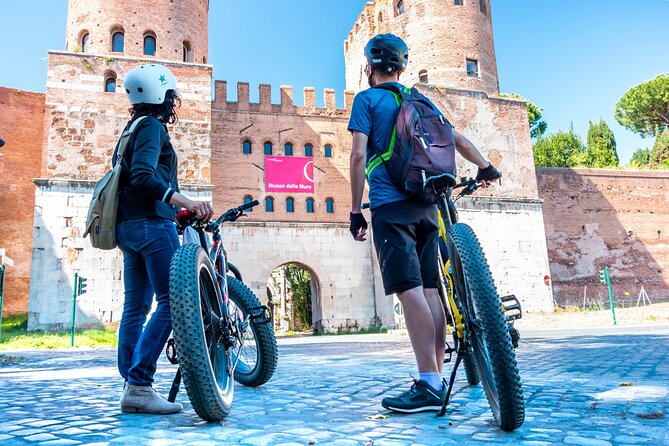
The ride begins at Porta San Sebastiano, one of the most imposing gates in the Aurelian Walls. The walls were built around 275 AD, when Rome needed stronger defenses, and this gate marks the start of the historic Via Appia Antica.
The gate is more than a photo stop. Medieval graffiti left by pilgrims shows that this road continued to carry people long after the Roman Empire faded. Those marks give the place a human touch. You are not simply looking at a block of old masonry. You are seeing a gateway used by soldiers, pilgrims, residents, and visitors over many centuries.
Your guide will fit you to the bike and helmet before setting off. This is a useful moment to speak up about your comfort, height, or cycling experience. The private setup means the guide can give your group more attention than you would receive in a large departure.
Caffarella Park: green Rome beyond the center
The route then reaches Parco della Caffarella, a large open area within the Appian Way Regional Park. This is one of the tour’s most pleasant surprises. Rome can feel packed and noisy, yet this park offers paths, groves, fields, and scattered ancient remains.
The park is not just filler between historic stops. It helps you understand the scale of the Appian Way area and why this part of Rome feels so different from the center. Ancient buildings appear among the trees and open ground, giving you a sense of how ruins can remain part of daily surroundings rather than being sealed inside a formal museum.
I would expect the bike to be especially useful here. You can move between sections without spending your entire morning walking, while still getting enough time to stop and hear the story behind what you see. The route is also a good fit for families, provided everyone can handle the bike and the pace.
The Nymphaeum of Egeria and its Roman legend
At the Ninfeo di Egeria, history and legend meet beside a spring. The site is linked to Egeria, a nymph and the companion of Numa Pompilius, Rome’s second king. According to the story, Egeria’s grief after Numa’s death produced the spring through her tears.
You should not expect a huge monument here. The appeal is the setting and the story. It gives the guide a chance to explain how Romans connected springs, sacred places, rulers, and myths. This is one of the shorter stops, but it adds atmosphere to the ride and breaks up the larger archaeological sites.
More Ancient History Tours in Rome
- Colosseum Underground & Ancient Rome Guided Tour
★ 4.5 · 2,590 reviews - Pantheon Elite Guided Tour – Rome’s Iconic Ancient Temple
★ 5.0 · 1,447 reviews - Ancient Rome: Colosseum Underground Group Tour
★ 4.5 · 1,059 reviews - Colosseum Express Guided Tour and Ancient Rome Admission Included
★ 4.0 · 1,008 reviews
Aqueduct Park: the tour’s most powerful view
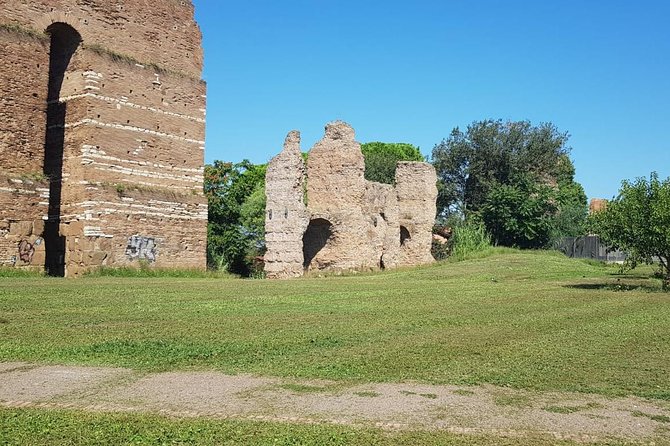
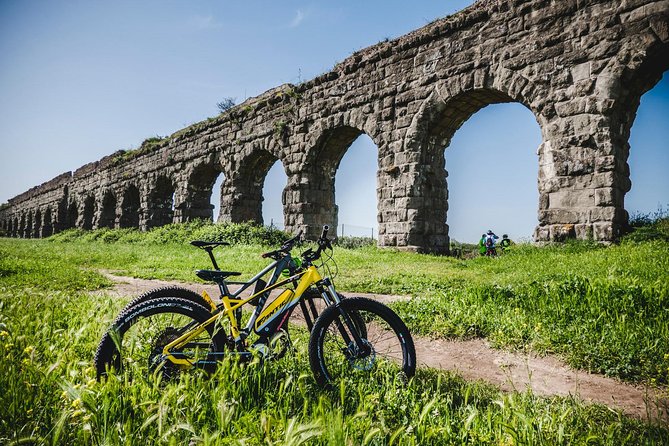
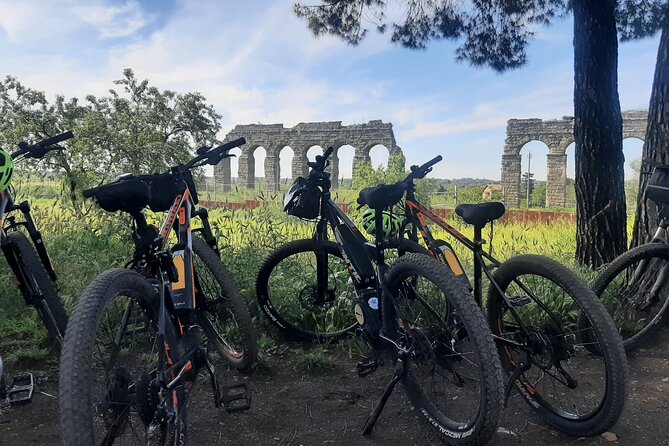
Parco degli Acquedotti is likely to be the high point for many people. The park is crossed by the old Via Latina and contains remains of the water system that supplied ancient Rome. Long stretches of aqueduct rise across the open area, making Roman engineering easy to grasp at a glance.
I especially like that the aqueducts are not presented as isolated fragments. You see them in a broad setting, where their height and distance become clear. The structures feel even more impressive because the park gives you room to step back and take them in.
Some aqueduct remains are still in operation, a detail that makes the site feel less like a dead ruin. The ancient water network was enormous, practical, and carefully designed. Your guide can help explain how these lines fit into Rome’s wider system, rather than leaving you with only a striking photo.
Several people have found the aqueducts the most memorable part of the trip. One rider who had visited Rome several times had never seen them before. That is a good reason to choose this outing even if you already know the central sights well.
Villa dei Quintili: an imperial-sized country retreat
At the fifth mile of the Appian Way, the remains of Villa dei Quintili reveal how grand Roman private life could become. The villa belonged to the brothers Sextus Quintilius Condianus and Maximus Valerius, consuls in the second century AD.
Their success did not protect them. Emperor Commodus had the brothers killed and took the villa for imperial use. That sharp turn from wealth to confiscation gives the site a useful political edge. Roman villas were not just comfortable homes. They could also reflect power, ambition, and the danger of attracting imperial attention.
The remains are spread across a large area, so the bicycle again helps you make sense of the site. You can appreciate the scale without trying to walk the entire Appian Way section between each stop. Expect the guide to give you the main story and point out the parts that matter most within the available time.
Cecilia Metella and the Caetani fortress
The Mausoleum of Cecilia Metella is one of the best-preserved tombs along the Appian Way. This large pagan monument dates from the first century BC and was later incorporated into the Castrum Caetani, a medieval fortress complex.
The combination is what makes the stop special. You see a Roman funerary monument, the remains of the Caetani family’s medieval residence, and the surviving perimeter walls of the church of San Nicola. Different periods overlap in one compact site.
This is a good place to notice how Rome reused its past. A monument built for a Roman woman became part of a later fortified settlement. The Appian Way is full of these layers, and a good guide can make the changes easier to follow.
Circus of Maxentius: a Roman racecourse in unusually good condition
The Circus of Maxentius is considered the best surviving example of a Roman circus. Its long form and central spina remain visible, giving you a clearer idea of how these venues were arranged than you may get from smaller fragments elsewhere.
The spina once held an obelisk. During the Renaissance, that obelisk was moved to Piazza Navona, where it now forms part of the Fountain of the Four Rivers. The connection is a fine reminder that pieces of ancient Rome often turn up far from their original locations.
This stop rewards a little imagination. The stone remains may be quiet today, but the circus was built for spectacle and crowds. Your guide can help you picture the racing track and explain how the surviving parts fit together.
The Baths of Caracalla and the ride back
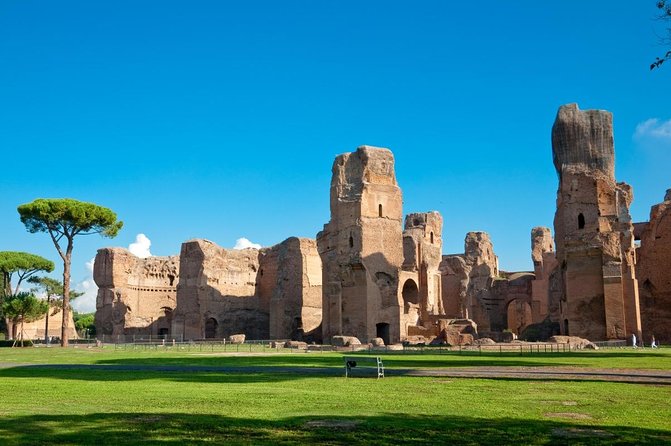
The final listed stop is the Terme di Caracalla, built by the emperor Caracalla. For about a century, these were the largest public baths in the Roman world, and much of the structure remains.
The baths were not simply places to wash. They were large public complexes, and their scale shows how Roman public life depended on ambitious engineering and reliable water. The Aqua Marcia supplied the complex through the Antoninian aqueduct. Smaller remains of that system can also be seen near Porta San Sebastiano.
Ending here gives the tour a strong final chapter. You have seen roads, tombs, villas, parks, aqueducts, a racecourse, and a public bath complex. From this point, the ride returns to the original meeting point at Via dei SS. Quattro.
What the private format adds
A private tour is useful here because the route includes changing surfaces, traffic, archaeological stops, and a substantial amount of cycling. You can ask the guide to slow down, repeat an explanation, or adapt the experience to your interests.
That flexibility has mattered to people who rode with guides such as Marco, who adjusted the outing to suit the group, and Valerio, who helped two riders manage the bikes and helmets before setting off. Alex was praised for being warm and patient, while Nico brought academic training in ancient Greek, Latin, and ancient history to the experience.
The guide names may change, of course. Still, the repeated pattern is important: the quality of the explanation can shape the whole ride. This is not a self-guided bike rental. You are paying for historical context, route-finding, and support on streets where local traffic can be stressful.
Bikes, traffic, and the fitness question
The included e-bike is high quality and comes with a helmet, mobile phone holder, and handlebar holder. Child seats are available for children up to 25 kilograms.
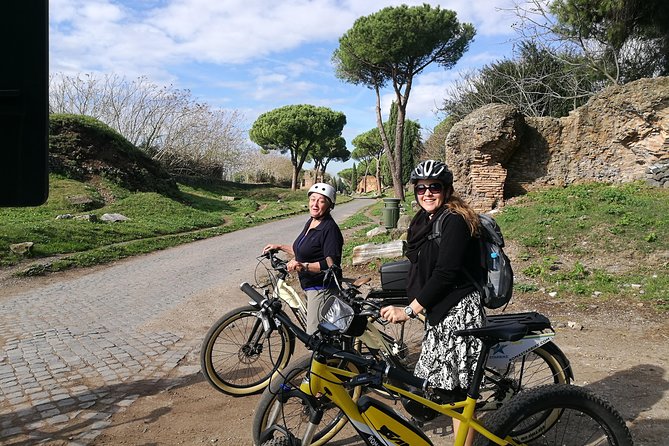
The electric assistance helps, but it does not replace cycling. There is no throttle. You must pedal, and the tour information calls for moderate physical fitness and strong bike-riding ability. If you are comfortable riding well but do not want to work hard on every incline or long stretch, the e-bike should make the route more manageable.
The biggest practical concern is traffic. About 20 percent of the ride may take place in city traffic, and one rider specifically warned about busy roads and impatient Roman drivers. If you are nervous around cars, this may not be the right activity. A guide helps, but cannot remove traffic from the route.
You will also encounter city streets, cobbled roads, and paths through parks. Wear comfortable clothes and shoes, and do not treat this as a passive sightseeing trip. The ride covers a lot of ground, which is part of its value, but it also requires attention and energy.
Is $147.54 per person a fair price?
At $147.54 per person, this is not the cheapest way to spend half a day in Rome. The value depends on what you want from the outing.
You receive a private guide, an e-bike, helmet, phone and handlebar holders, and a route that links major archaeological areas over about four hours. Admission is listed as free for the stops, so the price mainly reflects the guide, equipment, planning, and private service.
For two people who want a focused experience outside the crowded center, the price can make sense. You cover far more ground than you could comfortably walk, and you gain direct help with the route and the history. For a family, the calculation is more complicated, since several full-price places can add up, though child equipment and child reductions help.
I would compare this with the cost of booking separate transport to the Appian Way, visiting selected sites on foot, and arranging your own route. If you value efficiency and personal attention, this tour offers good value. If you prefer to move slowly through one archaeological site or want a completely traffic-free outing, it may not.
The tour is highly rated at 5 out of 5 from 89 reviews, with 99 percent of customers recommending it. Those figures point to a consistently strong experience, but they do not erase the traffic and cycling requirements. Read the physical demands honestly before booking.
Families, older cyclists, and first-time visitors
Families can do very well on this ride. One group with children aged 11, 9, 7, and 5 covered roughly 14 miles and found the experience so enjoyable that the children did not want it to end. That is encouraging, but it should not be read as a promise that every young child will handle the same distance.
Children aged 6 to 10 qualify for the reduced rate only if they are under 143 centimeters tall. They use a trailer bike rather than riding a bike alone. A child seat is available up to 25 kilograms. The supplied details do not specify the exact arrangement for a five-year-old, so confirm the setup when booking if your family includes a younger child.
I would recommend this for adults and older children who already ride confidently. It is also a good choice for repeat visitors to Rome who have seen the central monuments and want a different side of the city. First-time visitors can enjoy it too, especially if they want a break from indoor museums and crowded squares.
The tour is offered in English. A private group can make the experience easier if one person needs slower explanations or extra encouragement, but limited bike skills remain a real concern.
Booking details that matter
Confirmation is provided at booking, and the meeting point is near public transportation. The activity begins and ends at Via dei SS. Quattro, 58, 00184 Rome.
Free cancellation is available up to 24 hours before the start time for a full refund. Cancellations or changes made inside that 24-hour window are not accepted for a refund. The cut-off follows local Rome time.
Bring a realistic sense of your own ability. You must know how to ride a bike well, and the tour requires moderate fitness. Tips are optional and are not included.
Should you book the Ancient Appian Way Private Bike Tour?
Book it if you want Roman history with room to breathe, enjoy cycling, and like the idea of seeing aqueducts, tombs, villas, and parks in one half-day outing. I would especially recommend it to families with confident cyclists, repeat visitors, and anyone who wants to get beyond Rome’s most crowded streets.
Think twice if traffic makes you uneasy, if you want a completely easy ride, or if you cannot pedal for several hours. The private guide, strong e-bikes, and remarkable route make the price reasonable for the right group, but this is still an active tour.
For me, the aqueducts and the chance to connect so many Roman sites in one ride are the strongest reasons to go. Add a patient guide such as Valerio, Sara, Claudio, Marco, Alex, Iman, or Nico, and you have the ingredients for one of Rome’s more memorable half-days.
FAQ
How long does the Ancient Appian Way Private Bike Tour last?
The tour lasts approximately four hours.
Where does the tour begin and end?
It begins at Via dei SS. Quattro, 58, 00184 Rome, Italy, and ends back at the same meeting point.
Is the tour private?
Yes. Only your group participates in the activity.
Is the tour offered in English?
Yes. English is the listed tour language.
Do the bikes have electric assistance?
Yes. The tour includes high-quality e-bikes. They use pedal assistance and do not have a throttle, so you still need to pedal.
Are child seats available?
Yes. A child seat is available for children up to 25 kilograms. Children aged 6 to 10 may use a trailer bike at the reduced rate if they are under 143 centimeters tall.
Can I cancel for a full refund?
Yes. You can cancel at least 24 hours before the start time for a full refund. Cancellations or changes made less than 24 hours before the start time are not accepted.
More Private History Tours in Italy
- Ancient Ostia Antica Semi-Private Day Trip from Rome by Train with Guide
★ 4.5 · 579 reviews - Colosseum & Ancient Rome Semi-Private Tour
★ 5.0 · 208 reviews - Private Rome Food Tour in the Historic Centre with 8+Tastings
★ 5.0 · 135 reviews - Private Colosseum & Ancient Rome Family Tour for Kids
★ 4.8 · 124 reviews
More History Bike, Segway and Tuk-Tuk Tours in Rome
- Golf Cart Tour Rome: Glide By Ancient Wonders & Hidden Gems
★ 5.0 · 256 reviews - Ancient Rome Tour in a Golf Cart
★ 4.5 · 72 reviews - Rome in Golf Cart 4 Hours History & have Fun
★ 5.0 · 37 reviews - Ancient Rome Half-Day Segway Tour
★ 4.8 · 25 reviews
Just added around Rome
- Rome: Colosseum and Ancient Rome Guided Walking Tour★ 4.5 · 95 reviews
- Secrets of Rome: Historical True Crime Small Group Tour★ 4.9 · 85 reviews
- Rome: Private Colosseum Experience and Ancient Ruins Tour★ 4.6 · 25 reviews
- Rome Secrets: Dark History & Tasty Bites Tour★ 5.0 · 37 reviews
- Rome: Rome at Night Evening Historical Walking Tour★ 4.9 · 24 reviews
- Rome: Guided Tour of Colosseum and Ancient Rome★ 4.9 · 74 reviews
- Rome: Colosseum with Access to Arena Floor and Ancient Rome★ 4.2 · 320 reviews
- Rome: Food Tour of the Historic Center with Rooftop Spritz★ 4.7 · 43 reviews
Ancient Rome & Colosseum Tours, compared.
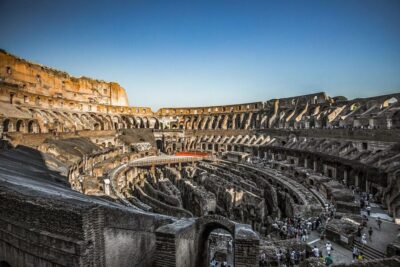
Colosseum: Underground and Ancient Rome Tour
Read our review →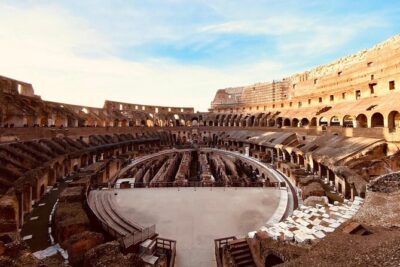
Colosseum with Arena, Roman Forum and Palatine Guided Tour
Read our review →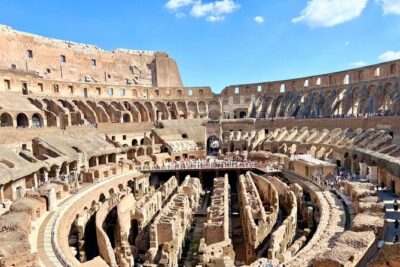
Colosseum with Arena, Roman Forum and Palatine Hill Guided Tour
Read our review →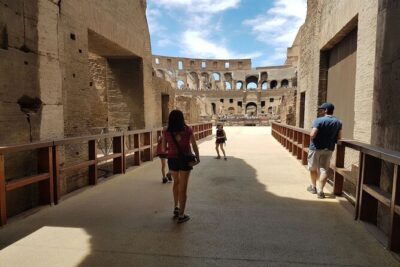
Colosseum & Ancient Rome with Arena Floor Option I Max 6 People
Read our review →
Colosseum, Ancient Rome Tour or AudioGuided Tour
Read our review →
Colosseum Underground & Ancient Rome Guided Tour
Read our review →
Colosseum Arena, Roman Forum & Palatine Hill Tour
Read our review →
Colosseum, Roman Forum & Palatine Hill Guided Tour
Read our review →Browse the lists this tour appears in