
Review · POMPEII
Skip-the-line Exclusive Private Full-Day Complete Ancient Pompeii Guided Tour
Pompeii rewards a slower look. This private tour gives you skip-the-line access and a personal guide for the UNESCO-listed ruins, with time to ask questions and shape the visit around your interests. I especially like the chance to see major highlights without being tied to a large group, and the way guides such as Italo and Clelia bring the buildings to life. The main caution is timing: the advertised four hours may feel shorter if the tour starts late or includes a break.
You pay $347.21 per person, so this is not a bargain admission-and-audio-guide outing. It makes more sense for couples, families, or a small group who value private attention, help with navigation, and a more focused visit over the lowest possible price.
Key things to know before you book
- Private touring keeps the pace personal: Only your group takes part, so you can ask questions and adjust the route.
- Italo earns special praise: His clear explanations, love of Pompeii, and skill at avoiding the most crowded areas make him a particularly strong guide when available.
- The four-hour plan covers major sights: You see the amphitheater, forum, two houses, and the Stabian Baths, but Pompeii is huge and this is a highlights visit.
- Skip-the-line access needs checking: The experience promises priority entry, yet one account describes a 20-minute wait while the guide bought tickets.
- Wear sensible shoes: The tour requires a moderate level of fitness and takes place across an extensive archaeological site.
- Ask about the museum early: Museum admission can stop several hours before closing, so do not leave that question until the end.
Why a private Pompeii tour can be worth the price
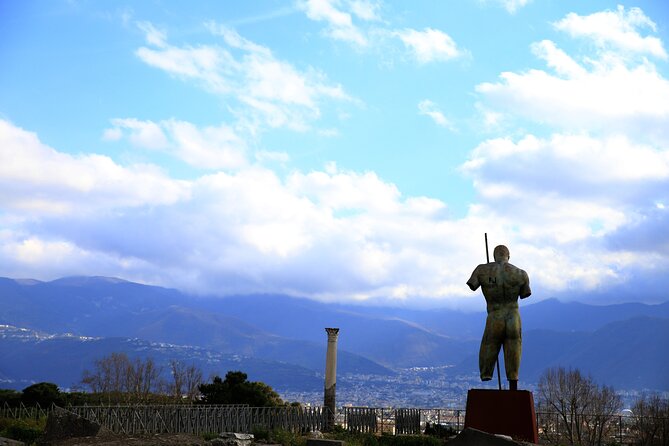
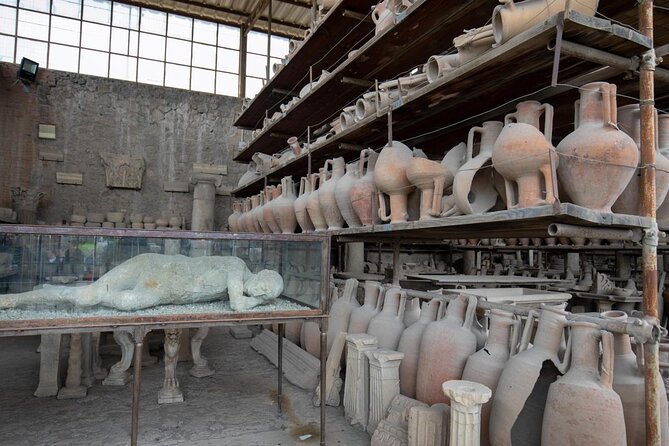
Pompeii is not a compact set of ruins arranged around one square. It is an ancient city with streets, houses, baths, shops, public buildings, and large open areas spread across a substantial archaeological park. Without some direction, you can spend hours walking and still miss the details that explain how the city worked.
That is where a private guide earns the fee. You are not simply following a flag through a crowded street. You can stop to ask why a house was built a certain way, how a public bath operated, or what a particular building tells you about daily life. The guide can also adjust the pace if your group wants more architecture, more social history, or more time in the most important houses.
The strongest experiences here seem to come from the guides. Italo is praised for explaining both the buildings and the practical layout of Pompeii. He also tries to steer around the busiest spots when possible, which matters in narrow streets and small interiors. Clelia is described as energetic, clear, and committed to explaining each place carefully.
Still, private does not mean leisurely at every moment. You have only about four hours, and Pompeii can easily absorb a full day. This tour gives you a useful first look rather than every corner of the site.
More Ancient History Tours in Italy
- Colosseum: Underground and Ancient Rome Tour
★ 4.7 · 12,691 reviews - Colosseum & Ancient Rome with Arena Floor Option I Max 6 People
★ 5.0 · 3,306 reviews - Rome: Colosseum, Ancient Rome Tour or AudioGuided Tour
★ 4.4 · 2,879 reviews
Meeting at Piazza Esedra
The tour begins at Piazza Esedra in Pompei. Hotel pickup and drop-off are not included, so you need to make your own way to the meeting point. The location is near public transportation, which helps if you are arriving independently.
Confirmation arrives at booking, and the experience is offered in English. Since this is a private activity, only your own party participates. That is a major advantage for families or friends who want to move together rather than wait for strangers.
I would arrive early. One account describes a 20-minute late start because the guide had to buy tickets in line, despite the advertised skip-the-line service. That may have been an isolated problem, but it is exactly the sort of delay that cuts into a four-hour visit. At the meeting point, confirm the guide’s name, the entry plan, and whether the museum fits into your day.
The Roman amphitheater: a strong opening stop
The first listed stop is the Anfiteatro Romano, with about an hour and admission included. Beginning here gives you one of Pompeii’s clearest examples of public entertainment and civic life.
An amphitheater is easy to appreciate even if you know little about Roman architecture. The shape, seating, entrances, and scale tell you how crowds moved and where spectators watched events. A guide can help turn those physical features into a picture of how public gatherings worked.
An hour is generous enough to look around without rushing, though the exact time may change with your group. If your party is keen on architecture, ask the guide to explain the building methods and crowd arrangements. If you are traveling with children, this is also a stop that tends to make Pompeii feel less abstract at the beginning.
The drawback is that the amphitheater is only one part of the city. It gives you scale, but it does not yet show the private homes and everyday spaces that make Pompeii so compelling. The rest of the route fills in that side of the story.
Pompeii Archaeological Park in one focused hour
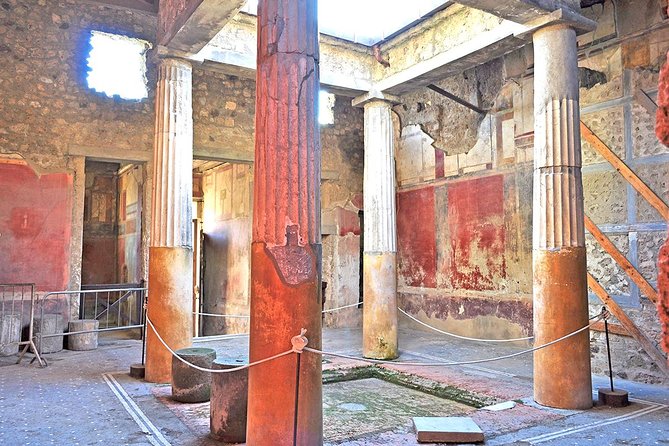
The broad archaeological park stop is listed for another hour. Think of this as a guided orientation through the site rather than a separate building with a single entrance or display.
Pompeii’s size is both its magic and its challenge. Streets lead away in several directions, and a visitor can lose track of which buildings matter most. A good guide helps you read the city as a connected place instead of a pile of isolated ruins.
The private format matters here. You can ask the guide to pause when something catches your eye, and you can avoid spending too much time on a space that does not interest your group. Past guests have especially valued guides who explain how to navigate the site and how different types of buildings fit into Pompeian life.
You should keep your expectations realistic. One hour in the wider park cannot cover the full archaeological area. It works best as a guided framework, with the named stops providing the most detailed visits.
More Private History Tours in Italy
- Ancient Ostia Antica Semi-Private Day Trip from Rome by Train with Guide
★ 4.5 · 579 reviews - 2 Hours Private Historical Tour in Genoa
★ 5.0 · 248 reviews - Colosseum & Ancient Rome Semi-Private Tour
★ 5.0 · 208 reviews - Ancient Pompeii Private Tour: Skip the Line & Kid-Friendly Option
★ 5.0 · 167 reviews
The Forum, Pompeii’s public center
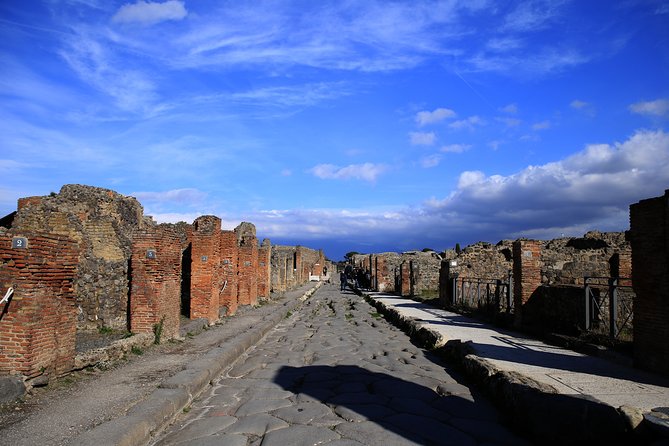
The Foro de Pompeya receives about 15 minutes. It was the main market and public center of ancient Pompeii, making it one of the essential places to understand the city’s civic life.
The forum is less about one preserved room and more about relationships. You can look across the open area and see how public, commercial, and religious buildings were arranged. A guide’s explanation is especially useful because many structures are now partial walls, columns, or foundations. The site can look quiet today, but it once carried the daily business of the city.
Fifteen minutes is brief. You will get an orientation and the main points, but not a long architectural study. If the forum is your top interest, tell the guide early and ask for a few extra minutes if the schedule allows. Since the route is private, you have more room to express that preference than you would on a standard group outing.
Casa del Menandro and the details of home life
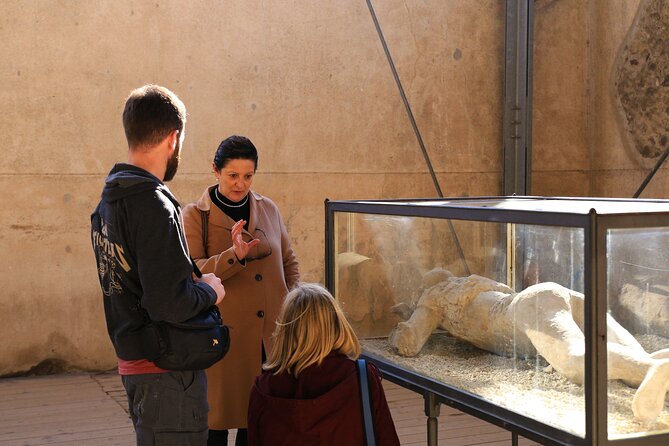
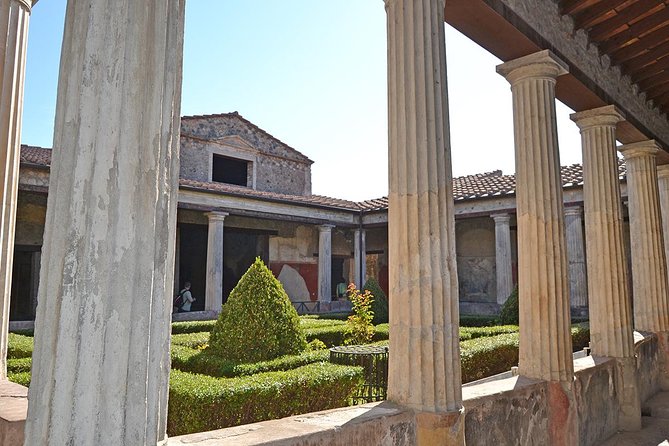
Casa del Menandro is scheduled for about 20 minutes. It is described as one of Pompeii’s most beautiful houses, with frescoes, a private garden, rooms, and a calidarium, or heated bathing room.
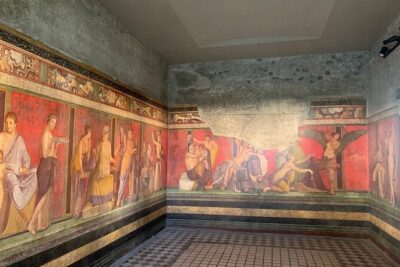
This is where the tour shifts from public life to private life. The house shows how wealth, leisure, decoration, and household organization came together under one roof. The frescoes deserve attention, but so do the layout and garden. A guide can help you see how the rooms connected and what the bathing area says about comfort in a Roman home.
Twenty minutes will give you a strong introduction, though it may not satisfy anyone who wants to inspect every painted detail. The house can also become crowded, especially when several groups arrive at once. Italo’s reported habit of working around the busiest areas would be useful here, though crowd levels change from day to day.
If you care about art, ask your guide to point out the details that are easiest to miss. A private visit is most valuable when you use the guide’s eyes as well as your own.
Casa di Ottavio Quartione on Via dell’Abbondanza

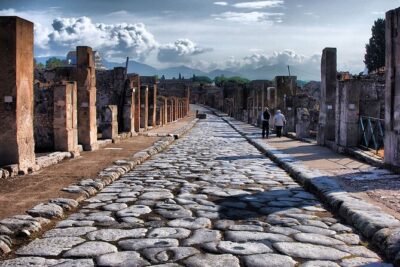
The route then moves to Casa di Ottavio Quartione, a large house on Via dell’Abbondanza, Pompeii’s main road. The visit is listed for about 15 minutes.
The location adds useful context. Instead of seeing the house as an isolated residence, you can connect it with the movement and activity of the main street. The size of the domus, or large Roman house, helps show the difference between ordinary urban life and the lifestyle of a wealthy household.
Fifteen minutes is enough for a guided look at the main features, but again, this is a highlights route. If you enjoy domestic architecture, you may wish the tour allowed longer at both houses. The benefit is variety: you see more of Pompeii instead of spending the entire four hours in one building.
The guide’s role is important here because ruins do not always explain themselves. Ask how the house was arranged, who might have used its rooms, and how its position on the main road affected daily life.
The Stabian Baths and Roman public comfort
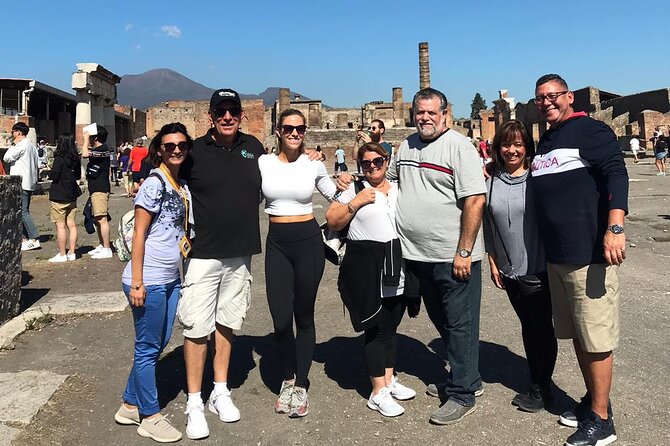
The final named stop is the Stabian Baths, with about 15 minutes. These baths served as a place for physical refreshment and social life, giving you another look at how Pompeiians used shared public facilities.
The baths are valuable because they broaden the picture beyond homes, shops, and political buildings. They show that cleanliness, exercise, relaxation, and social contact were part of the city’s public routine. The heated areas also give you a chance to consider the engineering behind Roman comfort.
A quarter hour is enough for the guide to identify the principal spaces and explain their purpose. It is not enough for an extended study of Roman bathing customs or construction. If your interest is engineering, ask for more detail, but be prepared to trade time elsewhere.
By this point, the route has covered entertainment, public life, private homes, and communal bathing. That is a sensible four-hour selection, even if it cannot represent the whole city.
What four hours really gets you
The stated duration is approximately four hours. For many people, that is a good balance. Pompeii is physically demanding, and a shorter route lets you learn a great deal without becoming exhausted by endless streets and stone surfaces.
One guide-led visit is reported to have lasted about four hours and felt like the right length. Another account describes receiving only three and a half hours, including a mid-tour break. A separate experience began 20 minutes late because of ticketing. These details make one point clear: confirm the actual schedule at the start and keep an eye on the clock.
The itinerary lists a total of roughly three hours and five minutes across its six stops, leaving room for walking, transitions, questions, and possible pauses. That is normal for a site this large. It also means the actual time at each place may shift.
If you want to see every major house, the museum, and the full street system, choose a longer visit or return on your own. If you want a guided introduction with the key categories of Pompeii, four hours is sensible.
Skip-the-line access and the museum warning
Priority entry is one of the tour’s main selling points. In theory, it protects your limited sightseeing time from long ticket queues. That can be valuable at Pompeii, especially when you have a train, another tour, or a fixed day plan.
But you should not treat the promise as a guarantee that no waiting will occur. One account reports that the guide had to wait in line to purchase tickets, delaying the start. I would ask before setting out how tickets will be handled and what skip-the-line access covers.
The museum deserves a specific warning. The route described here does not list the museum as a stop, and one visitor missed it because the guide did not explain that admission ends several hours before the archaeological park closes. If the museum matters to you, bring it up before the tour begins. Do not assume it can be added at the last minute.
Price, group size, and who gets the best value
At $347.21 per person, the tour costs far more than entering Pompeii independently. The price includes the local guide, a professional art historian guide, admission, skip-the-line service, and a private format. Lunch and hotel transportation are not included.
The value depends heavily on group size. A couple pays about $694.42 in total, which is a serious expense. A larger private group can spread the cost across more people, and group discounts are available, though the exact discount is not stated.
I would book this for a group that wants conversation, flexibility, and help making sense of the ruins. It is a weaker choice if you prefer to wander alone, read at your own pace, or spend the entire day on a single house. The guide’s ability to avoid crowded areas can also make the private format feel worthwhile, especially for a first visit.
Children must be accompanied by an adult. Service animals are allowed, and you should have moderate physical fitness. The site requires walking, and the tour ends back at the meeting point.
Should you book this Pompeii tour?
I would book it if you have about four hours, want an English-speaking private guide, and care more about understanding Pompeii than simply ticking off the entrance. It is especially suitable for couples, families, and small groups who can share the cost.
I would pause before booking if the museum is essential, if you need a precisely timed departure, or if you expect a full-day exploration. Confirm the start time, ticket procedure, exact duration, and museum plan before paying.
The high rating of 4.9 from 30 reviews and recommendation from 97 percent of customers fit the strongest parts of the experience: excellent individual guides, clear explanations, and a route that makes a huge site manageable. Just keep the limits in view. This is a well-focused introduction to Pompeii, not the final word on the entire city.
FAQ
Where does the Pompeii tour begin?
The tour begins at Piazza Esedra, 80045 Pompei NA, Italy.
Where does the tour end?
The activity ends back at the meeting point.
How long does the tour last?
The advertised duration is approximately four hours.
Is the tour private?
Yes. Only your group participates in the activity.
Is skip-the-line access included?
Yes. Guaranteed skip-the-line access is included, although one account describes a delay while the guide purchased tickets.
Is admission to Pompeii included?
Yes. Admission tickets are included in the tour.
Is a guide included?
Yes. The experience includes a local guide, a professional art historian guide, and a professional guide.
Is hotel pickup included?
No. Hotel pickup and drop-off are not included.
Is lunch included?
No. Lunch is not included.
Is the tour offered in English?
Yes. The tour is offered in English.
Can children take the tour?
Yes, but children must be accompanied by an adult.
Are service animals allowed?
Yes. Service animals are allowed.
What level of fitness is needed?
You should have a moderate level of physical fitness.
Can I cancel for a full refund?
Yes. You can cancel at least 24 hours before the local start time for a full refund. Changes or cancellations made less than 24 hours before the start time are not accepted for a refund.
More Skip-the-Line Tickets in Italy
- Taormina: Ancient Theater Skip-the-Line Ticket & Audio Guide
★ 4.5 · 2,412 reviews - Historic Milan Tour with Skip-the-Line Last Supper Ticket
★ 4.5 · 1,976 reviews - Skip the Line Ancient Herculaneum Walking Tour with Top Rated Guide
★ 4.5 · 32 reviews - Skip-the-Line Exclusive Private Ancient Pompeii & Vesuvius Volcano Full Day Tour
★ 4.5 · 31 reviews
More Pompeii and Vesuvius History Tours in Italy
- Discover the Ancient Ruins of Pompeii: Day Trip from Rome
★ 3.5 · 2,247 reviews - Small-Group Rome to Pompeii & Amalfi: Day of History & Sea
★ 5.0 · 239 reviews - Skip-the-Line Half-Day Private Tour Ancient Pompeii Highlights with Native Guide
★ 5.0 · 146 reviews - Ancient Pompei in the afternoon
★ 5.0 · 140 reviews
Just added around Italy
- Historical Cellar Visit and Wine Tasting in Salento★ 5.0 · 19 reviews
- Visit + Experience at the Historical Museum of Firefighters and the Italian Red Cross★ 5.0 · 30 reviews
- Small Group Guided Walking Tour of Ancient Pompeii Highlights★ 5.0 · 27 reviews
- Guided Tours of Pompeii Excavations Historical and Cultural Itineraries★ 5.0 · 56 reviews
- Fast Access Exclusive Private Ancient Pompeii Half Day Tour with Local Guide★ 5.0 · 54 reviews
- Pompeii Small Group Tour – Tickets Included★ 5.0 · 85 reviews
- Ancient Pompei in the afternoon★ 5.0 · 140 reviews
- Discover Palermo in 3 hours. Art, history, markets and street food★ 5.0 · 352 reviews
Pompeii & Vesuvius History Tours, compared.
Discover the Ancient Ruins of Pompeii: Day Trip from Rome
Read our review →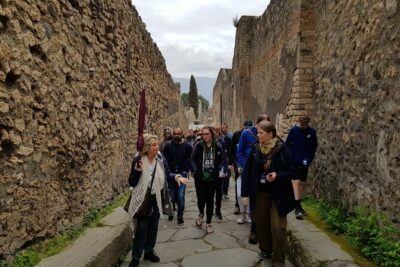
Small-Group Rome to Pompeii & Amalfi: Day of History & Sea
Read our review →Ancient Pompeii Private Tour: Skip the Line & Kid-Friendly Option
Read our review →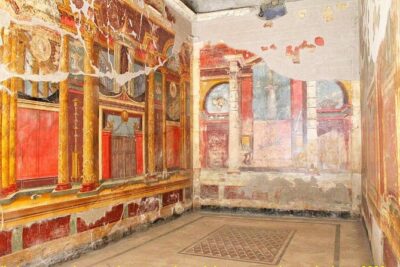
Skip-the-Line Half-Day Private Tour Ancient Pompeii Highlights with Native Guide
Read our review →
Guided Tours of Pompeii Excavations Historical and Cultural Itineraries
Read our review →
Fast Access Exclusive Private Ancient Pompeii Half Day Tour with Local Guide
Read our review →Browse the lists this tour appears in