
Review · PARO
15-Day Bird Watching and Cultural Tour in Bhutan
Birds are only half the story. This 15-day Bhutan tour pairs serious bird watching with mountain passes, Buddhist monasteries, village roads, and long stretches through some of the Eastern Himalayas’ best-preserved forests. I especially like the chance to search for rare species such as the White-bellied Heron and Beautiful Nuthatch, along with cultural stops at Punakha Dzong, Gangtey Goenba, and Paro Dzong. The included Bumthang to Paro flight also saves you from repeating a long mountain drive.
The main caution is the pace. You will spend many hours in a vehicle, often leaving early and traveling on winding mountain roads. The price is $5,370.38 per person, and international flights, insurance, and personal expenses are extra, so you should confirm exactly what accommodation and ground services are covered before paying.
Five things to know before you book
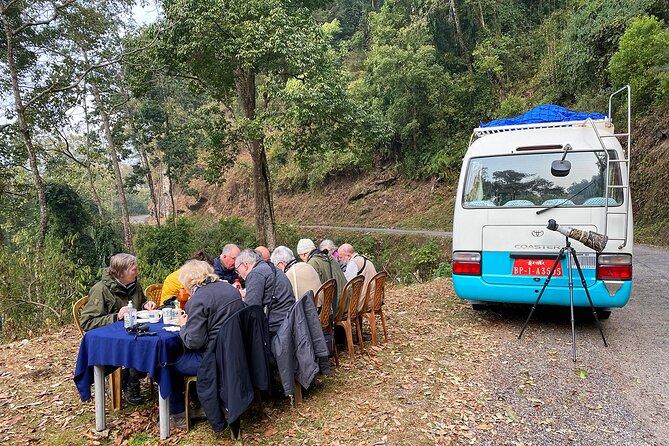
- Chele La and Thrimshingla Pass reach 3,780 meters, so altitude and cold weather are real factors.
- More than 350 bird species may be possible, from Himalayan Monals and Blood Pheasants to hornbills, trogons, laughingthrushes, and rare herons.
- Royal Manas National Park and Thrumshingla National Park provide the tour’s strongest wildlife settings.
- The itinerary crosses much of Bhutan, including Paro, Thimphu, Punakha, Gangtey, Trongsa, Bumthang, Yongkola, and Lingmethang.
- The tour is private, so only your own group participates, with pickup at Paro Airport and group discounts available.
- Meals and entrance fees are included, as is the domestic flight from Bumthang to Paro, but international flights and insurance are not.
Paro begins with river birds and a useful first look at Bhutan
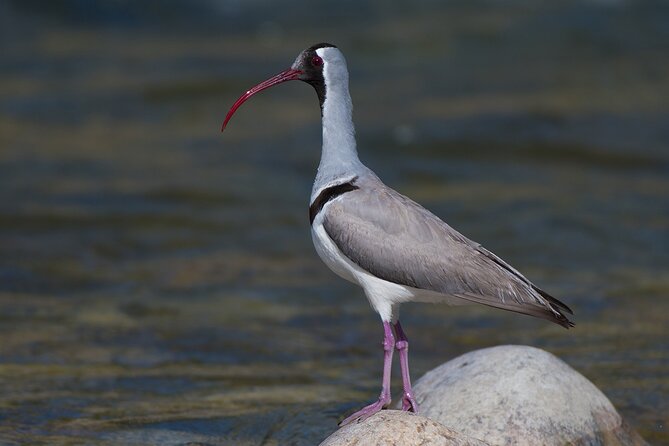
Your guide and driver meet you in Paro, then take you to the Pa Chhu River. This is a gentle first outing after your flight, but it is not just a warm-up. The river stones can hide the distinctive Ibisbill, one of the tour’s signature birds.
You might also find Brown Dipper, Green Sandpiper, Common Hoopoe, Plumbeous Water Redstart, Himalayan Buzzard, Russet Sparrow, Rosy Pipit, Citrine Wagtail, and Wallcreeper in winter. The river gives you a chance to settle into Bhutan’s birding style, where patience, careful scanning, and a good ear matter as much as dramatic scenery.
The first day includes about four hours at the river. That is enough time for a focused search without piling on another long transfer. Migration can also bring unexpected sightings, since Bhutan’s valleys serve as routes for birds moving north.
More Local Culture and Traditions Tours in the world:
- Amsterdam Food and Cultural Tour with Tastings
★ 5.0 · 4,315 reviews - Sevilla Food Tour: Tapas, Wine, History & Traditions
★ 5.0 · 3,468 reviews - Tromsø: Reindeer Camp and Sami Cultural Tour with Lunch
★ 4.7 · 3,326 reviews
Chele La puts you above the forest line
Day two climbs to Chele La at 3,780 meters, the highest point on the route. The road passes through high boreal forest before reaching alpine meadows and low rhododendron scrub. The setting changes quickly, and so does the bird list.
Himalayan Monal and Blood Pheasant are major targets. Snow Pigeon, Rufous-fronted Tit, Yellow-browed Tit, Red-tailed Minla, White-browed Fulvetta, Black-throated Thrush, and rosefinches may also appear. In winter, Wallcreeper is another possibility.
I like this part because the birding is tied closely to altitude. You are not simply ticking species from a roadside list. You can see how the forest thins, how the plants shrink, and how the bird community changes as you climb.
The drawback is physical. The tour requires a moderate fitness level and is not recommended for anyone with serious altitude sickness. Even if you are comfortable hiking at home, 3,780 meters can make a short walk feel demanding. Take the morning slowly, dress in layers, and follow your guide’s advice.
After breakfast and more birding, you drive to Thimphu. This transfer helps connect western Bhutan with the central part of the country, but it is another reminder that this is a road-based tour with birding stops, not a relaxed resort holiday.
Dochu La, Lampelri, and Punakha mix birds with Bhutanese culture
Day three starts early at Dochu La, where 108 white chortens and prayer flags frame views toward the high Himalayas. The pass is scenic even if birds are quiet, but the mixed broad-leaved forest can produce Hodgson’s Hawk Cuckoo, Darjeeling Woodpecker, Rufous-vented Tit, Chestnut-crowned Laughingthrush, Rufous Sibia, Green-tailed Sunbird, and Olive-backed Pipit.
At the Royal Botanical Park in Lampelri, the search shifts to Hill Partridge, Rufous-bellied Woodpecker, Verditer Flycatcher, Blue-fronted Robin, Scarlet Finch, and Dark-breasted Rosefinch. The Blue-fronted Robin is shy and rare, so this is a place where you should value the search itself rather than expect every target.
The cultural centerpiece is Punakha Dzong, built in 1637. Its position at the meeting of two rivers gives it a grand setting, while the painted woodwork and white walls show why Bhutan’s fortresses are more than museum stops. They remain part of the country’s religious and civic life.
Day four begins along the Puna Tshang Chhu near the suspension bridge. Pallas’s Fish Eagle is a prized possibility, along with Bar-headed Goose, Ruddy Shelduck, Eurasian Wigeon, River Lapwing, and Red-wattled Lapwing. The river outing is a welcome change from high mountain forest.
Gangtey and Phobjikha bring one of Bhutan’s best wildlife moments
The road to Gangtey climbs through rhododendron forest toward Lawa La at 3,350 meters. Ward’s Trogon and Spot-winged Grosbeak are key targets along the route, and the scenery changes from river valley to high forest and open upland country.
Gangtey Goenba, the largest Nyingmapa monastery in Bhutan, sits above Phobjikha Valley. The monastery and nearby village make this one of the tour’s strongest culture-and-nature combinations.
From November through March, Phobjikha is winter home to the Black-necked Crane, a globally vulnerable bird and one of Bhutan’s best-known species. Timing matters greatly here. If your visit falls outside that period, you should not expect cranes, but the valley remains an important stop for its open views, monastery, and mountain setting.
A few more history tours around the world worth a look
- History and Hauntings of Salem Guided Walking Tour
★ 5.0 · 14,564 reviews - Colosseum: Underground and Ancient Rome Tour
★ 4.7 · 12,691 reviews - Lisbon: History, Stories and Lifestyle Walking Tour
★ 4.8 · 10,902 reviews - London Small Group Tour of Historical Pubs
★ 5.0 · 10,422 reviews
Pele La and Trongsa mark the shift east
Day five crosses Pele La at about 3,350 meters. Himalayan Vultures may soar overhead, sometimes in sizeable groups, while roadside marshes offer a chance at Solitary Snipe. Spotted Laughingthrush, Black-faced Laughingthrush, Hume’s Bush Warbler, Crimson-browed Finch, Red Crossbill, and Brown Bullfinch add variety.
A short stop at Chendebji Chorten provides a cultural pause beside the river. The Nepalese-style chorten is easy to combine with the road journey and gives you a quieter look at Bhutan’s religious architecture away from the major dzongs.
The route continues through Tangsibji toward Trongsa, with a possible search for Black-tailed Crake near a stream. Expect long driving days in this part of Bhutan. The reward is access to less visited forest and a gradual move toward the country’s eastern wildlife areas.
On day six, the road from Trongsa to Tingtibi drops from about 2,200 meters toward 700 meters. That change in elevation brings a different set of habitats and birds. Mossy waterfalls may produce Spotted Forktail, while mixed broad-leaved forests hold Mountain Hawk Eagle, Green-billed Malkoha, Red-headed Trogon, Speckled Piculet, Bay Woodpecker, Long-tailed Broadbill, Crested Kingfisher, Crimson Sunbird, and Emerald Dove.
Golden Langurs may be seen along roadside forest near Tingtibi. They are an important bonus because the tour is not limited to birds. You might also encounter mixed flocks of laughingthrushes and other forest species, making this one of the more productive sections for anyone who enjoys variety.
Royal Manas and Zhemgang offer the rarest targets
Day seven reaches the Royal Manas National Park area after an early start. Bamboo forest and the Mangde Chhu create habitat for Tawny Fish Owl, Red Junglefowl, White-browed Piculet, Rufous-faced Warbler, Pale-headed Woodpecker, Blyth’s Paradise Flycatcher, Blue-bearded Bee-eater, and Great Hornbill.
The biggest prize is the White-bellied Heron, one of Bhutan’s rarest birds and critically endangered. No responsible tour can promise a sighting, but the search gives this day real purpose. Great Hornbills may appear in groups, adding a dramatic sight even when the heron stays hidden.
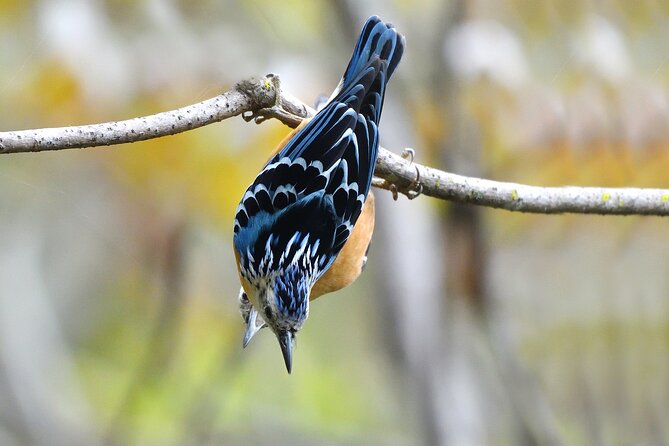
Day eight focuses on Zhemgang and the Beautiful Nuthatch, a globally vulnerable species. Other targets include Common Green Magpie, Golden-throated Barbet, Blue-winged Laughingthrush, Small Niltava, Grey-throated Babbler, and Black-throated Sunbird.
A stop near Bubja at high cliffs adds a chance for Yellow-rumped Honeyguide. These are specialized targets, and birding here is best suited to people who enjoy the process of locating a scarce bird rather than needing constant action.
Bumthang and Tharpaling add high valleys and monastery birds
Day nine climbs toward Yotong La at 3,450 meters through waterfalls, rhododendrons, and magnolia forest. Steppe Eagle, White-capped Water Redstart, Ultramarine Flycatcher, Fire-breasted Flowerpecker, Brown Parrotbill, Chestnut-headed Tesia, and Himalayan Beautiful Rosefinch are among the possible finds.
Bumthang is also an important cultural region, with religious sites dating back to the seventh century. At Tharpaling Monastery, Himalayan Monals may feed on food left by the monks. Since the birds have become accustomed to this practice, the monastery offers a better chance to see them than many wild settings, though you should still treat the place as a religious site first and a birding stop second.
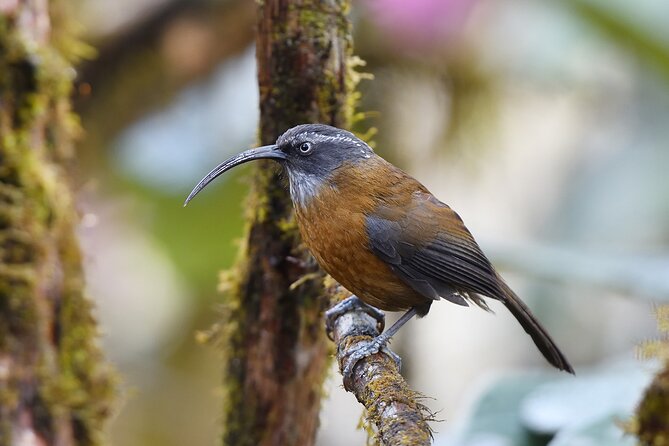
Day ten crosses Thrimshingla Pass, also listed as Thrumshing La, at 3,780 meters. This is a major highlight for Blood Pheasant, Satyr Tragopan, Bearded Vulture, and Great Parrotbill. The descent toward Sengor then brings Alpine Thrush, Hoary-throated Barwing, Slender-billed Scimitar Babbler, Speckled Wood Pigeon, and Bar-winged Wren Babbler.
The route is ambitious. You cover a great deal of ground, but that means the trip favors range and species variety over long stays in one village.
Yongkola and Lingmethang are the birding heart of the trip
Days eleven and twelve use Yongkola as a base for Thrumshingla National Park. A paved but lightly used road passes through forest where you may look for Chestnut-breasted Partridge, Rufous-necked Hornbill, Gould’s Shortwing, Himalayan Cutia, Sikkim Wedge-billed Babbler, Long-billed Wren Babbler, and Coral-billed Scimitar Babbler.
This is some of the tour’s most serious birding. The forest is remote, the target list is exceptional, and a full eight-hour day gives you time to work slowly through likely habitat. It can also feel tiring, especially after several previous days of early starts and mountain roads.
Lingmethang brings warmer broad-leaved forest, ancient trees, and orchids. Asian Emerald Cuckoo, Grey-headed Woodpecker, Maroon Oriole, Streaked Spiderhunter, drongos, bulbuls, tesias, and Rufous-bellied Niltava may appear.
A short night drive offers a chance to see the near-threatened Bhutan Giant Flying Squirrel. This is a nice change of rhythm and proves that the wildlife program does not end when daylight fades.
Ura Valley and the short flight back to Paro
Day thirteen continues through Namling and the Sengor Valley. Himalayan Cutia, Gould’s Shortwing, Black-eared Shrike Babbler, Chestnut-bellied Rock Thrush, Little Forktail, Fire-tailed Myzornis, Tickell’s Thrush, Rufous-breasted Bush Robin, and Fire-tailed Sunbird are possible.
The habitat shifts again between cool broad-leaved forest and higher mid-temperate forest. That variety explains the long species list, but it also explains why the schedule can feel intense. You are repeatedly changing altitude and habitat in pursuit of different birds.
On day fourteen, the domestic flight from Bumthang to Paro takes about 25 minutes. It includes mountain views and replaces another long road transfer, which I consider one of the tour’s smartest practical choices.
In Paro, you visit Rinpung Dzong, also called Paro Dzong, a five-story fortress built in 1644. From there, a stone path leads to the Paro Chhu and the Nyamai Zam, a wooden cantilever bridge decorated with prayer flags. A final forest outing near Chele La may produce Kalij Pheasant, Long-tailed Shrike, Ashy Drongo, Grey-sided Bush Warbler, Pygmy Wren Babbler, and Maroon Accentor.
What the price includes, and what you should confirm
At $5,370.38 per person, this is an expensive trip, but Bhutan travel involves permits, specialist guiding, long-distance transport, meals, park access, and complicated logistics. The included Bhutan visa fee, park and museum entrance fees, 14 breakfasts, 14 lunches, 14 dinners, and domestic flight add real value.
International flights are not included. Travel insurance is essential, and personal expenses remain yours. The supplied details do not clearly state accommodation in the inclusions, so ask for a written breakdown before booking. That single question matters more than a small price difference.
The operator offers pickup at Paro Airport, mobile tickets, group discounts, and free cancellation up to 24 hours before the start time. Changes or cancellations inside that window are not accepted for a refund.
Who should book this Bhutan tour?
I would choose this trip if you care about rare Himalayan birds, accept long road days, and want your birding tied to Bhutanese monasteries, dzongs, rivers, and villages. It suits experienced bird watchers, bird photographers, and curious nature lovers who can handle moderate physical demands and high passes.
I would not choose it for a slow cultural holiday, a luxury hotel escape, or a casual wildlife outing. The itinerary is packed, the roads are winding, and many sightings depend on weather, timing, habitat, and luck.
Still, the combination is unusually strong. You can search for a White-bellied Heron in the morning, visit a centuries-old dzong later, and finish the day among rhododendron forest or prayer flags. If that sounds like your kind of Bhutan, this is a serious and rewarding way to see the country.
FAQ
Is the tour private?
Yes. Only your own group participates in this private tour or activity.
Where does the tour begin?
The meeting point is Paro Airport in Paro, Bhutan. Pickup is offered.
Is the domestic flight included?
Yes. The domestic flight from Bumthang to Paro is included, and the flight takes about 25 minutes.
Are international flights included?
No. International flights are not included in the tour price.
Are meals and entrance fees included?
Yes. The package includes 14 breakfasts, 14 lunches, 14 dinners, and entrance fees for museums and parks.
Is this tour suitable for people with altitude concerns?
The tour requires a moderate fitness level and is not recommended for people with serious high altitude sickness. The route reaches 3,780 meters at Chele La and Thrimshingla Pass.
Just added around the world
- Rottnest Island Historical Train and Tunnel Tour from Hillarys Boat Harbour★ 4.0 · 20 reviews
- Spirits of Seville Pensacola’s Haunted History Tour with Meal★ 4.5 · 101 reviews
- Private Half-Day George Town History Tour★ 4.5 · 62 reviews
- Private George Town UNESCO Heritage Walking Tour★ 4.0 · 22 reviews
- Full-Day Wave Rock & Historic York★ 4.0 · 24 reviews
- 3-Hour Heritage on a Plate Dinner Hop in George Town Penang★ 5.0 · 125 reviews
- 3-Hour Heritage on a Plate Lunch Hop in George Town Penang★ 5.0 · 41 reviews
- Penang George Town All-In-One Heritage Tour By Bicycle & Trishaw (Metro Bike)★ 5.0 · 168 reviews
Local Culture & Traditions Tours, compared.

Amsterdam Food and Cultural Tour with Tastings
Read our review →
Sevilla Food Tour: Tapas, Wine, History & Traditions
Read our review →
Tromsø: Reindeer Camp and Sami Cultural Tour with Lunch
Read our review →
Half Day Dominican Republic Cultural Tour : Small Group
Read our review →
Ultimate Melbourne Walking Tour: History, Laneways & Culture
Read our review →
Tromsø: Sámi Reindeer Sledding and Sami Cultural Tour
Read our review →
Kyoto Gion: 2-Hour Geisha Culture & History Walking Tour
Read our review →
Marrakech Historical and Cultural Tour – Half Day City Tour
Read our review →Browse the lists this tour appears in