
Review · OAXACA CITY
Oaxaca city bike ride – History & traditions
Oaxaca reveals itself on two wheels. This small-group bike tour links cemeteries, churches, old neighborhoods, murals, and a traditional nieve stop in about two and a half hours. I like the route because it goes beyond the usual central plaza, and I like the way it gives you a quick feel for Oaxaca’s layout before you explore on foot.
The guides receive especially strong praise for their care, humor, and grasp of local history. Marion, Maryori, Humberto, Eric, and Gabriela are named in the feedback, with Humberto singled out for careful bike fitting and safe riding. The main catch is the pavement: old stone streets can be rough, and you may spend more time watching for holes than admiring the buildings while riding.
Key points at a glance
- Six stops with real variety: You visit a cemetery, two historic neighborhoods, three major churches or religious sites, and a park known for traditional nieves.
- A useful first-morning orientation: The route helps you understand central Oaxaca’s shape and points out places you can revisit later on foot.
- A genuinely small group: The maximum is eight people, which makes it easier to ask questions and stay together in city traffic.
- The ride is manageable but bumpy: The route has been estimated at about five miles, with some difficult stretches over centuries-old stones.
- Guides are a major strength: Safety, bike fitting, humor, and local history receive the warmest praise.
- Good value at $38.81: You get 2 hours and 30 minutes of guiding, a bike-based city overview, and several cultural stops, though the cemetery ticket is not included.
Why this bike ride works well in Oaxaca
Oaxaca is compact enough to explore on foot, but a bicycle lets you cover more ground without turning the day into a long march. This tour moves from the historic center into nearby neighborhoods, giving you a useful sense of how the city fits together.
I especially like the mix of major landmarks and quieter corners. Santo Domingo and the Basilica of Our Lady of Solitude are obvious highlights, but Jalatlaco and Xochimilco give the outing more character. You see how local streets, painted walls, old religious buildings, and neighborhood traditions sit side by side.
The ride lasts approximately 2 hours and 30 minutes. That is long enough to feel substantial, but short enough to leave most of your day free for markets, museums, food, or a second look at a favorite church.
This is also a good way to begin a stay in Oaxaca. One participant used it on the first morning to understand the central city and decide which places deserved a return visit. I think that is smart planning. A guided loop gives you orientation before you spend your remaining days choosing restaurants, museums, and day trips.
More Local Culture and Traditions Tours in Mexico
- Historical and Cultural Walking Tour of San Miguel de Allende
★ 5.0 · 641 reviews - Historical and Cultural Walking Tour of San José del Cabo
★ 5.0 · 576 reviews - Walking Tour in Mexico City for Exploring their Cultural Heritage
★ 5.0 · 245 reviews
Starting at Bike Flow Oaxaca
The meeting point is Bike Flow Oaxaca at Mártires de Tacubaya 101, in the Centro area along the Ruta Independencia. The activity returns to this same spot, so you do not need to arrange a second pickup or figure out how to get back from a distant neighborhood.
The tour is offered in English and includes a mobile ticket. It is limited to eight participants, a useful size for a bicycle ride through city streets. A small group should also make it easier for the guide to check helmets, answer questions, and keep the pace together.
One practical warning comes from a four-star experience: the shop was locked when the guide arrived around 4, which caused confusion at the start. This sounds like an isolated timing issue rather than a regular feature, but I would still arrive a little early and keep the provider’s contact details handy.
The company provides the bike and helmet. Humberto received particular praise for getting the bike and helmet fitted quickly and carefully. That matters more than it might sound. A poorly adjusted saddle or loose helmet can make a two-hour ride needlessly uncomfortable.
Panteon General, Oaxaca’s first cemetery
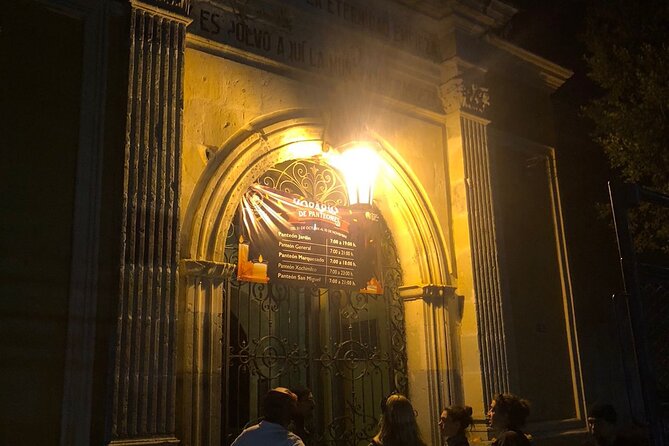
The first stop is Panteon General, described as Oaxaca’s first cemetery. You spend about 20 minutes learning about its role in the city and why the site matters.
This is a useful opening stop because it introduces local customs through a place connected to memory and family, not just government or church power. A cemetery can also give you a different lens on Oaxaca’s traditions before you move into its religious buildings and neighborhoods.
Admission is not included, so check the current entry arrangement when you book or meet the guide. The supplied details do not give an admission price. The stop itself is not designed as a long cemetery visit, but as a short historical introduction within the larger city ride.
Jalatlaco, murals, and colorful side streets
Next comes the Templo de San Matias Jalatlaco and the surrounding neighborhood. You spend about 20 minutes here, with time to look at street art, murals, and the area’s distinctive character.
This is one of the route’s best reasons to choose a bicycle. You are not simply being taken to a famous church, then returned to the main square. You get a look at a neighborhood where art and older streets share the same setting.
The guide’s commentary adds value here. The visual details are easy to notice, but the story behind a neighborhood is harder to grasp without local context. Maryori was praised for sharing Oaxaca’s past in a welcoming way, while another guide with graduate training in social studies was appreciated for explaining history and cultural traditions. That sort of background can turn a wall painting or small church into something more meaningful.
The neighborhood streets may not all be smooth. Oaxaca’s old surfaces are part of the atmosphere, but they are also part of the physical challenge. Keep your speed modest and expect the guide to pause rather than talk continuously while everyone is riding.
Same place, a different slice of the past:
- Historic Downtown Walking Tour
★ 5.0 · 1,289 reviews - Historic Center Food Tour in Mexico City
★ 5.0 · 1,263 reviews - Mexico City: Historic Downtown Walking Tour
★ 4.8 · 1,039 reviews - Walking Tour of the Historic Center of Mexico City
★ 5.0 · 870 reviews
El Llano and a traditional nieve
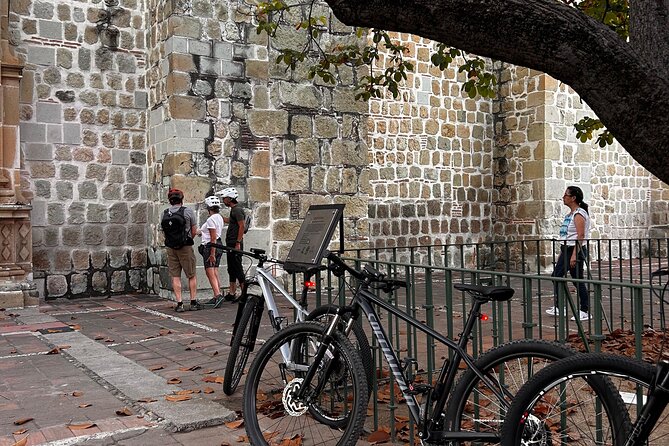
The route then reaches Parque Juarez, El Llano, for about 20 minutes. Here, you learn about the park’s past and try a traditional nieve, a natural frozen treat.
This is a welcome change of pace. After the cemetery and neighborhood riding, you get a chance to stop, taste something local, and listen without balancing on a bicycle. The stop connects food with place, which is often more memorable than a string of dates and architectural labels.
The description calls the nieves delicious and natural, but it does not specify flavors or explain whether the tasting is included in the tour price. Bring a little money in case you need to pay for your own serving. Since the cost is not stated, I would not assume the snack is covered by the $38.81 booking price.
El Llano also helps break up the route. A two-and-a-half-hour ride can feel longer if it is all motion. A seated stop gives you time to rest your legs and ask the guide about Oaxaca’s traditions.
Los Arquitos de Xochimilco and an older neighborhood
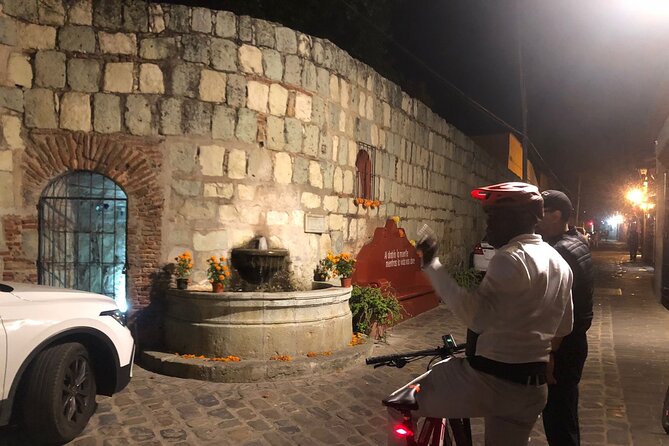
The stop at Los Arquitos de Xochimilco lasts about 15 minutes. Here, the guide explains the history and importance of the old Xochimilco neighborhood.
This is a short stop, but it adds depth to the tour’s neighborhood focus. Jalatlaco shows you colorful streets and murals, while Xochimilco offers another view of Oaxaca’s older residential fabric. Together, the two stops keep the experience from becoming only a circuit of major monuments.
The 15-minute timing means you should expect a focused explanation rather than a long neighborhood walk. If you want to study every street or mural, return later on foot. The value here is the overview: you learn why the neighborhood matters, then decide if it deserves more of your own time.
This is also where the ride’s balance of movement and information becomes clear. You cover several parts of the city quickly, but you will not receive an exhaustive account of every site. Think of the tour as a well-guided introduction, not a full course in Oaxacan history.
Santo Domingo de Guzman, Oaxaca’s grand church
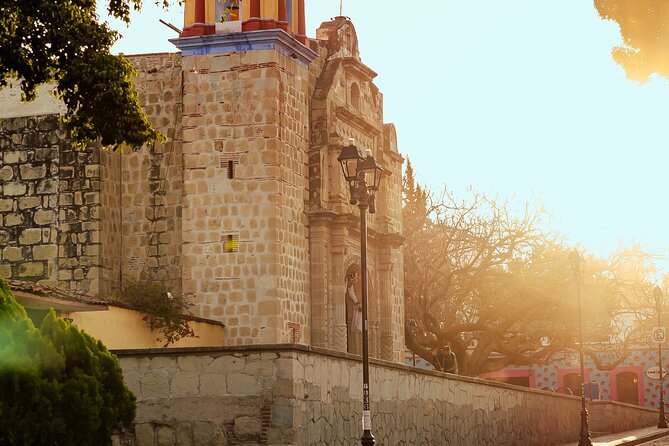
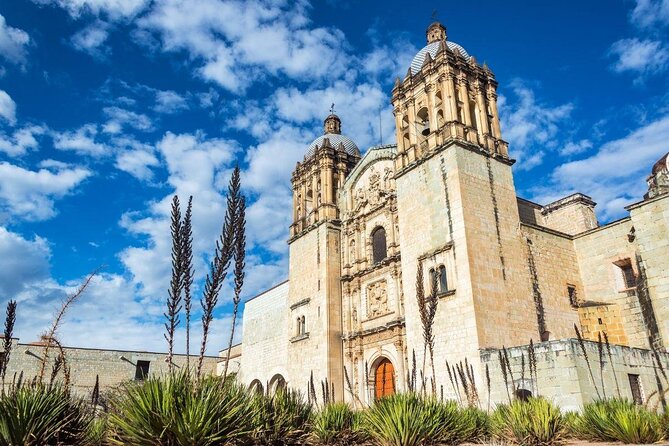
The Templo de Santo Domingo de Guzman receives about 15 minutes. The guide discusses its age, size, importance, and place in the city.
Santo Domingo is one of Oaxaca’s major sights, so including it makes sense. You get the context you need before returning on your own for more time. The short stop may feel too brief if you want a close look at the church’s decoration or a quiet visit inside.
One important practical point: the itinerary lists admission as free for the church stops, but it does not promise a full interior tour. The guide may focus on the exterior, surroundings, and history. Ask directly if you want to know how much time is planned inside.
This was one of the locations that a disappointed participant felt was skipped, along with another church. That feedback is worth keeping in mind. The route can change because of timing, access, traffic, or the guide’s judgment. If Santo Domingo is a top priority, plan a separate visit rather than relying on the bike ride as your only chance.
Basilica of Our Lady of Solitude
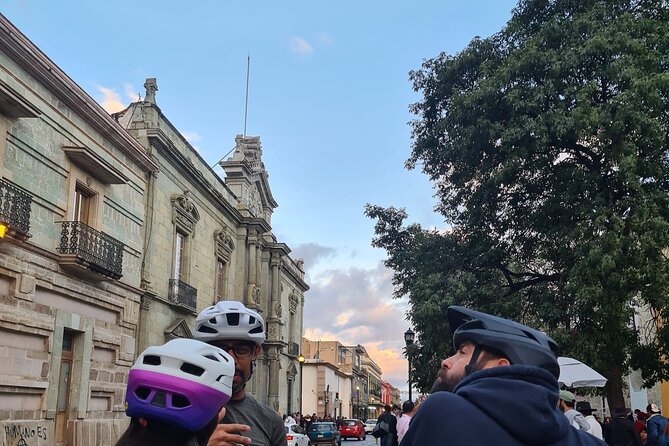
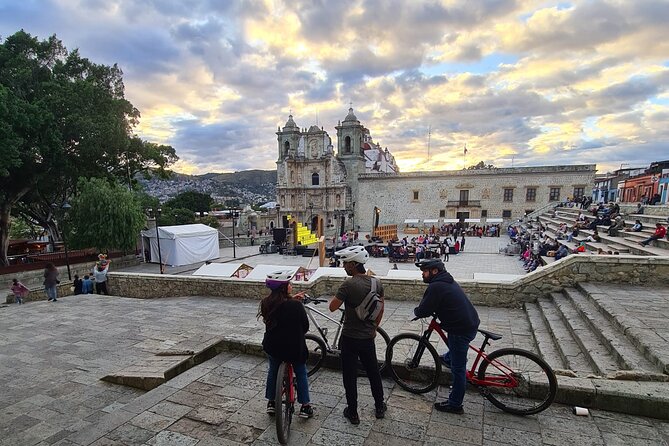
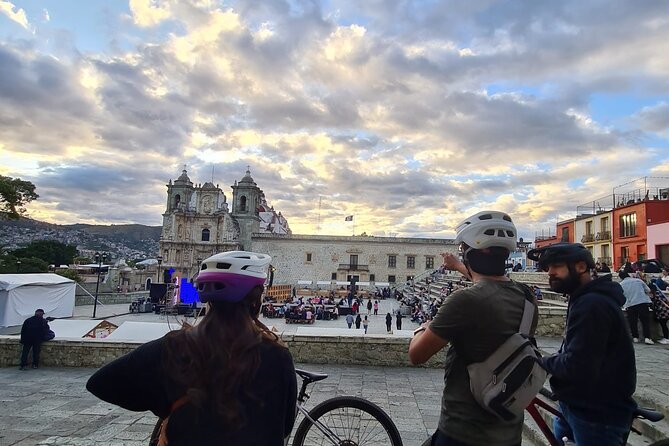
The final major stop is the Basilica de Nuestra Señora de la Soledad, with about 20 minutes for its architecture, the view toward the center, and its story.
The basilica gives the tour a strong closing point. After seeing smaller neighborhoods, you return to one of Oaxaca’s best-known religious landmarks and consider how the city’s streets and central areas connect around it.
The stop is not just a photo break. The guide explains the basilica’s importance, which helps place the building within Oaxaca’s religious and civic life. As with Santo Domingo, the listed admission is free, but the details do not promise a formal interior visit or a long time inside.
The central view is another useful feature. From here, you can better understand the city you have been crossing by bike. That is exactly the kind of practical orientation that helps later, when you are walking between the central market, churches, plazas, and nearby neighborhoods.
What the riding is really like
The tour has been described as an easy cruise by one participant, including for people who do not ride often. That is encouraging, but it should not be read as a promise of perfectly smooth cycling.
Another account points out that riding over 400-year-old stones can be challenging. Large stones and holes may force you to look down instead of around while moving. This is the most important limitation of the experience.
I would choose this tour if you are comfortable on a bicycle and can handle a rough urban surface. You do not need to be a serious cyclist, but you should be able to control a bike, brake carefully, and accept a slower pace over uneven streets.
The route has been estimated at roughly five miles. That distance is not extreme, especially with several stops, but the surface matters more than the mileage. Wear secure shoes, avoid loose clothing that could catch on the bicycle, and bring water. Those are sensible precautions for any city ride, though the tour details do not specify what equipment beyond the bike and helmet is supplied.
The group limit of eight helps. A guide can keep a small group together more easily than a large one, and the ride should feel less like a parade through city streets.
Guides who add the most value
The strongest praise goes to the guides. Marion was described as safe, informative, and funny. Maryori was warmly praised for sharing Oaxaca’s history. Humberto was credited with careful bike fitting, detailed route explanations, and cautious riding. Eric was called patient and enthusiastic.
That range matters because the guide is doing several jobs at once. You need someone who can explain history, manage a group, watch traffic, and adjust the pace to the street. The best feedback suggests Bike Flow Oaxaca has people who take those responsibilities seriously.
The tour is offered in English, and the comments point to guides who welcome questions and share practical suggestions about food, attractions, and history. If you want a lecture-heavy experience, the guide’s explanations may be the main attraction. If you prefer to ride quietly, you can still enjoy the route, but expect regular stops and commentary.
Is $38.81 a fair price?
At $38.81 per person, the value is solid if you want a guided introduction rather than a simple bike rental. You receive the equipment, a small-group route, approximately two and a half hours of guiding, and access to several parts of the city that are easy to miss on a first visit.
The cost also compares favorably with the time saved. Covering Panteon General, Jalatlaco, El Llano, Xochimilco, Santo Domingo, and the Basilica on foot would take longer and require more route planning. The guide supplies the structure and local explanation.
Still, do not treat the price as covering every expense. Admission to Panteon General is not included, and the cost of the nieve is not specified. The church stops list free admission, but any extra food or personal spending remains your responsibility.
The tour is booked an average of 12 days ahead, so it is wise to reserve early if your Oaxaca dates are fixed. The provider offers free cancellation up to 24 hours before the start time. Poor weather or an insufficient minimum group can also lead to a new date or a full refund.
Who should book this ride?
I would recommend it for first-time visitors who want to get their bearings quickly, couples or friends who enjoy a little activity, and repeat visitors who want to see neighborhoods beyond the main sights. It also suits people who prefer local stories and short stops over a long indoor museum visit.
It is less suitable if you dislike uneven pavement, have difficulty controlling a bicycle, or want uninterrupted time inside each church. The ride is not suitable for anyone under 1.50 meters tall.
The tour welcomes most participants, but you should be honest about your comfort on a bike. Oaxaca’s historic stone streets are part of the setting, not a minor footnote. If you can accept a bumpy surface and keep your eyes on the road when needed, the ride should feel manageable.
FAQ
How long is the Oaxaca city bike ride?
The experience lasts approximately 2 hours and 30 minutes.
Where does the tour begin?
It begins at Bike Flow Oaxaca, Mártires de Tacubaya 101, Ruta Independencia, Centro, Oaxaca de Juárez.
Where does the activity end?
The ride ends back at the Bike Flow Oaxaca meeting point.
What language is the tour offered in?
The tour is offered in English.
How many people can join the tour?
The maximum group size is eight travelers.
Is the tour suitable for children under 1.50 meters tall?
No. The activity is not suitable for people under 1.50 meters tall.
Are entrance fees included?
Admission to Panteon General is not included. The listed admission for the other stops is free.
What happens if the weather is poor?
If poor weather causes the tour to be canceled, you will be offered another date or a full refund.
Should you book it?
Book this ride if you want a small-group introduction to Oaxaca with real neighborhood character, several historic stops, and guides who take safety and local storytelling seriously. It is especially useful during your first morning, when the route can help you plan the rest of your stay.
Skip it if you want smooth cycling, long interior visits, or a slow walking tour. The stones can be rough, and the schedule gives some landmarks only 15 or 20 minutes.
For $38.81, this is a practical and fairly priced way to see more of Oaxaca in less time. Just expect a city ride, not a polished bike path: fit the helmet, watch the stones, and let the guide handle the route.
More Bike Tours in Mexico
- Mérida: Montejo Boulevard and Historic Center bike tour
★ 4.7 · 43 reviews - Mérida: The E-bike tour with history and culture
★ 4.9 · 36 reviews - Mexico City: Chapultepec & Reforma Historic Bike Experience
★ 4.5 · 30 reviews - Aztec Tlan – Heritage Bike Tour CDMX
★ 5.0 · 26 reviews
Just added around Mexico
- Culture, History and Food in Oaxaca City★ 5.0 · 43 reviews
- Bicycle Tour through Oaxaca learning about its Urban Art and History★ 5.0 · 78 reviews
- Walking Tour in Historic Center CDMX★ 5.0 · 50 reviews
- Walking Tour – Impressive murals in Historical Center of Mexico City★ 5.0 · 224 reviews
- Food and Historic Walking Tour: Private Tortilla Crawl in Mexico City Downtown★ 5.0 · 35 reviews
- Best PRIVATE TOUR of Legends and Events in the Historic Center★ 5.0 · 33 reviews
- The real “Dia de muertos” tour in Mixquic + secret cemetery★ 4.0 · 27 reviews
- 10 wonders of the Historic Center of Mexico City food and music★ 5.0 · 67 reviews
Local Culture & Traditions Tours, compared.

Amsterdam Food and Cultural Tour with Tastings
Read our review →
Sevilla Food Tour: Tapas, Wine, History & Traditions
Read our review →
Tromsø: Reindeer Camp and Sami Cultural Tour with Lunch
Read our review →
Half Day Dominican Republic Cultural Tour : Small Group
Read our review →
Ultimate Melbourne Walking Tour: History, Laneways & Culture
Read our review →
Tromsø: Sámi Reindeer Sledding and Sami Cultural Tour
Read our review →
Kyoto Gion: 2-Hour Geisha Culture & History Walking Tour
Read our review →
Marrakech Historical and Cultural Tour – Half Day City Tour
Read our review →Browse the lists this tour appears in