
Review · NEW ORLEANS
New Orleans Music Heritage Tour
Music gives New Orleans its street map. This two-hour walk links jazz, blues, gospel, soul, and rock and roll to the places where they took shape. I like the use of a Bluetooth speaker, which lets Keith pair songs with streets and stories, and I like the guide’s personal record-business background after more than 20 years in the field. The main drawback is the steady walking, often in heat or rain, with adult language that may not suit young children.
I also like the route itself. You move through the Marigny, French Quarter, and Tremé instead of staying on one famous block. At $30 per person, the tour offers solid value if you care about music, local history, or both, though people seeking a quiet sightseeing walk may find the narration and music quite lively.
Key points to know before you book
- Keith connects songs to real places: The guide uses music clips as you walk, helping names and dates stick.
- The route crosses three historic areas: You pass through the Marigny, French Quarter, and Tremé in about two hours.
- Congo Square is a major highlight: The stop explains the African-American roots that shaped New Orleans music.
- You visit more than famous clubs: The walk includes recording studios, musicians’ homes, hotels, venues, and music shops.
- The group can reach 28 people: A smaller group may feel more personal, but the maximum is not an intimate private-tour size.
- The tour suits music fans best: Jazz lovers will get the most from it, but the discussion also covers blues, gospel, soul, Motown, rock and roll, and pop.
Starting at Louisiana Music Factory on Frenchmen Street
Meet Keith at Louisiana Music Factory, 421 Frenchmen Street. This is a fitting starting point, since Frenchmen Street is one of New Orleans’ main music corridors and the shop carries the recordings connected to the tour.
The first ten minutes are set aside for the meeting point. You can browse the store before or after the walk, and it is a useful place to continue your musical education. The tour’s songs, artists, and subjects can be explored there through records and other music merchandise.
Keith is the heart of the experience. His background in the record business gives the walk a different feel from a standard sightseeing tour. He talks about performers, recording sessions, local characters, and the way musical styles changed over time. His delivery is often funny and informal, and he may take photographs along the route and send them afterward.
The use of a portable speaker is a smart touch. Instead of hearing only names and dates, you hear clips of the music while standing near the places tied to it. The sound may not replace a live performance, but it gives the walk a strong sense of place.
A few more history tours around New Orleans worth a look
- New Orleans Garden District History Walking Tour
★ 5.0 · 2,879 reviews - French Quarter Historical Sights and Stories Walking Tour
★ 5.0 · 2,724 reviews - New Orleans Small-Group Haunted History Carriage Tour
★ 4.5 · 2,289 reviews
Crossing Esplanade into the French Quarter
From Louisiana Music Factory, the route crosses Esplanade Avenue and turns onto Chartres Street. This shift matters because you leave the Frenchmen Street entertainment zone and begin looking at the people, homes, and institutions behind New Orleans music.
One early stop is connected with Danny Parker, whose boyhood home is part of the story. Keith also discusses Parker’s wife, Blue Lu, whose bawdy singing and personality add the kind of colorful detail that makes local history feel personal rather than textbook-like.
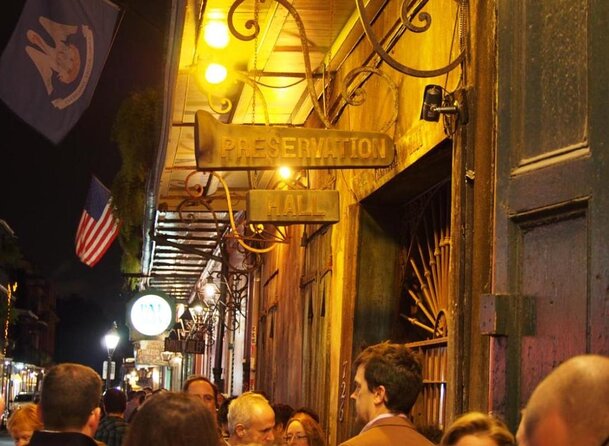
The route then continues toward Place de Armes and Preservation Hall. Along the way, Keith discusses the people who helped preserve brass-band traditions. One especially memorable story concerns how a single person helped keep that musical heritage alive.
This part of the walk is less about entering buildings and more about reading the streets. You see where musicians lived, worked, recorded, or performed, while the music clips provide an audio link between the modern city and earlier eras.
Preservation Hall and the people behind it
The brief stop at Preservation Hall lasts about five minutes. You can see the building, visit the gift shop, and take a photograph.
The stop also introduces Sandra and Allan Jaffe, who visited New Orleans on their honeymoon and later made Preservation Hall their life’s work. Their story helps explain why the venue matters. It is not just a photogenic French Quarter building. It represents a long effort to give traditional New Orleans jazz a home and a public audience.
Do not expect a concert during this tour stop. The value is the context. If you want to hear a full performance, you will need to make separate evening plans.
Bourbon Street beyond the neon
The walk continues down Bourbon Street, but the focus is musical rather than purely nightlife-oriented. Keith places the street in an earlier era, when performers such as Louis Prima, Al Hirt, and Pete Fountain helped make it one of the world’s great jazz corridors.
This is a useful correction to the usual Bourbon Street picture. The street is now famous for drinks, balconies, and late-night noise, but its musical identity came first. The tour connects that older sound to songs such as Basin Street Blues, including clarinet-led music that evokes the city’s brass and jazz traditions.
You may also hear about Mister New Orleans and J&M Studios. J&M is presented as the Home of Rock N Roll, showing that this is not a narrow jazz tour. The discussion reaches into rhythm and blues, soul, Motown, and pop, depending on the questions and interests of the group.
A short refreshment stop may also be included. Several accounts mention pausing at Lafitte for a drink or taking a coffee and restroom break, but you should treat this as part of the guide’s pacing rather than a guaranteed formal inclusion. If you stop, you pay for your own drink.
Same place, a different slice of the past:
- New Orleans Haunted History Ghost Tour
★ 4.5 · 2,084 reviews - Paddlewheeler Creole Queen Historic Mississippi River Cruise
★ 4.5 · 1,948 reviews - New Orleans Food and History Walking Tour
★ 5.0 · 1,544 reviews - New Orleans: Creole Queen History Cruise with Optional Lunch
★ 4.3 · 1,112 reviews
The Tremé, Louis Armstrong Park, and Congo Square
The route eventually reaches Louis Armstrong Park, where you see the statue of Armstrong and hear about Tremé. The neighborhood is described as America’s first African-American neighborhood, making this one of the most important sections of the walk.
Here the subject broadens from individual performers to community influence. New Orleans music did not grow from famous names alone. It came from gatherings, traditions, churches, street bands, family networks, and African musical practices carried forward under difficult conditions.
Congo Square is the final major historical stop. The short stop lasts about five minutes, but its importance is much larger than the clock suggests. This is where Keith explains the cultural roots that helped shape New Orleans rhythm and musical identity.
The visit is especially worthwhile for people who want more than a parade of famous musicians. Congo Square gives you a way to think about music as a social and cultural practice, not only as entertainment. It also ties the tour’s different styles together, from early rhythms to later jazz, blues, and popular music.
Finishing behind St. Louis Cathedral
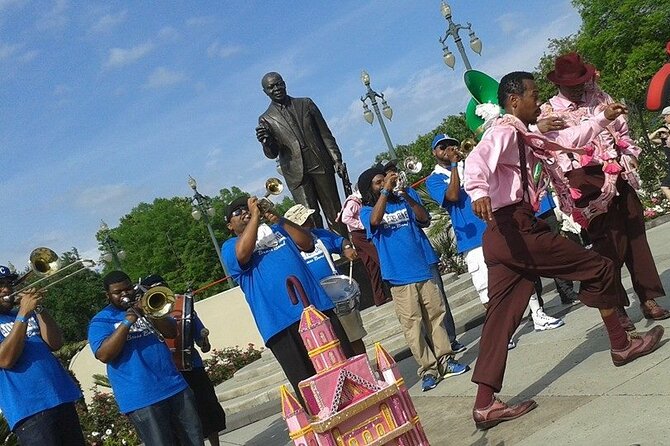
The stated end point is 712 Royal Street, near the area behind St. Louis Cathedral. On many days, musicians are playing in the street nearby, so the tour may finish with live sound already in the air.
That makes the ending practical as well as atmospheric. You are close to central French Quarter sights, and you can continue with a meal, a drink, more street music, or a visit to another attraction. The tour does not leave you in an isolated area.
The exact route can feel slightly flexible. The tour includes set places, but Keith’s storytelling and group questions affect the rhythm. One group may spend more time on a musician or recording studio, while another may move faster through a familiar section.
What the guide adds to the experience
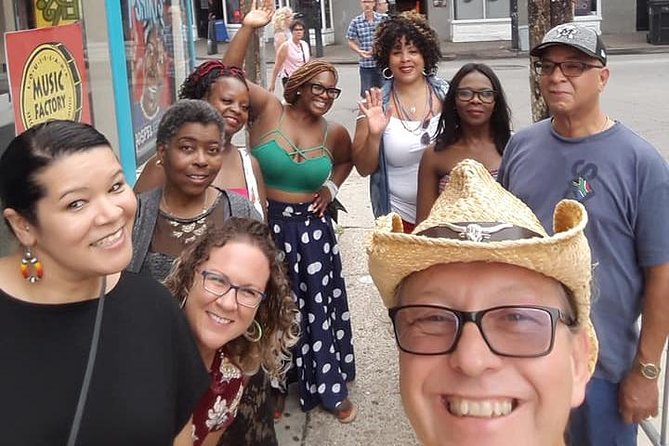
The strongest feature is Keith’s delivery. He is described as funny, personable, and full of personal stories. He does not simply recite information. He sings, plays music, points out details, answers questions, and keeps the group involved.
That style will appeal to you if you like a guide with a strong personality. It may be less appealing if you prefer a tightly scripted, quiet walk with exact timing at every stop. The tour has a performance quality, and Keith’s energy is part of what you are paying for.
The personal connection to New Orleans music also matters. Keith’s record-business experience gives him a practical understanding of artists, recordings, and the local scene. The music clips add another layer, particularly when you already know a song and suddenly hear it in the place tied to its story.
A few accounts describe the walk as a personal experience, especially when the group is small. The maximum group size is 28, so that intimacy is not guaranteed. Still, the guide’s habit of taking questions and making the discussion personal should help even in a larger group.
How much walking and what to expect
Plan on roughly two hours on foot. You move between the Marigny, French Quarter, and Tremé, with stops at streets, buildings, parks, and public spaces. The tour does not require strenuous hiking, but it is still a city walk with limited sitting.
Wear comfortable shoes. New Orleans sidewalks can be uneven, and the weather can be hot, wet, or humid. Bring water and consider a hat or light rain protection. The tour requires good weather, so poor conditions can lead to a rescheduled date or a full refund.
The pace includes frequent stops for stories and music. Some groups have described it as a good way to get their steps in, while others appreciated the coffee or restroom pause. If standing and walking for two hours is difficult, ask yourself if the historical payoff justifies the physical effort.
Children must be accompanied by an adult, and service animals are allowed. Most people can take part, and the meeting point is near public transportation. The guide’s language can be uncensored, especially with adult groups, so families with young children should consider that before booking.
The $30 price and who gets the most value
At $30, this is a reasonable price for a two-hour guided walk with music, a local guide, and a route through three important neighborhoods. You are not paying for entry to a concert or museum. You are paying for interpretation, access to stories, and a better understanding of what you are seeing.
The value increases if you are new to New Orleans music. Keith can give you names to pursue, songs to add to a playlist, and places to revisit later. Some groups have also received a playlist or bibliography, though you should not assume those extras are guaranteed on every departure.
Music fans are the clearest audience. Jazz lovers will find plenty to enjoy, but the tour also reaches into blues, gospel, rhythm and blues, soul, Motown, rock and roll, and pop. It can work well for a first day in the city because it gives you both orientation and a theme for later exploring.
I would be more cautious about booking it if you dislike long stories, strong guide personalities, or walking in warm weather. It is also not the best choice if you want a full concert. Think of it as a guided musical history walk, not a ticketed performance.
When to schedule this walk
Because the tour lasts about two hours and ends near St. Louis Cathedral, it fits well in a morning or afternoon. A first-day booking can help you understand Frenchmen Street, the Quarter, and Tremé before you explore them on your own.
You can also use it as a primer before an evening of live music. The guide may mention performers, places, or styles that give your later listening more context. Booking demand is fairly strong, with the experience often reserved about 28 days ahead, so advance planning makes sense during busy periods.
The ticket is mobile, and confirmation arrives when you book. Free cancellation is available up to 24 hours before the start time. Inside that 24-hour window, changes are not accepted and the payment is not refunded, except when the operator cancels because of weather or an unmet minimum.
Who should book the New Orleans Music Heritage Tour?
I would choose this tour if you want to understand why New Orleans music sounds the way it does, rather than simply checking off a few famous venues. The combination of streets, songs, personal stories, and Congo Square gives the city more meaning.
It is especially good for solo visitors, couples, families with older teens, and groups of friends who already listen to jazz or blues. Older teenagers can enjoy it, but parents should be ready for adult language and a fair amount of walking.
I would skip it if your main goal is a live show, a short sightseeing loop, or a highly formal lecture. For everyone else, $30 buys a useful introduction to the city’s musical past and a route that helps you see the French Quarter and Tremé with sharper ears.
FAQ
How long is the New Orleans Music Heritage Tour?
The walking tour lasts approximately two hours.
Where does the tour begin?
It begins at Louisiana Music Factory, 421 Frenchmen Street, New Orleans, Louisiana 70116.
Where does the tour end?
It ends at 712 Royal Street, near the area behind St. Louis Cathedral.
Which neighborhoods does the tour visit?
The route includes the Marigny, French Quarter, and Tremé.
Is music played during the walking tour?
Yes. The guide uses Bluetooth speaker capability to play clips of New Orleans blues, jazz, gospel, and other musical styles during the walk.
Is the tour suitable for children?
Children must be accompanied by an adult. The guide’s language may be uncensored, and one account specifically cautions that the walk may not suit younger children. Older teens may enjoy it, but families should consider the language and walking time.
What happens if the weather is poor?
If the tour is canceled because of poor weather, you will be offered another date or a full refund. You can also cancel for a full refund if you do so at least 24 hours before the start time.
Just added around New Orleans
- After-Dark Historical Night Tour of St. Louis Cemetery No. 1★ 5.0 · 132 reviews
- Private New Orleans Haunted History Ghost Tour★ 5.0 · 31 reviews
- Sip History in the Crescent City Cocktail Making Class★ 4.5 · 32 reviews
- Adults-Only Voodoo History Guided Walking Tour in New Orleans★ 5.0 · 105 reviews
- New Orleans Voodoo History Walking Tour★ 4.5 · 87 reviews
- New Orleans Storyville Museum All Access Ticket★ 5.0 · 73 reviews
- Eras of New Orleans: A History Lover’s Walking Tour★ 5.0 · 77 reviews
- New Orleans Small-Group History Tour Pub Crawl of The Irish Channel★ 5.0 · 40 reviews
New Orleans History Tours, compared.
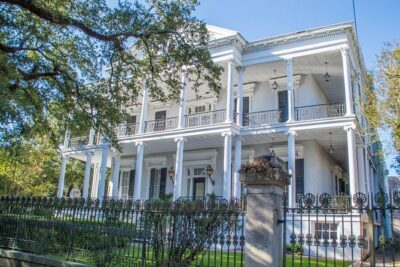
New Orleans Garden District History Walking Tour
Read our review →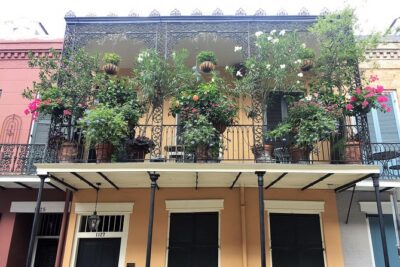
French Quarter Historical Sights and Stories Walking Tour
Read our review →
New Orleans Small-Group Haunted History Carriage Tour
Read our review →
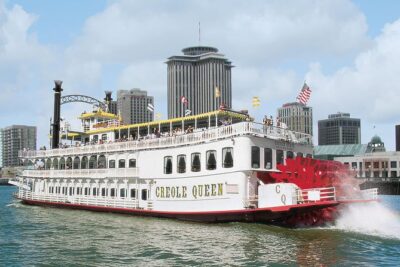
Paddlewheeler Creole Queen Historic Mississippi River Cruise
Read our review →
Creole Queen History Cruise with Optional Lunch
Read our review →
Browse the lists this tour appears in