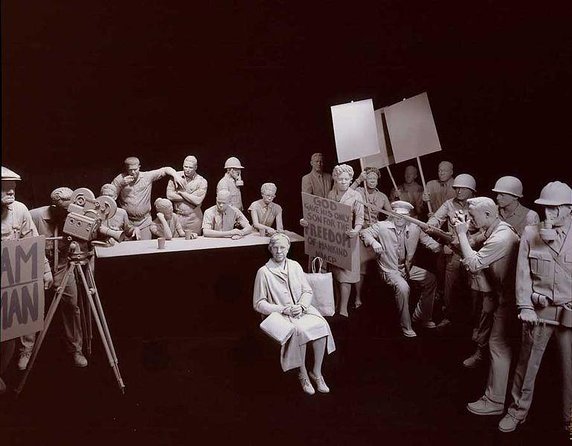
Review · MEMPHIS
2.5 Hours Essence of Memphis African American History Tour
Memphis tells its story from the pavement up. This 2.5-hour private driving tour connects slavery, the Underground Railroad, Jim Crow, the sanitation strike, and the civil rights movement in one focused ride. I like the way it puts African American history at the center of Memphis rather than treating it as a side note. I also like the personal style of guides such as Queen, Jackie, Devin, and Jarvis, who bring energy, music, personal stories, and local context to the route. The main drawback is clear: you drive past the sites but do not enter museums during the tour.
You meet at the Tennessee Welcome Center on Riverside Drive and return there at the end. The $88 price is fair for a private experience, especially if your group values conversation and can split the cost, but you should know that food, drinks, hotel pickup, and museum admissions are not included. Book at least a day ahead if you want the best chance of securing a date, since this experience is often reserved about 30 days in advance.
Five things to know before you go
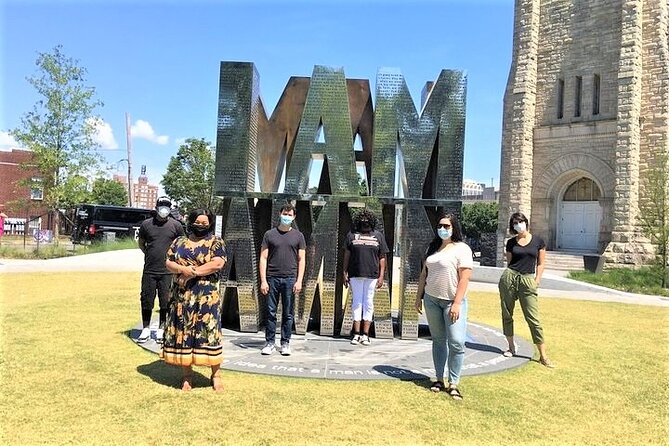
- Room 306 is viewed from outside: You see the balcony and room connected to Dr. Martin Luther King Jr.’s assassination, along with the National Civil Rights Museum nearby.
- The tour links several eras: The route moves from slavery and the Underground Railroad to Beale Street, Jim Crow, labor rights, and present-day Memphis.
- Your guide shapes the experience: Queen, Jackie, Devin, Jarvis, and other guides are praised for storytelling, warmth, singing, and care with difficult subjects.
- It is a driving tour, not a museum visit: You receive narration from the vehicle and can return to the museums on your own later.
- The private format suits families and small groups: Only your party participates, but at least three people are needed for the tour to operate.
Why this Memphis history tour matters
Memphis is often sold through music, barbecue, and Beale Street. Those things matter, but they do not explain the city on their own. African American history shaped Memphis politics, music, labor, neighborhoods, churches, business, and the national civil rights movement.
This experience gives you a guided framework for seeing those connections. Instead of visiting one museum and leaving with a set of exhibits in your head, you move through the city and hear how places relate to one another. That makes the tour especially useful early in your stay, before you visit the National Civil Rights Museum or explore Beale Street on your own.
The tone appears to balance serious history with warmth. Guides are praised for handling subjects such as lynchings, segregation, and Dr. King’s assassination with care, while still keeping children and teenagers interested. One family specifically noted that Queen held the attention of children across a wide age range. That is a useful sign for families who want an honest history lesson without a lecture that loses younger listeners after ten minutes.
You should still come prepared for difficult material. This is not a light sightseeing loop. The route deals with violence, racism, exploitation, and the long fight for basic rights. The guides’ personal approach can make the history more affecting, not less.
A few more history tours around the USA worth a look
- History and Hauntings of Salem Guided Walking Tour
★ 5.0 · 14,564 reviews - Charleston’s Old South Carriage Historic Horse & Carriage Tour
★ 5.0 · 10,023 reviews - Beneath The Streets Underground History Tour
★ 4.5 · 8,006 reviews
Starting at the Lorraine Motel and Room 306
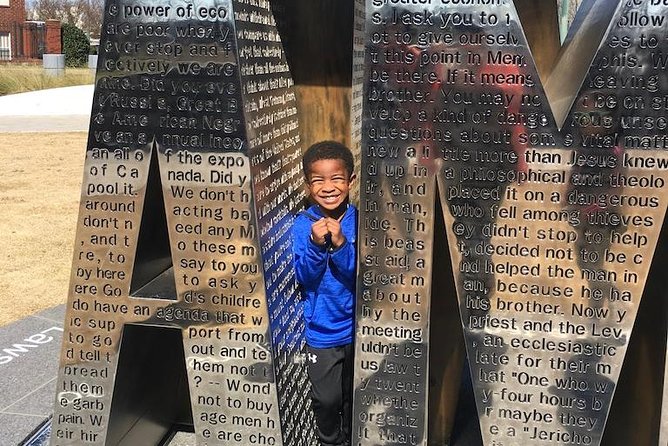
The most emotionally charged stop is the Lorraine Motel, where you see the balcony and Room 306, the place connected to Dr. Martin Luther King Jr.’s assassination on April 4, 1968. The National Civil Rights Museum occupies the site today.
The tour does not take you inside the museum. You see the location from the vehicle and hear the story from your guide. That limitation matters because the museum itself deserves time. If this is your first visit to Memphis, I would treat the drive-by as an introduction, then return separately when you can move through the exhibits at your own pace.
Even from the vehicle, the site carries weight. The point is not simply to photograph a balcony. Your guide places the assassination within the Memphis sanitation workers’ strike and Dr. King’s final campaign. That context helps you understand why he was in Memphis and why this city became a major chapter in the civil rights movement.
Expect this part of the tour to be reflective rather than purely scenic. One account described the stop as heartbreaking, which feels like the right warning. You may want a quiet moment afterward before the tour continues.
The Burkle home and the Underground Railroad
The former home of Jacob Burkle offers a different entry point into Memphis history. Burkle was a German immigrant who chose to assist the Underground Railroad, and the house is now a museum.
The stop helps widen the story beyond the better-known events of the 1950s and 1960s. You hear about the struggle against slavery and the people who risked their safety to help enslaved people seek freedom. It also reminds you that Memphis history includes immigrants, abolitionists, formerly enslaved people, and local networks of resistance.
Again, you drive by rather than tour the interior. If you want to visit the house museum, plan a separate visit. The tour’s value here is the connection between the site and the larger story. A building can look ordinary from the street, but the guide gives it a place in the history of freedom movements in the region.
This is one of the stops that makes the tour more than a civil rights highlights reel. You are not starting in 1955 and ending in 1968. You are given a longer timeline, from slavery through the present.
Beale Street beyond the music district
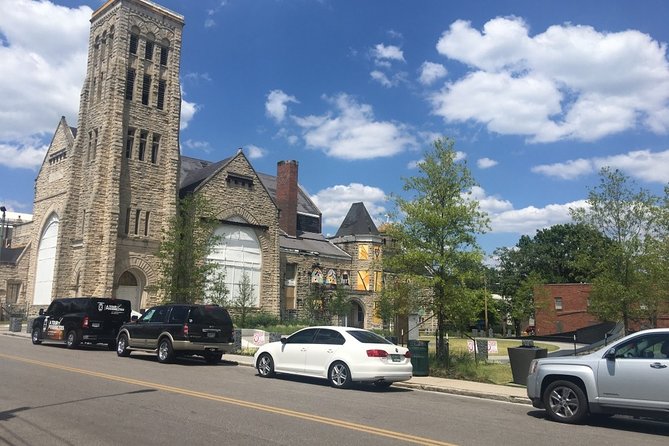
Beale Street is famous around the world, but the tour asks you to see more than clubs, neon, and music history. It was once known as Negro Main Street USA, and its importance rests in the African American businesses, performers, churches, newspapers, social life, and political activity that developed there.
Your guide explains the rest of the story. That phrase matters because many visitors encounter Beale Street as an entertainment district first. The tour adds the civic and cultural history that made the street meaningful long before it became a standard stop on a Memphis weekend.
You will not get a long walking visit here. You see the street from the vehicle, with narration. If you want nightlife, food, or photographs, return later on foot. The driving format gives you context quickly, but it cannot replace time spent exploring the street yourself.
I like this part of the route because it connects culture with community. Music did not appear in isolation. It grew from African American life in Memphis, from churches, neighborhoods, work, migration, and the determination to create businesses and gathering places despite discrimination.
Same place, a different slice of the past:
- Boston: Freedom Trail History Small Group Walking Tour
★ 5.0 · 6,450 reviews - Historic Charleston Guided Sightseeing Walking Tour
★ 5.0 · 6,216 reviews - Charleston Horse-Drawn Carriage Tour: Explore Historic Charleston
★ 5.0 · 3,561 reviews - Savannah History and Haunts Candlelit Ghost Walking Tour
★ 5.0 · 3,235 reviews
Mason Temple and Dr. King’s final speech
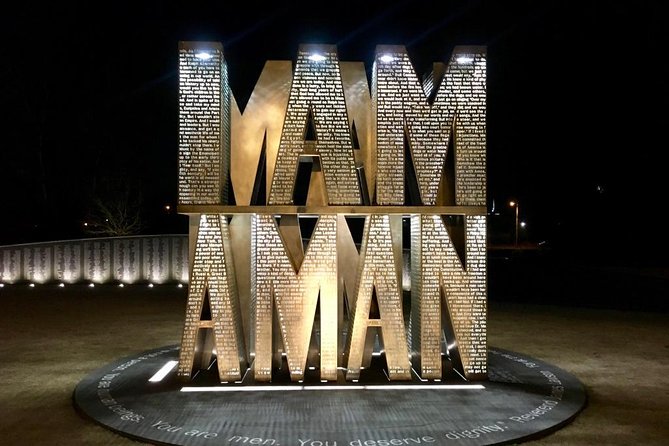
The tour includes the world headquarters of the Church of God in Christ, known as Mason Temple. This is where Dr. King delivered I’ve Been to the Mountaintop, less than 24 hours before he was killed.
That timing gives the stop its force. You are not just seeing a church linked to a famous speech. You are seeing the place where Dr. King spoke while supporting Memphis sanitation workers and confronting the dangers of the campaign.
The guide’s narration is particularly important here because the building’s exterior cannot tell the whole story. You receive the political and human context while looking at the site from the vehicle. If you have heard the speech before, this location may change how you hear it. If you have not, it is worth listening to it after the tour.
Several accounts praise the guides for using storytelling, personal anecdotes, and even singing. Those details suggest that this stop may feel more like a living lesson than a list of dates. Still, the experience depends heavily on your guide. A strong guide can connect the speech to the street outside, the workers’ demands, and the national movement. A quieter guide might deliver a more conventional explanation.
The church and the sanitation workers’ strike
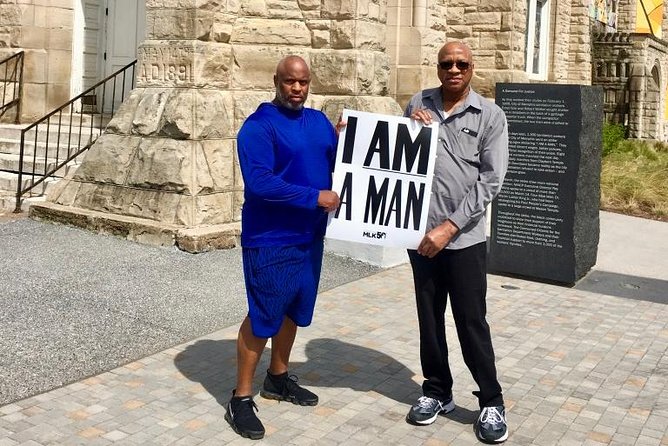
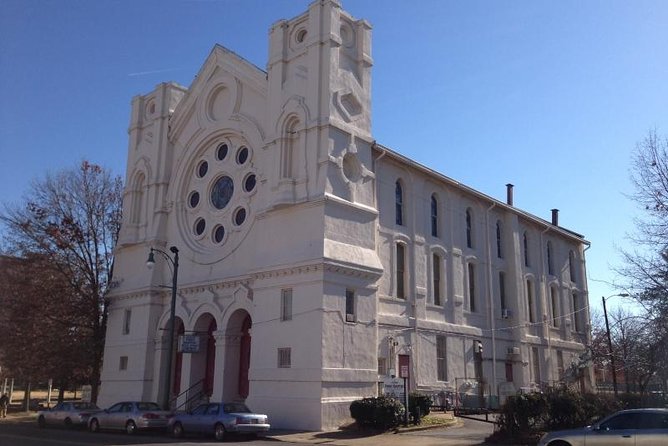
Another important stop is the church built in the late 1800s where sanitation workers gathered to plan the strike that brought Dr. King to Memphis. This is the labor side of the story, and it keeps the tour from presenting the movement only through famous leaders.
The sanitation workers were fighting for dignity, safety, and fair treatment. Their campaign shows how civil rights and workers’ rights were tied together. Dr. King came to Memphis because local people were already organizing. The tour helps put the community’s effort before the national spotlight.
I find this connection especially valuable for visitors who know Dr. King mainly through schoolbook milestones. The strike was not a backdrop. It was the reason for his final Memphis campaign.
You again see the location from the vehicle. The stop may be brief in physical terms, but its meaning builds on the Lorraine Motel and Mason Temple. The route connects the workers’ organizing, Dr. King’s speech, and the events that followed.
A guide-led experience with a personal voice
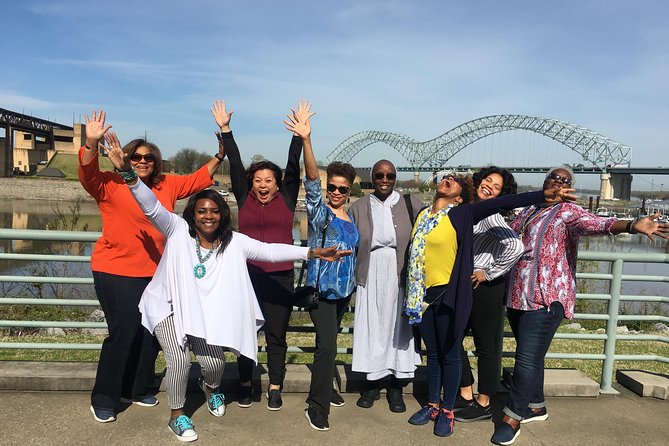
The guides receive the strongest praise in the feedback. Queen is described as energetic, warm, and deeply connected to the city. Jackie is praised for storytelling, singing, kindness, and strong command of Memphis history. Devin is noted as a Morehouse graduate who studied African American studies and clearly enjoys sharing the subject. Jarvis is praised for giving an engaging account of Memphis, including local details and practical insight.
You should not assume you will receive a particular guide unless the operator confirms it. But these names show the range of personalities involved. The common thread is a personal, involved approach rather than a detached audio script.
That style can make the tour memorable. One account described feeling like part of the guide’s family, while another praised the way the guide made a private group feel like VIPs. A family also appreciated the way heavy topics were explained with care for children.
The personal approach has a tradeoff. If you prefer a tightly timed, museum-style presentation with every fact delivered in the same order, this may feel less formal. If you like questions, conversation, local stories, and a guide who clearly cares about Memphis, it should suit you well.
The vehicle is clean and comfortable according to the feedback, and one account praised the communication, transport, punctual pickup, and extra time for photos. Those details are not guaranteed in every departure, but they offer a useful picture of the experience’s practical side.
What the private format means for you
This is a private activity, so only your group participates. That is a strong advantage if you are traveling with family or friends and want to ask questions without holding back a larger bus group. It also lets the guide adjust the tone for adults, teenagers, or mixed ages.
The minimum is three people. More than one party can combine to reach that number, so a reservation does not automatically mean the tour will operate alone with your group. If the minimum is not met, the operator offers another date or experience, or a full refund.
At about two and a half hours, the length is well judged. You get enough time to cover several eras without giving up an entire day. I would schedule the National Civil Rights Museum for another block of time, not try to squeeze it into the tour.
The meeting point is the Tennessee Welcome Center at 119 Riverside Drive. Hotel pickup and drop-off are not included, so you need to arrange your own way to the start. The tour ends back at that same meeting point.
Is $88 a fair price?
At $88 per person, the price is not bargain sightseeing, but the private format changes the calculation. You are paying for a guide focused on your group, transportation between sites, narration, and a carefully connected subject. If you are splitting the cost among several people, the value improves.
The price is harder to justify if you want museum entry, meals, or a long walking tour. None of those are included. You will still need to pay separately for food and drinks, and you will need a separate admission and visit for the National Civil Rights Museum or the Burkle house.
I see this as a strong orientation tour for people who want meaning and context more than a checklist of attractions. The value is in the connections: slavery to freedom, Beale Street to African American business, sanitation work to civil rights, and local organizing to national change.
The high rating and 99 percent recommendation suggest consistent satisfaction, but you should focus on fit rather than numbers. The tour works best when you want a guide’s interpretation. It is less useful if you already have a detailed self-guided plan and only need transportation.
Who should book this Memphis tour?
I would recommend it to first-time Memphis visitors, families, couples, and anyone who wants African American history to be central to the trip. It also suits people who have visited other civil rights sites and want a Memphis-focused route with local connections.
Families may find the balance of movement and storytelling helpful. The tour is not a long museum session, and guides have shown they can keep teenagers engaged. People with an interest in music should also appreciate the Beale Street connection, even though the main subject is broader than music.
You should think twice if you need step-by-step walking access at each landmark. The tour is conducted from the vehicle, and the provided information only says that service animals are allowed and most people can participate. For any specific mobility need, contact the operator before booking.
Smart casual dress is requested. Since the tour is about two and a half hours, you do not need to pack for a full day, but you should dress in a way that suits a respectful visit to historic churches and civil rights sites.
You can cancel for a full refund up to 24 hours before the start time. Changes or cancellations inside 24 hours are not accepted for a refund.
The right way to plan your day
I would take this tour near the beginning of your Memphis stay. Use it to learn the city’s basic story, then return to the National Civil Rights Museum and Beale Street with better questions.
Leave room afterward for reflection. The Lorraine Motel, the sanitation strike, and Dr. King’s final speech are not simple sightseeing subjects. A meal or quiet afternoon can give the material time to settle.
You can also make a short list of follow-up visits before you go: the National Civil Rights Museum, the Burkle house museum, and Beale Street on foot. Since the tour does not include museum visits, planning those separately will make the experience feel much more complete.
Should you book the Essence of Memphis tour?
Book it if you want a personal, guide-led introduction to African American history in Memphis and you value connections between places. The strongest reasons are the private format, the passionate guides, the well-chosen route, and the chance to hear how local people shaped national events.
Skip it if you expect entry into every museum or prefer to explore independently. You will see the landmarks from a vehicle, not spend long periods inside them.
For most first-time visitors, I would choose this tour and then reserve separate time at the National Civil Rights Museum. At $88, it earns its price through interpretation and convenience, not through the number of admissions included. Bring curiosity, allow time for the serious parts, and let the city’s story extend beyond Beale Street’s famous signs.
FAQ
How long is the Essence of Memphis tour?
The tour lasts approximately 2 hours and 30 minutes.
How much does the tour cost?
The listed price is $88 per person.
Where does the tour begin?
It begins at the Tennessee Welcome Center, 119 Riverside Drive, Memphis, Tennessee 38103.
Where does the tour end?
The activity ends back at the Tennessee Welcome Center meeting point.
Is this a private tour?
Yes. Only your group participates in the activity.
Is there a minimum number of people required?
Yes. At least three travelers are required for the tour to operate. More than one party can combine to reach the minimum.
Does the tour enter the museums?
No. The tour drives by the sites and provides narration. You can visit the museums separately at your own convenience.
Is the National Civil Rights Museum included?
The museum is located at the Lorraine Motel site, but museum admission and an interior visit are not included in the driving tour.
Is hotel pickup included?
No. Hotel pickup and drop-off are not included.
What language is the tour offered in?
The tour is offered in English.
Can I cancel for a full refund?
Yes. You can cancel at least 24 hours before the start time for a full refund. Cancellations within 24 hours are not refunded.
Just added around the USA
- Memphis Haunted History Bus Tour★ 4.5 · 170 reviews
- Maui Historical Island Tour★ 5.0 · 54 reviews
- Waterfall, Rainforest, Chocolate Tour & Historical Sites★ 4.5 · 171 reviews
- Waterfall, #1 On The Road to Hana, With Chocolate tour Historical★ 4.5 · 88 reviews
- Berlin Tasting Tour: A Delicious Walk Through History★ 5.0 · 23 reviews
- Mackinac Bridge History Cruise★ 4.5 · 96 reviews
- Historic Old Louisville Walking Tour★ 5.0 · 274 reviews
- Louisville: Private Guided Food, Bourbon & History Walking Tour★ 5.0 · 45 reviews
USA History Tours, compared.

History and Hauntings of Salem Guided Walking Tour
Read our review →
Charleston’s Old South Carriage Historic Horse & Carriage Tour
Read our review →
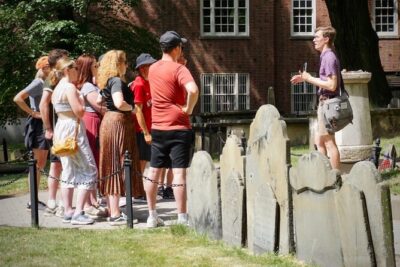
Freedom Trail History Small Group Walking Tour
Read our review →
Historic Charleston Guided Sightseeing Walking Tour
Read our review →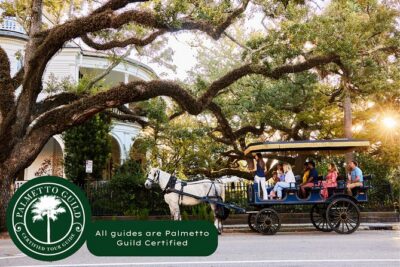
Charleston Horse-Drawn Carriage Tour: Explore Historic Charleston
Read our review →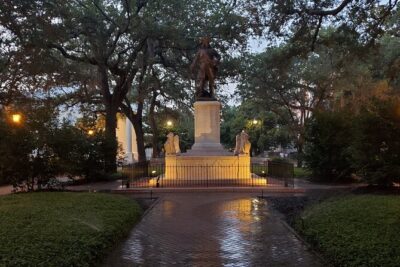
Savannah History and Haunts Candlelit Ghost Walking Tour
Read our review →