
Review · MARRAKECH
Marrakech Jewish Heritage and souks Tour
History hides in plain sight here. This private four-hour walk links Marrakech’s old Jewish quarter with its synagogue, cemetery, spice stalls, and craft markets, giving you more context than a quick visit alone. I like the private format, which lets your guide adjust the pace and focus, and I like the way the tour connects Jewish life with everyday Moroccan trades. The main drawback is value: at $95 per person, the Jewish quarter itself can feel modest if the synagogue or cemetery visit is limited.
The strongest part is the guiding. Chachi, Noura, Nora, Ismail, and Said are praised for clear explanations, patience, and personal service. One guide even helped arrange a later hammam booking, while another adjusted the walk for mobility needs. Still, you should confirm exactly which sites will be open and what entrance charges apply before setting out.
Key points to know before booking
- A private four-hour walk: Your group tours alone, with room to set the pace and shape the discussion.
- Mellah history with real places attached: See Slat Al Azama Synagogue, Miaara Jewish Cemetery, the Mellah Market, and the spice souk.
- The souks take up the largest share: About two hours are set aside for Souk Semmarine and craft workshops.
- Guide quality is the big strength: Chachi, Noura, Nora, Ismail, and Said are singled out for warmth, good English, useful explanations, and flexibility.
- Extra costs are limited but important: Guide service, fees, and taxes are included, while synagogue and cemetery admission may not be.
- Good for a first Marrakech visit: You finish at Jemaa el-Fna with the rest of your day free.
Why the Mellah gives this walk its purpose
Marrakech’s Mellah was once home to the city’s Jewish community. Its narrow lanes, courtyards, religious buildings, markets, and cemetery help you see Jewish life as part of the city’s wider story, not as an isolated museum subject.
That setting matters. You are not simply looking at an exhibit with dates on a wall. You are walking through a neighborhood where religious life, trade, family life, food, and local politics once met in the same compact area. Your guide explains what the buildings and markets meant, then places the Jewish community within the broader story of Morocco.
The quarter is also a useful counterpoint to the better-known medina. You may see Moroccan restaurants serving grilled meats and tajines, European-style cafés, meat and fruit sellers, and people going about daily business. The area is not frozen for sightseeing. That makes the walk feel more grounded, though it also means you should expect an active urban quarter rather than a polished historical park.
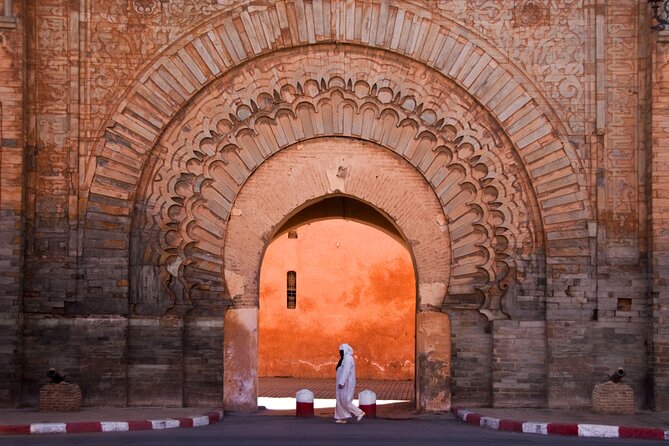
The tour begins at Bab Agnaou. From there, the walk leads toward the Mellah and later through the souks, finishing at Jemaa el-Fna. Since the activity is private, you can ask for more time on Jewish history, more market guidance, or a slower pace through the lanes.
More Jewish Heritage Tours in Marrakech:
- Budapest Jewish Heritage Memorial Walking Tour & Synagogue Entry
★ 5.0 · 568 reviews - Budapest: Jewish Heritage Guided Tour with Synagogue Ticket
★ 4.8 · 533 reviews - 3-Hour Porto Jewish Heritage Walking Tour with Local Guide
★ 4.5 · 396 reviews
Slat Al Azama Synagogue and the story of 1492
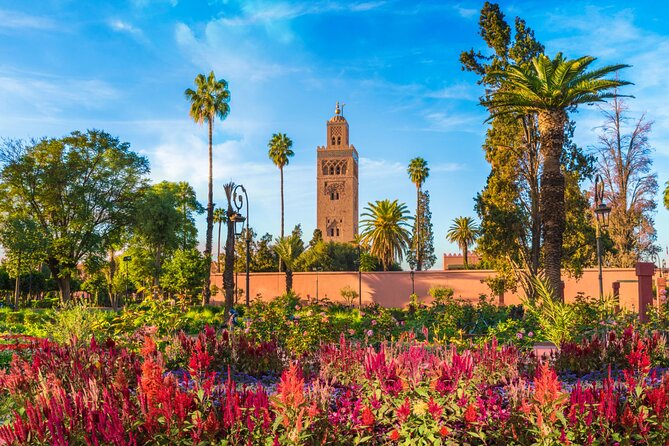
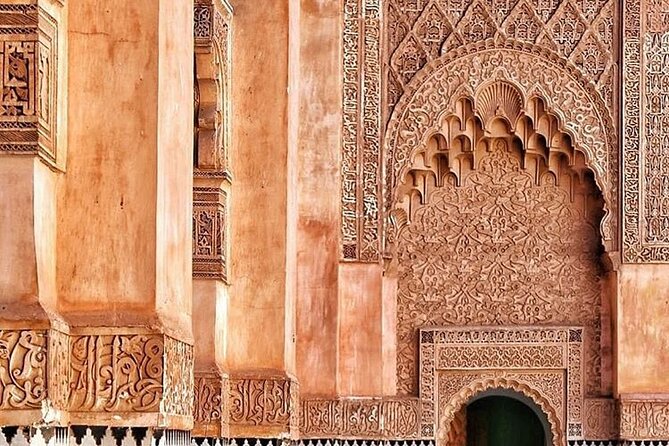
The Slat Al Azama Synagogue is the main indoor historical stop. It was built around 1492 to serve the Jewish community and follows a traditional Moroccan plan centered on a courtyard.
The courtyard is a key detail. It helps you understand how the building worked as a communal place rather than only a room for prayer. A recent renovation added a women’s gallery along the eastern wall. The movable wooden arch was also replaced by a marble arch bordering the eastern wall.
Your guide can explain the architecture and the role of the synagogue in the Mellah’s Jewish life. Noura and Nora receive particular praise for making the visit clear and meaningful, while several guides are noted for strong English.
Allow about 30 minutes here. That is enough for a focused visit, but not enough for a long architectural study. Admission is not included in the stated tour price, so ask about the current entrance fee before you go. The synagogue may be the part of the tour you value most if you want a tangible religious site, rather than only a walk through streets.
There is also a practical point: access can vary. One account explains that a guide could not visit the cemetery because he was a Cohen. This does not mean the cemetery is always unavailable, but it does show why you should confirm the exact plan with the provider before the start.
Miaara Jewish Cemetery and five centuries of memory
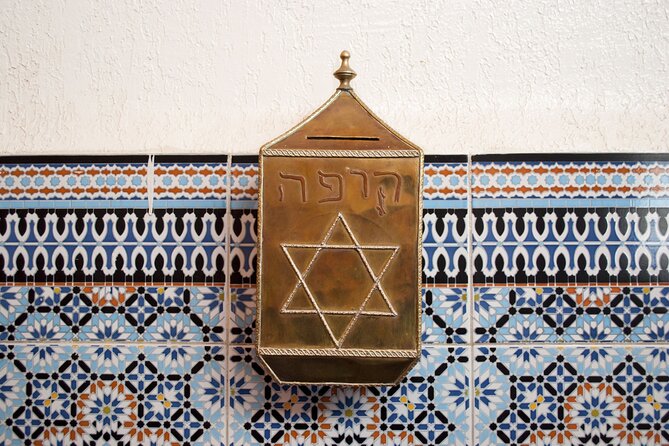
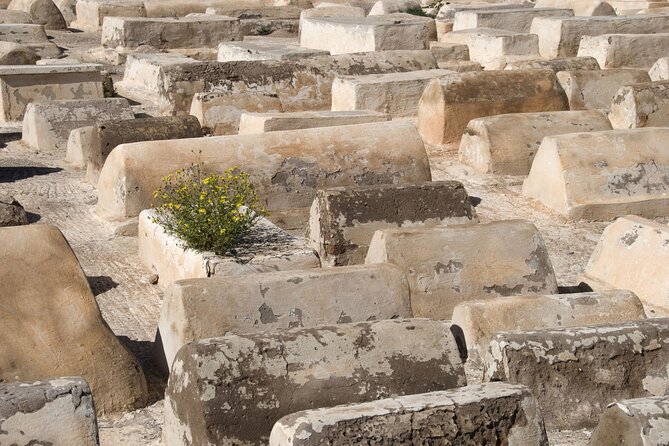
Miaara Jewish Cemetery offers a quieter change of pace from the markets. The cemetery is more than 500 years old, and its graves vary in size and appearance. Some date back several centuries, while others are far more recent.
The simple graves are part of what makes the place affecting. You will not find a single grand monument explaining everything. Instead, the cemetery asks you to look across a large field of burial places and listen to the guide’s account of the community, disease, and changing generations.
A group of anonymous graves on the left is linked to epidemics that once struck Marrakech. The burials had to be carried out quickly, and the lack of names gives that section a particularly stark feel.
The visit lasts about 25 minutes. That is enough time to see the cemetery and hear its main story, but the stop depends on access and local conditions. Admission is not included, and the tour details do not give a fixed entrance price. If the cemetery is a central reason for booking, confirm that it will be open to your group.
This stop also requires respectful behavior. Keep voices low, follow your guide’s instructions, and avoid treating the cemetery as a backdrop for casual sightseeing. The experience is short, but it can add emotional weight to the historical discussion.
Markets, spices, and the daily side of the Mellah
The Mellah Market gives the tour a useful everyday dimension. Meat and fruit sellers work near the older Jewish quarter, and the Bab Mellah Spice Souk offers a chance to learn about herbs and spices from an herbalist if you choose to stop.
This is where the tour can be shaped around your interests. If you care about Moroccan cooking, ask for more time with the spice sellers. If you are more interested in buildings and community history, keep the discussion focused on the Mellah and its architecture.
The market portion is not simply a shopping stop. Your guide can explain why spices matter in Moroccan food and trade, while helping you understand how the market fits into the neighborhood. You are free to buy something, but souvenirs are not included in the price.
Be clear about your shopping intentions. If you want to purchase spices, leather, metalwork, or textiles, ask your guide to help you compare quality. If you prefer not to shop, say so early. The private format makes that easier than it would be in a large group.
A few more history tours around Marrakech worth a look
- Marrakech Historical and Cultural Tour – Half Day City Tour
★ 4.5 · 1,180 reviews - Atlas Mountains – Ancient Ait Ben Haddou Day Tour from Marrakech
★ 5.0 · 411 reviews - Historical Marrakech Walking Tour
★ 5.0 · 198 reviews - Full-Day Tour to Essaouira – The Ancient Mogador City from Marrakech
★ 5.0 · 127 reviews
Two hours inside Souk Semmarine
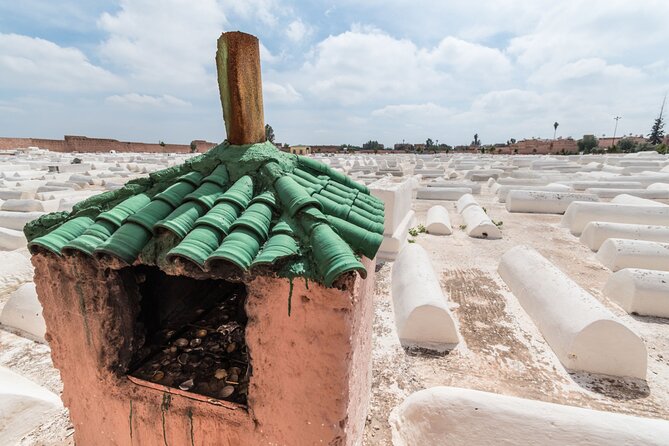
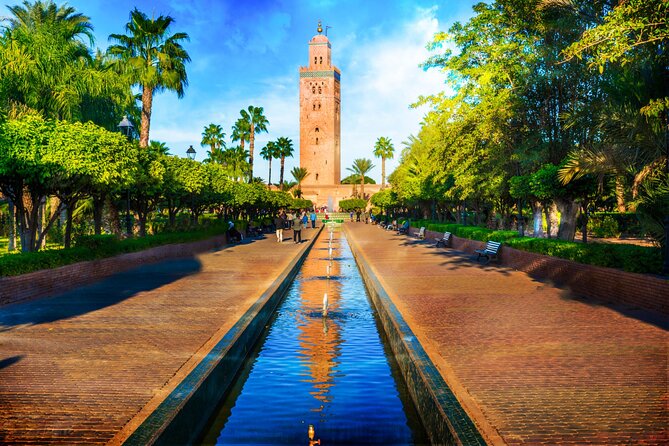
The longest section is the walk through Souk Semmarine and the surrounding markets. Plan on about two hours here, with stops at workshops producing handicrafts such as leather goods, blacksmith work, and woodwork.
The souks can be confusing, especially if you are seeing them for the first time. A local guide gives the walk some structure and helps you notice the difference between a finished product and the work behind it. You might see craftsmen at their benches, learn how different trades are arranged, and ask questions while moving through the lanes.
This is also the part most likely to affect your final bill. Shopping is optional, but the guide can help you look for better-quality handicrafts if you are interested. That assistance may be useful in a market where products can look similar at first glance.
I would treat the souk time as a cultural walk first and a shopping trip second. You will get more from it if you watch the workshops, ask about the trades, and take your time. If you dislike shopping pressure, tell the guide at the beginning. The tour is private, so the visit can focus on workshops and local life rather than purchases.
The route finishes at Jemaa el-Fna. The listed stop there is brief, about five minutes, but the square is a practical ending point. You can continue exploring on your own, find food, or return to your accommodation from one of Marrakech’s best-known central areas.
What $95 per person buys you
The price is $95 per person. For a private four-hour tour, that cost is reasonable if you are traveling with a small group and care about interpretation, flexibility, and help in the markets. Group discounts may also improve the value for larger private parties.
You are paying mainly for the guide’s time and local explanation. Guide service, fees, and taxes are included. Lunch and souvenirs are not, and admission to the synagogue and cemetery is listed separately from the tour price.
The value depends heavily on your priorities. If you want a detailed introduction to Jewish Marrakech, a guide who can answer questions, and a structured walk through the souks, the price can make sense. If you expect a large collection of Jewish monuments or several major indoor sites, you may find the Jewish portion too short for the cost.
The tour lasts around half a day, leaving the rest of your schedule open. That is useful in Marrakech, where you may want time for a hammam, lunch, a palace, or an unplanned wander. One guide helped a visitor sort out a future hammam booking, showing that the private service can sometimes be useful beyond the formal route.
Guides who shape the experience
The strongest praise centers on the guides, not on a single building. Chachi is described as phenomenal, informative, and especially good at revealing Jewish sights that might otherwise be missed. After the Jewish quarter, he also continued into the souks and explained parts of Moroccan culture.
Noura is praised for making the walk meaningful and interesting, while Nora is noted for her strong English and detailed explanations. Ismail receives credit for sharing his time generously and extending the visit into the market. Another guide reorganized the route around mobility concerns and built in rest periods.
These details matter because the tour is built around conversation. You will get more from it if you ask questions about Jewish life, Moroccan customs, architecture, food, or the crafts you see. A private guide can respond to your interests in a way a fixed group tour usually cannot.
At the same time, do not assume every guide will deliver the exact same style. Ask for the guide who best fits your interests if the provider allows it. Tell them in advance if you want a history-heavy walk, shopping help, fewer stairs, or a slower pace.
Pace, meeting point, and practical planning
The meeting point is Bab Agnaou, Marrakech 40000. The tour ends at Jemaa el-Fna, so you do not return to the starting point. That one-way route is useful if you want to continue in the medina afterward.
Four hours of walking through lanes and markets can feel full, even though the route is described as suitable for most participants. Wear practical shoes and bring water. The tour requires good weather, and poor conditions can lead to a different date or a full refund.
Mobile tickets and booking confirmation make the start simple. Free cancellation is available up to 24 hours before the start time. Changes or cancellations inside that period are not accepted for a refund.
Because the tour is often booked about 18 days ahead, reserve early if your dates are fixed. This is especially sensible if you want a certain guide or need the route adjusted for mobility.
Who should book this private walk
This tour suits you best if you want Jewish heritage placed within the wider life of Marrakech. It is also a good match if you prefer a private guide to a large group and want time for questions.
You will likely enjoy it most if you are interested in:
- Moroccan Jewish life and religious buildings
- Local markets and traditional crafts
- Flexible pacing
- Shopping advice without a fixed shopping requirement
- A half-day activity that leaves the afternoon free
Families and mixed-interest groups can also benefit from the private setup. One guide has already adjusted the route for mobility needs, though you should discuss your requirements before booking.
The tour may disappoint if you want a long museum visit, a full day devoted only to Jewish history, or a guaranteed cemetery visit without checking access first. The Mellah is historically important, but the number of visible Jewish sites is limited. Much of the value comes from the guide’s explanation and the link between the quarter and the souks.
Should you book the Marrakech Jewish Heritage and Souks Tour?
Book it if you want a personal introduction to the Mellah, a synagogue, an old cemetery, and Marrakech’s working markets in one morning. The guides appear to be the strongest reason to choose it, with Chachi, Noura, Nora, Ismail, and others praised for clear explanations, kindness, and flexibility.
Before paying $95 per person, confirm the synagogue and cemetery access, entrance charges, and the amount of time you want in the souks. If those details suit you, this is a useful half-day tour with a good balance of history and everyday Morocco. If you want only Jewish sites, the market section may feel too long. If you want both context and shopping guidance, the mix is much more appealing.
FAQ
How long does the Marrakech Jewish Heritage and Souks Tour last?
The tour lasts approximately four hours, or about half a day.
Is this a private tour?
Yes. Only your personal group participates, and the route can be adjusted to your interests.
Where does the tour start?
The meeting point is Bab Agnaou in Marrakech.
Where does the tour finish?
The tour ends at Jemaa el-Fna.
Is the synagogue entrance included?
No. Admission to Slat Al Azama Synagogue is not included in the stated tour price.
Is cemetery admission included?
No. Admission to Miaara Jewish Cemetery is not included in the stated tour price.
What does the tour price include?
The price includes the tour guide service, all listed fees, and taxes. Lunch and souvenirs are not included.
Can the tour be adjusted for mobility needs?
Yes. A guide has adjusted the route and added rest time for a visitor with mobility issues. You should discuss your needs before the tour.
What happens if bad weather cancels the tour?
The experience requires good weather. If poor weather causes cancellation, you will be offered another date or a full refund.
Just added around Marrakech
- Marrakech Monuments & Heritage★ 4.5 · 22 reviews
- 1 Day Guided Tour of World Heritage Kasbah Ait Ben Haddou from Marrakech★ 3.5 · 73 reviews
- Historical And Cultural Experience in Marrakech City★ 5.0 · 45 reviews
- Luxury VIP Half-Day of Marrakech into History & Culture.★ 4.0 · 35 reviews
- Historical Tour with Local guide in Marrakech★ 5.0 · 26 reviews
- Visit of the Souks and Historical Monuments of Marrakech★ 5.0 · 28 reviews
- Marrakech: Historical Private Tours – Half-Day★ 4.5 · 58 reviews
- Half Day Marrakech History Tour including entrances★ 3.5 · 39 reviews
Jewish Heritage Tours, compared.
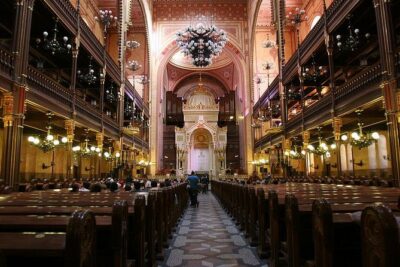
Budapest Jewish Heritage Memorial Walking Tour & Synagogue Entry
Read our review →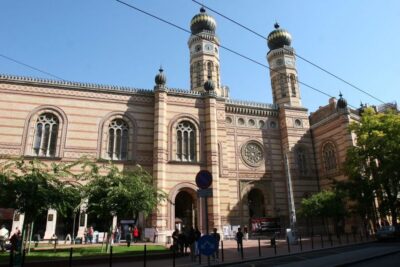
Jewish Heritage Guided Tour with Synagogue Ticket
Read our review →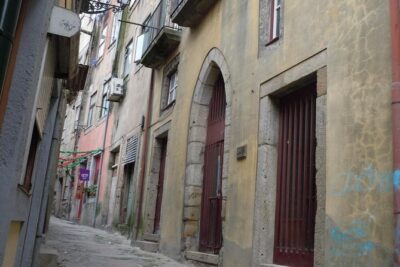
3-Hour Porto Jewish Heritage Walking Tour with Local Guide
Read our review →
Private Jewish Heritage Journey by Barcelona Dreaming
Read our review →
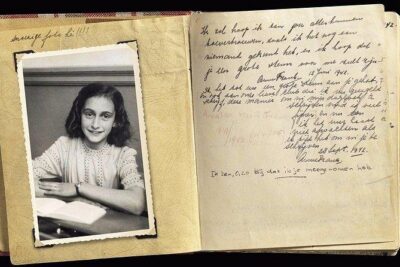
Anne Frank and the Jewish History of Amsterdam Private Tour
Read our review →
Lisbon Jewish Heritage and History – Private Tour Van
Read our review →
Browse the lists this tour appears in