
Review · EXTREMADURA
Caceres: Highlights, History and Jewish Quarter Walking Tour
Cáceres changes block by block. This two-hour walk moves from the grand medieval center into the narrow Jewish Quarter, showing how several cultures shaped the city. I like the clear route through major sights such as Carvajal Palace and Becerra Palace, and I like that admission to several interiors is included when they are open. The main consideration is pace: there is a lot of history to cover, and one guest felt the tour stopped too often for long explanations.
I also like the small-group feel described by Rafael, who found conversation easy and access to the sites comfortable. Guides such as Manuela and Javier have earned praise for their patience and strong command of the subject. Still, this is a Spanish-language tour, so you should be comfortable following a detailed explanation in Spanish.
Key points to know before booking
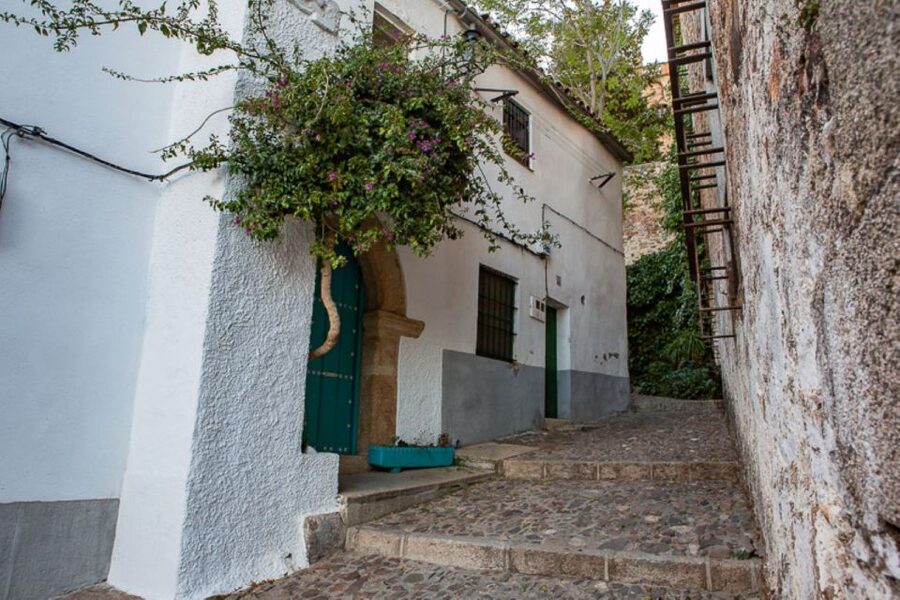
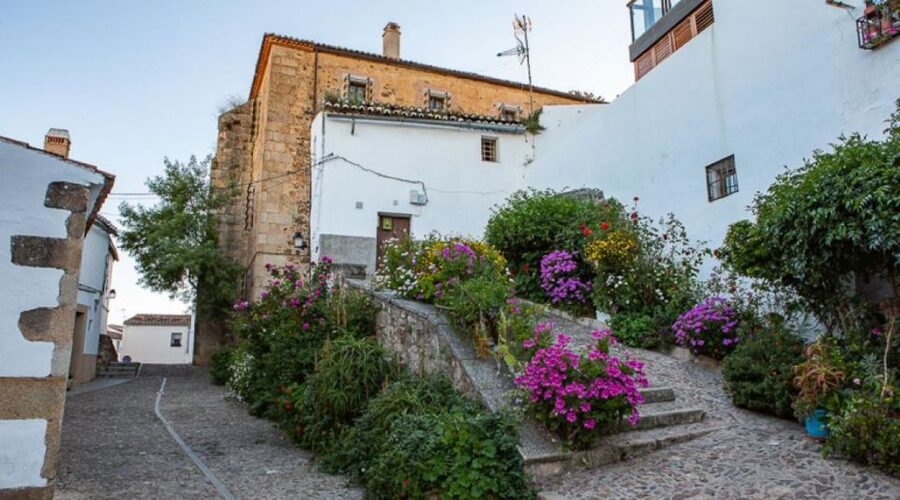
- A clear change of scenery: The tour begins among Cáceres’ grand palaces and towers, then enters the lower, tighter streets of the Jewish Quarter.
- Three interiors may be included: You may visit Carvajal Palace, Becerra Palace, and the Hermitage of San Antonio de Padua when they are open.
- A UNESCO-listed setting: Cáceres’ monumental old town has been recognized as a UNESCO World Heritage site since 1986.
- Jewish heritage is central: The walk explains the former synagogue, Jewish customs, and the material traces left in the quarter.
- Good value at $16: The price includes a guide and possible interior admissions, plus a 20 percent card discount for the Co-Cathedral.
- Best for history-minded walkers: The tour suits you if you want context, not just photographs, but it may feel talk-heavy if you prefer to keep moving.
Why this two-hour route works in Cáceres
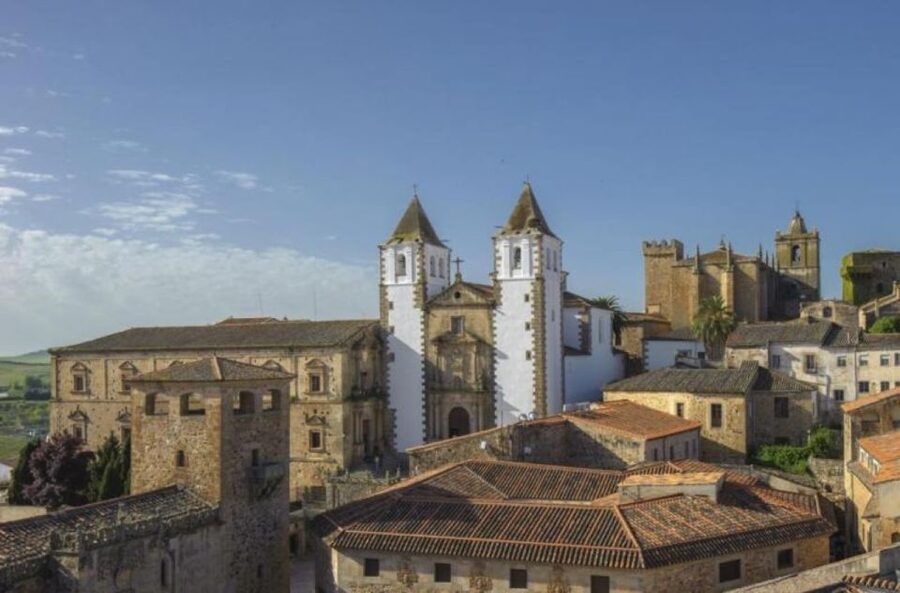
Cáceres is easiest to understand on foot. Its old town is enclosed by walls, and the compact setting lets you move between palaces, religious buildings, lanes, and small squares without transport getting in the way.
This tour focuses on the intramural city, meaning the part within the old walls. That matters because the walls are not just a backdrop. They help explain how Cáceres developed as a medieval center, why streets took their current shape, and why different communities lived in distinct parts of town.
At $16 per person, the walk offers solid value for a short introduction. You are paying for a two-hour official guided visit rather than simply following a map, and admission to three interiors can be included when they are open. The additional 20 percent discount card for the Co-Cathedral adds value if you plan to visit that important church afterward.
The trade-off is time. Two hours is enough for the essential route, but not enough for every corner of Cáceres or a long visit inside each building. One guest felt the guide tried to fit too much historical explanation into the available time. If you want a brisk walk with quick facts, say so politely at the start. If you enjoy detailed stories, you may find the pace worthwhile.
More History Walking Tours in Spain
- Barcelona: Tapas Walking Tour with Food, Wine, and History
★ 4.8 · 4,261 reviews - Barcelona Tapas Walking Tour: Food, Wine & History
★ 4.5 · 1,928 reviews - Madrid Historical Walking Tour
★ 5.0 · 721 reviews
Starting beside the tourist information office
You meet the Pasearte Cáceres guide beside the tourist information office. This is a practical starting point because you are already near the monumental center and can begin on foot without finding a separate transport pickup.
The tour is led by an Official Tourism Guide of Extremadura. That means the guide is authorized by the regional administration and works under the tourism rules of the autonomous community. It is a useful distinction in a city where buildings and religious sites can benefit from careful interpretation.
The guide language is Spanish. Manuela received specific praise for making a fast-moving history lesson work as well as possible, while Javier was praised for taking time with questions and making the visit interesting. Your guide may be different, but those comments suggest that the quality of the experience depends heavily on how much you enjoy spoken explanation.
Groups are described as small in at least one account. That can make a real difference in Cáceres, where narrow lanes and building entrances are not designed for a large crowd. A smaller group also makes it easier to ask questions without turning the walk into a formal lecture.
Carvajal Palace and Cáceres’ medieval core
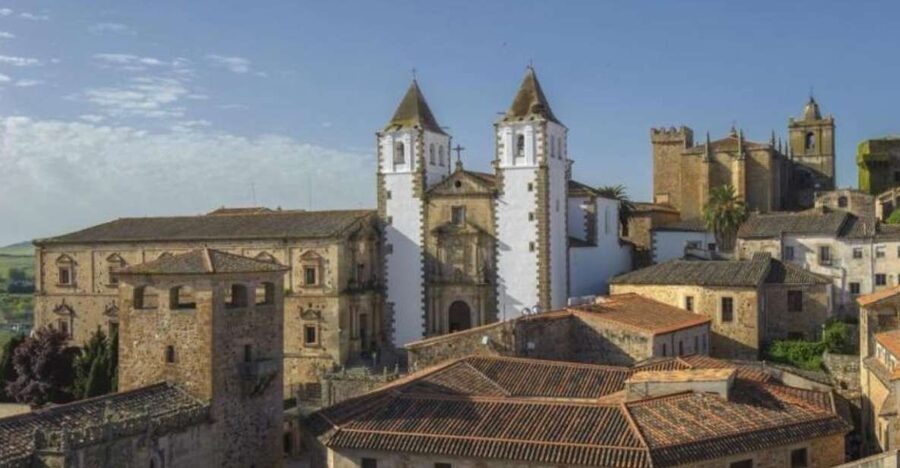
The opening section takes you through the most monumental part of the old town. This is where Cáceres makes its strongest first impression, with stone buildings, historic palaces, towers, and enclosed squares.
Carvajal Palace is one of the key stops. Its inclusion gives the tour a chance to move beyond exterior views, although interior access depends on whether the building is open at the time. When you can enter, the visit helps connect the grand façade with the life of the families who shaped the city.
The route also includes Becerra Palace, home to the Mercedes Calles-Carlos Ballestero Foundation. Again, admission is included when the building is open. This is an especially useful part of the walk for anyone who wants more than a street-level look at Cáceres. A palace interior can show how space, decoration, and household design differed from the modest homes in the Jewish Quarter.
The guide ties these buildings to Cáceres’ rise as a medieval reference point. You will hear about the forces that formed the city and about the cultures that left their mark. The value here is not just learning dates. You begin to see why a city can contain both powerful stone palaces and humble houses within a very short walk.
The shift into the Jewish Quarter
The most interesting part of the route is the physical change as you enter the Jewish Quarter in the eastern section of the walled town. The mood becomes less formal almost at once.
Instead of wide squares, you find narrow alleys. Instead of tall defensive towers and large aristocratic buildings, you see lower homes. Stone remains important, but brick, plaster, and rougher finishes reflect the style of ordinary Extremaduran houses.
That change in architecture gives the history a human scale. The Jewish Quarter was once one of the largest aljamas, or Jewish communities, in the Kingdom of Castile during the 15th century. You are not simply looking at an old neighborhood. You are seeing how social position, community life, and building traditions shaped the town.
I find this contrast more useful than a tour that treats the old city as one uniform monument. The grand center shows power and status. The Jewish Quarter shows a more domestic side of Cáceres, with a different pattern of streets and homes.
The lanes can also make the tour feel slower. The group may need to pause in small spaces while the guide explains what you are seeing. That is where the experience can split opinion. I would rather have the quarter explained properly than rush through it, but you should know that this is not a nonstop sightseeing walk.
More Jewish Heritage Tours in Spain:
- Private Jewish Heritage Journey by Barcelona Dreaming
★ 4.8 · 383 reviews - Budapest Jewish Heritage Memorial Walking Tour & Synagogue Entry
★ 5.0 · 568 reviews - Budapest: Jewish Heritage Guided Tour with Synagogue Ticket
★ 4.8 · 533 reviews - 3-Hour Porto Jewish Heritage Walking Tour with Local Guide
★ 4.5 · 396 reviews
The Hermitage of San Antonio and the former synagogue
The Hermitage of San Antonio de Padua is one of the most important stops in the Jewish Quarter. It is traditionally identified with the site of the former synagogue, later Christianized as a hermitage.
That change of use tells you a great deal about Cáceres’ religious and political history. The building is not presented as a simple, untouched Jewish monument. Its later Christian identity is part of the story, along with the traces of the community that once used the site.
Admission is included when the hermitage is open. Since access depends on opening conditions, you should treat the interior visit as a possible benefit rather than the sole reason to book. Even if the group cannot enter, the guide can still place the building within the quarter and explain its role.
The tour also looks at the material remains of a persecuted culture. These details matter because Jewish heritage is not limited to one surviving building. Customs, traditions, and ways of understanding daily life continued to leave a mark on Cáceres, even after the community faced persecution and major change.
The Jewish Quarter forms part of the Caminos de Sefarad network, which connects some of the best-preserved Jewish quarters in the Iberian Peninsula. That connection gives the visit a wider context. You are learning about Cáceres, but also about the place of Jewish communities within Spain’s long and often difficult past.
What the guide adds to the buildings
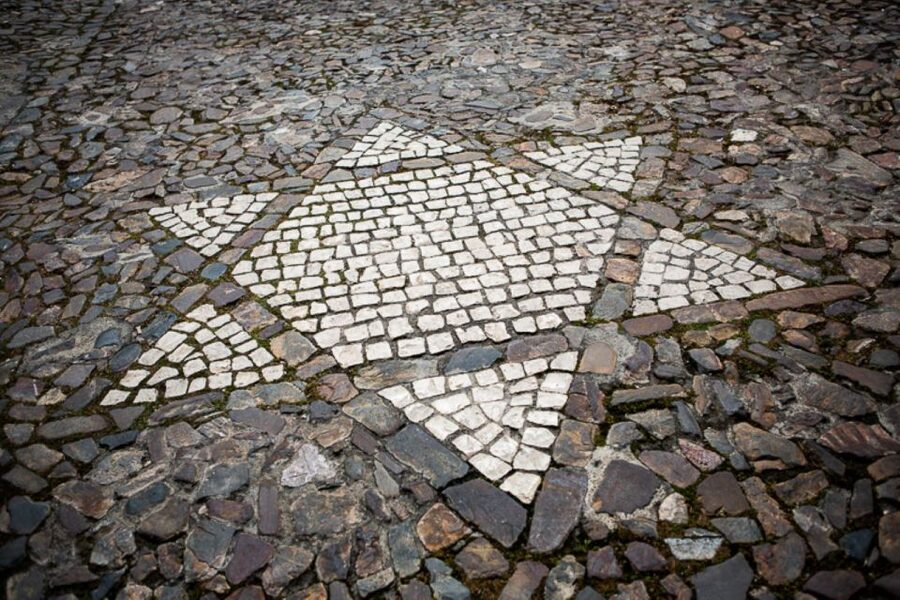
A self-guided walk can show you the same streets, but it may not explain why the buildings look so different from one another. The guide’s job is to connect architecture with culture, religion, and daily life.
The strongest comments about the experience focus on the guides’ preparation and willingness to answer questions. One German-speaking guest described the guide as deeply informed and committed, while Anne from France praised the time given to questions and recommended Javier. Rafael valued the small group and the easy conversation.
Those details point to the best way to use the tour: ask questions. If you want to know how the quarter changed, what remains of the synagogue, or why the homes differ from the palaces, ask while you are there. A two-hour walk can feel much more personal when you take part rather than simply listening.
The language is the key limitation. The tour is offered in Spanish, and the historical explanations may come quickly. If your Spanish is limited, you may miss some of the detail. If you understand Spanish well, the guide’s background as an authorized regional tourism professional should add useful depth.
The pace, group size, and walking effort
The walk lasts two hours and is described as relaxed and unhurried in its aim. In practice, the pace may feel different depending on the guide and the group. Some guests valued the explanations, while one person wanted shorter historical pauses and more movement.
This is not a strenuous excursion based on the information provided, and it is listed as wheelchair accessible. Still, you should expect narrow historic streets and an old-town setting rather than modern, open walkways. The exact access conditions inside each building can vary, especially since admission depends on whether the interiors are open.
A smaller group is helpful here. You can reach entrances more easily, hear the guide in tight streets, and ask questions without speaking across a large crowd. The tour provider is Pasearte Cáceres, and the meeting point beside the tourist information office keeps the start simple.
Wear comfortable shoes and leave room in your schedule after the tour if you plan to visit the Co-Cathedral. The discount card gives you 20 percent off admission there, but the tour itself does not include food or drinks.
Who will get the most from this tour?
I would choose this walk if you want a first orientation to Cáceres before exploring on your own. It covers the major medieval center, introduces two palaces, and gives the Jewish Quarter the attention it deserves.
It is also a good match for anyone interested in Jewish heritage in Spain. The discussion of the former synagogue, the Hermitage of San Antonio, the aljama, and the Caminos de Sefarad network gives the quarter a proper place in the story of the city.
You may not enjoy it as much if you prefer a quick photo stop at every building. The tour gives considerable time to explanation, and one low rating came from someone who felt there was too much standing and listening. That is a fair warning, not a reason to dismiss the walk. It simply tells you to choose it for interpretation rather than speed.
The price makes it easy to justify as a first visit. At $16, the cost is modest for two hours with an official guide and possible access to three interiors. The visit is especially good value if Carvajal Palace, Becerra Palace, and the hermitage are open during your time slot.
Should you book the Cáceres Jewish Quarter walk?
Book it if you want the old town explained rather than merely photographed, especially if you can follow Spanish. The strongest features are the sharp contrast between the monumental center and the Jewish Quarter, the chance to enter several historic buildings, and the guides’ reported care with questions and local detail.
Skip it if your ideal walk keeps moving and gives only short facts. You may find the frequent stops slow, particularly if the guide tries to cover every layer of Cáceres in two hours.
For most history-minded visitors, I think the $16 price is fair. Try to join with enough time afterward to visit the Co-Cathedral using the 20 percent discount card, and ask at the beginning about the day’s planned interiors. That will help you know exactly what this compact but information-heavy walk can deliver.
FAQ
Where does the tour meet?
You meet the Pasearte Cáceres guide beside the tourist information office.
How long does the walking tour last?
The tour lasts two hours.
What language is the tour offered in?
The live guided tour is offered in Spanish.
Is the tour wheelchair accessible?
Yes, the activity is listed as wheelchair accessible.
Which interiors may be included?
When they are open, the tour includes admission to Carvajal Palace, Becerra Palace, and the Hermitage of San Antonio de Padua.
Does the tour include the Co-Cathedral?
The tour does not include Co-Cathedral admission, but you receive a card offering 20 percent off entry.
Does the price include food and drinks?
No. Food and drinks are not included.
What is the cancellation policy?
You can cancel up to 24 hours in advance for a full refund. You can also reserve now and pay later.
Just added around Spain
- Essential Madrid: Walking Tour of the Historic Center★ 4.7 · 58 reviews
- Discover the fascinating Alcazaba: History and unique views★ 4.8 · 30 reviews
- Private Jewish Heritage Journey by Barcelona Dreaming★ 4.8 · 383 reviews
- Cordoba: Segway Tour historic center★ 4.5 · 21 reviews
- Cartagena: Ancient Roman Walking Tour with Entry Tickets★ 4.5 · 89 reviews
- Bilbao Historical Tour in small group★ 4.7 · 52 reviews
- Barcelona Tapas Tour, Taverns, History & Local Culture★ 5.0 · 25 reviews
- Barcelona: The Spanish Civil War Historical Walking Tour★ 4.9 · 239 reviews
Jewish Heritage Tours, compared.
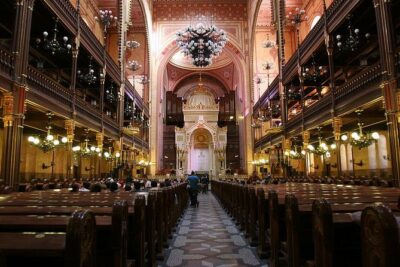
Budapest Jewish Heritage Memorial Walking Tour & Synagogue Entry
Read our review →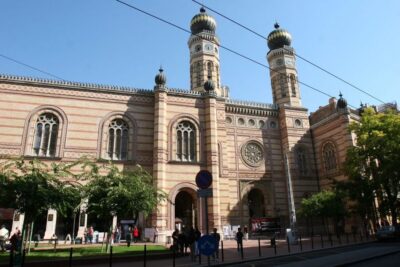
Jewish Heritage Guided Tour with Synagogue Ticket
Read our review →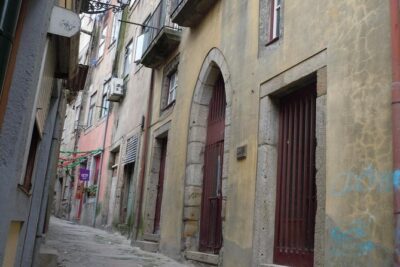
3-Hour Porto Jewish Heritage Walking Tour with Local Guide
Read our review →
Private Jewish Heritage Journey by Barcelona Dreaming
Read our review →

Anne Frank and the Jewish History of Amsterdam Private Tour
Read our review →
Lisbon Jewish Heritage and History – Private Tour Van
Read our review →
Browse the lists this tour appears in