
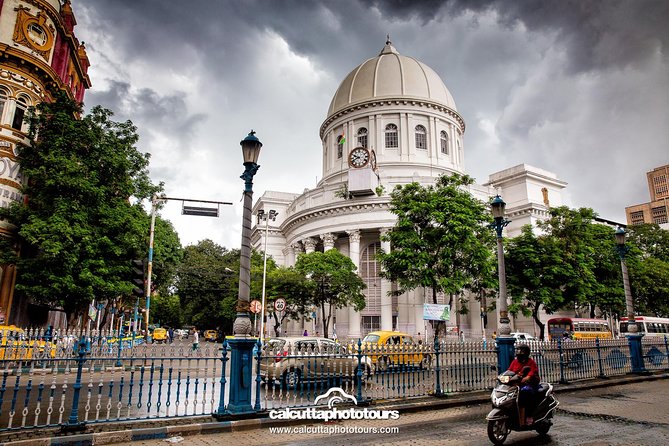
Review · KOLKATA
Kolkata’s English History – European Calcutta Tour
Old Calcutta rewards a slow, curious walk. This three-hour tour follows the colonial heart of Kolkata around B. B. D. Bagh, linking old churches, grand civic buildings, and the former center of British power. I like the way it uses architecture as a doorway into local history, and I especially like that guide Manjit brings humor, personal insight, and a clear love for Kolkata to the walk. Tea or coffee, water, and snacks add a welcome pause.
The main consideration is that this is a history and architecture tour, not a broad introduction to all of Kolkata. The route focuses on the European Calcutta district, and some sights are appreciated mainly from the outside. The streets can also be lively and crowded, so you should expect a city walk rather than a quiet museum visit.
What makes this Kolkata walk worth your time
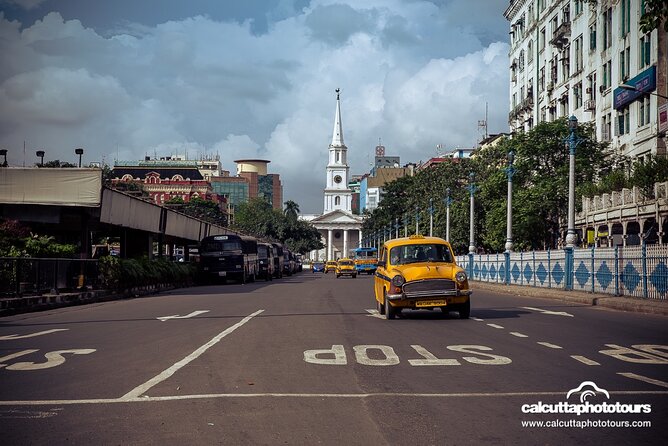
- B. B. D. Bagh sets the scene: Begin in the former Dalhousie Square, once the center of Calcutta’s commercial and administrative life.
- Manjit is the key attraction: His storytelling, humor, photography, and personal connection to the city give the tour its strongest human touch.
- Historic buildings come with context: The Great Eastern Hotel, St. Andrew’s Church, St. John’s Church, and Government House are tied together through stories about colonial power and urban growth.
- The small group limit matters: With no more than 15 people, you have a better chance to hear the guide and ask questions.
- A tea break keeps the pace comfortable: Coffee or tea, water, and snacks are included, a useful touch during a three-hour walk.
- The route is easy to place in your day: It starts at The LaLiT Great Eastern Kolkata and finishes at St. John’s Church, both in or near B. B. D. Bagh.
Start at The LaLiT Great Eastern Kolkata
The tour begins at The LaLiT Great Eastern Kolkata on Old Court House Street, beside the district once called Dalhousie Square. This is a fitting starting point. The hotel itself is linked to the old colonial center, and the surrounding streets quickly place you in the part of Kolkata shaped by British administration and trade.
You can book the experience with or without hotel transfers. That flexibility matters because the meeting point is near public transportation, and many people staying in central Kolkata may prefer to reach it independently. If you choose the transfer option, confirm the pickup details when booking, since the available information only states that pickup is offered.
The start time can be arranged with some flexibility. That is useful in Kolkata, where heat, traffic, and your own sightseeing plans can affect the best hour for a walk. Ask for a time that works with your schedule, but remember that the experience lasts about three hours.
Your guide, Manjit, is central to the character of this tour. His style is not simply a recital of dates and names. He connects buildings with the people, decisions, and ambitions that shaped the city. His storytelling has been praised for making history feel more immediate, while his humor and personal observations help keep the walk from becoming a dry architecture lesson.
A few more history tours around India worth a look
- Fontainhas Heritage Walk by Make It Happen
★ 5.0 · 2,834 reviews - The Great Indian Food Tour: Old Delhi Food and Heritage Walk
★ 5.0 · 1,698 reviews - Old Goa Heritage Walk by Make It Happen
★ 5.0 · 797 reviews
B. B. D. Bagh and the birth of colonial Calcutta
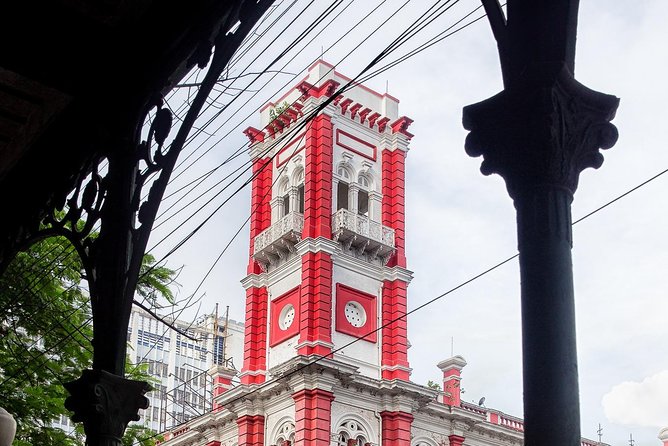
B. B. D. Bagh, formerly Dalhousie Square, is the main setting for the tour. This large historic area was once the central business district and the nerve center of Job Charnock’s Calcutta. From here, you begin to see how the city grew around commerce, government, shipping, and the British East India Company.
This is where the tour gives you its broadest sense of place. Instead of looking at one old building in isolation, you can consider the square as a working center of power. Streets, offices, churches, hotels, and government buildings all helped create the city that was later described as one of the finest in Asia.
The focus is not only on British achievements. The strongest parts of a colonial history walk should also make you think about who held power, who did the work, and how local life changed under foreign rule. Manjit’s approach has been praised for offering an honest view of colonial Kolkata rather than presenting the period as a polished postcard.
Bring a camera if you enjoy urban details. The route offers many chances to photograph façades, columns, windows, church buildings, and the changing layers of old and modern Kolkata. You do not need to be an architecture expert. The guide supplies the details that help you notice what you might otherwise pass without a second glance.
The Great Eastern Hotel and the social side of empire
The Great Eastern Hotel gives the walk a different angle. Government offices explain official power, but a grand hotel points to the social world built around commerce, travel, status, and European life in Calcutta.
The building helps show that colonial Kolkata was not only a place of administration. It was also a city of hotels, clubs, business meetings, formal dinners, and visitors passing through. The hotel’s place near the old center makes it a useful bridge between the city’s commercial history and its architectural past.
I like this part of the route because it gives the story a human scale. You can think about how the city functioned day to day, not only how rulers drew boundaries or managed institutions. The guide’s personal stories and observations are particularly valuable here, since a building often tells only part of its own story.
Do not expect an extended hotel visit or a separate hotel tour. The value comes from the explanation and the setting. If you want to stay longer for photographs, ask the guide how much time the schedule allows.
St. Andrew’s Church and the city’s religious divisions
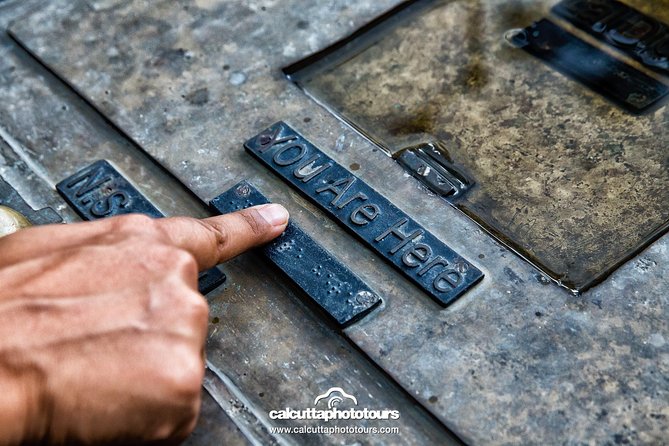
St. Andrew’s Church adds a religious layer to the walk. Colonial Calcutta was shaped by several European communities, and churches help show how identity and authority were organized within the city.
A church stop can seem quieter than a government building, but it helps explain the social structure behind the architecture. Religious buildings were places of worship, but they also reflected the presence and influence of particular communities. The guide’s job is to connect that visible structure with the larger story of European Calcutta.
This is also a good point to notice the contrast between the old European district and the wider city around it. Kolkata was never only a British city. Its streets were formed by many communities, languages, occupations, and traditions. A colonial walk is most useful when it helps you see that contrast rather than forgetting it.
The supplied details do not promise interior access at every stop, so you should be prepared to appreciate St. Andrew’s Church from the outside if entry is not available. The walk’s emphasis is on history, architecture, and explanation, not guaranteed admission to every building.
Same place, a different slice of the past:
- Old Delhi Food, Heritage&Cultural Walk with Rickshaw ride to Masterji Kee Haveli
★ 5.0 · 742 reviews - Blue City Heritage Private Walking Tour With Pickup and Drop-Off
★ 5.0 · 441 reviews - Kolkata Heritage Tram Tour
★ 4.0 · 395 reviews - Private Heritage Walking Tour in Jaisalmer Fort and Old Bazaar
★ 5.0 · 306 reviews
Government House and the machinery of power
Government House, also known as Raj Bhavan, represents the formal side of British rule. This is the kind of building that makes the political story visible. Its scale and position reflect the authority once concentrated in this part of the city.
Here, the guide can help you move beyond the usual question of who built a structure and ask what it was meant to communicate. Large official buildings were designed to project order, permanence, and control. They were part of the visual language of empire.
This stop is especially useful if you are trying to understand why B. B. D. Bagh mattered so much. The area was not simply attractive old Kolkata. It was a place where decisions were made, money moved, and colonial authority was displayed.
The drawback is that you should not expect a full palace tour. The attraction lies in the exterior setting and the explanation of its role. Photography may also be limited in places, so follow the guide’s instructions and avoid treating government buildings like ordinary façades.
St. John’s Church brings the route to a close
The walk ends at St. John’s Church on Council House Street, opposite Dewars Garage near Lal Dighi. This makes practical sense. You finish inside the same historic district where the tour began, but with a more complete sense of how its buildings relate to one another.
St. John’s Church is one of the most important stops because it brings together religion, colonial society, memorials, and architecture. The end of the tour gives Manjit a chance to tie the individual stories into a larger account of how Calcutta developed.
Ending at St. John’s is also useful for the rest of your day. You are near B. B. D. Bagh and public transportation, so you can continue exploring on foot or make your way elsewhere. The tour does not return you to your hotel automatically unless you book a transfer arrangement, so plan your onward route before setting out.
Why the guide matters more than the buildings
Kolkata has plenty of old buildings. You can photograph many of them without paying for a tour. The reason to book this walk is the interpretation.
Manjit has been praised for turning history lessons into stories with movement and personality. His approach combines historical context with humor, personal anecdotes, photography, and close observation. That mix is useful because colonial architecture can otherwise feel distant or repetitive.
The guide also appears to work well with both first-time visitors and people who already know Kolkata. The experience has helped some local participants learn more about their own city, while newcomers have used it to get their bearings and understand the old center.
I would not choose this tour if you want a silent, self-guided stroll or a quick checklist of famous sights. I would choose it if you enjoy asking why a building exists, who used it, and what its presence says about the city around it.
Small group, refreshments, and walking comfort
The maximum group size is 15 people. That is not a private tour, but it is small enough to make questions possible and keep the guide’s voice within reach. A much larger group would weaken the storytelling, especially on busy city streets.
Tea or coffee, water, and snacks are provided. This is a small feature, but it makes a difference during a three-hour walk. You get a short pause to absorb what you have seen, and the drink gives the tour a more relaxed rhythm.
Wear comfortable shoes and dress for a city walk. The supplied information confirms that most people can participate, but it does not give detailed accessibility information. If you have specific mobility needs, contact the provider before booking and ask about the exact route and walking conditions.
The tour is listed at $40.28 per person. For that price, the value depends on how much you want interpretation. If you only want to see the buildings, you can explore the area independently. If you want the history of Job Charnock’s Calcutta, British influence, church communities, civic power, and architectural details explained in one organized walk, the price is reasonable.
The maximum group size, refreshments, flexible start time, and possible pickup also add practical value. Still, keep your expectations clear: this is a focused three-hour experience, not a full tour of Kolkata.
Who should book the European Calcutta tour?
I would recommend it to first-time visitors who want a clear introduction to central Kolkata before exploring on their own. It also suits people interested in architecture, colonial history, photography, and urban storytelling.
Local residents and repeat visitors may enjoy it for a different reason. Manjit’s personal connection to Kolkata can reveal details you have passed many times without noticing. The walk has also worked well as an orientation experience for people beginning work or a project in the city.
Families with older children may find the stories more engaging than a formal museum visit, though the information provided does not specify a minimum age. History students, photographers, and anyone curious about how Calcutta became a major center of the British Empire should find plenty to consider.
I would skip it if you have only a short time in Kolkata and want to see many distant parts of the city. The route stays concentrated around B. B. D. Bagh. That focus is its strength, but it also means you will not cover the city’s markets, temples, neighborhoods, or later cultural history.
Final call: book it for stories, not just sights
Book this tour if you want Kolkata’s colonial center explained by a guide who clearly cares about the city. The strongest reasons are Manjit’s storytelling, the focused route through B. B. D. Bagh, and the chance to connect the Great Eastern Hotel, St. Andrew’s Church, Government House, and St. John’s Church into one story.
Skip it only if you prefer to explore independently or need a tour with guaranteed interior access at every stop. For most visitors with three hours to spare, this is a useful and personable way to understand the old European quarter before going deeper into Kolkata on your own.
The tour has a 4.9 rating from 19 published ratings, with 100 percent recommending it. You can cancel for a full refund up to 24 hours before the start time. If the minimum number of participants is not met and the experience is canceled, you are offered another date or experience, or a full refund.
FAQ
Where does the tour start?
The tour starts at The LaLiT Great Eastern Kolkata, at Dalhousie Square, 1, 2, 3 Old Court House Street, Kolkata.
Where does the tour end?
It ends at St. John’s Church, 2/2 Council House Street, near Lal Dighi in B. B. D. Bagh.
How long does the tour last?
The tour lasts approximately three hours.
Is hotel pickup available?
Pickup is offered, and the tour can be booked with or without hotel transfers.
What is included during the tour?
Coffee or tea, water, and snacks are provided. Admission for the stated tour is included.
How many people can join the tour?
The maximum group size is 15 people.
Can I cancel for a refund?
Yes. You can cancel at least 24 hours before the local start time for a full refund. Cancellations or changes made less than 24 hours before the start time are not refunded or accepted.
Just added around India
- Raj Heritage Walk★ 5.0 · 93 reviews
- British Raj Heritage walk in Kolkata with guide★ 5.0 · 54 reviews
- Mattancherry Heritage Tour by The Kochi Heritage Project★ 5.0 · 19 reviews
- Jewish Heritage Tour of Cochin★ 5.0 · 33 reviews
- Fort Cochin Heritage Tour by The Kochi Heritage Project★ 5.0 · 85 reviews
- Private Guided Heritage and Cultural Tour in Khajuraho★ 5.0 · 19 reviews
- Zamorin’s Tales by Tyndis – Calicut Heritage Walk★ 4.5 · 18 reviews
- Jodhpur Heritage Walk★ 5.0 · 85 reviews
India History Tours, compared.
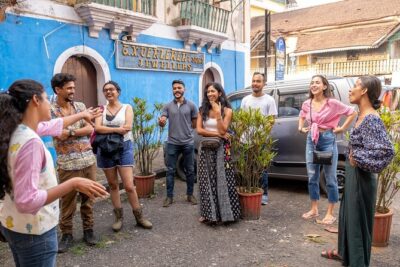

The Great Indian Food Tour: Old Delhi Food and Heritage Walk
Read our review →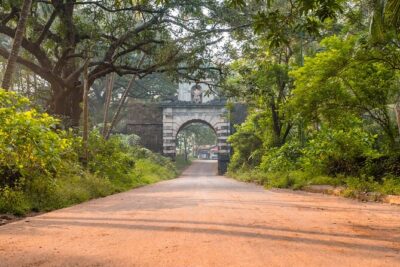

Old Delhi Food, Heritage&Cultural Walk with Rickshaw ride to Masterji Kee Haveli
Read our review →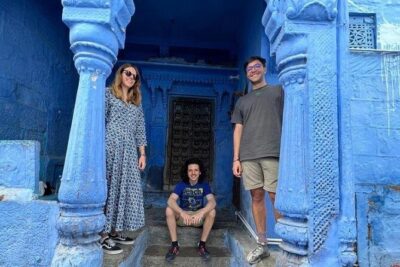
Blue City Heritage Private Walking Tour With Pickup and Drop-Off
Read our review →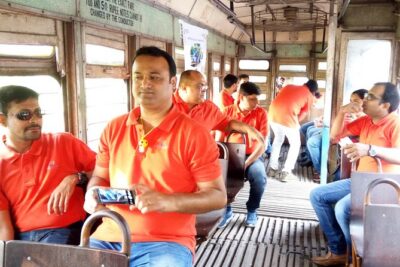
Private Heritage Walking Tour in Jaisalmer Fort and Old Bazaar
Read our review →
Old Delhi Food-Spice Market-Temples Tour Soon Featured on NETFLIX
Read our review →Browse the lists this tour appears in