
Review · MASSACHUSETTS
Boston: Tour of The Freedom Trail with Historic North End
History gets better with a good storyteller. This 105-minute walk links Boston Common, the Freedom Trail, and the North End with a colonial-costumed guide who turns old stones into human stories. I especially like the 1.3-mile route through the city center and the added visit to Paul Revere’s House. I also like the way guides such as Elena, known as Mother Goose, and Jeremiah Poole use humor, period dress, and sharp detail to keep the past moving. The main catch is simple: it is a walking tour, and some stops involve standing while you listen.
At $26 per person, this is a fair deal if you want an introduction to Boston’s revolutionary past without paying museum admission fees. The tour covers a lot in less than two hours, but storytelling can take priority over seeing every site up close. One past group also missed Paul Revere’s House, so pacing may depend on the size of the group and the guide.
Key points at a glance
- The route reaches the North End: You go beyond the central Freedom Trail to Paul Revere’s House and Paul Revere Mall.
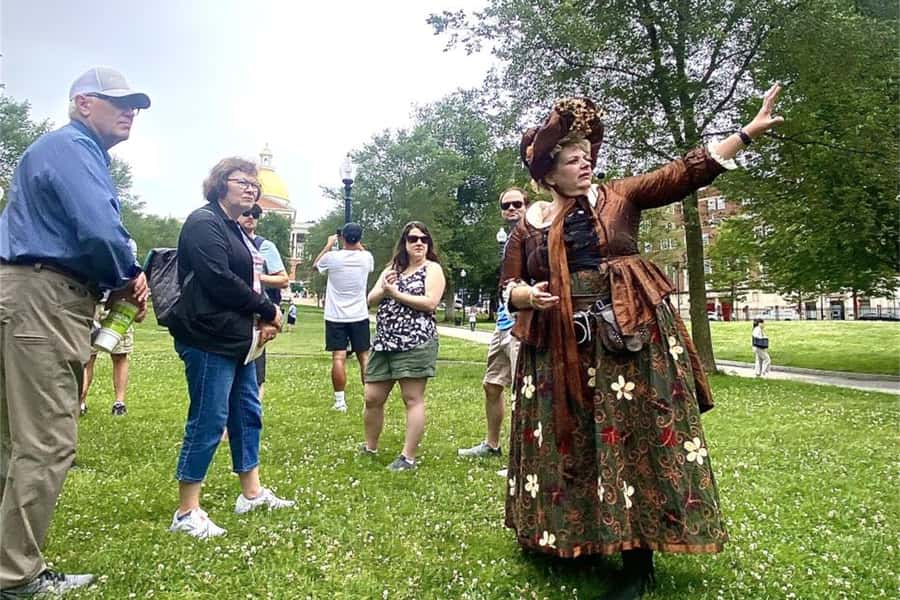
- Colonial dress adds theater: Guides use character, stories, and sometimes music to make the history easier to follow.
- You see the major downtown landmarks: Boston Common, Granary Burying Ground, the Old State House, the Boston Massacre Site, and Faneuil Hall are all part of the walk.
- The tour lasts about 105 minutes: Plan for up to two hours because the stated duration is an estimate.
- It is good value at $26: Guided interpretation costs less than many paid attractions, though entry inside museums and historic buildings is not included.
- The walk is accessible but not effortless: The activity is wheelchair accessible, yet you should expect outdoor walking and periods of standing.
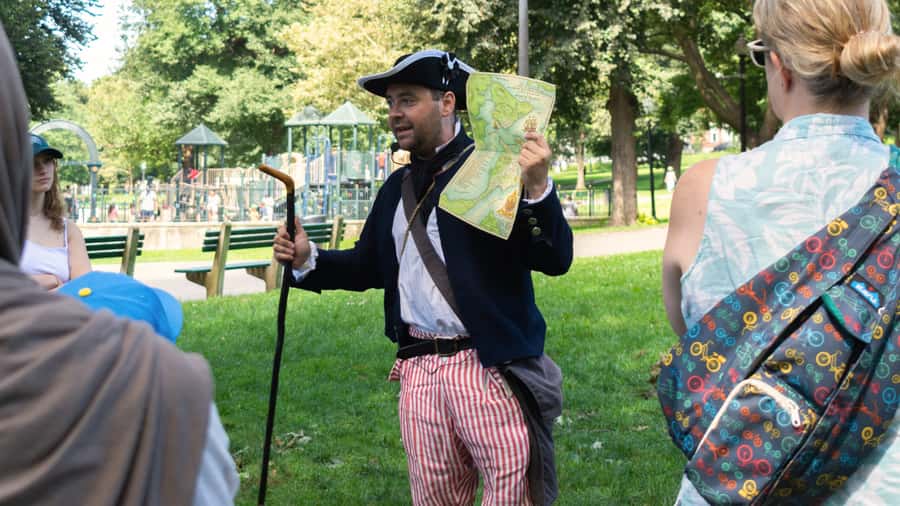
Starting at Boston Common with a colonial guide
Meet at 139 Tremont Street, the Boston Common Visitor Center, at the edge of America’s oldest public park. Arrive 15 minutes early. The guide leaves on time, and finding the right person in a busy area is easier when you are not rushing.
The colonial costume is more than a photo prop. It gives the guide a role to play and helps separate this walk from a plain street lecture. Steve, one of the guides, kept his period clothing on during a cold outing and used humor to hold the group’s attention. Other guides, including Catherine, Ben, Anna, and Jeremiah Poole, have been praised for clear explanations and lively delivery.
The opening portion sets the scene in Boston Common before turning toward the political center of colonial Boston. You are not simply following red bricks from one marker to the next. The guide explains how the places fit together, which is useful if this is your first look at the city.
Still, the tour is only in English. If you are unfamiliar with the American Revolution, some names and events may come quickly. I would read a short overview of the period before you arrive, especially if you are visiting from outside the United States.
A few more history tours around Boston worth a look
- Boston: Freedom Trail History Small Group Walking Tour
★ 5.0 · 6,450 reviews - Tour of Historic Fenway Park, America’s Most Beloved Ballpark
★ 4.5 · 3,013 reviews - Boston Food & History: Pizza, North End & Freedom Trail
★ 5.0 · 1,772 reviews
From the State House to Park Street Church
The Massachusetts State House is one of the first important sights. You get a photo stop and an explanation of its place in Boston’s civic story, though the tour does not include an interior visit.
Park Street Church follows. The church is a familiar Freedom Trail landmark, and the guide uses it to add religious and social context to the colonial city. This is a good example of the tour’s method: you stop at a building, hear why it mattered, then continue on foot rather than spending time inside.
The route is not hard in the sense of a long hike, but it is not a bus tour. You move through city streets, stop often, and listen in open public spaces. Comfortable shoes are essential. In rain or cold weather, the experience depends heavily on your clothing and your guide’s energy.
Granary Burying Ground and the people behind the names
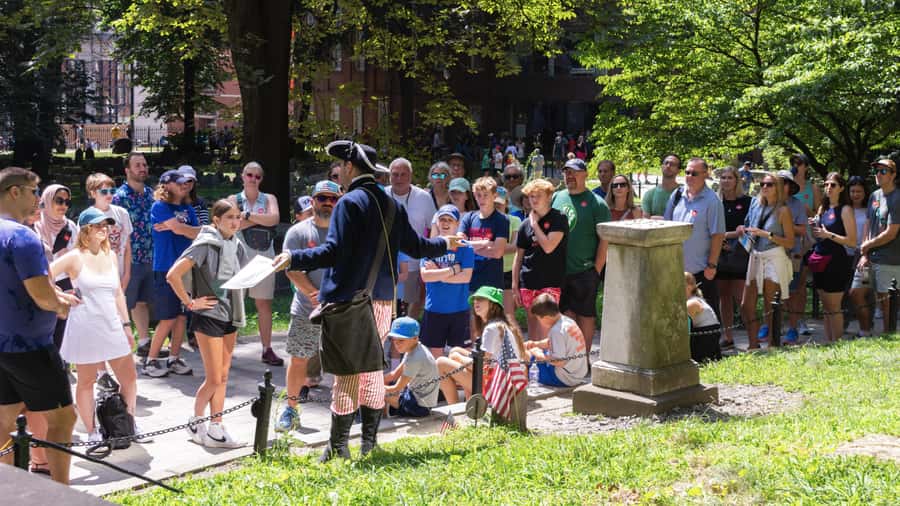
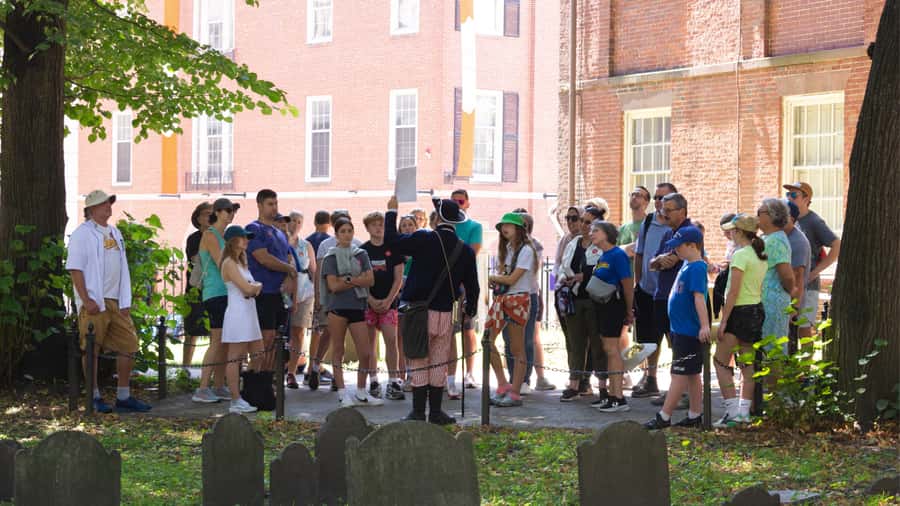
Granary Burying Ground is one of the strongest stops on the route. The burial ground contains the graves of major American figures from the revolutionary period, including figures commonly associated with the country’s founding.
Here, the guide can make the past feel personal. Instead of treating the cemetery as a list of famous names, the storytelling connects the people buried there to the political arguments and dangers of their time. You should expect to walk through or around the site and listen rather than receive an extended private visit.
King’s Chapel Burying Ground comes next as a pass-by and guided stop. Together, the two burial grounds show how close the early city was packed around its churches, meeting places, and public buildings. If you enjoy details about individual people, this section may be one of the most rewarding parts of the tour.
If you have trouble standing for several minutes, tell yourself honestly that this may be tiring. One participant found the walking easy but noted that the tour involved quite a bit of standing while the guide spoke. That is useful advice for anyone with limited mobility, even though the activity is listed as wheelchair accessible.
Boston Latin School and Franklin’s bronze likeness
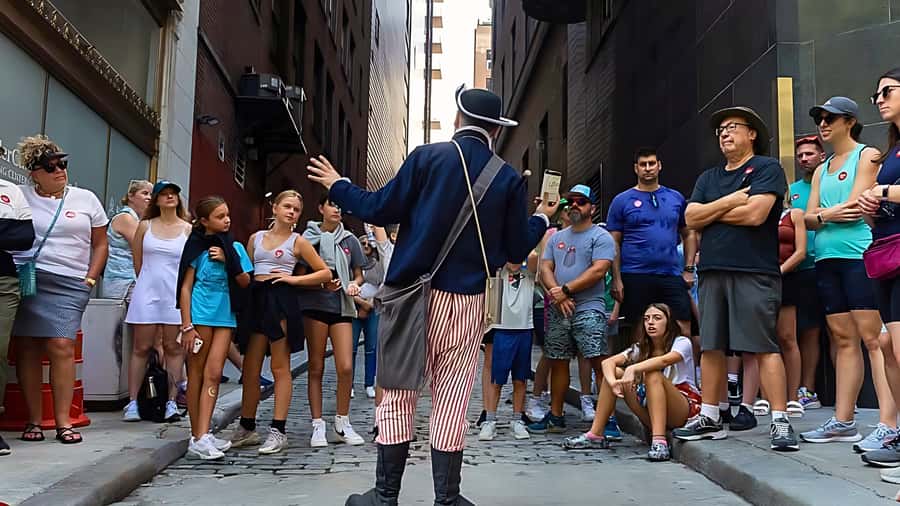
The walk then reaches the site of Boston Latin School and the Benjamin Franklin statue. The school is presented as America’s first public school, while Franklin gives the guide a chance to connect Boston’s local story with a wider American life.
This is a short stop, but it helps show how education and public debate shaped the city. You will have time for photographs and a spoken explanation, not a classroom visit.
The Old Corner Book Store is another quick but worthwhile pause. Its name points to Boston’s long connection with publishing and books. The value here is not only the building itself. The guide helps you notice how many layers of the city’s past sit along an ordinary-looking downtown street.
Same place, a different slice of the past:
- Boston: Freedom Trail History Small Group Walking Tour
★ 4.9 · 1,590 reviews - City Cruises Boston Historic Sightseeing Harbor Cruise
★ 4.5 · 1,388 reviews - Boston Pizza Lovers Food and History Walking Food Tour
★ 4.5 · 1,082 reviews - Boston Freedom Trail History Pub Crawl Small-Group Tour
★ 5.0 · 996 reviews
Old South Meeting House and the road to rebellion
At Old South Meeting House, the story turns more directly toward protest and revolution. The building is linked to public debate and the events that led toward the Boston Tea Party.
The route also covers the site of the Boston Tea Party. This stop matters because it places the famous protest within the wider argument over taxation, representation, and British authority. A good guide can turn a familiar schoolbook event into a tense local dispute involving real people and immediate risks.
You should know that the tour does not include admission inside Old South Meeting House or any other museum or attraction. You see the sites from the route and hear live narration. If you want interior displays, plan a separate visit and budget for admission.
The guide’s personality matters most here. Elena, called Mother Goose, has been especially praised for keeping the stories entertaining while explaining the details. Jeremiah Poole has also been praised for handling a large group while making sure people could hear him. That may be important on busy dates, since the group can be much larger than a private walking tour.
The Old State House and Boston Massacre Site
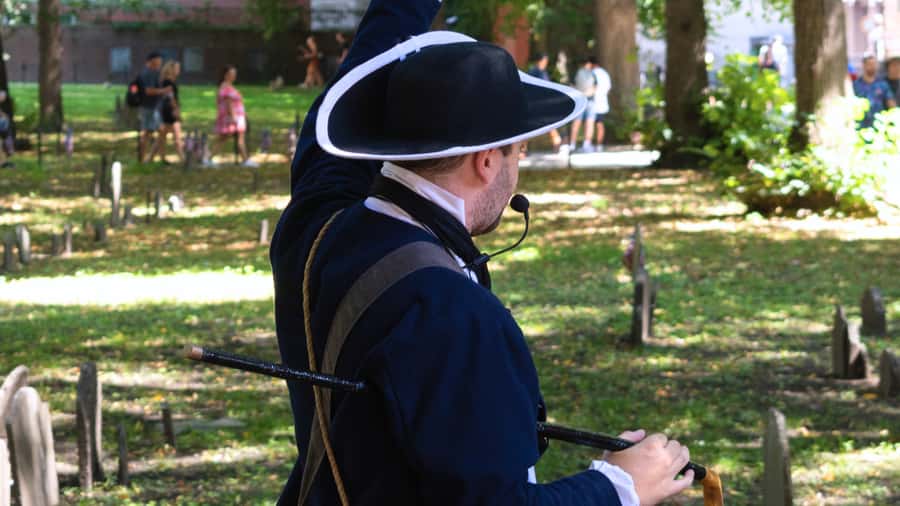
The Old State House is one of the walk’s key political landmarks. Its location helps you picture the old city as a compact place where government, commerce, protest, and public rumor all met within a few streets.
Nearby, the Boston Massacre Site marks one of the most charged moments before the Revolution. This is the kind of stop where a guide’s explanation is more useful than a quick photograph. The event is often reduced to a single phrase, but the guide can explain why it stirred anger and why the competing accounts mattered.
The tour pauses for photos and narration, but the sidewalks around these landmarks can be crowded. One person found it hard to hear every detail in busy areas. I would stay close to the guide and avoid drifting to the back of the group.
The best guides make the political history understandable without flattening it into heroes and villains. Ben has been praised for knowing the facts by heart while keeping the walk fun. That balance is valuable in Boston, where every corner can tempt a guide to give a ten-minute speech.
Faneuil Hall, then a welcome change of scenery
Faneuil Hall marks the end of the standard downtown portion of the route. You see the building, hear about its role in public debate, and then continue into the North End.
This change is one of the tour’s strongest features. Many Freedom Trail walks stop around Faneuil Hall, but this one keeps going. You trade the broad public spaces of downtown for narrower streets and a neighborhood with a different feel.
The route information describes Faneuil Hall as a photo and guided stop, not an interior museum visit. That distinction matters. You get the setting and the story, but you should not expect a full building tour.
At this point, the group may be ready for a slower pace. The stated duration is 105 minutes, but you should allow up to two hours. Guides sometimes spend extra time on a story, and that can mean less time at a later stop. One person enjoyed the tour but felt the storytelling ran long and that Paul Revere’s House was missed. I would treat the schedule as flexible rather than counting on equal time at every landmark.
Entering the North End and reaching Paul Revere’s House
The North End section gives this experience its added value. You continue into Boston’s historic Italian-American neighborhood and follow the revolutionary story beyond the central Freedom Trail.
Paul Revere’s House is the headline stop. It connects the political events downtown with one of the individuals most associated with the beginning of the Revolution. The tour includes a photo stop and guided explanation, but interior admission is not included.
The house is especially useful for families and first-time visitors because it gives the history a clear human focus. You are no longer dealing only with churches, meeting halls, and burial grounds. You are looking at the home of a person whose work and reputation became part of the national story.
The North End streets can be crowded, and the change from broad sidewalks to tighter passages may affect how easily everyone hears. Stay near the guide. If your group is large, ask questions during a natural pause rather than waiting until the final minutes.
The walk finishes at Paul Revere Mall, a fitting endpoint with its connection to the North End story. The supplied meeting details also describe the activity as ending back at the meeting point, so check the exact end instructions when you book. Either way, do not plan a tight restaurant reservation immediately afterward.
What the guides do especially well
The most praised part of this experience is the live interpretation. The strongest guides are not simply reciting dates. They use character, wit, and small human details to make the story stick.
Steve has been praised for being entertaining before the tour even began. Jeremiah Poole has been praised for keeping a large group laughing while making the facts clear. Elena, or Mother Goose, earned repeated praise for an engaging style that made the walk feel lively rather than academic. Captain Pickles was also described as both fun and well informed.
The tone can vary from guide to guide. That is normal for a character-led tour. You may get a more theatrical performance, a more traditional history lesson, or a mix of both. The supplied experiences suggest that the quality of narration is usually a strength, but a crowded street or large group can affect how much you hear.
If you want a quiet, highly structured lecture, this may not be your ideal format. If you learn best through stories and personality, it is a strong choice.
The $26 question: is the value there?
At $26, I think the tour offers solid value. You get about two hours of guided history, a costumed interpreter, and a route covering many of Boston’s major landmarks. You also avoid spending time trying to decode the Freedom Trail map on your own.
The price does not include admission inside museums or historic buildings. That keeps the initial cost down, but you should add separate admission if you want interiors. The tour itself is mainly an outdoor walk with narration and photo stops.
The value is highest on your first day in Boston. The guide helps you get oriented, shows you the historic core, and leaves you free to return later to the buildings that interest you most.
It is less useful if you already know the Freedom Trail well and prefer to set your own pace. You may want more time at Granary Burying Ground, Old South Meeting House, or Paul Revere’s House than a group schedule allows.
Weather, pace, and practical comfort
Wear comfortable shoes and weather-appropriate clothing. The tour runs in outdoor public spaces and may continue in rain, as one outing did. A rainy day will not necessarily cancel the experience, but it can make listening and photography less pleasant.
The activity is wheelchair accessible, yet accessibility does not remove every practical challenge. You still need to manage city sidewalks, group movement, and periods of standing. If you need frequent seated breaks, contact the provider before booking to confirm the current route and arrangements.
The tour is in English only. Arrive 15 minutes early at the Boston Common Visitor Center. Free cancellation is available up to 24 hours before the start, and you can reserve now while paying later, which helps if your Boston plans are still shifting.
Who should book this Freedom Trail walk?
I would recommend it to first-time Boston visitors, families with older children, and anyone who wants the main Freedom Trail story without spending a full day inside museums. The cost is modest, the route covers important ground, and the North End extension gives it more reach than a basic downtown walk.
It also suits people who have walked the trail alone but felt they were missing the meaning behind the markers. One person who had previously navigated the trail without a guide learned much more with the storytelling.
I would be cautious if you dislike group tours, standing, or theatrical presentation. I would also avoid scheduling it immediately before a fixed appointment because the tour can last close to two hours and crowded conditions may slow the group.
Should you book it?
Book this tour if you want Boston’s revolutionary story delivered by a lively human guide rather than a phone app. The North End extension, Paul Revere’s House, and the strong record of entertaining guides make it a better choice than a short Freedom Trail overview.
Skip it if you want long interior visits, a private pace, or a guarantee of equal time at every stop. For $26, though, it is a sensible first look at Boston, especially if you arrive prepared for walking, standing, and changing weather.
FAQ
How long does the Boston Freedom Trail tour last?
The scheduled duration is 105 minutes. The activity information advises planning for up to two hours because the actual timing is an estimate.
Where does the tour begin?
It begins at 139 Tremont Street, Boston, Massachusetts 02108, at the Boston Common Visitor Center.
How early should I arrive?
Arrive 15 minutes before the scheduled start. The tour leaves on time.
Where does the tour finish?
The route finishes at Paul Revere Mall in the North End. The meeting information also describes the activity as ending back at the meeting point, so confirm the exact end details when booking.
Does the tour include Charlestown?
No. It covers the standard central section of the Freedom Trail and continues into the historic North End, but it does not cover Charlestown.
Is admission to Paul Revere’s House included?
No. Admission inside Paul Revere’s House and other museums or attractions is not included.
Is the tour wheelchair accessible?
Yes, the activity is listed as wheelchair accessible. You should still expect outdoor walking and periods of standing.
What language is the tour in?
The live tour is conducted in English.
What should I bring?
Bring comfortable shoes and clothing suited to the weather.
Can I cancel for a refund?
Yes. You can cancel up to 24 hours in advance for a full refund. You can also reserve now and pay later.
Just added around Boston
- Boston: Underground Railroad History Tour of Beacon Hill★ 4.9 · 38 reviews
- Boston: Ultimate Historic Food & Drink Tour★ 4.7 · 20 reviews
- Boston: Seafood Tasting & Historical Walking Tour★ 5.0 · 28 reviews
- Boston: Historic Pubs Walking & Ferry, Food & Drink Tour★ 4.9 · 56 reviews
- Boston History & Highlights Tour: From Revolution to Today★ 4.8 · 178 reviews
- Boston: History & Haunts Guided Ghost Tour★ 4.3 · 154 reviews
- Boston: Haunted Pub Crawl of Historic Pubs and Taverns★ 4.6 · 127 reviews
- Boston: 2-Hour Historic Walking Tour★ 4.7 · 88 reviews
Boston History Tours, compared.
Freedom Trail History Small Group Walking Tour
Read our review →
Tour of Historic Fenway Park, America’s Most Beloved Ballpark
Read our review →
Boston Food & History: Pizza, North End & Freedom Trail
Read our review →Freedom Trail History Small Group Walking Tour
Read our review →
City Cruises Boston Historic Sightseeing Harbor Cruise
Read our review →
Boston Pizza Lovers Food and History Walking Food Tour
Read our review →
Boston Freedom Trail History Pub Crawl Small-Group Tour
Read our review →
Boston City View Bicycle Tour: History and Landmarks
Read our review →Browse the lists this tour appears in