
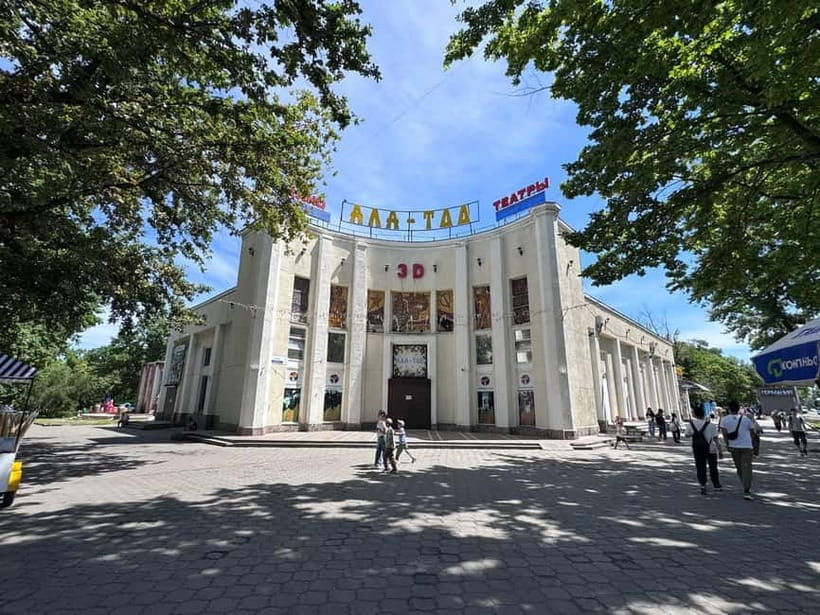
Review · BISHKEK REGION
Bishkek : City Tour (History, Architects, Statues & Culture)
Bishkek reveals itself one monument at a time. This 2.5-hour walking tour gives you a clear introduction to Kyrgyz history, from nomadic traditions and the national flag to Soviet buildings, public art, and the modern political center. I especially like the focus on stories behind the statues and the useful local advice offered along the way. The main consideration is value: $29 per person is fair for a private or highly personal tour, but one couple felt it was expensive by local standards for a few hours of walking.
The route begins and ends at Ala-Too Square, which makes it easy to fit into your first day in Bishkek. Guides such as Alex, Anna, Sofia, Talgat, and Tareen have been praised for clear English, friendly conversation, and practical suggestions for food, hotels, public transport, and trips beyond the city. Bring comfortable closed-toe shoes, travel light, and prepare for a tour that is more about explanation and conversation than formal museum visits.
Key points to know before you book
- Ala-Too Square is both the starting point and the city’s main stage, with the national flag, Manas Statue, and State History Museum nearby.
- The tour explains Soviet Bishkek through architecture, statues, and mosaics, including Lenin, Karl Marx and Friedrich Engels, government buildings, and the KSSR period.
- Kyrgyz identity gets equal attention, with discussion of the flag, nomadic life, Kurmanzhan Datka, Manas, and the country’s changing political story.
- The route lasts about 2.5 hours, with stops ranging from 10 to 20 minutes and a comfortable walking pace.
- Guide quality is a major strength, especially with English-speaking guides such as Alex and Anna, who have been praised for storytelling and personal attention.
- The $29 price includes guidance and local recommendations, but entrance fees, personal purchases, insurance, and large luggage are not included.
Starting at Ala-Too Square and the Kyrgyz flag
Ala-Too Square is the right place to begin. It is central, open, and surrounded by several of Bishkek’s most important civic buildings and monuments. The tour starts at the large flag of the Kyrgyz Republic, then uses the square to introduce the country’s national symbols and recent history.
You will hear about the Kyrgyz flag and what it represents, along with the connection between modern national identity and the older nomadic way of life. This opening is useful because it gives the rest of the walk a frame. The statues and government buildings are not treated as isolated photo stops. Instead, you begin to see them as pieces of a story about independence, Soviet rule, cultural memory, and national pride.
The square is also a good place to ask questions. Guides have been praised for making history easy to follow, and several visitors particularly enjoyed the way Anna and Alex connected political events with daily life. If this is your first morning in Bishkek, the meeting point also helps you get your bearings quickly.
The stop lasts about 20 minutes. You will be walking and listening outdoors, so weather matters. Heavy rain did not ruin the experience for one group, but it did require some flexibility with the start time. In hot weather, the same walking route may feel more demanding.
More Local Culture and Traditions Tours in the world:
- Amsterdam Food and Cultural Tour with Tastings
★ 5.0 · 4,315 reviews - Sevilla Food Tour: Tapas, Wine, History & Traditions
★ 5.0 · 3,468 reviews - Tromsø: Reindeer Camp and Sami Cultural Tour with Lunch
★ 4.7 · 3,326 reviews
Kurmanzhan Datka and the women of Kyrgyz history
The Kurmanzhan Datka Statue gives the tour a strong historical and cultural focus. Kurmanzhan Datka is one of the prominent figures included in Bishkek’s public memory, and the stop helps move the discussion beyond Soviet-era men and government leaders.
This is one of the places where a guide adds real value. A statue alone tells you very little. With an explanation, you can learn why the figure matters and how Kyrgyzstan remembers its past through public art. The tour’s emphasis on legends, local life, and national history makes this more than a quick photograph.
The stop is listed at about 20 minutes. That is long enough for a proper explanation without turning the walk into a lecture. I like this balance. The route gives you context, then keeps moving before the city center begins to feel repetitive.
The State History Museum and a quick dose of context
The State History Museum is included as a short stop of around 10 minutes. You should understand that this is not presented as a full museum visit. Entrance fees are not included, and the schedule is built around seeing the building and discussing its role rather than spending hours inside its galleries.
That brief pause still matters. A national museum beside Ala-Too Square is part of Bishkek’s civic identity, and the guide can place it within the wider story of the country. If you want a longer museum visit, you would need to return independently at another time.
This is a useful example of what the tour does best. It gives you a map of Bishkek’s historical subjects and locations. You can then choose which places deserve more of your own time.
Victory Square and the memory of war
Victory Square receives about 15 minutes of guided attention. This is one of the city’s major memorial spaces, and it adds a solemn counterpoint to the more ceremonial feel of Ala-Too Square.
Expect an explanation of the monument’s historical meaning and its place in Soviet and Kyrgyz public memory. The tour does not treat the square as just another stop for photographs. Instead, it uses the memorial to discuss how war and sacrifice are remembered in the city.
Because the experience covers many locations, the guide’s explanation is the key part. You will not be spending a long time at the site, but you should come away knowing why it matters. If you prefer slow, detailed visits at every monument, the pace may feel brisk.
A few more history tours around the world worth a look
- History and Hauntings of Salem Guided Walking Tour
★ 5.0 · 14,564 reviews - Colosseum: Underground and Ancient Rome Tour
★ 4.7 · 12,691 reviews - Lisbon: History, Stories and Lifestyle Walking Tour
★ 4.8 · 10,902 reviews - London Small Group Tour of Historical Pubs
★ 5.0 · 10,422 reviews
Opera, ballet, and Bishkek’s formal architecture
The Opera and Ballet Theater is a 10-minute stop. Its architecture gives you a change of mood after the memorial spaces and political monuments. The guide discusses the building, its design, and its role in the city’s cultural life.
This is one of the better stops for understanding Bishkek as more than a Soviet capital. The city’s theaters, museums, squares, and public buildings reflect a mix of civic ambition and artistic life. You will also see how the Soviet period shaped cultural institutions across the region.
The tour is titled around architecture as well as history, and this is where that promise becomes clear. You are not only hearing names and dates. You are looking at the design of the city and asking what its public buildings were built to communicate.
Lenin, Marx, Engels, and the Soviet chapter
The Vladimir Lenin Statue receives around 15 minutes of guided discussion. The route also includes the monument to Karl Marx and Friedrich Engels, along with government buildings connected to the Soviet period.
These stops are especially useful if you know little about the Kyrgyz Soviet Socialist Republic, often abbreviated as the KSSR. Bishkek’s public spaces still carry visible traces of that era, even as the country has developed its own post-Soviet identity.
The guide can help you read the city’s political symbols without reducing everything to a simple before-and-after story. Lenin is not merely a statue, and the government buildings are not merely impressive facades. Together, they raise questions about how the city remembers a political system that shaped its streets, institutions, education, and public culture.
This part of the tour may appeal most to you if you like history with a visual side. The monuments make the past easy to see. They also give you plenty to discuss with your guide, particularly if you want to understand how Soviet memories sit alongside Kyrgyz national traditions.
The White House and Kyrgyz government today
The White House is listed as a 10-minute stop. It is one of the tour’s clearest links to modern government and national politics.
The name can cause confusion, since this is not the American White House. Here, the focus is the government of the Kyrgyz Republic and the role of the building in Bishkek’s civic center. The visit helps connect the older Soviet political structure with the country’s current national institutions.
The nearby Jogorku Kenesh, or Parliament, is also part of the wider route. Together, these buildings show how much political life is concentrated around the central squares. You can expect exterior sightseeing and explanation rather than an interior government tour.
The Friendship of Peoples and public memory
The Stele of Friendship of Peoples is given about 15 minutes. This monument reflects the Soviet idea of different ethnic groups living together within one political system. It is an important stop for understanding the language of unity used during the Soviet period.
A guide’s explanation is particularly helpful here because the monument’s meaning may not be obvious from its appearance. You will hear how public monuments were used to promote shared identity, cooperation, and loyalty to the wider Soviet project.
The stop also gives you a chance to compare official symbolism with the more specifically Kyrgyz themes introduced at the beginning of the walk. The contrast is one of the tour’s most useful features. You see both the country’s national story and the political messages that shaped the capital for decades.
Manas, nomadic life, and Kyrgyz identity
The Manas Statue is one of the final major stops, with about 20 minutes of guided attention. Manas is central to Kyrgyz cultural identity, and the statue provides a natural place to return to the themes of nomadic life, oral tradition, and national pride.
This part should appeal to you if you want more than Soviet history. The route makes room for Kyrgyz traditions and the country’s own cultural heroes, not just the architecture left by the twentieth century.
The placement near the end works well. After seeing Lenin, Marx and Engels, government buildings, and Soviet memorials, you finish with a strong symbol of Kyrgyz identity. The tour then returns to Ala-Too Square, creating a neat circle.
Mosaics, statues, and the city between the major stops
The published route names the largest landmarks, but the experience also includes Bishkek’s Soviet mosaics and other historical monuments. These murals and decorative works are tied to Soviet celebrations, including references to 100-year commemorations.
You should pay attention while walking between the headline stops. The mosaics may be less famous than the central statues, but they offer a more everyday view of Soviet visual culture. They show how public art reached beyond grand squares and official buildings.
This is also where the guide can make the walk feel personal. Several people praised guides for showing corners they would not have found alone, explaining local stories, taking photos, and answering repeated questions. Alex was repeatedly praised for his easy manner and practical city advice, while Anna was singled out for turning history into an engaging story.
What the guides add to the experience
The strongest part of this tour is the human element. Different guides are assigned, but the names most often praised include Alex, Anna, Sofia, Talgat, and Tareen.
Alex is described as friendly, flexible, and good at explaining history, politics, culture, and local life. He also helped groups adjust when rain disrupted the planned start. Anna received especially warm praise for her humor, passion, and ability to make people feel involved. Sofia was valued for clear stories about monuments and a relaxed approach with small groups.
Talgat was praised for practical recommendations in Bishkek and beyond the city. Tareen was noted for patience and for creating a comfortable atmosphere while covering a lot in a short time.
Guide quality can vary on any city tour, but the repeated pattern here is encouraging. You are likely to get more than dates and names. You can ask about food, hotels, natural places near Bishkek, public transport, and other cities in Kyrgyzstan. That advice may be as useful as the sightseeing itself.
Timing, walking comfort, and what to bring
The full experience lasts about 2.5 hours. The listed stops range from 10 to 20 minutes, so expect a steady walking route with frequent pauses for explanation and photographs.
Wear comfortable closed-toe shoes. The tour is outdoors and involves walking through the city center, so comfortable footwear matters more than dressing formally. Large bags and oversize luggage are not allowed, and you should travel light.
The activity is described as comfortable for walking, but that does not mean every day will feel equally easy. Heat, rain, and tiredness after a long journey can change the experience. One group found the tour a little long after arriving early in the morning, while another enjoyed it despite heavy rain.
The tour is not suitable for people with altitude sickness or people over 95 years old. Those restrictions are worth checking before you book.
Is $29 a fair price?
At $29 per person, the price is reasonable if you want a guided introduction to central Bishkek and value conversation with a local guide. You are paying for two and a half hours of explanation, route planning, historical context, and practical recommendations, not simply transport between monuments.
Public transportation is included, and private groups are available. Entrance fees, insurance, personal purchases, and large luggage are not included. Since the experience is mainly an outdoor walking tour, you should judge the price against the guide’s time and expertise rather than against a museum ticket.
Still, the cost is not automatically a bargain. One couple felt that $58 for two people was high by Kyrgyz standards for a short walk. I think that criticism is fair, especially if you are comfortable exploring central Bishkek independently.
The tour becomes better value if you use it as an orientation session. Ask for hotel areas, local food suggestions, public transport guidance, and ideas for natural spots or other Kyrgyz cities. If the guide helps shape the rest of your trip, the fee pays back in saved time and better choices.
Who should book this Bishkek walk?
I would recommend it for a first visit, especially if you have only a day or two in Bishkek. The circular route is simple, the meeting point is central, and the mixture of national history, Soviet architecture, statues, and mosaics gives you a useful first picture of the capital.
It also suits you if you enjoy asking questions. The best moments seem to come from the conversations around the monuments, not from simply ticking off sights.
You may want to skip it if you already know Bishkek well, dislike walking in changing weather, or want long interior visits at museums and theaters. The route is broad rather than slow, and entrance fees are separate.
Free cancellation is available up to 24 hours before the start, and you can reserve now and pay later. Confirmation is handled through WhatsApp, so keep an eye on your messages before the tour.
Should you book it?
Book this tour if you want a friendly, efficient introduction to Bishkek that explains both Kyrgyz identity and the Soviet layer of the city. The combination of Ala-Too Square, Kurmanzhan Datka, Manas, Lenin, Victory Square, the White House, Parliament, mosaics, and cultural buildings gives you a strong overview in a manageable 2.5 hours.
I would especially recommend it for first-time visitors who want practical advice for the rest of Kyrgyzstan. At $29, it is not the cheapest way to walk around town, but the guide’s storytelling and local suggestions can make the difference between seeing Bishkek and beginning to understand it.
FAQ
Where does the Bishkek city tour start and finish?
The tour starts at Ala-Too Square and returns to Ala-Too Square at the end.
How long does the experience last?
The walking tour lasts approximately 2.5 hours.
Which languages are available?
The tour is available with a live guide in English or Russian.
Is the tour private?
A private group option is available. The tour details do not specify that every booking is private.
What should I bring?
Bring comfortable closed-toe walking shoes. Oversize luggage and large bags are not allowed.
Are entrance fees included?
No. Entrance fees, personal purchases, and insurance are not included in the price.
Just added around the world
- The Queenstown Story @ Cobh Heritage Centre , Great Stories of Emigration.★ 4.5 · 181 reviews
- Visit 16 Sites Key Historical Sites And Experience Cobh Rebel Tours★ 5.0 · 167 reviews
- Historical Bicycle Tour of Dunedin★ 5.0 · 44 reviews
- 2.5 Hour Kayaking with Manatee and History Tour in Tarpon Springs★ 5.0 · 24 reviews
- Cincy Brunch History and Streetcar Tour with Riverside Food Tours★ 5.0 · 108 reviews
- Private Tour in Chichen Itza Official History Guide★ 5.0 · 36 reviews
- Dazu Ancient Rock Carvings Private Tour Extension★ 5.0 · 24 reviews
- Chicago River Architecture Tour Aboard a Historic Yacht★ 5.0 · 45 reviews
Local Culture & Traditions Tours, compared.

Amsterdam Food and Cultural Tour with Tastings
Read our review →
Sevilla Food Tour: Tapas, Wine, History & Traditions
Read our review →
Tromsø: Reindeer Camp and Sami Cultural Tour with Lunch
Read our review →
Half Day Dominican Republic Cultural Tour : Small Group
Read our review →
Ultimate Melbourne Walking Tour: History, Laneways & Culture
Read our review →
Tromsø: Sámi Reindeer Sledding and Sami Cultural Tour
Read our review →
Kyoto Gion: 2-Hour Geisha Culture & History Walking Tour
Read our review →
Marrakech Historical and Cultural Tour – Half Day City Tour
Read our review →Browse the lists this tour appears in