
Review · CHARLESTON
Charleston’s Best Highlights: History, Culture & Architecture
Charleston’s story unfolds on foot. This two-hour walk brings together major landmarks, striking houses, religious sites, and difficult chapters of American history, all within the old downtown area. I like the way it connects famous sights such as Rainbow Row and the Old Exchange with less comfortable subjects, including Charleston’s role in the interstate slave trade. I also like the small-group limit of 20, which gives a good guide room to answer questions.
The tour is especially useful on your first day because it helps you understand the city before you explore it on your own. Guides Brian, Fin, and Finn have earned praise for their teaching skills, humor, and flexibility. The main consideration is that several interiors are not included, and the walk can run longer than two hours when the group has plenty to ask.
Key things to know before you book
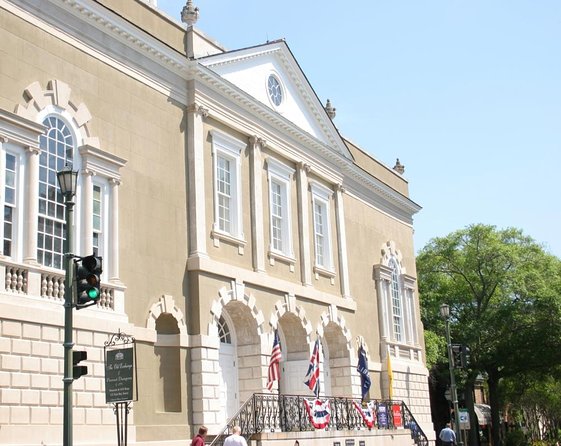
- The Old Exchange sets the historical stage: This 1771 building connects Charleston to the Declaration of Independence, the American Revolution, the Constitution, and George Washington’s 1791 visit.
- The route tackles hard history directly: At the Old Slave Mart Museum, the guide explains Charleston’s part in the interstate slave trade, though the group does not enter the museum.
- The walk covers major downtown sights: You see Rainbow Row, Dock Street Theater, City Hall, St. Michael’s Church, and two grand private houses.
- The guide is the main attraction: Brian, Fin, and Finn are praised for strong storytelling, broad American history, and answers tailored to the group.
- It may last longer than advertised: The official timing is about two hours, but some walks have lasted well over two or three hours.
- You return to where you started: The meeting point is 122 E Bay St, and the walk ends back there.
Begin at the Old Exchange and Provost Dungeon
The tour starts at 122 East Bay Street, beside one of South Carolina’s most important colonial buildings. The Old Exchange and Provost Dungeon dates from about 1771, and its walls have witnessed events that reach far beyond Charleston.
The Declaration of Independence was read here in 1776. During the American Revolution, the British used the building as a prison for roughly two years. South Carolina ratified the United States Constitution here in 1788, and George Washington was entertained at the building during his weeklong Charleston visit in May 1791.
That list alone gives your guide plenty to work with. A good explanation here should help you see Charleston not as an isolated Southern city, but as a place tied to the founding of the United States. The stop lasts about 15 minutes, and admission to the building is not included, so you should not expect a full interior visit as part of the walk.
More Architecture and Landmark Tours in Charleston:
- Historic Charleston Walking Tour: Rainbow Row, Churches, and More
★ 5.0 · 691 reviews - Charleston: History and Architecture Guided Walking Tour
★ 4.8 · 349 reviews - Charleston History, Homes, and Architecture Guided Walking Tour
★ 5.0 · 267 reviews
Rainbow Row and the city’s changing appearance
A short walk brings you to Rainbow Row, the famous line of attached Georgian houses. It is described as the longest row of attached Georgian row houses in the country, though the real appeal is visual and historical rather than simply record keeping.
The buildings began as mariners’ stores in the 18th and 19th centuries. They were restored during Charleston’s preservation efforts in the 1930s and painted in bright Caribbean colors. The result is one of the city’s most photographed streets, but the guide gives the buildings more meaning than a quick picture stop would.
You have about five minutes here, with no admission charge. That is enough time for an explanation and photographs, but not a long architectural inspection. Keep your camera ready, since the stop is brief.
The Old Slave Mart Museum and Charleston’s difficult past
This is one of the most important stops on the route. The building was known as Ryan’s Slave Mart in the 1850s and served as an auction site in the interstate slave trade. The guide discusses Charleston’s role in that trade and places the city’s wealth, architecture, and political influence in a harder context.
The group does not enter the museum. The City of Charleston operates it, and tours are available on site, but admission is not included in this walking experience. That arrangement has two practical effects: you get an introduction from the guide, and you can decide later if you want a separate museum visit.
I value the fact that this subject is included rather than avoided. A tour of Charleston that only celebrates grand houses, churches, and patriotism would give you an incomplete picture. This stop is short, about 10 minutes, so you may want to set aside extra time on another day if you want a longer museum visit.
The French Huguenot Church and Charleston’s faith communities
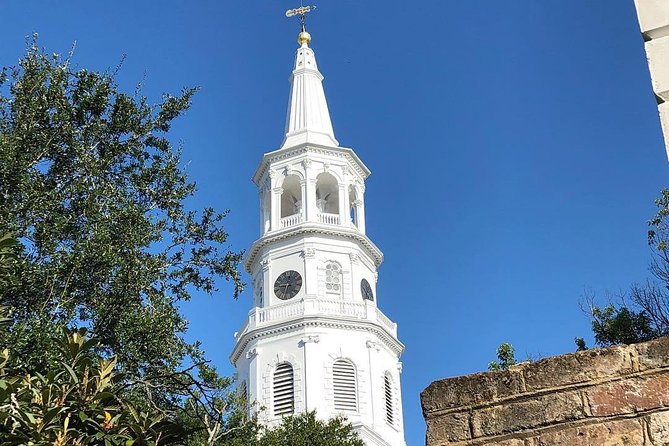
The French Huguenot Church brings a different strand of Charleston’s past into view. The Gothic Revival building dates from 1845 and houses one of the only practicing Huguenot, or French Protestant, congregations in the country.
The stop takes about five minutes and is free to see from the outside. Its value comes from the way it broadens your understanding of the city. Charleston was shaped by many religious and cultural influences, and the guide uses this church to discuss that continuing story.
You should think of this as a focused exterior stop rather than a full church visit. If the building is open, access may depend on availability.
More Local Culture and Traditions Tours in Charleston:
- Amsterdam Food and Cultural Tour with Tastings
★ 5.0 · 4,315 reviews - Sevilla Food Tour: Tapas, Wine, History & Traditions
★ 5.0 · 3,468 reviews - Tromsø: Reindeer Camp and Sami Cultural Tour with Lunch
★ 4.7 · 3,326 reviews - Half Day Dominican Republic Cultural Tour : Small Group
★ 4.5 · 1,862 reviews
Dock Street Theater, from early stage shows to Charleston Stage
Dock Street Theater occupies a site associated with the first theater in the British colonies. The present building dates from about 1937 and was restored from the former Planter’s Hotel, built around 1809.
Today, Charleston Stage operates the theater as South Carolina’s largest professional theater company, with roughly 120 performances each year. That gives the building a living role, not just a historical one. You are looking at a place connected both to early American theater and to the city’s current arts scene.
The guide may be able to take you inside, depending on availability. The listed stop is about 10 minutes, and there is no admission charge for the planned visit. Still, you should treat interior access as a possibility rather than a promise.
City Hall and the Four Corners of Law
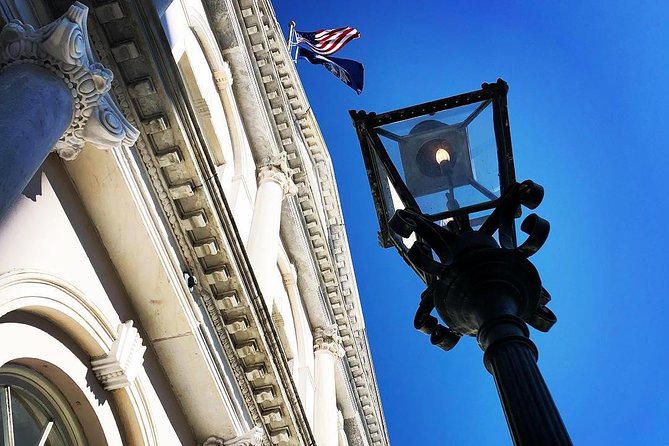
Charleston City Hall occupies one corner of the area known as the Four Corners of Law, a name associated with Robert Ripley of Ripley’s Believe It or Not. The building was constructed as a bank in 1801 and has served as City Hall since 1818.
That long use gives the stop a useful civic angle. You are not just looking at another old façade. You are seeing one of the country’s oldest continuously operating city halls, a place where local government has worked for generations.
The official stop is only about two minutes, so the guide will keep this part tight. On weekdays, visitors may enter the council chamber and view the collection at no charge. Because that opportunity depends on the day and timing, do not book this walk solely for an interior visit.
St. Michael’s Church and the people behind the Constitution

St. Michael’s Church dates from about 1761 and is the oldest house of worship in Charleston. The guide uses it to explain the city’s religious past and present, while the building itself provides plenty to notice.
Much of the original woodwork remains, and the church has Tiffany stained glass windows. The churchyard also contains the graves of John Rutledge and Charles Cotesworth Pinckney, both signers of the United States Constitution.
The stop lasts about 15 minutes, making it one of the longer pauses on the route. Interior entry depends on availability. Even if you only see the exterior and churchyard, the stop helps connect national political history with an actual Charleston address.
The Nathaniel Russell House garden
At the Nathaniel Russell House, the group enters the garden of a Federal-style townhouse built in 1808. Nathaniel Russell came from Rhode Island and was a wealthy merchant involved in shipping.
The garden gives you a look at Charleston’s merchant class and the world created by maritime trade. It also helps vary the walk. After several public buildings and churches, you get a glimpse of a private urban residence and its outdoor space.
The tour does not include full admission to the house. Admission is listed as not included, so you should think of the garden visit as an exterior-focused introduction. The stop takes about 10 minutes.
The High Battery and the view toward Fort Sumter
The final major section takes you up onto the High Battery wall. From here, the guide points out waterfront mansions and discusses the beginning of the Civil War. Fort Sumter is visible from the area, giving the conversation a clear geographic reference.
The Edmondston-Alston House has been in the same family since 1838. It also has a direct connection to the opening of the Civil War: General Beauregard watched the bombardment of Fort Sumter from here with other onlookers.
This is a good closing stop because it moves the story from colonial Charleston and the early republic into the crisis of 1861. It also gives you a change of pace, with water views and grand residences after a series of close urban streets.
The stop lasts about 10 minutes, and admission to the house is not included. The guide focuses on the exterior, the waterfront setting, and the wartime story.
Why the guide matters more than the route
Charleston has no shortage of old buildings. The value of this tour comes from the connections made between them.
Brian is praised for knowing Charleston and American history in equal measure. He links South Carolina figures to events in other colonies and explains how local decisions fit into the wider formation of the country. Fin and Finn are also described as warm, enthusiastic teachers, with Fin drawing on 30 years as a high school history teacher and 15 years as a Charleston guide.
The most useful quality is flexibility. Guides have adjusted the route around weather, answered detailed questions, and made the walk fit the interests of the group. If you are curious about architecture, religion, the Constitution, slavery, theater, or the Civil War, say so at the start.
The group limit is 20 people, but it may be much smaller. Some departures have had only two or three participants, which can make the experience feel almost private. You should not assume every departure will be that intimate, but the cap is still sensible for a walking tour on busy downtown streets.
Timing, pace, and practical value
The stated duration is about two hours. In practice, the walk may run longer when the guide gives detailed explanations or the group asks many questions. That is good news if you enjoy history, but it matters if you have a restaurant booking, another tour, or a tight transportation schedule afterward.
This is an urban walking tour, not a bus ride. You move between stops through central Charleston, with frequent pauses for stories and photographs. Most people can participate, and service animals are allowed. The experience is offered in English and includes a mobile ticket.
The route ends where it begins at East Bay Street. That makes it easy to continue exploring downtown afterward, visit the Old Slave Mart Museum on your own, or head to a meal nearby. Since the tour requires good weather, bring a plan for changing dates if rain is in the forecast.
No price is provided here, so I cannot judge the exact dollar amount. The value depends on how much you want from a guide. If you only want quick photos of Rainbow Row and the waterfront, you can see several highlights without booking a tour. If you want the buildings placed in political, religious, architectural, and social context, the fee can be worthwhile, particularly when the group is small.
Free cancellation is available until 24 hours before the start time. Cancellations within 24 hours are not refunded, and poor weather may lead to another date or a full refund.
Who should book this Charleston walk?
I would choose this tour for a first visit, especially at the beginning of a longer stay. It gives you a working map of downtown and introduces the subjects that deserve more time later.
It also suits returning visitors who want a sharper understanding of the city. The route covers familiar postcard sights, but the guide’s explanations add political links, local stories, and architectural details you might otherwise miss.
Families can do well here if children enjoy stories and questions. Couples and friends who prefer conversation to a fixed script should also find the format appealing. The tour is less suitable if you want extensive interior access, a slow photography session at every stop, or a guaranteed two-hour finish.
Should you book it?
Book it if you want Charleston explained rather than simply displayed. The route covers a lot in a compact area, and the strongest feature is the guide’s ability to connect buildings to national events and uncomfortable local truths.
I would book it early in your stay, then return to the places that catch your attention. Just remember that admission to several interiors is not included, access can depend on availability, and the walk may last longer than the advertised two hours. For a first look at Charleston’s history, culture, and architecture, this is a strong choice.
FAQ
Where does the Charleston walking tour begin?
The tour begins at 122 E Bay St, Charleston, South Carolina 29401.
Where does the tour end?
The activity ends back at the meeting point on East Bay Street.
How long does the tour last?
The stated duration is approximately two hours. It may run longer, depending on the guide’s presentation and the group’s questions.
Is admission to the buildings included?
Admission is not included at the Old Exchange and Provost Dungeon, Nathaniel Russell House, or Edmondston-Alston House. Entry to Dock Street Theater and St. Michael’s Church depends on availability. The group does not enter the Old Slave Mart Museum.
Is the tour offered in English?
Yes. The experience is offered in English and provides a mobile ticket.
What is the cancellation policy?
You can cancel at least 24 hours before the start time for a full refund. Cancellations or changes made within 24 hours are not accepted for a refund. If poor weather cancels the tour, you can receive a different date or a full refund.
Just added around Charleston
- Charleston’s Historic Pubs, Taverns, and Taprooms Tour★ 4.5 · 33 reviews
- Charleston’s Strong Women of the South History Tour★ 4.5 · 27 reviews
- Small-Group Tour: Charleston Old Walled City Historical Walking Tour★ 4.5 · 283 reviews
- Private Walking Tour of Historic Charleston★ 5.0 · 38 reviews
- Sip History in The Sun Cabana Covered Cocktail Class★ 5.0 · 332 reviews
- Sip History In a Secret Speakeasy Cocktail Class★ 5.0 · 40 reviews
- Private Afternoon Sailing/Dolphin & History Tour on 43ft Mystique★ 5.0 · 32 reviews
- Private Sunset Sail BYOB Dolphin/History Tours on 43ft Mystique★ 5.0 · 42 reviews
Architecture & Landmark Tours, compared.
St. Mark’s Basilica Guided Tour & VR History Intro
Read our review →
Venice’s Best: Basilica, Doge’s Palace, Gondola & History Gallery
Read our review →
Córdoba: Skip-the-Line Great Mosque-Cathedral History Tour
Read our review →
Pantheon Elite Guided Tour – Rome’s Iconic Ancient Temple
Read our review →
Abu Dhabi Grand Mosque, Palace, and Heritage Village
Read our review →
Chicago in a Day: Food, History & Architecture Walking Tour
Read our review →

Colosseum Special Access Tour, with Ancient Temples & Tombs
Read our review →Browse the lists this tour appears in