
Review · CHARLESTON
Charleston History Tour – Small Groups Only – History & Alleyways
Old Charleston rewards slow walking. This tour makes that easy with a maximum of 10 people, a manageable route through the old city, and guide Adam’s lively stories about pirates, theater, slavery, revolution, and local life. I like the personal scale and the way the walk mixes famous sights with lesser-known alleyways. I also like that the history is presented plainly, including Charleston’s painful past rather than only its pretty streets.
The main consideration is that this is an outdoor walking tour with no general admission included. You will see most sites from the street, though the tour may enter a historic building such as the theater, church, or city hall. Bring comfortable shoes, water, and rain protection, because Charleston weather can change quickly.
Key points at a glance
- Small groups capped at 10: You can hear Adam clearly and ask questions without trying to speak over a crowd.
- A useful first-day orientation: The route connects major landmarks, old streets, alleyways, and Waterfront Park.
- Stories beyond dates: Expect pirates, theater history, the American Revolution, slavery, and personal details about Charleston’s past.
- Mostly an exterior tour: The stops are free to view, but regular entry inside museums and private homes is not part of the standard route.
- About two hours on foot: The pace is active but manageable, with several short stops rather than one long lecture.
- Ends by the Pineapple Fountain: The final harbor view gives you a pleasant place to linger after the tour.
Why this small Charleston walk works so well
Charleston can feel confusing at first. The streets are compact, the architecture is dense, and important sites often sit only a few minutes apart. This walk gives you a useful framework for the old city without asking you to spend half a day on your feet.
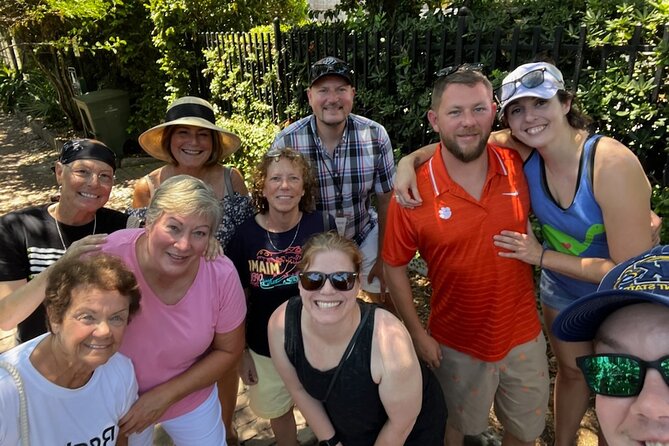
Adam leads the tour himself, and that matters. His style is conversational rather than a fixed speech delivered to a large group. The small size lets him adjust to questions and interests, which can turn a basic stop into a longer discussion when the subject catches your attention.
I especially like the balance between well-known landmarks and quieter corners. You will pass Rainbow Row, the Pineapple Fountain, and the Old Slave Mart Museum, but you will also walk through Charleston’s French Quarter and along cobblestone Chalmers Street. The result feels broader than a checklist of postcard views.
The tour costs $28 per person. For roughly two hours with a local guide, that is a fair price, especially if you use it to get oriented early in your visit. It is not the right choice if you want several building interiors or a slow architectural study. It is a good value if you want a lively introduction that helps the rest of your Charleston stay make more sense.
A few more history tours around Charleston worth a look
- Charleston’s Old South Carriage Historic Horse & Carriage Tour
★ 5.0 · 10,023 reviews - Historic Charleston Guided Sightseeing Walking Tour
★ 5.0 · 6,216 reviews - Charleston Horse-Drawn Carriage Tour: Explore Historic Charleston
★ 5.0 · 3,561 reviews
Starting at the Powder Magazine with a pirate story
The meeting point is at 151 Meeting Street, near the Powder Magazine. Built in 1713, the Powder Magazine is described as the oldest public building in South Carolina. The walk passes by the building rather than charging admission, so you should expect an exterior introduction and a story connected with Charleston’s pirate era.
That opening is a smart choice. It begins with an old, physical reminder of the city’s colonial defenses, then adds the kind of dramatic tale that helps dates and buildings stick in your mind. Adam’s storytelling is one of the tour’s strongest features, and the pirate material gives the group an easy way into Charleston’s early history.
The stop lasts about 10 minutes. That is enough for context, photographs, and questions, but not enough for a full museum visit. If you want to inspect the Powder Magazine from inside, plan to do that separately.
Through the French Quarter and the Huguenot Church
From there, the route moves into Charleston’s French Quarter and passes the French Huguenot Church. The stop is short, around five minutes, but its value comes from placing the church in the wider story of the neighborhood.
You will get a sense of how Charleston’s religious and cultural history is written into its streets. This is one of those moments where a guide adds much more than a map can. Without context, you may simply see a handsome old church. With Adam’s explanation, the building becomes part of the city’s larger story of settlement and community.
The short stop also keeps the walk moving. This tour does not linger at every location until everyone has exhausted every possible photograph. If you prefer a slower pace with long periods at each building, this may feel brisk.
The Dock Street Theater and Charleston’s stage history
The Dock Street Theater receives a longer stop, about 15 minutes. Originally built in 1736, it is presented as the first theater in the American colonies. The building gives Adam a chance to shift from military and religious history to entertainment, public life, and the way colonial Charleston spent its leisure time.
This is also one of the possible places where the group may go inside. The exact interior access can vary, so do not book the walk assuming a guaranteed theater visit. Still, the chance to enter a historic building adds something important, particularly for anyone who feels that an all-exterior walk can become repetitive.
The theater is also a good place to listen for the guide’s sense of humor. The strongest praise for Adam centers on his ability to make historical information entertaining without reducing it to trivia. That combination is useful for families and first-time visitors who want substance but do not want a two-hour classroom lecture.
Same place, a different slice of the past:
- Charleston Harbor History Day-Time or Sunset Boat Cruise
★ 4.5 · 2,788 reviews - Hidden Alleyways and Historic Sites Small-Group Walking Tour
★ 5.0 · 2,335 reviews - Charleston: Daytime or Sunset Historic Harbor Cruise
★ 4.5 · 1,352 reviews - Charleston historical walking tour with a Professor of History at The Citadel
★ 5.0 · 1,284 reviews
Chalmers Street, the Pink House, and Charleston’s visual appeal
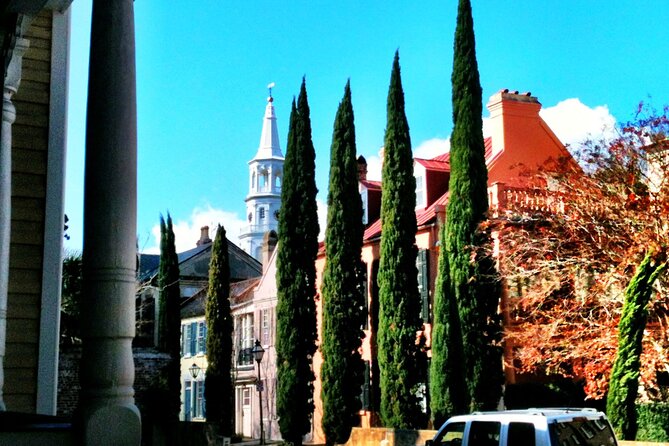
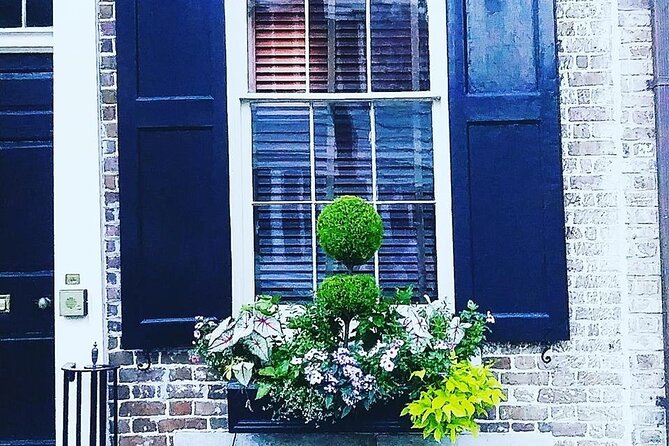
Chalmers Street is one of the most photogenic sections of the route. Its cobblestones, palmetto trees, and crepe myrtles create the classic Charleston setting, but the guide gives the scene a historical purpose rather than treating it as a photo stop alone.
Here Adam discusses the Pink House, one of the oldest buildings in Charleston and possibly the oldest. The wording matters because the exact claim is not presented as a simple certainty, and that is a useful reminder that old-city history often includes competing dates and interpretations.
You will want comfortable shoes here. Cobblestones are uneven, and the route is entirely on foot. This is a place to slow down for photographs, but the ground is not ideal for flimsy sandals or shoes with poor support.
A serious pause at the Old Slave Mart Museum
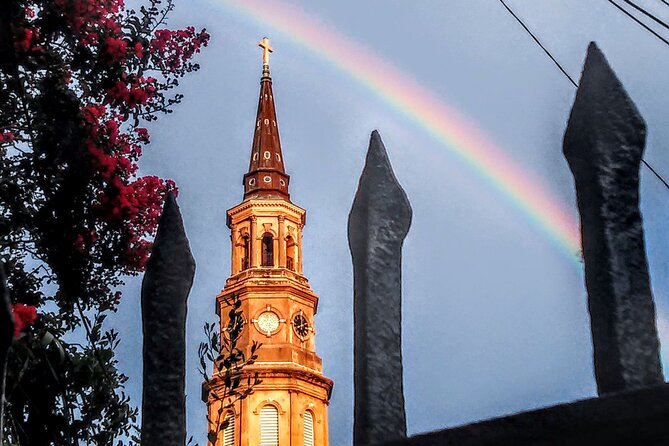
The stop outside the Old Slave Mart Museum lasts about 10 minutes, and it is one of the most important parts of the walk. Adam discusses the major effects of slavery on Charleston and its people. The tour does not treat the subject as a side note beneath the city’s architecture and charm.
That honesty is a real strength. Charleston’s story includes beauty, wealth, political influence, and cultural achievement, but those things cannot be separated from the forced labor and human suffering that helped shape the city. A good introduction to Charleston needs to make room for that fact.
You will be standing outside the museum rather than taking a standard museum visit as part of the $28 fee. If this subject is central to your interests, you can treat the stop as a starting point and return for a longer visit on your own. The tour gives you context, but it is not a substitute for a full museum experience.
Broad Street and the old center of commerce
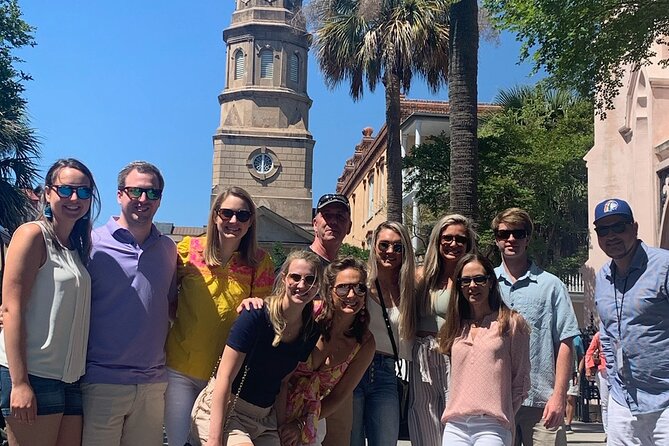
The route continues to Broad Street, laid out in 1680. The stop is brief, about five minutes, but it links the city’s street plan with its commercial past. Broad Street was the center of commerce in Charleston and remains an important part of the downtown route.
This is the sort of detail that helps you read the city after the tour. Instead of seeing streets as random lanes between attractions, you begin to understand why they were placed where they are and how different parts of old Charleston functioned.
The guide’s local recommendations can also be useful here. One past group received a lunch suggestion for the Blind Tiger and found it a good fit, so it is worth asking Adam for food ideas if you still need to plan a meal. That kind of small, practical exchange is easier in a group of six or seven than on a packed bus.
Rainbow Row and the limits of postcard history
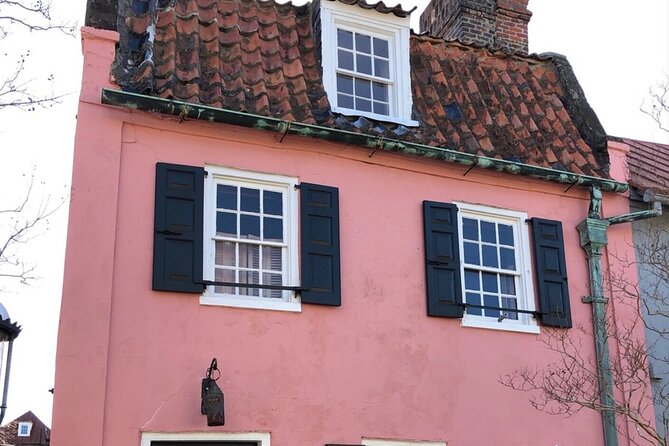
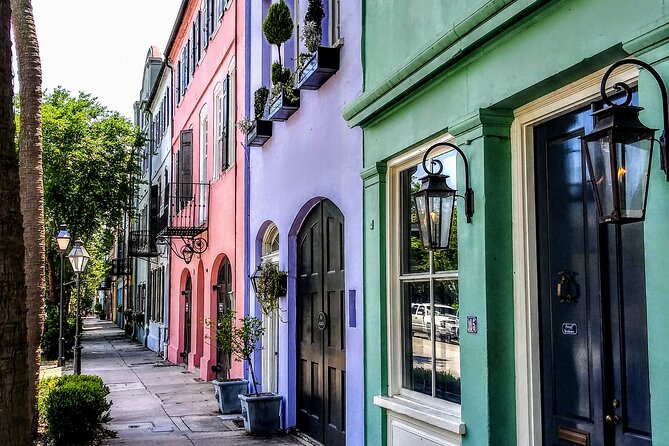
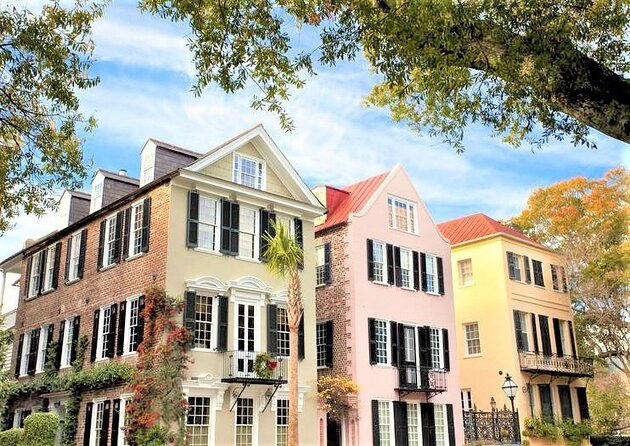
Rainbow Row is a required Charleston sight, and the route includes it for about 10 minutes. The colorful row of houses is an easy crowd-pleaser, especially for first-time visitors. You will have time for photographs and a short explanation of the buildings’ place in the city.
The limitation is that Rainbow Row is primarily a street-side viewing stop. You should not expect to tour the private houses. That point is worth stressing because Charleston’s private residences can look like museums from the pavement, but they are still homes.
This is also where the tour’s mix of famous and less familiar sights pays off. If you have already seen Rainbow Row in photographs, Adam’s context gives you a reason to look again. Still, people who want extensive access to house interiors should book a separate house tour. The historic homes open to the public are not located along this exact walking route.
The Exchange Building and the American Revolution
The Exchange Building dates to 1771, and the group pauses outside for about 10 minutes to discuss Charleston’s role in the American Revolution. This stop gives the tour a clear political turn after the earlier focus on defense, religion, theater, commerce, and slavery.
The value here is in connecting a building to events rather than simply pointing out its age. Charleston’s part in the Revolution was not a remote footnote. The Exchange Building becomes a place where you can consider the city’s position in the colonial economy and its role in the conflict that reshaped the country.
Again, the standard experience is primarily exterior. You are paying for the guided walk and interpretation, not a bundle of museum admissions. That keeps the price low, but it also means you should plan extra time if you want to go inside particular buildings later.
Finishing beside the harbor at Waterfront Park
The last stop is Waterfront Park, where the route ends near the Pineapple Fountain. The park looks out over Charleston Harbor and provides a pleasant change from the narrow streets and dense architecture of downtown.
The final 15 minutes are a good release after the historical material. You get a broad view, room to take photographs, and a natural place to pause before lunch or your next activity. Ending at the harbor also makes the tour easy to combine with the rest of a day downtown.
The endpoint is listed as Waterfront Park at Vendue Range and Concord Street, near the Pineapple Fountain. You should pay attention to that distinction at the start: the tour does not return to Meeting Street. If you have a reservation or another appointment immediately afterward, allow time to walk from the park.
Pace, weather, and what to bring
The experience is advertised at approximately two hours. Adam has also described the actual walking portion as about 80 minutes, while the planned stops add time. In practice, allow the full two-hour window. Questions, photographs, weather, and the size of your group can all affect the pace.
The physical demands are moderate rather than extreme. You do not need athletic fitness, but you should be comfortable walking on city streets and uneven cobblestones. Several short stops make the route easier than a nonstop march, yet you will still be outdoors for most of the experience.
Pack:
- Comfortable walking shoes
- Water
- Bug spray
- An umbrella or raincoat
Rain matters in Charleston, and the tour requires good weather. If poor conditions cancel the experience, you are offered another date or a full refund. You can cancel for a full refund up to 24 hours before the start time, but cancellations or changes inside that window are not refunded or accepted.
Service animals are allowed, and the starting area is near public transportation. No special admission ticket is needed for the listed stops.
Who will get the most from this tour
I would choose this walk for a first day in Charleston. It gives you a map in your head, introduces the city’s major themes, and may help you decide which sites deserve a longer return visit.
It also suits people who enjoy history when it comes with stories and personality. Adam’s approach includes humor, questions, and details that move beyond dates. Families can benefit from the short stops and changing subjects, while repeat visitors may appreciate the alleyways and less familiar corners.
The tour is a particularly good match for:
- First-time visitors who want city orientation
- Couples and friends who prefer small groups
- Families with older children or teenagers
- People who want honest treatment of slavery and Charleston’s difficult past
- Visitors who enjoy a guide-led walk but do not want a large crowd
I would choose something else if your priority is a full museum itinerary, extended time inside historic houses, or a slow architectural photography walk. You should also think twice if hot, humid, or rainy weather makes outdoor walking unpleasant for you.
Should you book Charleston History Tour?
Book it if you want an affordable, personal introduction to old Charleston, especially near the beginning of your stay. The combination of a 10-person limit, a central route, Adam’s storytelling, and the harbor finish gives you a lot for $28.
Go in expecting an exterior-focused walking tour, not a collection of admission tickets. Wear proper shoes, leave room for questions, and allow the full two hours. If you want a friendly guide, serious historical context, and a route that includes both famous streets and quieter alleyways, this is an easy tour to recommend.
FAQ
How much does the Charleston History Tour cost?
The price is $28 per person.
How long does the tour last?
The experience lasts approximately two hours. The walking portion has also been described as about 80 minutes, with time spent at the various stops.
What is the maximum group size?
The tour accepts a maximum of 10 travelers.
Where does the tour begin?
It begins at 151 Meeting Street, Charleston, South Carolina 29401.
Where does the tour end?
It ends at Waterfront Park near the Pineapple Fountain, at Vendue Range and Concord Street.
Are admission tickets included?
The listed stops have no admission charge as part of the walking route. Most are viewed from outside, and regular entry to museums or private homes is not included.
What should I bring?
Bring comfortable walking shoes, water, bug spray, and an umbrella or raincoat.
Can I cancel for a refund?
You can cancel at least 24 hours before the start time for a full refund. Cancellations or changes made less than 24 hours before the start time are not refunded. If poor weather causes the tour to be canceled, you are offered another date or a full refund.
Just added around Charleston
- Charleston’s Historic Pubs, Taverns, and Taprooms Tour★ 4.5 · 33 reviews
- Charleston’s Strong Women of the South History Tour★ 4.5 · 27 reviews
- Small-Group Tour: Charleston Old Walled City Historical Walking Tour★ 4.5 · 283 reviews
- Sip History In a Secret Speakeasy Cocktail Class★ 5.0 · 40 reviews
- Private Walking Tour of Historic Charleston★ 5.0 · 38 reviews
- Sip History in The Sun Cabana Covered Cocktail Class★ 5.0 · 332 reviews
- Private Afternoon Sailing/Dolphin & History Tour on 43ft Mystique★ 5.0 · 32 reviews
- Private Sunset Sail BYOB Dolphin/History Tours on 43ft Mystique★ 5.0 · 42 reviews
Charleston History Tours, compared.

Charleston’s Old South Carriage Historic Horse & Carriage Tour
Read our review →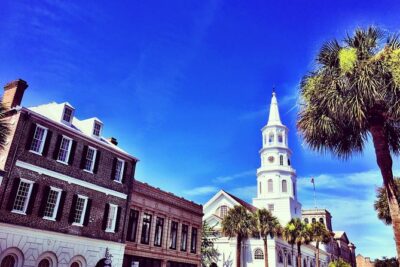
Historic Charleston Guided Sightseeing Walking Tour
Read our review →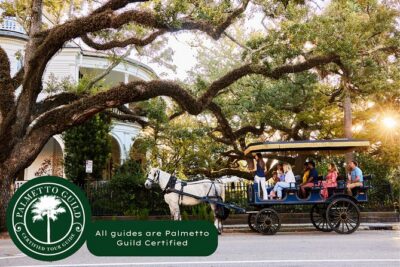
Charleston Horse-Drawn Carriage Tour: Explore Historic Charleston
Read our review →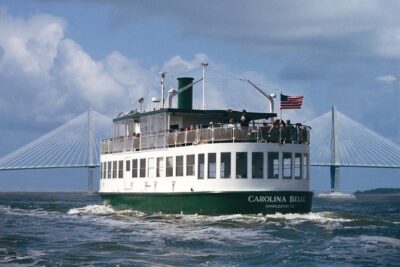
Charleston Harbor History Day-Time or Sunset Boat Cruise
Read our review →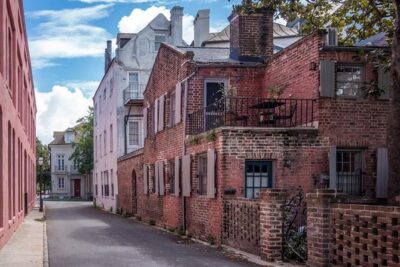
Hidden Alleyways and Historic Sites Small-Group Walking Tour
Read our review →

Charleston historical walking tour with a Professor of History at The Citadel
Read our review →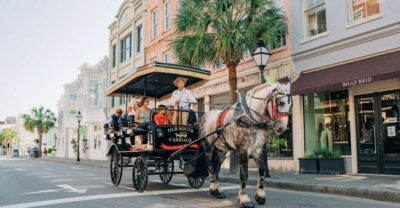
Historical Downtown Tour by Horse-drawn Carriage
Read our review →Browse the lists this tour appears in