

Review · CHARLESTON
Charleston History, Homes, and Architecture Guided Walking Tour
Charleston tells its story in beautiful streets. This two-hour walk gives you a useful introduction to Downtown Charleston through churches, Georgian homes, wartime sites, and the elegant South of Broad neighborhood. I like the mix of architecture and American history, and I like that the tour includes admission to the Powder Magazine Museum. The main drawback is simple: Charleston heat, rain, and uneven walking surfaces can make two hours feel longer than expected.
The tour costs $28 per person, uses a professional local guide, and accepts groups of no more than 20 people. Morning and afternoon departures make it easy to fit into a sightseeing day, but you need to arrive early. The guide leaves promptly, and one late arrival missed the group after arriving five minutes after the start time.
Key Points Before You Book
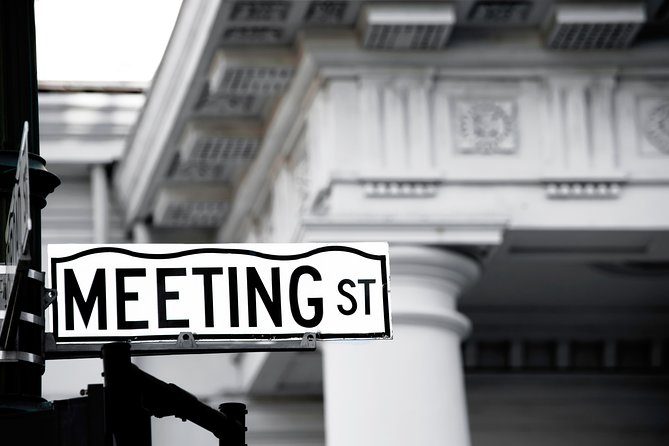
- The route begins at City Hall: Meet outside 80 Broad Street, at one of Charleston’s Four Corners of Law.
- You see major landmarks in a compact walk: St. Michael’s Church, Rainbow Row, the Old Exchange, White Point Gardens, and the Battery all fit into roughly two hours.
- The tour mixes famous sights with residential streets: South of Broad gives you a closer look at Charleston homes and day-to-day city design.
- Powder Magazine admission is included: You can visit the museum at your own pace, although it is not listed as a main timed stop on the walking route.
- The guides add personality: Al, Duggard, Dennis, Evans, Mark, Lawrence, and Captain Bobby are praised for humor, local stories, and strong command of Charleston’s past.
- Plan for the weather: Wear comfortable shoes, bring water, and dress for sun or rain. The tour operates in all weather conditions unless poor weather forces a cancellation.
Why This Two-Hour Walk Works Well
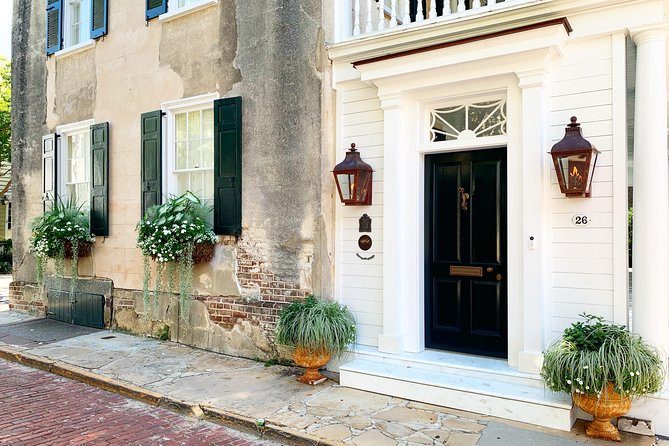
Charleston is easy to admire and surprisingly easy to misunderstand. A pretty house may hide a story about trade, slavery, war, religion, or political power. A short walk with a local guide helps connect those pieces instead of leaving you with a collection of attractive photographs.
The route focuses on the historic center, including the French Quarter and South of Broad. You will not spend the morning inside a series of grand houses, and this is not a museum-heavy tour. Instead, you move through public streets while the guide explains the buildings, people, and events around you.
That format offers good value for $28. You receive two hours with a licensed guide, a small-group setting capped at 20 people, and a Powder Magazine ticket. The guide also helps you notice details that are easy to miss, such as architectural features, old religious landmarks, and the way Charleston’s historic neighborhoods are arranged.
The walking pace appears moderate rather than athletic. Stops include time for explanation, photographs, and occasional rest. Dennis is praised for planning bathroom and cooling stops, while Duggard and Captain Bobby are noted for keeping groups interested in hot weather. Still, you should expect to be on your feet for most of the experience.
More History Walking Tours in Charleston
- Historic Charleston Guided Sightseeing Walking Tour
★ 5.0 · 6,216 reviews - Hidden Alleyways and Historic Sites Small-Group Walking Tour
★ 5.0 · 2,335 reviews - Charleston historical walking tour with a Professor of History at The Citadel
★ 5.0 · 1,284 reviews
Starting at City Hall and the Four Corners of Law
The meeting point is outside Charleston City Hall at 80 Broad Street. This is a useful place to begin because it introduces the city’s civic and legal center before the walk turns toward churches, homes, and the waterfront.
The opening stop lasts about 10 minutes and is free to enter because the tour remains outside. Your guide will explain City Hall as one of the pillars of the Four Corners of Law, a phrase linked to the concentration of civic and legal institutions in this part of Charleston.
Arrive at least 15 minutes before departure. That extra time is not just polite scheduling. It gives the guide time to check the group, explain the route, and begin on time. The operator has stated that the guide may leave after the introduction, so do not count on catching up if you are late.
From City Hall, the walk continues to Washington Square, a brief five-minute stop. The park provides context for the city’s public spaces and offers a quieter pause before the group reaches St. Michael’s Church.
Washington Square and St. Michael’s Church
Washington Square receives only a short explanation, but it helps you understand how Charleston’s historic center uses small green spaces among tightly packed streets. You may find this stop less dramatic than the church or Battery, but it gives the route a sensible rhythm.
St. Michael’s Episcopal Church receives more attention, with about 10 minutes devoted to its story. It is described as Charleston’s oldest surviving religious structure and is associated with George Washington, who worshipped there.
This is a good example of the tour’s approach. You are not simply told that a church is old. You hear why it matters, who used it, and how it fits into Charleston’s political and social past. The church also helps explain the importance of religion in the city’s early public life.
Because the tour is conducted outdoors, you should not assume that you will enter every building. The supplied route specifically describes learning about St. Michael’s, rather than an interior visit. If seeing the inside is important to you, check the day’s access separately.
Rainbow Row and Charleston’s Famous Houses
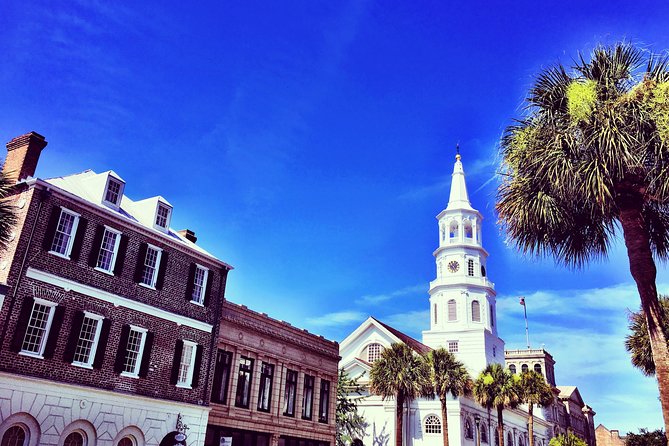
Rainbow Row is one of Charleston’s most recognizable sights: a line of colorful Georgian houses along East Bay Street. The stop lasts about 10 minutes, enough to hear the story behind the homes and study the details that make the row so photogenic.
This is where an architecture-focused guide adds real value. The houses are easy to photograph, but a guide can point out how their arrangement, color, proportions, and position reflect Charleston’s past. The focus is not simply on the bright paint. It is on how homes, shops, streets, and waterfront commerce once worked together.
Rainbow Row can also be crowded with people taking pictures, so you may not get a quiet view. The group size limit helps, but the route still uses public streets. Keep your expectations realistic: this is a guided look at the buildings, not a private photo session.
The tour then continues through the French Quarter and toward the Old Exchange and Provost Dungeon. Along the way, the guide discusses Charleston’s role in the American Revolution, the Civil War, and later periods. The subject matter includes difficult parts of the city’s past, including slavery. A strong point of this experience is that the guide is expected to address those subjects with care rather than presenting Charleston as only a polished collection of old homes.
More History Walking Tours in the USA
- Charleston: Old Walled City Historical Walking Tour
★ 4.7 · 705 reviews - Historic Charleston Walking Tour: Rainbow Row, Churches, and More
★ 5.0 · 691 reviews - Charleston: History and Architecture Guided Walking Tour
★ 4.8 · 349 reviews - Charleston History and Hops Tour: Bar and History Walk
★ 5.0 · 316 reviews
The Old Exchange and Provost Dungeon
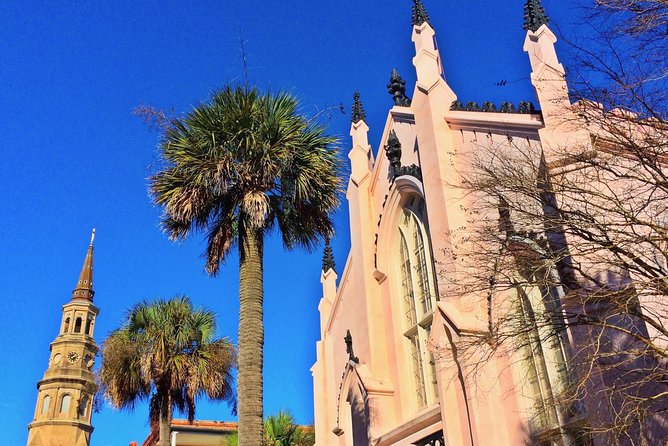
The Old Exchange is presented as one of South Carolina’s most historic buildings. Its long story includes pirates, patriots, and presidents, giving the guide plenty of material for a short but memorable explanation.
The itinerary allows about five minutes here, so you should not expect a full interior tour or an extended museum visit. The value is in the historical framing. You learn why the building mattered to Charleston’s commercial and political life and how its use changed over roughly three centuries.
The Old Exchange and Provost Dungeon can appeal to anyone who likes the less tidy side of history. The mention of pirates, colonial politics, and imprisonment gives the stop a different tone from the graceful homes and churches earlier in the walk.
The supplied schedule lists admission as free at this stop, while the clearly included museum ticket is for the Powder Magazine. Treat the Old Exchange portion as a guided exterior or area explanation unless your confirmation or guide says otherwise.
South of Broad, the Battery, and White Point Gardens
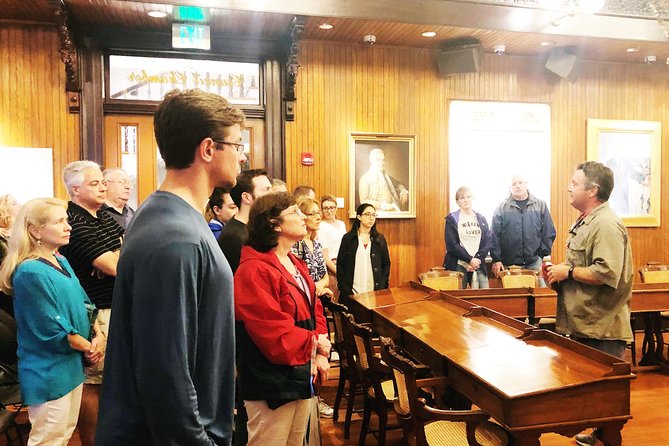
The route’s most scenic section comes near the end, when you walk through South of Broad toward the Battery and White Point Gardens. This residential area is known for grand homes, mature streets, and a strong sense of Charleston’s architectural character.
The guide discusses the people connected with the mansions along the Battery. That matters because the houses are not just decorative backdrops. They reflect wealth, social rank, trade, and the city’s changing fortunes. You also get a better sense of how Charleston’s historic center transitions from busy public streets to a quieter residential district.
The Battery is a seawall promenade, and the walk here lasts about 15 minutes. You can look toward the water, examine the line of historic homes, and hear how the waterfront shaped the city. The stop is especially pleasant in cooler weather, but the open setting can feel hot and exposed in summer.
White Point Gardens offers another break from dense streets. The route does not promise a long rest, but the guide may pause as needed. Dennis is praised for watching the group’s comfort and making bathroom or resting considerations part of the route, which is useful in Charleston’s heat.
The Powder Magazine Ticket: A Useful Extra
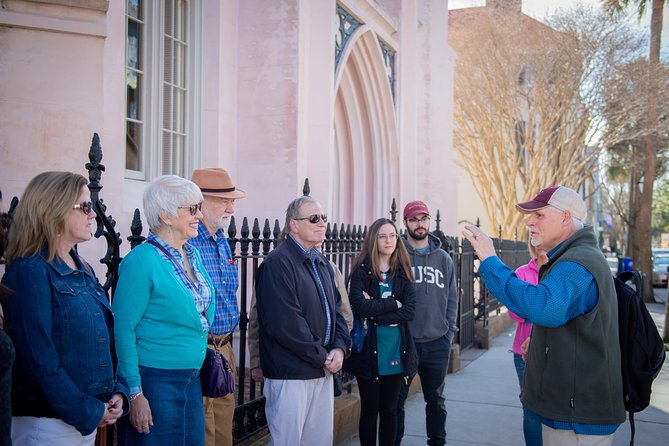
The included Powder Magazine admission adds value, but it requires a little planning. The walking route ends a few blocks from the start, and the Powder Magazine can be explored at your leisure rather than as a clearly timed stop within the six-part walking schedule.
That flexibility is useful. You can visit the museum after the walk, before another downtown activity, or at a time that suits your schedule. The Powder Magazine is a smaller, focused historical attraction, so it works well as a follow-up to a walking tour rather than as a substitute for one.
Do not assume the guide will spend a large part of the two-hour route inside the museum. The main experience remains the walk through Downtown Charleston. The ticket is an added opportunity, not the central part of the itinerary.
What the Guides Add
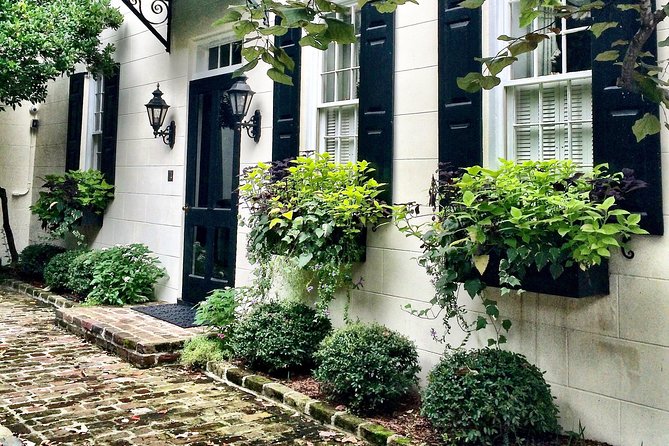
The guide is the heart of this experience. Charleston has enough historic plaques and attractive buildings to fill a day, but a good guide gives those sights a human shape.
Dennis is repeatedly praised for combining detailed history with humor, keeping a comfortable pace, and watching the group’s needs. He is also described as a South Carolina native and, in one account, a seventh-generation Charlestonian. Those local connections can add useful personal anecdotes, especially when the group wants more than dates and names.
Al is praised for a light, pleasant manner and a large store of information. Duggard, also referred to as Duggar in some comments, is described as friendly, funny, and especially strong on Charleston’s past. Evans is noted for bringing stories to life, recommending places to continue exploring, and taking the group through less obvious corners of the city.
Mark and Lawrence also receive strong praise for clear explanations, humor, and a well-managed pace. Captain Bobby is singled out for fun facts and a strong performance on a Christmas morning tour.
Guide styles can differ. One account found that a few historical details may have been incorrect, while another felt that some stories ran longer than necessary. That is a fair reminder that a live walking tour is not a scripted audio guide. You get personality and local color, but the exact emphasis can vary by guide.
Timing, Group Size, and Walking Conditions
The experience lasts about two hours and is offered in the morning or afternoon. The maximum group size is 20, which is small enough for a guide to address the group without the street feeling crowded around you.
The tour is conducted in English and uses a mobile ticket. Children must be accompanied by an adult, and service animals are allowed. It is near public transportation, and the operator states that most people can participate.
The end point is listed as 94 Battery Place, but it may change according to the guide and route. It should be only a few blocks from the starting point, and the guide will walk you back to the start if you request it.
Wear comfortable shoes. Bring water. Charleston’s streets can be tiring in heat, and the route operates in all weather conditions unless poor weather causes cancellation. Light clothing, sun protection, and a rain plan are sensible choices, though the exact weather conditions will determine how comfortable the walk feels.
The tour requires good weather for operation. If the operator cancels because of poor conditions, you are offered another date or a full refund.
Booking Ahead and Cancellation Terms
The experience is booked an average of 21 days ahead, so I would not leave it until the last morning of a short Charleston visit. A few weeks of advance planning gives you a better chance of finding a departure that suits your schedule.
You can cancel for a full refund up to 24 hours before the start time. Cancellations or changes made within 24 hours are not refunded or accepted. This matters if your plans depend on weather, since Charleston conditions can change quickly.
The punctual start is equally important. Arrive 15 minutes early, find the guide outside City Hall, and allow time for a restroom stop before the group leaves.
Who Will Get the Most From This Tour?
I would choose this walk if you are visiting Charleston for the first time and want a solid orientation before exploring independently. It is also a good fit if you care about architecture but want the buildings tied to politics, religion, war, and everyday life.
Families can participate, provided children are accompanied by an adult. History fans will appreciate the coverage of the American Revolution, Civil War, slavery, colonial Charleston, and the city’s later development. Couples and friends who prefer a relaxed introduction will enjoy the combination of stories, photographs, and manageable walking.
You might choose something else if you want extensive interior access, a much longer historical treatment, or a specialized tour devoted only to the Civil War or architecture. Two hours gives you a broad introduction, not an exhaustive study of Charleston.
Should You Book the Charleston Walking Tour?
At $28, this is a strong-value introduction to central Charleston. You get a licensed local guide, a maximum group size of 20, a route through the French Quarter and South of Broad, and admission to the Powder Magazine Museum.
Book it early, arrive well before the start time, and bring water. I would especially recommend it for a first day in town, when the guide’s suggestions can help you decide which churches, museums, homes, and waterfront areas deserve a closer look later.
Skip it only if the heat, rain, or two hours of walking will be a serious problem, or if you want a tour centered mainly on building interiors. For most first-time visitors, this is a practical way to get the city’s basic story before wandering Charleston on your own.
FAQ
How long is the Charleston History, Homes, and Architecture tour?
The guided walking tour lasts approximately two hours.
How much does the tour cost?
The price is $28 per person.
Where does the tour begin?
The tour begins outside Charleston City Hall at 80 Broad Street, Charleston, South Carolina 29401.
Where does the tour end?
The listed end point is 94 Battery Place, Charleston, South Carolina 29401. The exact ending can vary by guide and route, but it should be a few blocks from the start.
Can the guide walk me back to City Hall?
Yes. The guide will walk you back to the starting point if you request it.
Is Powder Magazine admission included?
Yes. Admission to the Powder Magazine Museum is included, and you can explore it at your leisure.
What sights are included on the walking route?
The route includes City Hall, Washington Square, St. Michael’s Episcopal Church, Rainbow Row, the Old Exchange and Provost Dungeon area, South of Broad, the Battery, and White Point Gardens.
Is the tour suitable for children?
Children may participate, but they must be accompanied by an adult.
What happens if the tour is canceled because of bad weather?
If poor weather causes the operator to cancel, you will be offered a different date or a full refund.
More Architecture and Landmark Tours in Charleston
- Charleston’s Best Highlights: History, Culture & Architecture
★ 5.0 · 422 reviews - Charleston History and Architecture Walking Tour
★ 5.0 · 63 reviews - Venice: St. Mark’s Basilica Guided Tour & VR History Intro
★ 3.9 · 4,880 reviews - Venice’s Best: Basilica, Doge’s Palace, Gondola & History Gallery
★ 4.5 · 2,478 reviews
Just added around Charleston
- Charleston’s Historic Pubs, Taverns, and Taprooms Tour★ 4.5 · 33 reviews
- Charleston’s Strong Women of the South History Tour★ 4.5 · 27 reviews
- Small-Group Tour: Charleston Old Walled City Historical Walking Tour★ 4.5 · 283 reviews
- Private Walking Tour of Historic Charleston★ 5.0 · 38 reviews
- Sip History in The Sun Cabana Covered Cocktail Class★ 5.0 · 332 reviews
- Sip History In a Secret Speakeasy Cocktail Class★ 5.0 · 40 reviews
- Private Afternoon Sailing/Dolphin & History Tour on 43ft Mystique★ 5.0 · 32 reviews
- Private Sunset Sail BYOB Dolphin/History Tours on 43ft Mystique★ 5.0 · 42 reviews
Architecture & Landmark Tours, compared.
St. Mark’s Basilica Guided Tour & VR History Intro
Read our review →
Venice’s Best: Basilica, Doge’s Palace, Gondola & History Gallery
Read our review →
Córdoba: Skip-the-Line Great Mosque-Cathedral History Tour
Read our review →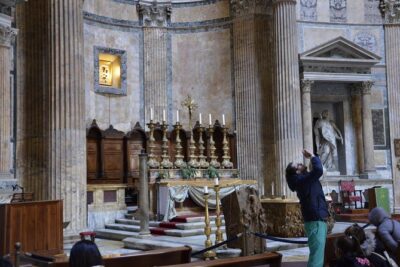
Pantheon Elite Guided Tour – Rome’s Iconic Ancient Temple
Read our review →
Abu Dhabi Grand Mosque, Palace, and Heritage Village
Read our review →
Chicago in a Day: Food, History & Architecture Walking Tour
Read our review →

Colosseum Special Access Tour, with Ancient Temples & Tombs
Read our review →Browse the lists this tour appears in