
Review · CHARLESTON
Charleston History Tour /
Old Charleston rewards slow walking. This two-hour tour brings together ornate buildings, harbor views, Gullah culture, and the city’s long political story in a compact route. I like the small group limit of 10, which gives the guide room to answer questions, and I like the way the tour mixes famous sights with less familiar cultural history.
I also like that admission to the listed sites is included, so you are not constantly reaching for your wallet. The main consideration is that much of the experience takes place outdoors, and the tour requires a moderate level of fitness. Hot, wet, or uncomfortable weather could change the feel of the walk.
A guide named Joyce has earned especially warm praise for explaining Charleston’s development, military past, architecture, and culture in a friendly way. One unusual possibility is ending up with a nearly private walk if the group is small. The one serious caution is reliability: one scheduled tour failed when the guide was hospitalized and could not contact the group.
Key points to know before booking
- Small groups capped at 10 people: You get a better chance to hear the guide and ask questions than on a large city tour.
- A strong mix of famous sights and local culture: The route includes Rainbow Row and the Battery, then adds Gullah history and Charleston’s Huguenot past.
- Five-minute stops are brief: The listed stops are orientation points within a two-hour walk, not long visits at each site.
- No extra admission payments are required: The listed sites seen during the tour are covered, while food and drinks are not.
- Starts and ends at 80 Broad Street: The round-trip format is useful if you are exploring central Charleston on foot.
- Weather matters: The experience requires good weather, and you need moderate physical fitness for the walk.
A compact introduction to Charleston at 80 Broad Street
The tour begins at 80 Broad Street, in the heart of Charleston’s historic center. That location makes sense for a walking experience because the route can move through several important parts of old Charleston without adding a separate transport leg.
You should allow about two hours for the full experience. The tour ends back at the meeting point, so you will not need to arrange a pickup at another part of town. That is handy if you have dinner plans, a museum visit, or another activity afterward.
The route is not a deep visit to one building. It is a guided overview, with short stops and connecting commentary. The five-minute timing attached to each listed site suggests that you will pause for an explanation, look closely at the exterior or immediate setting, and then continue walking.
That format suits you if you want a clear first look at Charleston. It may feel too brief if you hope to spend long periods inside churches or study every architectural detail. The value comes from the links between the stops: religion, politics, trade, defense, architecture, and culture all appear within a short stretch.
A few more history tours around Charleston worth a look
- Charleston’s Old South Carriage Historic Horse & Carriage Tour
★ 5.0 · 10,023 reviews - Historic Charleston Guided Sightseeing Walking Tour
★ 5.0 · 6,216 reviews - Charleston Horse-Drawn Carriage Tour: Explore Historic Charleston
★ 5.0 · 3,561 reviews
Dock Street Theater and Charleston’s performance past
Dock Street Theater is one of the more decorative stops. The building is noted for ornate playhouse design, elegant woodwork, and a courtyard, with the present structure dating to around 1810.
You get only about five minutes here, so think of this as a focused introduction rather than a full theater tour. The guide can point out the building’s visual character and explain why a theater matters in a city known for old homes, churches, and civic buildings.
I like this stop because it breaks up the church-and-monument rhythm. Charleston’s past was not only about government and worship. Theater also tells you something about public life, taste, and the city’s social world.
The short stop has one clear limitation. If the theater is your main reason for booking, the tour may leave you wanting more time. Still, as one piece of a broader walk, it provides a useful change of pace and gives the route a more human feel.
St. Michael’s Church, built around 1764
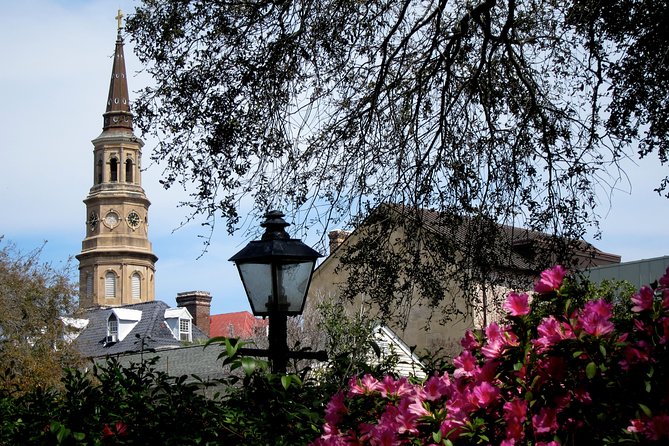
St. Michael’s Church is described as the oldest religious building in Charleston. That makes it one of the key historical anchors on the route.
The stop lasts about five minutes, enough for a guide to explain the church’s age and place in the city. You may be able to study its exterior closely, though the supplied details do not promise a long interior visit or a particular service schedule.
This is the sort of stop where a guide adds real value. A building can look impressive, but a short explanation gives it a role in the larger story. Joyce, one of the guides praised for this tour, is especially noted for connecting architecture with Charleston’s development and military history.
If you are interested in historic religious buildings, this stop should be one of the highlights. If you need extensive time inside, check your expectations. The tour keeps moving, and the church is part of a larger walking lesson rather than a stand-alone visit.
The 1771 building tied to the Constitution
The route also includes a building dating to 1771 that is associated with the ratification of the United States Constitution. The supplied details do not name the building, so you should treat this as a political-history stop rather than expect a full description of its interior access.
This part of the walk gives Charleston a national role. You are not simply looking at old walls. You are hearing how a local building connects to the creation of the United States as a federal nation.
That sort of context can be easy to miss when walking alone. You might pass a handsome old structure, take a photograph, and move on. With a guide, the building becomes part of a larger explanation of Charleston’s civic life.
Because the stop is folded into a two-hour route, the time here is likely short. I would listen closely and ask questions while the group is gathered. The small-group format helps, especially if you want clarification about the ratification story or the building’s role.
Same place, a different slice of the past:
- Charleston Harbor History Day-Time or Sunset Boat Cruise
★ 4.5 · 2,788 reviews - Hidden Alleyways and Historic Sites Small-Group Walking Tour
★ 5.0 · 2,335 reviews - Charleston: Daytime or Sunset Historic Harbor Cruise
★ 4.5 · 1,352 reviews - Charleston historical walking tour with a Professor of History at The Citadel
★ 5.0 · 1,284 reviews
Gullah culture adds an essential local voice
One of the most important parts of the tour is its attention to the Gullahs of Charleston. This adds cultural depth to a route that might otherwise focus mainly on architecture, churches, and famous streets.
Gullah history is central to understanding the Lowcountry’s people and traditions. The available tour details do not specify a separate Gullah site or the exact length of this discussion, so you should expect it as part of the guide’s interpretation rather than as a named building stop.
That can be a strength. The guide has room to connect culture to the streets around you instead of placing the subject in a separate box. You get a broader view of Charleston, one that includes the people and traditions behind the city’s public image.
I would pay close attention here and use the small group to ask respectful questions. The cultural portion may be brief, but it keeps the tour from becoming only a parade of pretty facades.
Rainbow Row and the city’s painted waterfront houses
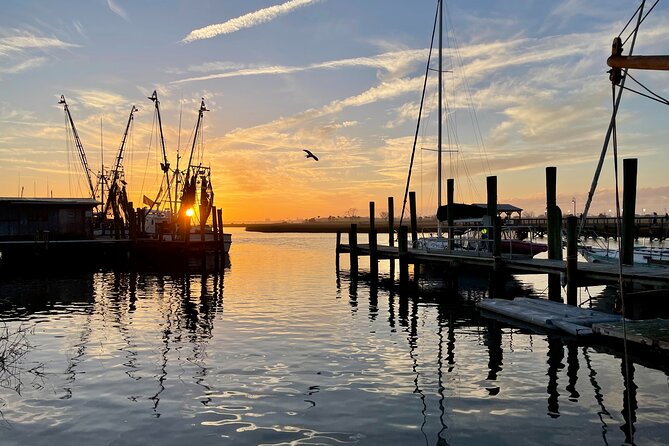
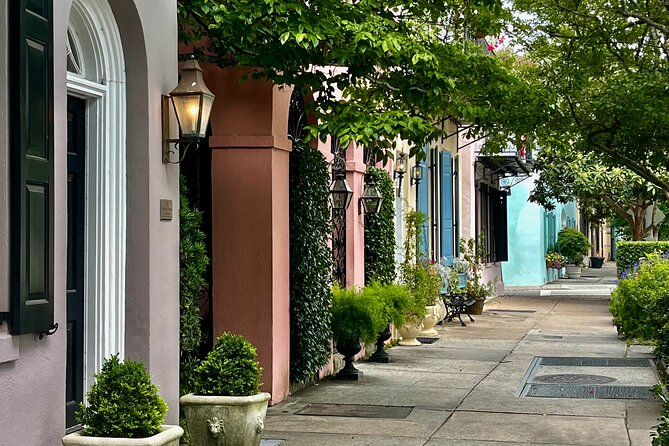
Rainbow Row is made up of nine attached buildings. All but one predate the American Revolution. The group is one of Charleston’s most recognizable sights, and it is easy to see why the route includes it.
The colorful facades make this a natural photo stop, but the age of the buildings matters more than the paint. Their connected form gives you a quick lesson in how Charleston’s older streets were built and arranged.
You have about five minutes here. That is enough for a short explanation and photographs, but not enough for a long architectural study. If you want postcard-style pictures, have your camera ready before the group stops.
I appreciate that Rainbow Row appears alongside less decorative sites. The route does not ask you to choose between beauty and substance. You get the attractive street scene, then move on to political, military, religious, and cultural subjects.
The Battery and White Point Gardens
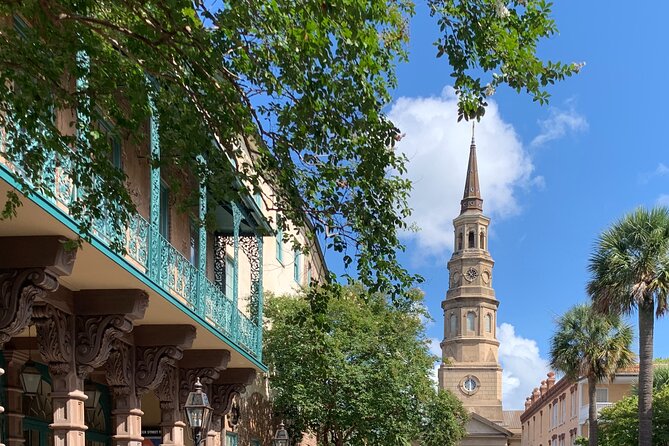
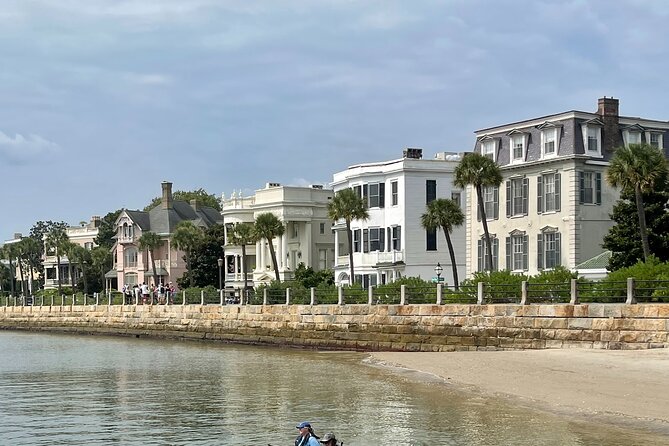
The Battery is a defensive seawall and promenade along Charleston Harbor. White Point Gardens adds an open green setting to this part of the walk.
This is likely one of the most pleasant sections of the route because the character changes from tight historic streets to the edge of the harbor. You can expect a more open outlook, with the defensive purpose of the seawall forming the main historical point.
The five-minute stop is short, so do not expect an extended waterfront stroll. You will get a taste of the setting and its role in Charleston’s defense. A guide can also help connect the Battery to the city’s military story, one of the subjects Joyce is praised for explaining.
Weather matters especially here. Wind, rain, heat, or strong sun can affect your comfort along the water. The tour requires good weather, and that is not a minor note for an outdoor walk. Wear comfortable shoes and bring what you need for the conditions, though food and drinks are not included.
French Huguenot Church and a distinct religious tradition

The French Huguenot Church was built in 1844. It is described as the oldest Gothic Revival church in South Carolina and the only independent Huguenot Church in the country.
This stop gives the tour another religious and cultural layer. St. Michael’s Church introduces an older Charleston religious building, while the French Huguenot Church shows a different tradition and a later architectural style.
Again, the stop is scheduled for about five minutes. That is enough to understand why the church matters, but you should not book this walk expecting a lengthy interior visit. The attraction here is the guide’s explanation and the chance to see the building within the wider pattern of Charleston’s religious history.
I find this kind of contrast useful. You can compare age, design, and religious identity without spending half a day inside one church. It keeps the pace lively, though visitors who want detailed Gothic Revival study may need extra time elsewhere.
What the two-hour format gives you
Two hours is a good length for a first introduction. You get enough time to see several major landmarks without giving up the whole day. The route also gives you a framework for returning later to the places that interest you most.
The short stop lengths mean walking and commentary fill much of the experience. That is important when setting expectations. You will not spend five minutes at each stop and then finish in half an hour. The route includes movement between locations, explanations, and the wider city setting.
A small group can make the format work better. With no more than 10 people, the guide can keep everyone together and respond to questions. If the group is very small, the walk may feel almost private. Joyce’s praised style is friendly and conversational, more like strolling with someone who enjoys showing you the city than listening to a formal speech.
That said, your experience depends heavily on the guide. Most of the tour’s value comes from interpretation rather than admission to attractions. The guide’s illness-related cancellation shows the practical risk, even though it appears to be an unusual case. Confirmation arrives within 48 hours of booking, subject to availability, so check that your reservation is confirmed before building a tight schedule around it.
Value, inclusions, and practical limits
A price is not provided in the available details, so I cannot judge whether the tour is a bargain at a specific dollar amount. I can assess what the fee is meant to cover: a two-hour guided walk, the listed historic stops, and admission to the sites seen during the experience.
You do not pay extra for those included sites. Food and drinks are not included, so plan those separately. Since the tour ends where it starts, you also avoid the complication of arranging transport back from another neighborhood.
The value is strongest if you want orientation and context. A self-guided walk may show you the same streets, but you would need to research the ratification site, Gullah culture, church history, military setting, and architectural details yourself.
The value is weaker if you want long indoor visits, a meal, or a relaxed pace with plenty of time for photographs. This is a guided overview, not a full-day cultural program.
You should have moderate physical fitness. The supplied details do not give a distance or step count, so I would not assume the walk is suitable for someone who cannot comfortably remain on foot for about two hours. Free cancellation is available up to 24 hours before the start time. Changes or cancellations inside that window are not accepted for a refund, and poor weather may lead to another date or a full refund.
Who should book this Charleston walk
I would recommend it to you if this is your first visit to Charleston and you want a sensible historical foundation. It works well for people who like architecture but also want politics, religion, defense, and local culture in the same outing.
It should also suit you if you prefer small groups. The maximum of 10 keeps the experience personal, and a very small booking may become close to a private walk.
Families with older children may appreciate the variety. The stops change often, and the city itself provides visual interest. Still, you should judge your group’s ability to walk outdoors for around two hours.
History fans will enjoy the range, but those seeking a specialist subject may find the treatment too brief. The Gullah discussion, French Huguenot Church, and Constitution-related building are valuable additions, yet none is presented as a full lecture or extended site visit.
Should you book it?
Book this tour if you want a compact, people-focused introduction to Charleston with strong coverage of architecture, religion, military history, civic history, and Gullah culture. The small group size, included site admissions, and return to the starting point make the plan easy to fit into a wider visit.
Skip it if you need guaranteed indoor access, extensive time at each landmark, or a tour built around food and drinks. Also leave room in your schedule in case weather affects the date.
For most first-time visitors who want more than photographs of Rainbow Row, this is a useful choice. Go in expecting a guided city walk, not a series of long building tours, and the two-hour format should serve you well.
FAQ
How long does the Charleston History Tour last?
The tour lasts approximately two hours.
Where does the tour begin?
It begins at 80 Broad Street, Charleston, South Carolina 29401.
Where does the tour end?
The activity ends back at the meeting point at 80 Broad Street.
What sites are included?
The route includes Dock Street Theater, St. Michael’s Church, Rainbow Row, the Battery and White Point Gardens, and the French Huguenot Church. It also covers a 1771 building connected with ratification of the United States Constitution and the Gullahs of Charleston.
Are admission fees included?
Yes. The listed sites seen during the tour do not require additional payment.
What happens if the weather is poor?
The experience requires good weather. If it is canceled because of poor weather, you will be offered another date or a full refund.
Just added around Charleston
- Charleston’s Historic Pubs, Taverns, and Taprooms Tour★ 4.5 · 33 reviews
- Charleston’s Strong Women of the South History Tour★ 4.5 · 27 reviews
- Small-Group Tour: Charleston Old Walled City Historical Walking Tour★ 4.5 · 283 reviews
- Private Walking Tour of Historic Charleston★ 5.0 · 38 reviews
- Sip History in The Sun Cabana Covered Cocktail Class★ 5.0 · 332 reviews
- Sip History In a Secret Speakeasy Cocktail Class★ 5.0 · 40 reviews
- Private Afternoon Sailing/Dolphin & History Tour on 43ft Mystique★ 5.0 · 32 reviews
- Private Sunset Sail BYOB Dolphin/History Tours on 43ft Mystique★ 5.0 · 42 reviews
Charleston History Tours, compared.

Charleston’s Old South Carriage Historic Horse & Carriage Tour
Read our review →
Historic Charleston Guided Sightseeing Walking Tour
Read our review →
Charleston Horse-Drawn Carriage Tour: Explore Historic Charleston
Read our review →
Charleston Harbor History Day-Time or Sunset Boat Cruise
Read our review →
Hidden Alleyways and Historic Sites Small-Group Walking Tour
Read our review →

Charleston historical walking tour with a Professor of History at The Citadel
Read our review →
Historical Downtown Tour by Horse-drawn Carriage
Read our review →Browse the lists this tour appears in