
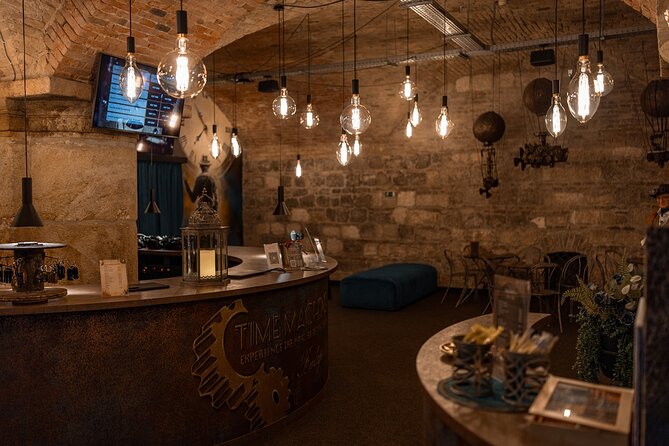
Review · BUDAPEST
Time Machine Budapest Historical Exhibition Ticket
Budapest’s past becomes a live show. Time Machine Budapest turns the city’s story into a 100-minute sensory experience, using VR glasses, projections, mist screens, holograms, and actors’ recorded voices. I like the way it gives you more than dates and displays, and I like its central location beneath Twentysix restaurant at 26 Király Street. The main drawback is that anyone seeking a quiet, traditional museum may find the technology-heavy format a little much.
The story runs from the idea of unifying Budapest through revolutions, wars, personal tragedies, and everyday courage. The scenes can be funny, sad, and startlingly realistic. It is especially well suited to families with children over 8, though you should expect a staged presentation rather than a free-form exhibition.
Key things to know before you go
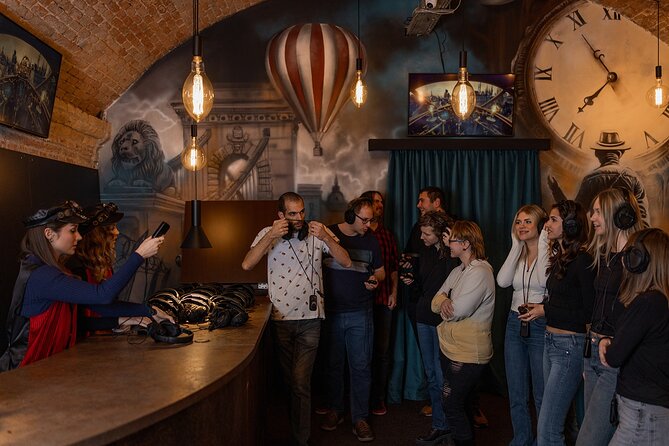
- The 1,000-square-meter setting creates room for detailed scenes, sound, projections, and changing moods.
- VR, holograms, mist screens, and a holopyramid bring Budapest’s past into view in ways a standard museum cannot.
- The story covers Budapest from unification to the present day, giving you a broad introduction to the city.
- English, German, Spanish, and Hungarian make the exhibition useful for international visitors and local residents.
- The experience lasts about 100 minutes, long enough to feel substantial but short enough to fit into a busy sightseeing day.
- The price is $25.29 per person, a fair cost if you want a polished indoor attraction rather than another walking tour.
What Time Machine Budapest is really like
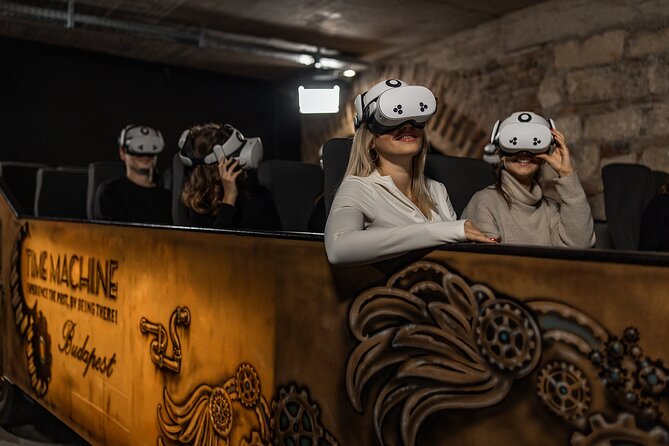
Time Machine Budapest is not a museum where you wander from case to case, reading small labels at your own pace. It is a guided historical presentation built around scenery, sound, visual effects, and short dramatic moments.
You move through a large, atmospheric space beneath Twentysix restaurant on Király Street. The setting matters. A 1,000-square-meter venue gives the production room to change its mood and scale, from broad historical events to smaller human stories.
The experience follows Budapest across a long stretch of time. It begins with the idea of bringing the city together and continues through revolutions, wars, political change, and the present day. The emphasis is not only on famous events. Forgotten lives and everyday heroes also have a place in the story.
That broad approach is one of the exhibition’s strengths. If you are new to Budapest, it gives you a useful framework for understanding the city before you explore its streets. If you already know the basics, the theatrical presentation may help you connect familiar places and events with human emotion.
The exhibition is available in English, German, Spanish, and Hungarian. English-speaking visitors should have no trouble following the presentation, while local residents and repeat visitors can experience the city’s story in their own language.
More Museum and Gallery History Tours in Budapest:
- Michael Jackson History Exhibition Ticket
★ 5.0 · 42 reviews - Paris: Louvre Museum Entry with History of Mona Lisa
★ 3.9 · 2,823 reviews - Venice’s Best: Basilica, Doge’s Palace, Gondola & History Gallery
★ 4.5 · 2,478 reviews
A 100-minute journey through Budapest’s past
The full program lasts about 1 hour and 40 minutes. That is longer than a quick attraction but shorter than a half-day museum visit. I see the timing as one of the better features: you get a substantial historical program without giving up an entire afternoon.
The sequence begins with Budapest’s formation and the idea of unification. From there, it moves through major turning points, including revolutions and wars. Rather than presenting these events as a dry list, the exhibition uses actors’ audio performances and visual scenes to give them a human voice.
You may see history presented through different emotional registers. One moment can be light or amusing, while the next becomes serious or sad. That shift reflects the reality of Budapest’s past, which includes both cultural achievement and painful disruption.
The final part brings the story to the present day. This makes the experience useful early in your visit, since you leave with a sense of how the city reached its current form. It can also work near the end of a Budapest stay, when familiar streets and landmarks may carry more meaning.
A practical point: the exhibition has a fixed narrative flow. You are not choosing which era to visit or deciding how long to spend in each room. If you prefer total freedom, that structure may feel limiting. If you like a clear story with a beginning, middle, and end, it keeps the experience easy to follow.
How the technology brings the story to life
The production uses several types of special effects, and each serves a slightly different purpose.
VR glasses create the most direct sense of movement into another time. One particularly strong response to the experience described scenes as so realistic that the past seemed to be in front of the viewer. That is the point of the format: not simply to show you historical information, but to make you feel present inside a staged moment.
Holographic projection adds figures and images that seem to appear in the space. The mist screen projection creates another surface for the story, while the holopyramid adds a compact three-dimensional visual effect. These tools make the exhibition feel more like a theatrical production than a standard cultural attraction.
Sound is just as important as the images. Professional actors perform the original audio plays, giving the historical episodes a human tone. The combination of voices, music or sound effects, projections, and physical decoration helps the scenes feel connected rather than like a string of unrelated demonstrations.
I would not book this expecting a perfectly realistic history lesson. The exhibition is designed for emotion and atmosphere as much as explanation. Some scenes may simplify complicated events so the story can move along. That is not necessarily a flaw, but you may want to pair the experience with a traditional museum or walking tour if you want detailed dates, political background, and scholarly interpretation.
The atmosphere, decoration, and emotional range
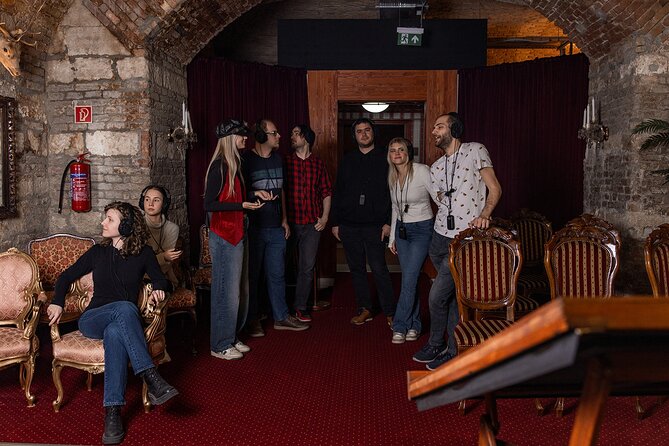
The setting receives as much attention as the technology. Detailed decoration and atmospheric rooms help create a sense of place, rather than leaving you in a plain hall surrounded by screens.
That attention to mood is important because Budapest’s story is not all grand buildings and famous names. The program includes forgotten destinies and ordinary people caught up in major events. Those smaller stories can make the historical material easier to remember.
The emotional range is another strong point. You should be prepared for funny parts as well as sad ones. Some scenes are intended to entertain, while others ask you to consider war, revolution, loss, and the people who endured them.
This balance works well for families. Children old enough to follow the story can see history presented in a way that feels active and visual. The recommended minimum age is over 8, which is a useful guide. Younger children may not have the attention span for a 100-minute historical program, especially when the subject matter becomes serious.
Parents should also consider the VR component and the emotional tone. The available information does not specify how every guest responds to the visual effects, so if someone in your group is sensitive to VR or theatrical scenes, it is worth keeping that in mind before booking.
More Entry Tickets in Budapest:
- Budapest: Jewish Heritage Guided Tour with Synagogue Ticket
★ 4.8 · 533 reviews - Edinburgh: Edinburgh Castle Guided History Tour with Tickets
★ 4.8 · 9,933 reviews - Taormina: Ancient Theater Skip-the-Line Ticket & Audio Guide
★ 4.5 · 2,412 reviews - Historic Milan Tour with Skip-the-Line Last Supper Ticket
★ 4.5 · 1,976 reviews
Why the location on Király Street is useful
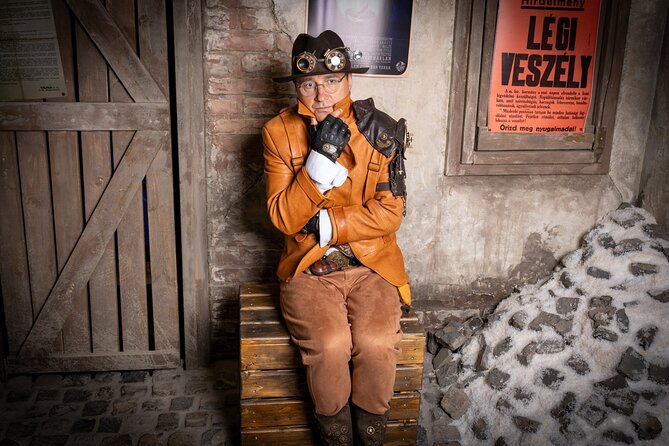
The exhibition is located at 26 Király Street, beneath Twentysix restaurant. Its central Budapest position makes it easy to add to a day of sightseeing, and the venue is near public transportation.
The location is helpful because the program works well as a break from outdoor touring. Budapest is a city you often explore on foot, with long stretches spent crossing districts, visiting churches, walking along the Danube, and climbing to viewpoints. A 100-minute indoor attraction gives your feet a rest while still adding cultural value.
I would place it early in a visit if you want context before seeing more of the city. Afterward, you may look at Budapest’s streets with a clearer sense of the events that shaped them.
You can also schedule it later in the day as a change of pace. The exhibition is not dependent on weather, and its atmosphere comes from the production rather than from outdoor conditions. The available information does not provide a specific meeting procedure or entry time advice, so check your booking details carefully before setting out.
Is $25.29 a good price?
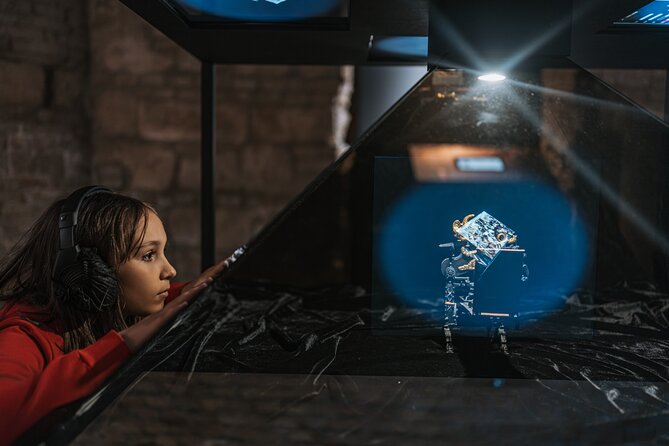
At $25.29 per person, Time Machine Budapest is not a bargain basement attraction, but the price is reasonable for a 100-minute production using several forms of special technology and professional audio performances.
The value depends on what you want from your Budapest sightseeing. If you only want low-cost outdoor attractions, you may prefer to spend your money on the city’s streets, public spaces, and free viewpoints. But if you want a polished indoor activity with a clear story, the cost compares well with the time involved.
You are paying for more than admission to a room. The price covers a designed historical presentation with VR, holographic projection, mist screens, a holopyramid, recorded performances, and decorative settings. That does not guarantee that every effect will impress every person, but it explains why the experience costs more than a simple self-guided exhibit.
The strongest value comes when you share the experience with family or friends and want something everyone can follow. It can also be worthwhile for a first-time visit when you want an overview without committing to a long museum visit.
Who will enjoy this most?
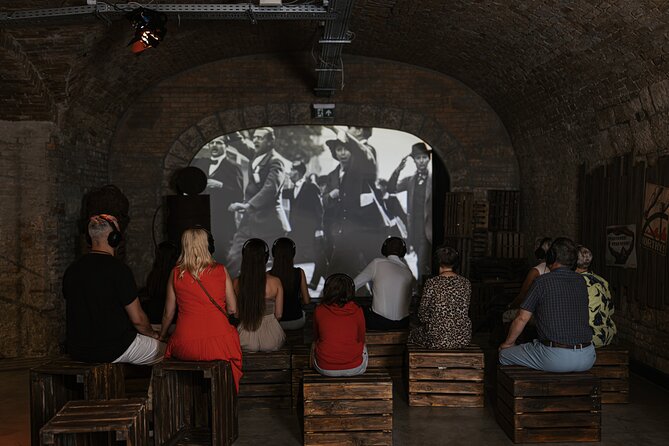
I would recommend Time Machine Budapest to several kinds of visitors:
- First-time visitors who want a broad introduction to Budapest’s past.
- Families with children over 8 who respond better to scenes, sound, and visual effects than to long museum labels.
- History fans who enjoy seeing familiar events presented in a dramatic format.
- Repeat visitors and local residents who want a different way to think about the city.
- People needing an indoor break from a full day of walking.
- Visitors looking for something beyond standard sightseeing, especially an activity that combines education and entertainment.
It may be less suitable if you want a quiet, self-guided museum experience. You also may prefer a more traditional historical site if your main goal is detailed documentation rather than mood and storytelling.
The experience is offered in four languages, which makes it a practical choice for mixed-language groups. You should select the language that lets you follow the audio plays comfortably, since the spoken performances are central to the program.
How it compares with a normal museum visit
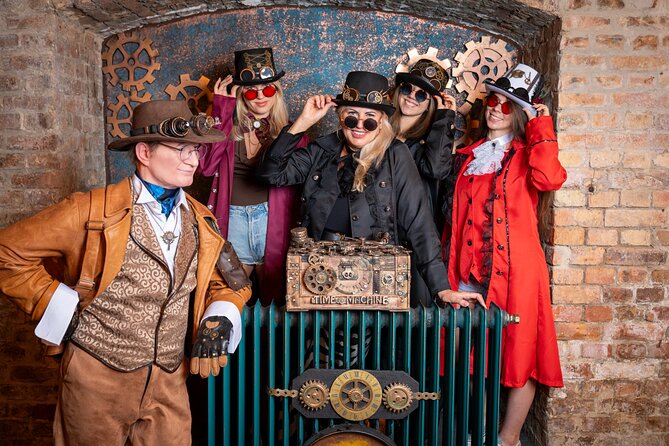
A normal museum gives you control. You can skip a display, linger over a painting, reread a label, or leave whenever you like. Time Machine Budapest gives you a set sequence and a more dramatic presentation.
That fixed structure has benefits. You do not need to plan your own route through Budapest’s history, and you will not spend half your visit wondering which room to visit next. The story does the organizing for you.
The trade-off is depth. A 100-minute show can introduce a wide range of events, but it cannot explain every political movement, military decision, or social change in detail. Think of it as a vivid starting point, not the final word on Hungarian history.
I like this kind of attraction when used with a little planning. See the exhibition, then spend time walking through the city and visiting a more traditional museum or historic site. The technology gives you an emotional outline, while Budapest itself supplies the real streets, buildings, and details.
Booking, timing, and cancellation
The experience is available with a mobile ticket, which keeps admission simple for most visitors. Confirmation is provided at booking, and it is near public transportation.
Most people can participate, according to the supplied practical information. The recommended audience is adults and families with children over 8. No special accessibility details are provided, so you should contact Time Machine Budapest directly if someone in your group has mobility, sensory, or other access needs.
The experience can be cancelled for a full refund if you cancel at least 24 hours before the start time. Cancellations or changes made less than 24 hours before the start time are not accepted for a refund, and the cut-off follows local Budapest time.
Because the attraction is often booked well ahead, with an average booking lead time of 59 days, I would reserve early if your schedule is fixed. That is especially sensible for school holidays or a short city break when you have little room to move activities around.
Should you book Time Machine Budapest?
I would book it if you want Budapest’s history presented as a show rather than a collection of displays. The VR scenes, holograms, mist projections, actor performances, and detailed decoration give the city’s past a strong emotional pull.
The best reason to go is the combination of story and atmosphere. You get revolutions, wars, personal stories, and everyday courage in one organized 100-minute program. The main caution is that this is entertainment-led history, not a quiet museum or a specialist lecture.
At $25.29, it offers fair value for families, first-time visitors, and anyone who wants a memorable indoor break from walking. Book it if the idea of seeing Budapest’s past through staged scenes and modern visual effects appeals to you. Skip it only if you strongly prefer self-guided museums, detailed academic interpretation, or complete control over your pace.
FAQ
Where is Time Machine Budapest located?
It is located beneath Twentysix restaurant at 26 Király Street in Budapest, Hungary.
How long does the experience last?
The experience lasts approximately 1 hour and 40 minutes, or about 100 minutes.
What languages are available?
The exhibition is available in English, German, Spanish, and Hungarian.
What age is the experience recommended for?
It is recommended for adults and families with children over 8 years old.
What does the admission include?
Admission to the Time Machine Budapest historical exhibition is included.
What technology is used during the exhibition?
The experience uses VR, holographic projection, mist screen projection, a holopyramid, and original audio plays performed by professional actors.
Is the attraction near public transportation?
Yes. The venue is near public transportation.
Can I cancel for a full refund?
Yes, if you cancel at least 24 hours before the experience start time. Cancellations and changes made less than 24 hours before the start time are not accepted for a refund.
Just added around Budapest
- Private Jewish Heritage Tour including Hotel Pickup★ 4.5 · 35 reviews
- Jewish Heritage in Hungary with a Historian★ 5.0 · 37 reviews
- Jewish Heritage / Full tour★ 5.0 · 59 reviews
- Budapest Jewish Heritage: Synagogues, Shoes, Secrets & Flódni★ 5.0 · 47 reviews
- Michael Jackson History Exhibition Ticket★ 5.0 · 42 reviews
- Budapest Historic Downtown Bicycle Tour in small groups★ 5.0 · 288 reviews
- Communist History Evening Walking Tour of Budapest★ 4.5 · 23 reviews
- HOLLÓKŐ UNESCO World Heritage site + Eger Castle Private guided tour★ 4.5 · 18 reviews
Museum & Gallery History Tours, compared.
Louvre Museum Entry with History of Mona Lisa
Read our review →
Venice’s Best: Basilica, Doge’s Palace, Gondola & History Gallery
Read our review →
Guided African American History Tour with Reserved Museum Entry
Read our review →
POLIN Museum of the History of Polish Jews Ticket
Read our review →
Bell Tower & St Mark’s Square History Gallery Ticket
Read our review →
Field Museum of Natural History Ticket or VIP Tour
Read our review →
Madrid in a Day Tour:Royal Palace, Historic Center & Prado Museum
Read our review →
Basilica, Doge’s Palace, History Gallery & Bell Tower Option
Read our review →Browse the lists this tour appears in