
Review · BUCHAREST
Private Tour – Food, Culture, History & Traditions
Bucharest rewards curious walkers. This private tour links food, architecture, royal landmarks, communist history, and local legends across roughly 6 kilometers, giving you a useful first look at a city that can feel confusing at street level. I like the thoughtful route and the included two-course Romanian meal, which turns sightseeing into a proper introduction to local life. The main consideration is the distance: you need reasonable fitness, and the soft-spoken guide may be harder to hear beside busy streets.
Guide Bianca brings a journalist’s eye to the walk, connecting buildings to the events that shaped Romania. I also like that the pace can bend to your group, with time for photos and questions instead of a rigid march from one monument to the next. At $114.14 per person, the price is fair for a private half-day outing with a full meal, though drinks cost extra.
Key Details That Shape the Experience
- A 6-kilometer walk through central Bucharest: You move from Old Town to University Square, with many short stops along the way.
- A meal with Romanian starters and a main course included: Expect a platter of cheeses, charcuterie, and other local starters, followed by a main dish.
- Bianca’s history-focused storytelling: Her background as a former journalist helps tie architecture to politics, culture, and daily life.
- A private tour for your group only: You can ask questions, pause for photos, and adjust the pace more easily than on a large group outing.
- A route beyond the standard postcard sights: The Armenian Quarter, Dacia Boulevard, Central School, and Icoanei Garden add local texture.
- Free cancellation up to 24 hours ahead: Bad weather or an unmet minimum number of participants can also lead to a new date or refund.
Starting in Old Town, Where Food and Trade Meet
The tour begins at Bulevardul Ion C. Brătianu 36, a practical starting point near Bucharest’s historic center. From there, you enter Old Town, where the walk begins with the area’s past as a trading district.
This opening section matters because it gives you a reason to look beyond the polished facades and restaurants. The guide explains how goods moved through the district and points to the place associated with the invention of mici, Romania’s famous grilled meat rolls. Food here is not just a lunch break. It is part of the city’s social and commercial story.
You spend about 30 minutes in Old Town, enough time to get oriented without spending the entire tour among the busiest streets. I would treat this as a useful first chapter, especially if you have just arrived and want a quick sense of how Bucharest developed around trade, public life, and food.
More Local Culture and Traditions Tours in Romania:
- Roma Culture, Realities and Slavery History, Walking tour
★ 4.9 · 52 reviews - Private Bucharest: History & Food with Traditional Meal
★ 5.0 · 34 reviews - Amsterdam Food and Cultural Tour with Tastings
★ 5.0 · 4,315 reviews
Stavropoleos, CEC, and Bucharest’s Decorative Center
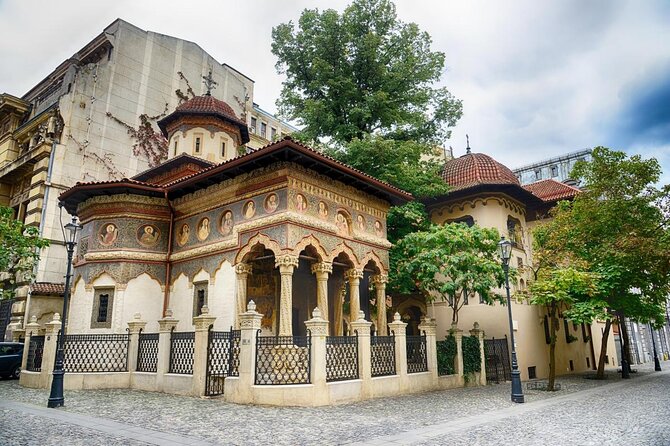
Stavropoleos Monastery is a small but important stop. This 18th-century Romanian Renaissance monastery offers a quiet change of pace from the streets around it. The scheduled visit is brief, about three minutes, so you should not expect a long guided exploration.
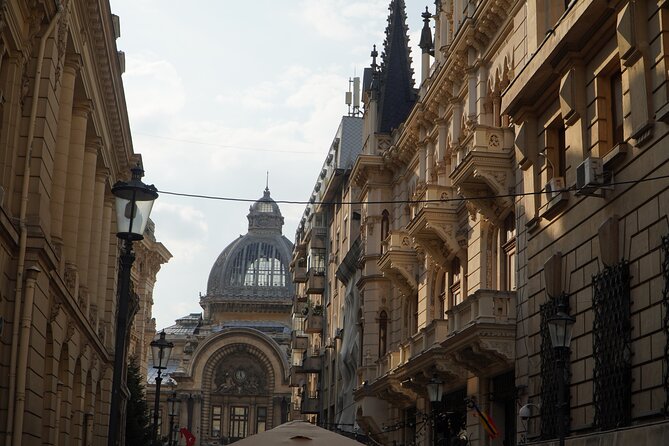
The same quick rhythm applies at Palatul CEC, the ornate home of CEC Bank. Built at the end of the 19th century, it shows the eclectic style that gives central Bucharest much of its visual character. You pause outside and take in the building rather than enter for a full interior visit.
Macca Villacrosse Passage follows, with about five minutes to see one of the city’s most attractive covered passages. This is a good photo stop, but it also helps explain how Bucharest’s commercial center once connected shops, cafés, and movement through the city.
These stops are short, and that is both useful and limiting. You cover a lot of ground, but anyone who wants long museum visits or detailed architectural study may find the pace brisk. The tour works best when you enjoy a broad city portrait rather than one monument explored at length.
Banks, Hotels, and the Heart of Calea Victoriei
The route continues to the BNR Palace, home of Romania’s national bank, along with the former Marmorsch Blank Bank, now converted into a hotel. These buildings show the financial side of Bucharest’s growth and the way old institutions have been given new uses.
Then comes Calea Victoriei, described as the heart of Bucharest since the 19th century. You spend about 30 minutes here, making it one of the longer sightseeing sections. This is where the many architectural influences begin to make more sense as a group. Grand civic buildings, former banks, royal structures, and cultural institutions all sit within the same broad story.
I especially like this part for first-time visitors because Calea Victoriei helps you connect separate sights into one city center. Instead of seeing a bank, a palace, and a concert hall as unrelated photo stops, you get a sense of the avenue as a long-running stage for Bucharest’s public life.
Pasajul Victoriei and the City’s Less Polished Stories
Pasajul Victoriei brings a more scandalous note to the walk. Along with Pasajul Englez, it points to a former brothel with a discreet entrance off the main avenue. The story involves the king and upper-class patrons who once sought private entertainment there.
The stop takes only about five minutes, but it adds welcome candor. Bucharest’s past is not only palaces, national institutions, and elegant facades. A good city tour also makes room for the private behavior, social divisions, and moral contradictions behind respectable streets.
This is one of the places where Bianca’s storytelling style matters. The value is less in the passage itself than in the context she gives it. You are not simply photographing an old alley. You are hearing how power and privilege operated in the capital.
More Private History Tours in Romania:
- Bucharest Jewish Heritage | Holocaust Memorial | Private Car Tour
★ 5.0 · 38 reviews - Private Historical Walking Tour of York
★ 5.0 · 1,324 reviews - Private Guided Historic Electric Cart Tour of St. Augustine
★ 5.0 · 1,194 reviews - Istanbul: Acemoglu Historical Turkish Bath w/Private Options
★ 4.6 · 1,190 reviews
Revolution Square and the Fall of Ceaușescu

At Revolution Square, the tour turns to Romania’s communist period and the bloody events of 1989. This is where Nicolae Ceaușescu gave his final speech as the regime began to collapse.
You spend around ten minutes here. That may sound short for such an important site, but the stop is part of a larger historical thread that runs through the tour. Bucharest’s grand avenues and official buildings take on a different meaning when you understand how political power was displayed, challenged, and finally broken.
The tour does not appear to be designed as a specialist communist-history walk. Instead, it gives you a clear orientation point and links the square to nearby royal and cultural landmarks. If Romania’s 20th-century politics is your main interest, you may want additional time elsewhere. For a general city introduction, this is a valuable stop.
The Romanian Athenaeum and the Former Royal Palace
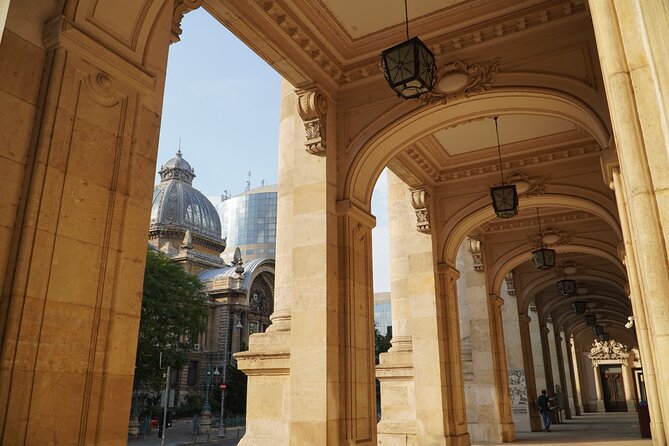
The Romanian Athenaeum is one of the most admired buildings in Bucharest, and the visit gives you time to appreciate its exterior. The stop lasts about five minutes, so the emphasis is on the building’s appearance and place in the city rather than an extended concert-hall visit.
Next comes the Royal Palace, which now houses the National Art Museum. Again, the stop is brief, around three minutes. You see where royal power once operated and how the building serves a public cultural role today.
These two stops work well together. The Athenaeum represents music and national culture, while the palace points to monarchy, state power, and the later use of royal spaces. I would not book this tour expecting admission to the National Art Museum, since the route lists the palace as an exterior sightseeing stop and all attractions have free admission during the walk.
Dacia Boulevard and Bucharest’s Neo-Romanian Villas
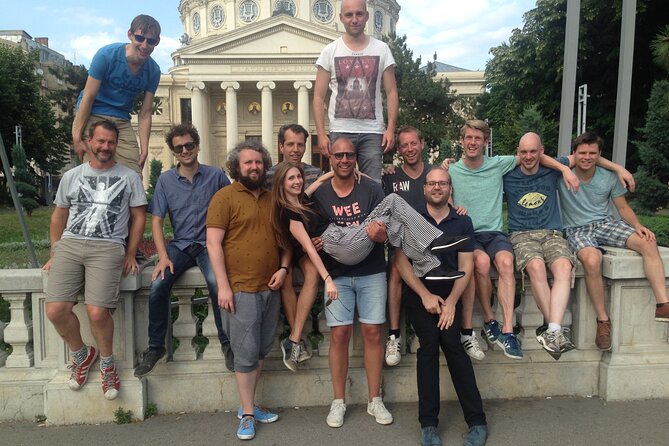
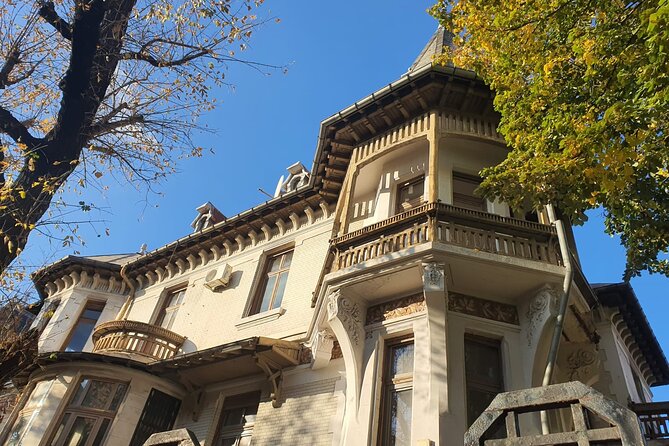
Bulevardul Dacia gives the tour a welcome change of scenery. Rather than focusing on major public buildings, you walk past magnificent villas that show the neo-Romanian architectural style.
You spend about 20 minutes here, enough to slow down and look at residential architecture. This is the kind of section that can be easy to miss if you explore Bucharest only by taxi or follow the main tourist circuit. The villas offer clues about how prosperous residents wanted to express Romanian identity through design.
The route’s variety is one of its strengths. You move from banks and palaces to homes, schools, gardens, and a neighborhood shaped by a specific ethnic community. That range makes the city feel more real than a list of famous buildings would.
Central School and Stories from the Armenian Quarter

Colegiul Național Școala Centrală was a 19th-century boarding school for girls. The stop includes eerie stories connected with the school, adding a touch of local folklore to the architectural and social history.
You stay for about five minutes. The visit is short, but the school helps show how education, gender, and elite society fit into Bucharest’s development. The mysterious stories also keep the walk from becoming too formal or institutional.
The Armenian Quarter receives a longer 30-minute exploration. This is one of the strongest parts of the route for anyone who wants to see a less obvious side of the city. You encounter a district filled with Armenian history, unusual details, and small points of interest that can be easy to pass without a guide.
I like the Armenian Quarter because it broadens the story of Bucharest. The city is not only Romanian royal history and communist politics. It also reflects the communities that traded, worshipped, built homes, and shaped local culture over time.
Icoanei Garden and the City’s Old Superstitions
The final sightseeing stop is Grădina Icoanei, where you hear about beliefs that witches once cast spells nearby. The visit lasts around ten minutes.
This closing section shifts from documented institutions and political events toward older fears and local legends. It is a fitting way to finish a route that has already covered food traditions, royal buildings, former brothels, revolutionary history, and minority neighborhoods.
You then finish at University Square on Bulevardul Regina Elisabeta, Bucharest’s kilometer zero. This is a useful end point for continuing your own exploration, though the supplied meeting details do not promise transport back to your hotel.
What the Included Romanian Meal Adds
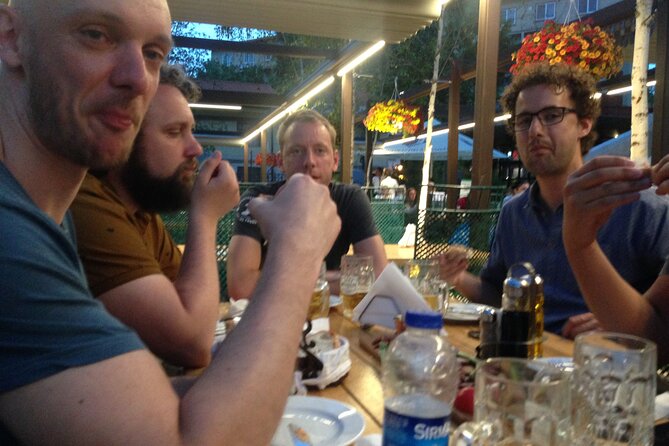
The included meal is a real part of the tour’s value. You receive two courses: a platter with cheeses, charcuterie, and other Romanian starters, followed by a main course. Alcohol, soda, and other drinks are not included, so budget a little extra if you want something beyond the meal.
This food stop gives the tour a social finish. After several hours of walking and listening, you can sit down with a clearer sense of what Romanian food traditions mean in daily life. The meal also helps justify the price, particularly for a private experience rather than a simple sightseeing walk.
The timing of lunch or dinner can vary, since the tour lasts about four to five hours and the exact start time may be arranged with the guide. One past outing included pastries, coffee, and lunch, but the guaranteed inclusion is the two-course meal, not those extra refreshments.
Pace, Group Size, and Hearing the Guide
This is a private activity, so only your group participates. That gives you room to ask questions and request a slower pace. Bianca has adjusted start times and walking speed for groups, and she has been praised for helping with photos and adapting when a building or street catches your interest.
The physical side deserves plain attention. The route covers approximately 6 kilometers, with much of it on foot. Most people can take part, but you should be comfortable walking for several hours through an urban setting.
If your group has more than four people, audio devices are provided so everyone can hear the guide while keeping a comfortable distance. That is helpful in crowded areas. Bianca has a soft voice, and city noise can sometimes make her harder to hear, so staying close is sensible even when headsets are available.
Families can fit this tour well. Bianca has successfully worked with a four-year-old, and the mix of food, odd stories, grand buildings, and short stops gives younger children more variety than a long museum visit. Still, the 6-kilometer distance may be tiring for small legs.
Is $114.14 Per Person Good Value?
At $114.14 per person, this is not a budget walking tour. But the price includes a private guide, all fees and taxes, audio equipment for groups above four, and a full two-course meal.
The value improves if you are traveling with relatives or friends and can use the available group discount. A private format is also useful if you have only one full day in Bucharest and want both a broad orientation and a meal without arranging separate research.
The price is less attractive if you want museum entry, long interior visits, or a short route. Those are not the main goals here. You are paying for personal attention, a carefully linked route, historical explanation, and food.
Booking Details and Weather Rules
Confirmation arrives at booking, and the tour is offered in English. Service animals are allowed, and the route is near public transportation.
You can cancel for a full refund up to 24 hours before the local start time. Changes made inside that 24-hour window are not accepted, and the payment is not refunded for a late cancellation.
The experience depends on good weather. If poor weather causes cancellation, you receive the choice of another date or a full refund. The same choice applies if the minimum number of participants is not met.
Should You Book This Bucharest Walk?
I would book this tour if you are visiting Bucharest for the first time, want a strong orientation in half a day, and care about the connection between food, buildings, politics, and local stories. Bianca’s journalism background, flexible manner, and ability to link architecture with Romanian history are major advantages.
I would also recommend it for families and small groups who prefer a private pace and want more than the standard Old Town circuit. The Armenian Quarter, Dacia Boulevard, Central School, and Icoanei Garden give you a broader view of the city.
I would hesitate only if you dislike long walks, need guaranteed indoor access, or want a specialist tour focused entirely on communist history, art, or food. For most first-time visitors who can manage 6 kilometers and pay for a private experience, the combination of sights and lunch makes this a sensible introduction to Bucharest.
FAQ
How long does the tour last?
The tour lasts approximately four to five hours.
How far do you walk?
The route is approximately 6 kilometers, so a reasonable level of physical fitness is required.
Where does the tour start?
It starts at Bulevardul Ion C. Brătianu 36, 030167 Bucharest, Romania.
Where does the tour end?
The tour ends at University Square on Bulevardul Regina Elisabeta, Bucharest, known as kilometer zero of Bucharest.
Is lunch included?
Yes. The meal includes two courses: a platter with cheeses, charcuterie, and other Romanian starters, followed by a main course.
Are drinks included?
No. Alcoholic drinks, soda, and other drinks are not included.
Is the tour private?
Yes. Only your group participates in the activity.
What happens if the weather is poor?
If the tour is canceled because of poor weather, you are offered another date or a full refund.
More Food Tours in Romania
- Bucharest Historical Food Tour in Old Center
★ 5.0 · 21 reviews - Barcelona: Tapas Walking Tour with Food, Wine, and History
★ 4.8 · 4,261 reviews - Sevilla Food Tour: Tapas, Wine, History & Traditions
★ 5.0 · 3,468 reviews - Madrid Tapas & Taverns Small Group Food & History Tour
★ 5.0 · 2,664 reviews
Just added around Romania
- Half-Day Jewish Heritage Walking Tour in Bucharest★ 5.0 · 20 reviews
- Bucharest Jewish Heritage | Holocaust Memorial | Private Car Tour★ 5.0 · 38 reviews
- Bucharest Historical Food Tour in Old Center★ 5.0 · 21 reviews
- Bucharest Heritage City Tour – The Last Days of Communism★ 5.0 · 20 reviews
- Experience the History of Bran Castle and Saxon Fortifications in Burzenland★ 5.0 · 19 reviews
- Roma Culture, Realities and Slavery History, Walking tour★ 4.9 · 52 reviews
- Private Bucharest: History & Food with Traditional Meal★ 5.0 · 34 reviews
- Discover Romania’s Wine Heritage in Brasov’s Historic Center★ 4.6 · 19 reviews
Local Culture & Traditions Tours, compared.

Amsterdam Food and Cultural Tour with Tastings
Read our review →
Sevilla Food Tour: Tapas, Wine, History & Traditions
Read our review →
Tromsø: Reindeer Camp and Sami Cultural Tour with Lunch
Read our review →
Half Day Dominican Republic Cultural Tour : Small Group
Read our review →
Ultimate Melbourne Walking Tour: History, Laneways & Culture
Read our review →
Tromsø: Sámi Reindeer Sledding and Sami Cultural Tour
Read our review →
Kyoto Gion: 2-Hour Geisha Culture & History Walking Tour
Read our review →
Marrakech Historical and Cultural Tour – Half Day City Tour
Read our review →Browse the lists this tour appears in