
Review · BUCHAREST
Bucharest Historical Food Tour in Old Center
Bucharest tastes better with a story. This small-group evening walk links Romanian food with landmarks from the Athenaeum to Old Town, and Dan brings personal memories of communist-era Romania to the historical stops. I especially like the six-person maximum and the way Dan and Patricia divide the evening between history and food. The main drawback is price: at $108.02 per person, the meal portions may not feel generous enough for every appetite.
You begin at 5:00 pm and finish near Manuc’s Inn after about two and a half hours, with walking time built into the schedule. I also like the mix of grand buildings, quiet religious art, royal history, and familiar local dishes. Just keep in mind that some stops are brief, and entry inside the Athenaeum depends on permission that day.
Six useful things to know before booking
- A small group of up to six people makes it easier to ask questions and adjust the pace.
- Dan handles the history, including personal insight into life before and after communism.
- Patricia focuses on food, guiding you toward Romanian dishes and traditional sweets.
- The route covers major Old Center sights, from the Romanian Athenaeum to Manuc’s Inn.
- The food is part of a full evening walk, not a restaurant crawl with long meals at every stop.
- The tour is most useful early in your visit, when you want context for Bucharest’s buildings, politics, and cuisine.
Why this Bucharest food walk works well
I like tours that give food a job beyond filling your plate. Here, each taste fits into a larger picture of Bucharest, a city shaped by royal ambition, French-style architecture, religious traditions, communism, revolution, and a lively modern center.
Dan and Patricia make a strong team. Dan leads the historical side and has spoken about growing up in communist Romania, which gives his explanations a personal edge. Patricia takes care of the food and hospitality. Their roles are clear, but the evening also feels social rather than scripted. Several people found the guides warm and generous, and one couple even described being treated like family.
The maximum group size is six. That matters in a city where narrow streets, busy squares, and small food stops can make a large group clumsy. You can ask about a building, request more detail about the communist period, or explain a dietary concern without trying to catch a guide’s attention from the back of a crowd.
The tour is also more than a food tour. You will not spend two and a half hours sitting at tables. The schedule includes short visits at historic sites, walking between them, and food stops that may be quick tastings or modest meals. If you want a long dinner with several courses, this may feel light for the price. If you want a useful first look at Bucharest with food woven through it, the format makes sense.
More Food and History Tours in Romania:
- Sevilla Food Tour: Tapas, Wine, History & Traditions
★ 5.0 · 3,468 reviews - Victoria Guided Food and History Tour
★ 5.0 · 2,015 reviews - Gastown Historic Walking Food Tour
★ 5.0 · 1,863 reviews
Starting at the Romanian Athenaeum at 5:00 pm
The meeting point is on Strada Benjamin Franklin, in front of the Romanian Athenaeum. The building dates from 1888 and is often described as Bucharest’s most beautiful building. That is a bold claim, but the Athenaeum gives the evening a fine opening: grand, historic, and easy to appreciate before heading toward the older center.
If entry is allowed that day, you may go inside. The information provided does not promise interior access every time, so treat this as a welcome extra rather than a guaranteed part of the tour. That distinction matters if you are planning the rest of your evening around seeing the concert hall.
Allow a few minutes to arrive early. The meeting point and endpoint are in different parts of central Bucharest, and one person had trouble with a map directing them to the final location instead of the start. Direct WhatsApp communication solved the problem, but checking the starting address before leaving your hotel is sensible.
Royal power and revolution at the Memorial of Rebirth
The next stop is the Memorial of Rebirth, where Dan explains several important pieces of Bucharest’s modern story. You will hear about the Royal Palace, the balcony connected with the beginning of the revolution, and the statue of King Carol.
This is a short stop of about 15 minutes, so expect a clear overview rather than a long lecture. The value comes from putting several landmarks together. Royal rule, public protest, and the country’s more recent political change are close enough here to discuss in one place.
Dan’s personal experience adds weight to this part of the walk. His stories about life during and after communism help connect dates and buildings with ordinary life. That personal viewpoint was one of the most praised parts of the evening, especially for anyone who wants more than a list of names and events.
You should also expect the tour to move at a steady pace. It is designed to cover several places in one evening, not to linger at each site until every detail has been explained. Take notes if a particular building catches your interest, then return later on your own.
Quiet beauty inside Stavropoleos Monastery
Stavropoleos Monastery offers a change of mood. Instead of broad boulevards and political monuments, you enter one of Bucharest’s oldest and most beautiful religious sites. The visit lasts about 10 to 15 minutes and includes the interior when access is available.
Ten nuns live at the monastery, and that detail helps you understand that this is not simply a preserved monument. It remains a religious place with an active community. Keep your behavior respectful, and be prepared for a quiet visit rather than a guide-led show.
The stop works well because it adds another layer to Bucharest’s identity. The city is not only royal facades and communist-era stories. Its churches and monasteries preserve a more intimate side of local life, one that is easy to miss if you race straight to the restaurants of the Old Center.
This is also one of the stops where a short explanation can be enough. You see the setting, hear why it matters, and move on before the evening becomes overloaded with facts.
More Food Tours in Romania:
- Private Bucharest: History & Food with Traditional Meal
★ 5.0 · 34 reviews - Amsterdam Food and Cultural Tour with Tastings
★ 5.0 · 4,315 reviews - Barcelona: Tapas Walking Tour with Food, Wine, and History
★ 4.8 · 4,261 reviews - Madrid Tapas & Taverns Small Group Food & History Tour
★ 5.0 · 2,664 reviews
Manuc’s Inn and the heart of Old Town
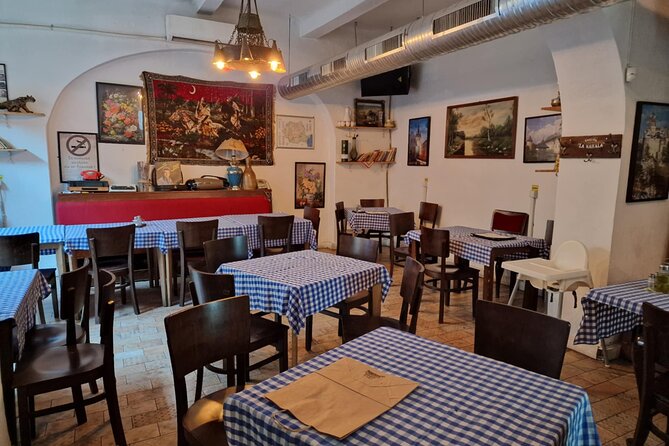
Manuc’s Inn, or Hanul lui Manuc, is the tour’s endpoint and one of its most atmospheric stops. You visit the interior garden of the oldest restaurant in Bucharest, a place closely tied to the city’s past and a familiar stop for people exploring the center.
The courtyard gives you a sense of how an old inn functioned as a meeting place. It is a natural bridge between the historical walk and the food portion of the evening. You are not simply told that Bucharest once depended on inns, merchants, and busy routes. You see a surviving setting where that older city still feels present.
The endpoint is listed as Piaţa Sfântul Anton 66, at Manuc’s Inn. Since the tour ends here, you can continue with your own plans in the Old Center afterward. That is useful if you want a drink, another meal, or a simple walk through the central streets after the guide departs.
One caution: the Old Center can be busy, and the inn is a working restaurant rather than a silent museum. The atmosphere is part of the appeal, but you should not expect a private, hushed visit.
CEC Bank and the city’s French-style face
The route includes a brief five-minute stop outside the headquarters of CEC, described as Romania’s oldest bank. The building was constructed in the 19th century in a French style.
Five minutes is enough to look, take a photo, and hear why the building matters. It is not enough for a full architectural study, but that is not the point. The stop helps you notice how strongly Bucharest’s public buildings reflect outside architectural influences.
This quick pause also keeps the route moving toward the food stops. If you enjoy façades, domes, and urban design, you may wish to note the building and return during daylight. The evening timing gives the tour a pleasant social feel, but fading light can make small architectural details harder to see.
Capsa Pastry and the sweet finish
Capsa Pastry is one of Bucharest’s oldest and most elegant confectioneries. Here, you taste candy, with pastries and other sweets also forming part of the food experience.
This stop is brief, about five minutes, but it gives the tour a fitting finish. Romanian food is not only grilled meat and savory dishes. Traditional sweets and confectionery help show the city’s European influences and its long café culture.
The food portions across the evening can be more substantial than the word tasting suggests. One person found there was more food than they could manage, while another felt the overall offering did not fully match the price. Those two reactions point to the most important practical issue: come hungry, but do not assume every stop is a large sit-down meal.
You may also leave with sweets for later. One especially thoughtful detail was the gift of candy from Capsa and pastries at the end of the evening. Small gestures like that can make a short tour feel personal, though they should be viewed as a kindness rather than a guaranteed inclusion.
What you may eat, and how much
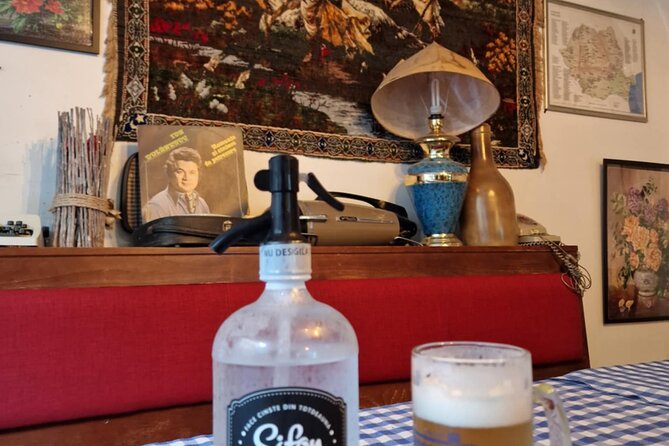
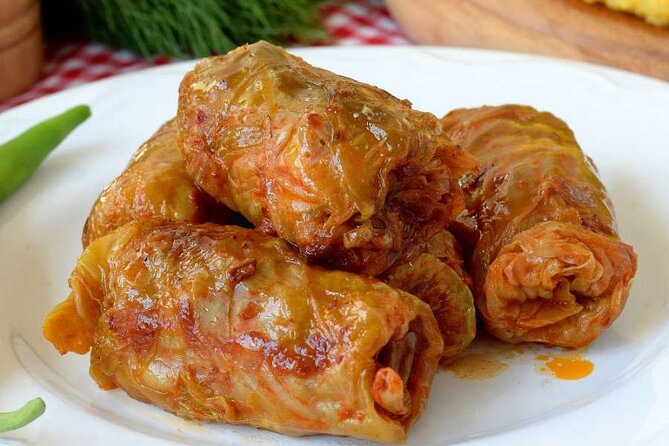
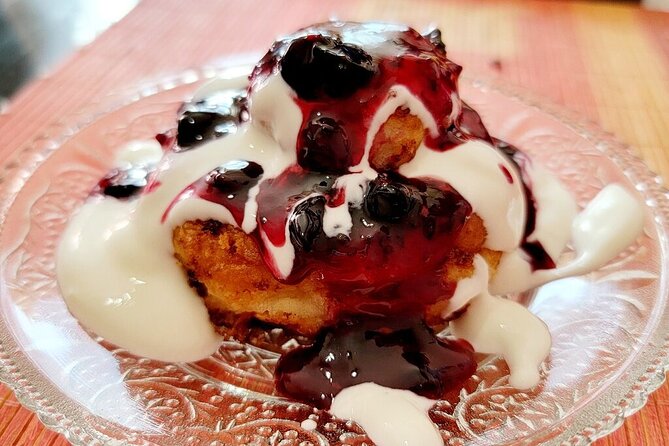
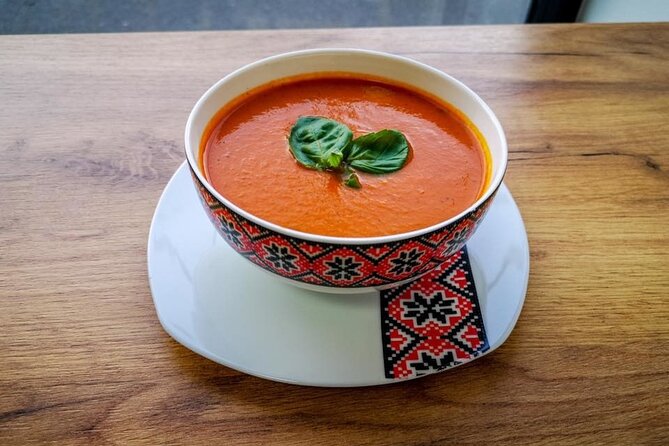
The exact menu can vary, so you should not book this expecting a fixed restaurant menu. The food has included Romanian savory dishes, sausages with chips, sweet and savory donut-style pancakes, dessert with cream and plum-like compote, pastries, candy, and other local treats.
A few points are worth keeping clear:
- The food is intended to be traditional and local rather than fancy.
- Dan may help order at local places, making it easier to try dishes you would not choose alone.
- Meat appears in some of the food examples, though chicken soup or chicken livers were offered as alternatives on one occasion.
- You may eat more than expected, especially when several small dishes and sweets are combined.
- You should raise dietary needs before or at the start of the tour, since the provided details do not promise a specific vegetarian, vegan, or allergy-friendly menu.
The food is best understood as a guided introduction. You get help finding local flavors and understanding their place in Romanian life, but you are not paying only for the cost of the dishes. You are also paying for the walking route, the explanations, the small group, and the guides’ time.
Is $108.02 a fair price?
At $108.02 per person, this is not a budget food walk. The price makes more sense if you value the history and personal conversation as much as the meal.
The strongest value comes from the combination. You receive a 2.5-hour introduction to central Bucharest, visits to important sites, food guidance, and the chance to ask questions in a very small group. A private or nearly private experience can cost more elsewhere, so the six-person limit helps justify the rate.
Still, the food alone may not satisfy every person at this price. One account described the meal as good but felt the tour was expensive for what was served. If you judge tours by the number of dishes, you may prefer a cheaper food-focused outing.
I would book this for context, company, and access to local guidance rather than for maximum food quantity. It is especially useful at the start of a Bucharest stay, when you can use Dan’s suggestions and return to places that interest you.
Timing, walking, and practical planning
The tour begins at 5:00 pm and runs for approximately two hours and 30 minutes, including travel between stops and time spent eating. You should expect a walking evening, with short pauses rather than long stays at every location.
The start is near public transportation, and most people can take part. The small group should make the route easier to manage, but comfortable shoes remain a good idea because the schedule links several central locations.
The tour is offered in English and uses a mobile ticket. Confirmation arrives when you book. Free cancellation is available if you cancel at least 24 hours before the local start time. Changes or cancellations made later are not accepted for a refund.
The tour is often booked well ahead, with an average of 62 days. That does not mean you must plan two months out, but it does suggest that you should reserve early if your dates are fixed, especially because the group is limited to six.
Who should book this evening?
I would choose this tour if you want:
- A first look at Bucharest that combines food and history.
- Personal discussion of communism and recent Romanian life.
- A small group instead of a large guided crowd.
- Traditional food with help from someone who knows local places.
- A gentle introduction to the Old Center and its major landmarks.
- A friendly evening led by a guide team, especially Dan and Patricia.
I would look elsewhere if you want a long, food-heavy dinner, a fixed tasting menu, or a low-cost way to eat your way through Bucharest. You should also avoid expecting guaranteed entry inside every building. The Athenaeum visit depends on permission that day, and the monastery is an active religious site.
Should you book the Bucharest Historical Food Tour?
Yes, if you want Bucharest to make sense as you walk through it. The best part is the link between places, food, and lived experience. Dan’s stories about communist Romania give the modern history real human detail, while Patricia keeps the evening connected to local dishes and sweets.
The price is the main question. At $108.02, the tour is worth it for a small, personal introduction with strong historical content. It is less convincing if you mainly want the biggest possible meal.
Book it early in your visit, arrive at the Athenaeum rather than Manuc’s Inn, and keep your schedule flexible enough to continue exploring the Old Center afterward. For many visitors, this will be a warm and useful first evening in Bucharest, with enough food to remember and enough history to send you back out looking.
FAQ
Where does the Bucharest Historical Food Tour begin?
It begins at Strada Benjamin Franklin in Bucharest, in front of the Romanian Athenaeum.
What time does the tour start?
The tour starts at 5:00 pm.
How long does the experience last?
The total duration is approximately two hours and 30 minutes, including travel between stops and the food portions.
Where does the tour end?
It ends at Piaţa Sfântul Anton 66, at Manuc’s Inn.
Is the tour available in English?
Yes. The experience is offered in English.
How many people can join the tour?
The tour has a maximum of six participants.
Just added around Romania
- Half-Day Jewish Heritage Walking Tour in Bucharest★ 5.0 · 20 reviews
- Bucharest Jewish Heritage | Holocaust Memorial | Private Car Tour★ 5.0 · 38 reviews
- Bucharest Heritage City Tour – The Last Days of Communism★ 5.0 · 20 reviews
- Experience the History of Bran Castle and Saxon Fortifications in Burzenland★ 5.0 · 19 reviews
- Roma Culture, Realities and Slavery History, Walking tour★ 4.9 · 52 reviews
- Private Bucharest: History & Food with Traditional Meal★ 5.0 · 34 reviews
- Discover Romania’s Wine Heritage in Brasov’s Historic Center★ 4.6 · 19 reviews
- Bucharest: Sweet Delights History and Desserts Walking Tour★ 5.0 · 18 reviews
Food & History Tours, compared.
Sevilla Food Tour: Tapas, Wine, History & Traditions
Read our review →

Dublin Historical Centre Food Tour with 8 Food Tastings & Drinks
Read our review →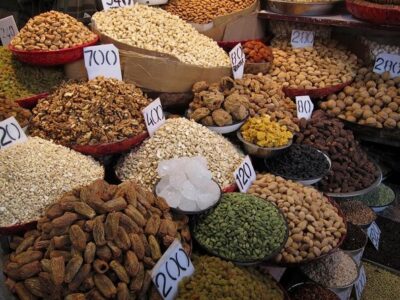
The Great Indian Food Tour: Old Delhi Food and Heritage Walk
Read our review →
Browse the lists this tour appears in