
Review · ANTWERP
Private Historical Tour: Legends of Antwerp
Antwerp’s old center is full of stories. This private walking tour connects the city’s giants, medieval lanes, churches, artists, and trading past in about two hours. I like the private format, which lets your group move at its own pace, and I like the focus on legends that are easy to miss when you walk around alone. The main drawback is that this is a walking tour over cobblestones, with limited time at each stop.
I also like the clear route from Grote Markt to the Cathedral, passing Antwerp’s best-known historic sights along the way. Guides such as Beren, Luc D, Joske, Flip, and Pearson have been praised for making the city’s past lively and adjusting the pace for their groups. Still, guide quality can vary, and one past participant felt a guide asked too many questions and gave some incorrect details.
Key points about the Legends of Antwerp tour
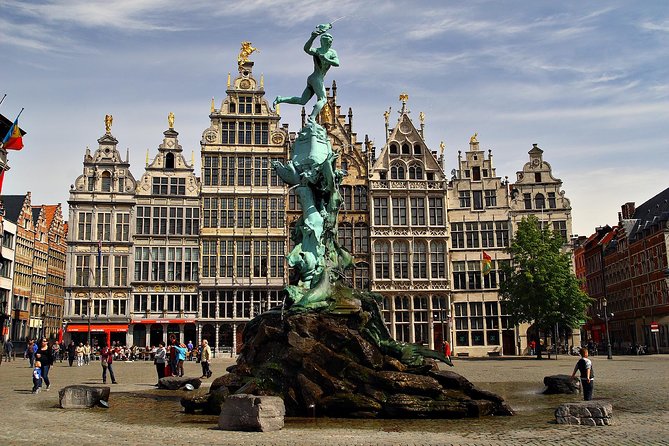
- Antwerp’s hand legend comes alive at Grote Markt: Learn why the hand is the city symbol and how Antwerp became one of Europe’s richest cities in the 16th century.
- A private group sets the pace: Only your party takes part, so the guide can adjust the walk to your speed.
- The route covers major medieval sights: Grote Markt, Het Steen, Vleeshuis, Carolus Borromeus Church, Vlaeykensgang, the Cathedral, and the Plantin-Moretus Museum area all feature.
- Rubens is part of the city story: You pass through Meir and by the Farmers Tower on the way toward the Rubens museum.
- The tour mixes famous sights with small details: Vlaeykensgang offers a quieter medieval lane, while the city’s giant legends add local character.
- The price reflects a private experience: At $105.82 per person, value improves when several people share the guide and want a focused introduction.
Starting in Grote Markt, Antwerp’s storybook square
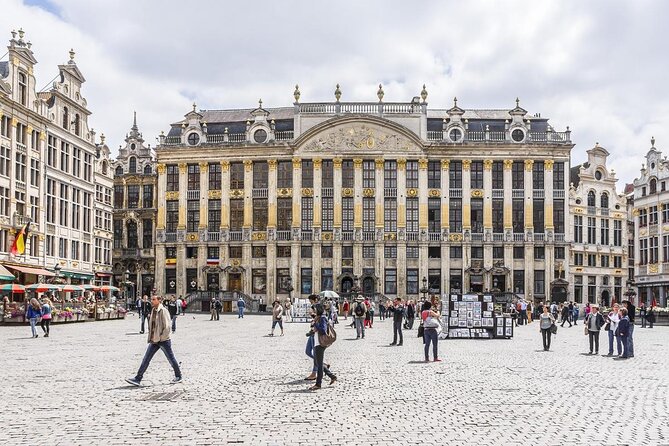
The tour begins at Grote Markt, the city’s main square and the right place to get your bearings. You spend about 15 minutes here, learning how Antwerp became a major European center during the 16th century, then lost that position.
This opening gives the rest of the walk a useful frame. Antwerp is not just a collection of old buildings. Its fortunes rose through trade, wealth, and international importance, then declined for reasons the guide explains on site. You also hear why Antwerp is called the city of giants and why a hand became its best-known symbol.
The square is a strong starting point because the stories are easy to connect to the buildings around you. You are not simply being pointed toward a handsome façade. You are getting the basic political and commercial background needed to understand why Antwerp developed as it did.
The stop is short, so expect an introduction rather than a full lecture. If you already know Antwerp’s history, you may want more detail. For a first visit, the quick overview should help you notice more during the rest of your stay.
More Private History Tours in Belgium
- Private Historical Tour: The Highlights of Bruges
★ 5.0 · 315 reviews - Private tour: Highlights & History of Antwerp
★ 5.0 · 299 reviews - Bruges: Private Historical Highlights Walking Tour
★ 4.7 · 191 reviews
Het Steen and the city’s giant legend
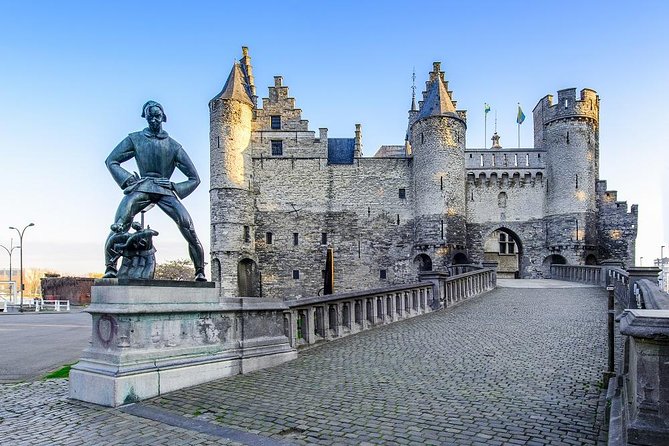
From Grote Markt, the walk continues to Het Steen, Antwerp’s oldest building. The name means the Stone Castle, and the stop lasts about 10 minutes.
This is where the city’s giant story gets a physical setting. You learn about the famed giant connected with the building and about the different roles Het Steen has played over time. The appeal here is not just the stonework. It is the way the guide ties an old structure to a local tale that still helps explain Antwerp’s identity.
Because Het Steen has served different purposes, this stop also adds a layer of practical history. Buildings change as cities change. A short explanation can make the castle feel less like a leftover monument and more like part of Antwerp’s long civic life.
Admission is free for the stop, and the tour does not include a separate ticket for entering attractions. You should think of this experience mainly as an outdoor walk with guided explanations at important sites.
Butchers, guilds, and the Vleeshuis
The Museum Vleeshuis, or Butcher’s Hall, receives about five minutes. It is described as the city’s oldest guild house and carries a story that is practical, grim, and tied to working life.
This is a useful contrast with grand churches and wealthy merchants. The building points to the organized trades that helped shape medieval Antwerp. A guild house can tell you who held power, how work was arranged, and how daily life differed from the polished image of a wealthy trading city.
The short timing is the main limitation. You will hear the building’s background, but this is not a museum visit with time to examine displays. If you want to explore Museum Vleeshuis inside, plan a separate visit after the tour and check its opening arrangements independently.
Carolus Borromeus Church and Rubens’s Antwerp
The next major stop is Carolus Borromeus Church, a Baroque church visited for about 10 minutes. It was once associated with Rubens, Antwerp’s most famous painter, and the guide explains its connection to him.
This part of the walk works especially well for anyone interested in art. You get a sense of Rubens not only as a name in a museum but as a figure linked to the city’s religious and public buildings. The guide also helps place Baroque design within Antwerp’s wider story.
The tour then passes the Farmers Tower and continues along Meir, the city’s major shopping street, toward the Rubens museum. The supplied route describes this as the place where Rubens lived and worked throughout his life.
You should note the wording here. The tour takes you to the Rubens museum area, but the experience information does not promise museum admission. If you want to see the collection or the house interior, treat that as an optional visit outside the two-hour walk.
The Rubens section is one reason this tour suits a first-time visitor who wants several themes in one outing. Trade, religion, painting, and city life are all brought together without requiring a full day.
Same place, a different slice of the past:
- Historical Walking Tour: Legends of Bruges
★ 5.0 · 2,541 reviews - Historical Walking Tour: Legends of Antwerp
★ 5.0 · 1,837 reviews - Historical Walking Tour: Legends of Gent
★ 5.0 · 1,761 reviews - Brussels: Historical Tour with Chocolate & Waffle Tasting
★ 4.8 · 1,206 reviews
Vlaeykensgang, Antwerp’s smallest street
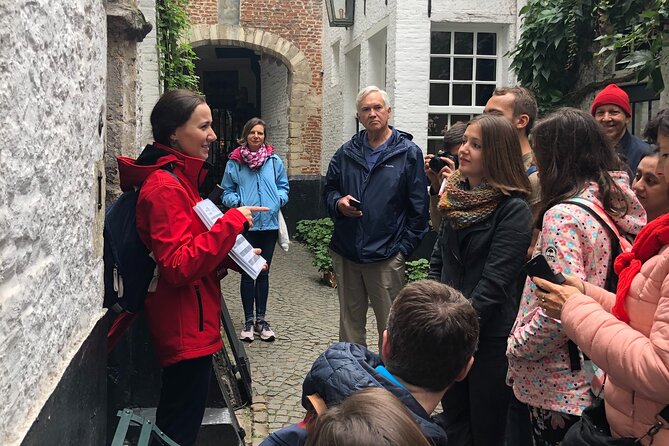
Vlaeykensgang is one of the most appealing stops because it changes the mood of the walk. You spend about 10 minutes in what is described as Antwerp’s smallest street, a narrow passage that offers a glimpse of the medieval city.
A lane like this gives you something that a broad square cannot. Grote Markt explains public power and wealth. Vlaeykensgang suggests the tighter, more private scale of old Antwerp. The guide frames it as a throwback to the Middle Ages, so listen for the details that explain how this small passage fits into the city’s past.
This is also a good place to remember that the route is still an active city walk, not a staged historic attraction. You may find the lane quiet or busy depending on the moment. The benefit of visiting with a guide is the context, since a narrow passage can be easy to pass without realizing why it matters.
The cobblestones deserve attention. One person specifically praised the tour but advised being comfortable walking on uneven streets. Wear shoes with a firm sole, and do not plan this as a relaxing stroll in delicate footwear.
Antwerp Cathedral and the city’s final legends

The Cathedral of Our Lady is the natural high point of the route. The tour spends about 15 minutes outside the cathedral, discussing its history and sharing legends from earlier times.
This is a strong ending because the building brings together Antwerp’s religious, artistic, and civic importance. It also gives the guide a large subject for final stories after the smaller lanes and individual buildings earlier in the walk.
The experience ends at Handschoenmarkt, about 50 meters from Grote Markt. The end point is in front of the Cathedral, so you finish in a central part of the old city rather than at a distant transport stop.
The description also places the Plantin-Moretus Museum after a walk through the fashion quarter and fashion district. The stop lasts about 10 minutes and focuses on the site where industrial printing began. The supplied route lists it after the Cathedral, while the stated ending point is by the Cathedral. Since the exact order may vary, confirm the final sequence with your guide when you meet.
Even with that route detail to clarify, the Plantin-Moretus stop adds a valuable subject. Antwerp’s story was not only about paintings and trade. Printing helped ideas, news, and books travel farther. You will see the museum from the outside as part of the walk, with the option to return later if you want more time.
How much of Antwerp fits into two hours?
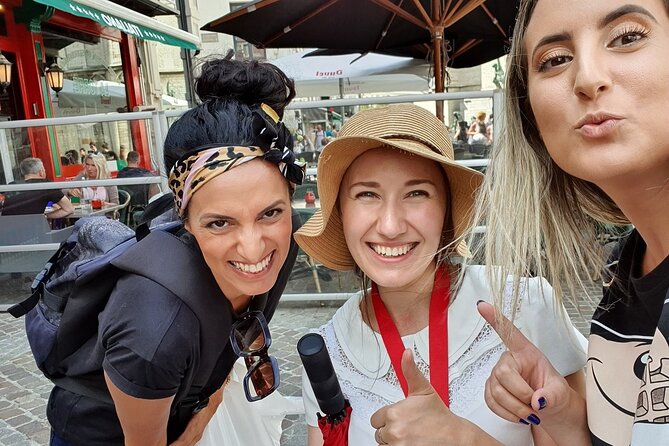
Two hours is enough for a useful introduction, not enough for a full study of every site. The listed stops add up to a compact route with short explanations, and the private format means the guide can spend more time on subjects your group cares about.
That flexibility has real value. Beren was praised for adjusting the walk to the group’s speed and for explaining both Antwerp’s hand symbols and the Red Star Line’s history. The Red Star Line is not listed as a formal stop, so you should not assume it is guaranteed on every departure. Still, the comment suggests that a strong guide may respond to your interests when time allows.
The best use of the tour is to ask questions early. If you care most about Rubens, printing, Jewish Antwerp, trade, or local legends, tell the guide at the start. One past participant specifically felt the tour did not cover Antwerp’s Jewish community well. That is a useful warning: if this subject matters to you, ask directly rather than assuming it will be included.
The tour has a 4.9 rating from 125 ratings, and 98 percent of participants recommend it. Those numbers point to consistently strong satisfaction, especially with the guides’ personal approach, but they do not remove the need to judge the format honestly. You are paying for two hours of interpretation and company, not entry to several museums.
Private pricing and who gets good value
The price is $105.82 per person. That is a considerable amount for a two-hour walk if you are traveling alone or as a pair. It becomes easier to justify when several people share the private guide and want a tailored introduction without joining a large group.
The main value is control. Your group is the only group taking part, and guides have adjusted their pace for private parties. You can ask for more explanation at Grote Markt, move faster through a familiar subject, or focus on the legends and art that interest you most.
I would compare this price with the cost of a standard group walk in Antwerp before booking. If you mainly want directions and a quick list of sights, this private experience may feel expensive. If you want a guide who can connect the city’s medieval past, Golden Age, Rubens, churches, printing, and local stories in one compact route, the cost makes more sense.
Group discounts are available, which may improve the price for a larger party. The tour is offered in English and includes a mobile ticket. Hotel pickup is described as an optional convenience, so check the exact arrangements when booking rather than assuming it is included for every reservation.
Guides, walking conditions, and practical planning
The guide makes a major difference here. Specific guides praised in the supplied feedback include Beren, Luc D, Joske, Flip, and Pearson. Beren was singled out for adjusting the pace and explaining Antwerp in detail. Luc D was described as personable and well informed, while Joske was praised for making the past feel alive and being accommodating.
The experience is offered in English. Confirmation is normally received at booking, though bookings made within three days of the date may receive confirmation within 48 hours and remain subject to availability.
Most people can take part, and the meeting point is near public transportation. Service animals are allowed. The tour is outdoors and involves cobblestones, so anyone who finds uneven walking difficult should consider the route carefully.
You can cancel for a full refund up to 24 hours before the start time. Cancellations made less than 24 hours ahead are not refunded, and late changes are not accepted. The cut-off follows Antwerp local time.
Who should book the Legends of Antwerp tour?
I would choose this tour for a first visit, a small family group, or friends who want a private introduction before exploring Antwerp on their own. It is especially useful if you enjoy stories attached to buildings, rather than simply photographing them.
History fans should like the range of subjects. You move from medieval legends to Antwerp’s 16th-century wealth, then through guild life, Baroque religion, Rubens, printing, and the city’s old lanes. Art lovers will appreciate the Rubens connection, while people who prefer local folklore will enjoy the giant and hand stories.
I would be more cautious if you want long museum visits, a slow photographic walk, or a detailed treatment of every Antwerp community. The tour visits several museum exteriors and explains their importance, but admission is not listed as included. The route is brisk, and one short stop lasts only five minutes.
Should you book this Antwerp walking tour?
Book it if you want a private guide, a compact route, and stories that make familiar sights easier to understand. The strongest features are the private pace, the broad range of subjects, and the guides’ ability to make Antwerp feel personal rather than merely historic.
Before paying, decide if $105.82 per person fits your group size and priorities. Ask about the exact route, particularly the Plantin-Moretus stop and any subjects you care about, such as Jewish Antwerp or the Red Star Line. If you are comfortable on cobblestones and want a lively two-hour orientation, this is a solid way to meet Antwerp.
FAQ
Where does the tour start?
The tour starts at Grote Markt, 2000 Antwerpen, Belgium.
Where does the tour end?
It ends at Handschoenmarkt, 2000 Antwerpen, Belgium, in front of the Cathedral. The end point is about 50 meters from Grote Markt.
How long does the tour last?
The tour lasts approximately two hours.
Is the tour private?
Yes. Only your group takes part in the activity.
What language is the tour offered in?
The tour is offered in English.
What sights are included?
The route includes Grote Markt, Het Steen, Museum Vleeshuis, Carolus Borromeus Church, the Rubens museum area, Vlaeykensgang, the Cathedral of Our Lady, and the Plantin-Moretus Museum area.
Is museum admission included?
The listed experience includes a tour guide, but it does not list admission tickets to the museums or other attractions as included.
Can I cancel for a full refund?
Yes. You can cancel at least 24 hours before the start time for a full refund. Cancellations made less than 24 hours before the start time are not refunded.
Just added around Belgium
- Historical Walking Tour: The Story of Brussels – by Legends★ 5.0 · 164 reviews
- Bruges Bites & Sights – Belgian Food, Beer & A Little Bit Of History★ 5.0 · 94 reviews
- 2-Hour Historical Walking Tour in Bruges with Praline Included★ 5.0 · 291 reviews
- Historic Battle of the Bulge Sites Tour from Brussels★ 5.0 · 31 reviews
- Food tasting & Historical walk★ 4.5 · 47 reviews
- Bruges at Night: Murder, Mystery & Dark Stories Small Group Walk★ 5.0 · 137 reviews
- Private Guided Historical Walking Tour in Bruges Belgium★ 5.0 · 23 reviews
- Across Bruges History Equals Fun with chocolate and waffle sample★ 5.0 · 34 reviews
Private History Tours, compared.

Private Guided Historic Electric Cart Tour of St. Augustine
Read our review →
Acemoglu Historical Turkish Bath w/Private Options
Read our review →
Private Full-Day Tour of Historical Alexandria
Read our review →
Private Tour of the Historic City in a Ford T Car
Read our review →
Madrid Historical Tour with Local Guide in Eco Tuk Tuk Private
Read our review →
Private Biblical Tour Ancient Corinth & Isthmus Canal from Athens
Read our review →
Private Kathmandu Sightseeing Tour | UNESCO World Heritage sites
Read our review →Browse the lists this tour appears in