Review · AMSTERDAM
Guided Walking Tour Amsterdam – Legends, History & Ghost Stories
Amsterdam has plenty of secrets after dark. This 90-minute walking tour links ghost stories, old court cases, strange sightings, and famous streets in the city center, with a strong focus on documents and historical evidence. I like the small maximum group of 12, which should make it easier to hear the guide, and I like the route’s mix of folklore and real urban history. The main consideration is simple: this is more historical than frightening, so visitors seeking jump scares may find it too calm.
The tour costs $24.04 per person and runs in English. One guide praised for his research and presentation is Luuk, whose work draws on archival documents, historical records, and original sources. That approach gives the stories more substance, but it also means you should expect interpretation and context rather than theatrical horror.
Key things to know before you book
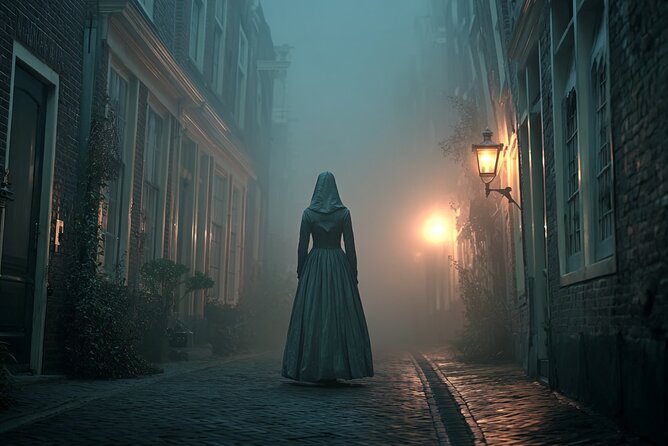
- The route connects Waterloo Square with Central Station, covering several old districts instead of staying around one landmark.
- The stories are based on research, including records tied to ghost sightings, witchcraft accusations, old buildings, and Amsterdam street names.
- Nieuwmarkt brings the city’s darker past into focus, with a 1624 witchcraft case and the curious name Blood Street.
- Zeedijk supplies three different tales, including Ghost Alley, the sailor’s café In ’t Aepjen, and the Weeping Tower.
- The tour ends near Central Station, making it easy to continue your evening elsewhere in the city.
- The group is limited to 12 people, though you should be ready for 90 minutes of walking and standing.
Starting at Blauwbrug and Waterloo Square
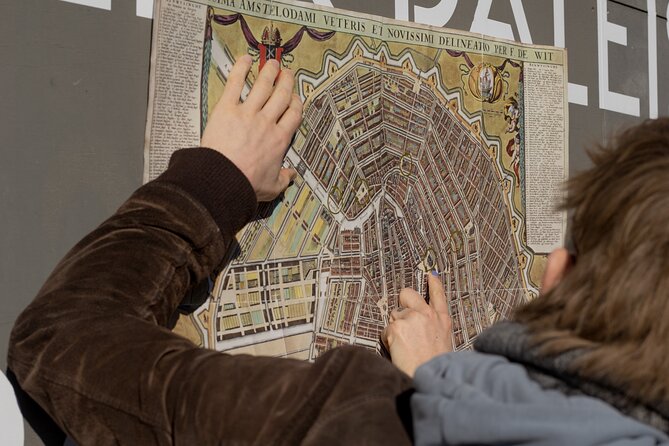
The meeting point is Blauwbrug, at 1011 PT Amsterdam, near Waterloo Square. The first eerie stories are set in this area, so the tour begins with the city already in its darker mood rather than spending half the time on a general introduction.
Waterloo Square is a useful opening because it puts the supernatural beside ordinary city life. Amsterdam’s old streets can look neat and polished now, but the stories tied to them often involve fear, rumor, punishment, and public spectacle. I like that the tour uses those themes to show how people once understood unusual events.
The opening tales are not described in detail ahead of time, which is probably a good thing. You can expect the guide to establish the tone and connect the setting to the legends that follow. If you arrive early, use the time to get your bearings, check the meeting point, and wear shoes suited to city walking.
More History Walking Tours in Amsterdam
- Amsterdam: Haunted History and Ghost Walking Tour
★ 4.5 · 488 reviews - Amsterdam History Walking Tour
★ 5.0 · 281 reviews - Amsterdam: Highlights & History Walking Tour
★ 4.8 · 266 reviews
The ghost appearances of 1833
One of the most unusual stops concerns a series of ghost appearances in 1833. Crowds gathered for days to see what they believed were supernatural events. The central question is not simply Was there a ghost? It is what people thought they were seeing, and why so many were willing to wait and watch.
The story gives the guide room to examine trickery, rumor, and mass imagination. That is a better fit for this tour than a simple campfire tale because you get to consider the evidence and the public reaction. An event that drew crowds for several days tells you as much about nineteenth-century Amsterdam as it does about ghosts.
This part should appeal to you if you enjoy unsolved stories with several possible explanations. It may disappoint you if you want a firm answer or a dramatic supernatural performance. The tour’s strength is its willingness to leave room for doubt.
Nieuwmarkt, witchcraft, and Blood Street
At Nieuwmarkt, the tour turns to a woman accused of witchcraft in 1624. The subject carries real historical weight, but the guide also looks at the story behind the nearby name Blood Street and what that name reveals about Amsterdam’s past.
This is where the route appears to move beyond spooky entertainment. A witchcraft accusation was not harmless folklore. It could shape a person’s fate, reflect local fears, and show how authorities and communities treated people accused of strange or threatening behavior. The tour uses one case to connect private suspicion with wider social beliefs.
Blood Street adds another layer. Street names often preserve fragments of the past, but they do not always explain themselves clearly. Here, you get a chance to ask what the name refers to and how the city’s old functions shaped its language. I appreciate this kind of stop because it makes you look at Amsterdam’s signs and corners with more care after the tour ends.
One of Amsterdam’s oldest streets
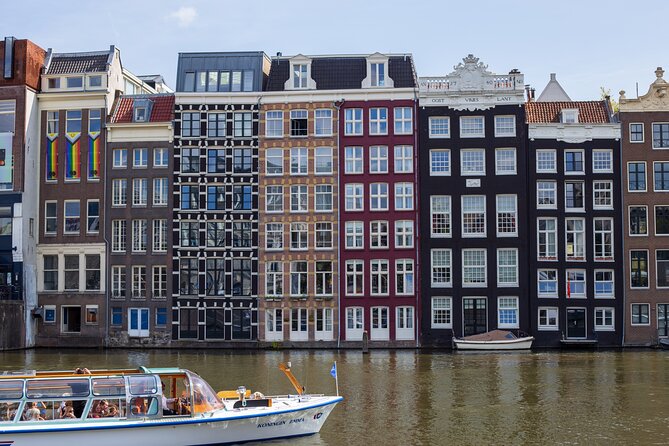
The route next reaches one of the city’s oldest streets, with landmarks including the Spinhuis and Trippenhuis. These names may mean little to you before the tour, but they help place Amsterdam’s stories in real buildings rather than in an abstract old town.
The Spinhuis is tied to Amsterdam’s institutional past, while the Trippenhuis brings attention to the city’s grander architecture and influential residents. The supplied details do not specify every story told at these sites, so you should expect the guide to use them as historical markers within the wider route rather than as long interior visits.
That distinction matters. This is a walking tour, not a museum tour, and the buildings are viewed from the street. Still, the combination of landmarks and legends can help you understand how Amsterdam changed over time. You are not just hearing about ghosts in random locations. You are moving through streets shaped by work, wealth, punishment, trade, and belief.
More History Walking Tours in the Netherlands
- Anne Frank and Amsterdam Jewish History Walking Tour
★ 5.0 · 259 reviews - Amsterdam: Ghost Walking Tour and Dark History
★ 4.8 · 118 reviews - Amsterdam: Iconic Canals & Historic Sights Walking Tour
★ 4.5 · 90 reviews - Amsterdam: Anna Frank and World War II History Walking Tour
★ 4.8 · 86 reviews
Zeedijk and three memorable tales
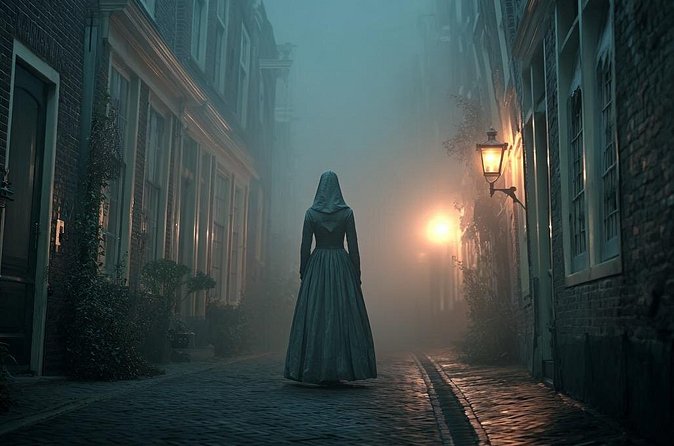
Zeedijk is one of the route’s strongest sections because it brings together three different stories from Amsterdam’s colorful and uncertain past. The stops include Ghost Alley, the sailor’s café In ’t Aepjen, and the Weeping Tower.
Ghost Alley supplies the obvious supernatural link. In ’t Aepjen gives the walk a more social and maritime angle. The café is presented as a place connected with sailors, so the story helps show how drinking houses and waterfront streets formed part of Amsterdam’s daily life. The Weeping Tower adds another local legend and keeps the route from becoming a string of ghost sightings with no wider setting.
I like the variety here. You get a narrow lane, a historic café story, and a tower legend, all within the same old district. The subjects are different enough to keep the walk moving, but the area gives them a common setting.
You should not expect to enter every site. The information describes a route through the streets, not private access to interiors. The value comes from hearing the stories while standing near the places that inspired them.
Near Central Station, Rembrandt and a mysterious woman
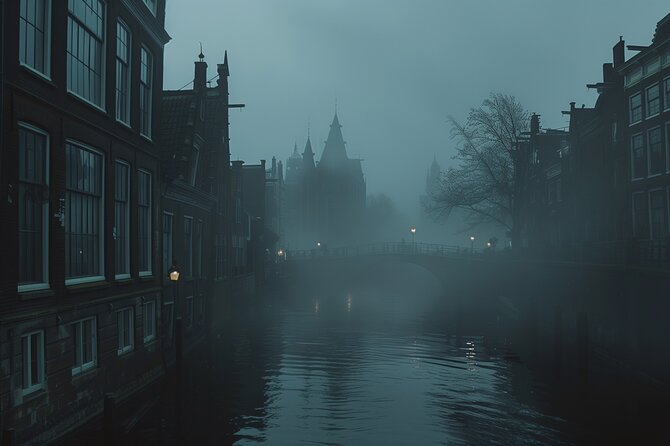
As the tour approaches Central Station, it takes in the odd grandeur of a historic hotel. The phrase odd grandeur suggests a building with an unusual character, but no detailed interior visit is promised. Think of this as a street-level stop where the guide explains why the hotel matters.
The route then moves into the world of Rembrandt. You will hear about a drawing showing a mysterious woman on the gallows fields, with her identity still uncertain after centuries. This is a fine example of the tour’s method: a known artist, a surviving image, and a question that remains open.
The gallows fields reference also adds a darker edge to the art story. It reminds you that old Amsterdam was not only canals, merchants, and handsome houses. Public punishment and death were part of the city’s social world, and artists recorded parts of that world in ways that still invite questions.
This stop may be especially rewarding if you like art but do not want a standard museum lecture. It connects a Rembrandt-related image to place, public memory, and a mystery. At the same time, the tour does not claim to solve the woman’s identity, so you should be comfortable with an unresolved ending.
Warmoesstraat, from markets to shady deals
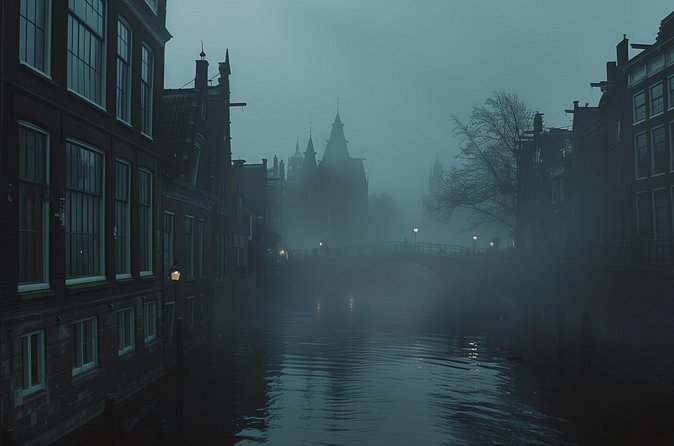
Warmoesstraat has passed through several versions of Amsterdam life, from busy markets to less respectable business. The guide uses the street to tell stories of commerce, crime, and the city’s scandalous side.
This final stretch sounds less like a ghost story and more like a portrait of human behavior. That balance is useful. A city’s legends grow from real anxieties, and old streets often preserve the setting for arguments, bargains, rumors, and bad decisions. Warmoesstraat lets you see how close ordinary trade could sit beside questionable dealings.
The street is also a good place to end the historical portion of the walk because it brings together the tour’s main themes. Amsterdam’s past includes public spectacle, superstition, art, punishment, trade, and rumor. The supernatural stories make more sense when placed among those everyday pressures.
The route ends beside Central Station
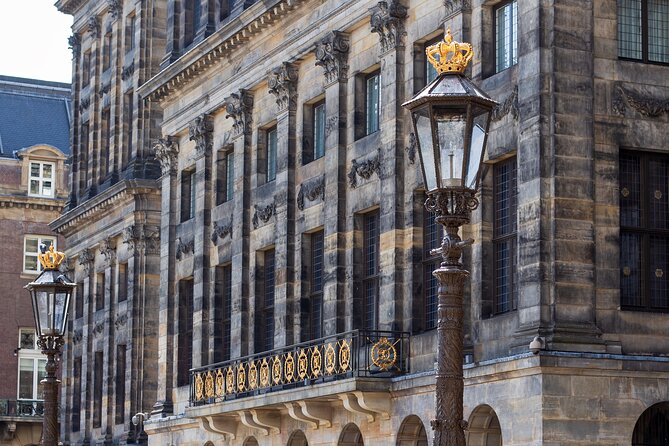
The final meeting point is Prins Hendrikkade 38K, 1012 AB Amsterdam, a short walk from Central Station. That is practical planning, especially if you schedule the tour in the evening and want to continue with dinner, a canal-side walk, or public transport.
The starting point at Blauwbrug and the ending point near the station mean this is a point-to-point walk, not a loop. You will need to arrange your own way to the start, then you can finish close to one of Amsterdam’s main transport hubs.
The route is offered in English and uses a mobile ticket. It is near public transportation, but the exact walking distance from your arrival stop is not provided, so allow enough time to find Blauwbrug without rushing.
What the $24.04 price gets you
At $24.04 per person, this is reasonably priced for a 90-minute guided walk, especially with a maximum of 12 people. The small group matters because the stories depend on hearing details and being able to follow the guide’s explanations. A very large group could make narrow streets and quiet storytelling less effective.
The strongest value comes from the research-led format. Guides use archival documents, historical records, and original sources rather than relying only on familiar ghost tales. That does not make every story certain, but it gives you a better basis for judging what may be documented, what may be rumor, and what may be later embellishment.
The price is less attractive if you only want entertainment. There is no promise of actors, costumes, special effects, or frightening surprises. You are paying for a guided interpretation of Amsterdam’s past, with legends used as the entry point.
The tour is booked, on average, 31 days ahead. That suggests you should reserve early if your schedule is fixed, particularly if you want a specific date. The data does not promise daily departures or unlimited availability, so avoid leaving this until the last minute.
Who will enjoy this walk most
I would recommend this experience to you if you like old buildings, urban legends, art, social history, and unanswered questions. It also suits first-time visitors who want a structured introduction to several central districts without committing to a much longer walking tour.
It is a good choice for people who prefer a guide to explain what they are seeing. The route includes names and references that can pass quickly if you walk alone, including Blood Street, the Spinhuis, Trippenhuis, In ’t Aepjen, and the Weeping Tower.
You may want something else if your main goal is a theatrical scare. The tour is described as heavier on history and urban legends than on spookiness. That is not a weakness, but it is an important expectation to set before booking.
A moderate level of physical fitness is required. The experience lasts about an hour and a half, and the format involves walking and standing on city streets. Service animals are allowed. The activity is offered in English, so you should be comfortable following a spoken tour in that language.
Weather, group size, and cancellation details
The experience requires good weather. If poor weather causes a cancellation, you are offered another date or a full refund. The activity also requires a minimum number of people, and if that minimum is not met, you are offered another date or experience, or a full refund.
You can cancel for a full refund up to 24 hours before the start time. Cancellations or changes made less than 24 hours ahead are not refunded or accepted. Cut-off times use Amsterdam’s local time, so check the time zone carefully if you are booking from abroad.
Should you book the Amsterdam legends walk?
Book it if you want evidence-backed stories in real city settings, a compact route, and a guide who treats folklore as part of history rather than as pure theater. The combination of the 1833 ghost appearances, the 1624 witchcraft accusation, Blood Street, Zeedijk, and the Rembrandt drawing gives the walk plenty of range.
Skip it if you want a high-energy horror show or a tour focused only on famous landmarks. This experience is quieter and more thoughtful. For $24.04, a 90-minute English walk with a small group and a convenient finish near Central Station is a fair deal, especially for curious visitors who like asking what really happened.
FAQ
Where does the tour start?
It starts at Blauwbrug, 1011 PT Amsterdam, Netherlands, near Waterloo Square.
Where does the tour end?
It ends at Prins Hendrikkade 38K, 1012 AB Amsterdam, near Central Station.
How long does the walking tour last?
The tour lasts approximately 1 hour and 30 minutes.
What language is the tour offered in?
The tour is offered in English.
How much does the experience cost?
The listed price is $24.04 per person.
How many people can join the tour?
The maximum group size is 12 people.
Is the tour suitable for people with limited mobility?
The experience requires a moderate level of physical fitness. It is a walking activity, and the supplied information does not give further accessibility details.
What happens if the weather is poor?
If poor weather causes the experience to be canceled, you are offered a different date or a full refund.
More Dark History and Haunted Tours in Amsterdam
- Amsterdam Haunted History and Ghost Walking Tour
★ 5.0 · 47 reviews - Ghost Walking Tour and Dark History in Amsterdam
★ 5.0 · 32 reviews - Amsterdam: Ghastly Grachten: ghost stories&dark history tour
★ 4.9 · 21 reviews - Savannah History and Haunts Candlelit Ghost Walking Tour
★ 5.0 · 3,235 reviews
Just added around Amsterdam
- Amsterdam: Luxury Canal Cruise with Historic VR Experience★ 5.0 · 305 reviews
- Amsterdam Walking Tour: Urban Legends & History with local guide★ 5.0 · 39 reviews
- Amsterdam 3 hrs Bike Tour – live guide En/Fr/De/Nl/Sp★ 4.5 · 138 reviews
- Historical Walking Tour, private with local Dutch guide★ 5.0 · 23 reviews
- Amsterdam Haunted History and Ghost Walking Tour★ 5.0 · 47 reviews
- Private Guided Historic Amsterdam Canal Cruise in a Salon Boat★ 5.0 · 21 reviews
- Anne Frank’s Amsterdam Jewish History WWII Exclusive Guided Tour★ 5.0 · 18 reviews
- LGBTQI+ History Tour of Amsterdam★ 5.0 · 123 reviews
Dark History & Haunted Tours, compared.

Savannah History and Haunts Candlelit Ghost Walking Tour
Read our review →

New Orleans Small-Group Haunted History Carriage Tour
Read our review →

Genteel and Bard’s Savannah Dark History and Ghost Encounter Walking Tour
Read our review →