
Review · SOUTH EAST ENGLAND
Chatham: The Historic Dockyard Chatham Annual Ticket
Ships make history feel real. At The Historic Dockyard Chatham, you can walk through warships, peer from a Cold War submarine, inspect lifeboats, and follow the work of dockyard craftsmen across a large former naval site. This is not a quick museum stop. It is a full day of hands-on history, with enough material to justify several visits during the ticket’s 365-day validity.
I especially like the quarter-mile ropery, where rope-making has continued in some form since 1618, and the chance to move through vessels rather than simply view them behind glass. The main drawback is time: four hours will not be enough for everything, and the wide site can feel demanding if you try to hurry through every building.
The $37 price makes good sense if you can return, since the ticket works for a full year after first activation. Parking costs extra, and voucher exchange may take a little patience, but the large range of exhibits, school holiday activities, and restored dockyard buildings gives families and history fans plenty to see.
Key Things to Know Before You Go

- The annual ticket is the main value: Return visits are included for 365 days from first activation, making this far more useful than a one-time museum ticket.
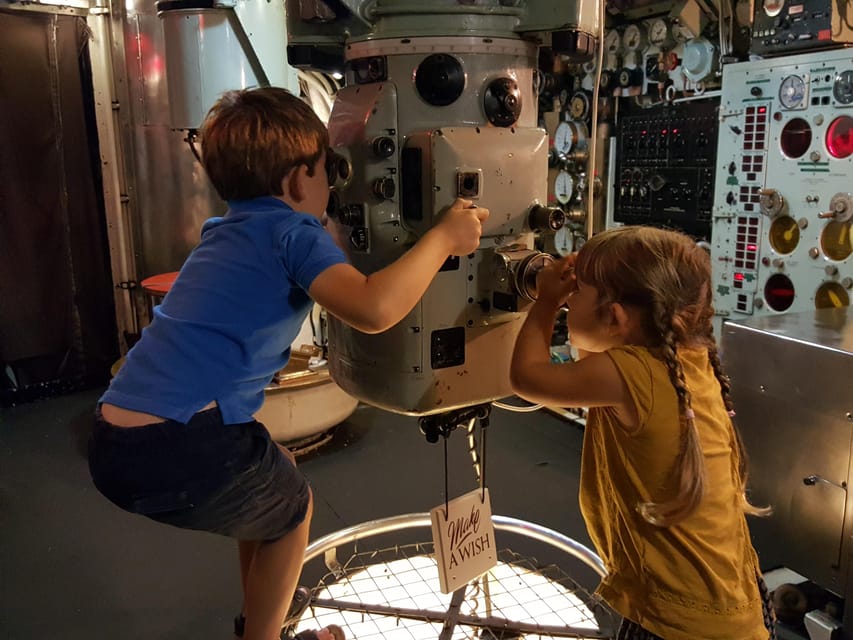
- The submarine is a tight, memorable experience: You can peer through the periscope aboard the Cold War submarine Ocelot and see how confined life at sea could be.
- The ropery is a must-see: The working rope-making display and museum explain a craft tied to the dockyard since 1618.
- The collection covers more than warships: You will also find the UK’s biggest collection of RNLI Historic Lifeboats, plus exhibitions in No. 1 Smithery.
- Allow more than four hours: The ships, submarine, museums, galleries, and dockyard buildings cover a lot of ground.
- Guides add real value: Staff are described as cheerful, helpful, and keen to explain the site, with strong knowledge of the vessels and dockyard trades.
Entering a Dockyard Built for the Royal Navy
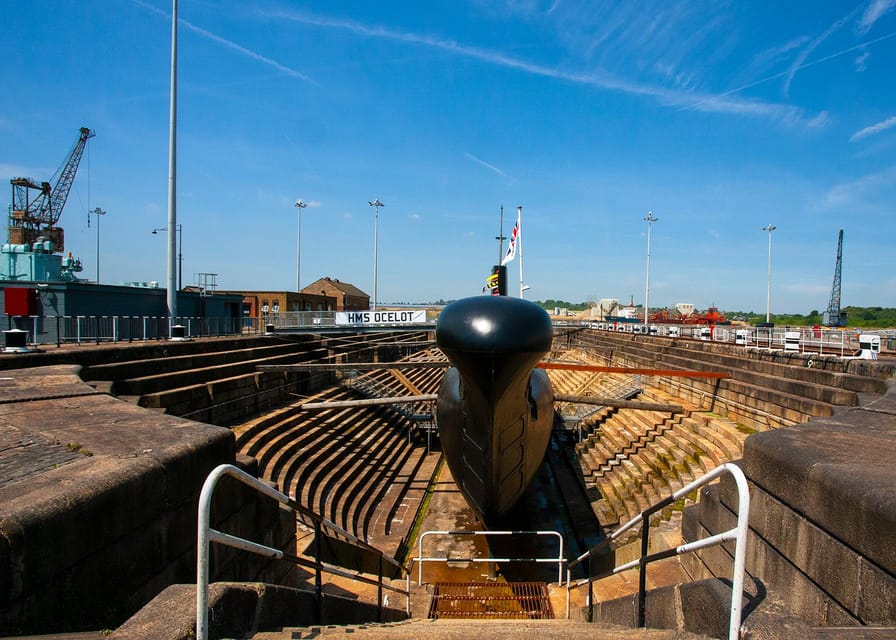
Chatham’s appeal begins with its setting. This was a working naval dockyard, not a museum designed from scratch. The buildings, workshops, ships, and long ropery help you picture the place as a busy industrial center where vessels were built and maintained for Britain’s navy.
The dockyard’s story reaches back to the Age of Sail, when Chatham built ships that helped Britain control major sea routes. You are not simply reading about that era in a gallery. You are walking through the spaces where shipbuilding, rope-making, storage, repair, and naval administration once took place.
I recommend treating the site as a collection of connected experiences rather than trying to follow a rigid route. Start by getting a map or asking staff what is running that day, then choose the exhibits that matter most to you. The site is large enough that a little planning will save you from racing at the end.
The annual ticket changes how you use the dockyard. Instead of trying to absorb every room in one visit, you can make a first trip about the ships and ropery, then return for the exhibitions and lifeboats. That flexibility is one of the strongest reasons to choose this ticket over a standard day out.
More Entry Tickets in the UK:
- Edinburgh: Edinburgh Castle Guided History Tour with Tickets
★ 4.8 · 9,933 reviews - Portsmouth: Historic Dockyard Ultimate Explorer Ticket
★ 4.8 · 1,052 reviews - Taormina: Ancient Theater Skip-the-Line Ticket & Audio Guide
★ 4.5 · 2,412 reviews
A Cold War Submarine and the Ocelot Experience
The submarine is one of the dockyard’s most memorable stops. On board Ocelot, you can peer through the periscope and move through the cramped interior of a Cold War vessel. The experience gives you a much clearer sense of submarine life than a display case ever could.
Space is part of the story. Passageways and working areas make you aware of how carefully every part of the vessel had to be used. You can look at the equipment, imagine the crew working below the surface, and consider the strain of spending long periods in such confined surroundings.
The quality of the explanation matters here, and the dockyard handles this well. One former submariner was particularly impressed by a civilian guide’s knowledge of Ocelot and appreciated being able to add personal stories about life aboard this class of submarine. That detail tells you something useful: the guides can support both first-time visitors and people who already know naval history.
Do not rush through Ocelot. The submarine is smaller and more enclosed than many visitors expect, so give yourself time to notice the layout. If you are visiting with children, this can be an excellent way to turn technical history into something they can see and feel, though the tight spaces may not suit everyone.
Taking the Bridge of a Second World War Destroyer
The Second World War destroyer gives you a different view of naval service. Instead of the submarine’s enclosed, silent world, the destroyer opens onto the sea-facing work of navigation, command, and defense.
You can take charge on the bridge and picture officers directing the vessel during wartime operations. Even without detailed military knowledge, the layout helps explain how a ship was controlled and how much depended on clear orders, teamwork, and constant attention.
The ship is best approached slowly. Look at the working areas, consider the distance between the bridge and the rest of the vessel, and compare the open surface ship with the enclosed submarine. That contrast is one of the pleasures of the dockyard. Each vessel tells a different part of naval life.
The ships are especially useful for families because they turn abstract dates into physical spaces. A child can stand at a bridge, look through a periscope, and ring a ship’s bell rather than simply read a paragraph about twentieth-century naval history.
Ringing the Bell on a Victorian Sloop
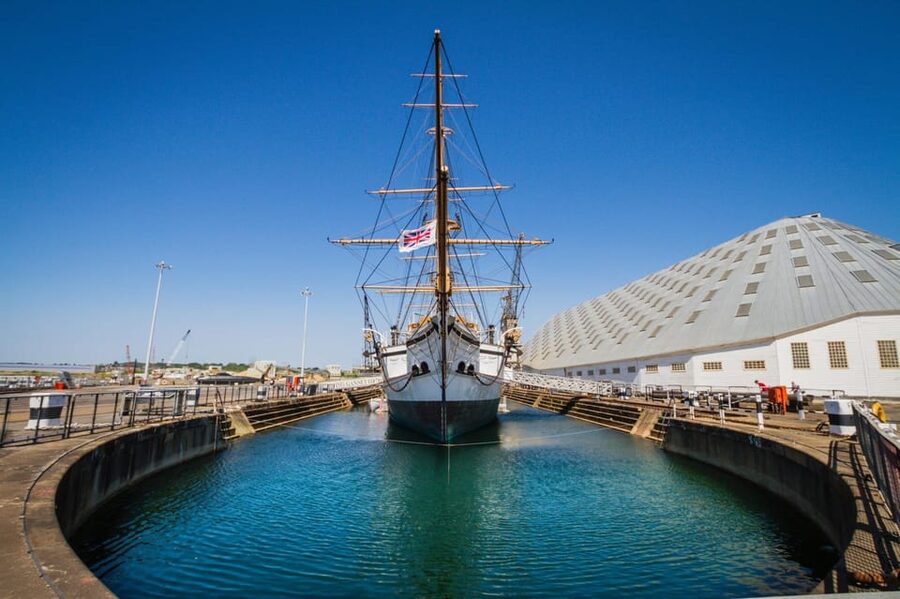
The Victorian sloop adds a more personal and atmospheric note to the ship collection. Here, the focus shifts from twentieth-century warfare to the working life of an earlier naval vessel.
You can walk the deck and ring the ship’s bell. It is a small action, but it gives the vessel an immediate sense of place. The bell connects with the routines of shipboard life, where time, watches, and orders were marked by sound.
This is also a useful stop for comparing different periods of naval design. The sloop feels very different from both Ocelot and the destroyer. Taken together, the three vessels give you a broad sense of changing technology, crew conditions, and naval roles.
Allow enough time to explore each ship rather than treating them as quick photo stops. The dockyard works best when you pause to notice the details that reveal how people actually lived and worked aboard these vessels.
A few more history tours around the UK worth a look
- London Small Group Tour of Historical Pubs
★ 5.0 · 10,422 reviews - A History of Terror – Belfast City Centre Walking Tour
★ 5.0 · 2,883 reviews - Edinburgh: Whisky Tasting with History and Storytelling
★ 4.9 · 2,451 reviews - Edinburgh: Old Town History and Tales Walking Tour
★ 4.8 · 2,361 reviews
The Ropery: Chatham’s Most Distinctive Stop
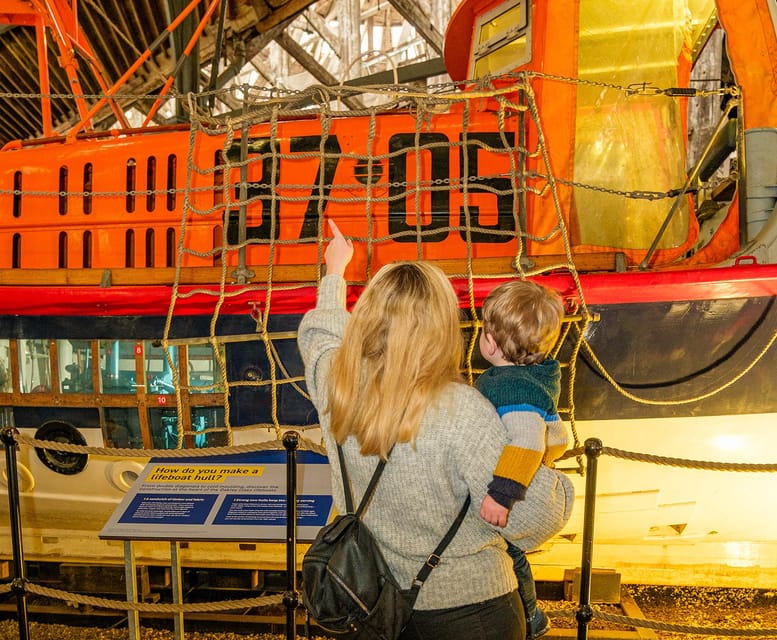
If you have time for only one demonstration, make it the ropery. Rope-making has been carried out at Chatham since 1618, and the quarter-mile-long ropery remains one of the site’s most unusual features.
The process shows how a basic material supported an entire naval system. Ships needed rope for rigging, hauling, securing equipment, and handling sails. The long building makes practical sense once you understand that strands must be twisted and combined over considerable distances.
The demonstration is especially effective because it is easy to follow. You can watch the stages of production and see how a simple-looking object demands skill, control, and space. This is the sort of exhibit that works for adults who enjoy industrial history and for children who want to see something being made.
The ropery museum adds context, but the working demonstration is the real draw. Several people have found this the best part of the visit, and I can see why. It is specific to Chatham, tied directly to the dockyard’s purpose, and different from anything you will find aboard the ships.
Put the ropery high on your plan, especially if you are visiting during a busy school holiday period. Ask about demonstration times when you arrive so you do not accidentally miss it.
Lifeboats, No. 1 Smithery, and the Wider Collection
The UK’s biggest collection of RNLI Historic Lifeboats gives the dockyard another strong strand. These boats tell a different story from naval vessels. Their focus is rescue, service, and the risks faced by people at sea and by the crews who went to help them.
The collection works well after the warships because it broadens your understanding of maritime life. Not every important boat was built for combat. Lifeboats show how vessels served coastal communities and responded to danger in a direct, practical way.
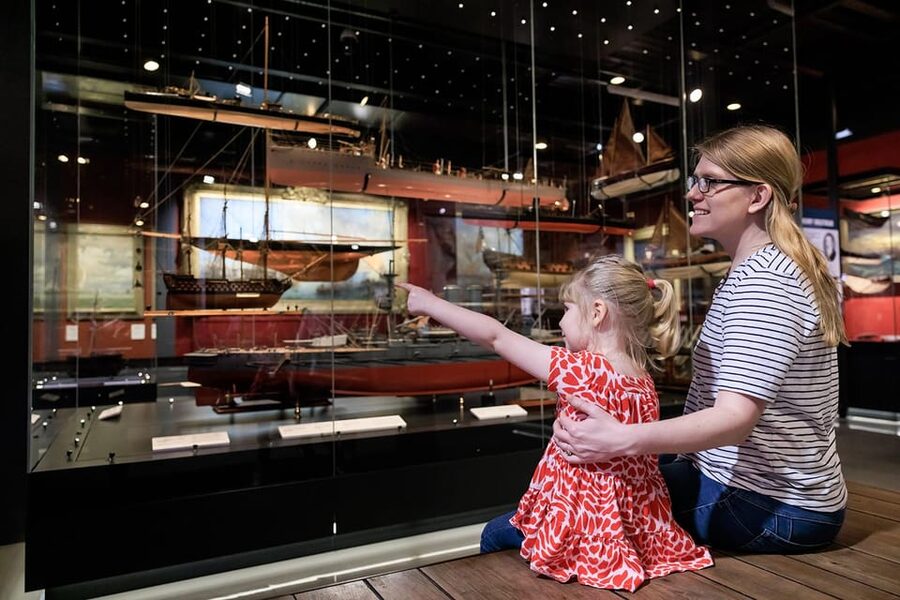
No. 1 Smithery offers a change of pace. This large exhibition space presents collections from Royal Museums Greenwich and Imperial War Museums. It is a useful place to spend time if you want more objects, photographs, and interpretation after walking through the ships.
The Command of the Oceans interactive exhibit adds another layer. You can discover what lies beneath the floor, including the hidden remains of an ancient ship. The interactive approach helps younger visitors stay involved, but adults will also find it a worthwhile link between archaeology, naval power, and the changing use of the dockyard.
These indoor exhibitions are valuable on cold or wet days. Weather can affect the open parts of the visit, so having substantial galleries and museums makes the ticket less risky than an attraction built entirely around outdoor viewing.
Guides, Staff, and the Feel of the Visit
The staff are one of the site’s best assets. You can expect guides and attendants across the dockyard, and the strongest impressions come from their friendly, informative approach.
Good guidance matters at a site this large. Without it, you might walk through a ship and notice only the obvious rooms. With a useful explanation, the same space can reveal how the crew worked, how the vessel was organized, and why certain parts mattered.
The staff also seem comfortable with visitors who bring specialist knowledge. A former submariner was able to share personal stories aboard Ocelot while still receiving useful information from the guide. That is a good sign for anyone who knows a lot about naval history and does not want a basic explanation.
The dockyard can feel quieter in winter, but cold weather will make the outdoor sections less comfortable. One February visit was described as bitterly cold, although the staff remained helpful and the indoor facilities, hot drinks, and children’s play area made the day manageable.
Planning Your Day and Getting Good Value
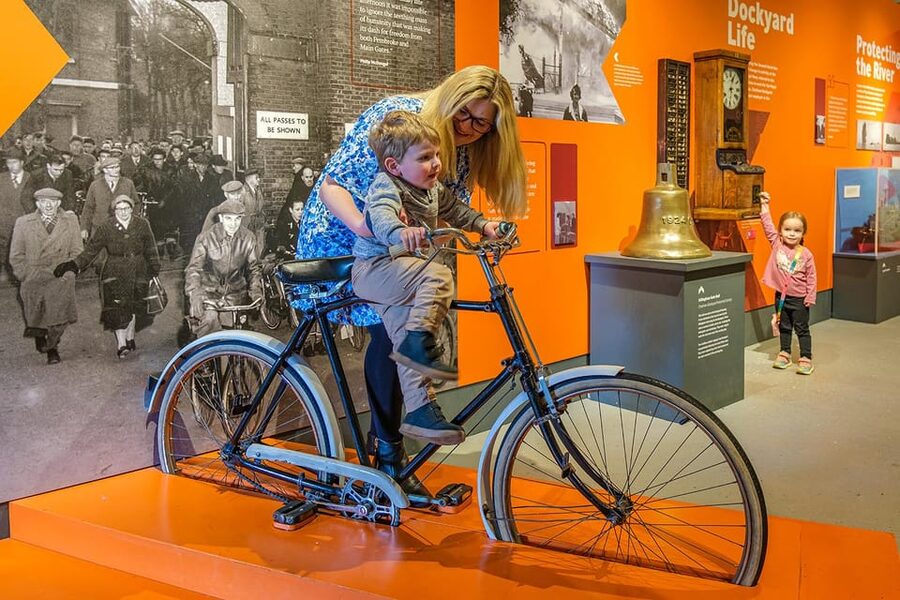
At $37 per person, the ticket is not a minor museum admission. Its value depends on how much of the site you use and whether you can return during the year.
For a single visit, I would allow a full day if possible. Four hours may cover the main ships, but it will be hard to include the ropery, submarine museum, lifeboats, No. 1 Smithery, Command of the Oceans, and other exhibitions without skipping details.
A practical first visit might look like this:
- Start with the three historic vessels while your energy is high.
- See Ocelot carefully, since the confined layout takes time to appreciate.
- Visit the ropery and catch a rope-making demonstration.
- Stop for food or a hot drink before the indoor exhibitions.
- Finish with the lifeboats, No. 1 Smithery, or Command of the Oceans.
You do not need to follow that order, but it helps prevent the common mistake of spending too long on the first ship and missing the ropery. School holiday activities are included, which adds value for families and gives younger children a reason to return.
The return privilege is the key calculation. If you live within reasonable reach of Chatham, the annual ticket can become excellent value after a second visit. You might make one trip with family, another focused on the exhibitions, and a later visit for seasonal activities. If you are passing through the area only once, the price still makes sense for a full day, but you should arrive early enough to use it properly.
Parking is not included, so add that cost to your plans. The ticket is wheelchair accessible, though the ships themselves may present different practical conditions from the main site. If accessibility is important for your group, ask staff on arrival about the best way to experience each vessel.
Cancellation is flexible up to 24 hours before the visit for a full refund, and you can reserve now and pay later. Those terms help if your plans depend on weather or changing family schedules.
Who Will Enjoy Chatham Most?
I would recommend this experience to families, naval enthusiasts, industrial-history fans, and anyone who likes museums with real structures rather than rows of cases. Children have ships to explore, interactive displays, school holiday activities, and a play area, while adults get serious history and strong interpretation.
It also suits two adult couples or groups with mixed interests. You can spend time on the ships, split up for exhibitions, then meet again for the ropery or refreshments. The variety prevents the day from feeling like one long military museum.
You should think twice if you dislike walking, enclosed spaces, or large heritage sites that require several hours. The submarine is tight, the dockyard covers a lot of ground, and the amount of material can feel overwhelming on a short visit.
The site may also feel familiar to anyone who has visited repeatedly over many years. One returning visitor felt that the main attractions had changed little in a decade and wanted new features. The annual ticket remains useful in that case, but repeat visitors may find the value depends on temporary exhibitions and special activities.
Should You Book the Annual Ticket?
Book it if you want a full day of maritime history and can return within 365 days. The ships are hands-on, the ropery is memorable, and the lifeboat and gallery collections give you far more than a quick look at naval vessels.
I would make the rope-making demonstration a priority and allow more than four hours. If you are visiting once, plan carefully so you do not miss the submarine or the main exhibitions. If you live nearby, the annual access makes the $37 price particularly attractive.
Skip it only if you want a short, compact attraction or have no interest in ships, dockyard work, or maritime history. For everyone else, Chatham offers a substantial, practical day out with enough variety to bring you back.
FAQ
How long is the Chatham Historic Dockyard ticket valid?
The ticket is valid for 365 days from first activation, allowing return visits during that period.
What is included in the annual ticket?
Entry to The Historic Dockyard Chatham, access to temporary and permanent exhibitions, and school holiday activities are included.
Are the historic ships included?
Yes. The ticket includes access to the three historic warships: a Cold War submarine, a Second World War destroyer, and a Victorian sloop.
Can I visit the submarine?
Yes. You can board the Cold War submarine Ocelot and peer through its periscope.
Is the rope-making demonstration included?
The dockyard ticket includes access to the ropery and its rope-making operation.
Is parking included?
No. Parking is not included in the ticket price.
Is the dockyard wheelchair accessible?
Yes. The activity is listed as wheelchair accessible.
What language is the experience offered in?
The host or greeter service and available information are in English.
Can I cancel for a refund?
Yes. You can cancel up to 24 hours in advance for a full refund.
Can I reserve now and pay later?
Yes. The booking terms allow you to reserve your place and pay later.
Just added around the UK
- Glasgow: The Magnificent and Mysterious History of Glasgow★ 4.9 · 302 reviews
- St Andrews: Town, Golf, and Old Course History Tour★ 4.7 · 162 reviews
- St Andrews: 90-Minute Historical Walking Tour★ 4.8 · 23 reviews
- St Andrews: Golf Origins and Old Course History Tour★ 4.7 · 322 reviews
- Shadows of York: Ghost Walk and Horrible History.★ 4.8 · 333 reviews
- Oban: Historical Tour with Seafood Lunch Option★ 4.8 · 23 reviews
- Newcastle: History and Highlights Guided Walking Tour★ 5.0 · 18 reviews
- London: Self-Guided History City Tour with an App★ 4.3 · 21 reviews
Tickets, compared.

Edinburgh Castle Guided History Tour with Tickets
Read our review →
Taormina: Ancient Theater Skip-the-Line Ticket & Audio Guide
Read our review →
Historic Milan Tour with Skip-the-Line Last Supper Ticket
Read our review →
Hop-on Hop-Off Historical Tram Ticket for Line 42
Read our review →
Rotterdam: Kinderdijk UNESCO World Heritage Entry Ticket
Read our review →
POLIN Museum of the History of Polish Jews Ticket
Read our review →
Portsmouth: Historic Dockyard Ultimate Explorer Ticket
Read our review →Browse the lists this tour appears in