Review · LAZIO
Secrets of Rome: Historical True Crime Small Group Tour
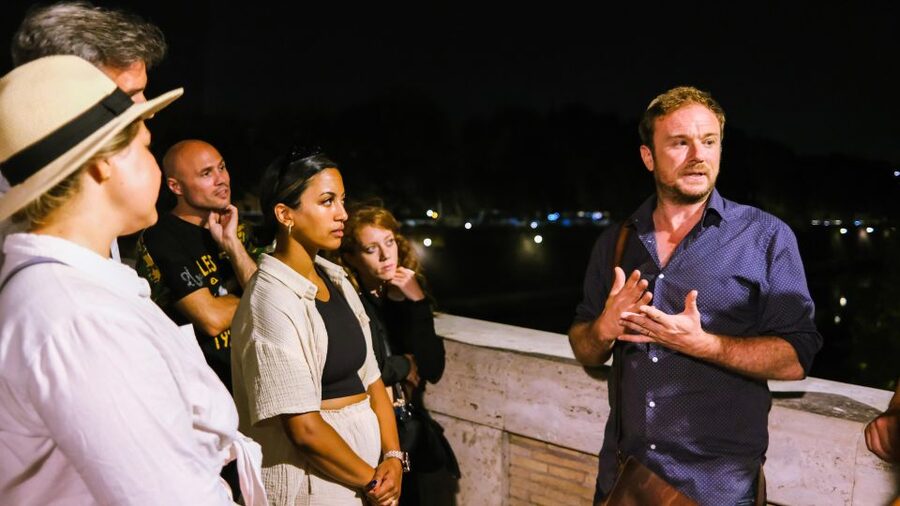
Rome has a darker address book. This two-hour walking tour traces scandals, murders, political plots, and eerie tales from Campo de’ Fiori to Castel Sant’Angelo, with a maximum of 15 people. I like the intimate group size and the guides’ lively storytelling, especially the performances praised from Ben, Ivana, and Ariel. The main consideration is the theme: this is historical true crime, not a modern crime investigation, and the ghostly material is lighter than some visitors may expect.
I also like the route through Rome’s backstreets, where the stories connect naturally with the places around you. At $29, the tour offers a good way to spend an evening, though you should be ready to walk outdoors in all weather and listen to some grim material involving poison, executions, betrayal, and abuse.
Key things to know before you book
- The route links seven atmospheric locations: You walk from Campo de’ Fiori through Piazza Farnese, Ponte Sisto, Via Giulia, a local bar area, a lesser-known stop, and Castel Sant’Angelo.
- The group is capped at 15 people: That gives the guide a better chance to hold your attention and answer questions.
- The stories center on real historical figures: Expect Giordano Bruno, Cagliostro, Donna Olimpia Maidalchini, Giulia Tofana, the Borgias, and Beatrice Cenci.
- The guides are performers as well as historians: Ben, Ivana, and Ariel have earned especially warm praise for humor, energy, and clear delivery.
- There is a short break during the walk: You get about 10 minutes for a restroom stop or a drink at a local bar.
- The tour is outdoors from start to finish: Bring an umbrella or raincoat, since it runs rain or shine.
Why Rome’s dark side makes a good walking tour
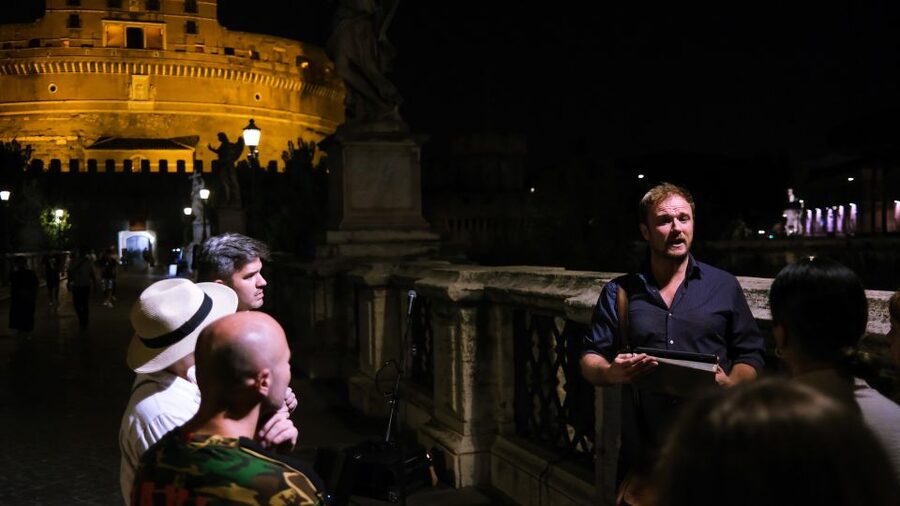
Rome is often presented through emperors, popes, fountains, and grand churches. Those sights matter, but they can also make the city feel like a museum with a very large ticket queue. This tour takes a different route through the past, focusing on people who schemed, poisoned, challenged authority, or met violent ends.
That change of focus gives you a fresh way to read the city. A square is no longer just a pretty public space. A bridge becomes part of a story about movement, escape, or power. A narrow street gains a connection to a family scandal or a tragic courtroom case.
The tour also suits Rome because so much of the city’s past happened in public view. The walk does not depend only on indoor displays or long historical lectures. Your guide tells the story while you move through the same central neighborhoods where many of these events unfolded.
I would not book this as a replacement for the Colosseum, Roman Forum, or Vatican Museums. It does something else. It gives you lesser-known stories and a more personal look at the people behind Rome’s grand buildings.
More Small-Group History Tours in Italy
- VIP Colosseum Underground and Ancient Rome Small Group Tour
★ 4.5 · 332 reviews - Small-Group Rome to Pompeii & Amalfi: Day of History & Sea
★ 5.0 · 239 reviews - Colosseum Forum Ancient Rome Small Group Tour for Kids Families
★ 5.0 · 198 reviews
Campo de’ Fiori: executions, politics, and a strong opening
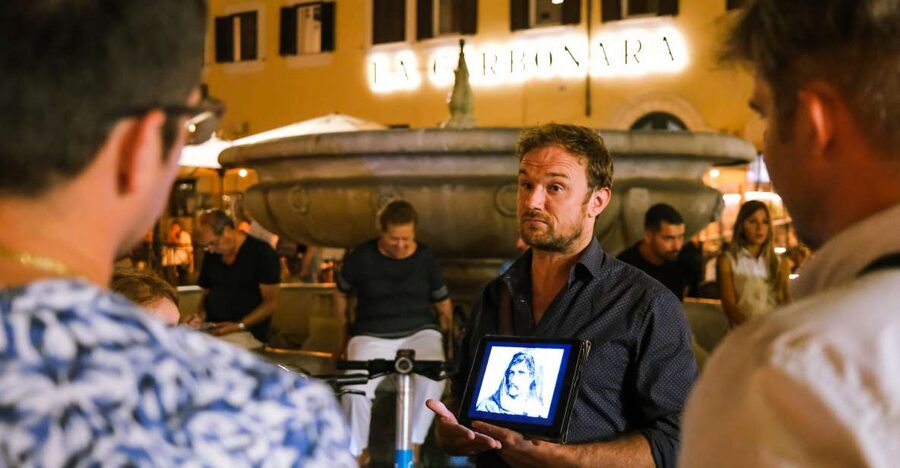
The meeting point is the statue in the middle of Campo de’ Fiori. Your guide carries a sign reading Rome’s Dark Side, which makes the group fairly easy to find in a crowded square.
Campo de’ Fiori is a fitting place to begin. Today it is associated with markets, restaurants, and evening activity, but the square also carries the memory of public punishment. The opening story centers on Giordano Bruno, the philosopher and former Dominican friar burned here in 1600 for heresy.
This is more than a quick fact about a statue. The story raises questions about religion, free thought, censorship, and the price of challenging accepted ideas. A good guide can explain those issues without turning the first stop into a dry lecture, and the strongest feedback about Ben, Ivana, and Ariel points to exactly that balance.
The square can be noisy, so you may need to stand close to the guide. A group of up to 15 is helpful here, but staying attentive matters. This first stop also sets the tone: expect real historical violence and moral complexity, not just spooky entertainment.
Piazza Farnese and the powerful people behind Rome
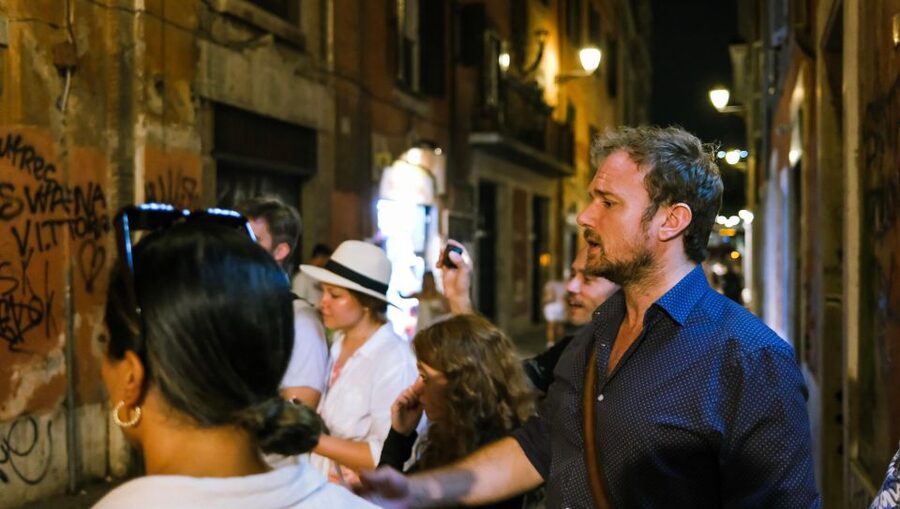
From Campo de’ Fiori, the walk continues to Piazza Farnese. The square is one of Rome’s grander urban spaces, with the Palazzo Farnese giving it a strong political presence.
Here, the stories turn toward influence, status, and private power. Donna Olimpia Maidalchini is one of the key figures connected with the tour. Known as a formidable power player in 17th-century Rome, she operated close to the highest levels of church and political life.
Her story helps explain why this tour is not simply a list of murders. Rome’s darker past also involves patronage, family networks, ambition, and the use of influence behind closed doors. You hear about how people could shape events without holding an official title that matched their real power.
Piazza Farnese is also a good place for a guide to connect architecture with politics. The setting feels formal and controlled, while the stories reveal rivalry and maneuvering underneath. I would pay attention to the contrast. That is one of the pleasures of this walk: the streets look calm, but the past was often anything but.
Ponte Sisto: crossing the city through its secrets
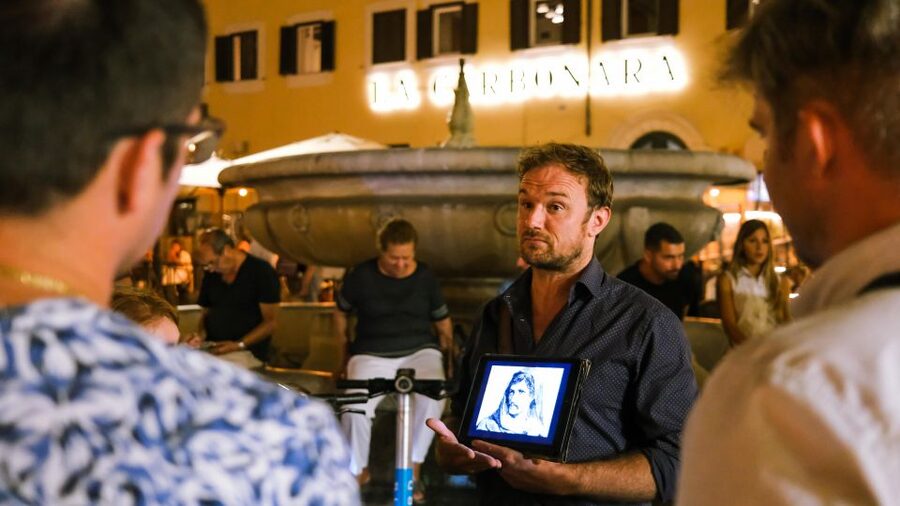
The route then reaches Ponte Sisto, a pedestrian bridge over the Tiber. The bridge gives the group a change of pace and a more open view after the tight lanes around Campo de’ Fiori and Piazza Farnese.
The supplied details do not assign one named story to every stop, so your guide may use this part of the walk to connect the main characters and themes. The bridge is still useful in its own right. It shows how the route moves through central Rome rather than keeping you in one square.
Walking across Ponte Sisto also gives you a few minutes to absorb the atmosphere. The tour is not a series of stationary talks with no sense of place. You are moving between neighborhoods, and the changing streets help break up the darker material.
If you want a fast-paced tour with a new major monument every few minutes, this section may feel slower. I see that as a fair trade. The point is to hear the story properly and notice the city around it, not to rush through a checklist.
More Small-Group History Tours in Rome
- Rome: Colosseum and Ancient Rome Small Group Guided Tour
★ 4.5 · 70 reviews - Rome: Trastevere street food and history tour – small group
★ 5.0 · 58 reviews
Via Giulia: a quieter side of central Rome
Via Giulia brings the tour into one of the city’s more elegant historic streets. Its long, relatively calm character makes a useful setting for stories of hidden relationships, political dealings, and personal danger.
The route includes the scandals of the Borgias, a family long associated with ambition, treachery, affairs, and ruthless political calculation. The Borgia material is familiar in broad outline, but a skilled storyteller can make it feel less like a textbook summary and more like a set of human choices with real consequences.
You also hear about Cagliostro, the mysterious figure linked with secretive activity and a colorful reputation. His story adds a different flavor to the tour. Not every tale is a straightforward murder case. Some involve rumor, deception, performance, and the uncertain line between fact and legend.
That point matters if you are booking for true crime. The tour combines documented historical wrongdoing with scandal and haunting themes. It is best understood as a dark-history walk, rather than a strict modern crime tour with forensic detail.
The 10-minute stop for drinks and a restroom
Partway through the route, the group pauses at a local bar for about 10 minutes. Food and drinks are not included, so you pay for anything you order.
This short break is practical. Two hours of walking and listening can become tiring, especially in summer or after a full day of sightseeing. You can use the stop for the restroom, buy a drink, or simply reset before the final stories.
The pause also keeps the tour from feeling like one long block of narration. Some visitors may prefer a longer seated stop, but that would reduce the time spent walking through Rome. The schedule gives you a brief rest without losing the shape of the route.
You should not count on this as a full meal break. Have dinner before or after the tour if you need more than a drink.
Giulia Tofana and the darker human stories
One of the most striking figures covered is Giulia Tofana, the notorious poisoner whose activities caused alarm in Rome. Her story shifts the focus from powerful public figures to crime that could happen within domestic and personal life.
This is the sort of story that gives the tour its true-crime appeal. It involves motive, secrecy, fear, and the way historical societies handled women trapped in dangerous circumstances. The material can be grim, so I would think twice before bringing young children or anyone who dislikes stories about poisoning and violent crime.
The guide’s delivery matters a great deal here. Ben has been praised for keeping the material entertaining with humor, while Ivana has been described as bringing both heart and wit to difficult subjects. That balance helps prevent the tour from becoming needlessly bleak.
Humor cannot remove the seriousness of the events, but it can give the group room to keep listening. The best guides know when to lighten the mood and when to let a story carry its own weight.
Beatrice Cenci and tragedy near Castel Sant’Angelo
The final stretch leads toward Castel Sant’Angelo, with Beatrice Cenci among the central figures. Her story is tied to betrayal, family violence, and tragedy, making it one of the more emotionally heavy episodes on the route.
Beatrice is an important choice for this tour because her story shows how crime, family power, justice, and public sympathy could collide. It is not just a tale of a notorious person doing terrible things. It asks you to consider who had power, who was believed, and how punishment worked in her time.
The walk finishes at Castel Sant’Angelo, one of Rome’s most memorable landmarks. You do not enter the castle as part of the tour, but ending nearby gives the route a strong visual finish. The building has long associations with defense, imprisonment, religion, and political life, so it suits a tour about secrets and people caught in dangerous systems.
You may want to leave extra time afterward to see the area at your own pace. The tour ends at the castle, not at a restaurant or transport hub, so plan your next stop before the guide says goodbye.
What the guides do best
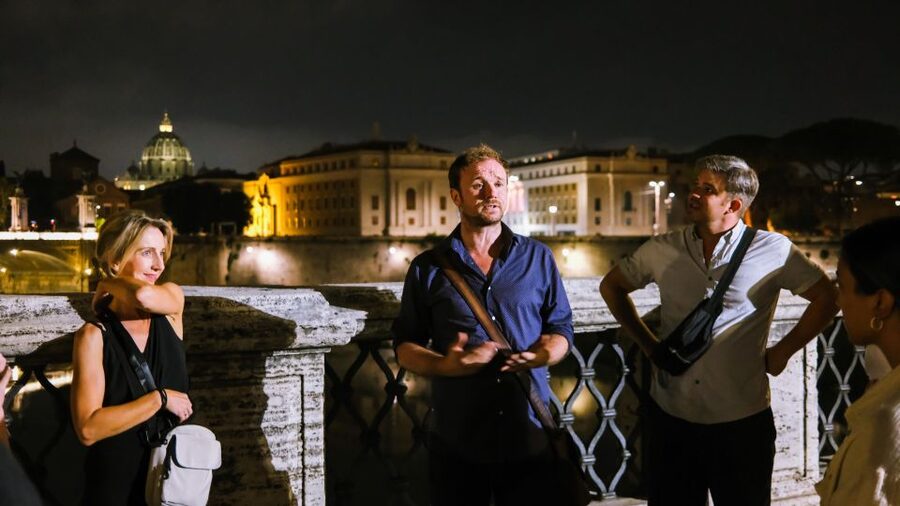
The most praised part of this experience is the guiding. Ben is repeatedly described as funny, charismatic, relaxed, and able to hold attention from start to finish. Ivana is praised for passion, warmth, humor, and a strong command of the subject. Ariel is described as engaging, competent, and a gifted storyteller.
Those comments point to a clear strength: the experience depends more on delivery than on a long list of sites. You are paying to hear stories shaped for a walking group, with enough context to understand why the characters mattered.
Guides have also offered restaurant and sightseeing suggestions after the walk. That can be useful if you take the tour early in your stay and want practical ideas for the rest of your time in Rome.
Guide quality can vary from one departure to another, but the repeated praise for several named guides is encouraging. The small group helps too. A guide speaking to 15 people can usually create more contact than one speaking to 40.
Is $29 good value for two hours?
At $29 per person, this is a reasonable price for a two-hour guided walk in central Rome. You are not paying for entry to a monument, a meal, or transportation. You are paying for the route, the research, and the guide’s ability to turn places into stories.
The value is strongest if you enjoy history, crime, legends, or unusual city walks. You get seven main points, a bar break, a small group, and a route that covers several central neighborhoods. For many people, it can also serve as an entertaining introduction to Rome before more formal sightseeing.
The value is weaker if you want museum access, detailed archaeological explanation, or recent criminal cases. One visitor specifically hoped for more modern true crime, ghosts, and creepy stories. That is a useful warning. The tour includes hauntings and dark themes, but the heart of it is historical Rome.
Free cancellation up to 24 hours before the start and the option to reserve without paying immediately make the booking fairly flexible. The tour is offered in English and is wheelchair accessible, though the route takes place outdoors on Rome’s historic streets.
Who should book this Rome walking tour?
I would recommend it to adults and older teens who enjoy:
- Historical crime and scandal
- Political intrigue and famous family disputes
- Story-led walking tours
- Rome after the standard sightseeing hours
- Small groups rather than large organized crowds
- A mix of documented events, legend, and darker folklore
You do not need to be a devoted true-crime fan. Several stories add general facts about Rome, and the walk gives you a different way to understand central neighborhoods.
I would skip it if you want a gentle introduction to Rome, dislike graphic or upsetting subjects, or expect a tour built around entering famous monuments. It is also not ideal if rain would ruin your plans, since the entire experience takes place outdoors and runs in poor weather.
Final verdict: book it for stories, not tickets
Book this tour if you want Rome to feel less like a list of famous sights and more like a city of flawed people, risky choices, and long memories. The combination of Campo de’ Fiori, Via Giulia, Ponte Sisto, and Castel Sant’Angelo gives you a pleasant central walk, while the stories provide the real reason to go.
At $29, the price is fair, the group size is sensible, and the guides have earned strong praise for humor and passion. Just set the right expectation: this is a historical dark-side tour with true-crime elements, not a modern crime walk or a full ghost hunt.
FAQ
Where does the Secrets of Rome tour start?
The tour starts in Campo de’ Fiori. Your guide waits in front of the statue in the middle of the square and carries a sign saying Rome’s Dark Side.
Where does the tour finish?
The walk finishes at Castel Sant’Angelo.
How long does the tour last?
The tour lasts two hours, including a short break of about 10 minutes.
What places does the route visit?
The route includes Campo de’ Fiori, Piazza Farnese, Ponte Sisto, Via Giulia, a local bar, a lesser-known stop, and Castel Sant’Angelo.
What subjects does the tour cover?
The stories include Giordano Bruno, Cagliostro, Donna Olimpia Maidalchini, Giulia Tofana, the Borgias, and Beatrice Cenci. The tour focuses on scandals, crimes, political intrigue, and darker episodes from Rome’s past.
Is the tour suitable for people who want ghost stories?
The tour includes hauntings and dark themes, but its main focus is historical true crime and scandal. It may not suit you if you want a tour devoted mainly to recent crimes or frightening ghost stories.
Is food or drink included?
No. Food and drinks are not included, though the group stops at a local bar for a restroom break and an opportunity to buy a drink.
What happens if it rains?
The tour runs rain or shine and takes place outdoors. Bring an umbrella or raincoat if wet weather is expected.
More Dark History and Haunted Tours in Rome
- Rome: Guided Bar Crawl with Drinks & Dark History
★ 4.9 · 444 reviews - Rome Secrets: Dark History & Tasty Bites Tour
★ 5.0 · 37 reviews - Savannah History and Haunts Candlelit Ghost Walking Tour
★ 5.0 · 3,235 reviews - Stockholm: Ghost Walk and Historical Tour
★ 4.7 · 2,685 reviews
Just added around Rome
- Rome: Colosseum and Ancient Rome Guided Walking Tour★ 4.5 · 95 reviews
- Rome: Private Colosseum Experience and Ancient Ruins Tour★ 4.6 · 25 reviews
- Rome Secrets: Dark History & Tasty Bites Tour★ 5.0 · 37 reviews
- Rome: Guided Tour of Colosseum and Ancient Rome★ 4.9 · 74 reviews
- Rome: Rome at Night Evening Historical Walking Tour★ 4.9 · 24 reviews
- Rome: Colosseum with Access to Arena Floor and Ancient Rome★ 4.2 · 320 reviews
- Rome: Food Tour of the Historic Center with Rooftop Spritz★ 4.7 · 43 reviews
- Rome: Introduction to the Colosseum and Ancient City Tour★ 4.8 · 75 reviews
Dark History & Haunted Tours, compared.
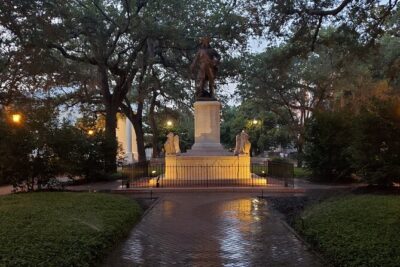
Savannah History and Haunts Candlelit Ghost Walking Tour
Read our review →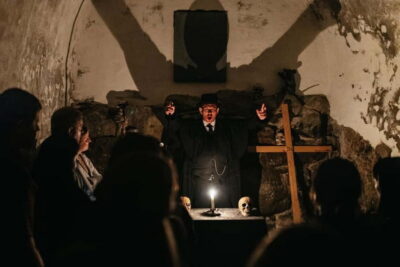
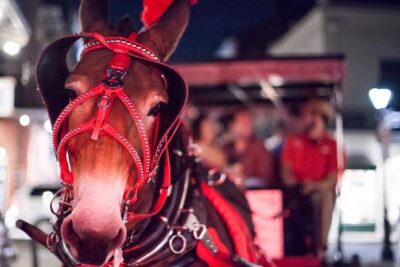
New Orleans Small-Group Haunted History Carriage Tour
Read our review →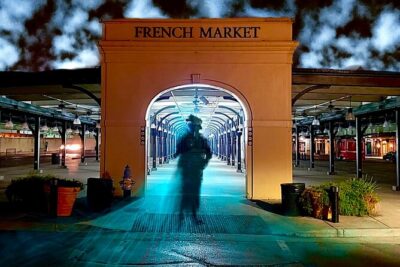


Genteel and Bard’s Savannah Dark History and Ghost Encounter Walking Tour
Read our review →