
Review · SOUTH HOLLAND
Rotterdam: Maritime Museum and historic museum harbor ticket
Rotterdam keeps its working past in plain sight. At the Maritime Museum Rotterdam, I like the mix of polished indoor exhibits and real ships, cranes, and workshops outside. I also like that the museum explains the port as a living part of Rotterdam, not just as a collection of old objects. The main thing to watch is the opening information on your voucher, since one visitor arrived at 5:05 p.m. and found the museum already closed.
For $22 per person, you get a full day to explore the exhibitions, museum harbor, and workshops. That is good value if you give the visit several hours, but the inner harbor cruise costs extra and must be arranged at the ticket counter. Families should also reserve a free time slot for Plons! The Future of the Sea before visiting.
Key points at a glance
- Europe’s largest port explained: Learn how Rotterdam grew into one of Europe’s leading ports through exhibits such as Destination Port City.
- Old ships and working cranes: The outdoor museum harbor lets you inspect historic vessels and machinery maintained in working condition.
- Offshore energy made practical: The Offshore Experience focuses on the search for energy and the technical world beyond the shoreline.
- Hands-on maritime crafts: The workshop gives you a closer look at the practical skills needed to build and maintain a port.
- A separate harbor cruise: The inner harbor cruise is not part of the standard admission, so ask at the ticket counter.
- Family planning matters: Plons! requires a separate, free time reservation in addition to your regular entrance ticket.
Rotterdam’s maritime story starts at Leuvehaven
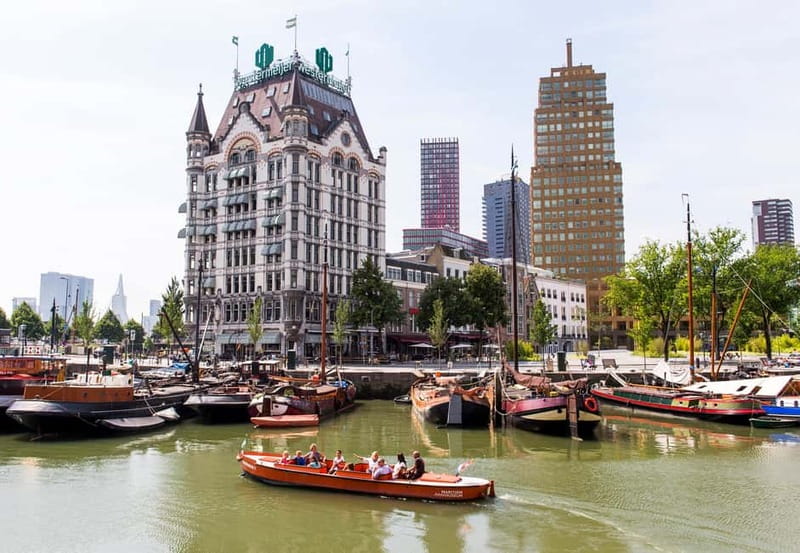
The museum is at Leuvehaven 1, in the center of Rotterdam. That location matters. You are not being sent out to a distant industrial zone to study the port. The museum sits right in the city, beside a harbor area where historic ships and cranes help explain Rotterdam’s working identity.
I would plan this as a one-day activity, though you do not need to spend every minute inside. The admission covers the museum exhibitions, museum harbor, and workshops, so you can move between indoor displays and outdoor machinery at your own pace.
The museum has been welcoming new generations for 150 years. That long history gives the place a useful balance: some displays focus on the past, while others ask what ports and oceans need to become in the future. I find that more useful than a collection that only celebrates old ships.
Getting there is simple. Take the metro to Beurs, tram 8, 23, or 25 to Beurs, bus 32 to Westblaak, or a watertaxi to Leuvehaven. Since the museum is central, you can fit it into a day of sightseeing without arranging a special excursion.
More Museum and Gallery History Tours in the Netherlands:
- Paris: Louvre Museum Entry with History of Mona Lisa
★ 3.9 · 2,823 reviews - Venice’s Best: Basilica, Doge’s Palace, Gondola & History Gallery
★ 4.5 · 2,478 reviews - Guided African American History Tour with Reserved Museum Entry
★ 4.5 · 1,180 reviews
Destination Port City shows how Rotterdam grew
Start with Destination Port City if you want the broadest introduction. This exhibit looks at how Rotterdam developed into one of Europe’s biggest ports. It gives the city’s waterfront a larger context, helping you understand why the harbor shaped local work, transport, engineering, and daily life.
I like this kind of beginning because the outdoor vessels make more sense afterward. A crane is not simply an old crane. A ship is not merely a large object to walk around. They are pieces of a much bigger port system, and this exhibit helps you see how the parts fit together.
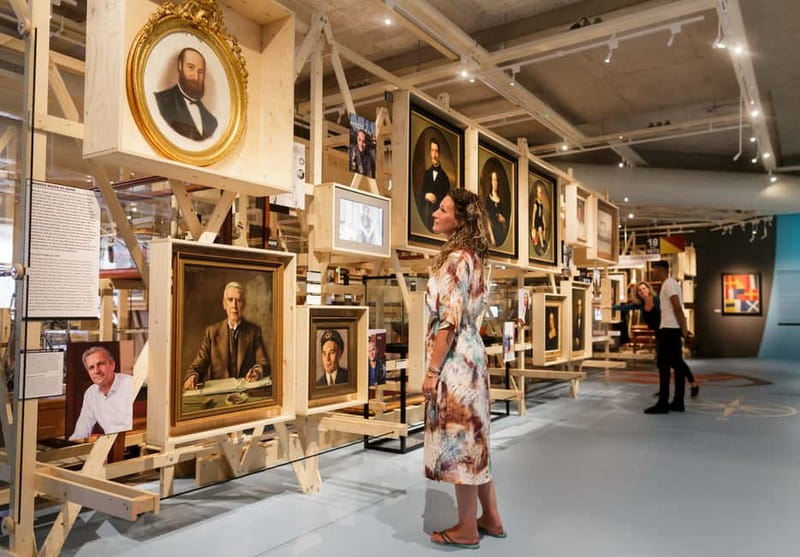
The museum focuses on both the maritime past and the maritime present. You can expect modern exhibitions alongside objects from the museum’s leading collection. Some displays are designed for serious history fans, while other activities are aimed at younger visitors and families.
The exact order of your visit is flexible, which is useful if you are traveling with children. You can spend more time in the sections that catch your attention and move on when an exhibit feels too technical.
The outdoor harbor puts history under your feet

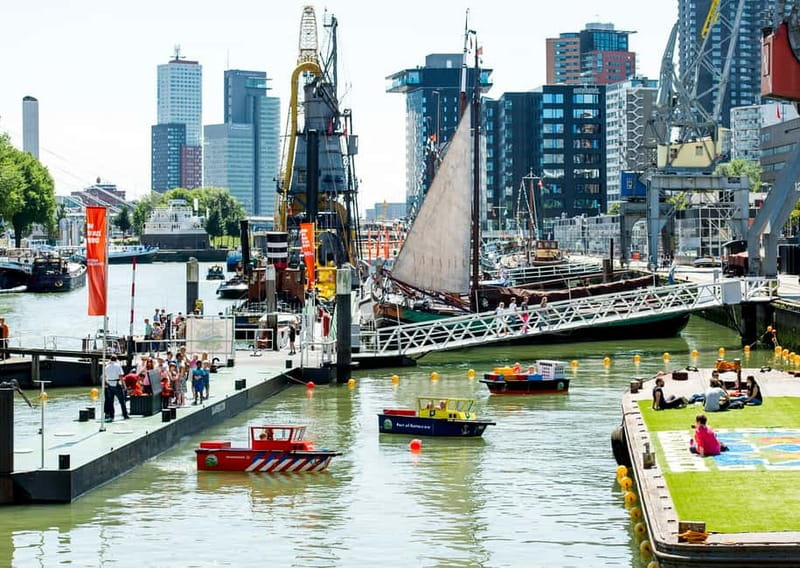
The museum harbor is one of the strongest reasons to buy this ticket. It is described as the oldest and largest museum harbor in the Netherlands, with historic vessels and cranes set outside at Leuvehaven.
I prefer seeing working maritime machinery outdoors because scale becomes obvious. Inside a gallery, a ship model can explain an idea. Beside an actual crane or vessel, you can see how much space the equipment required and how closely port work was tied to the water.
The historic vessels and cranes are maintained in working condition. That does not mean every item will be operating during your visit, but it does mean the collection is treated as machinery, not as decoration. You can explore the harbor area and get a sense of how the port once functioned.
The outdoor section also gives the visit breathing room. After reading exhibit panels, you can step outside and look across the harbor. On a wet or windy day, bring a practical coat, since some of the experience takes place outdoors.
This is especially worthwhile for anyone interested in ships, engineering, industrial history, or Rotterdam itself. If your main interest is art or traditional painting, the museum may feel more specialized than other city museums.
Workshops reveal the practical side of port life
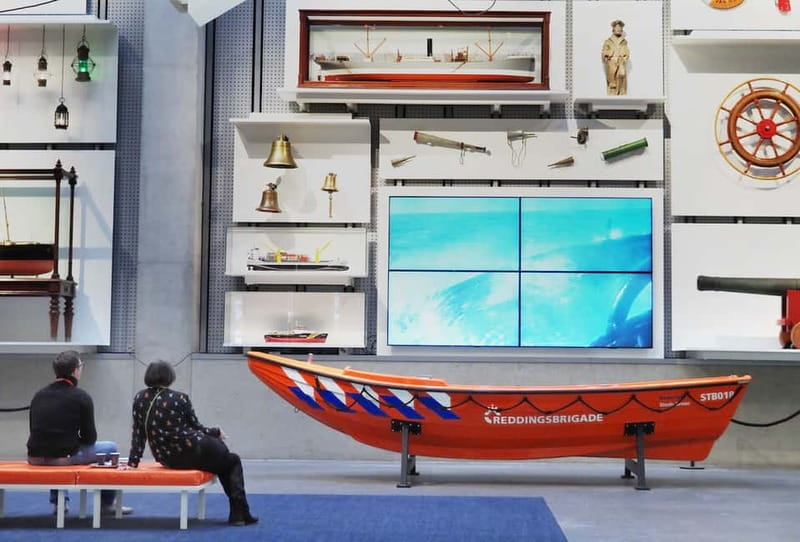
The workshops add an important human element. They show maritime crafts and the skills used to maintain vessels and equipment. This helps you move beyond the image of a port as only cranes, containers, and giant ships.
I like the workshop because it focuses on making and repairing. Maritime history depends on practical work, and the exhibit gives that work a place in the story. You may find it particularly useful if you are visiting with children who need something active between more formal displays.
The workshop is included with admission. That makes the $22 ticket easier to justify, especially if you spend time in the indoor exhibitions, harbor, and workshop rather than making a quick pass through the building.
The museum also has a café and shop. These are useful if you need a pause or want to end the visit with something connected to the subject. The café is not a reason to book the experience, but it makes a longer visit more comfortable.
More Entry Tickets in the Netherlands:
- Rotterdam: Kinderdijk UNESCO World Heritage Entry Ticket
★ 4.6 · 1,477 reviews - Edinburgh: Edinburgh Castle Guided History Tour with Tickets
★ 4.8 · 9,933 reviews - Taormina: Ancient Theater Skip-the-Line Ticket & Audio Guide
★ 4.5 · 2,412 reviews - Historic Milan Tour with Skip-the-Line Last Supper Ticket
★ 4.5 · 1,976 reviews
The Offshore Experience takes you beyond the waterfront
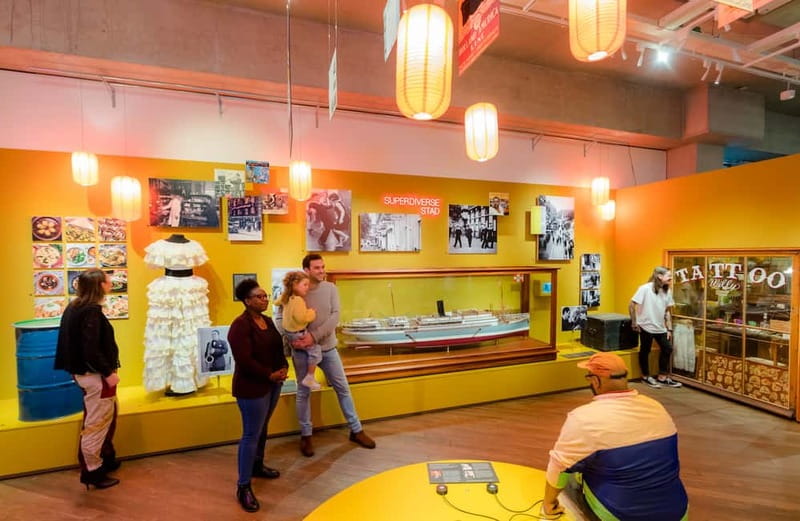
The Offshore Experience turns attention toward energy and the sea. You follow a challenging search for energy, with the focus placed on offshore work and the technical questions surrounding it.
This section helps explain that maritime life is not limited to historic sailing ships or old harbor tools. Modern ports connect to energy, engineering, environmental pressure, and the changing demands placed on the sea.
I would give this exhibit time instead of treating it as a corridor on the way to the outdoor harbor. Its value lies in showing how maritime industries continue to change. It also creates a useful contrast with the historic vessels outside.
The future-facing material is important because the museum does not present the past as a finished story. Rotterdam’s port continues to develop, and the exhibits ask you to consider what the sea can provide and what responsibilities come with using it.
Plons! gives children a separate sea adventure
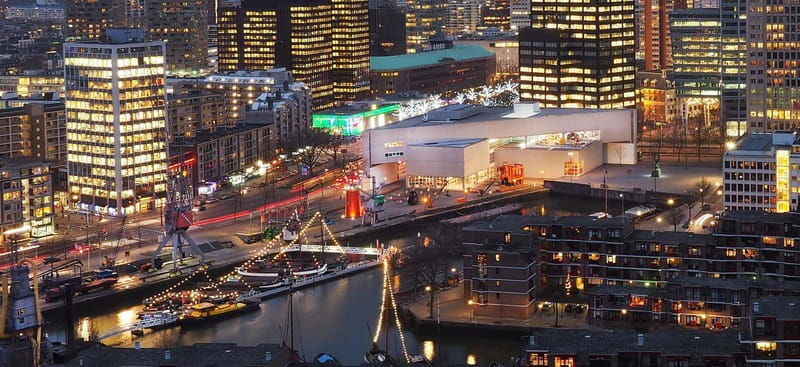
Families should pay close attention to Plons! The Future of the Sea. This children’s exhibit introduces young visitors to the world beneath the water and asks them to think about climate, pollution, and the transition to new energy sources.
The exhibit is included in the broader museum visit, but you must reserve a separate time slot. The reservation is free when you have ordered a regular entrance ticket. Use the museum’s ticket page to book the slot before arriving:
https://tickets.maritiemmuseum.nl/en/plons/tickets
This extra step is easy to miss. I would handle it before planning the rest of your day, especially if you are visiting during a busy period. Without the time slot, your child may not be able to enter Plons! even though the main museum admission is valid.
The exhibit sounds best suited to younger visitors who enjoy learning through a themed setting rather than reading long blocks of text. It also gives parents a way to discuss big subjects, including pollution and energy, without turning the visit into a school lesson.
The inner harbor cruise requires an extra decision
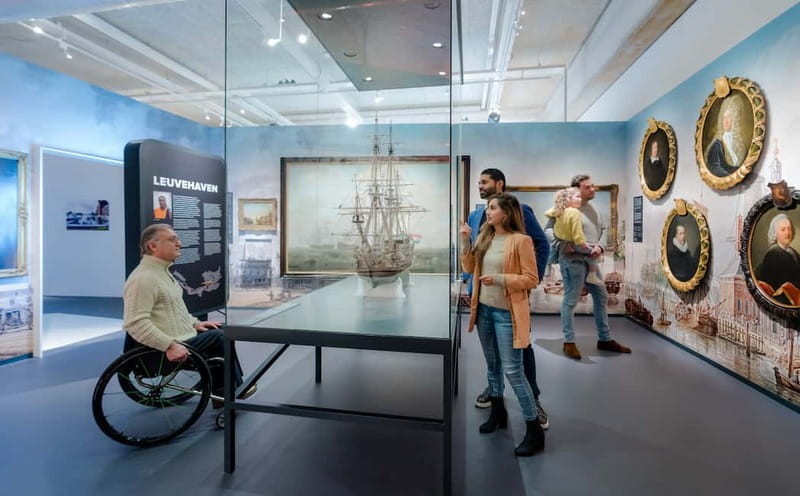
The inner harbor cruise is not included in the standard ticket. You should ask at the museum ticket counter about taking the cruise through the inner harbor section.
This is an important price detail. The advertised $22 covers the exhibitions, harbor, and workshops, but you should not assume it also covers a boat ride. Ask about availability and cost when you arrive, then decide if it fits your schedule and budget.
A cruise can add a useful water-level view of the museum harbor. From the quay, you look at ships and cranes from the outside. From the water, you may get a better sense of their position within the harbor. Still, the core visit works without it, so do not book the museum only because you expect a boat trip to be included.
I would first explore the main museum and outdoor harbor, then ask about the cruise. That lets you judge how much time and energy you have left.
Is $22 good value for one day?
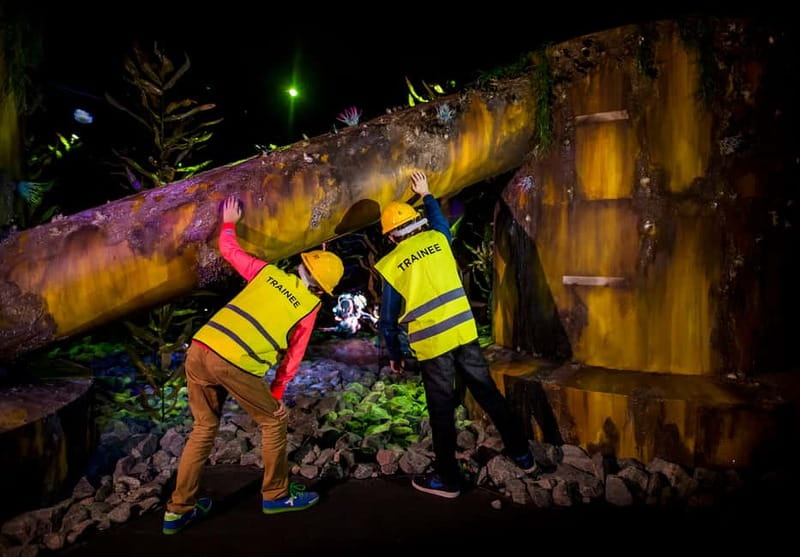
At $22 per person, the ticket is fairly priced if you use the full range of admission benefits. You get access to all exhibitions, the historic museum harbor, and workshops for one day. The outdoor harbor alone is interesting, but the ticket becomes stronger when you add Destination Port City, Offshore Experience, and the family exhibits.
The value depends on your pace. If you spend only an hour looking at a few ships, the price may feel high. If you plan several hours, take breaks at the café, and include both indoor and outdoor sections, it becomes a sensible Rotterdam attraction.
Remember to budget separately for the inner harbor cruise. Plons! does not add a fee when you already hold regular admission, but it does require the additional reservation.
The museum’s overall rating is 3.9 out of 5 from 92 ratings. The strongest clear positive is simple: the visit is informative. The most serious practical complaint concerns incorrect opening hours printed on a voucher. I would check the museum’s current opening details before setting out and avoid relying only on the printed voucher.
Timing, access, and rules you should know
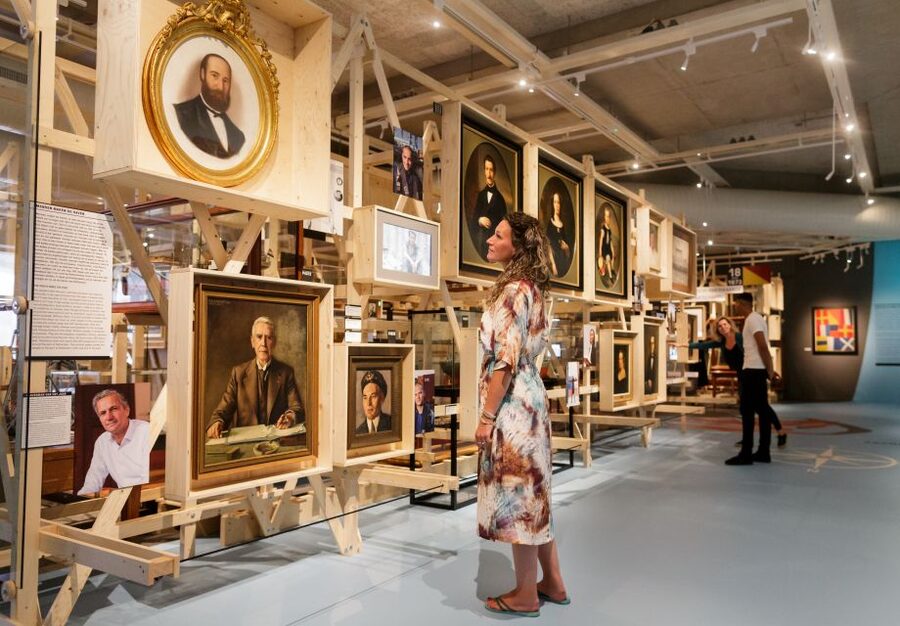
The museum is closed on Mondays, New Year’s Day, during the Rotterdam Marathon, on King’s Day, and at Christmas. Check the calendar before you build your Rotterdam schedule around it.
The experience is wheelchair accessible. English and Dutch are available, and the host or greeter information lists both languages. The museum has exhibitions for all ages, so you can visit as a couple, with older children, or as part of a family day.
The restrictions are unusually extensive. Do not bring pets, weapons, sharp objects, oversized luggage, large bags, drones, bikes, skateboards, skates, umbrellas, walking sticks, crutches, alcohol, or drugs. Smoking and vaping indoors are not allowed, and flash photography is prohibited.
Unaccompanied minors are not allowed. That makes the museum a supervised family activity rather than a place for children to visit alone.
I would arrive with a small day bag and wear comfortable shoes. The combination of galleries, outdoor harbor areas, workshops, and possible boat activity means you will be moving around more than in a standard indoor museum.
Who will enjoy this museum most?
I would recommend it most strongly to:
- People curious about Rotterdam’s port and industrial development
- Families looking for exhibits aimed at different ages
- Anyone interested in ships, cranes, offshore energy, or maritime crafts
- Visitors who prefer real objects and working machinery to display cases alone
- People with several hours available in central Rotterdam
I would be more cautious if you have very limited time or little interest in ports and engineering. The museum is focused. It does not try to be a general Rotterdam museum, and that is both its strength and its limitation.
For families, reserve Plons! early. For boat enthusiasts, ask about the inner harbor cruise at the counter. For everyone else, begin with Destination Port City, then choose between the modern exhibitions and the outdoor harbor based on the weather and your interests.
Should you book the Maritime Museum Rotterdam?
Book it if you want to understand why Rotterdam became a major European port, not simply take a photograph beside a ship. The combination of modern exhibits, historic vessels, old cranes, workshops, and a central location gives you plenty to see for $22.
I would not book it expecting the harbor cruise to be included, and I would double-check opening hours before leaving. Families should make the free Plons! reservation in advance.
For a practical, well-rounded look at Rotterdam’s relationship with the sea, this is a worthwhile one-day stop. The museum is most rewarding when you slow down, inspect the machinery, and connect the old harbor outside with the modern port story inside.
FAQ
Where is the Maritime Museum Rotterdam?
The museum is at Leuvehaven 1, 3011 EA Rotterdam, in the center of the city.
How much does admission cost?
The listed price is $22 per person.
How long is the ticket valid?
The ticket is valid for one day.
Is the inner harbor cruise included?
No. The cruise through the inner harbor museum section is not included. Ask about it at the museum ticket counter.
Do I need a separate ticket for Plons! The Future of the Sea?
You need a separate time slot for Plons!, but the reservation is free if you have ordered a regular entrance ticket.
How can I reach the museum by public transport?
You can take the metro to Beurs, tram 8, 23, or 25 to Beurs, bus 32 to Westblaak, or a watertaxi to Leuvehaven.
Is the museum wheelchair accessible?
Yes, the museum is wheelchair accessible.
Just added around the Netherlands
- REDKULT: Red Light District & Historical City Center★ 4.5 · 107 reviews
- Leiden: Historical and Fun City Tour in German, English, or Dutch★ 4.9 · 35 reviews
- Gouda: Historical Canal Cruise★ 4.3 · 158 reviews
- Amsterdam: Jewish Quarter and History Guided Tour★ 4.7 · 210 reviews
- Amsterdam Walking Tour:Anne Frank, History & Liberal Culture★ 5.0 · 18 reviews
- Skipping Lines & Sipping Beers: A History Tour of Amsterdam★ 5.0 · 22 reviews
- Amsterdam: Iconic Canals & Historic Sights Walking Tour★ 4.5 · 90 reviews
- Amsterdam: Private Pedicab Historical Sightseeing Tour★ 5.0 · 41 reviews
Museum & Gallery History Tours, compared.
Louvre Museum Entry with History of Mona Lisa
Read our review →
Venice’s Best: Basilica, Doge’s Palace, Gondola & History Gallery
Read our review →
Guided African American History Tour with Reserved Museum Entry
Read our review →
POLIN Museum of the History of Polish Jews Ticket
Read our review →
Bell Tower & St Mark’s Square History Gallery Ticket
Read our review →
Field Museum of Natural History Ticket or VIP Tour
Read our review →
Madrid in a Day Tour:Royal Palace, Historic Center & Prado Museum
Read our review →
Basilica, Doge’s Palace, History Gallery & Bell Tower Option
Read our review →Browse the lists this tour appears in