
Review · LAZIO
Rome Secrets: Dark History & Tasty Bites Tour
Rome has a shadowy side. This two-hour walking tour brings it to life through the Jewish Ghetto, Campo de’ Fiori, Via Giulia, and the streets near Ponte Sant’Angelo, mixing unsettling stories with Roman pizza, wine, beer, and local sweets. I especially like the balance between serious history and folklore, plus the chance to see small corners many first-time visitors miss.
I also like that the route does not rely only on famous monuments. The Passetto del Biscione, Arco dei Banchi, and Santa Maria dell’Orazione e Morte give the tour a strong sense of place. The main consideration is pace: two hours is enough for a lively introduction, but not enough for long visits inside every stop, and the spooky themes may not suit anyone looking for a calm, classic Rome walk.
Key points at a glance
- The Jewish Ghetto sets the mood: Begin at Portico d’Ottavia with stories of Kabbalah, mysticism, the number seven, and the Golem.
- Food breaks keep the evening easy: Roman pizza, a glass of beer, wine, and ciambelline al vino are included.
- The route visits genuinely unusual places: See the skull-decorated Santa Maria dell’Orazione e Morte and the frescoed Passetto del Biscione.
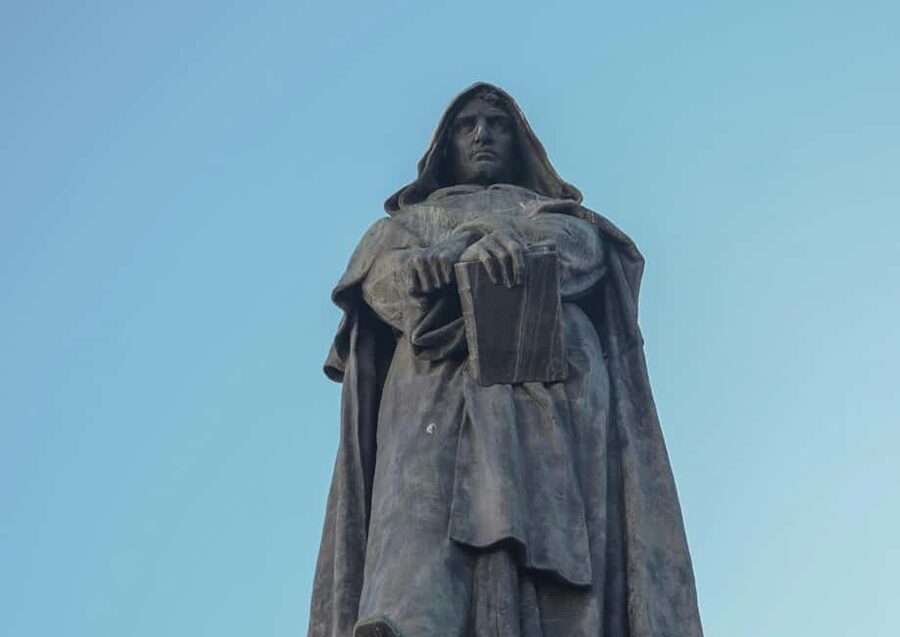
- Giordano Bruno gives Campo de’ Fiori a darker edge: His statue introduces questions about faith, authority, and free thought.
- Guides are a major strength: Simona, Daniele, Daniela, Sylvia, and others have been praised for passion, humor, and strong storytelling.
- It is good value at $40: The price combines a guided walk, several tastings, and access to a side of Rome that standard sightseeing routes often skip.
Why this Rome walk feels different
Rome usually presents itself through emperors, popes, fountains, and grand ruins. This tour takes another route. It focuses on people who were condemned, forgotten, feared, or pushed to the edge of respectable society.
You hear about poisoners, heretics, executioners, secret meetings, forbidden relationships, and nameless bodies pulled from the Tiber. The food stops soften the mood, but they do not erase it. That contrast is the point. One moment you are looking at a tiny sacred image in a quiet passage; the next, you are eating a hot slice of pizza.
I like this approach because the stories give ordinary streets a second layer. You do not need a specialist interest in Roman history to enjoy it. The guide explains the setting through memorable characters and local legends, which makes the information easier to carry with you after the walk.
The experience has earned a 5 out of 5 rating from 37 reviews, with especially strong praise for the guides. Simona received repeated compliments for her warmth and passion. Daniele was praised for his humor, local background, and ability to hold attention for the full two hours. One guide, Daniel, also brought an archaeology background to the walk, adding useful context to the stories.
More Dark History and Haunted Tours in Rome:
- Rome: Guided Bar Crawl with Drinks & Dark History
★ 4.9 · 444 reviews - Savannah History and Haunts Candlelit Ghost Walking Tour
★ 5.0 · 3,235 reviews - Stockholm: Ghost Walk and Historical Tour
★ 4.7 · 2,685 reviews
Starting at Portico d’Ottavia and the Jewish Ghetto
The meeting point is in front of the ruins of the porch at Portico d’Ottavia. This is a fitting start. The ancient remains create a dramatic backdrop, while the surrounding Jewish Ghetto gives the opening story a strong local setting.
The first part looks at mysticism, Kabbalah, and the mysterious role of the number seven in Rome. You will also hear the legend of the Golem, a creature associated with Jewish folklore and the idea of creating life through sacred knowledge.
The value here is less about proving every legend as fact. A good guide helps you separate documented history from traditional storytelling, and the tension between the two is what makes this section work. Rome has always been a city where old stones, religious belief, rumor, and political power sit close together.
This opening can also help you get your bearings. The Jewish Ghetto is easy to reach from central Rome, and the tour begins among historic ruins rather than at a hard-to-find modern venue. The first guided section lasts around ten minutes, so expect an introduction rather than a full historical lecture.
Roman pizza before the darker tales
Food arrives early, with a stop at a local pizzeria for Roman pizza. The included tasting is one of the tour’s practical pleasures. You get something warm and filling before continuing through the evening streets.
The exact pizza style or topping is not specified, so you should treat this as a tasting rather than a full meal. The supplied details also mention gelato in several comments, though the formal inclusions specify Roman pizza and local sweets. That difference is worth noting if you are booking mainly for dessert.
A glass of beer is included as well. It is an easygoing break that keeps the tour from becoming too heavy. I like the way the food is used here: not as a separate food tour, but as a pause between stories. You get a taste of everyday Rome while the guide builds the mood for the next part of the route.
Passetto del Biscione and Rome’s small sacred images
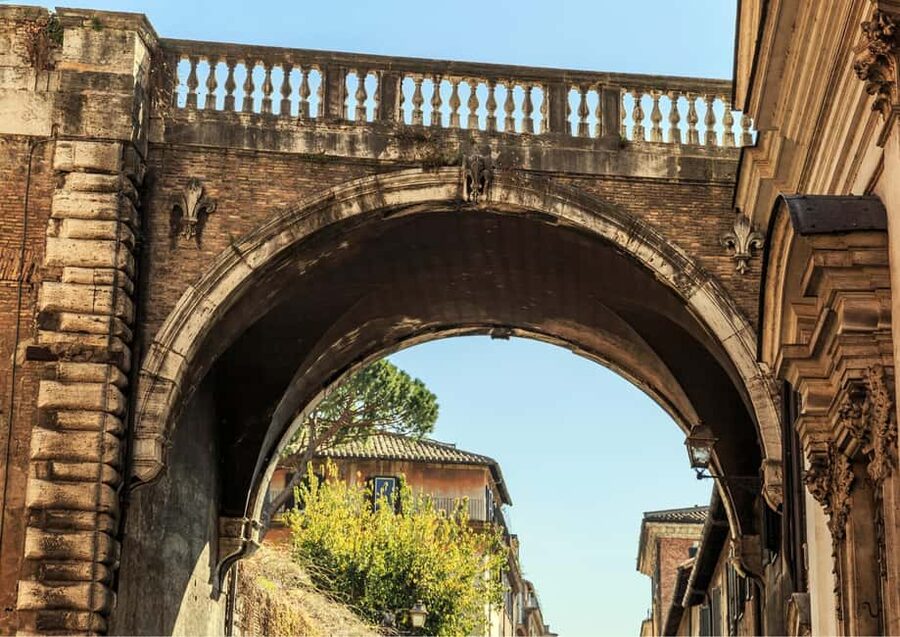
The Passetto del Biscione is one of the route’s most appealing stops. This old frescoed corridor is linked with secret meetings, forbidden love affairs, and quick escapes. It is the sort of place that can look insignificant if you walk past without context.
The passage also introduces the Madonnelle, small images of the Virgin Mary placed in corners, on walls, and beside streets. These details show how religion once appeared in daily life, not only inside churches. They also give you something specific to watch for as you continue through Rome.
This section is particularly good for photography, although the experience is guided rather than designed as a dedicated photo tour. Keep your camera ready, but do not let it distract you from the explanation. The corridor is part of the story, not just a backdrop.
A few more history tours around Rome worth a look
- Colosseum: Underground and Ancient Rome Tour
★ 4.7 · 12,691 reviews - Rome: Colosseum with Arena, Roman Forum and Palatine Guided Tour
★ 4.0 · 5,598 reviews - Colosseum with Arena, Roman Forum and Palatine Hill Guided Tour
★ 4.5 · 3,526 reviews - Colosseum & Ancient Rome with Arena Floor Option I Max 6 People
★ 5.0 · 3,306 reviews
Campo de’ Fiori and the warning of Giordano Bruno
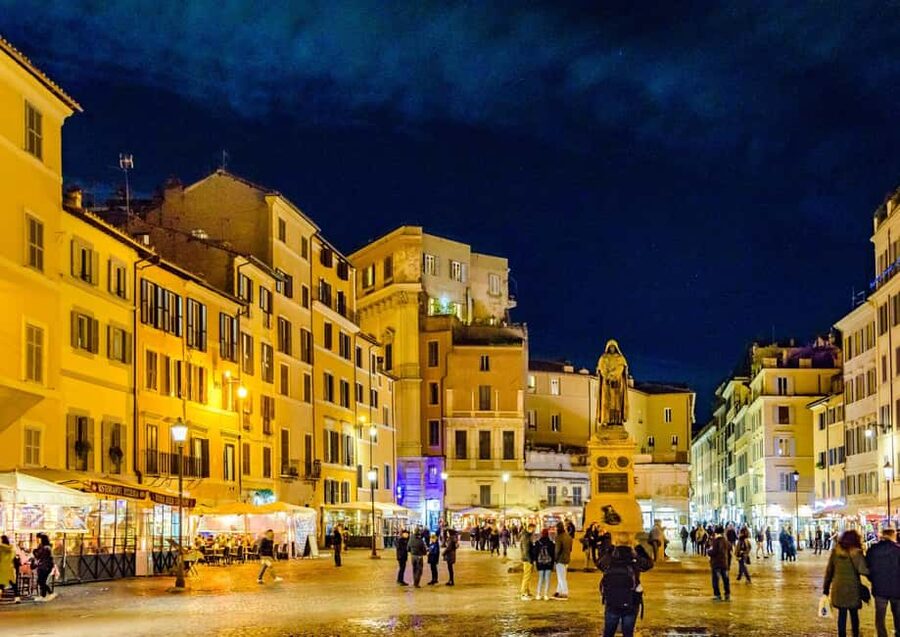
Campo de’ Fiori is one of Rome’s best-known squares, but the statue of Giordano Bruno changes how you see it. Bruno was burned alive for heresy in 1600, and his bronze figure now looks across the square with a stern, almost defiant expression.
The story works because it connects a lively public space with a violent episode involving religious authority and free thought. The guide explains who Bruno was and why his execution still matters. You are not simply looking at a statue. You are considering the cost of challenging accepted ideas.
The stop lasts about ten minutes, so expect a focused explanation. Campo de’ Fiori can be busy, and the group may need to gather close enough to hear. A small group or private option should be easier for questions and conversation, but the available group size is not specified.
Santa Maria dell’Orazione e Morte
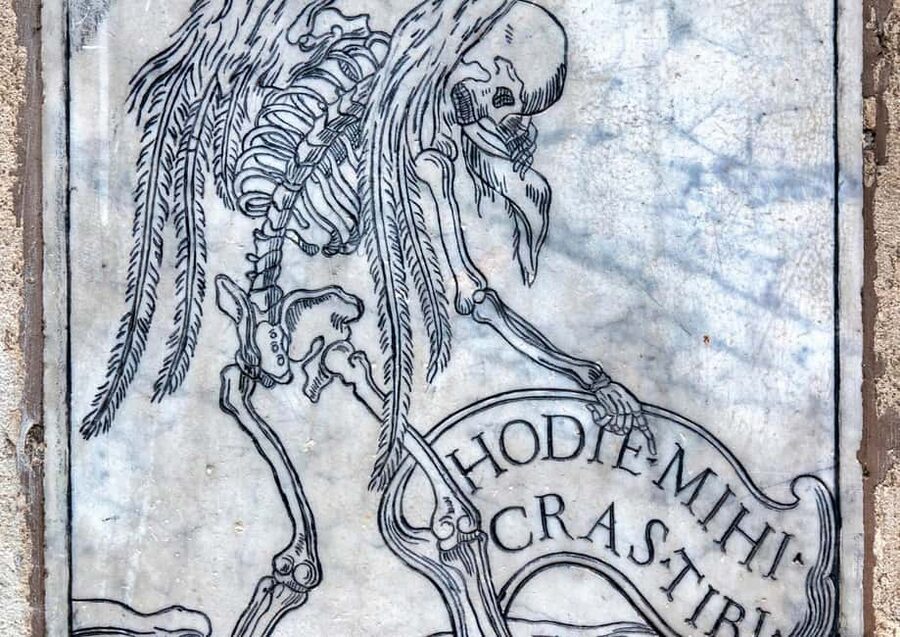
The Church of Santa Maria dell’Orazione e Morte brings the macabre theme into sharp focus. Its façade features carved skulls, and the church was connected with the care and remembrance of unidentified dead people recovered from the Tiber.
The planned stop is described as a photo stop lasting around ten minutes. That means you should not expect a long interior visit or a full church tour. The exterior itself supplies much of the impact, with skulls and bones used as reminders of mortality.
This is one of the tour’s more memorable locations because it is not the usual Roman checklist stop. The church also gives the guide a chance to explain charitable work, death, and the treatment of people who had no family or known identity. The subject is unsettling, but it has a serious human side.
If you prefer lighthearted sightseeing, this may be the point where the tour feels too dark. If you enjoy old cemeteries, gothic stories, or the less polished side of the past, it should be a highlight.
Via Giulia and the story of Aqua Tofana
The walk continues along Via Giulia, one of Rome’s elegant historic streets. Here, the guide tells the story of Giulia Tofana, a seventeenth-century poisoner associated with Aqua Tofana, a lethal substance reportedly sold to women seeking escape from unhappy marriages.
This story needs careful handling. It is memorable, but it also touches on domestic violence, desperation, and murder. The most useful version does not treat Tofana as a cartoon villain. It asks why women in that period might have felt trapped and why a poisoner could find customers.
Via Giulia is an effective setting because the polished street hides the darker subject matter. The contrast between elegant architecture and stories of betrayal gives the walk its Roman character. Not every stop is about a famous monument. Sometimes the setting works precisely because it appears ordinary.
Arco dei Banchi and the final food tasting
The Arco dei Banchi is described as a passage once used by bankers, spies, and priests moving between the Vatican and the center of Rome without being seen. It is another example of the route’s focus on small spaces with large stories.
The passage suggests how movement through the city was shaped by power, money, religion, and secrecy. You may pass through quickly, but the guide’s explanation helps you picture the people who once used these routes.
Later, the tour stops for ciambelline al vino, traditional ring-shaped biscuits made with wine, along with a glass of wine. These biscuits are a fine Roman finish to the savory food earlier in the walk. They are simple, local, and tied to the everyday table rather than a formal restaurant meal.
The included drink and sweets add value to the $40 price. You are not paying only for a two-hour commentary. You are also receiving several small tastings that help break up the walking. Still, anyone expecting a full dinner should plan another meal afterward.
Ponte Sant’Angelo and Mastro Titta
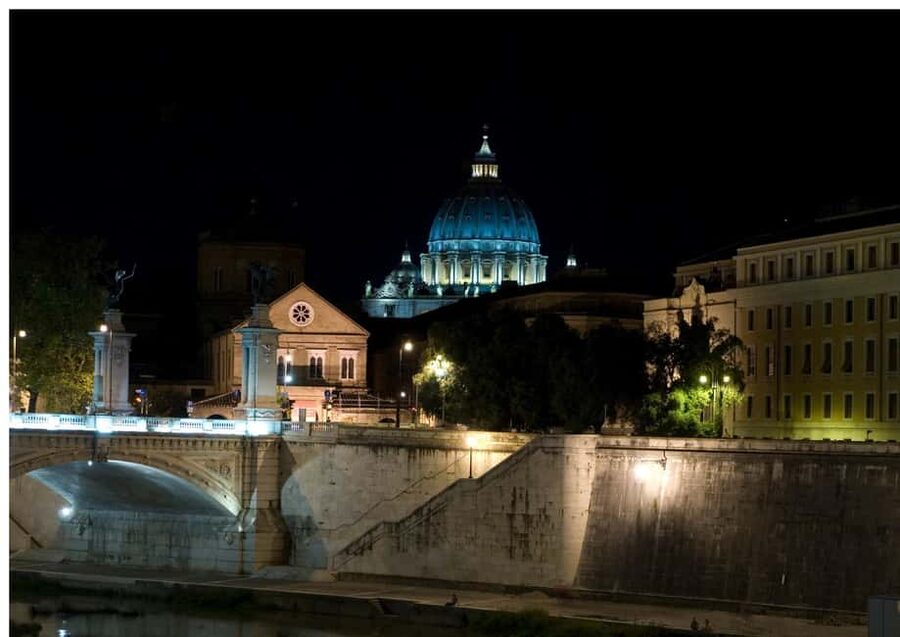
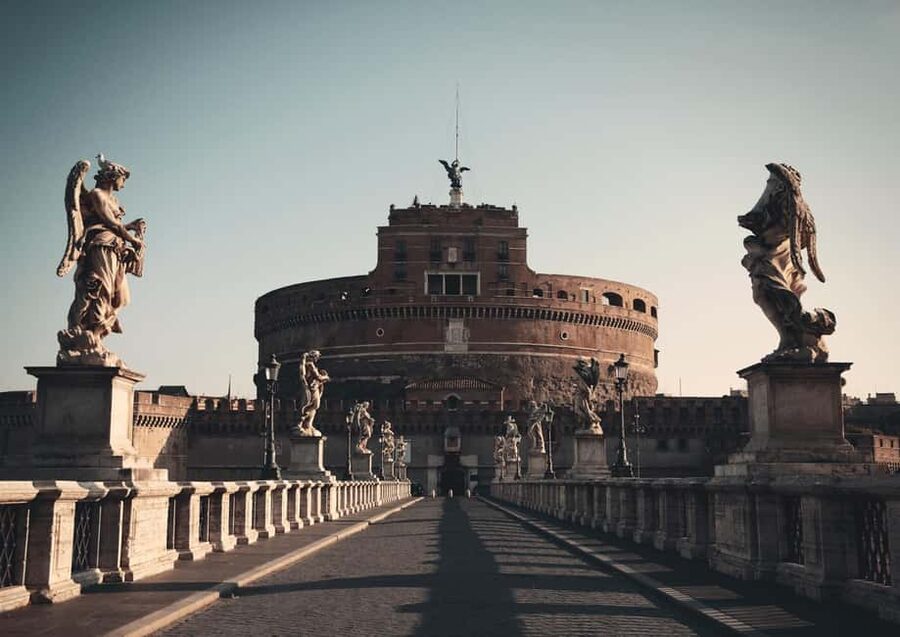
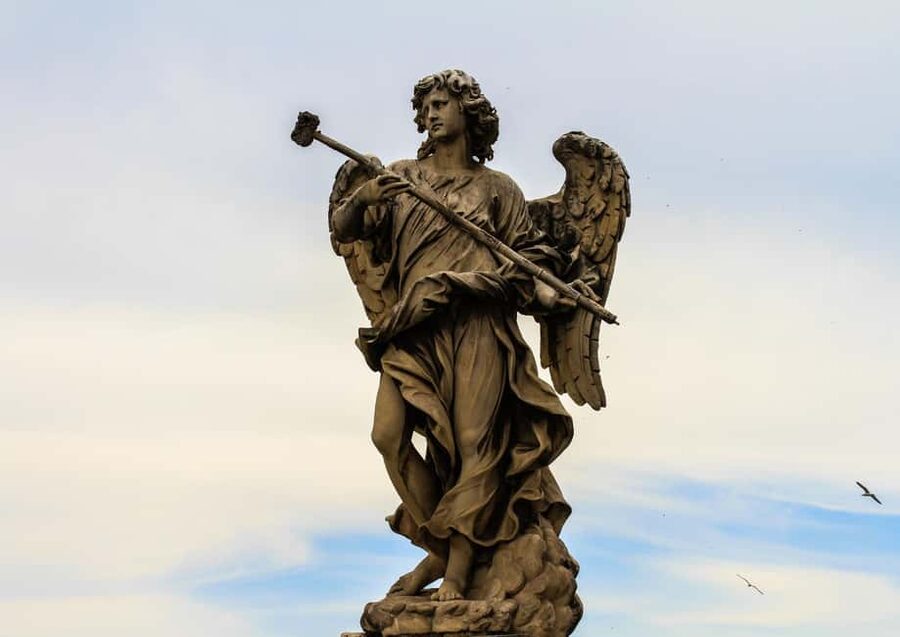
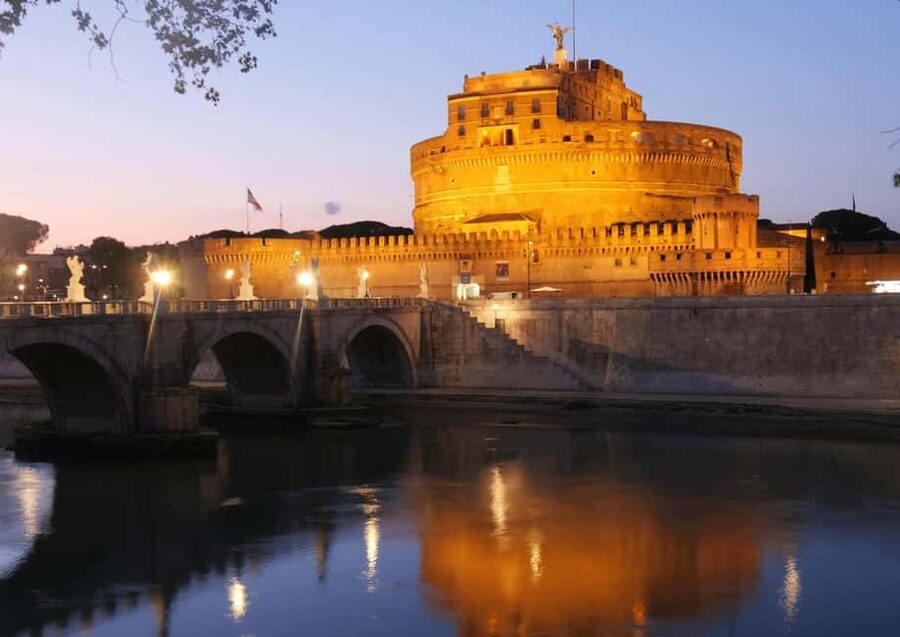
The final area is near Ponte Sant’Angelo, with a short photo stop before the tour finishes on Via del Banco di Santo Spirito. The bridge and nearby Castel Sant’Angelo create a strong closing setting, especially as daylight fades.
The final story concerns Mastro Titta, Rome’s most notorious executioner. His work was gruesome, but his personality and place in Roman society were more complicated than a simple villain story. The guide uses him to close the tour with questions about public punishment, spectacle, and the people who carried out official violence.
One particularly appealing feature is the change in atmosphere during the walk. The route may begin in daylight and end beneath the moonlit presence of Castel Sant’Angelo, depending on the start time. Since the available times vary, check the schedule if you specifically want an after-dark experience.
The finish is not at the original meeting point. You end near Ponte Sant’Angelo, which can be useful if you want to continue exploring central Rome afterward.
Guides make or break this experience
The guide is the most important part of this tour. The stories involve folklore, disputed details, religious conflict, and grim events. They need a clear narrator who can keep the mood lively without turning suffering into a joke.
The strongest comments focus on Simona and Daniele. Simona was praised for combining history with warmth, while Daniele was repeatedly described as passionate, funny, and engaging. Sylvia was also praised for linking history and folklore in a way that held attention. A guide with an archaeology background added another layer of interpretation.
Names and staffing can change, so you should not assume you will receive a particular guide. The important point is that the experience depends heavily on presentation. A flat delivery would make the same streets feel ordinary. A lively guide can make a narrow corridor, statue, or church façade stay with you for years.
English, French, Spanish, and Portuguese tours are available. Private and small-group formats can also be selected, which may suit you if you want more room for questions or prefer not to walk with a large crowd.
Is $40 a fair price?
At $40 per person, the tour offers reasonable value for a two-hour experience. The price includes an English-speaking guide, Roman pizza, one glass of beer, one glass of wine, and local sweets. That is a useful package for an evening introduction to Rome.
The value depends on what you want. If you only want a cheap walk through famous squares, you may find it costly. If you would otherwise pay separately for drinks and snacks, the price becomes easier to justify.
The tour also saves you the work of finding the smaller locations yourself. The Passetto del Biscione, Arco dei Banchi, and Santa Maria dell’Orazione e Morte are more rewarding when someone explains their purpose and stories. You are paying for interpretation as much as for movement between places.
It is still a short tour. You should not expect full museum visits, a complete study of Roman occult traditions, or a substantial dinner. Think of it as a focused evening walk with tastings.
What to know before you book
Wear comfortable shoes. The route uses Rome’s cobbled streets, and the experience involves steady walking between stops. The supplied details do not give a total distance, so you should not assume the walk is effortless simply because it lasts two hours.
Arrive at the Portico d’Ottavia meeting point and look for the ruins of the porch. The tour ends on Via del Banco di Santo Spirito near Ponte Sant’Angelo, not back at the starting point.
The timing matters. If you want the full shadowy mood, choose a start time that allows the walk to continue into the evening. The tour can also work as a first-night activity because it introduces neighborhoods, food, and local stories without requiring a full day of sightseeing.
Cancellation is free up to 24 hours before the start, and you can reserve while paying later. These policies make it easier to fit the walk into a changing Rome schedule.
Who should book this tour?
I would recommend it to you if you enjoy local legends, unusual churches, small historic passages, and stories about people who challenged authority. It also suits first-time visitors who want a gentle introduction to central Rome beyond the Colosseum and Trevi Fountain.
Food-minded visitors will appreciate the pizza, beer, wine, and ciambelline al vino. The tour is not a full food crawl, but the tastings make the evening more satisfying.
Families with older children may enjoy the storytelling, though the subjects include execution, poisoning, heresy, death, and ghosts. For younger children, the tone may be too grim.
You should probably skip it if you want a quiet architectural walk, long interior visits, or a substantial meal. The tour moves quickly and uses dark stories as its main attraction.
Should you book Rome Secrets?
Book it if you want Rome to feel stranger, more personal, and less polished. The best parts are the passionate guides, the unusual stops, and the way simple food breaks keep the dark material from becoming too heavy.
For $40, it is a fair introduction to Rome’s legends and overlooked corners. Choose it early in your stay if you want useful orientation, or later if you already know the major sights and want a different side of the city. Just bring comfortable shoes, an appetite for small tastings, and a willingness to hear stories that do not always end happily.
FAQ
Where does the tour begin?
It begins at Portico d’Ottavia, in front of the ruins of the porch, in Rome’s Jewish Ghetto.
Where does the tour finish?
The tour finishes on Via del Banco di Santo Spirito, near Ponte Sant’Angelo.
How long does the experience last?
The tour lasts two hours.
What food and drinks are included?
The experience includes Roman pizza, one glass of beer, one glass of wine, and local sweets, including ciambelline al vino.
Which languages are available?
Tours are available in English, French, Spanish, and Portuguese.
Is this a private tour?
You can choose a private or small-group format.
What places are visited?
The route includes the Jewish Ghetto, Passetto del Biscione, Campo de’ Fiori, Santa Maria dell’Orazione e Morte, Via Giulia, Arco dei Banchi, and the area near Ponte Sant’Angelo.
Can I cancel for a full refund?
You can cancel up to 24 hours in advance for a full refund.
Can I reserve now and pay later?
Yes. The experience allows you to reserve your place and pay later.
Just added around Rome
- Rome: Private Colosseum Experience and Ancient Ruins Tour★ 4.6 · 25 reviews
- Rome: Guided Tour of Colosseum and Ancient Rome★ 4.9 · 74 reviews
- Rome: Rome at Night Evening Historical Walking Tour★ 4.9 · 24 reviews
- Rome: Colosseum with Access to Arena Floor and Ancient Rome★ 4.2 · 320 reviews
- Rome: Food Tour of the Historic Center with Rooftop Spritz★ 4.7 · 43 reviews
- Rome: Introduction to the Colosseum and Ancient City Tour★ 4.8 · 75 reviews
- Rome: Guided Group Colosseum & Ancient City Tour★ 4.8 · 62 reviews
- Rome: Five Shapes of Pasta Cooking Class in Ancient Tavern★ 5.0 · 102 reviews
Dark History & Haunted Tours, compared.
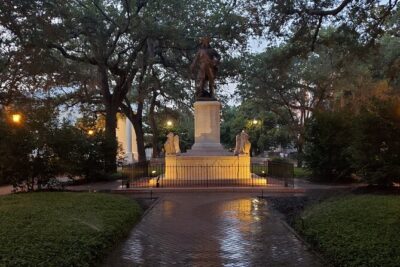
Savannah History and Haunts Candlelit Ghost Walking Tour
Read our review →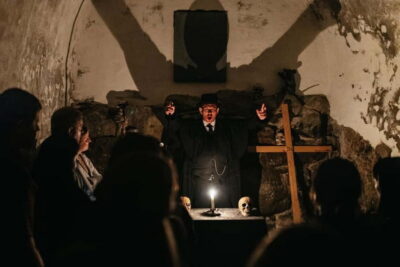
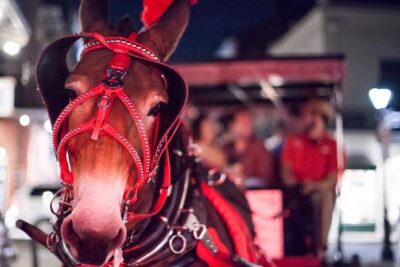
New Orleans Small-Group Haunted History Carriage Tour
Read our review →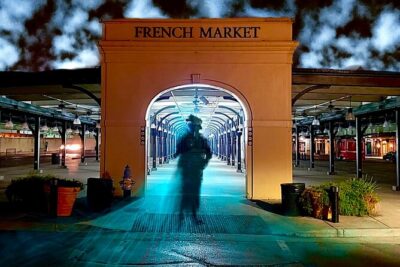


Genteel and Bard’s Savannah Dark History and Ghost Encounter Walking Tour
Read our review →
Shadows of York: Ghost Walk and Horrible History.
Read our review →Browse the lists this tour appears in