
Review · BAVARIA
“Rotes Bier” and “Blaue Zipfel”. A historical-culinary walk
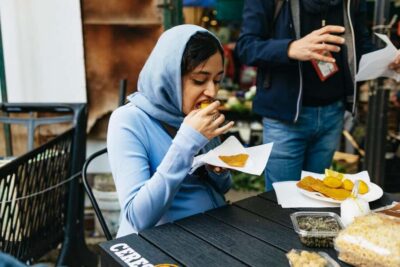
Nuremberg tastes better with a story. This two-hour walk connects the old town’s landmarks with local food, from red beer and tiny bratwurst to gingerbread and Blaue Zipfel. I like the way the tour treats food as part of the city’s past, not just a snack between sights. I also like the short walking distances, which keep the outing easy to follow.
The guide explains why Nuremberg’s sausage is so small, how cooks here knew ravioli, and what the Devil’s Kitchen has to do with local eating habits. The main drawback is clear: the tour is held in German, so you need a good command of the language to catch the jokes and historical detail. The samples are a pleasant bonus, though they may feel modest if you expect a full meal.
Key points at a glance

- Local food with a historical purpose: Each tasting helps explain Nuremberg customs, trade, cooking, or daily life.
- A compact old-town route: The walk links the Altes Rathaus, Hauptmarkt, St. Sebaldus Church, and Altstadthof Brewery.
- Three signature tastes: Expect Nuremberg Bratwurst, gingerbread, and local red beer, along with other small samples.
- German-speaking guide: The tour suits German speakers best, including visitors who want detailed answers and local context.
- Two hours and mostly gentle walking: The stops are close together, with one longer ten-minute walk near the end.
- A good-value food walk: At $29 per person, the price covers the guide, walking tour, snacks, and beer, but not transportation.
Starting at the Altes Rathaus
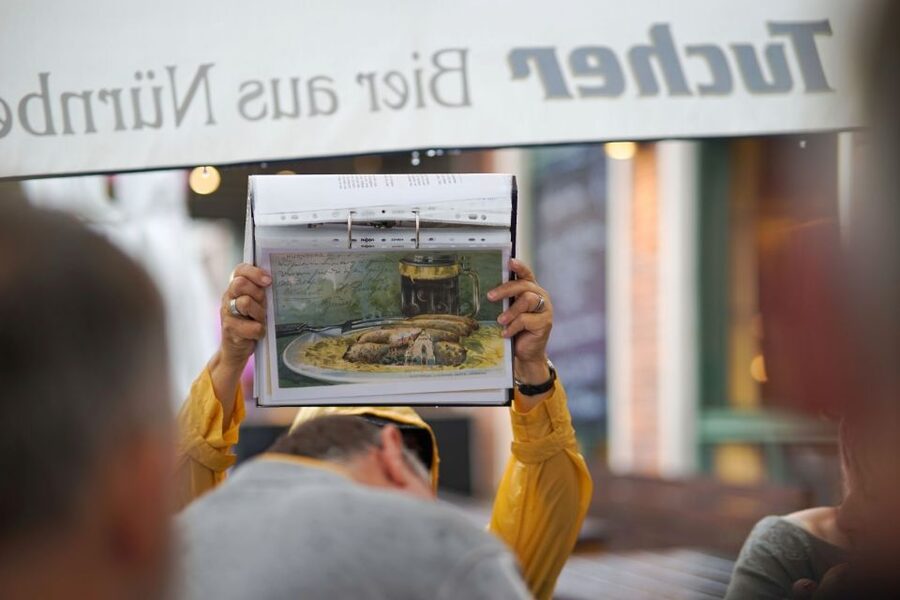
The meeting point is in front of the main entrance of Nuremberg’s Old Town Hall, or Altes Rathaus, at Rathausplatz 5. Look for the guide with a picture folder and the green logo of Geschichte Für Alle e.V., the local organization running the walk.
This is a smart place to begin. You are already in the historic center, and the Old Town Hall gives the guide a natural setting for explaining how civic life, food, and trade shaped Nuremberg. You do not need a bus or taxi once you reach the meeting point. The route continues on foot through the center and finishes at the Altstadthof Brewery.
The tour lasts two hours. That sounds short, but the tightly arranged route makes good use of the time. Most walks between stops take three to five minutes, so you spend more time hearing stories and tasting food than crossing the city.
Wear comfortable shoes and clothing suited to the weather. The tour runs rain or shine, and much of the experience takes place outdoors or while moving between stops. A small umbrella or rain jacket can make a wet day easier, though the tour does not require special equipment.
More History Walking Tours in Germany
- Leipzig: 1.5-Hour Historical Walking Tour in German
★ 4.7 · 2,217 reviews - Berlin: History of the Third Reich Guided Walking Tour
★ 4.7 · 791 reviews - Trier: Guided Old Town Highlights and History Walking Tour
★ 4.7 · 687 reviews
Why Nuremberg’s bratwurst is so small
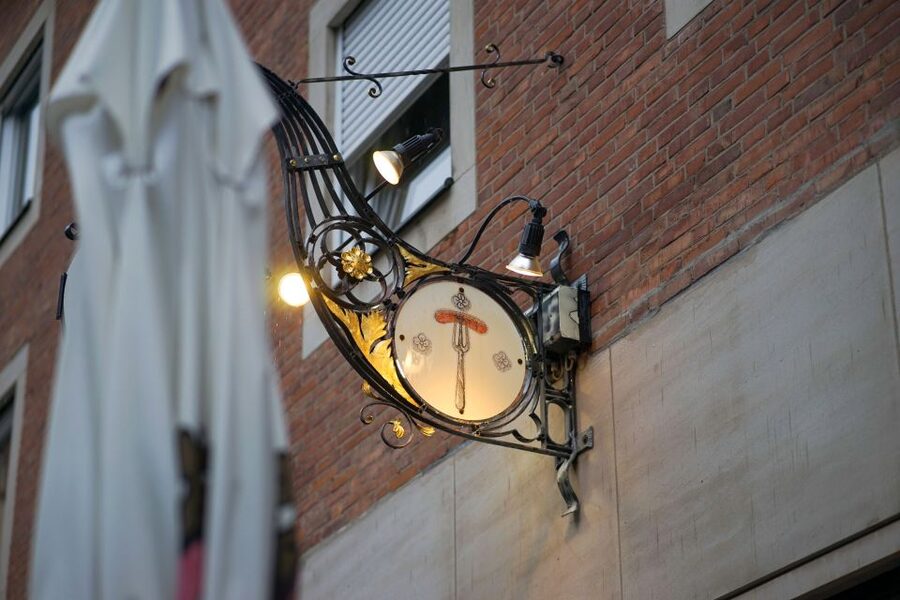
The first major food stop is Bratwurst Röslein, a well-known address near the center. Here, the guide explains the story behind the Nuremberg Bratwurst and answers the simple question many visitors have: why is it so small?
The sausage is not merely a miniature version of a larger German bratwurst. Its size is part of its identity. The tour uses this familiar food to open a wider discussion about Nuremberg cooking and local eating customs. You get to taste a real Nuremberg Bratwurst while learning why the city is associated with this particular form.
I like this approach because it turns a quick bite into a useful cultural clue. Instead of giving you a generic sausage and moving on, the guide connects the food to the city’s traditions. You will also hear about how much meat Nuremberg citizens ate, which adds a practical angle to the story. Food history becomes easier to understand when it involves something you can hold and taste.
Do not treat this stop as a full lunch. The tour includes snacks and tastings, not a large restaurant meal. If you arrive hungry, have a proper meal before or after the walk, or plan another stop later in the day.
Hauptmarkt and the city’s sweet side
From Bratwurst Röslein, the route takes about three minutes on foot to Hauptmarkt, Nuremberg’s main market square. This is one of the central public spaces in the old town, and it gives the guide room to connect daily life, commerce, and food.
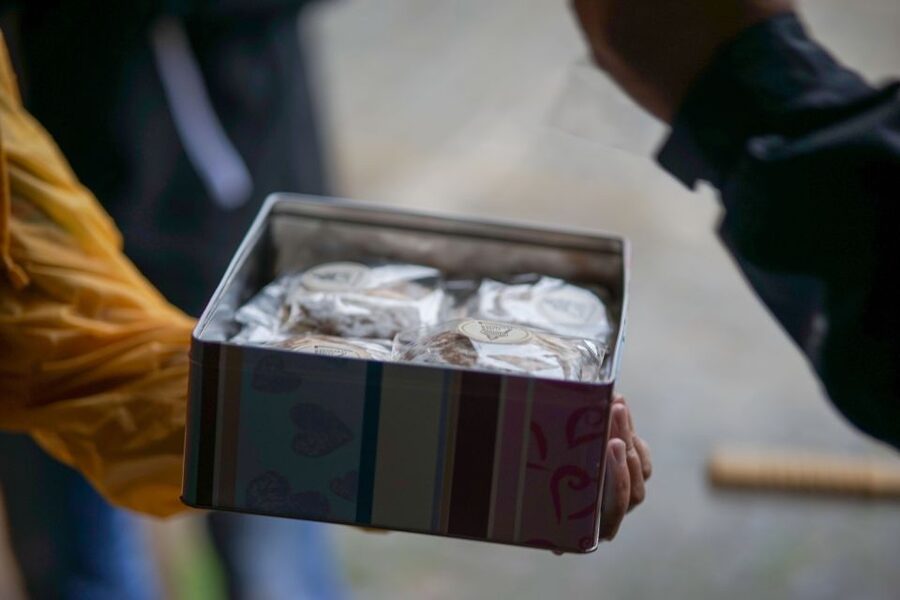
The tour includes food tasting here and at a nearby address, Hauptmarkt 2. The focus turns to Nuremberg gingerbread, one of the city’s best-known specialties. You will learn what makes Nuremberg gingerbread special and why it has such a strong place in the city’s food culture.
The gingerbread is described as some of the best in the world, but the real value is the explanation around it. You are not simply handed a sweet and told to enjoy it. The guide places it within the city’s cooking traditions and trade connections. That makes the tasting more memorable, especially if you have already seen gingerbread sold throughout Nuremberg and wondered what separates the local version from ordinary spiced cake.
The Hauptmarkt stops also help break up the walking. You move only a short distance, hear another part of the story, then taste something connected to it. That rhythm works well for visitors who want history without spending two hours inside a museum.
From Trödelmarkt to the Unschlitthaus
After the Hauptmarkt, the tour continues through the old town to Trödelmarkt 13, about five minutes away. The guide continues the food story through additional samples and historical explanations. The supplied details do not list every snack by name, so you should expect a series of small tastings rather than a fixed restaurant menu.
That uncertainty is worth keeping in mind. The experience is built around discovery, and the samples support the talk. It is not designed for people who want to choose each course or receive a large serving of every specialty. One German participant praised the bratwurst, gingerbread, and beer but felt that some of the smaller snacks could have been more substantial. I would set your expectations accordingly.
The next stop is Unschlitthaus, reached after another short walk of about five minutes. This building provides a setting for stories about the city’s food supply and working life. The tour’s questions range widely: Nuremberg cooks and ravioli, local meat consumption, and the meaning of Devil’s Kitchen all come into play.
These unusual questions are part of the walk’s charm. A standard city tour might explain a church facade or a town square and leave it there. This one asks what people cooked, what they ate, and how food shaped ordinary life. The result is more specific and often more entertaining than a string of dates and architectural labels.
More Food and History Tours in Germany:
- Bamberg: Guided Historical Culinary Tour
★ 4.6 · 461 reviews - Sevilla Food Tour: Tapas, Wine, History & Traditions
★ 5.0 · 3,468 reviews - Victoria Guided Food and History Tour
★ 5.0 · 2,015 reviews - Gastown Historic Walking Food Tour
★ 5.0 · 1,863 reviews
St. Sebaldus Church and food in a sacred setting
The route then takes about ten minutes to reach St. Sebaldus Church. This is the longest walk between stops, though ten minutes is still easy for most people who are comfortable walking through the old town.
The church stop adds another layer to the tour. Food is not separated from religion, civic life, or public space. The guide uses the surroundings to continue the historical discussion, with another food tasting included along the way.
You may find this part especially useful if you want more than a list of local dishes. The tour asks how food fits into the city’s larger story. It also touches on figures connected with Nuremberg’s cooking traditions, including the planner of Munich’s English Garden and his relationship to Nuremberg food. That is an unexpected connection, and it shows how the guide moves beyond the obvious sausage-and-beer material.
The strongest feature here is the guide’s willingness to answer questions. Sonja, one of the named guides associated with the experience, has been praised for explaining the material with humor, clear wording, and strong command of the subject. That matters on a walk filled with small historical details. A good guide can make an odd fact stick; a rushed guide can make it disappear before the next corner.
Finishing with red beer at Altstadthof
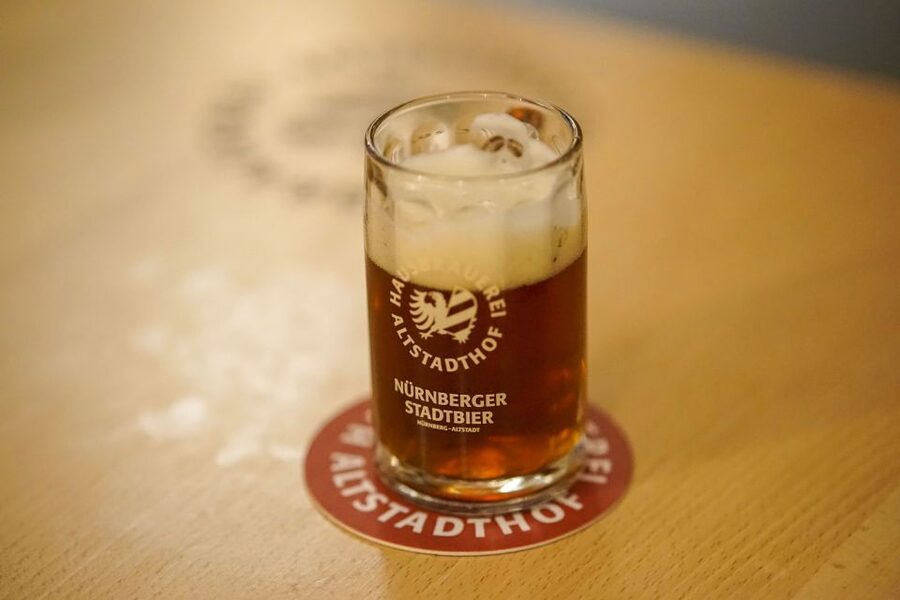
The final stretch takes about five minutes to Altstadthof Brewery, also called Hausbrauerei Altstadthof, Rotbierstüberl, Brauerei und Whiskydestillerie. The experience ends here with a tasting of Nuremberg red beer.
This is a fitting finish. The walk begins with the city’s civic center and local sausage, then moves through markets, food traditions, and old buildings before arriving at a brewery. The red beer gives you a final taste that is distinct from the more familiar pale lagers many people associate with Germany.
The beer is not an optional extra. It is included with the snacks and guide, making the final stop feel like part of the main experience rather than a sales pitch added at the end. The brewery also produces whisky, but the tour information does not promise a whisky tasting, so do not book expecting one.
The finish at the brewery is practical as well as thematic. You can continue your evening from the old town without needing transportation back to the starting point. The tour does not include travel to or from the meeting point, but the walking route itself is arranged in a compact central area.
What you actually get for $29
At $29 per person, the tour includes a guided walking route, a live guide, snacks, and beer. It does not include transportation to or from the Altes Rathaus. Since the entire tour takes place on foot in central Nuremberg, the lack of transportation during the walk is not a serious limitation.
The value depends on what you want from a food tour. If you want a large meal, $29 will not buy one here. You receive samples, not a full lunch or dinner. If you want context, a local guide, several tastings, and an organized route through the old town, the price is more appealing.
I see this as a good first-day activity. It helps you learn the names and stories behind foods you may see elsewhere in Nuremberg. You can then return to a restaurant or bakery later with a better idea of what you want to order.
The score of 4.4 from 190 ratings suggests a generally strong experience, but it also fits the practical picture: the guiding and historical content receive the most praise, while the snack portions are the area to keep in mind. The best reason to book is the combination of food and explanation, not the quantity of food.
Who will enjoy this walk most
I would recommend this tour to you if you enjoy local history, like asking questions, and can follow a German-language explanation. It is especially useful for visitors who want to understand the meaning behind Nuremberg’s famous foods rather than simply sample them.
It also suits repeat visitors. One local participant still learned new things, which suggests that the walk can offer more than the usual first-glance introduction to Nuremberg. The guide’s questions about cooking, meat, trade, and civic life give the route enough depth to reward people who already know the old town.
Families and older visitors may appreciate the short distances between most stops. The activity is listed as wheelchair accessible, though weather and old-town surfaces can still affect comfort. The ten-minute walk to St. Sebaldus Church is the longest stretch, so consider your own walking pace.
You should think twice if you need an English tour, dislike outdoor activities in poor weather, or want a substantial meal. The German-only format is the main limitation, not a minor footnote. Also, because the tour runs rain or shine, weather-appropriate clothing matters.
A few practical tips before you go
Arrive at the main entrance of the Altes Rathaus with enough time to identify the guide’s picture folder and green Geschichte Für Alle e.V. logo. The meeting point is specific, but the old town can still feel confusing if you are rushing.
Eat lightly beforehand rather than arriving very hungry. The food samples are spread through the walk, and the final beer comes at the brewery, but the experience is not meant to replace lunch.
Keep your questions ready. The guides make time for them, and the walk’s unusual subjects are more rewarding when you engage with them. Ask about the small sausage, the local gingerbread, the Devil’s Kitchen, or the link to Munich’s English Garden.
Finally, remember that no invoice can be issued for bookings made through GetYourGuide. The booking confirmation serves as proof of payment. Free cancellation is available up to 24 hours before the start, and you can reserve now and pay later if you want to keep your plans flexible.
Should you book this Nuremberg food walk?
Book it if you want a compact, thoughtful introduction to Nuremberg through bratwurst, gingerbread, beer, and local stories. The route is well suited to curious German speakers who prefer a guide with humor and time for questions. The most praised qualities are the clear explanations, strong historical content, and friendly guiding style, including the work of Sonja.
Skip it if you need English, expect a full meal, or want to spend the entire time inside restaurants. At $29, the value is in the guided interpretation and several tastings, not in large portions. For the right visitor, it is an easy way to connect the old town’s buildings with what people cooked, sold, and drank there.
FAQ
Where does the tour start?
The tour starts in front of the main entrance of the Altes Rathaus at Rathausplatz 5 in Nuremberg.
Where does the tour finish?
It finishes at Hausbrauerei Altstadthof, also called the Rotbierstüberl, brewery, and whisky distillery.
How long does the tour last?
The walking tour lasts two hours.
What language is the tour in?
The live tour guide speaks German. The activity is not advertised as an English-language tour.
What food and drink are included?
The experience includes snacks, Nuremberg Bratwurst, gingerbread tastings, and local red beer. The exact selection of every snack is not specified.
Is transportation included?
No. Transportation to and from the meeting point is not included. The route between stops is walked.
Is the tour wheelchair accessible?
Yes, the activity is listed as wheelchair accessible.
What happens if it rains?
The tour takes place rain or shine. You should bring weather-appropriate clothing and comfortable shoes.
Just added around Germany
- Regensburg: City Highlights Historical Boat Tour★ 4.0 · 259 reviews
- Quedlinburg: Historical Old Town Evening Walking Tour★ 4.5 · 148 reviews
- Quedlinburg UNESCO World Heritage Group Tour (private)★ 4.6 · 32 reviews
- POTSDAM: Old historical town, a walk with a certified guide★ 4.7 · 52 reviews
- Nuremberg:Complete Tour! Castle/Old Town/World War history★ 5.0 · 45 reviews
- Nürnberg: Mörder, Fälscher, Messerstecher★ 4.8 · 53 reviews
- Nuremberg: 1.5-Hour Private Tour through Historical Old Town★ 4.8 · 283 reviews
- Nuremberg: Historical Rock Passages Tour★ 4.8 · 131 reviews
Food & History Tours, compared.
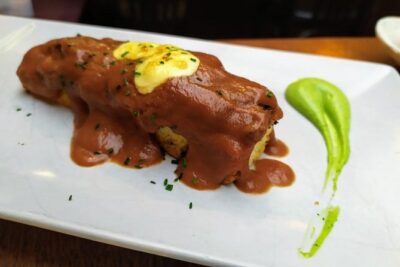
Sevilla Food Tour: Tapas, Wine, History & Traditions
Read our review →

Dublin Historical Centre Food Tour with 8 Food Tastings & Drinks
Read our review →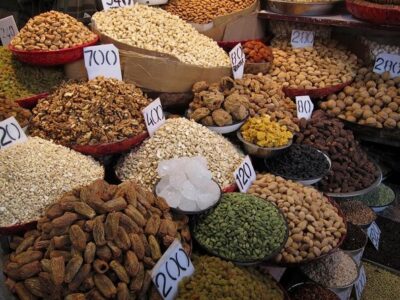
The Great Indian Food Tour: Old Delhi Food and Heritage Walk
Read our review →

Browse the lists this tour appears in