
Review · ANDALUSIA
Málaga: 2h Walking Historical Tour–Art, Culture and Legends
Málaga rewards curious walkers. This tour links the Roman Theatre, cathedral, Picasso’s birthplace, and Atarazanas Market with the stories that connect them. I like the mix of major sights and local food, and Igor Francisco Martínez gets repeated praise for making history funny, clear, and useful. The main caution is timing: advertised at 1.5 hours, it can run much longer.
You’ll also get practical tips for restaurants, bars, and later sightseeing, which makes this a smart first activity in Málaga. I especially like the tasting of local sweets and the final surprise stop, though you should avoid scheduling a tight appointment afterward. The relaxed pace, shady stopping places, and small groups suit most visitors, but the exact group size can vary.
Key points at a glance
- Roman beginnings: Start near Puerta Oscura and learn why the Phoenicians founded Malaka in this part of the city.
- Málaga’s headline sights: See the Roman Theatre, Alcazaba area, Picasso landmarks, cathedral, Constitution Square, and Atarazanas Market.
- Igor’s lively guiding: Igor Francisco Martínez combines art history, local knowledge, humor, and restaurant advice.
- Food along the way: Try traditional products such as candied almonds and artisanal nougat, with a final local food and drink stop.
- A flexible finish: The tour is listed as 1.5 hours, but some outings have lasted two to three hours.
- Good first-day value: At $26 per person, it offers a broad introduction to central Málaga without transport costs.
Starting where Málaga began
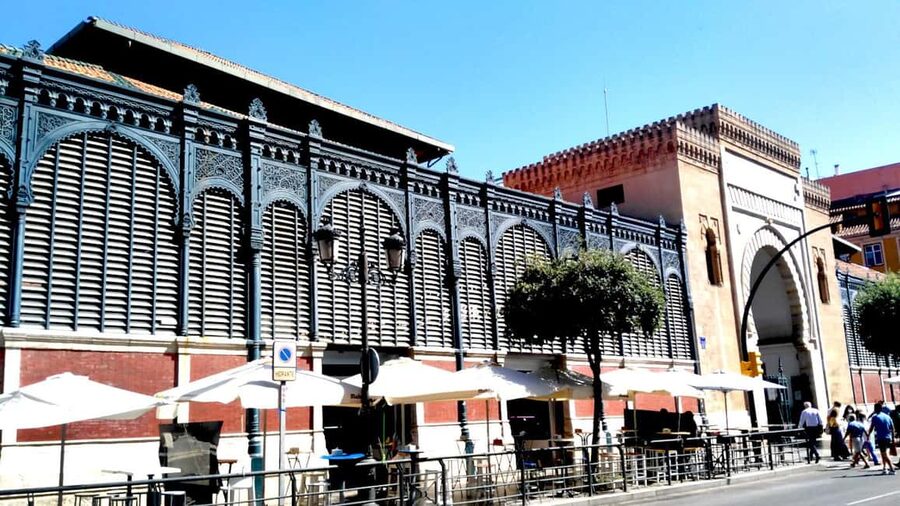
The meeting point is beside the white tourist information kiosk in Plaza de la Aduana, next to the Alcazaba. This is a useful location because it sits close to Málaga’s main historic sights, and you can reach it on foot from Málaga Centro-Alameda station or the Muelle Heredia bus station.
The route begins around Puerta Oscura Garden, where the calm setting hides a dramatic beginning. In the 6th century BC, Phoenician settlers chose this area to found ancient Malaka. Igor explains why the location mattered and how the city’s early foundations still shape the center you see today.
I like this opening because it gives the rest of the walk a clear frame. You are not simply moving from one monument to another. You are following Málaga from its Phoenician origins through Roman rule, Christian Spain, modern art, and present-day food culture.
The tour is conducted in English, French, or Spanish. Igor contacts you shortly before the start by WhatsApp or phone, and he wears an identification card. Bring water, sunscreen, a sun hat, and comfortable shoes. Málaga can be hot, and even an easy city walk feels different under the Andalusian sun.
More History Walking Tours in Spain
- Barcelona: Tapas Walking Tour with Food, Wine, and History
★ 4.8 · 4,261 reviews - Barcelona Tapas Walking Tour: Food, Wine & History
★ 4.5 · 1,928 reviews - Madrid Historical Walking Tour
★ 5.0 · 721 reviews
Roman Theatre and the Alcazaba setting
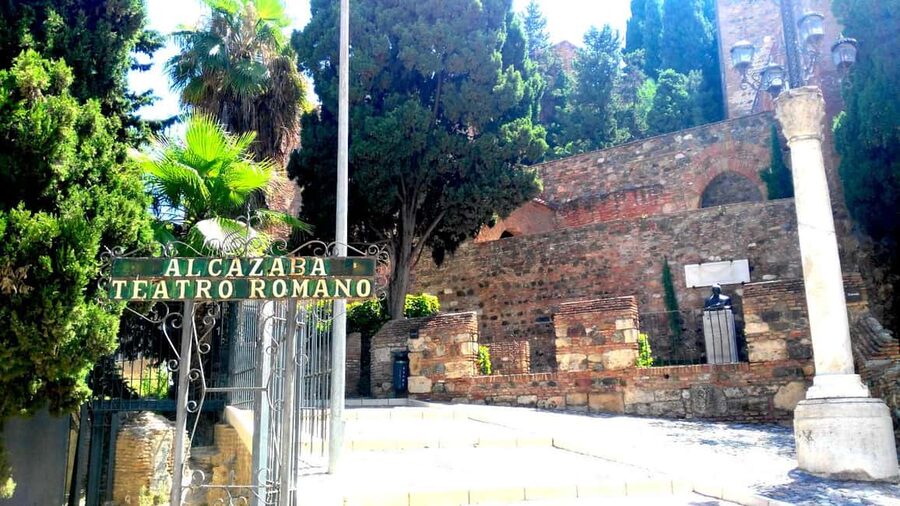
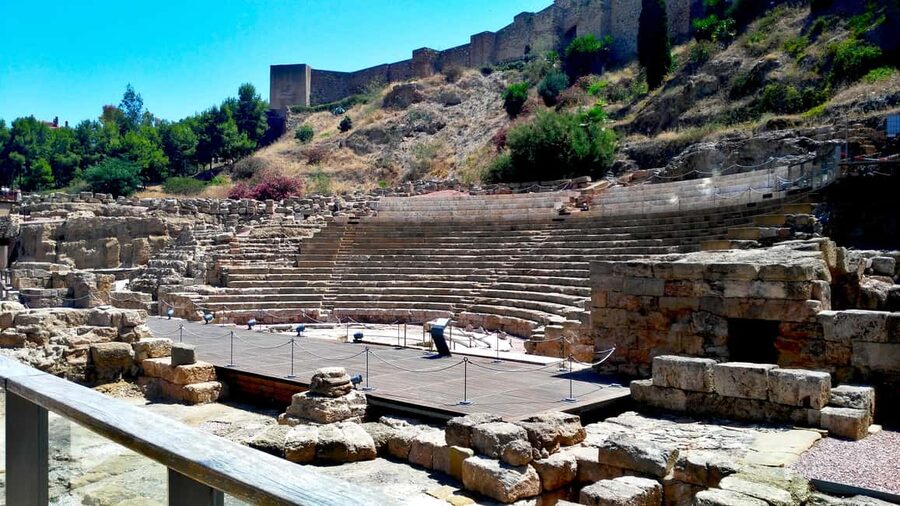
The Roman Theatre is one of the strongest stops on the route. Dating from the 1st century, it is the oldest visible structure in Málaga. From the seating area, you learn how Roman performances worked, what audiences watched, and why the theatre disappeared from view for so many centuries.
The theatre is especially useful as a teaching stop because it is not just a pile of old stones. Its shape helps you picture public life in Roman Málaga. Igor’s explanations connect the structure to the city’s wider story rather than treating it as an isolated photo opportunity.
The experience also includes exploration of the Alcazaba fortress area. The detailed route does not spell out a separate Alcazaba visit or confirm whether entry inside every monument is included, so check the arrangements if entering the fortress is essential to you. You should expect a guided look at the historic setting, but do not assume that every attraction involves a full ticketed interior tour.
The walk between stops is short, usually around five minutes. That keeps the pace manageable and leaves more time for explanations. You are not being marched across Málaga to collect sights at speed.
Picasso, Plaza de la Merced, and Calle Granada
The route continues toward Plaza de la Merced, one of Málaga’s best-known public squares. Its large obelisk honors General Torrijos, a figure tied to the city’s political past. The square also contains the birthplace of Pablo Picasso, Málaga’s most famous artist.
Picasso is treated here as part of the city’s character, not just as a museum subject. The route includes a guided stop at the Picasso Museum Málaga, and the birthplace helps place the artist within Málaga’s streets and civic life. The exact length of the museum visit is listed as about 15 minutes, so this is an introduction rather than a full art-museum session.
That distinction matters. If Picasso is your main reason for visiting Málaga, you will likely want separate time for a longer museum visit. If you want a useful orientation, the tour gives you the context to return later with a better sense of what you are seeing.
Calle Granada adds another layer. The street marks the route taken by the Catholic Monarchs after the Christian conquest of Málaga in 1487. Along it, you see the Church of Santiago, one of the city’s oldest churches and the place where Picasso was baptized.
This part of the walk is packed with contrasts. You get medieval and early modern history, religious architecture, art, restaurants, and local nightlife in a short stretch. The guide also points out El Pimpi winery and the Picasso Museum, along with smaller corners that are easy to miss when walking alone.
La Manquita and Málaga’s central squares

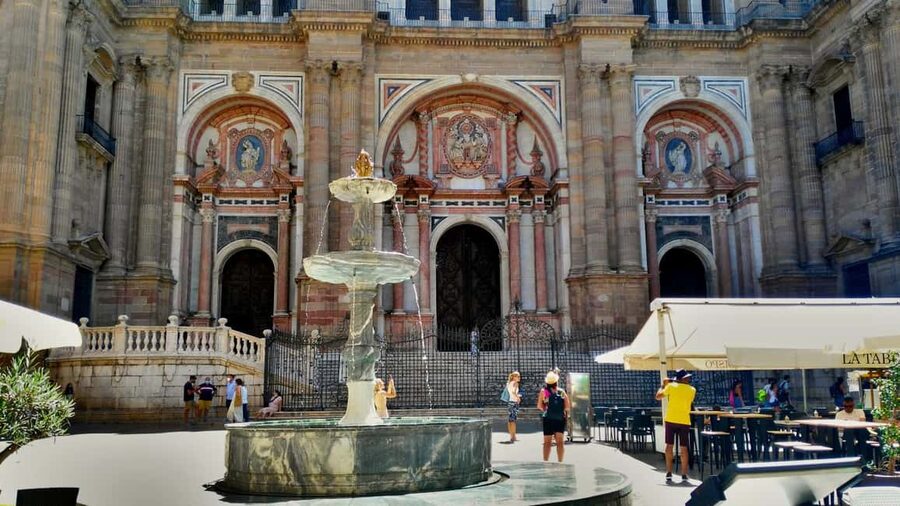
Málaga Cathedral is the tour’s grand architectural stop. Its formal name is Catedral de la Encarnación, and it is a Renaissance masterpiece. Locals call it La Manquita, or the one-armed lady, because one of its towers was never completed.
The unfinished design gives Igor a natural opening for stories about the cathedral’s construction, legends, and small details that often escape notice. The listed visit lasts about 15 minutes, which should give you a solid introduction but not enough time for a slow architectural study.
The cathedral is also a good place to ask questions. Several outings have been praised for their small size, which made it easier to speak directly with Igor. Group size is not fixed, though. One booking became a private tour, while another had six people, so your experience may range from intimate to more social.
From the cathedral, the route moves to Plaza de la Constitución, the social heart of central Málaga. This square helps you understand how the old center functions today. It is a natural point for explaining civic life, public celebrations, and the way Málaga’s historic center remains part of everyday life rather than a sealed museum district.
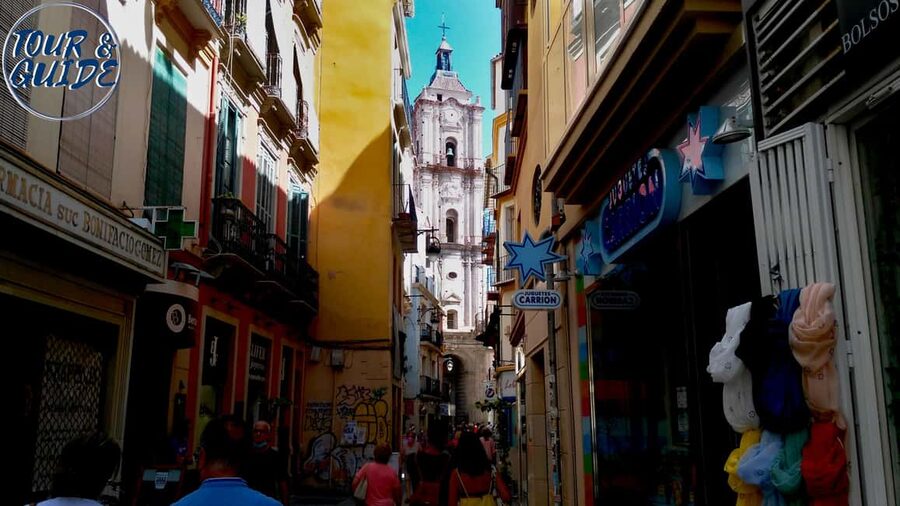
Next comes Plaza de las Flores and the Church of San Juan. These stops add smaller-scale character after the cathedral’s grand proportions. The church is linked with local tradition and popular devotion, while the square offers a more relaxed view of central Málaga.
I like this sequence because the tour does not pile every major monument into the first half. You move between large landmarks and ordinary city spaces, which gives you a better feel for Málaga as a living place.
More Local Culture and Traditions Tours in Spain
- Sevilla Food Tour: Tapas, Wine, History & Traditions
★ 5.0 · 3,468 reviews - Taste of Malaga Tour : Tapas, History and Local Customs
★ 5.0 · 758 reviews - San Sebastian E-bike trour: Basque History and Cultural.
★ 5.0 · 367 reviews - Tarragona and Sitges Small Group Tour – Roman History & Culture
★ 4.5 · 339 reviews
Sweets, market smells, and the final surprise
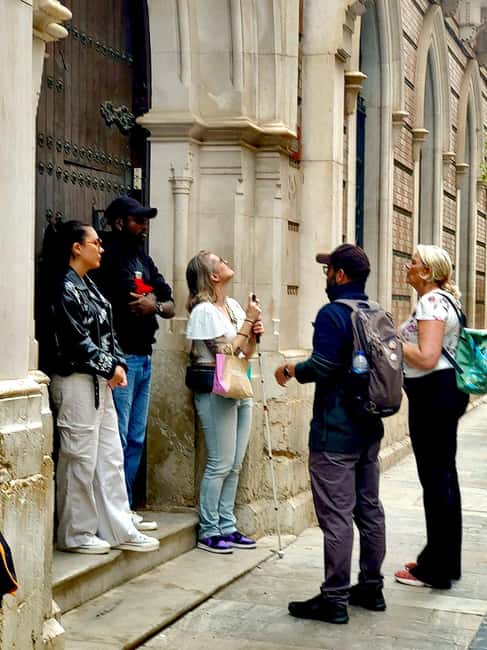
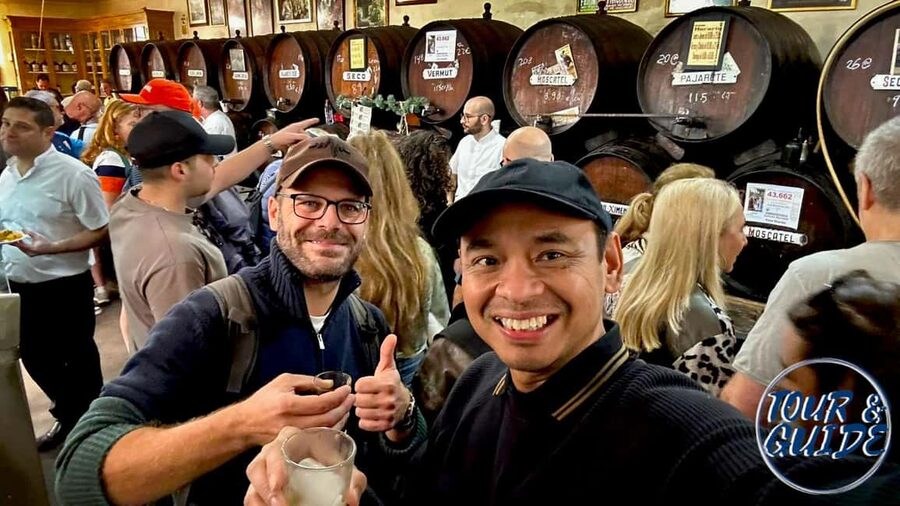
Food is not an afterthought here. During the walk, you taste local products such as candied almonds and artisanal nougat. Some outings have also included a wine and tapas tasting, a famous café, a snack shop, or a vintage wine bar.
The exact food and drink offering may vary, so treat the tasting as part of the experience rather than a substitute for lunch. Additional drinks and full meals are not included. If you have dietary restrictions, ask Igor before the tour so you know what can be accommodated.
The last major sight is Mercado Central de Atarazanas. The market occupies a former shipyard and is one of the best places in central Málaga to get a sense of local food culture. Expect a setting of produce, aromas, color, and daily commerce rather than a quiet historic monument.
Atarazanas is valuable because it gives the tour a present-day ending. You have heard about Phoenicians, Romans, Christian rulers, Picasso, and cathedral builders. At the market, Málaga’s story becomes edible and practical.
The tour finishes at an emblematic local spot where you can sample food and drinks. The exact surprise is intentionally not spelled out. That can be a pleasant ending, but it also makes the schedule less predictable. Some outings have extended well beyond the planned time, and one ran about an hour longer than expected.
Plan accordingly. Do not book a train, museum entry, airport transfer, or restaurant reservation immediately afterward. The longer finish is a benefit if you enjoy conversation and local recommendations. It is a problem if you need to keep moving.
Igor’s style and what you will learn
Igor Francisco Martínez is an art historian and local guide, and his approach is a major reason this tour earns such strong feedback. His explanations cover ancient history, architecture, art, local customs, and present-day attitudes in Málaga.
Just as important, he uses humor. The tour is not a lecture in the open air. Igor has been praised for testing the group’s history knowledge, telling funny stories, finding shade for explanations, and keeping the walk easy to follow.
You also get advice for the rest of your stay. Igor recommends restaurants, bars, shops, and other sights, with specific places such as El Gallo Ronco and Las Chinitas mentioned by name. That kind of advice is most useful when you take the tour early in your visit and still have time to use it.
The guide’s local focus also helps avoid a purely postcard version of Málaga. You see the headline attractions, but you also hear about food, neighborhood habits, religious traditions, and the corners between the big sights.
How the timing affects the value
The listed price is $26 per person. For a 1.5-hour guided introduction, that is a reasonable price, especially since the route covers several of central Málaga’s key places and includes tastings.
The value improves if you use the tour as your orientation. You learn where the main monuments are, how the old center fits together, and which restaurants or bars may be worth trying later. That can save time and prevent you from spending your first evening in the most obvious tourist spots.
There is one important complication: the title describes a two-hour tour, while the activity details list 1.5 hours. Actual outings have sometimes lasted two and a half or nearly three hours. I would treat the advertised duration as the minimum planning figure, not a guaranteed finish time.
The included experience covers the guided historic-center walk, Roman Theatre and Alcazaba exploration, cathedral visit, tastings, Atarazanas Market, and final surprise. Transportation to the meeting point, extra drinks, and food are not included.
Free cancellation is available up to 24 hours before the start, and you can reserve without paying immediately. The tour is wheelchair accessible, though the old center’s walking surfaces and the length of the outing are still worth considering when planning your day.
Who will like this Málaga walk?
I would choose this tour for a first visit to Málaga, especially if you want history without a dry classroom tone. It suits couples, families with older children, solo visitors, and anyone who wants a quick sense of direction before exploring independently.
It is also a good fit if you enjoy asking questions. Small groups have sometimes made it easy to get personal recommendations and discuss details that would be skipped in a large group.
History fans will get the most from the Roman Theatre, Christian conquest stories, cathedral legends, and Picasso connections. Food-minded visitors will appreciate Atarazanas and the tastings, although this is not a full food tour.
You may want a different plan if you prefer a strict schedule, a long museum visit, or an entirely private itinerary. The surprise ending is part of the appeal, but it also means you need a free block of time afterward.
Should you book it?
I would book this tour if you want one lively introduction to Málaga’s history, art, architecture, and food for $26. Igor’s humor, local recommendations, and willingness to show more than the standard photo stops add real value.
Book it near the start of your stay, wear light comfortable clothing, and leave your afternoon open. Skip it only if you need a tightly timed walk or want to spend most of your time inside museums. For everyone else, it is a practical way to get your bearings and find reasons to return to the old center on your own.
FAQ
How long does the Málaga walking tour last?
The stated duration is 1.5 hours, although the experience title refers to two hours. Some outings have lasted two and a half to nearly three hours, so leave extra time afterward.
What is the price?
The price is $26 per person.
Where does the tour begin?
Meet beside the white tourist information kiosk in Plaza de la Aduana, next to the Alcazaba in Málaga.
How will I identify the guide?
Igor contacts you shortly before the tour by WhatsApp or phone. He wears an identification card.
Which languages are available?
The tour is offered in English, French, and Spanish.
Is the walking tour wheelchair accessible?
Yes, the activity is listed as wheelchair accessible.
What sights are included?
The route includes the Roman Theatre, Alcazaba area, Picasso Museum Málaga, Málaga Cathedral, Plaza de la Constitución, and Mercado Central de Atarazanas. It also covers Plaza de la Merced, Picasso’s birthplace, Calle Granada, the Church of Santiago, Plaza de las Flores, and the Church of San Juan.
Is food included?
Traditional tastings such as candied almonds and artisanal nougat are included. Full food, additional drinks, and meals are not included.
Does the tour include Málaga Cathedral?
Yes, a visit to Catedral de la Encarnación is included. The planned stop is listed as about 15 minutes.
Can I cancel the booking?
You can cancel up to 24 hours before the tour for a full refund. You can also reserve now and pay later.
More Two-Hour Tours in Spain
- Málaga: 2-Hour Historical Center & Cathedral Tour
★ 4.0 · 338 reviews - Barcelona in 2 Hours: Guided Walk Through History and Sights
★ 5.0 · 203 reviews - 2 Hours Tour around Cádiz: History, anecdotes and curiosities
★ 5.0 · 89 reviews - 2-Hour Gettysburg Battlefield Guided History Bus Tour with a National Park Guide
★ 4.5 · 2,201 reviews
Just added around Spain
- Jerez de la Frontera History and Art Walking Tour★ 4.5 · 49 reviews
- 2 Hours Tour around Cádiz: History, anecdotes and curiosities★ 5.0 · 89 reviews
- Bilbao Historical Small Group Tour★ 4.5 · 159 reviews
- Barcelona Jewish & Gothic Tour★ 5.0 · 18 reviews
- Andorra Original History and Sightseeing Tour (Private, Pickup)★ 5.0 · 350 reviews
- History Museum of Catalonia & Rooftop Access Ticket★ 4.5 · 43 reviews
- Sip, Sites & Bites Barcelona Food, Drinks & History Tour★ 4.5 · 95 reviews
- Barcelona Tapas Food Tour, Taverns, History & Local Culture★ 5.0 · 42 reviews
Local Culture & Traditions Tours, compared.

Amsterdam Food and Cultural Tour with Tastings
Read our review →
Sevilla Food Tour: Tapas, Wine, History & Traditions
Read our review →
Tromsø: Reindeer Camp and Sami Cultural Tour with Lunch
Read our review →
Half Day Dominican Republic Cultural Tour : Small Group
Read our review →
Ultimate Melbourne Walking Tour: History, Laneways & Culture
Read our review →
Tromsø: Sámi Reindeer Sledding and Sami Cultural Tour
Read our review →
Kyoto Gion: 2-Hour Geisha Culture & History Walking Tour
Read our review →
Marrakech Historical and Cultural Tour – Half Day City Tour
Read our review →Browse the lists this tour appears in