
Review · BADEN-WüRTTEMBERG
Karlsruhe: Guided City History & Culture Walking Tour
Karlsruhe was designed from a bold idea. This 1.5-hour walk makes that idea easy to grasp, with Karl III Wilhelm’s city plan and architect Friedrich Weinbrenner at its center. I like the short format and the guide’s mix of useful history, funny anecdotes, and local tips. The main drawback is simple: the tour is in German, and it runs outdoors in every kind of weather.
You start and finish at Karlsruhe’s Tourist Information beside the market square, a handy spot for getting your bearings. I also like the low $12 price, which gives you a focused introduction without taking up half your day. If you want a long list of interior visits or admission tickets, this is not that kind of tour.
Key points to know before you go
- Karl III Wilhelm explains the city’s unusual beginning: Learn why the Margrave left Durlach and founded Karlsruhe in 1715.
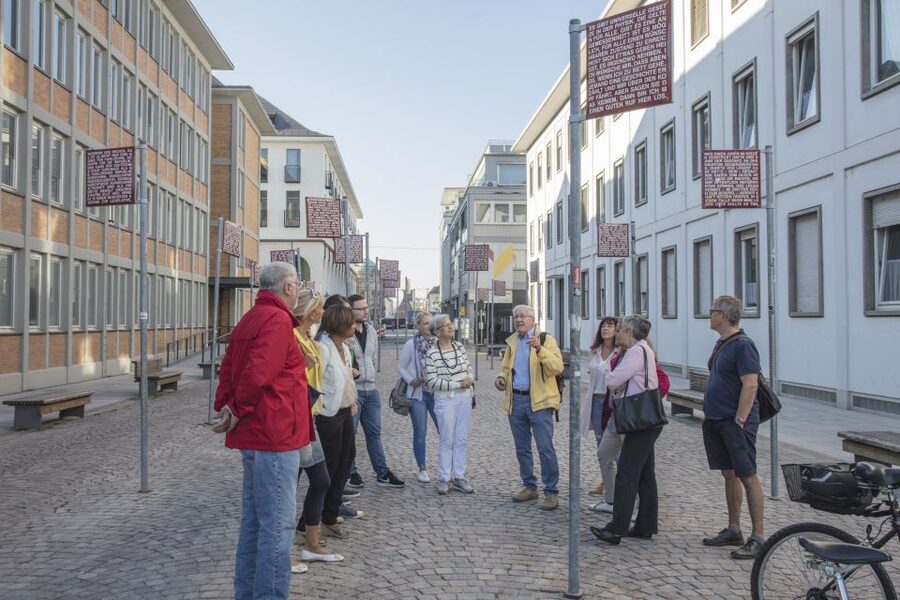
- The planned Baroque layout is the main visual lesson: The tour helps you read the city as a deliberate work of design rather than a place that grew by accident.
- Weinbrenner adds an architectural layer: You hear how the classical architect helped shape Karlsruhe’s later identity.
- A local guide adds character: Funny stories and personal tips keep the history from feeling like a dry lecture.
- Tuesday has a different theme: On Tuesdays, the focus is Hometown Karlsruhe, Residence of Law.
- The practical setup is easy: The walk is wheelchair accessible, starts and ends at the market square, and permits free cancellation up to 24 hours before departure.
Why Karlsruhe’s story works so well on foot
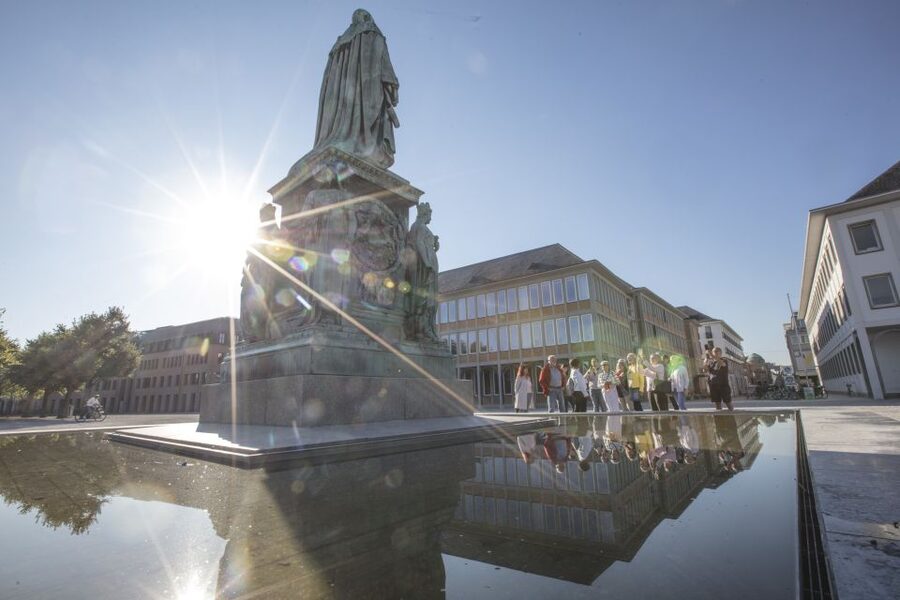
Karlsruhe is a relatively young German city, founded in 1715. That youth is part of its appeal. You are not trying to piece together thousands of years of settlement. Instead, you can follow a clear story about a ruler, a plan, and a city built with purpose.
The founder was Karl III Wilhelm, Margrave of Baden-Durlach. He decided to leave his old capital, Durlach, and create a new residence. The exact reasons behind that decision are part of the tour’s central story, and your guide explains the political and personal background in an approachable way.
Karlsruhe’s layout was a novelty in its time. The city was planned in the Baroque period, so its streets and public spaces reflect an organized vision rather than gradual growth. That makes a walking tour especially useful. A guide can point out the logic of the plan while you are standing inside it, instead of leaving you to interpret a map later.
I find this kind of city history more useful than a string of dates. You learn how the city was conceived, then see how that idea affected its streets, architecture, and civic life. The tour also connects the past with Karlsruhe’s present and future, so the city does not feel frozen in the eighteenth century.
More History Walking Tours in Germany
- Leipzig: 1.5-Hour Historical Walking Tour in German
★ 4.7 · 2,217 reviews - Berlin: History of the Third Reich Guided Walking Tour
★ 4.7 · 791 reviews - Trier: Guided Old Town Highlights and History Walking Tour
★ 4.7 · 687 reviews
Meeting at the market square and Kaiserstraße
The starting point is the Tourist Information Karlsruhe at Kaiserstraße 72 to 74, beside the market square. This is a practical meeting place in the city center, and the fact that the walk returns there makes your planning easy.
Arrive ready to walk rather than expecting a seated presentation. The tour lasts 90 minutes, so the pace should suit most people who can comfortably spend that length of time outdoors. You will want comfortable shoes and clothing that matches the forecast.
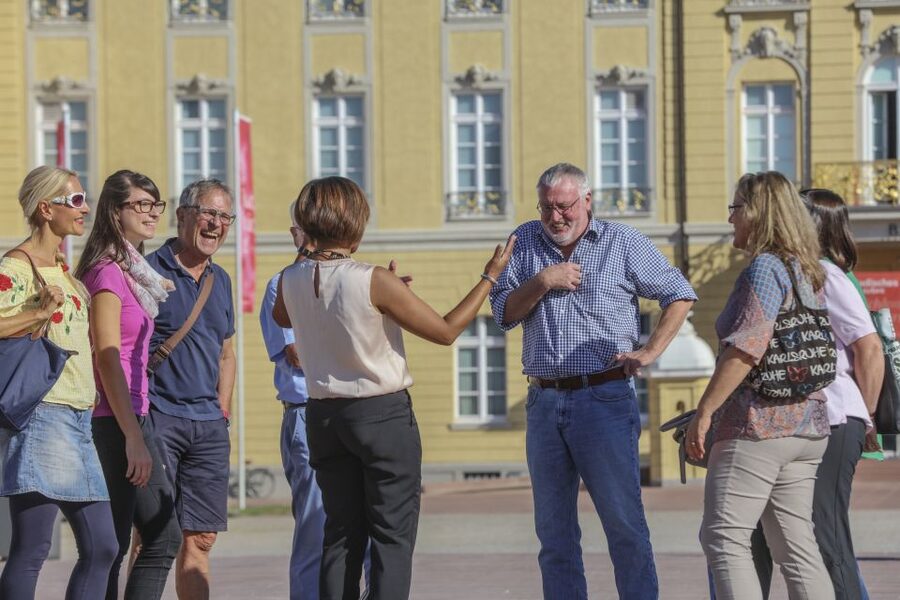
The market square gives the tour a useful opening point. It places you in the civic center before the guide explains how Karlsruhe developed around the residence of its margrave. You can expect the guide to use the surrounding city as a visual aid, tying what you see to the larger story of the planned capital.
Because the tour begins and ends at the same location, you can pair it with other central activities before or after. The experience does not include food, drinks, admission tickets, or optional activities, so plan those separately. That is not a serious flaw for a short orientation walk, but it is worth knowing if you prefer an all-inclusive outing.
Following Karl III Wilhelm’s decision to found Karlsruhe
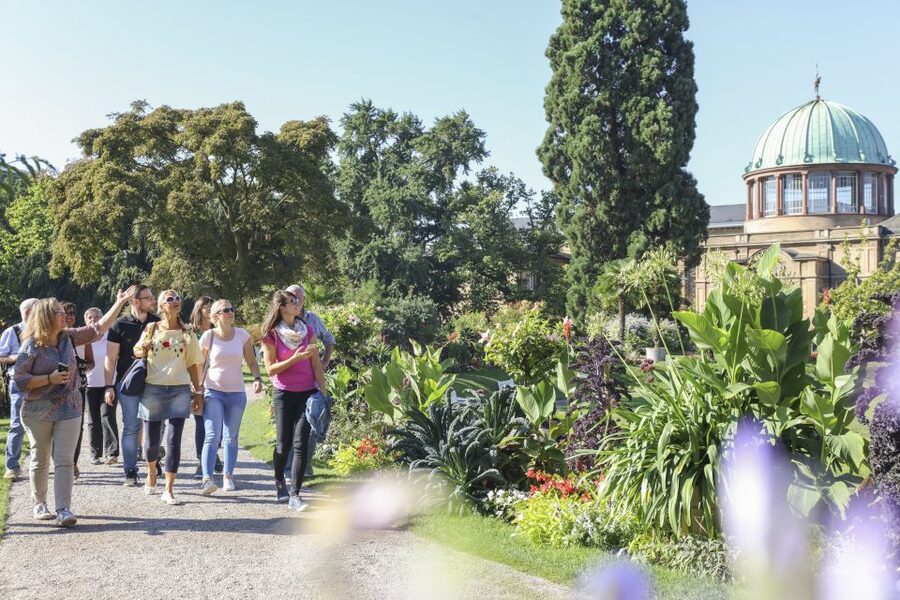
The strongest historical section concerns Karl III Wilhelm. He founded Karlsruhe in 1715 and chose to build a new city instead of continuing with Durlach as his capital. That decision gives the tour a clear human figure, which is much easier to remember than a list of municipal milestones.
You will hear what made the Margrave take this step and how his plans shaped the city that followed. The story also helps explain why Karlsruhe feels different from older German cities that grew around medieval walls, trade routes, or religious centers.
The guide’s anecdotes matter here. Personal details and amusing stories can make a ruler from the early eighteenth century feel less remote. The information is not presented as a solemn march through dates. Instead, the human choices behind the city come forward.
I would pay close attention to the transition between the founding story and the physical city plan. This is where the tour earns its modest price. You are not simply told that Karlsruhe was planned. You are helped to understand what planning meant in practice and why the result was unusual for its period.
The tour’s strongest praise concerns the content and the clarity of the explanations. The German-language feedback includes a clear assessment that the material was highly interesting and very well explained. That matches what you should want from this experience: not an overloaded lecture, but a focused story that makes the streets around you easier to read.
Reading the Baroque city plan
Karlsruhe’s Baroque design is the tour’s main visual subject. The city was laid out as a planned residence, and the guide introduces the pattern and purpose behind that design.
You may already notice that Karlsruhe does not feel like a city that simply accumulated one neighborhood after another. The tour gives you the vocabulary to understand that difference. Instead of viewing the streets as separate pieces, you can think about how the plan organized movement, authority, and public life.
This is also where a local guide adds value beyond a guidebook. A book can show you a diagram or explain the founding date. On the walk, the guide can connect the diagram to the exact surroundings and point out details you might otherwise pass without a second thought.
The experience is not advertised as a museum tour, and that is important. The focus stays on the city itself. You are learning outdoors, moving through the streets, and building a picture of Karlsruhe from its public spaces and architecture.
The drawback is that the supplied information does not name every stop or provide a detailed route map. You should book this for the theme and the guided interpretation, not because you expect a fixed checklist of famous buildings. The guide’s explanation is the product.
More Local Culture and Traditions Tours in Germany:
- Berlin: Guided Craft Beer & Cultural Tour With Snacks
★ 5.0 · 68 reviews - Amsterdam Food and Cultural Tour with Tastings
★ 5.0 · 4,315 reviews - Sevilla Food Tour: Tapas, Wine, History & Traditions
★ 5.0 · 3,468 reviews - Tromsø: Reindeer Camp and Sami Cultural Tour with Lunch
★ 4.7 · 3,326 reviews
Understanding Weinbrenner’s classical influence
The tour also introduces Friedrich Weinbrenner, the classical city architect associated with Karlsruhe. He provides a second chapter in the city’s development after the original Baroque foundation.
Weinbrenner helps show that Karlsruhe was not defined by one moment in 1715. The city continued to change, and later architectural ideas gave it another layer. His classical approach offers a useful contrast with the earlier Baroque planning.
I like this part because it broadens the tour beyond the founder. You begin with Karl III Wilhelm’s decision, then move toward the people and ideas that shaped the city afterward. That gives you a better sense of Karlsruhe as a living place, not only a historical project.
The tour does not include admission to architectural sites. If a building or museum catches your eye, you would need to arrange any interior visit separately and pay its admission yourself. Still, seeing the city with Weinbrenner’s work in mind can help you decide what deserves a closer look later.
The guide’s stories and local advice
Facts give the walk its structure, but the funny anecdotes give it a pulse. The guide is expected to add personal insider tips, so you should come ready for more than a formal account of city planning.
Those tips can be useful even when they are small. A local guide can help you understand which parts of central Karlsruhe deserve more time, how to think about the city’s character, or what to notice after the walk. The supplied description does not list particular restaurant or museum recommendations, so do not book this expecting a detailed food or nightlife guide.
The German-only format is the biggest practical limitation. The live guide speaks German, and there is no other language listed. If you understand German well, the tour should be much more rewarding than a self-guided walk because you can follow the explanations and ask questions as the city unfolds around you.
If you do not speak German, this is probably not the right choice unless you have a separate way to translate the content. The price is low, but a bargain is not useful if you cannot follow the main presentation.
Tuesday’s special theme: Residence of Law
Tuesday tours use the theme Hometown Karlsruhe, Residence of Law. That makes Tuesday a particularly good choice if you want a civic and local perspective rather than only the founding story.
The supplied information does not spell out every difference between the regular tour and the Tuesday version. You should therefore treat Tuesday as a themed variation, not assume that it covers an identical route with one extra stop.
The title points toward Karlsruhe’s identity as a place connected with law and civic institutions. If that subject interests you, check the available date and theme before booking. If you mainly want Karl III Wilhelm and the Baroque plan, confirm that the Tuesday format still suits your priorities.
Is $12 a fair price?
At $12 per person, this is an easy tour to justify for a first visit. You receive 90 minutes with a local German-speaking guide, historical interpretation, anecdotes, and practical local tips. There are no food or drink costs included, but those omissions keep the price clear and low.
The best value comes if you are new to Karlsruhe. A short city walk can save you from spending your first day wandering without context. Once you understand the founding story and the planned layout, later sightseeing becomes more meaningful.
The value is weaker if you already know Karlsruhe well or want entry to museums and historic interiors. This is an orientation experience, not a package of attractions.
A 4.5 rating from 79 assessments supports the idea that the content and explanations are the tour’s strong points. I would put more weight on that than on the low price alone. A cheap tour with thin information is not a bargain, while this one appears to succeed because it explains the city clearly.
Weather, mobility, and family considerations
The walk operates in all weather, so dress for the day rather than assuming a sunny city stroll. A raincoat, sensible shoes, and protection from cold or heat can make a real difference during 90 minutes outside.
The tour is wheelchair accessible, which makes the format more practical for many visitors. Since the activity takes place outdoors and the full route is not described in detail, you may still want to confirm any specific mobility needs when booking.
Children under three may join free of charge. The tour’s historical subject is best suited to children who can follow a guided explanation, but the family rule makes it easier to include very young children in your plans.
Alcohol and drugs are not permitted. That is standard conduct for a guided public walk and should not affect most bookings.
Free cancellation is available up to 24 hours in advance for a full refund. You can also reserve now and pay later, which helps if your schedule in Karlsruhe is still changing.
Who should book this Karlsruhe walk?
I would choose this tour if you want a clear introduction to Karlsruhe in a short amount of time. It suits first-time visitors, history fans, architecture enthusiasts, and anyone curious about why the city looks so deliberately planned.
It also works well early in a stay. Take the walk before exploring on your own, and you will have a framework for understanding the streets and public spaces. The return to the market square makes it easy to continue your day from the same central area.
You should think twice if you need English, prefer indoor attractions, or want a route packed with ticketed sights. The German-language guide and outdoor format are not minor details. They shape the whole experience.
FAQ
Where does the Karlsruhe walking tour begin?
It begins at the Tourist Information Karlsruhe by the market square, at Kaiserstraße 72 to 74, 76133 Karlsruhe.
Where does the tour end?
The walk ends back at the starting meeting point.
How long does the tour last?
The tour lasts 1.5 hours. Starting times depend on availability.
What language is the tour conducted in?
The live tour guide speaks German.
Is the walking tour wheelchair accessible?
Yes, the activity is listed as wheelchair accessible.
What happens if it rains?
The tour takes place in all weather because it is an outdoor activity. Dress according to the forecast.
Are children under three charged?
Children under three may participate free of charge.
What does the price include?
The $12 price includes a local German-speaking guide, insider tips, and funny anecdotes. Food, drinks, personal expenses, admission tickets, and optional activities are not included.
Should you book it?
Book this walk if you want Karlsruhe to make sense quickly. For $12, you get a focused explanation of Karl III Wilhelm, the 1715 founding, Baroque city planning, and Weinbrenner’s classical influence, with a few local stories to keep the history lively.
Skip it if you need an English tour or prefer museums and interiors. For German-speaking visitors who want a useful first look at Karlsruhe, this is a practical, fairly priced introduction with enough character to make the city’s unusual design stick.
Just added around Germany
- Historical tour of the old town including a Saxon dinner★ 4.7 · 23 reviews
- Historical Walking Tour of Augsburg / Historische Führung★ 4.7 · 41 reviews
- Historic Christmas tour of Lübeck★ 4.3 · 47 reviews
- Historic Berlin Pubs & History Tour★ 4.9 · 73 reviews
- Heidelberg: Experience our history 1.5-hour walking tour through the old town★ 4.7 · 306 reviews
- Heidelberg: Discover Heidelberg Castle – experience history up close★ 4.7 · 171 reviews
- Hamburg: Speicherstadt Historical Guided Walking Tour★ 4.7 · 71 reviews
- Berlin: Cold War History and Berlin Wall Guided Walking Tour★ 5.0 · 33 reviews
Local Culture & Traditions Tours, compared.

Amsterdam Food and Cultural Tour with Tastings
Read our review →
Sevilla Food Tour: Tapas, Wine, History & Traditions
Read our review →
Tromsø: Reindeer Camp and Sami Cultural Tour with Lunch
Read our review →
Half Day Dominican Republic Cultural Tour : Small Group
Read our review →
Ultimate Melbourne Walking Tour: History, Laneways & Culture
Read our review →
Tromsø: Sámi Reindeer Sledding and Sami Cultural Tour
Read our review →
Kyoto Gion: 2-Hour Geisha Culture & History Walking Tour
Read our review →
Marrakech Historical and Cultural Tour – Half Day City Tour
Read our review →Browse the lists this tour appears in