

Review · HO CHI MINH CITY
6 Hours Historical Tour in Cu Chi Tunnel with Free Snack
The tunnels tell a story underground. This half-day trip from Ho Chi Minh City brings you to one of Vietnam’s most important war sites, where you can see hidden entrances, wartime traps, cramped passageways, and the remains of a complete underground community. I like the small group size of up to 25 people and the fact that air-conditioned transport, an English-speaking guide, bottled water, tapioca, and hot tea are included.
I also like the short tunnel crawl, which gives you a physical sense of the site without requiring you to spend hours underground. The main drawback is the long drive, about 1.5 hours each way, and the stop at a handicraft workshop may feel like an unwanted sales break if you would rather spend more time at the tunnels.
Key points to know before booking
- Two departure times: Choose an 8:00 am start or a 12:30 pm start, with pickup offered for hotels in central District 1.
- About three hours on the road: The drive takes roughly 1.5 hours each way, so the six-hour tour includes a substantial amount of transport time.
- A practical history lesson: You watch a short wartime documentary, see booby traps, enter hidden tunnel areas, and hear how hospitals, schools, kitchens, and theaters operated underground.
- A short crawl is included: You can go through part of one tunnel, but the experience is still worth considering carefully if you dislike tight spaces.
- Food is part of the story: Tapioca and pandan leaves tea show what people ate and drank during the war.
- Optional shooting costs extra: You can try an AK-47 at the rifle range, but bullets are not included in the tour price.
Why the Cu Chi Tunnels matter
The Cu Chi Tunnels are more than a wartime attraction. They show how people adapted to life under extreme pressure, using a large underground network for shelter, movement, food preparation, medical care, education, and communication.
That practical detail makes the visit more meaningful than simply looking at old military equipment. You begin to understand that the tunnels were not just hiding places. They were part of an organized way of life, built beneath land that had suffered heavily during the war.
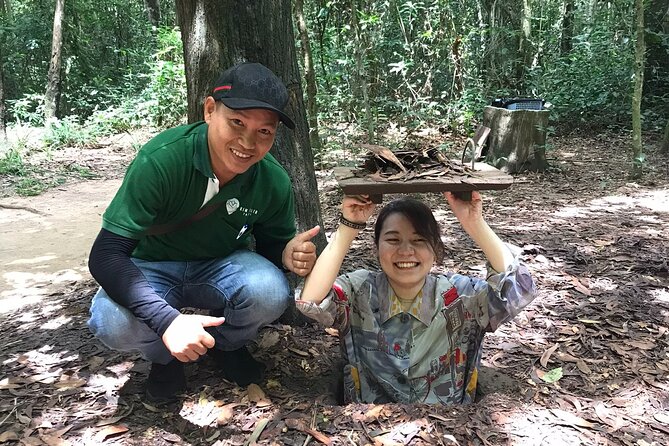
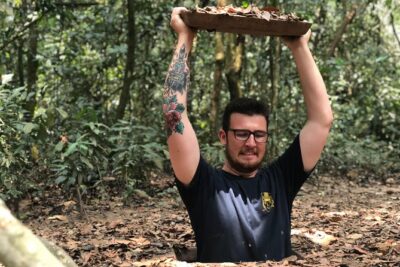
The entrances are covered with wooden doors and camouflage leaves, making them difficult to spot from above. The openings are notably small, and that can make the first demonstration feel almost like a magic trick. Then you realize the point was not comfort. The design helped people remain hidden and forced attackers to approach with care.
I appreciate tours that connect physical places to daily life. Here, the tunnel size, the traps, the food, and the underground rooms all work together. You leave with a better sense of how the site functioned, not just a list of dates and military terms.
More Vietnam War and Indochina History Tours in Vietnam:
- Premium Cu Chi Tunnels Tour with Local Expert by SpeedBoat
★ 5.0 · 2,045 reviews - From Ho Chi Minh: Cu Chi Tunnels Half-Day History Tour with Guide
★ 5.0 · 480 reviews - Cu Chi Tunnels Guided Tour: Vietnam War History Half-Day
★ 4.6 · 189 reviews
Leaving Ho Chi Minh City at 8:00 am or 12:30 pm
You meet at 268 Đề Thám in Phạm Ngũ Lão, District 1, unless pickup has been arranged from a central District 1 hotel. The two departure times give you some useful flexibility. The morning start leaves more of your afternoon free, while the 12:30 pm option may suit you if you prefer a slower morning in the city.
The air-conditioned vehicle matters. The trip to the tunnels takes around 1.5 hours, and the return takes about the same. Vietnam’s roads can make even a moderate distance feel long, so a comfortable vehicle is a real part of the tour’s value.
Along the way, you see countryside outside the city. This change from dense urban streets to a more open setting helps explain why the tunnels could exist in a rural area, away from Ho Chi Minh City’s center.
There may also be a stop at a workshop where handicrafts and pictures are made by disabled artists. One person found this stop pleasant, while another felt the time would have been better spent at the tunnels. My advice is simple: expect the stop as a possible part of the drive, and decide in advance how much patience you have for a commercial-style break.
Watching the documentary before entering the site
At Cu Chi, the tour begins with background information and a short documentary about the tunnels during the war. This is useful because the site can otherwise feel like a collection of holes, trenches, and displays without a clear timeline.
The documentary helps set the scene before you walk around. You can then connect what you hear with what you see: concealed entrances, defensive traps, and the narrow tunnel spaces.
The quality of the explanation depends heavily on the guide. Bao received particularly strong praise for answering questions and keeping the group engaged. Son was also described as friendly and clear when explaining the site. At the same time, one poor experience involved a guide with weak English who could not answer basic historical questions and directed the group to a website instead.
That contrast is worth keeping in mind. A good guide can turn the tunnels into a thoughtful history lesson. A weak guide can leave you rushing from one feature to the next without much understanding. Since the tour is in English, clear communication is important.
Seeing the booby traps and hidden entrances
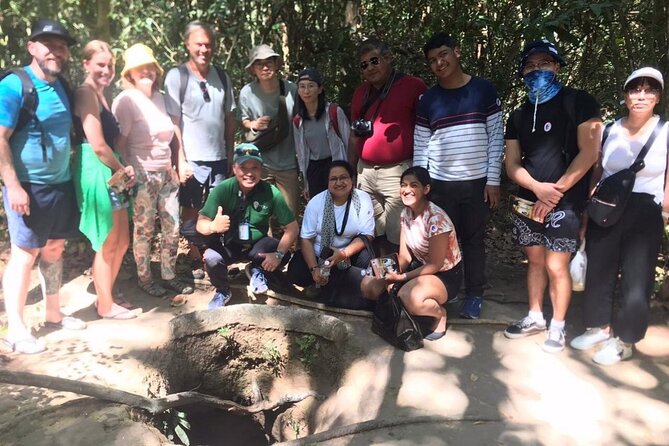
The displays of wartime traps are among the most striking parts of the visit. They show how the tunnel defenders used the environment and simple mechanical devices to slow or injure opposing forces.
You should expect these displays to be unsettling. They are not polished museum pieces removed from difficult events. Their purpose was to cause harm, and seeing how they worked can make the war feel more immediate.
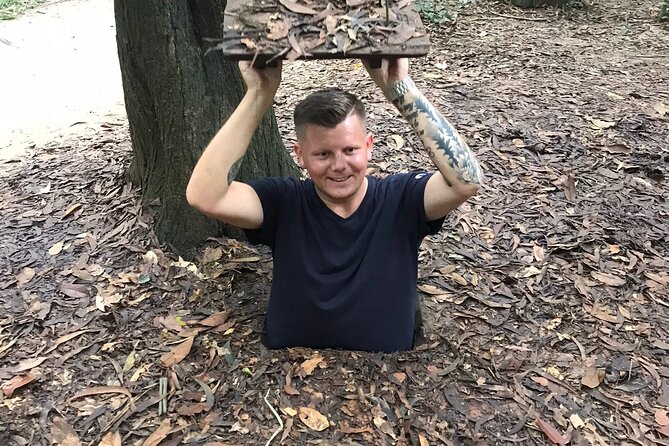
The hidden entrance demonstration is also memorable. A wooden cover and camouflage leaves conceal a very small opening, showing how quickly someone could disappear from view. The entrance is built to favor concealment, not ease of access.
Families can find this section especially engaging because the traps offer a clear visual lesson. One family with children aged five and nine found the site interesting and exciting, with the older child especially focused on the traps. Still, parents should decide how much detail is suitable for their children, since the subject is war and the displays concern injury and death.
A few more history tours around Vietnam worth a look
- Ninh Binh Heritage Full Day Tour with Buffet Lunch and Limousine
★ 5.0 · 2,692 reviews - Hanoi Heritage Premium Daily Tour
★ 5.0 · 914 reviews - Halong Heritage Luxury Day Cruise-Buffet lunch&Limousine transfer
★ 5.0 · 846 reviews - Hoi An: Ancient Town Guided Walking Tour
★ 4.9 · 766 reviews
Crawling through a short section of tunnel
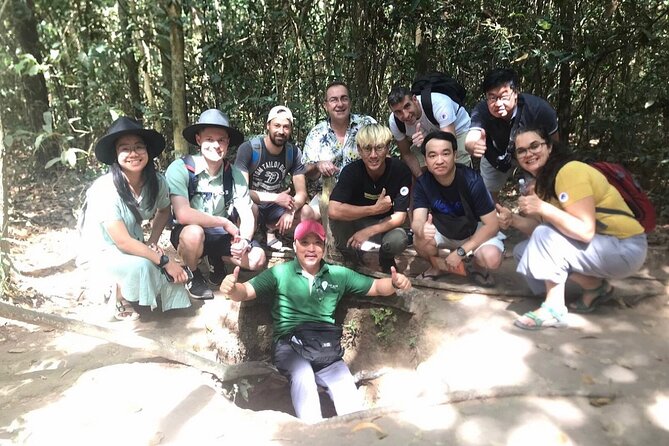
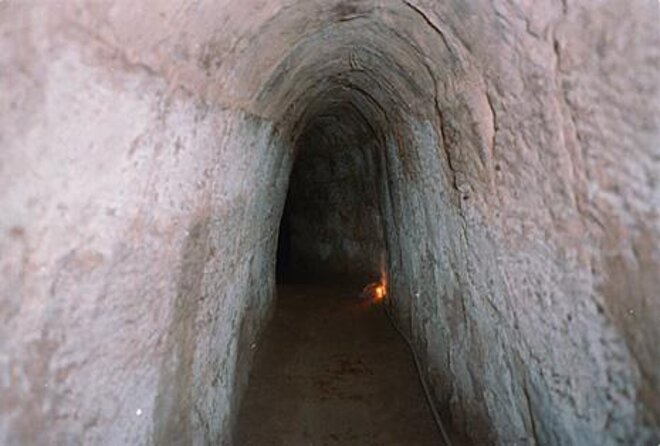
The short crawl is the moment when the site becomes physical. You do not simply hear that the tunnels were narrow. You lower yourself into one and move through a limited section.
The experience is brief, but it gives you a useful sense of the darkness and restricted space. If you are claustrophobic, you may prefer to enjoy the history from above. One person in a group had a claustrophobic partner who still enjoyed the visit by focusing on the historical explanation rather than the crawl.
That is a good way to approach it. You do not need to crawl to get value from the tour. The tunnel experience is optional in spirit, even though it is included as part of the visit. You can treat it as a short test rather than a challenge you must complete.
The tunnel section also helps explain why the entrances and passageways were so compact. They were designed for concealment and defense, not for modern comfort or large groups.
Tapioca and pandan tea with a wartime connection
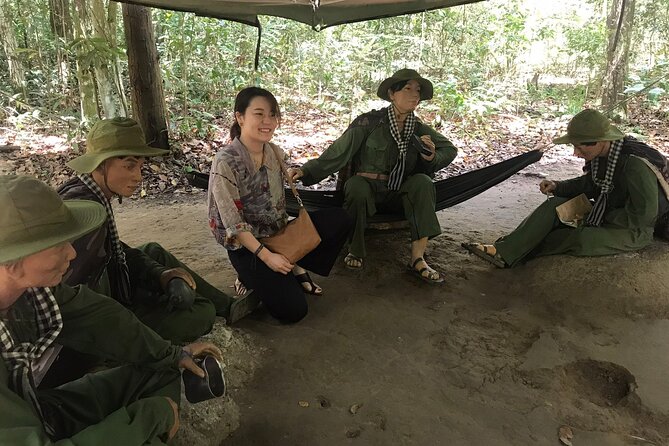
The included snack is simple: tapioca, hot tea made with pandan leaves, and bottled water. It is not a full meal, so eat beforehand if you need something substantial.
The tapioca has historical value because it was a typical wartime food at Cu Chi. Tasting it gives you a small connection to the limited supplies used by people living and working around the tunnels.
I like this part because food can explain history in a direct way. You are not just told that conditions were difficult. You get a modest example of what sustained people during the conflict.
The snack also breaks up the walking and explanations. After the documentary, traps, and tunnel visit, a drink and small food sample give you time to pause before continuing.
The optional AK-47 shooting range
The tour offers optional rifle shooting with an AK-47. Ammunition is not included, and you pay for bullets separately.
This is a personal choice. Some people see it as an important part of understanding the site’s military context. Others may find the shooting range distracts from the historical meaning of the tunnels.
If you choose to participate, treat it as an extra activity, not part of the basic tour price. You do not need to use the range to experience the main attractions. The documentary, traps, tunnel crawl, and food already form a complete visit.
The shooting range also affects the pace. If several people in your group participate, allow time for the activity before returning to the vehicle. Ask the guide about the extra cost before committing, since bullets are specifically excluded.
How much value do you get for $19.79?
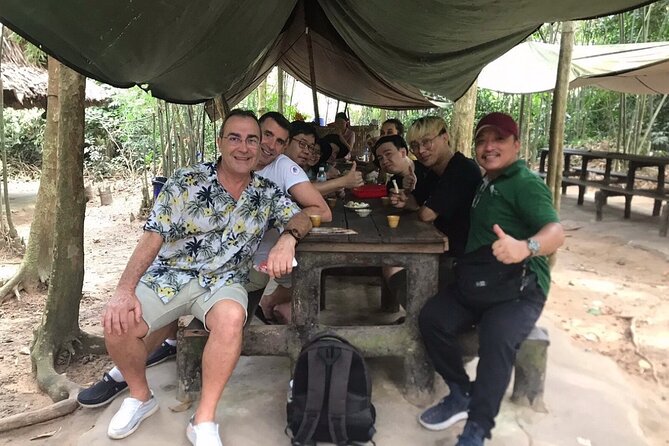
At $19.79 per person, this is a low-cost way to reach Cu Chi from Ho Chi Minh City. The price includes the air-conditioned vehicle, English-speaking guide, entrance fees, bottled water, tapioca, and hot tea. Those inclusions make the tour good value if you want transport and interpretation rather than arranging the visit yourself.
The main limit is time. Six hours sounds generous, but about three hours can be spent driving there and back. You are paying for convenience and a guided introduction, not an extended day at the site.
The group can reach 25 people. That is still manageable, but it is not a private tour. Your experience may depend on where you sit, how clearly you hear the guide, and how efficiently the group moves between stops.
I would choose this tour if you want a straightforward half-day visit at a modest price. If you want a private guide, extra time for photographs, or a slower historical discussion, you may prefer a more expensive arrangement. Those options are not included here, so it is best to judge the tour for what it offers: transport, basic historical context, and the main Cu Chi highlights.
Who will enjoy this six-hour visit?
This tour suits you if you want to see one of Vietnam’s major historical sites without spending a full day away from Ho Chi Minh City. It works well for first-time visitors, families with older children, and anyone interested in military history and everyday survival during wartime.
It can also suit people who prefer a set schedule. Pickup, transport, admission, guiding, snacks, and the return to District 1 are handled within the six-hour plan.
You should think twice if long drives frustrate you, if you need a very slow pace, or if narrow tunnels make you uncomfortable. The site remains worthwhile without the crawl, but the visit does involve war displays and a potentially commercial stop on the way.
The guide is a major part of the experience. Bao and Son were both praised for friendly, useful explanations, while another guide received serious criticism for poor English and limited historical knowledge. I would pay close attention to the guide at the beginning and ask questions early. That quickly tells you how much historical detail you are likely to receive.
Practical details before you reserve
Pickup is offered for people staying in central District 1 hotels, but the stated meeting point is 268 Đề Thám in Phạm Ngũ Lão. Confirm the pickup arrangement when you book rather than assuming every hotel is covered.
Mobile tickets are accepted, and confirmation is provided at booking. The tour ends back at the meeting point, which makes it easier to plan an evening meal or another activity in central Ho Chi Minh City.
Most people can participate, and the activity is near public transportation. The maximum group size is 25. The tour requires good weather and a minimum number of bookings. If poor weather or insufficient bookings cancels the trip, you are offered another date or experience, or a full refund.
For your own cancellation, cancel at least 24 hours before the start time for a full refund. Cancellations and changes within 24 hours are not refunded or accepted.
Should you book the Cu Chi Tunnels tour?
I would book it if you want an affordable, organized visit with the key Cu Chi experiences included: the documentary, hidden entrances, wartime traps, a short tunnel crawl, tapioca, pandan tea, and an optional rifle range.
The best reason to choose it is value. You get transport from central Ho Chi Minh City and a guide for less than $20, while still seeing the site’s most important features. The main cautions are the 1.5-hour drive each way, the possible handicraft stop, the group size, and the uneven guide quality.
If you accept those limits, this is a practical first visit to the Cu Chi Tunnels. Go for the history, ask questions, and do not feel obliged to crawl or shoot if those activities are not for you.
FAQ
How long does the Cu Chi Tunnels tour last?
The tour lasts approximately six hours, including transportation between Ho Chi Minh City and the Cu Chi Tunnels.
What time does the tour start?
You can choose an 8:00 am start or a 12:30 pm start.
Where does the tour begin?
The stated meeting point is 268 Đề Thám, Phường Phạm Ngũ Lão, District 1, Ho Chi Minh City.
Is hotel pickup available?
Pickup is offered for guests staying at hotels in central District 1.
Is transportation included?
Yes. An air-conditioned vehicle is included, and the tour returns to the meeting point at the end.
Is admission to the Cu Chi Tunnels included?
Yes. Admission fees are included in the tour price.
What food and drinks are included?
The tour includes tapioca, hot pandan leaves tea, and bottled water.
Is shooting an AK-47 included in the price?
No. Rifle shooting is optional, and bullets must be paid for separately.
Can I cancel for a full refund?
Yes. You can receive a full refund if you cancel at least 24 hours before the experience starts. Cancellations within 24 hours are not refunded.
Just added around Vietnam
- Private Danang City and Hoi An Ancient Town from Cruise Port★ 5.0 · 18 reviews
- Hue: 3 Best Royal Tombs Tour and Ancient Pagoda★ 4.9 · 100 reviews
- Hue Imperial Ancient City Walking Tour★ 4.8 · 308 reviews
- Hoi An: Half-Day Heritage Walking Tour★ 4.6 · 19 reviews
- Ho Chi Minh City Tour with Colonial Heritage and Chinatown★ 4.6 · 48 reviews
- Hanoi: Cho Gioi Vietnam War History Walking Tour★ 5.0 · 102 reviews
- Hanoi: Historic Jeep Tour★ 4.9 · 30 reviews
- Hanoi City Highlights Walking Tour – Landmarks & History★ 5.0 · 34 reviews
Vietnam War & Indochina History Tours, compared.

Premium Cu Chi Tunnels Tour with Local Expert by SpeedBoat
Read our review →
From Ho Chi Minh: Cu Chi Tunnels Half-Day History Tour with Guide
Read our review →
Cu Chi Tunnels Guided Tour: Vietnam War History Half-Day
Read our review →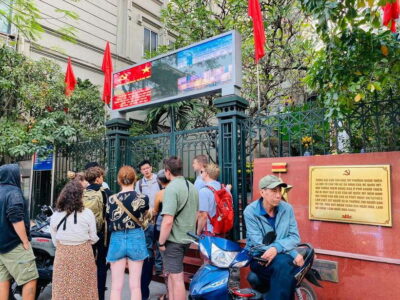
Private Cu Chi Tunnels Tour – Explore History & Off-the-path Local Sites
Read our review →Browse the lists this tour appears in