
Review · MONTREAL
Rabbis, Writers and Radicals: Montreal Jewish History Walking Tour
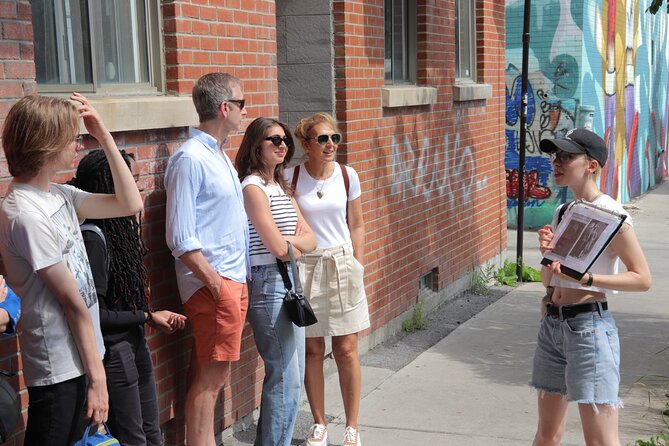
Montreal’s Jewish past is written into its streets. This two-hour walk through the Plateau and Mile End connects the city’s Jewish communities with debates over religion, class, politics, immigration, and daily life. I like the small-group format, capped at 20 people, and the chance to learn from local guides such as Serafina, Vivien, Hannah, and Sofia. I also like the reasonable $24.03 price, which makes this an easy addition to a Montreal day.
The main thing to consider is that this is a history walk first and a sightseeing tour second. Some places are remnants rather than grand landmarks, and the quality depends on how clearly the guide shapes the story. A few people found the talk too fast or hard to hear, while others praised the guides for making two hours lively, clear, and personal.
Key points at a glance
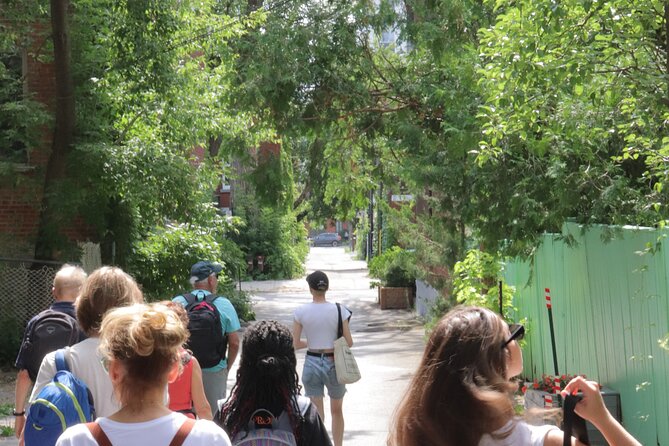
- Former Jewish Montreal in the Plateau and Mile End: Walk through neighborhoods tied to Ashkenazic Jewish immigration and community life.
- Stories beyond synagogue walls: Learn about class divisions, anti-Zionist Jews, immigration, and Montreal’s padlock laws.
- Two hours on foot: The route requires moderate physical fitness, with the start and finish at different locations.
- Strong guide record: Serafina, Vivien, Hannah, and Sofia are praised for warmth, enthusiasm, clear explanations, and thoughtful answers.
- Not a museum tour: The walk does not begin at the Museum of Jewish Montreal, and the museum exhibitions require a separate visit.
- Good value for history-minded visitors: At $24.03 per person, the tour costs less than many guided city activities, though the experience is mainly spoken interpretation rather than entry to major sites.
Why Jewish Montreal belongs on your walking list
Montreal’s Jewish story is closely tied to the Plateau and Mile End, neighborhoods that today are known for cafés, shops, restaurants, and creative life. On this walk, you look past the current street scene and consider the communities that once shaped these blocks.
The appeal is not simply seeing old buildings. It is understanding how Jewish immigrants became part of Montreal, how religious and political views differed within the community, and how social class affected daily life. The walk is especially useful if you want Jewish history connected to the wider story of Montreal rather than presented as an isolated subject.
The title points to three forces: rabbis, writers, and radicals. That suggests a tour built around ideas as much as architecture. You may hear about religious leadership, Jewish literary life, political movements, and the debates that divided Montreal’s Jewish population.
The tour is also a useful counterpoint to Old Montreal. Instead of grand stone buildings and formal monuments, you get an urban neighborhood walk where the past may be visible only in fragments. That can be rewarding, but you need to arrive ready to listen. If you want a parade of famous landmarks, this may feel restrained.
More History Walking Tours in Canada
- Gastown Historic Walking Food Tour
★ 5.0 · 1,863 reviews - Vancouver: Gastown Historical Walking Food Tour
★ 4.8 · 539 reviews - Quebec City: Old Quebec Historical Walking Tour
★ 4.8 · 409 reviews
A route through the Plateau and Mile End
The walk begins and ends at different points in the Plateau and Mile End area, rather than at the Museum of Jewish Montreal. The supplied meeting information lists 4129 Boulevard Saint-Laurent as the start and 5220 Boulevard Saint-Laurent as the end, while another instruction gives 4040 Boulevard Saint-Laurent as the beginning and ending point. Because those details conflict, check the exact meeting instructions on your ticket before setting out.
That detail matters. You do not want to walk to the museum building expecting to meet the guide there. The tour’s outdoor route and the museum’s exhibition space are related, but they are not the same visit.
The St. Laurent corridor gives the walk a practical sense of place. You are not hearing about a distant community from inside a lecture room. You are moving through the streets where Jewish Montreal developed, changed, and eventually shifted elsewhere. The route can make the past feel close, even when the original community buildings are gone or changed.
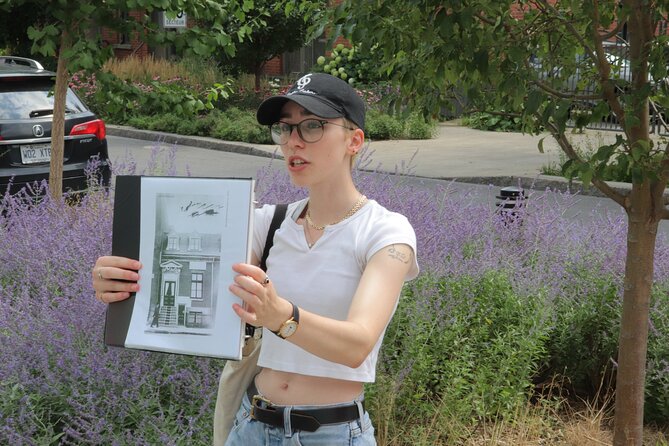
The precise stops are not fully specified in advance, so you should not expect a fixed list of grand interiors. The experience is better understood as a neighborhood story told while walking. Your guide may use photographs or other visual aids to show what no longer survives. That helps explain the past, although one person found the use of pictures frustrating because so much of the community has disappeared from the present streetscape.
The stories that give the walk its character
The strongest material here is the material that complicates easy ideas about Jewish Montreal. You may learn about the padlock laws, a striking piece of Montreal history connected with the suppression of places considered immoral or politically threatening. It is the sort of subject that shows how law, religion, public morality, and minority communities could collide.
You may also hear about Jews who opposed Zionism. That is an important reminder that Jewish Montreal was never politically uniform. Religious belief, secular identity, socialism, Zionism, and other political positions could exist in tension within the same broad community.
Class is another useful theme. The difference between wealthier and poorer Jewish residents helps explain why one shared label can hide very different lives. A stronger version of the tour would connect these social divisions more tightly to the buildings and streets along the route. If your guide develops that thread, it may become one of the most interesting parts of the morning or afternoon.
The tour also covers the remnants of the original Ashkenazic Jewish community. For many people, that is the central reason to book. You get a compact account of immigration and community growth, followed by an explanation of what remains and what has vanished.
What to expect from the guides
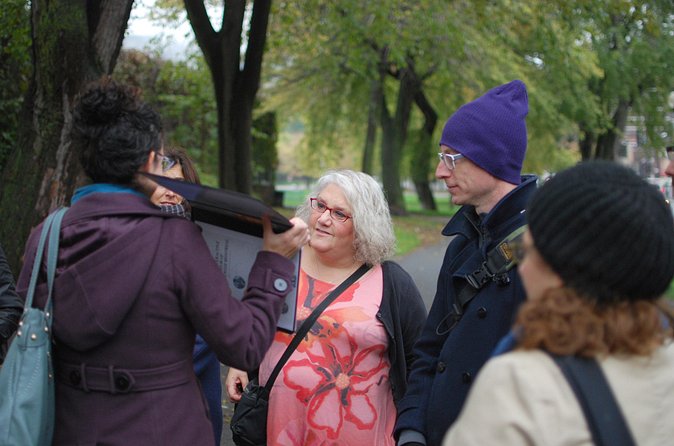
Guide quality is the biggest variable in this experience, but the overall record is strong. Serafina is praised for being friendly, patient, open to different experiences, and easy to understand. Vivien is described as warm and well prepared, while Sofia receives especially strong praise for enthusiasm and command of the subject.
Hannah’s approach sounds more interactive. She used questions and other ways to keep the group involved, added observations from her own life, and adjusted her walking speed for older people. That personal touch can make a history talk feel less formal.
At the same time, you should pay attention to the guide’s speaking pace. One visitor found Hannah’s delivery too quick, with non-native English speakers missing parts of the presentation. Another person found the guide difficult to hear and wanted some kind of audio amplification. This is worth considering if you have hearing difficulties or need extra time with spoken English.
The group limit is 20 people, which is small enough for questions but large enough that you may be standing near the back. Stay close to the guide, especially on a busy street. If you cannot hear, speak up early rather than waiting until the end.
Some feedback also points to uneven depth. A guide may rely on a prepared book or text, and a question outside that material may receive a less satisfying answer. The best guides appear to move beyond the script and connect the facts into a clear story. The weaker experience can feel like a series of interesting fragments.
More Jewish Heritage Tours in Canada:
- Making Their Mark: Montreal Jewish History Walking Tour
★ 5.0 · 166 reviews - In the Shadow of the Mountain: Montreal Jewish History Walking Tour
★ 4.5 · 33 reviews - Budapest Jewish Heritage Memorial Walking Tour & Synagogue Entry
★ 5.0 · 568 reviews - Budapest: Jewish Heritage Guided Tour with Synagogue Ticket
★ 4.8 · 533 reviews
A history walk, not a major attraction circuit
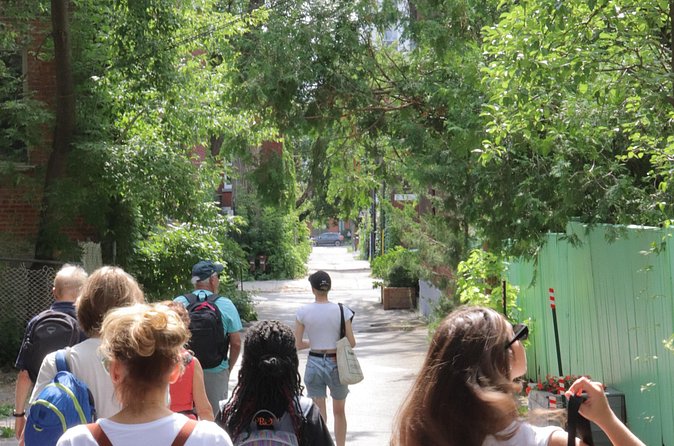
This distinction will help you choose correctly. The walk does not promise admission to historic synagogues, private homes, or a long list of preserved interiors. Its value comes from interpretation, neighborhood context, and the guide’s ability to make lost places meaningful.
Some of the physical sights may look ordinary if you do not know what happened there. A storefront, apartment block, or stretch of Boulevard Saint-Laurent may not announce its Jewish connection. The guide supplies the missing layer.
That also creates the tour’s main limitation. If you prefer dates, large monuments, and clearly preserved buildings, parts of the route may seem unremarkable. One person wanted more dates and major events. Another felt the stories were not joined into a single narrative.
I would approach it as a guided lesson outdoors. You are paying for a local interpreter, not for a museum ticket or a sequence of spectacular views. That is a fair trade at this price, as long as the subject itself interests you.
How the two hours feel on foot
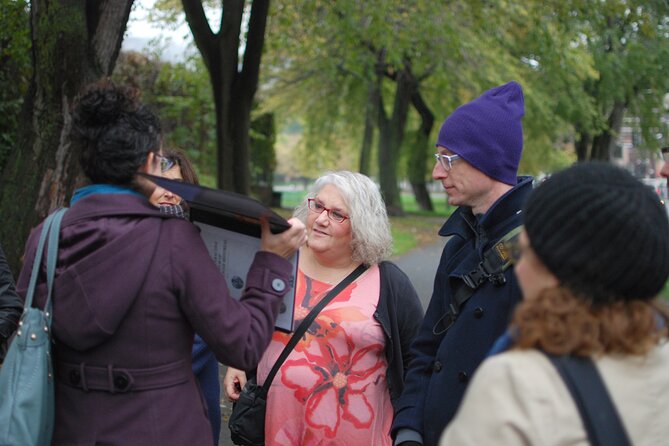
The tour lasts about two hours and requires a moderate level of fitness. There is no hotel pickup or drop-off, so you are responsible for reaching the starting point and continuing from the final location.
The route begins and ends in different places around the Plateau and Mile End, according to the general tour information. That is useful if you plan to continue exploring St. Laurent Boulevard afterward. It also means you should not assume you will finish where you started.
A steady walking pace seems to be the aim. Guides have adjusted the pace for older people, and one guide was praised for being considerate about stopping when needed. Still, this is not a seated talk. Wear comfortable shoes and leave room in your schedule for the route to take the full two hours.
The walk is family-friendly, especially for older children who can follow a history discussion. Younger children may find the spoken format slow unless they already enjoy stories about cities, immigration, or politics.
Price, group size, and overall value
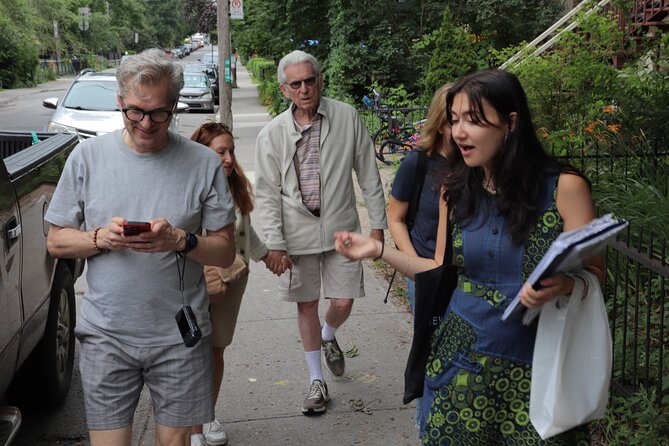
The listed price is $24.03 per person. At that rate, I consider the tour good value if you want an introduction to Jewish Montreal and prefer a local guide to independent reading.
You are paying for roughly two hours of interpretation, not transportation, food, museum admission, or hotel service. The local guide is included, while pickup and drop-off are not. The price works best when you see the walk as a starting point for further exploration.
The 4.6 rating and 92 percent recommendation figure suggest that most people find it worthwhile, but the lower scores reveal a useful warning. The difference between an excellent experience and a disappointing one often comes down to delivery: volume, pace, preparation, and whether the guide builds a coherent story.
At $24.03, the risk is modest compared with a costly private tour. Still, value depends on your expectations. If you want a polished lecture with detailed chronology, ask questions early and listen for how the guide organizes the material. If the group cannot hear, raise the issue politely.
Add the museum only if the timing works
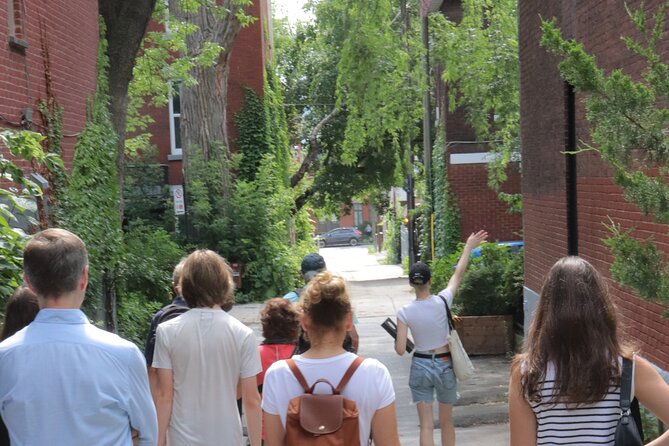
The Museum of Jewish Montreal’s exhibitions are at 5220 Boulevard Saint-Laurent, but the walking tour does not begin there. The exhibition space is open Thursday through Sunday, with Monday openings beginning in late May 2024 according to the supplied information. Check the museum’s current website for operating hours before planning a visit.
The museum can make a sensible companion to the walk because the tour explains the neighborhood while the exhibitions offer an indoor setting for more material. Do not assume that your walking ticket includes museum entry. The information provided lists only the local guide as included.
Ending near 5220 Boulevard Saint-Laurent may make a museum visit convenient, but you still need to confirm that the exhibitions are open that day. The museum’s schedule and the walking tour’s schedule are separate.
Who should book this Montreal walk?
I would recommend it to you if you have a real interest in Jewish history, immigration, Montreal politics, or the changing life of urban neighborhoods. It is also a good choice if you want a local introduction before exploring Mile End and the Plateau on your own.
It suits solo visitors and couples particularly well because the guide-led format gives you context you might not pick up from wandering alone. Families can enjoy it too, provided children are comfortable with a two-hour talk while walking.
I would be more cautious if you want a purely visual tour. The physical remains may be limited, and some stories depend on photographs or spoken explanation. You should also think twice if you have trouble hearing outdoor conversation or prefer a slow, highly structured presentation.
Free cancellation is available up to 24 hours before the start time. Changes or cancellations made less than 24 hours ahead are not accepted for a refund.
Should you book Rabbis, Writers and Radicals?
Book it if you want ideas, context, and neighborhood history at a low price. The best guides turn two hours on St. Laurent Boulevard into a useful account of Jewish Montreal, with memorable subjects such as the padlock laws, anti-Zionist Jews, class divisions, and the traces of Ashkenazic immigration.
Go with realistic expectations. This is not a grand-building tour, and the guide’s pace and clarity matter. Confirm the meeting address, stay near the guide, and consider pairing the walk with the Museum of Jewish Montreal if its exhibitions are open. For history-minded visitors, it is a worthwhile way to see Montreal with more questions in your head than you had at the start.
FAQ
How long is the Rabbis, Writers and Radicals tour?
The walking tour lasts approximately two hours.
Where does the tour take place?
It takes place around Montreal’s Plateau and Mile End neighborhoods, mainly along the Saint-Laurent area.
Does the tour begin at the Museum of Jewish Montreal?
No. The tour does not begin at the museum building. The exact meeting location is provided with your ticket.
What is the listed starting point?
The meeting information lists 4129 Boulevard Saint-Laurent, Montreal, as a starting point. Another instruction mentions 4040 Boulevard Saint-Laurent, so confirm the exact location on your ticket.
Where does the tour end?
The listed endpoint is 5220 Boulevard Saint-Laurent, Montreal. Another instruction says the tour begins and ends at 4040 Boulevard Saint-Laurent, so check your booking details for the correct arrangement.
Is museum admission included?
No museum admission is listed as included. The included service is a local guide.
Is the tour offered in English?
Yes. The tour is offered in English.
How many people can join the tour?
The maximum group size is 20 people.
Is the walking tour family-friendly?
Yes, it is described as family-friendly. Participants should still be able to manage about two hours of walking and spoken history.
Can I cancel for a full refund?
Yes. You can cancel at least 24 hours before the start time for a full refund. Cancellations or changes made less than 24 hours before the start time are not accepted.
Just added around Canada
- Mi’kmaq Heritage Path Tour★ 5.0 · 23 reviews
- Admission 1 person – Visit of the Acadian Historic Village★ 4.5 · 40 reviews
- Private Montreal City Tour by Car, History & Hidden Gems★ 5.0 · 22 reviews
- In the Shadow of the Mountain: Montreal Jewish History Walking Tour★ 4.5 · 33 reviews
- Montreal History Guided Sightseeing Cruise★ 3.5 · 363 reviews
- Making Their Mark: Montreal Jewish History Walking Tour★ 5.0 · 166 reviews
- Bicyle Tour on Historical Kettle Valley Railway from Myra Canyon to Penticton★ 5.0 · 62 reviews
- Guided Bike Tour on Historical Kettle Valley Railway at Myra Canyon & Wine Tour★ 5.0 · 19 reviews
Jewish Heritage Tours, compared.
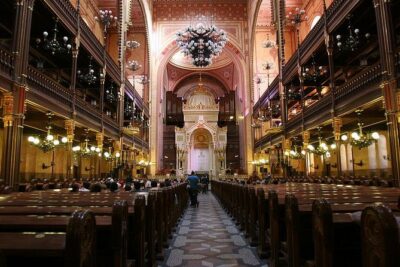
Budapest Jewish Heritage Memorial Walking Tour & Synagogue Entry
Read our review →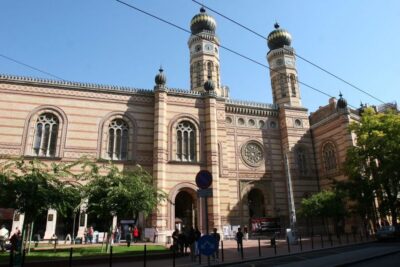
Jewish Heritage Guided Tour with Synagogue Ticket
Read our review →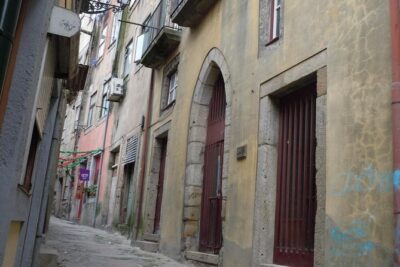
3-Hour Porto Jewish Heritage Walking Tour with Local Guide
Read our review →
Private Jewish Heritage Journey by Barcelona Dreaming
Read our review →
Anne Frank and the Jewish History of Amsterdam Private Tour
Read our review →
Lisbon Jewish Heritage and History – Private Tour Van
Read our review →
Browse the lists this tour appears in